Trinity College Dublin & The Book of Kells: 2026 Visitor Guide
Ar an gComhartha Seo — On this sign
- At a Glance: Book of Kells & Trinity College
- What is the Book of Kells?
- The Book of Kells Experience: What to Expect in 2026
- Ticket Types & Booking Strategy
- When to Book and How to Avoid Crowds
- Walking the Trinity College Campus (Free)
- Practical Tips: Visiting Trinity College & the Book of Kells
- A Quick History of Trinity College Dublin
- Combine Your Visit With…
- How the Book of Kells Was Made
- The Old Library Redevelopment Project
- Famous Trinity Alumni
- Trinity College & Book of Kells: FAQ
- After Trinity: Plan the Rest of Your Day
- Keep Reading
The Book of Kells Dublin exhibition is, by some distance, Ireland’s most famous cultural object — a 9th-century illuminated manuscript whose intricate, jewel-like pages have been pulling visitors to Dublin for over a century. It lives in the heart of Trinity College Dublin, the country’s oldest university (founded 1592), set on a 47-acre cobbled campus in the very centre of the city. A visit combines superb manuscript art, one of the most beautiful library spaces on earth, and a free wander through Ireland’s most prestigious working academic campus.
This guide is the most thorough planning resource for visiting in 2026. We cover what the Book of Kells actually is, what to expect from the redesigned Book of Kells Experience, the current state of the Long Room conservation project, ticket types compared, the best slots to book, and a self-guided walk around the Trinity campus — all of which is free and open to the public.
For the bigger picture on Dublin’s cultural heavyweights, see our pillar guide on things to do in Dublin and our list of the top 20 Dublin museums.
At a Glance: Book of Kells & Trinity College
- What it is: A 9th-century illuminated Gospel manuscript on display, plus access to the historic Long Room and a related immersive experience in Trinity’s New Square.
- Address: Trinity College Dublin, College Green, Dublin 2 (D02 PN40).
- Hours: Monday–Thursday 08:30–18:30, Friday–Saturday 08:30–19:00, Sunday 09:00–18:30.
- Admission: Adults from €25, with senior and student concessions; child and family prices are on Trinity’s Book of Kells page.
- Allow: About 90 minutes for the full Book of Kells Experience including the Long Room.
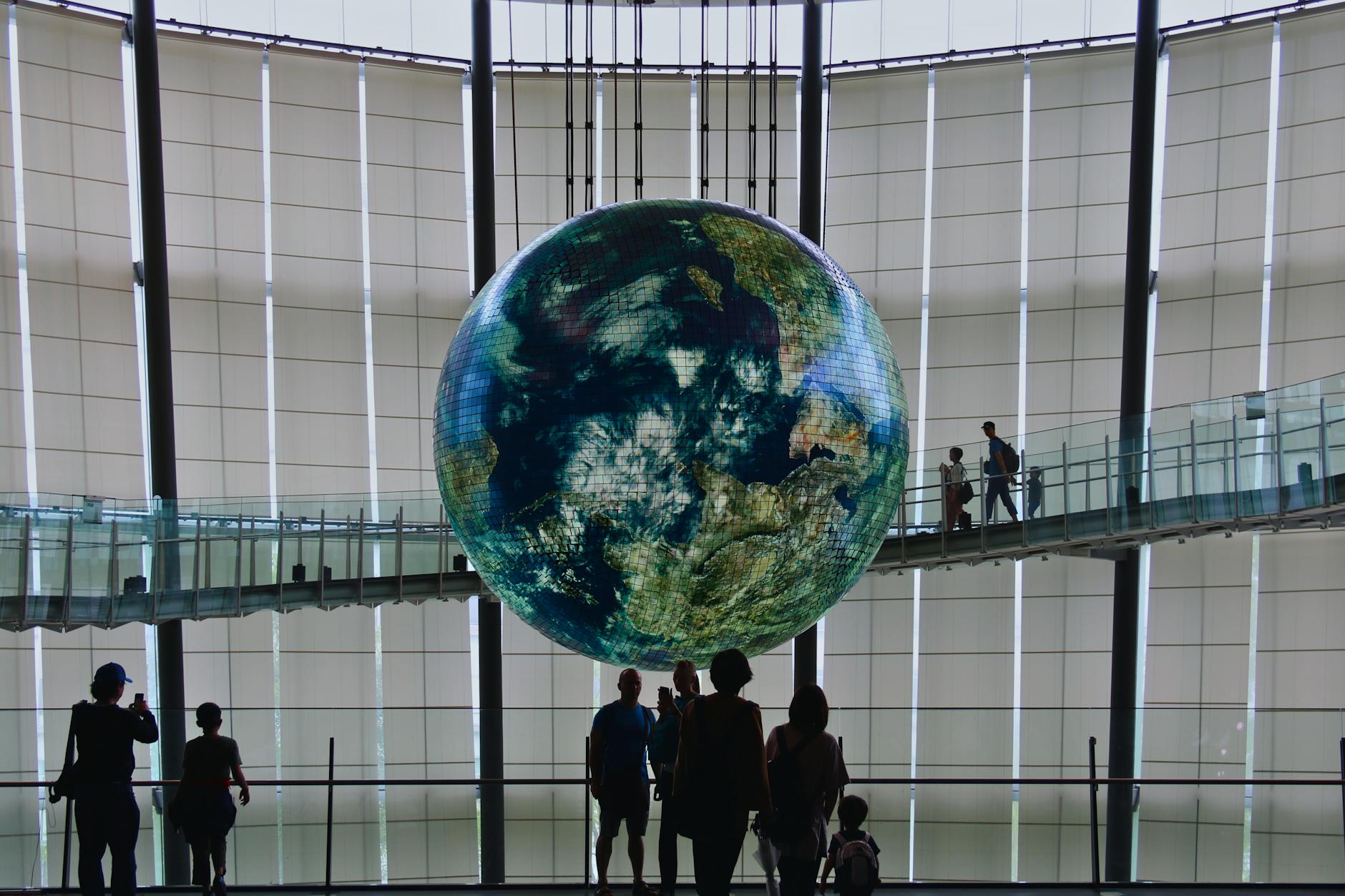
- Important 2026 note: The Old Library is undergoing a major conservation programme. The Long Room remains open through 2027, but most of its 200,000 books have been temporarily removed. Gaia by Luke Jerram — a 6-metre illuminated Earth sculpture — currently hangs at the centre of the Long Room.
What is the Book of Kells?
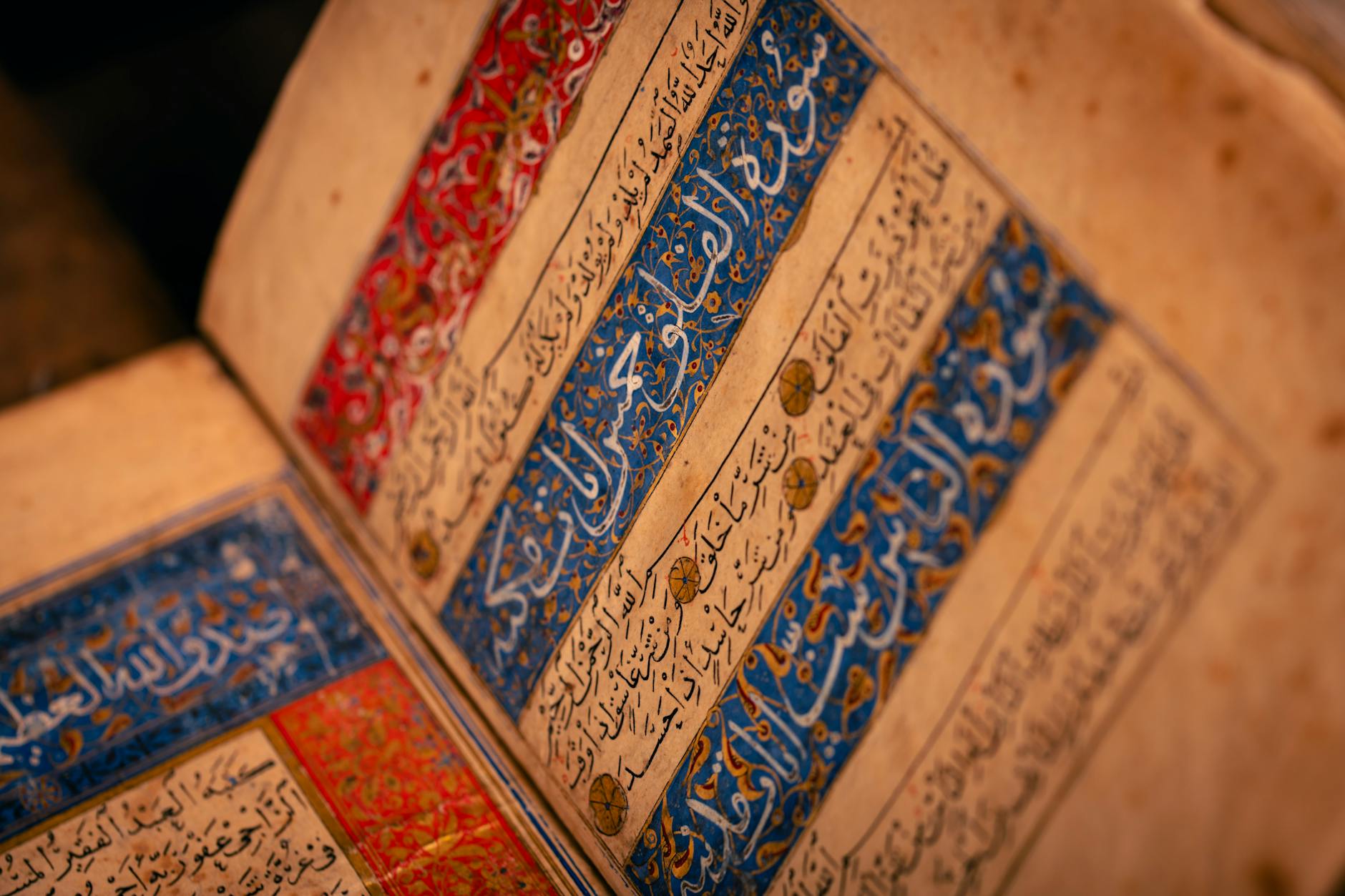
The Book of Kells is a richly decorated illuminated manuscript of the four Gospels in Latin, produced by Columban monks around the year 800 AD. Most scholars now believe it was begun on the small Hebridean island of Iona (off the west coast of Scotland) and finished at Kells in County Meath after Viking raids forced the monastic community to relocate. It is widely considered the finest surviving example of Insular illuminated manuscript art, a style that flourished across Britain and Ireland in the 7th to 9th centuries.
The manuscript runs to 340 calf-skin folios (680 pages), of which two volumes are typically on display at any one time. The pages are turned periodically — usually every quarter — so repeat visitors see different illustrations. Highlights of the calligraphy and illumination include:
- Chi Rho page — the famously elaborate page introducing the genealogy of Christ, considered one of the most ornate single pages of any medieval manuscript.
- Carpet pages — full-page geometric and zoomorphic interlace.
- Evangelist portraits — stylised images of Matthew, Mark, Luke and John with their respective symbols.
- Marginalia — tiny human and animal figures hidden in initials, including cats chasing rats and otters.
The Book of Kells was held at Kells until 1654, when Cromwellian troops occupied the town and the manuscript was sent to Dublin for safekeeping. It has been at Trinity College since 1661, where it has been on continuous public display since the 19th century.
The Book of Kells Experience: What to Expect in 2026
In recent years the visit was substantially expanded and rebranded as the Book of Kells Experience. It now has three connected components, all included in your ticket:
1. The Red Pavilion (New Square) — Digital Exhibition
You begin your visit not in the historic library but in a striking modern temporary pavilion in New Square. Its immersive digital spaces use high-resolution projections, animated illustrations and audio narration to introduce the manuscript’s symbolism, the monks who created it, the materials they used, and what each gospel says. It is well designed and gives you the context you need to make sense of the original page when you see it. Children love it.
2. The Original Manuscript Display
From the pavilion you walk to the Old Library, where two volumes of the Book of Kells are displayed under low light in a darkened room. One is opened to a major decorated page (such as the Chi Rho), the other to a representative text page. Two other 9th-century gospel manuscripts — the Book of Durrow and the Book of Armagh — are usually on display alongside.
Don’t rush this room: the manuscripts are what you came for. Photography is not permitted here.
3. The Long Room
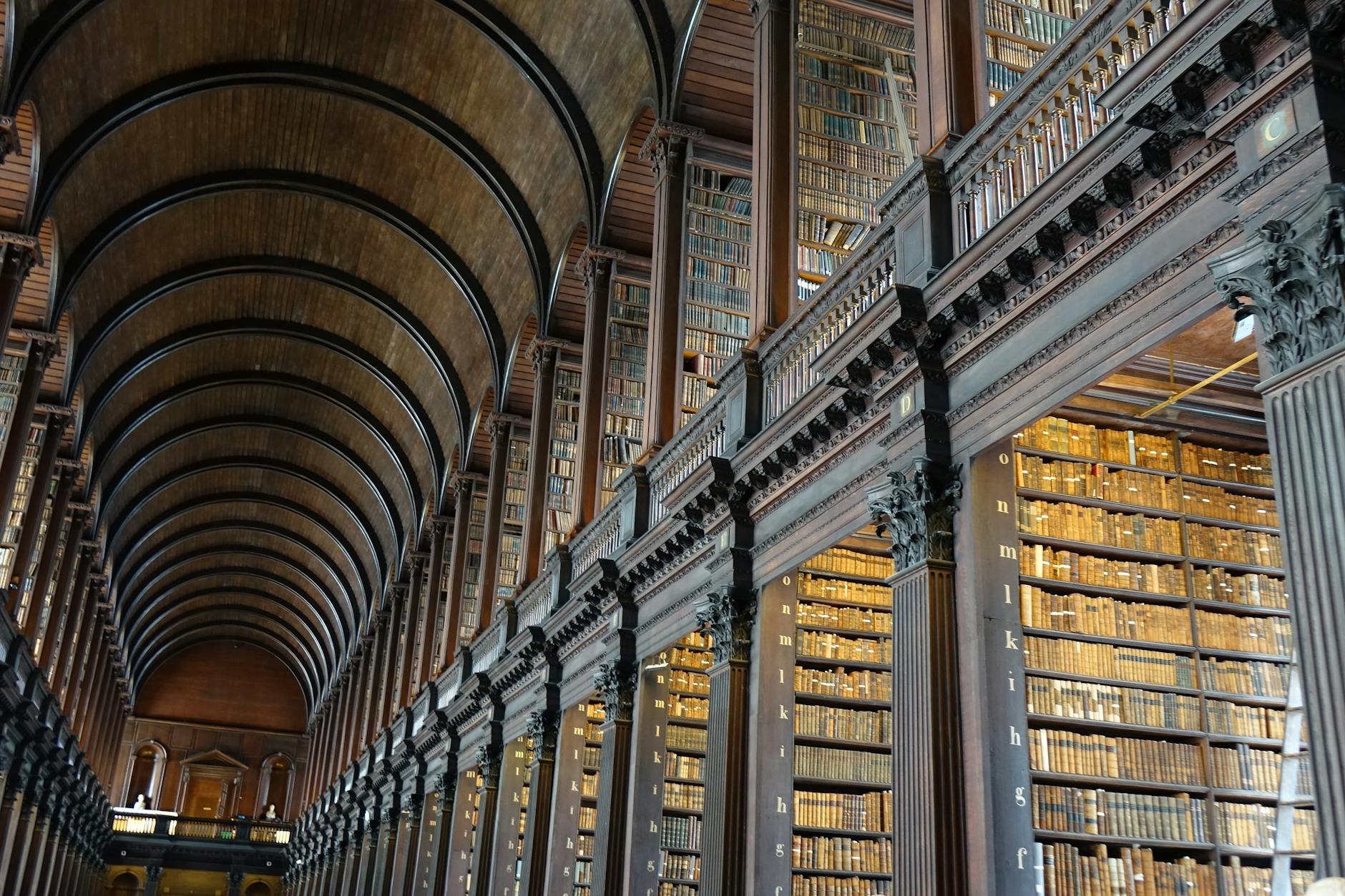
Up the staircase from the manuscript display lies the climax of the visit: the Long Room, a barrel-vaulted hall nearly 65 metres long, lined with marble busts of philosophers, writers and Trinity figures. Built between 1712 and 1732, it is one of the most impressive libraries in the world.
Important 2026 note: The Long Room is in the middle of a multi-year redevelopment project that began in 2022, when the books started coming off the shelves. Most of its 200,000 books have been temporarily removed for cleaning, environmental assessment and digitisation; about 20,000 remain in the first four bays, and the rest return only once the project is finished, with no official date yet. The Long Room itself stays open to visitors until the end of 2027, and the empty oak shelves are a striking sight. Luke Jerram’s six-metre illuminated Gaia sculpture — a meticulously detailed model of the Earth based on NASA imagery — hangs at the centre of the room as a temporary art installation with no confirmed end date, so check it is still in place before you go.
Other Long Room highlights include the Brian Boru harp — the 15th-century instrument that’s the model for the harp on the Irish euro coin and the Guinness logo — and a copy of the 1916 Proclamation of the Irish Republic, one of the few that survive.
Ticket Types & Booking Strategy
Self-Guided Book of Kells Experience — from €25
The default ticket. Online-only, timed-entry. Includes Red Pavilion exhibition, Book of Kells display, Long Room, and audio guide. Best for most visitors. Lower price applies to off-peak (early-morning weekday) slots.
Guided Book of Kells & Trinity Campus Tour Bundle — from €37
Sold as Trinity Trails: a 45-minute outdoor walking tour of Trinity’s historic campus by a current Trinity student, plus all of the standard Experience. The student guides are excellent — this is one of the very best guided tours available in any Dublin attraction. If you’d rather be guided through the Old Library itself, Trinity’s fully guided experience runs 75 minutes, from €65.
Combo Tickets
Trinity sells a Trinity Trails + Experience bundle from €37. A Book of Kells and Dublin Castle pairing will have to wait: the castle is closed until January 2027 (see our Dublin Castle guide).
When to Book and How to Avoid Crowds
When you go makes a real difference to the experience.
- Go early: Doors open at 08:30 Monday–Saturday and 09:00 on Sunday, so you can be through before the rest of your day begins.
- Busiest times: Summer (June, July, August) and St Patrick’s Festival, which runs 13–17 March in 2027.
- Book online: Trinity recommends booking in advance; don’t count on walk-up tickets, least of all in summer.
- Book well ahead if your trip falls between June and August or in mid-March.
- Best months: February, October, early November — quieter, sometimes cheaper.
Walking the Trinity College Campus (Free)
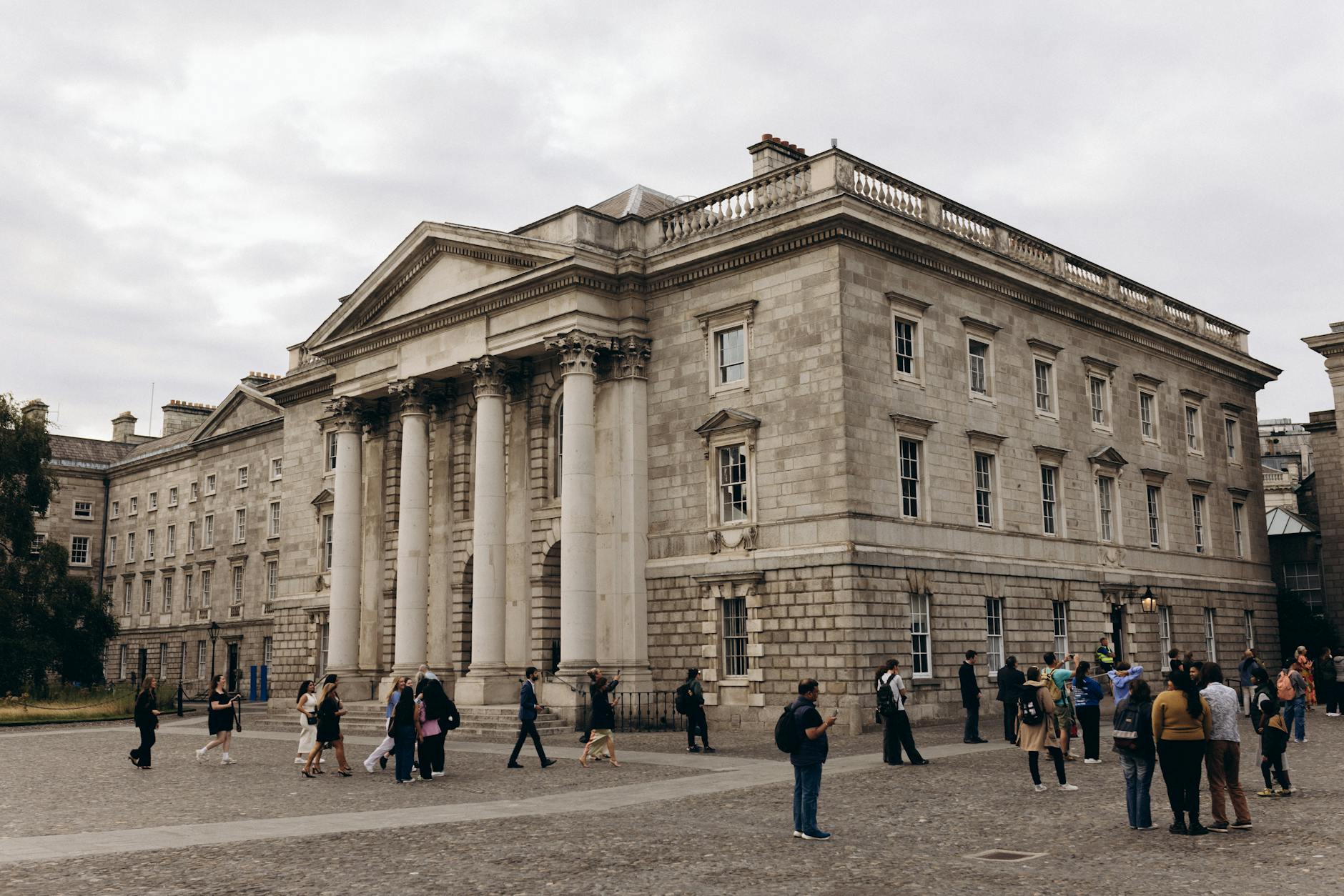
While the Book of Kells is paid, the Trinity campus itself is free and open to the public during daylight hours. With over 22,000 students, four centuries of architectural history and some of the finest neoclassical buildings in the country, it’s arguably Dublin’s most beautiful single space.
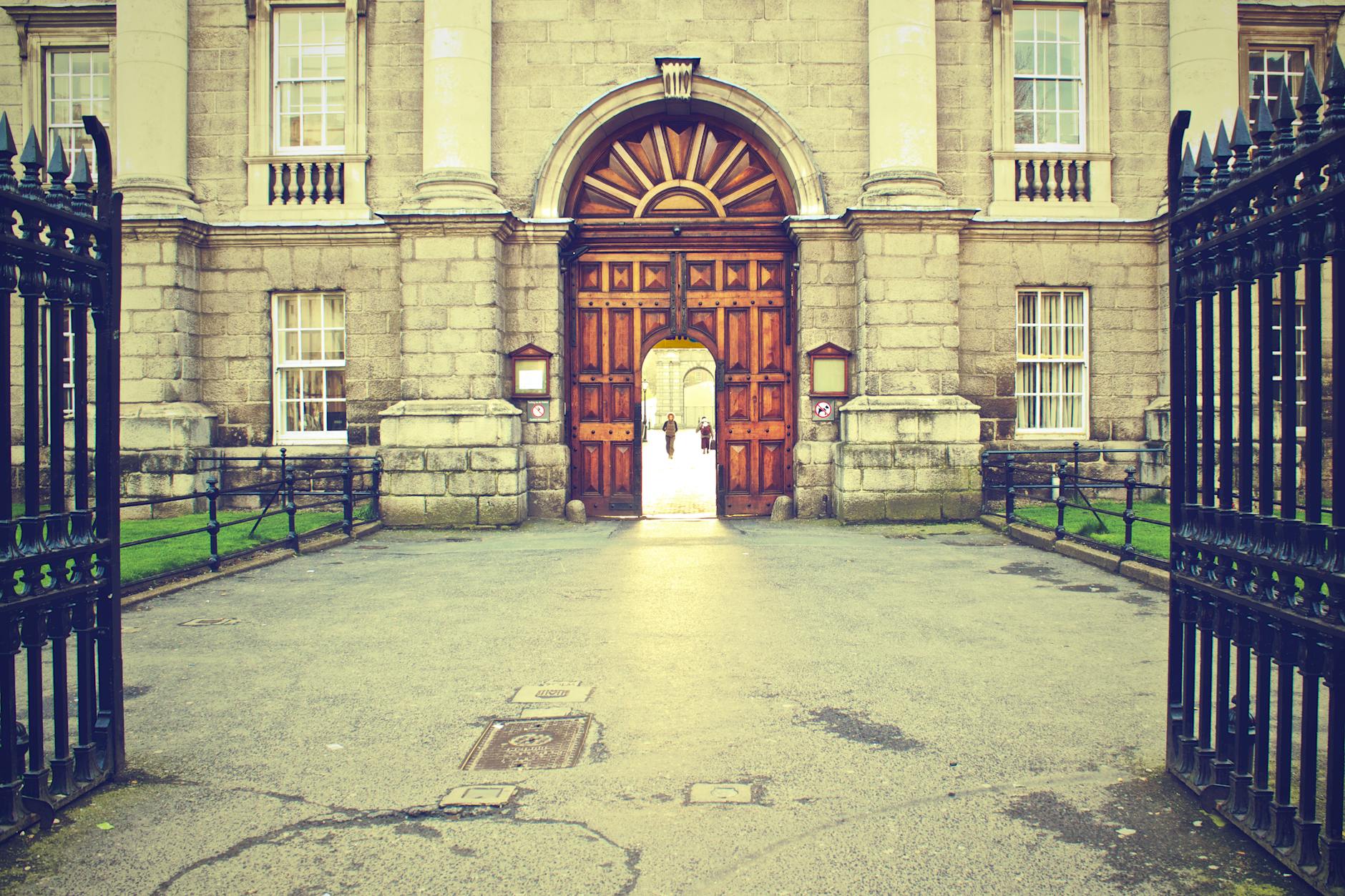
A self-guided loop of the campus:
- Front Gate (College Green): Pass through the 1750s West Front into Front Square.
- Front Square / Parliament Square: The cobbled main square is flanked by William Chambers’ Chapel (finished 1798) and Examination Hall (begun around 1777), facing the Dining Hall (c.1760).
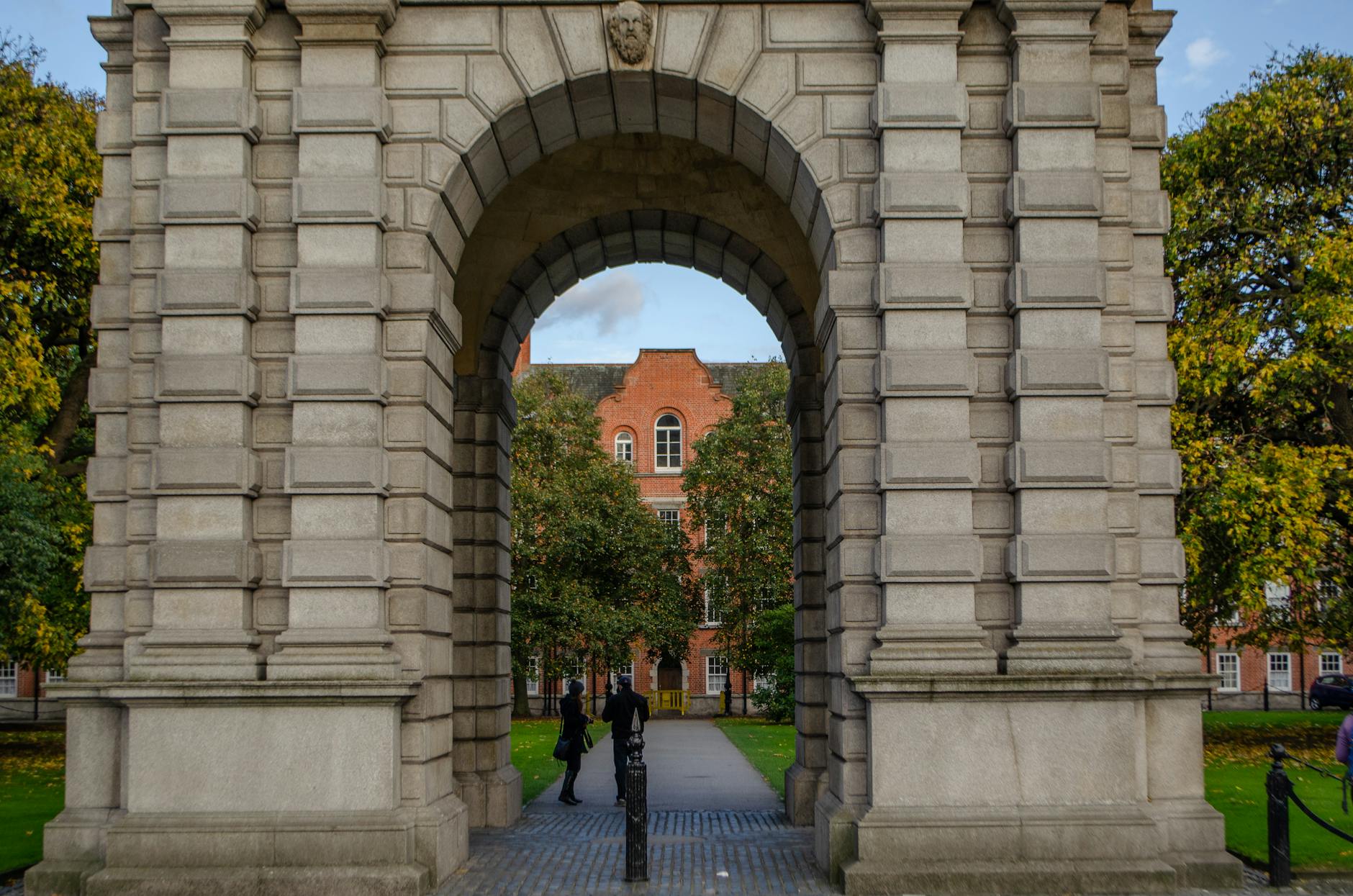
- The Campanile: The 30.5-metre granite bell tower in the centre of Front Square, designed by Charles Lanyon and finished in 1854. Tradition says Trinity students who walk under it while the bell rings will fail their exams.
- Library Square: The Old Library (housing the Book of Kells) sits on the south side, with the modernist Berkeley Library opposite.
- The Rubrics: Behind Library Square stand the oldest surviving buildings on campus — redbrick student residences built around 1700, still in use today.
- New Square: Home to the Book of Kells Experience pavilion and the 1857 Museum Building (free to enter, a Victorian Venetian Gothic gem with elaborate stone carvings).
- Pavilion (Cricket Ground): A small pavilion overlooks College Park, Trinity’s cricket pitch and home ground of Dublin University Cricket Club.
- Fellows’ Square: The modernist quad ends the loop. Exit via Nassau Street to head into the city centre.
The Long Room Hub
If you’re an academic or research-curious, the Long Room Hub on Fellows’ Square hosts free public lectures, exhibitions and humanities events year-round. Worth a glance at the noticeboard to see what’s on during your visit.
The Douglas Hyde Gallery
Trinity’s contemporary art gallery in the basement of the Arts Building shows challenging international work — admission free. Closed on Mondays.
Practical Tips: Visiting Trinity College & the Book of Kells
- Book online before you arrive. Trinity recommends booking in advance.
- Print or save the QR code on your phone before reaching the Red Pavilion entrance.
- Plan ~90 minutes for the full Experience. Allow more if you also want to walk the campus.
- Photography: Allowed in the Long Room and Red Pavilion (no flash). Not allowed in the Book of Kells display room.
- Wheelchair accessibility: The Red Pavilion is fully accessible. The Old Library has lift access to the Long Room. Older buildings on campus are mixed.
- Bag policy: Larger bags must be checked into the cloakroom.
- The campus is busy with working students — lecture-goers and graduate students may ask you to make way; please respect any “no entry” signs.
- Combine wisely: The Book of Kells pairs naturally with the National Gallery of Ireland (5 minutes’ walk) and Grafton Street & St Stephen’s Green.
- Eat on campus: The Buttery (basement of the Dining Hall) and the Pav Café (next to the cricket pitch) are open to visitors and excellent value.
- Free public lectures in term time — check the Trinity events calendar before your visit.
A Quick History of Trinity College Dublin
Trinity was founded in 1592 by Queen Elizabeth I as “the College of the Holy and Undivided Trinity of Queen Elizabeth near Dublin”, on the site of a dissolved Augustinian priory. It is Ireland’s oldest surviving university and remained the country’s only one for more than 250 years, until the Queen’s University of Ireland was chartered in 1850. For most of its history it was a Protestant institution; Catholics could enrol from the start but could not take degrees until 1793, and the Catholic Church kept its ban on Catholics attending without a special dispensation until 1970.
Famous alumni include Jonathan Swift, George Berkeley, Edmund Burke, Oscar Wilde, Bram Stoker, Samuel Beckett, Mary McAleese and three Irish presidents. Today Trinity has over 22,000 students, ranks as Ireland’s top university, and is a member of the LERU European research consortium.
The campus you walk through today reflects four centuries of architectural styles: the medieval Rubrics, the Georgian splendour of Front Square, the Victorian Gothic Museum Building, the modernist Berkeley Library, and the 21st-century Long Room Hub. Pair this with our Dublin history pillar guide for more on the literary and political figures who studied here.
Combine Your Visit With…
Trinity sits at the very heart of Dublin’s tourist core. Easy half-hour additions either side of your Book of Kells slot:
- The National Gallery of Ireland — 5 minutes’ walk; free; Ireland’s national art collection, with over 16,300 works.
- Grafton Street & St Stephen’s Green — immediately south of campus.
- The National Museum of Ireland — Archaeology — a short walk away on Kildare Street; free; superb.
- The Bank of Ireland old House of Lords — directly opposite Trinity’s front gate; free; visitable during banking hours.
- Temple Bar & the Liffey — a few minutes’ walk north.
- Dublin Castle & Chester Beatty Library — a short walk west (note: the Castle is closed to the public until January 2027 for the EU Presidency, and the Chester Beatty until the end of 2026).
How the Book of Kells Was Made
The craftsmanship of the manuscript is part of its enduring fame. Scholars believe it was the work of three or four monks over many years, possibly across two monastic centres. The materials and techniques are remarkable in their own right.
- Vellum: The 340 folios are made from calf-skin vellum — a vast monastic resource investment.
- Pigments: The colour palette includes red lead, kermes (a red dye from a Mediterranean insect), copper green, yellow orpiment (a sulphide of arsenic) and blues from woad. Despite the old story, modern analysis has found no lapis lazuli in the book.
- Iron-gall ink was used for the body of the script, which is in the elegant Insular majuscule script developed in Irish and Northumbrian monasteries.
- Hidden details: Look for the marginalia — tiny illustrations of cats chasing rats around the text, otters with fish, intertwined snakes, dragons, peacocks, hares and human figures. The decoration is so dense that scholars are still finding new motifs almost 1,200 years later.
The book was not made for daily use; it was a ceremonial gospel book for the high altar at one of the most important monasteries in early medieval Europe. Some pages bear water stains and finger marks, but the main illuminated pages are in remarkably good condition.
The Old Library Redevelopment Project
The Old Library, almost 300 years old, is in the middle of a major redevelopment. The reasons are sobering. The building, finished in 1732, was never designed for today’s visitor numbers, and it needs modern environmental control and fire protection to keep the collection safe. The roof is at end-of-life. There is no modern fire suppression system. The Brian Boru harp, the Book of Kells display and the Proclamation of the Republic all share the same vulnerable building.
The phased plan, a major conservation project costed at around €100 million, runs like this:
- From 2022: Books removed from the Long Room shelves in batches, starting in spring 2022; cleaned, condition-surveyed, digitised and stored offsite. The Long Room remains open to visitors throughout. Gaia by Luke Jerram is the temporary art piece that fills the visual void.
- In the meantime: The Red Pavilion in New Square serves as the temporary visitor hub.
- End of 2027: Old Library closes for full structural conservation: roof renewal, new climate control, installed fire systems and lighting refit. Completion is expected around 2030.
- After the works: The Old Library reopens with the books back on the shelves and the Long Room ready for another century of visitors; Trinity has not yet set a date.
If you want to see the Long Room before it closes, you have until late 2027. After that the Book of Kells will move to a temporary display, but the building itself will be off-limits.
Famous Trinity Alumni
Trinity is one of those universities where the alumni list reads like a literary syllabus. The undergraduate experience produced an extraordinary number of writers, philosophers and political figures, including:
- Jonathan Swift — Gulliver’s Travels, Dean of St Patrick’s; admitted 1682.
- George Berkeley — philosopher (immaterialism), bishop, namesake of Berkeley, California; admitted 1700.
- Edmund Burke — the founding figure of modern conservative philosophy; admitted 1744.
- Bram Stoker — Dracula; admitted 1864.
- Oscar Wilde — The Importance of Being Earnest, The Picture of Dorian Gray; admitted 1871. He won the Berkeley Gold Medal for Greek before going on to Oxford.
- Samuel Beckett — Nobel Prize for Literature 1969; admitted 1923. The Beckett bridge across the Liffey is named for him.
- Mary Robinson — first female President of Ireland.
- Mary McAleese — second female President of Ireland.
- Paul O’Connell — Irish rugby legend.
Trinity’s long literary tradition feeds into Dublin’s status as a UNESCO City of Literature. The Dublin history & literary heritage guide goes into more detail on the city’s remarkable concentration of Nobel laureates and major writers.
Trinity College & Book of Kells: FAQ
Is the Book of Kells worth seeing?
For most first-time Dublin visitors, yes. The Book of Kells is the most internationally significant cultural object on permanent display in Ireland, and the Long Room is among the most beautiful library spaces in the world. The Experience, redesigned in recent years, is much better than the previous version — the digital pavilion adds real context that makes the original far more rewarding to look at.
How long do you spend with the Book of Kells?
Trinity suggests allowing about 90 minutes for the full Experience, which takes in the Red Pavilion, the original manuscript and the Long Room. Less than an hour feels rushed; over two hours is rarely needed.
Can you see the Book of Kells without paying?
No. The original manuscript is only on display inside the paid Old Library exhibition. However, the Trinity College campus is free to walk, and a high-resolution digital facsimile of the entire Book of Kells is available online via Trinity’s Digital Collections.
What pages of the Book of Kells will I see?
Two pages from two volumes — usually one major decorated page and one text page. The pages are turned roughly every quarter, so the specific pages on display change throughout the year. The Trinity website lists the current opening before each rotation.
Can I take photos of the Book of Kells?
No. Photography is not permitted in the manuscript display room, to preserve the calf-skin pages. Photography is permitted in the Long Room and Red Pavilion (no flash, no tripods).
What is the Long Room Hub vs the Long Room?
The Long Room is the Old Library’s historic main hall, built between 1712 and 1732; the Book of Kells itself is shown in the Treasury, which you visit before the Long Room. The Long Room Hub is a modern humanities research institute on Fellows’ Square that runs free public lectures — the two are different buildings but related by name.
Was the Long Room used in Harry Potter?
No — despite a persistent online rumour, the Long Room was not used as a filming location for Harry Potter. Hogwarts library scenes were filmed at Oxford’s Bodleian Library and on a Leavesden Studios soundstage. The Long Room is, however, often suggested as the inspiration for the Jedi Archives in Star Wars: Episode II — though Lucasfilm denies it.
What’s the difference between the Book of Kells and the Book of Durrow?
Both are early Insular illuminated manuscripts of the Gospels. The Book of Durrow is older (c. 700 AD) and more sparsely decorated; the Book of Kells (c. 800 AD) is the more elaborate masterpiece. Both are usually on display in Trinity’s manuscript room.
Are the Long Room books really gone?
Most of them, yes — temporarily. As part of the Old Library Redevelopment Project, most of the books have been removed for cleaning and digital scanning, leaving about 20,000 in the first four bays. They go back once the project is finished; Trinity has not given a date. The room itself is still spectacular and stays open to visitors until the end of 2027.
After Trinity: Plan the Rest of Your Day
The Book of Kells slots into a Dublin day naturally. A perfect morning: Trinity at opening (08:30, or 09:00 on Sundays), then the Bank of Ireland House of Lords across the road, then a walk down Grafton Street with the buskers to St Stephen’s Green for a packed-lunch break. After that, head to the National Gallery of Ireland or the National Museum of Ireland (both free) for the afternoon. Round it off with a trad music session in a Dublin pub in the evening.
For more day-by-day planning, see the Dublin itinerary planner. Browsing more Dublin attractions? Our top 20 Dublin museums guide and our things to do in Dublin pillar both make great companions.
Keep Reading
- Best Restaurants Near Temple Bar & Trinity — where to eat when you come out of the Book of Kells.
Lean na Comharthaí — Keep following the signs