The Guinness Storehouse Dublin experience is the most-visited paid attraction in Ireland, drawing more than 1.7 million visitors a year to the seven-storey former fermentation plant at St James’s Gate. Whether you’re a black-stuff devotee or a complete novice, a few hours here is an excellent introduction to the brewing process, the brand’s 265-year history and the city itself — all crowned by a free pint with a 360-degree view from the Gravity Bar.
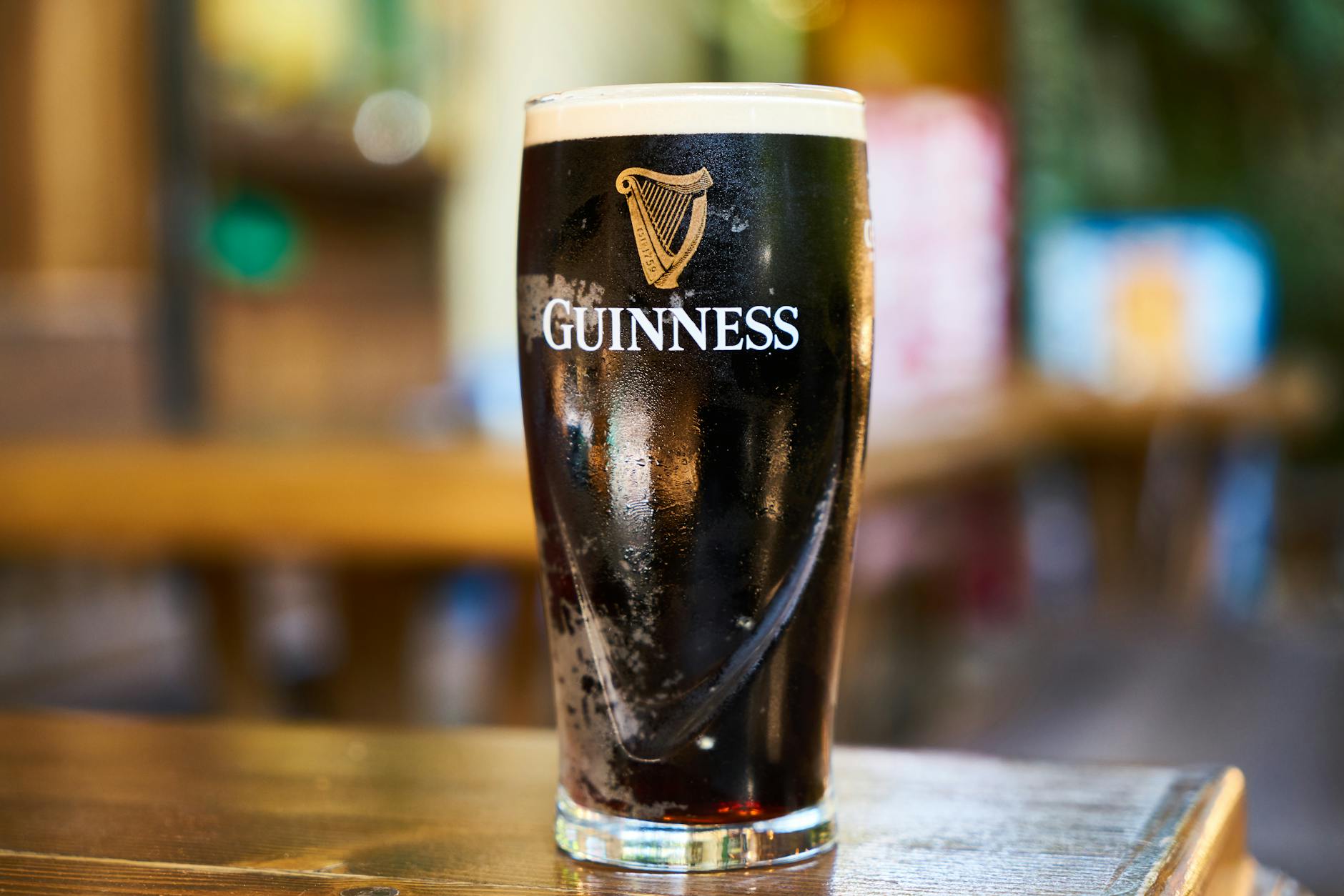
This guide is the most thorough independent visitor planning resource you’ll find for the Storehouse: how it works floor-by-floor, the smartest time slots to book, every ticket type compared, plus all the practical gotchas that aren’t obvious until you’re standing in line. Pair it with our pillar guide on things to do in Dublin and our Dublin itinerary planner to fit it into your wider trip.
Quick Overview: What is the Guinness Storehouse?
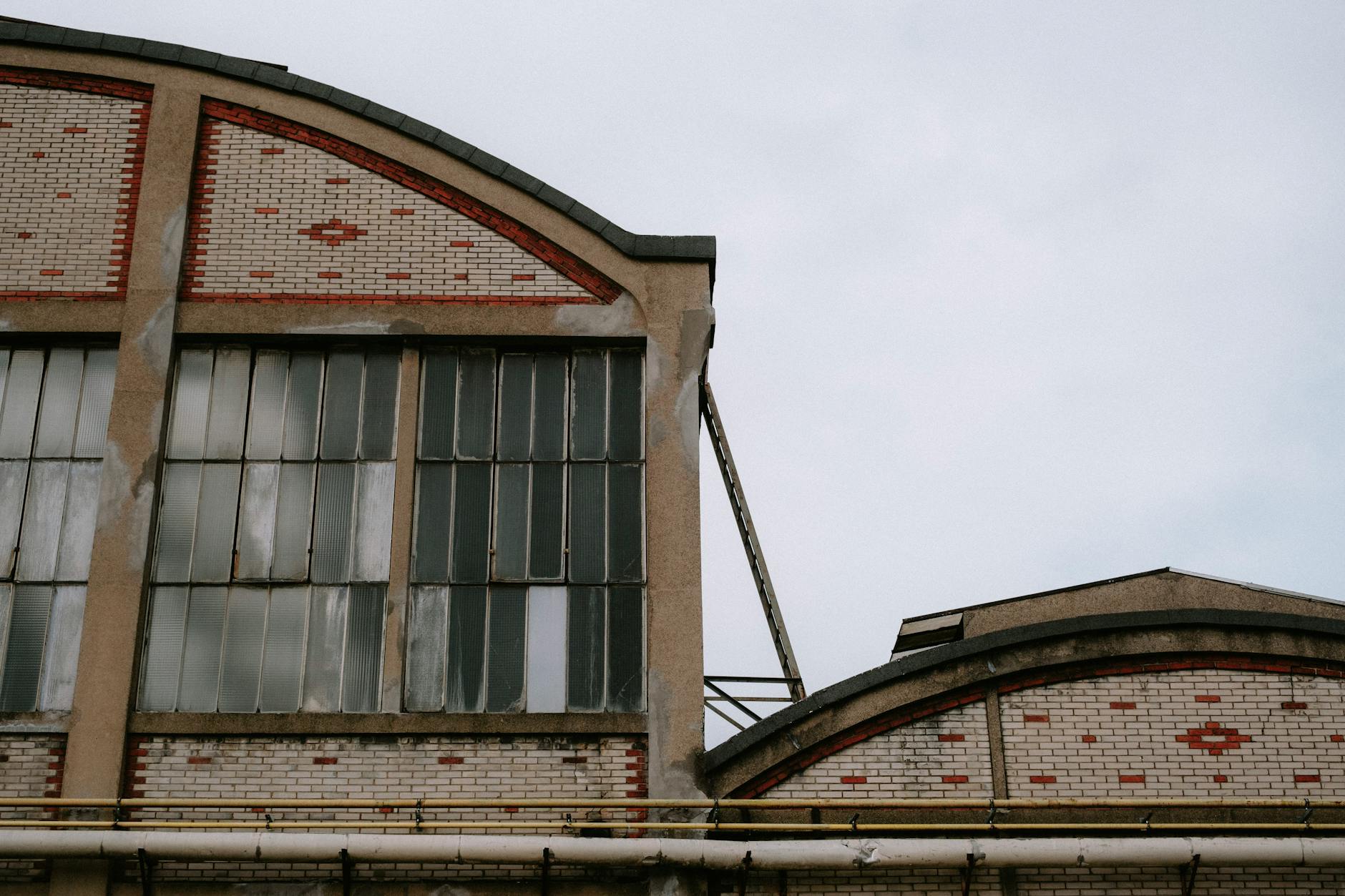
The Guinness Storehouse is the official visitor experience for the Guinness brand, occupying a converted 1904 fermentation plant inside the still-working St James’s Gate Brewery in the Liberties, Dublin 8. The building’s seven floors are arranged around a central glass atrium shaped like an enormous pint glass — if filled, it would hold 14.3 million pints.
The visit is self-guided at your own pace. The standard journey moves up through the building floor by floor: ingredients on the ground floor, brewing on the second, transport on the third, and so on, ending in the famous Gravity Bar at the top. Audio guides, lift access, retail, food and tasting experiences are all included or available as add-ons.
- Address: St James’s Gate, Dublin 8 (D08 VF8H)
- Hours: Daily 09:30–19:00 (last entry 17:00) — extended to 20:00 weekends in summer.
- Standard entry: Adult €26–€30, Student/Senior €22–€26, Child (5–17) €10, Under 5 free.
- Allow: 2–3 hours for the standard self-guided tour.
- Booking: Online timed tickets only — walk-up entry is rarely possible.
Inside the Storehouse: A Floor-by-Floor Walkthrough
Floor 1: Ingredients
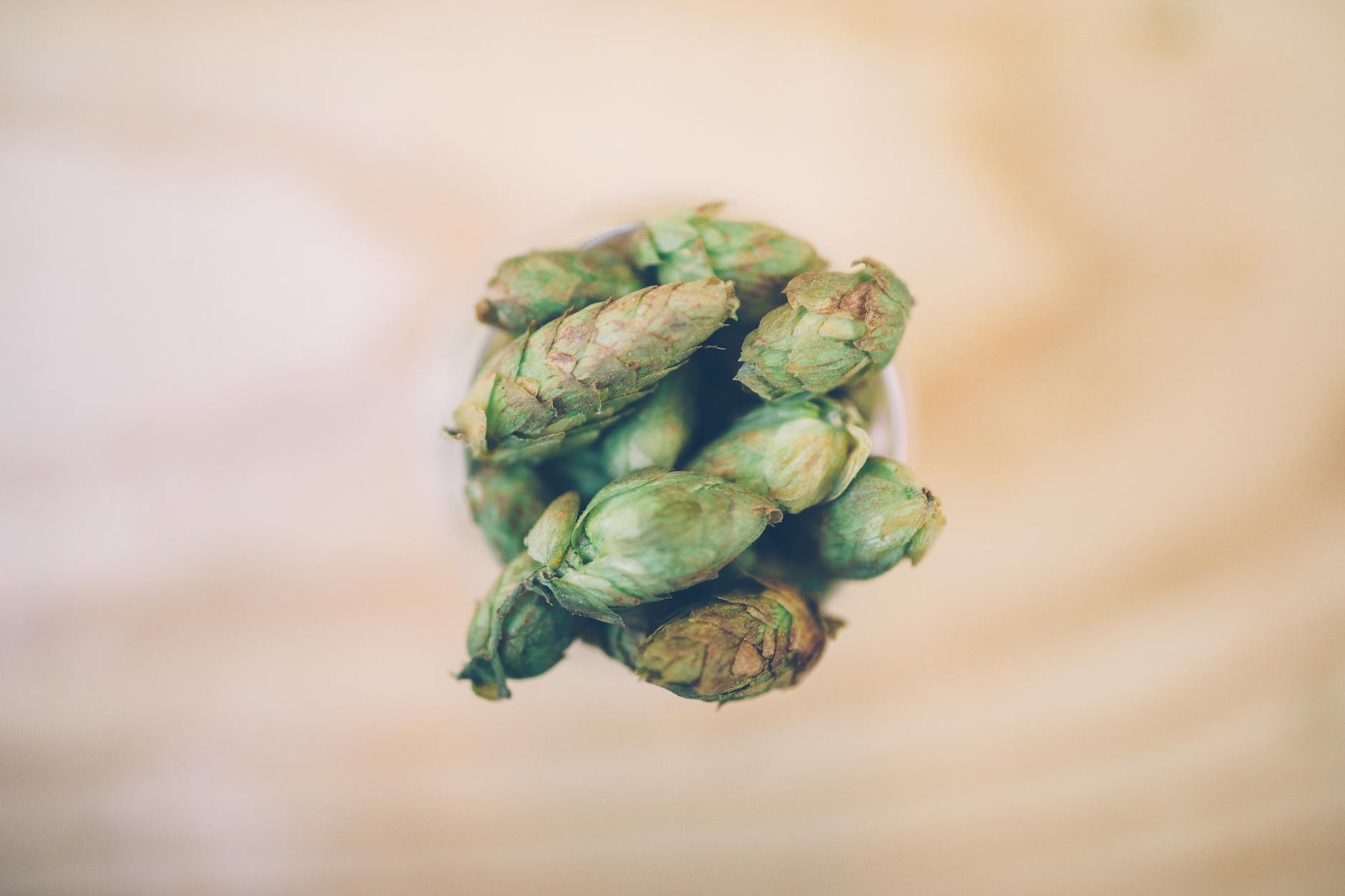
The journey begins at the foot of the seven-floor “pint glass” with a sensory introduction to the four ingredients of Guinness: water, barley, hops and yeast. A waterfall represents the spring water from the Wicklow Mountains; an enormous glass column holds 1,500 kg of roasted barley; a glasshouse displays Wye Challenger and Galena hops; and a vault preserves the original strain of brewer’s yeast that founder Arthur Guinness used in 1759. Don’t skip the 9,000-year lease displayed in the floor — the document signed by Arthur Guinness in 1759 setting his rent at €57.10 per year, in perpetuity.
Floor 2: Brewing
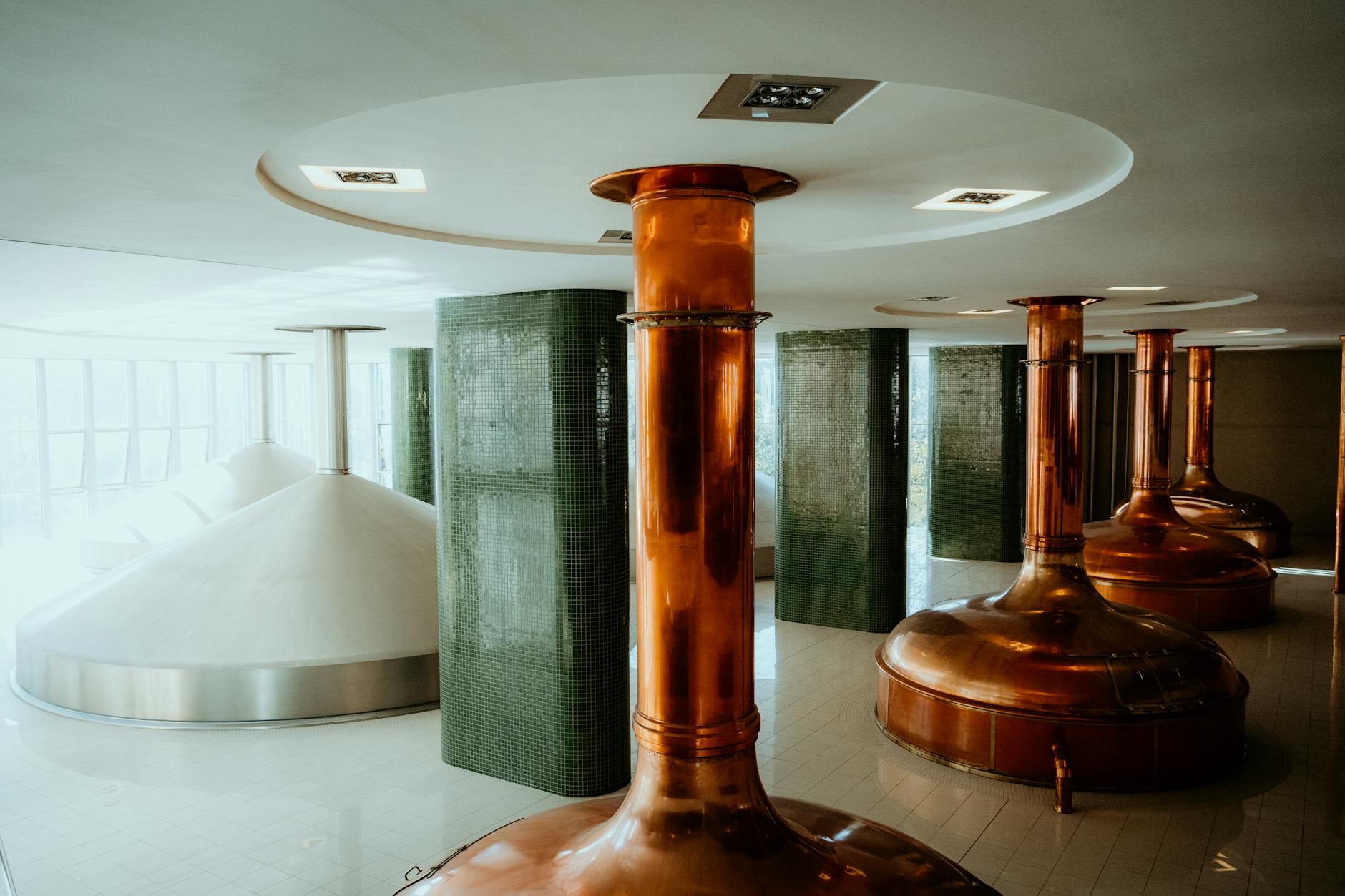
The Brewing floor is the most interactive section. Step into a recreated Victorian brewing chamber with copper kettles, glassed-walled fermentation tanks and tactile exhibits explaining mashing, lautering, boiling, fermentation, conditioning and packaging. Touchscreens let you trial each stage of the process. The intense smell of roasted malt is carefully pumped through — it’s genuinely evocative, especially if you’ve ever brewed at home.
Floor 3: Transport, Cooperage & the History of Guinness
How did a Dublin brewery become a global giant? Floor three answers it through three connected exhibits: the cooperage (where 19th-century coopers built thousands of wooden barrels each week), transport (Guinness once owned its own railway, fleet of barges down the Liffey, and a small fleet of cargo ships), and the history of the brewery from 1759 to today. Look out for the heritage shipping label collection — including the very first “extra stout porter” designs.
Floor 4: Tasting Rooms & Advertising Archive
Floor four is where the visit pivots from brewing to drinking. The free Tasting Experience introduces you to a small sample pour in a sensorial cylindrical chamber filled with hop-and-malt aromas. A separate hall houses the brand’s advertising archive — the toucans, sea horses, “Lovely Day for a Guinness”, the surfing horses and 100 years of pint-glass-shaped poster art. Many visitors call this the most fun floor in the building.
Floor 5: Guinness Academy & STOUTie
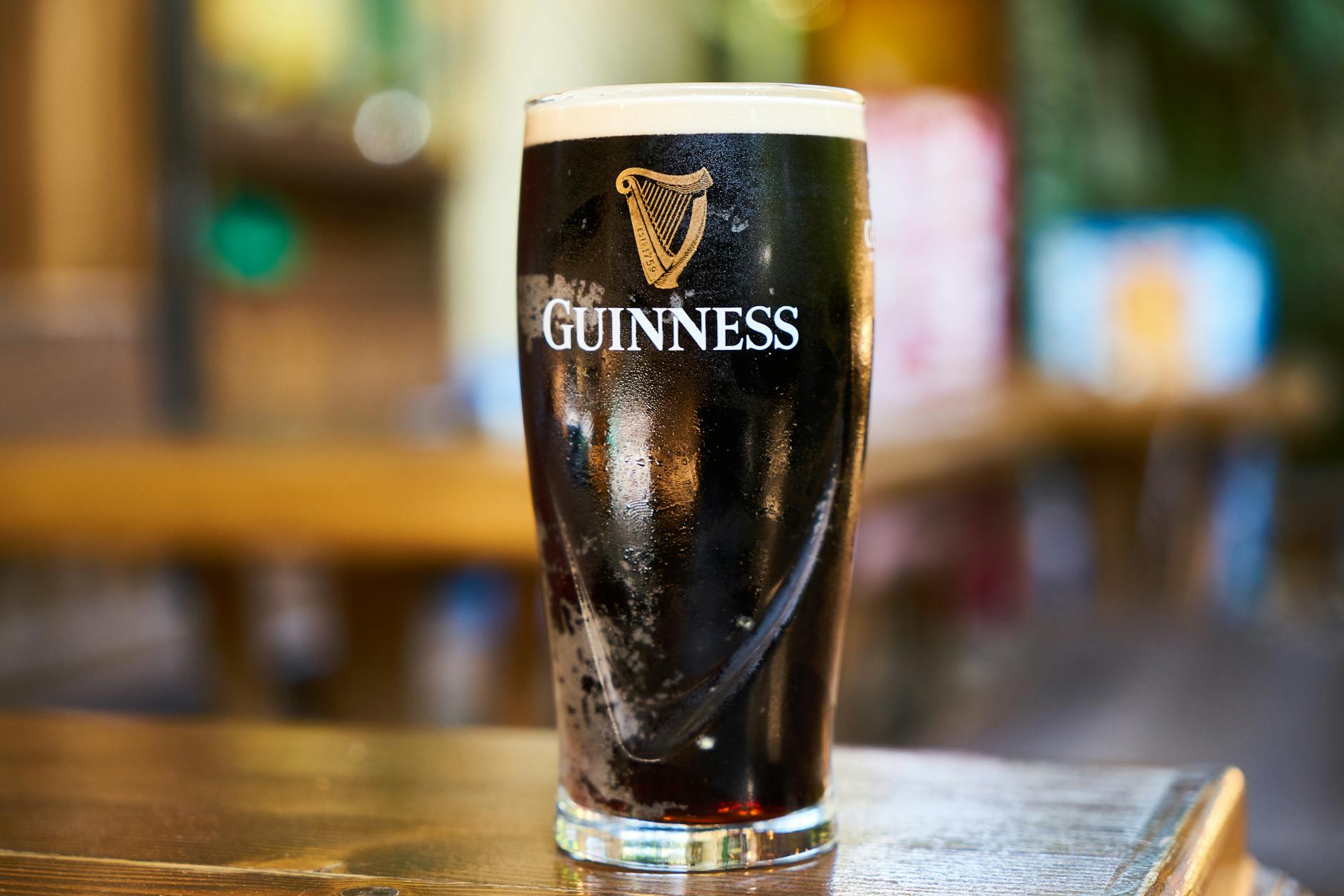
The Guinness Academy is included in your ticket and is the must-do upgrade-from-passive-tour moment. A trained pourer walks you through the famous “six-step pour” (45-degree angle, three-quarters fill, 119.5-second settle, top-up to the harp logo) and you do it yourself behind the bar. You leave with a printed Guinness Academy certificate and a fresh pint to drink. STOUTie is a paid €6 add-on where they print a selfie of you on the head of your pint in edible malt extract — gimmicky, but Instagram gold.
Floor 6: 1837 Bar & Stout-and-Food Pairings
The 1837 Bar & Brasserie is the Storehouse’s in-house restaurant, named after the year Arthur Guinness II first exported stout to North America. The food — Guinness-braised beef stew, fish & chips with stout batter, oysters & stout pairings — isn’t cheap (mains around €25), but it’s reliably good. There’s also a more casual “Brewers Dining Hall” cafeteria for sandwiches and lighter bites.
Floor 7: The Gravity Bar (and Your Free Pint)
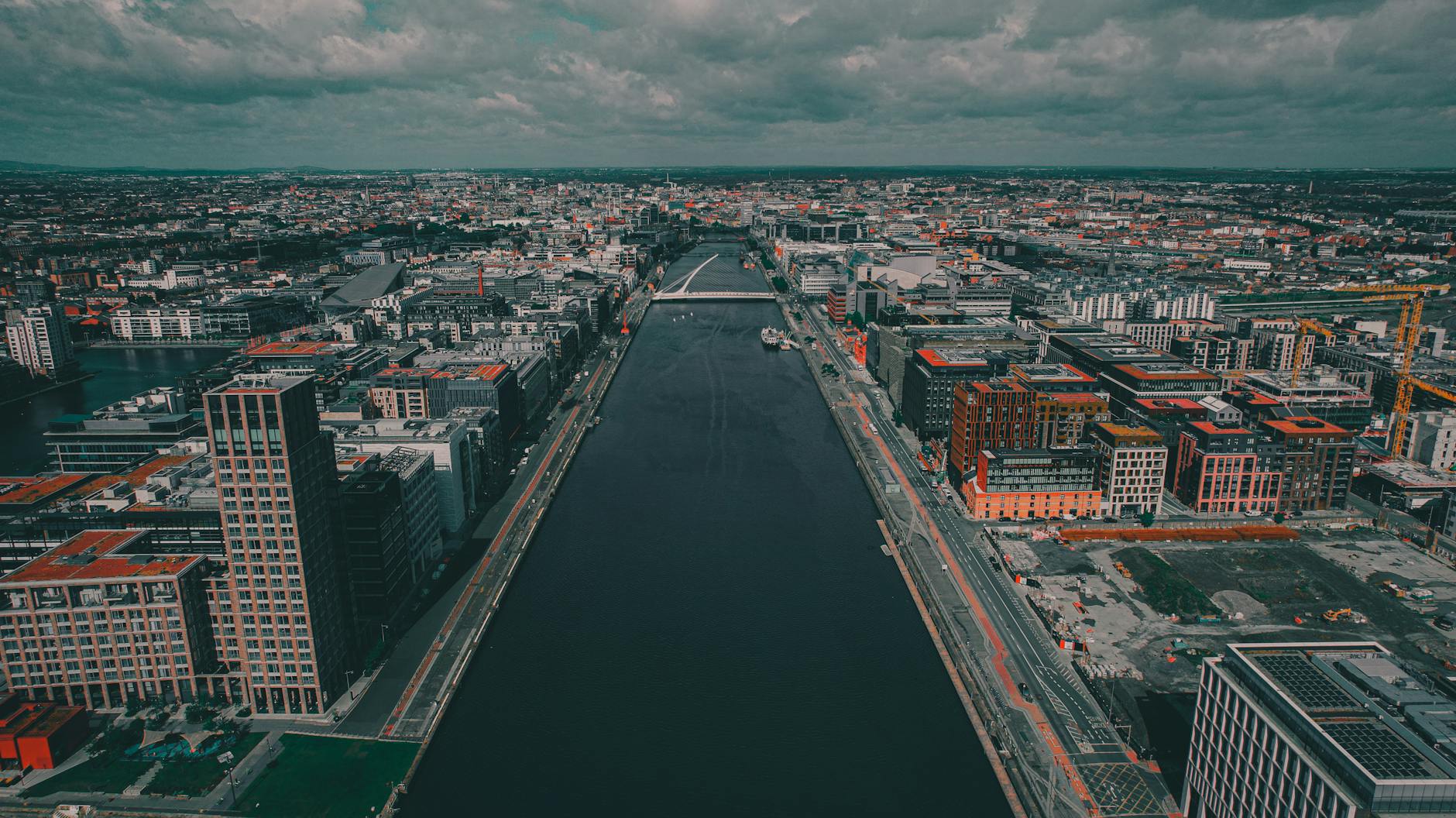
The reward at the top: the Gravity Bar, a 360-degree glass-walled bar perched 46 metres above ground level — the highest viewpoint open to the public in central Dublin. Hand over your ticket stub for your complimentary pint of Guinness (or Guinness 0.0, or a soft drink), find a window seat, and pick out the Wicklow Mountains, the Poolbeg chimneys, Croke Park stadium and the Liffey. Bar staff keep things moving, but you’re welcome to linger.
Guinness Storehouse Tickets & Tour Options Compared
Five main ticket types are sold for 2026, with significant price variation by day, season and time slot.
1. Self-Guided Experience (Standard) — from €26
What 90% of visitors book. Includes self-guided access to all seven floors, the Tasting Experience, the Guinness Academy pour, and your complimentary pint at the Gravity Bar. Audio guides in 7 languages are free at entry. Best for: first-timers, families.
2. Guided Tour — from €55
A 2.5-hour expert-led group tour through the building (max 12 guests) with priority Gravity Bar access. The depth on brewing science and brand history is genuinely better than the audio guide. Best for: beer enthusiasts, anyone wanting context not just photo-stops.
3. The Connoisseur Experience — €95 (18+)
An exclusive 90-minute private bar tasting of four Guinness variants — usually Original, Extra Stout, Foreign Extra Stout and a draught variant — led by a beer specialist. Includes a personal seat in the Connoisseur Bar (the Storehouse’s top tier of hospitality), branded glassware to take home, and complimentary Gravity Bar pint after. Best for: beer geeks, special occasions, gifts.
4. STOUTie Add-On — €6
Pre-bookable add-on for any ticket type. The bartender takes your selfie at the Floor 5 Academy and a moment later you’re drinking your own face on the head of a pint. Edible, harmless, surprisingly fun.
5. Skip-the-Line / Combo Tickets
Several third-party resellers (Viator, GetYourGuide, the Dublin Pass) offer skip-the-line bundles. The Storehouse’s own timed-entry system already works as skip-the-line, so combo tickets only make sense if you’re also visiting EPIC, the Book of Kells or Jameson Distillery in the same trip. See our Dublin on a budget guide for a pass-by-pass comparison.
Best Time to Visit the Guinness Storehouse
The Storehouse averages around 4,500 visitors per day, with serious peaks in summer, on weekends, and across the St Patrick’s Day window. Crowd management makes a huge difference to the experience.
- Quietest: First slot of the day (09:30) any weekday in October, November, January or February. You’ll often have whole rooms to yourself.
- Sweet spot: 14:00–15:00 weekdays in shoulder season — coach tours have moved on, the morning rush is gone.
- Avoid if you can: 11:00–13:00 on summer weekends and the entire week around 17 March.
- Sunset visit: If you’re visiting October–March, book the latest possible entry slot — you’ll reach the Gravity Bar at golden hour.
How to Get to the Guinness Storehouse
The Storehouse is in Dublin 8’s Liberties neighbourhood — a 20-minute walk from Trinity College or 15 minutes from Christ Church Cathedral. Several easy routes:
- Walking: Most enjoyable. Cross from Temple Bar via Christ Church and Thomas Street — you’ll pass St Patrick’s Cathedral and the brewery’s vast working perimeter on the way.
- Bus: Routes 13, 40, 123, 27 & 56A all stop within 5 minutes of the Storehouse.
- Luas: Red Line to James’s, then a 7-minute walk through the working brewery.
- Hop-on/Hop-off: Both Dublin Bus Tour and DoDublin’s Big Bus stop directly outside.
- Taxi/Uber: €10–€13 from the city centre.
For more on getting around the city, see our pillar guide on Dublin transport.
12 Practical Tips First-Timers Always Wish They Knew
- Book online — always. Walk-up tickets are routinely sold out, especially May–September.
- Print or save your QR ticket — you’ll need it for entry and for your Gravity Bar pint.
- Allow more time than you think. Most visitors take 2–3 hours, not the “90 minutes” first-time visitors plan for. Don’t schedule anything within 30 minutes either side.
- The free pint is for over-18s only. Under-18s get a complimentary soft drink at the Gravity Bar.
- Book the Academy slot early in your visit — it has its own queue and fills up by mid-afternoon.
- Use the lift, not the stairs, on the way up; walk down via the staircase to see the building’s industrial bones.
- The Gravity Bar window seats are first-come, first-served. Aim for them on arrival; they free up regularly as people circulate.
- Bring layers. The lower floors are kept brewery-cool; the Gravity Bar is greenhouse-warm in summer.
- The retail shop is huge and reasonable. Branded glassware, vintage poster prints, sweatshirts and the Storehouse’s own coffee.
- Public transport beats parking. The on-site car park costs €15 and fills early.
- Combine wisely: The Storehouse pairs naturally with the Roe & Co distillery (next door, also in a former Guinness power station) and the historic Liberties pubs.
- Allow time for a proper pint afterwards. The neighbouring Brazen Head, Dublin’s oldest pub (est. 1198), is a 12-minute walk and a great post-Storehouse spot.
Visiting the Guinness Storehouse With Kids
The Storehouse is more child-friendly than you’d expect. The seven floors are lift-accessible, the exhibits are heavy on touchscreens and tactile elements, and the Gravity Bar serves complimentary soft drinks for under-18s. The cooperage and transport floors are particularly popular with kids 6–12. Strollers are permitted; baby-changing is on Floor 1. Children under 5 enter free; ages 5–17 are €10 (about half adult). For more family-friendly Dublin attractions, see our Dublin for families guide.
Accessibility
The Storehouse is fully wheelchair-accessible. Lifts reach all seven floors; staff at the door will assist on entry. Free wheelchairs are available to borrow. Audio guides are compatible with hearing aid T-loop systems. The Gravity Bar can become very crowded; visitors with sensory or mobility needs are advised to book the first or last slot of the day.
Alternatives if You’re “Guinnessed Out”
If the Storehouse feels too commercial or you’re short on time, three excellent alternatives sit nearby. The Open Gate Brewery on James’s Street (a 5-minute walk away, smaller, much quieter, brewers’ experiments only) offers a more authentic taproom experience for serious beer fans. The Roe & Co Distillery next door is the better pick for whiskey lovers. And the genuinely historic Brazen Head pub does Guinness arguably as well as any bar in Dublin and costs nothing to enter.
The Guinness Story: A 265-Year History
To make sense of the Storehouse exhibits, it helps to know the broad arc. Arthur Guinness was 34 years old when he signed his now-famous 9,000-year lease at St James’s Gate on 31 December 1759. Dublin’s brewing industry at the time was dominated by ales; Guinness initially brewed those, then switched to porter — a darker, hoppier style imported from London — in the 1770s when he saw the market opportunity. Within fifty years he had built the largest porter brewery in Ireland.
His son Arthur II took over in 1803 and pushed exports hard. The first shipments to Bristol went out in 1769; continental Europe followed in the 1820s; North America in 1837 (the year that names the Storehouse’s in-house bar). By 1838 the brewery was the largest in Ireland; by 1886 it was the largest in the world, employing 5,000 people on a 26-hectare site in central Dublin. The site you stand on today is part of that original brewery footprint.
The 20th century brought the iconic branding. The harp logo (registered as a trademark in 1862, four years before the Irish state used the same symbol) is now one of the most-recognised commercial marks in the world. The Gilroy advertising campaign — sea horses, toucans, “My Goodness, My Guinness” — ran from 1929 to 1979 and gave Guinness one of the most distinctive visual identities of any consumer brand. Floor 4 of the Storehouse covers it in detail.
The Guinness family sold their last shareholding in 1986. Today the brand is owned by global drinks giant Diageo, which still brews the iconic black-and-tan stout in Dublin and exports to over 150 countries.
The Science of the Perfect Pour
Why does a pint of Guinness look and taste different from any other beer? Three reasons, all explained well at the Storehouse but worth previewing:
1. Roasted barley. Most stouts use roasted malt for their dark colour. Guinness uses unmalted, kilned roasted barley, which gives the beer its signature dry, coffee-like bitterness and ruby-edged opacity.
2. Nitrogen, not carbon dioxide. Standard beers are pressurised with carbon dioxide. From the 1950s, Guinness pioneered serving its draught with a 70/30 blend of nitrogen and CO₂. Nitrogen bubbles are smaller and rise more slowly, giving the famous “cascade effect” in the glass and producing the soft, creamy head. The widget in canned Guinness is a small plastic ball that releases nitrogen on opening to mimic the same effect.
3. The 119.5-second pour. A barman fills the glass three-quarters with the tap angled at 45 degrees, lets the beer settle for 119.5 seconds, then tops it up with the tap upright. Done correctly, the head sits perfectly above the rim and the harp logo on the glass is visible. Done incorrectly, the head separates and the beer turns flat. The Floor 5 Academy walks you through this and gives you a chance to do it.
The Cultural Footprint of Guinness in Ireland
Guinness is so deeply embedded in Irish life that visitors are often surprised by how much of the country’s social fabric the brewery shaped. The company built workers’ housing across the Liberties from the 1860s onward (still standing on Bellevue and Echlin Streets), St Patrick’s Park beside the cathedral, the Iveagh Trust baths, hostels and entire blocks of social housing, and funded the restoration of St Patrick’s Cathedral in 1865. The Iveagh Gardens behind the National Concert Hall are named for the Guinness peerage. The family also operated a workforce welfare scheme decades ahead of its time — with on-site doctors, dentists, sports facilities and pension provision.
This blend of corporate heritage, public benefaction and Liberties-neighbourhood community is something the Storehouse touches on lightly — if you’re curious to dig deeper, the Dublin history pillar guide covers the Liberties in more detail.
Combine With: A Walk Through the Liberties
The Liberties is one of Dublin’s oldest neighbourhoods, with medieval streets and a craft-and-distilling identity that predates Guinness by centuries. After the Storehouse, walk back to the centre via Thomas Street — you’ll pass the National College of Art & Design, the lovely 19th-century St Catherine’s Church (where Robert Emmet was executed in 1803), and several excellent independent pubs. The Roe & Co Distillery, Teeling Distillery and the soon-to-reopen Pearse Lyons Distillery all sit within a short walk. For more on the area, see our Dublin neighbourhoods guide.
Guinness Storehouse: FAQ
How long does the Guinness Storehouse take?
Most visitors spend 2–3 hours. Less than 90 minutes feels rushed; 4 hours is plenty even for the most thorough visitor. The Connoisseur Experience adds another 90 minutes.
Is the Guinness Storehouse worth the money?
Most visitors agree it is — the building, the panoramic Gravity Bar pint and the depth of the brewing exhibits justify the price even if you don’t love stout. If you have only one paid attraction in your Dublin trip, the Storehouse and Kilmainham Gaol are the most consistently recommended.
Do you really get a free pint?
Yes — one complimentary pint of Guinness (or Guinness 0.0 or soft drink) is included in every adult ticket and is redeemed in the Gravity Bar at the top of the building. The Guinness Academy pour also gives you a fresh pint, so most adults leave having drunk two pints in total.
Can I visit the actual brewery?
No — the working St James’s Gate brewery is not open to the public. The Storehouse is the visitor experience adjacent to the working brewery. The smell of brewing wafts through the area on most weekdays.
What’s the cheapest way to visit the Guinness Storehouse?
Booking direct on the Guinness Storehouse website at the earliest possible time slot midweek in winter saves about €4 vs peak weekend pricing. The Dublin Pass becomes cost-effective only if you’re visiting 4+ paid attractions in the same trip.
Does the Storehouse close for any holidays?
The Storehouse is closed on 24, 25 and 26 December and from late afternoon on Good Friday. All other days, including 17 March, it’s open with extended hours.
Can I leave and re-enter?
No. Once you’ve scanned out, you can’t scan back in on the same ticket. Plan to do the whole visit in one go.
Is the Guinness Storehouse the same as the Open Gate Brewery?
No — they’re separate. The Open Gate Brewery is a small experimental taproom on the same campus where Guinness brewers trial new beers. It has its own ticketed tasting events but no exhibits.
After the Storehouse: Pair It With…
Most visitors finish the Storehouse with a pint of stout in their belly and a couple of free hours ahead of them. Make the most of it. Walk five minutes to the Roe & Co Distillery for whiskey, ten minutes to the Brazen Head for Dublin’s oldest pub, twenty minutes to Kilmainham Gaol if you’ve booked ahead, or take the Luas to Trinity College for the Book of Kells. For more, see our pillar guides on Dublin nightlife & pubs and things to do in Dublin. Sláinte.
Leave a Reply