Glendalough Day Trip from Dublin 2026: Complete Guide
Ar an gComhartha Seo — On this sign
- Quick Picks: Glendalough Day Trip Options
- What Is Glendalough?
- How to Get to Glendalough from Dublin
- Glendalough Walking Trails
- Monastic City Highlights
- Powerscourt Estate & Gardens
- Sally Gap & Lough Tay
- Where to Eat in Wicklow
- Sample Glendalough Day Trip Itinerary
- When to Visit Glendalough
- What to Wear for Glendalough
- Glendalough Accessibility
- Common Glendalough Mistakes
- Comparing the Tour Options
- Extending the Trip
- Related Reading
- Glendalough Through History
- Wicklow Mountains National Park
- Combining Glendalough with Nearby Spots
- Glendalough Day Trip from Dublin: FAQ
- Keep Reading
- Photo Credits
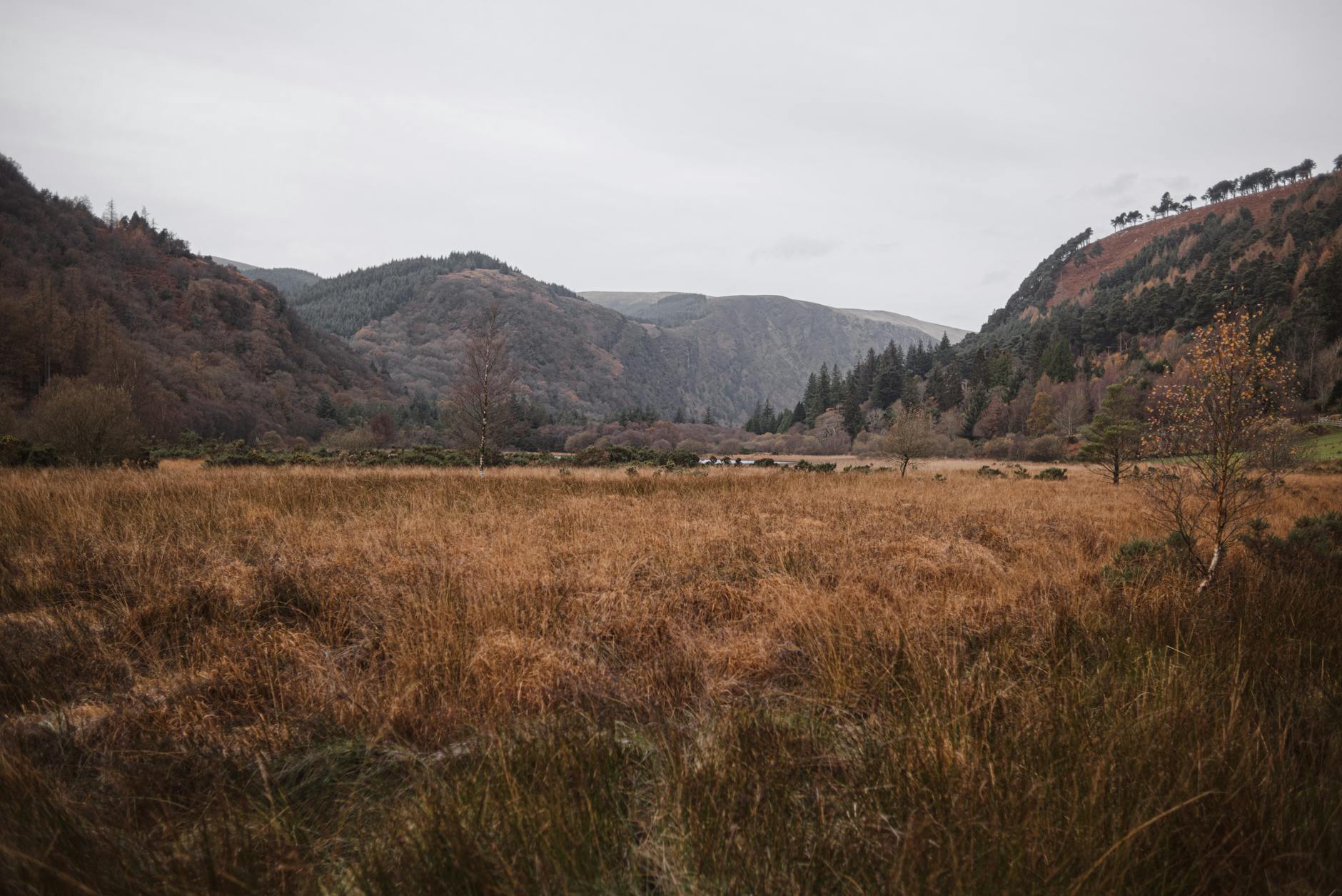
A Glendalough day trip from Dublin is the city’s most-photographed escape into nature: 6th-century monastic ruins, two glacial lakes in a U-shaped valley, hiking trails from gentle 30-minute strolls to 4-hour mountain ascents, and the Game-of-Thrones-and-Vikings filming location of Sally Gap nearby. Here’s everything: how to get there, which trail to walk, where to eat lunch, what to expect from each tour operator, and how to combine Glendalough with Powerscourt Estate for the ultimate Wicklow day.
By the end of this guide you’ll know exactly which Glendalough day trip option fits your travel style and energy level.
If you are still building the shape of your trip, the full guide to day trips from Dublin covers how this fits with the rest of the city.
Quick Picks: Glendalough Day Trip Options
- Best for first-timers: Wild Wicklow Tour (€45, 9 hours; includes Glendalough, Powerscourt Waterfall, Sally Gap)
- Best budget option: Paddywagon Wicklow Tour (€38, 9 hours; same stops, slightly less expert guiding)
- Best independent option: St Kevin’s Bus from St Stephen’s Green (€14 each way; Glendalough only)
- Best private/group option: Hidden Ireland Tours private driver-guide (€380-450 per group)
- Best self-drive option: Rental car + R755 scenic route (1 hour 30 min drive from Dublin)
- Best for hikers: Self-drive or St Kevin’s Bus to allow time for the Spinc 4-hour loop
What Is Glendalough?
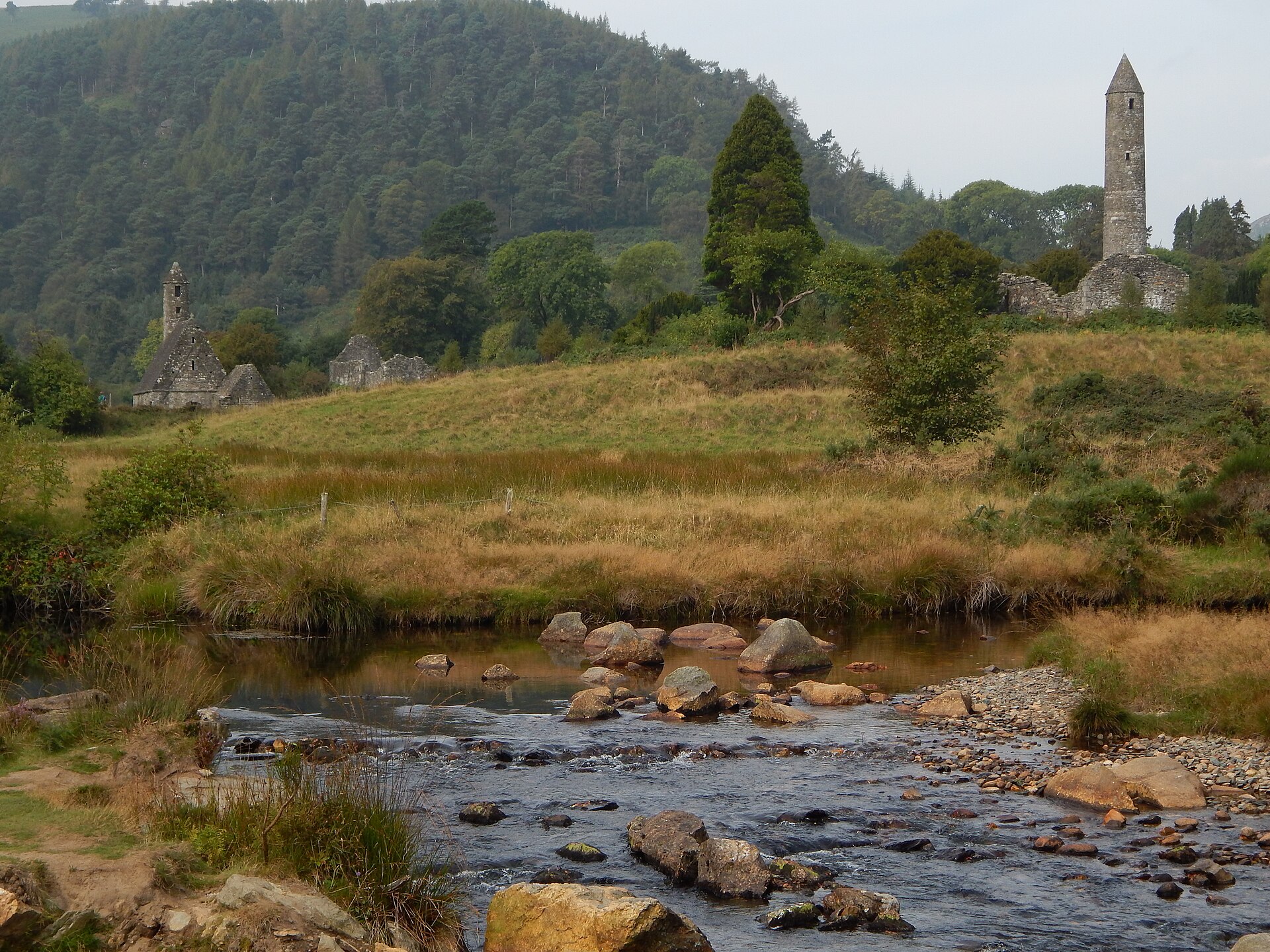
Glendalough (“Gleann Dá Loch” in Irish, “Glen of Two Lakes”) is a glacial valley 60km south of Dublin in County Wicklow. The site combines:
- Monastic City: Founded by Saint Kevin in the 6th century. The ruins include a 30-metre round tower (1066), 7 churches, a Romanesque doorway, the famous “Priest’s House” tomb, and an extensive monastic graveyard. The round tower is the most-photographed structure.
- Upper and Lower Lakes: Two glacial lakes created by the last ice age. The Upper Lake is the more spectacular — surrounded by mountain cliffs, with the Poulanass Waterfall flowing into it.
- Wicklow Mountains National Park: 23,000 hectares of bog, mountain and forest. Glendalough sits at the eastern edge.
- Walking trails: Nine waymarked routes from 30-minute lake strolls to 4-hour mountain ascents.
Saint Kevin (498-618 AD) was an Irish monk who established a hermitage here, gradually attracting followers and forming one of medieval Europe’s most important monastic centres. The site was raided by Vikings multiple times before being abandoned in the 16th century.
How to Get to Glendalough from Dublin
Wild Wicklow Tour (€45 per person)
The classic Glendalough day tour. 25 years operating; very experienced guides. Departs Dame Street at 8.50am, returns 5.30pm. Covers Glendalough (90 minutes), Powerscourt Waterfall (30 minutes), Sally Gap drive with Lough Tay viewpoint, lunch stop at Roundwood Inn (own expense). Includes admission to Glendalough Visitor Centre. Coach-style with 30-40 passengers.
Do Dublin Wicklow Tour (€42)
Similar route, slightly cheaper, similar quality. Departs O’Connell Street 8.30am. Open-top double-decker if weather permits.
Paddywagon Tours Wicklow (€38)
Budget tour brand; younger backpacker demographic. Departs Burgh Quay 9am. Covers Glendalough plus Powerscourt Waterfall. Faster turnaround, less detail in guide narration.
St Kevin’s Bus (€14 each way)
Public-style bus service direct from St Stephen’s Green to Glendalough. Departs 11.30am, returns from Glendalough 5pm. Only stop at Glendalough; no Powerscourt or Sally Gap. Best for: travellers wanting unstructured time at Glendalough for proper hiking (5+ hours at the site).
Private Driver-Guide (€380-450 per group)
Hidden Ireland Tours, Heritage Tours and several private operators provide door-to-door private driver-guide service. Same stops as the group tours but with flexibility on lunch location, pace and added stops (e.g., a quieter mountain pass). Worth it for groups of 3-4 splitting the cost.
Self-Drive (Rental Car)
1 hour 30 min from Dublin city via M11 and R755. Free parking at Glendalough Visitor Centre car park (€4 fee in peak season). Adds flexibility for hiking duration; pairs well with onward travel south to Kilkenny, Cork or Killarney.
Glendalough Walking Trails
The trails are colour-coded by difficulty:
Green Route (Lake Walk, 1.5km, 30-45 minutes, Easy)
Flat lakeside path from the Visitor Centre to the Upper Lake. Wheelchair-friendly. Best for first-time visitors and families with young children. Lakeside benches and information boards. Views of the cliffs and Poulanass Waterfall.
Yellow Route (Miner’s Road, 5km, 1.5 hours, Moderate)
Follows the Miner’s Road past the abandoned 19th-century lead mines on the south side of the Upper Lake. Returns via the lakeside path. Some climbing, mostly gentle.
Red Route (Spinc Loop, 9km, 3.5-4 hours, Challenging)
The spectacular high-level walk. Climbs steeply via wooden boardwalk steps to the Spinc ridge (485m), follows the cliff edge for several kilometres with views over both lakes and the surrounding mountains, then descends. The defining Glendalough hike but demanding: 600m of total ascent, slippery wooden steps in rain, weather-exposed ridge walking. Strong fitness required.
White Route (Spinc Extended, 11km, 4-5 hours, Challenging)
Variation of the Red Route adding an extension toward Glenealo Valley. Even more rewarding views; suitable only for experienced hikers.
Glendalough to Glenmalure Walk (12km, 4-5 hours, Challenging)
Cross-mountain hike over Mullacor (657m) to the adjoining Glenmalure valley. One-way; needs car or pre-arranged pickup at Glenmalure. Experienced hikers only.

Monastic City Highlights
- Round Tower: 30 metres tall, built around 1066. Used for warning (smoke signals), refuge (entrance 3 metres above ground), and bell-ringing. Best-preserved round tower in Ireland.
- Cathedral: Largest ruined church on site; 9th-13th century. Romanesque doorway is well-preserved.
- St Kevin’s Church (St Kevin’s Kitchen): 11th-century church with a steep stone roof and a small bell tower. Often photographed.
- Priest’s House: Small structure of disputed function; possibly a reliquary chapel or tomb.
- Cathedral Gateway: Stone gateway with sanctuary symbol on a slab inside the arch.
- Reefert Church and Saint Kevin’s Bed: 1km further west toward the Upper Lake. The cave-like “bed” is reportedly where Saint Kevin slept.
The Visitor Centre (€5 adult entry; included in Wild Wicklow Tour) houses a 17-minute audiovisual presentation and exhibits explaining the site’s history. Open 9.30am-5pm March-October, 9.30am-4.30pm November-February.

Powerscourt Estate & Gardens
Most Glendalough tour operators include a stop at Powerscourt Waterfall (121 metres, Ireland’s tallest), often combined with Powerscourt House and Gardens. The Gardens are 47 acres of Italian, Japanese and walled gardens at the foot of the Sugar Loaf mountain, regularly ranked among the world’s top 10 estate gardens.
- Powerscourt House: 18th-century Palladian mansion. Currently houses shops and a cafe; main rooms accessible via guided tours.
- Italian Garden: Tier of formal terraces overlooking the Sugar Loaf. Most-photographed garden in Ireland.
- Japanese Garden: Authentic Japanese-style design with pond, tea house, miniature pagoda.
- Pet Cemetery: Touching small graveyard for the Wingfield family’s pets dating back 150 years.
- Powerscourt Waterfall: 6km from the house; separate entry (€7 adult). Tallest waterfall in Ireland.
Most Wicklow tours stop briefly at Powerscourt Waterfall (15-30 minutes); to properly explore the Gardens needs self-drive or a private tour. Direct Powerscourt entry: Adult €15 House & Gardens, €7 Waterfall.

Sally Gap & Lough Tay
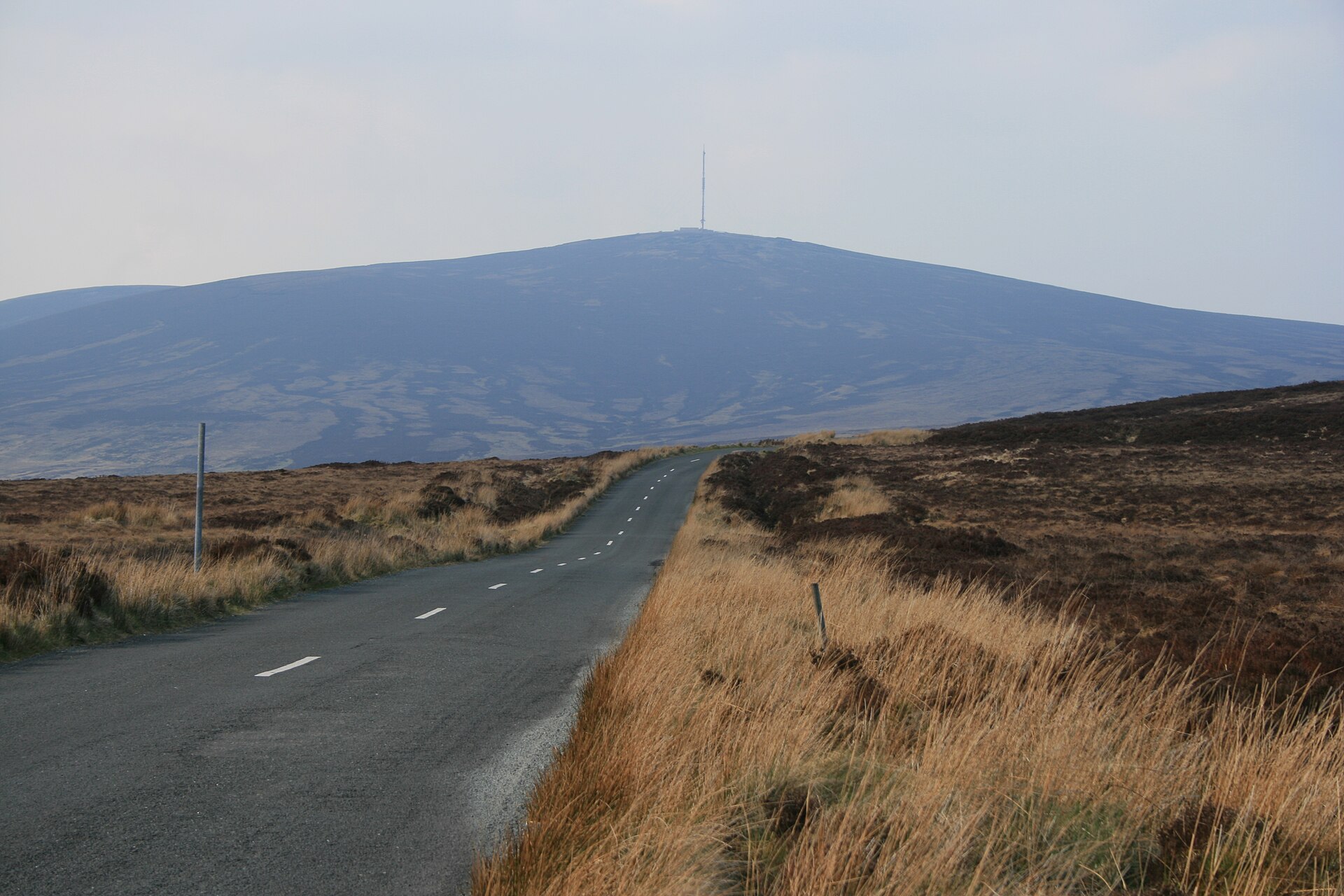
The R759 mountain road crosses the Wicklow Mountains via the Sally Gap pass (510m). Featured in Braveheart, P.S. I Love You, Excalibur and Vikings. Most Wicklow tours include the drive plus stops at:
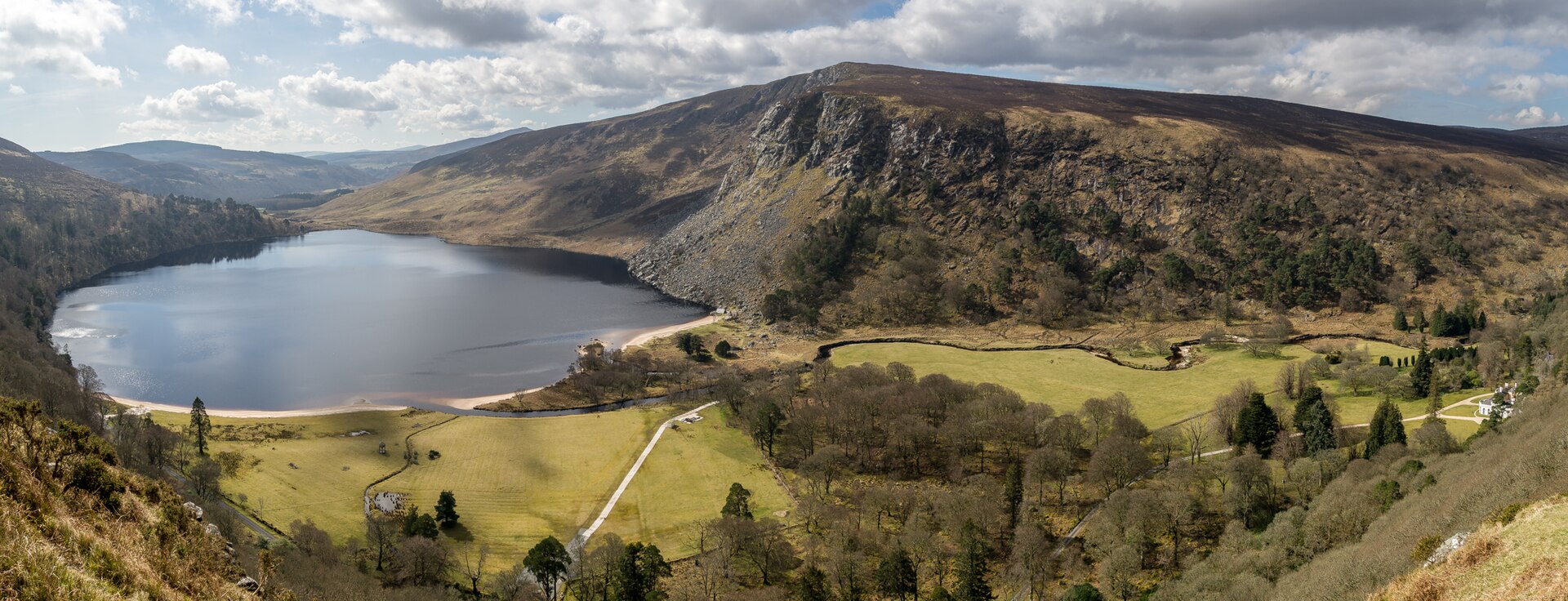
- Lough Tay (Guinness Lake): The lake’s dark peat-stained water and white sandy beach gave it the nickname. The Guinness family owned the estate around it. Filmed extensively for Vikings (the lake doubles for fjords in the series).
- Sally Gap pass: The actual mountain saddle; bleak bog scenery on either side. Photo stop.
- Glenmacnass Waterfall: Smaller waterfall visible from the road.
- The Pier Gates Viewpoint: Looking north over the Cloghernagh valley.
The Sally Gap drive is part of the appeal for many visitors — it’s scenic, atmospheric, and removes you visually from anything resembling urban Ireland. Cloud-shrouded weather is the norm; clear days are bonus.
Where to Eat in Wicklow
Roundwood Inn (Group Tour Lunch Stop)
Most Wicklow tours stop here. Solid Irish gastropub food: beef and Guinness stew, fish and chips, soup of the day. €14-22 mains. Atmospheric old pub interior.
Glendalough Hotel (Hotel-Inside Bistro)
Right beside the Visitor Centre. Bistro food, scones, soups, sandwiches. €10-22 per dish. Convenient for self-drive visitors.
Wicklow Heather (Sustainable Restaurant in Laragh)
5 minutes drive from Glendalough. Sustainability-focused Irish menu. €18-28 mains. Worth the detour.
Avoca Stores (Multiple Wicklow Locations)
Irish craft store with excellent cafes. Avoca Powerscourt (at the Estate) is the famous one; Avoca Kilmacanogue (en route from Dublin) is the headquarters. Soup, sandwiches, cakes €8-14.
Lynham’s of Laragh (Pub)
Local pub 3km from Glendalough. Pub food, comfortable atmosphere. Best for an unhurried lunch with a pint.
Sample Glendalough Day Trip Itinerary
Wild Wicklow Tour Day
- 8.50am — Tour departs Dame Street (or hotel pickup)
- 9.30am — Avoca Kilmacanogue brief stop
- 10.30am — Powerscourt Waterfall (30 minutes)
- 11.30am — Sally Gap drive with Lough Tay photo stop
- 12.45pm — Lunch at Roundwood Inn (1 hour)
- 2.00pm — Arrive Glendalough; 90 minutes free time
- 3.30pm — Tour departs Glendalough
- 5.30pm — Return to Dublin
Self-Drive Day
- 9.00am — Leave Dublin via M11
- 9.30am — Avoca Kilmacanogue coffee stop (optional)
- 10.15am — Arrive Glendalough; park at Visitor Centre
- 10.30am — Visitor Centre exhibition (45 minutes)
- 11.15am — Monastic City exploration (45 minutes)
- 12.00pm — Choose your trail: Green Route walk (45 minutes) or Red Route Spinc Loop (3.5-4 hours)
- 1.00pm or 4.00pm — Lunch at Glendalough Hotel or Wicklow Heather
- 2.30pm or 5.30pm — Drive to Powerscourt Waterfall
- 3.30pm or 6.30pm — Powerscourt Waterfall (60 minutes)
- 4.30pm or 7.30pm — Drive back to Dublin via R755 and M11
When to Visit Glendalough
April-May: Spring colours, bluebells in the woods, mild weather, smaller crowds.
June-August: Peak season; queues at the Visitor Centre 11am-3pm. Pre-book tours 5-7 days ahead.
September-October: Autumn colour through the woods around the lakes. Excellent shoulder season.
November-March: Cool, often wet, but the monastic ruins are atmospheric in winter mist. Visitor Centre has limited hours; check before going.
What to Wear for Glendalough
- Walking shoes or low boots: Wet, uneven trails year-round. Trainers are okay in dry summer; not in winter.
- Waterproof jacket with hood: Wicklow weather changes faster than Dublin’s. Pack regardless of forecast.
- Layers: Even in July, the higher elevations are 5℃ cooler than Dublin city.
- Hat and gloves: Essential October-April for the higher trails.
- Daypack with water and snacks: Limited refreshment options at the Visitor Centre.
- Map and offline GPS: The Spinc Loop has limited signage on the high-level section.
Glendalough Accessibility
- Visitor Centre: Step-free and wheelchair-accessible.
- Monastic City: Mostly accessible via paved paths; some uneven gravel sections.
- Lower Lake (Green Route): Wheelchair-friendly flat path.
- Upper Lake: Accessible via the same flat lake path.
- Spinc and Red Route: NOT wheelchair-accessible — steps and steep terrain.
- Accessible parking: Marked spaces at Visitor Centre car park.
- Toilets: Accessible toilets at the Visitor Centre.
Common Glendalough Mistakes
- Underestimating the Spinc Loop: 4 hours, 600m ascent, slippery wooden steps. Not suitable for casual hikers.
- Visiting in heavy rain without preparation: The Spinc steps become genuinely slippery. Stick to lakeside trails in wet weather.
- Skipping the Visitor Centre: The 17-minute film provides essential context for the monastic ruins. Watch it before exploring.
- Trying to do Glendalough plus Cliffs of Moher in one day: Geographically impossible; Glendalough south of Dublin, Cliffs of Moher 200km west. Plan separate days.
- Underdressing: Wicklow Mountains weather is more severe than Dublin. Layer and waterproof regardless of city forecast.
- Bringing only credit cards: Some Wicklow village shops and pubs are cash-only; carry €30-50 backup cash.
- Not booking peak-season tours: Wild Wicklow Tour sells out 3-5 days ahead June-August. Pre-book online.
Comparing the Tour Options
- Wild Wicklow Tour (€45): Best guides, most expert narration, comfortable coach. Ideal for first-time visitors.
- Do Dublin Wicklow (€42): Open-top double-decker option (weather-dependent), good value, similar route.
- Paddywagon (€38): Cheapest option; younger backpacker demographic; less detailed guiding.
- St Kevin’s Bus (€28 return): Cheapest of all but Glendalough only (no Powerscourt or Sally Gap). Best for hikers wanting maximum time at the site.
- Private driver-guide (€380-450 per group): Door-to-door flexibility, best for groups of 3-4 sharing cost.
- Self-drive (€30-80 rental + fuel): Maximum flexibility, your own pace, can extend the route to Glenmalure or Avondale.
Extending the Trip
- Glendalough + Powerscourt + Sally Gap: The standard Wild Wicklow Tour day.
- Glendalough overnight: Stay at Glendalough Hotel or Lynham’s of Laragh. Allows early-morning Spinc Loop hike before tourist crowds arrive.
- Glendalough + Avondale: Charles Stewart Parnell’s ancestral estate; 30 minutes south of Glendalough. Forest park with treetop walk added in 2022.
- Glendalough + Kilkenny: Continue south for 90 minutes via R755 and N9 to the medieval city. Overnight in Kilkenny; explore there next day.
- Glendalough + Brittas Bay: Detour east to the Wicklow coast for beach + ice cream stop before returning to Dublin.
Related Reading
For more day trip planning, see Howth Cliff Walk, Cliffs of Moher from Dublin, Powerscourt Day Trip, 3 Days in Dublin, One Week Dublin Itinerary, and Renting a Car in Dublin.
Glendalough Through History
Glendalough’s 1,400-year history makes it one of Europe’s longest continuously-revered monastic sites. Saint Kevin established his hermitage here in the late 6th century, attracting followers within a generation. By the 10th century the site had become a major centre of European learning, sending missionaries across Britain and continental Europe; pilgrims came from Wales, Brittany and northern Iberia. The site was raided four times by Vikings (878, 977, 1014, 1116) before the Normans incorporated it into the Diocese of Dublin in 1214.
The monastic city was finally suppressed by Henry VIII in 1539 during the dissolution of the monasteries, though local devotion continued. The ruins were rediscovered as a tourist attraction in the Victorian era; the railway from Dublin to Wicklow (now closed) brought pilgrims and tourists in the 19th century. The Office of Public Works took stewardship in 1880; the modern Visitor Centre opened in 1986.
The Saint Kevin pilgrim tradition continues — the patronal feast day (3 June) draws pilgrims who walk between the upper and lower lakes carrying small candles. The Glendalough rounds (a circular walking devotion past nine stations on the monastic site) remain practised by some local Catholics. Even non-religious visitors describe a contemplative atmosphere at the site that distinguishes it from other Wicklow attractions.
Wicklow Mountains National Park
Glendalough sits inside Wicklow Mountains National Park, Ireland’s second-largest national park at 230 square kilometres. The park covers most of the high mountain country south of Dublin: peaks reaching 925m at Lugnaquilla (Ireland’s highest mountain outside Kerry), extensive blanket bog, the Glenmalure and Glendalough glens, and several lake-filled glacial valleys. Wildlife includes red deer, sika deer, peregrine falcons, ravens and the occasional reintroduced golden eagle.
The park doesn’t require an entry fee — you’re free to walk most areas without payment. The OPW-managed Visitor Centre at Glendalough charges €5 for the indoor museum experience; the trails themselves and most viewpoints are free. The longer Wicklow Way walking trail (127km from Dublin to Carlow) passes through Glendalough; a 4-day section walk Dublin-to-Glendalough is increasingly popular with British and continental hikers, with overnight stops at Knockree Hostel, Roundwood and Glendalough.
Combining Glendalough with Nearby Spots
Self-drive visitors with a full day can add nearby Wicklow attractions to the standard Glendalough route. Avoca Handweavers (the original 1723 mill, 15km east) offers Irish craft shopping and an excellent cafe. The original Avoca site is more atmospheric than the chain’s Dublin store. Vale of Avoca — the meeting-of-the-waters featured in Thomas Moore’s 19th-century poem — lies 25km south; brief stop for photos. Brittas Bay beach on the Wicklow coast is 30 minutes from Glendalough; sandy beach, ice cream, and a refreshing afternoon stop in summer.
For a more energetic full day, drive from Glendalough to Glenmalure — the deeper, less-visited valley to the south. The Glenmalure Lodge offers excellent pub lunches; the surrounding peaks of Lugnaquilla and Mullacor draw serious hikers. Round-trip from Dublin: 5-6 hours of driving plus a full Glendalough exploration. Best suited to visitors with a hire car and good weather forecasts.
Glendalough Day Trip from Dublin: FAQ
How do I get to Glendalough from Dublin?
Three main options: Wild Wicklow Tour (€45 coach tour with multiple stops), St Kevin’s Bus (€28 return; Glendalough only), or self-drive (1 hour 30 min via M11 and R755). Multiple tour operators run organised day trips; St Kevin’s Bus is best for serious hikers wanting more time at the site.
Is Glendalough worth visiting?
Yes — Glendalough combines 6th-century monastic ruins, two glacial lakes, walking trails for all abilities, and one of Europe’s most photographed round towers. The site is consistently rated Ireland’s best day trip from Dublin and the southern equivalent of the Cliffs of Moher.
How long should I spend at Glendalough?
Minimum 2 hours for Visitor Centre, monastic ruins and lake walk. 3-4 hours for moderate hiking (Yellow Route). 5-6 hours for the Red Route Spinc Loop. Combined with travel and lunch, a full day-trip totals 8-9 hours.
What is the best Glendalough tour from Dublin?
Wild Wicklow Tour (€45) is the most highly-rated coach tour with experienced guides, comfortable vehicles and the right stops (Powerscourt, Sally Gap, Glendalough). For independence, self-drive or St Kevin’s Bus give more time at the site itself.
How hard is the Spinc Loop walk?
Challenging — 9km, 3.5-4 hours, 600m of total ascent, wooden boardwalk steps that become slippery in rain. Strong fitness required. The views from the high ridge make it the defining Glendalough walk for confident hikers.
Can I do Glendalough and Powerscourt in one day?
Yes — most Wicklow tours combine both stops with Glendalough (90 minutes) and Powerscourt Waterfall (30 minutes). Self-drive allows more time at either site. Adding Powerscourt House and Gardens fully requires a separate full day.
What should I wear to Glendalough?
Sturdy walking shoes or low boots, waterproof jacket with hood, layers (Wicklow Mountains are 5℃ cooler than Dublin), hat and gloves October-April. Pack water and snacks.
When is the best time to visit Glendalough?
April-May or September-October for mild weather and smaller crowds. June-August is peak season; pre-book tours 5-7 days ahead. The Visitor Centre operates 9.30am-5pm March-October, with limited winter hours.
Keep Reading
- Best Day Tour Companies from Dublin Compared — the Wicklow and Glendalough loop is the best-value tour day in the market.
- Dublin Mountains Hikes — the same range, an hour closer, and reachable on a city bus.
Photo Credits
Glendalough monastic site: Cathedral & Church Glendalough by Ianfhunter, CC BY 4.0, via Wikimedia Commons.
Wicklow road at Sally Gap: IMG Kippure0232w by Sarah777 (English Wikipedia), Public domain, via Wikimedia Commons.
Lough Tay and Luggala: Guinness Estate Luggala Ireland by Giuseppe Milo, CC BY 2.0, via Wikimedia Commons.
Lean na Comharthaí — Keep following the signs