Day Trips from Dublin Without a Car: Best Train, DART & Bus Escapes
Turais Lae ó Bhaile Átha Cliath gan Carr

Ar an gComhartha Seo — On this sign
- Quick Answer: The Best Car-Free Day Trips
- First: Understand Your Leap Card Zone
- The Two Stations Problem
- Day Trips on the DART
- Longer Day Trips from Dublin Without a Car: Intercity Rail
- Day Trips from Dublin Without a Car, by Bus
- When an Organised Tour Is Actually the Right Answer
- What Does Not Work Without a Car
- How to Plan the Day
- Costing It Out
- Three Ready-Made Days
- Gotchas
- Day Trips from Dublin Without a Car FAQ
- Keep Planning
- Keep Reading
You do not need a car in Ireland. You need one for the Ring of Kerry and the back roads of Connemara, and you emphatically do not need one to get out of Dublin for a day. The DART runs along thirty miles of coastline that most cities would build a national park around. Intercity trains reach a medieval city in ninety minutes and another capital in two hours. And the handful of places genuinely awkward to reach on public transport — Newgrange chief among them — are awkward for reasons a hire car does not entirely solve either.
This guide is the honest, mode-by-mode version of day trips from Dublin without a car: what the DART reaches inside your Leap Card zone, what the intercity network reaches beyond it, which places need a bus and which of those buses are actually usable, where an organised coach tour is genuinely the right answer rather than a cop-out, and — the section nobody writes — which trips simply do not work without a car, so you can stop researching them. Every journey time here is door to door from the city centre.
Quick Answer: The Best Car-Free Day Trips
The four that work best, in order: Howth on the DART for a cliff path and a fishing harbour twenty-five minutes from Connolly; the Dún Laoghaire–Dalkey–Killiney run on the same line south for a village, a castle and the best free view in the county; Kilkenny from Heuston in ninety minutes for a genuinely medieval city you can walk end to end; and Belfast from Connolly in two hours and eight minutes for a different country and a different currency without a border check.
After that, Glendalough by dedicated bus, Malahide by DART, Bray by DART (the cliff path to Greystones is closed until further notice because of landslides, though the DART still serves both ends), and Powerscourt by a train-plus-bus combination that works for the house and gardens but not for the waterfall. The best day trips from Dublin without a car are the ones where the transport is the easy part, and on this list that is most of them — the DART and the two intercity stations do almost all the work.
| Destination | How | Time each way | Verdict |
|---|---|---|---|
| Howth | DART from Connolly | ~25 min | The best short trip in Ireland |
| Dalkey and Killiney | DART south | ~30 min | Best variety per kilometre |
| Malahide | DART north | ~25 min | Best with children |
| Bray and Greystones | DART to either end | ~45 min | Cliff walk closed until further notice |
| Kilkenny | Train from Heuston | ~1h 30m | Best full-day rail trip |
| Belfast | Enterprise from Connolly | ~2h 08m | Best big-city day out |
| Glendalough | Dedicated bus from the city | ~1h 45m | Best scenery, limited timetable |
| Powerscourt | DART plus local bus | ~1h 15m | House and gardens only, not the waterfall |
| Galway | Train from Heuston | ~2h 30m | Doable, long, better as an overnight |
| Newgrange | Organised tour, realistically | ~1h by tour | The one that genuinely needs a tour |
| Cliffs of Moher | Organised coach tour | 13–14 hours total | A very long day, but the only way |
First: Understand Your Leap Card Zone
This is the thing that determines what a day trip costs, and almost nobody explains it before people start booking. The Leap Card covers the Dublin short-hop zone: all of Dublin Bus, the Luas, the DART and the commuter rail services inside that boundary. The zone stretches roughly as far as Balbriggan in the north, Greystones and Kilcoole in the south, and Maynooth and Hazelhatch to the west.
Inside it, a day trip costs a couple of euro each way and you tap on and off. Outside it — Drogheda, Kilkenny, Galway, Belfast, Wexford — you buy a separate intercity ticket, which costs considerably more and is much cheaper booked online in advance than at the machine. Zone boundaries do change, so check the current one before you rely on it.
The practical upshot: the coastal DART trips are effectively free if you already have a Leap Card, and the intercity trips are a real expense that rewards booking ahead. The cheap transport guide has the money-saving detail and getting around Dublin covers the network as a whole.
The Two Stations Problem
Dublin has two intercity terminals and confusing them is the single most common mistake visitors make. Connolly, on the north side near Busáras, serves the north and east: Belfast, Drogheda, Dundalk, Sligo, Rosslare — and it is also the DART’s central station. Heuston, west along the quays, serves the south and west: Kilkenny, Cork, Galway, Limerick, Waterford, Westport.
They are about thirty-five minutes apart on foot, or one ride on the Luas Red Line, which runs directly between them. Getting this wrong costs you the train. If you are catching an early departure from Heuston, allow for the Luas rather than assuming a fifteen-minute walk. Irish Rail for tourists covers ticket types and seat reservations in detail.

Day Trips on the DART
The DART is the best asset Dublin has for this, and it accounts for more of the good day trips from Dublin without a car than every other mode combined. It is a single electrified line running along the coast from Malahide and Howth in the north to Greystones in the south, it is inside your Leap Card zone for its whole length, and it runs every ten to twenty minutes. Everything below is reachable on it with no connection and no booking.
Howth — 25 minutes north
A working fishing harbour on a peninsula with a cliff path around the head, a Sunday market, seals in the harbour and some of the best seafood near Dublin. The cliff loop comes in several lengths from about 6 to 12 kilometres and the views back across the bay are the best on the north side. This is the single best short trip from the city and it is genuinely better in cold weather. See the Howth village guide for what to do besides walk.
Dún Laoghaire, Dalkey and Killiney — 20 to 35 minutes south
A Victorian harbour with two granite piers, the Forty Foot swimming place beside the Martello tower where Ulysses opens, a medieval castle in Dalkey village, a tiny harbour facing an island with wild goats on it, the Vico Road, and the free summit view from Killiney Hill. Four DART stations, seven kilometres of walking, and more variety than any other trip on this list. The full southside guide has the route.
Malahide — 25 minutes north
A castle set in 260 acres of parkland with a walled garden, a village with a marina and a good high street, and an estuary walk. Easier with children than anything else on this list — the grounds are free, the castle tour is short, and there is a playground. The Malahide guide covers tickets and timings, and day trips with kids has more of the same.
Bray and Greystones — 45 minutes south
The classic version was to take the DART to Bray, walk the cliff path around Bray Head to Greystones and take the DART back. That path is closed, with no reopening date, but the DART still serves both ends, so Bray and Greystones each work as a seaside stop on their own. The Bray to Greystones guide has the latest on the path. Greystones is the southern end of the Leap zone, so this stays inside your card.
Skerries and the northern commuter line
Beyond the DART’s Malahide terminus, the northern commuter service continues to Rush and Lusk, Skerries and Balbriggan, all still inside the short-hop zone. Skerries is the pick: a harbour town with two restored windmills, a mill complex you can tour, a good beach and a strong food scene, about forty minutes out and almost never on a visitor’s list. It is the closest thing to a secret on this page.
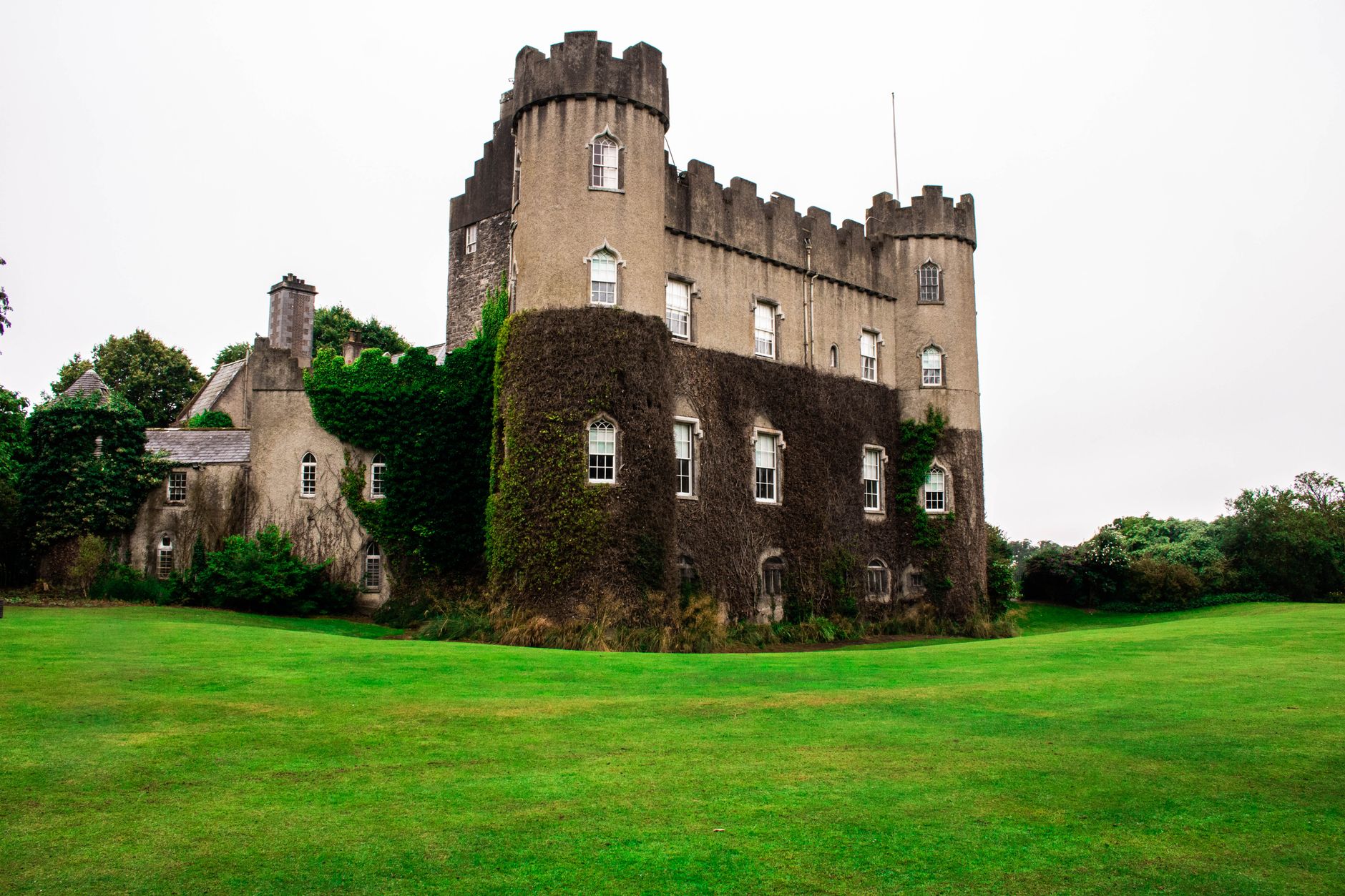
Longer Day Trips from Dublin Without a Car: Intercity Rail
Beyond the Leap zone, the intercity network opens up. Book online and in advance — Irish Rail’s cheapest fares are advance web fares tied to a specific train, and the walk-up price at the machine is materially higher.
Kilkenny — 1 hour 30 minutes from Heuston
The best full-day rail trip from Dublin, and it is not close. Kilkenny is a genuinely medieval city, small enough to walk end to end in twenty minutes, with a castle in the middle of it, a thirteenth-century cathedral, a well-preserved medieval mile of lanes, a serious craft and design scene and a good number of pubs. The station is a ten-minute walk from the castle. Nothing about this trip requires any onward transport at all. See Kilkenny from Dublin.
Belfast — 2 hours 8 minutes from Connolly
The Enterprise runs roughly hourly, fifteen times a day Monday to Saturday from about 06:00 and eight times on Sunday, arriving at Belfast Grand Central. There is no border check, no passport control and no ceremony — but the currency changes to sterling and your mobile roaming may not follow you. A 07:00 departure and an 18:00 return gives you eight hours, which covers Titanic Belfast, a black-taxi tour, City Hall and lunch. The Enterprise guide has fares and logistics; the Belfast day trip guide has the itinerary.
Galway — 2 hours 30 minutes from Heuston
Doable in a day and better as an overnight. Two and a half hours each way leaves you six or seven hours in the city, which is enough for the Latin Quarter, the Spanish Arch, the Claddagh and a long lunch, and not enough for Connemara or the Aran Islands. If Galway is the point, stay the night; if it is a box to tick, the train works. See Galway from Dublin.
Drogheda — 35 minutes from Connolly
Rarely listed and worth knowing about. Drogheda is a substantial medieval town on the Boyne with St Laurence’s Gate, the preserved head of St Oliver Plunkett in St Peter’s Church, and — critically — it is the rail gateway to the Boyne Valley. The town itself is a comfortable half-day on foot from the station. The problem, as below, is getting from Drogheda to Newgrange.

Day Trips from Dublin Without a Car, by Bus
Buses cover what the rails do not, and two of them are genuinely good.
Glendalough — about 1 hour 45 minutes
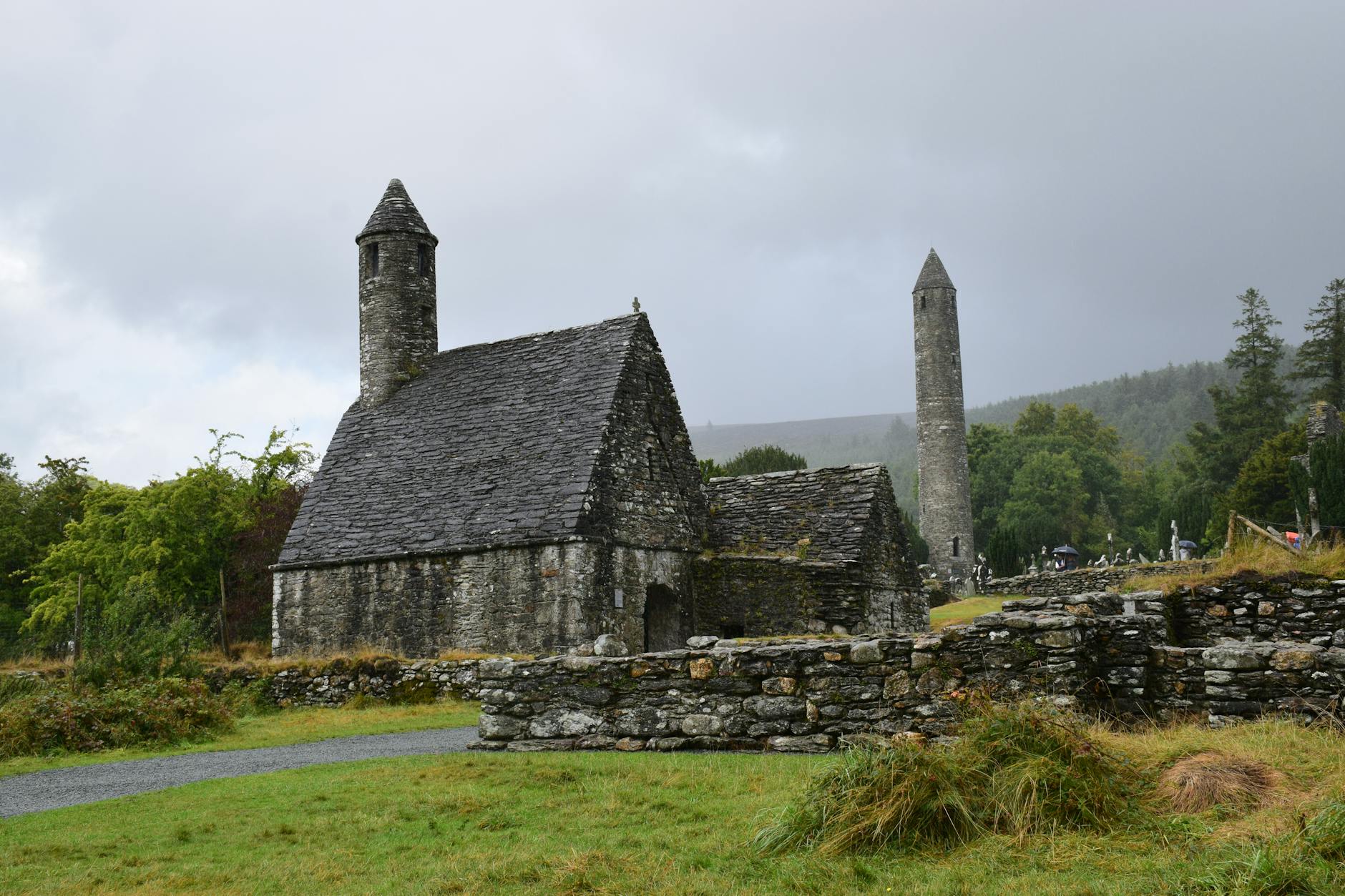
A sixth-century monastic settlement with a round tower, a graveyard of high crosses and two glacial lakes in a valley in the Wicklow Mountains, and it is the most beautiful place within two hours of Dublin. A dedicated bus service runs from the city centre out to the valley, with a limited number of departures a day and more in summer — check the operator’s current timetable before you plan, because the frequency is the constraint on this trip rather than the journey.
The site itself is free and open, the visitor centre is paid, and the walks range from a flat twenty-minute stroll to the upper lake to a five-hour mountain route. Winter is genuinely better than summer here — the valley empties, the lakes go black, and it looks like what it is. The Glendalough guide has the walks and the timings.
Powerscourt — about 1 hour 15 minutes
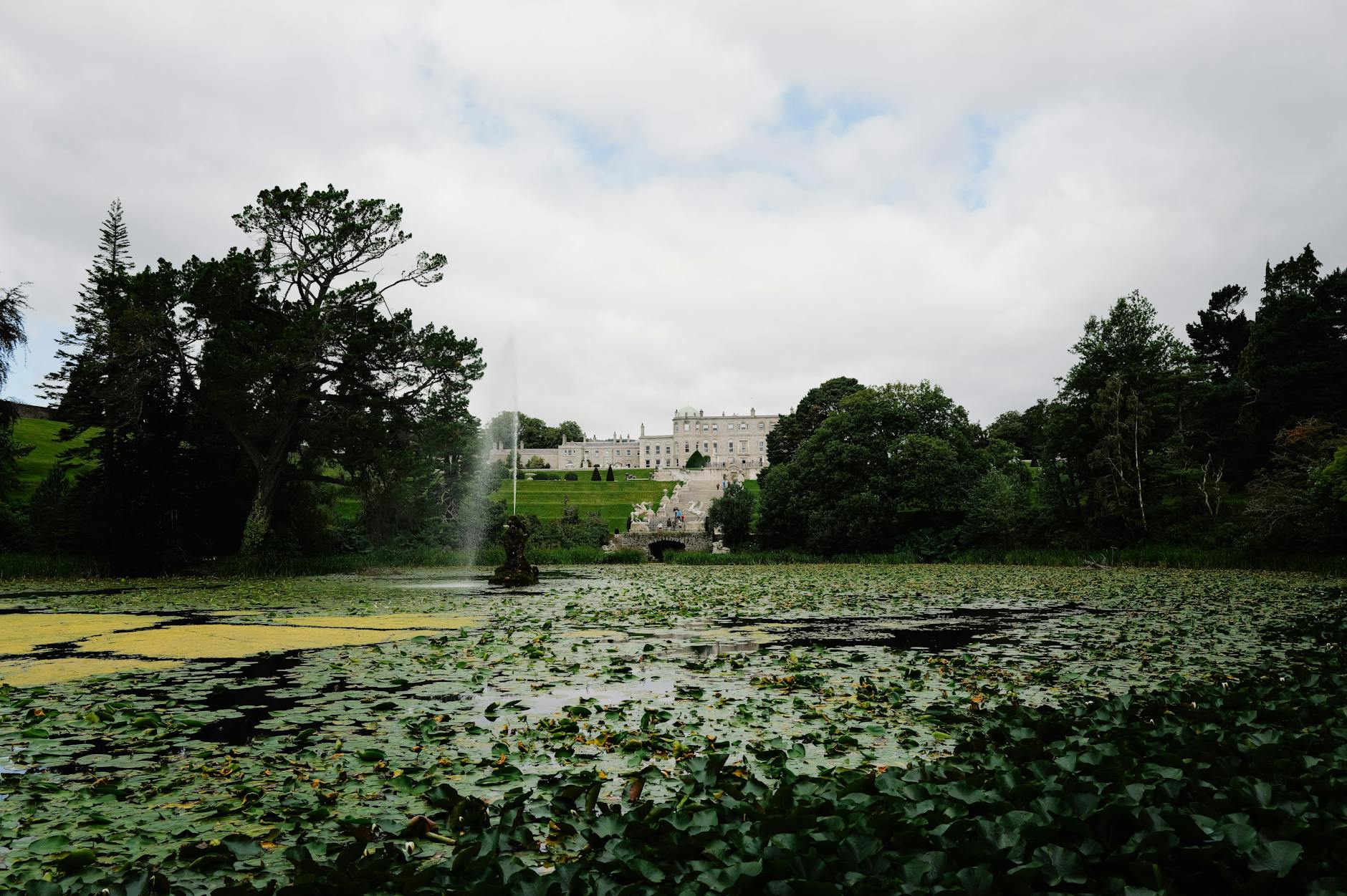
Here is where you need to read carefully, because the two Powerscourt attractions are not in the same place. Powerscourt House and Gardens is about a kilometre and a half from Enniskerry village, and Enniskerry is reachable by a city bus from Dublin or by DART to Bray plus a local connection. That works: bus or train, then a twenty-minute walk, then the gardens. Powerscourt Waterfall — Ireland’s highest — is a further six kilometres from the house, on a road with no footpath and no bus. It is not walkable and it is not reachable without a car or a taxi.
So: the house and gardens are a legitimate car-free day trip, the waterfall is not, and any guide that lists “Powerscourt” without separating the two is misleading you. See the Powerscourt guide for the site itself.
Trim — about 1 hour
Bus Éireann runs from Busáras to Trim in County Meath, and Trim Castle — the largest Anglo-Norman castle in Ireland, and the one from Braveheart — is a five-minute walk from where the bus stops. This is one of the most straightforward car-free castle trips from Dublin and it is on almost nobody’s list. The Trim and Boyne Valley guide covers it properly.
When an Organised Tour Is Actually the Right Answer
There is a reflex among independent travellers that a coach tour is a failure of planning. For two specific destinations it is simply the correct decision, and for a third it is defensible.
Newgrange — the one that genuinely needs a tour
Brú na Bóinne, the Neolithic passage tomb complex in the Boyne Valley, is older than the pyramids and it is the single hardest major site in Ireland to reach independently. The reasons are structural: you cannot drive or walk to the tombs at all — access is exclusively by shuttle bus from the Brú na Bóinne Visitor Centre near Donore — and the visitor centre itself is several kilometres from the nearest useful public transport, with no connecting service. Tickets must be booked in advance and the tomb tours sell out.
So even with a hire car you are parking at a visitor centre and taking a shuttle. Without one, an organised tour from Dublin is not a compromise; it is the practical option, and it usually bundles in Trim Castle or Monasterboice on the same day. See the Newgrange guide for what the site actually is and how booking works.
The Cliffs of Moher — a very long day, and only by coach
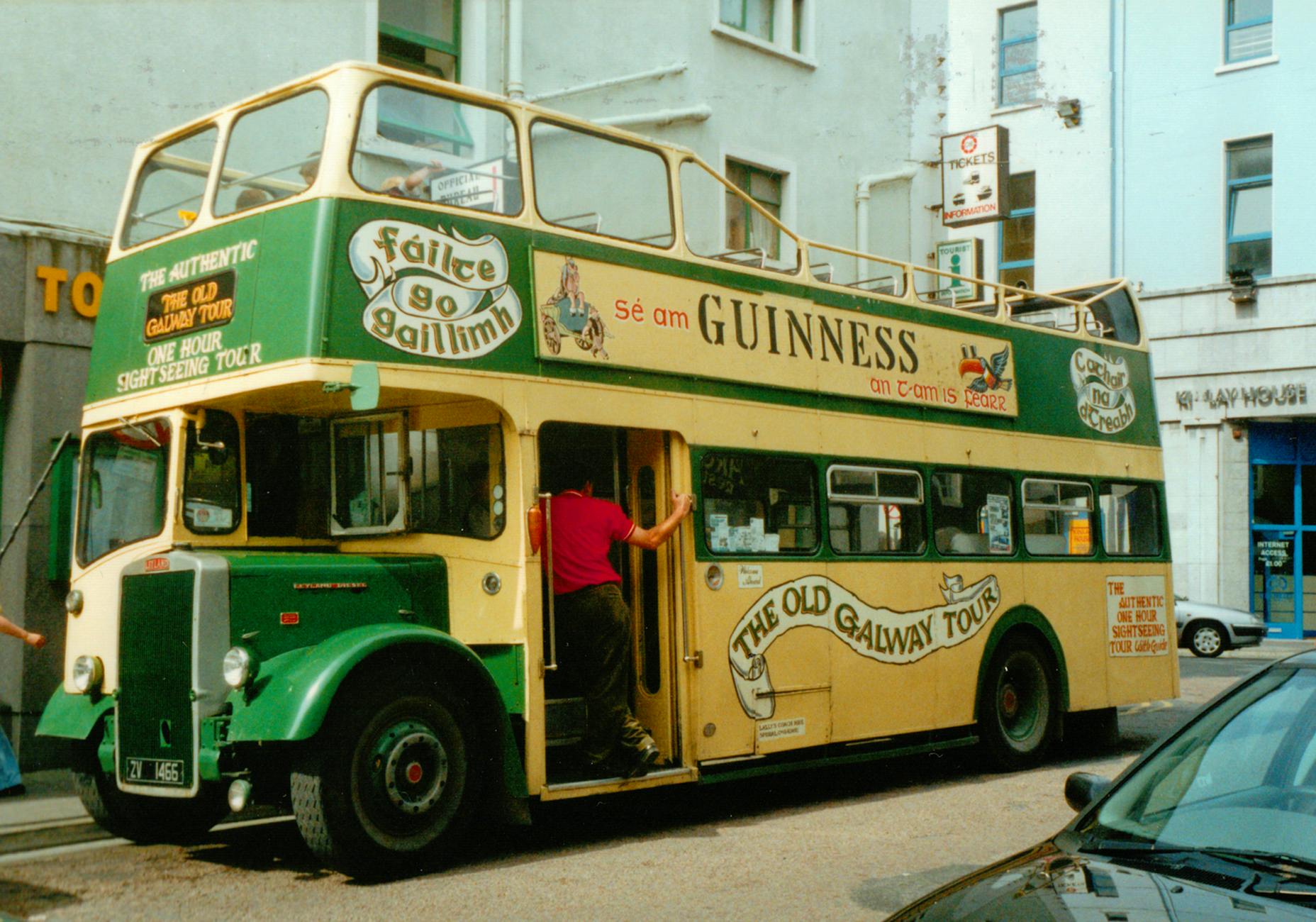
The cliffs are on the west coast of County Clare, roughly 260 kilometres away, and there is no rail station near them. The independent version is a train to Galway or Limerick and then a regional bus, which turns a long day into an impossible one. The coach tours run about thirteen to fourteen hours door to door from Dublin, leaving around 07:00 and returning around 20:00, usually with stops in the Burren and Galway on the way.
Be honest with yourself about whether you want to spend fourteen hours doing this. In winter, with eight hours of daylight, a substantial part of the journey happens in the dark. The cliffs are magnificent and the day is exhausting. See the Cliffs of Moher guide before you book.
The Giant’s Causeway — better split over two days
Reachable independently in theory: the Enterprise to Belfast, then a Translink service up the Antrim coast. In practice that is four hours of travel each way and leaves almost no time at the site. The coach tours from Dublin run a similarly punishing schedule to the Cliffs of Moher day, usually taking in the Carrick-a-Rede rope bridge and the Dark Hedges. The better version is to stay a night in Belfast and do the Causeway from there — see the Causeway guide.
What Does Not Work Without a Car
Every guide to this subject should carry a list like this, and almost none do. An honest accounting, so you can stop researching:
- Powerscourt Waterfall. Six kilometres from the house on a road with no path and no bus.
- Most of the Wicklow Mountains beyond Glendalough. The Sally Gap, Lough Tay, the military road — spectacular, and served by nothing.
- Brú na Bóinne independently. Shuttle-only access from a visitor centre with no bus connection.
- The Ring of Kerry, Dingle, Connemara. Not day trips from Dublin under any circumstances, with or without a car.
- Rural beaches and coves. The Dublin coast is well served; the Wicklow and Meath coasts largely are not.
- Anything requiring two rural bus connections. Rural Irish bus timetables are built for schoolchildren and shoppers, not for a visitor’s day-return.
If your itinerary has several of these on it, the calculation changes and a hire car for two or three days may genuinely be worth it — see the car hire guide, which is clear-eyed about the costs, the insurance and the fact that you will not want to drive after a distillery tour.
How to Plan the Day
| Step | What to do |
|---|---|
| Check daylight first | In winter you have about six usable hours; in summer, sixteen |
| Check the weather | Most of these are outdoor days with no indoor fallback |
| Book intercity ahead | Advance web fares are much cheaper than the machine |
| Confirm Sunday timetables | Rail and bus both thin out significantly |
| Note the last train back | The one number that ends a day badly if you get it wrong |
| Carry a Leap Card | For everything inside the short-hop zone |
| Eat before rural stops | Glendalough and the smaller villages close early |
Two general rules. First, always check the return timetable before you commit to the outbound one; the last train from Kilkenny or Galway is earlier than people assume, and the last bus from Glendalough is much earlier. Second, build every day around the weather rather than the plan — Dublin’s weather is the variable that decides whether a coastal walk is a highlight or an ordeal, and none of these trips is worth doing in a named storm.
Costing It Out
Day trips from Dublin without a car are dramatically cheaper than the alternative, and it is worth seeing the shape of it. A DART return inside the Leap zone is a few euro. An advance intercity return to Kilkenny or Belfast is a modest fare booked ahead and considerably more on the day. A full-day organised coach tour to the Cliffs of Moher or the Causeway is by far the largest single expense on this list.
Against that, a hire car is the daily rate plus insurance plus fuel plus parking, and Irish hire-car insurance excesses are notoriously high. For one or two day trips, public transport wins outright. For four or five spread across a week, and especially with a group splitting the cost, a car starts to compete — but not for the trips in this guide, which are the ones that work best without one. See what a Dublin trip costs and the budget guide.

Three Ready-Made Days
Three complete days out, in ascending order of how much planning each one needs.
- The best cheap day. DART to Howth at 09:30, cliff loop before lunch, fish and chips on the West Pier, back into town by 16:00. Cost: a Leap fare and lunch. Nothing to book.
- The best full day. Early train from Heuston to Kilkenny, castle and cathedral in the morning, the medieval mile and lunch, the craft quarter in the afternoon, evening train back. Book the train ahead.
- The best big day. 07:00 Enterprise from Connolly to Belfast, Titanic Quarter, black-taxi tour, City Hall, 18:00 train home. Book weeks ahead if it is a weekend.
If you have a week, the one-week itinerary spaces these out sensibly, and Dublin and Ireland itineraries covers the version where you leave the city properly.
Gotchas
The things that turn a good day out into a wasted one, nearly all of them checkable the night before.
- Connolly is not Heuston. North and east versus south and west, thirty-five minutes apart, one Luas Red Line ride.
- Your Leap Card stops at the zone boundary. Roughly Balbriggan, Greystones and Maynooth. Beyond that is a separate ticket.
- Powerscourt Waterfall is not reachable by bus. The house and gardens are. They are six kilometres apart.
- Newgrange is shuttle-access only from a visitor centre with no public transport connection. Take a tour or take a car, and pre-book either way.
- Sunday timetables are thinner everywhere. The Enterprise drops from fifteen services to eight; rural buses drop much further.
- Check the last service back before you leave, not while you are standing on a rural platform at dusk.
- Book intercity rail online in advance. Walk-up fares are meaningfully higher.
- High winds cut the coastal DART and cancel outdoor days generally. If a storm is named, change the plan.
- Winter gives you six usable hours of daylight. A fourteen-hour Cliffs of Moher tour in January is mostly a coach in the dark.
- Rural villages close early. Eat before you get to Glendalough, not after.
Day Trips from Dublin Without a Car FAQ
What are the best train day trips from Dublin?
Kilkenny from Heuston in about ninety minutes is the best of them — a walkable medieval city with a castle ten minutes from the station and no onward transport needed. Belfast from Connolly in two hours and eight minutes is the best big-city option. On the DART, Howth, Malahide, Dalkey and Bray are all inside your Leap Card zone and take under forty-five minutes. Galway is doable at two and a half hours each way but works better as an overnight.
Can you reach Belfast by train from Dublin?
Yes, on the Enterprise from Dublin Connolly to Belfast Grand Central, roughly hourly — fifteen departures a day Monday to Saturday from around 06:00, eight on Sundays — taking about 2 hours 8 minutes. There is no border check on the train. What does change is the currency, from euro to pound sterling, and possibly your mobile roaming, since the UK sits outside EU roaming rules. Book online in advance for the cheapest fares; booking closes 80 minutes before departure.
Which day trips can you do on a Leap Card?
Everything inside the Dublin short-hop zone, which runs roughly to Balbriggan in the north, Greystones and Kilcoole in the south, and Maynooth and Hazelhatch in the west. That covers Howth, Malahide, Skerries, Dún Laoghaire, Dalkey, Killiney, Bray and Greystones — which is to say most of the best short trips out of the city. Anything beyond the boundary, including Drogheda, Kilkenny, Galway and Belfast, needs a separate intercity ticket. Check the current zone before you rely on it.
Can you get to Glendalough without a car?
Yes. A dedicated bus service runs from the city centre to the valley in about an hour and three-quarters. The constraint is frequency rather than journey time — there are only a few departures a day, with more in summer, so check the operator’s current timetable and note the last bus back before you set out. The monastic site is free and open, the visitor centre is ticketed, and the walks run from twenty minutes to five hours.
Can you visit Newgrange without a car?
Realistically, only on an organised tour. Access to the tombs is exclusively by shuttle bus from the Brú na Bóinne Visitor Centre, which sits several kilometres from any useful public transport with no connecting service. Even visitors with a hire car park at the centre and take the same shuttle, so a tour is not a compromise here — it is the practical route, and most tours bundle Trim Castle or Monasterboice into the same day. Tickets must be booked in advance and sell out.
Is the Cliffs of Moher doable as a day trip from Dublin without a car?
Only by organised coach, and it is a thirteen-to-fourteen-hour day: leaving around 07:00, returning around 20:00, usually with stops in the Burren and Galway. There is no rail station near the cliffs and the train-plus-regional-bus version does not fit into a day. The cliffs are worth seeing; the day is genuinely tiring, and in winter a large part of it happens in the dark. Consider an overnight in Galway or Doolin instead.
Do I need a car in Ireland?
Not for Dublin and not for the day trips in this guide. You need one for the Ring of Kerry, Dingle, Connemara, the rural Wicklow Mountains and anything requiring two country bus connections. For a city break with two or three days out, public transport is cheaper, easier and does not involve Irish hire-car insurance excesses. If your itinerary is genuinely rural, hire for the rural section only rather than for the whole trip.
How much do car-free day trips from Dublin cost?
DART trips inside the Leap zone cost a few euro each way, which makes Howth, Malahide and Dalkey close to free if you already have a card. Intercity returns to Kilkenny or Belfast are moderate when booked online in advance and noticeably more at the ticket machine on the day. Full-day organised coach tours to the Cliffs of Moher or the Giant’s Causeway are the largest single expense here. Compared with a hire car plus insurance, fuel and parking, public transport wins comfortably for one or two trips.
What is the easiest day trip from Dublin?
Howth. Twenty-five minutes on the DART from Connolly with no booking, no connection and no planning, arriving at a working fishing harbour with a cliff path, seals, a Sunday market and good seafood. You can decide to go at ten in the morning and be walking by eleven. Malahide is the equivalent for anyone travelling with young children, since the parkland is free and the castle tour is short.
Are there day trips from Dublin without a car that work in winter?
Most of them, and several are better. Glendalough in January is emptier and more atmospheric than in July. The Howth cliff path is at its best in cold, clear weather. Kilkenny and Belfast are city days that do not depend on sunshine at all. What winter takes away is daylight — about six usable hours — which rules out the fourteen-hour coach tours and shortens everything else. Check for named storms, which cut the coastal DART and close exposed paths.
Can I do two day trips in one day?
On the DART, yes. Howth in the morning and Malahide in the afternoon works because they are on the same northern branch and both are inside your Leap zone. Dún Laoghaire, Dalkey and Killiney are effectively three trips already, strung along one line. What does not work is combining anything intercity — Kilkenny plus anything, or Belfast plus anything, is a day that ends at midnight with nothing properly seen.
Keep Planning
These guides go deeper on the individual trips covered above.
- Day Trips from Dublin — the parent guide, with and without a car.
- The DART — the line that does most of the work here.
- The Leap Card — what it covers and where the zone ends.
- The Howth Cliff Walk — the best short trip in Ireland.
- Dún Laoghaire, Dalkey and Killiney — the southside coastal run.
- Kilkenny from Dublin — the best full-day train trip.
- Dublin to Belfast by Train — the Enterprise, fares and timings.
- Glendalough — the best scenery within two hours.
- Renting a Car in Dublin — when it is genuinely worth it.
- Getting Around Dublin — the network, station by station.
Check timetables and fares directly: Iarnród Éireann for DART and intercity rail, Transport for Ireland for the Leap Card and the journey planner, Bus Éireann for regional services, Translink for the Northern Ireland side, and Heritage Ireland for OPW site opening hours including Brú na Bóinne.
Keep Reading
- Trim Castle & the Boyne Valley — the 111 bus gets you to the castle; Tara is harder, and here is why.
- Day Trips from Dublin: The Complete Guide
- The DART: Dublin’s Coastal Rail Line
Lean na Comharthaí — Keep following the signs