How to Save Money on Dublin Hotels (2026 Booking Guide)
Ar an gComhartha Seo — On this sign
- When to Book for Cheapest Dublin Hotel Rates
- Non-Refundable Rates: The Single Biggest Saver
- Choose Cheaper Dublin Neighbourhoods
- Consider Alternative Accommodation Types
- Use Hotel Loyalty Programmes
- Use Multiple Comparison Sites
- Avoid Friday-Saturday Premium
- Consider Package Deals
- Free Upgrade Tricks
- Avoid Hidden Hotel Charges
- Advanced Money-Saving Tricks
- Real-World Booking Example
- Adapting Strategy to Each Season
- Strategies for Group Travellers
- Common Dublin Hotel Booking Mistakes
- Save Money on Dublin Hotels: FAQ
- Photo Credits
Hotels typically make up the single largest expense for any Dublin trip. A three-night city centre stay can run anywhere from €225 to €900 depending on dates and booking strategy. The good news: significant savings are available across every season and budget level if you know the right techniques. This comprehensive guide details every proven method for cutting Dublin hotel costs, from booking-day strategy and seasonal timing to neighbourhood selection and alternative accommodation types. Whether you’re a budget backpacker hunting for the cheapest possible bed or a comfort-conscious traveller trying to stretch a mid-range budget further, these strategies can save you €50–200 per night.
For the wider picture, our complete Dublin budget guide sets this in context alongside everything else worth planning around.
When to Book for Cheapest Dublin Hotel Rates
Dublin hotel booking timing matters enormously. For most travel dates, the sweet spot is booking 6–10 weeks before arrival. This window gives hotels enough time to gauge demand — if they’re underselling, they’ll cut rates to fill rooms; if they’re overselling, you’ve locked in lower advance rates. Booking 3–4 months ahead typically pays slightly more than the 6–10 week sweet spot because hotels haven’t yet decided whether to discount. Booking within 2 weeks of travel is risky — rates either crash (if a hotel has unsold rooms) or surge (if it’s filling up).
For peak Dublin dates — St Patrick’s Day, Christmas/New Year, Six Nations rugby weekends, major concerts — book 4–6 months ahead. Hotels routinely sell out during these windows and walk-up rates can be triple normal levels. For low season (January, February, November), you can wait until 2–4 weeks before arrival without significant penalty — sometimes you’ll catch genuine last-minute deals as hotels desperately try to fill empty rooms. For the full seasonal pricing picture, see our Cheapest Time to Visit Dublin guide.
Non-Refundable Rates: The Single Biggest Saver
Non-refundable rates (also called “advance purchase” or “pay now and save”) typically discount Dublin hotel rooms by 15–25% versus standard flexible rates. The trade-off is you pay upfront and lose the money if you cancel. For confirmed travel dates with no chance of changes, this is the single biggest saving you can make on a Dublin hotel. A €160-per-night hotel commonly drops to €120–130 on the same dates with non-refundable booking.
Pair non-refundable booking with travel insurance covering trip cancellation (most policies do for an extra €5–15) and you essentially eliminate the risk. Always read the cancellation terms carefully — some non-refundable rates still allow date changes for a small fee, while others lock you in completely. Booking.com and the official hotel website usually offer the deepest non-refundable discounts.
Choose Cheaper Dublin Neighbourhoods
Hotel prices in Dublin vary dramatically by neighbourhood. Temple Bar, Trinity College area, and the streets around Grafton Street carry the heaviest premium — you’ll pay 30–50% more for the same hotel quality versus suburbs just 15–25 minutes away by public transport. Strategic neighbourhood selection alone can save €30–80 per night.
Best value neighbourhoods for hotels
- Drumcondra — 15 minutes by bus to the city centre. Hotels here typically run €90–140 versus €160–220 in the centre. Croke Park stadium nearby.
- Smithfield — A 10-minute walk to the city centre with Luas tram access. Hotels €110–160 versus €180–240 centrally.
- Phibsborough/Glasnevin — 15 minutes by bus. Cheap suburban hotels €80–130.
- Ballsbridge — Trinity College area but the upscale-suburban version. Hotels €130–180.
- Donnybrook — Quiet, leafy, 25-minute bus. Hotels €100–140.
- Inchicore/Kilmainham — West of city centre near Kilmainham Gaol. Hotels €90–130.
- Dún Laoghaire (DART access) — 25 minutes by DART to centre. Sea-view hotels €110–160.
The strict trade-off is transport time. Add 30–50 minutes per day to your sightseeing schedule and budget €10–15 in transport costs over a 3-night stay. Even with these added costs, neighbourhood selection typically saves €50–200 across a trip. For full neighbourhood pros and cons, see our Best Dublin Neighbourhoods to Stay guide.
Consider Alternative Accommodation Types
Sometimes the biggest savings come from skipping hotels entirely. Dublin offers a deep range of alternative accommodation types that can dramatically cut your nightly costs.
Hostels and Apart-hotels
Modern Dublin hostels offer private double rooms at €55–90 a night — cheaper than the equivalent hotel and often nicer thanks to recent renovations. Generator Dublin, Jacobs Inn, and Abbey Court offer private rooms with en-suite bathrooms in central locations. Apart-hotels like Premier Inn, Maldron Apart-Hotel, and Staycity provide kitchen-equipped studios from €110–150 a night — comparable to mid-range hotels but with the ability to cook breakfast and other meals. Over a 4-night stay, self-catering breakfast alone saves €40–60.
B&Bs and guesthouses
Dublin’s traditional bed and breakfasts and small guesthouses offer remarkable value, particularly in Drumcondra, Phibsborough, Glasnevin, and along the DART line. Most run €75–130 a night for a double room including hearty Irish breakfast. The breakfast inclusion alone is worth €15–20 per person versus a cafe. B&Bs offer a more personal experience than hotels — owners often share local restaurant recommendations and pub suggestions. Book through dublinbedandbreakfasts.com or B&B Ireland for the widest selection.
Airbnb and short-term rentals
Dublin Airbnbs work best for stays of 4+ nights when the cleaning fee gets diluted across more nights. Two-bedroom apartments at €160–220 a night divide between 4 people at €40–55 each. Self-catered breakfast and at least one home-cooked dinner saves another €30–50 per day across a group. Look for Superhost-rated listings with consistent 4.8+ ratings to avoid cleaning fee scams and listing-quality issues. See our Dublin Apartment Rentals guide for full details.
Use Hotel Loyalty Programmes
Hotel loyalty programmes deliver meaningful savings even for occasional travellers. Marriott Bonvoy, Hilton Honors, IHG One Rewards, and Accor Live Limitless all operate properties in Dublin and offer free member-only rates that typically beat standard rates by 5–15%. Sign-up is free and member rates apply from your very first booking.
If you’re a business traveller earning loyalty points elsewhere, redeeming points for free Dublin nights delivers extraordinary value in low season. A standard Dublin Hilton charges 30,000–40,000 Honors points for a free night in January versus 60,000–80,000 in July. Marriott similar. Credit card sign-up bonuses on Marriott, Hilton, and Amex Membership Rewards cards routinely yield 2–5 free Dublin nights for new applicants. Stack a co-branded credit card with member-only rates for the deepest savings.
Use Multiple Comparison Sites
No single hotel booking site consistently offers the lowest Dublin prices. Compare at least 3–4 sites before booking: Booking.com, Hotels.com, Expedia, and the hotel’s own website. Trivago and Kayak aggregate prices but don’t always show the deepest discounts — verify their best-price listing on the actual booking site. Sometimes Hotels.com’s Rewards programme (free night for every 10 nights) makes their slightly-higher rate the better long-term value.
Check the hotel’s own website last. Many hotels guarantee to match or beat third-party rates and offer perks like free breakfast, late checkout, or room upgrades not available through OTAs. Email or call directly to ask “is the rate I see on Booking.com the best you can do for direct booking?” — you’ll be surprised how often the answer is no. Smaller independent Dublin hotels especially appreciate direct bookings and offer the most aggressive direct-only deals.

Avoid Friday-Saturday Premium
Friday and Saturday nights in Dublin command 40–80% premiums over weeknight rates at the same hotels. A Tuesday-Wednesday-Thursday stay at the same hotel as a Friday-Saturday weekend can cost half as much. If your travel timing is flexible, mid-week stays save dramatic amounts. Even shifting your weekend trip to Sunday-Monday-Tuesday delivers significant savings — Sunday nights see steep drops as business travellers haven’t yet arrived.
For a long weekend Dublin city break, the sweet spot is Sunday-Monday-Tuesday-Wednesday rather than Thursday-Friday-Saturday-Sunday. You’ll save 30–40% on hotels and the city is less crowded for sightseeing. Restaurants take reservations more easily, popular attractions like the Guinness Storehouse have shorter queues, and pubs have a more authentic local atmosphere.
Consider Package Deals
Flight-plus-hotel packages on Expedia, Booking.com, and TripAdvisor often discount Dublin hotels by 10–20% versus standalone booking. The hidden discount comes from airlines and hotels selling distressed inventory together at lower prices than they’d offer individually. Use these for short city breaks where you don’t care about earning frequent flier miles or hotel loyalty points (packaged bookings typically don’t qualify for full rewards programmes).
Tour operators like ClickAndGo, Topflight, and Sunway sell Dublin packages from UK and continental Europe departure points that frequently beat assembling the same trip yourself. Their bulk-buying power gets them hotel rates 30–40% below standard online prices. The trade-off: they lock you into specific hotels and dates. For flexibility, individual booking still wins.
Free Upgrade Tricks
Even after locking in your rate, you can often save money by getting upgrades to rooms or perks worth more than you paid. Specific techniques include:
- Email the hotel 1–2 days before arrival mentioning a special occasion (anniversary, birthday, first visit). Many hotels upgrade automatically.
- Ask politely at check-in if any upgrades are available. Late afternoon check-ins (3–5pm) get the best chances as hotels know which rooms are available.
- Join the hotel loyalty programme on arrival — members often get small but genuine perks like free WiFi, bottled water, or extended late checkout.
- Book a basic room with the loyalty programme — loyalty members get upgrade priority over standard guests when rooms are available.
- Check in late on Sunday or Monday nights — hotels with empty premium rooms often upgrade business travellers automatically.
These techniques don’t guarantee upgrades but cost nothing to try. A typical 4-star Dublin hotel upgrade from standard to deluxe is worth €30–60 a night — meaningful savings if you score them.
Avoid Hidden Hotel Charges
Hotel ancillary charges can quickly inflate your total Dublin spending. Common Dublin hotel charges to watch out for and avoid:
- Hotel breakfast at €15–25 per person — eat at a nearby cafe for €7–10 instead.
- Hotel parking at €25–35 per night — avoid by skipping a car rental in central Dublin or using NCP/Q-Park public garages at €15–20.
- Mini-bar €5–8 per soft drink — pick up the same items at Tesco/Centra for €1.50–2.50.
- Room service surcharges of 15–20% — use Deliveroo or Just Eat instead for delivery to the hotel lobby.
- Hotel laundry at €8–15 per shirt — use a high street laundrette for €15–25 for a full bag.
- In-room movies €15–20 — use Netflix, Apple TV+ etc on your laptop instead.
- City taxes — Dublin doesn’t currently charge a tourist tax, but some hotels include service charges. Check rate breakdown.
Advanced Money-Saving Tricks
For really committed bargain hunters, several advanced techniques can extract additional savings:
Error fares and pricing glitches
Booking sites occasionally list Dublin hotel rooms at clearly mistaken low prices — €30 for what should be €180. These “error fares” are usually honoured if you book quickly. Sign up for hotel deal alert sites like SecretFlying, The Flight Deal, or Holiday Pirates which monitor and post these glitches. Most pricing errors get fixed within 6–12 hours, so act fast when you spot them.
Opaque bookings and last-minute apps
Sites like Priceline and Hotwire offer Dublin hotels at 30–50% discounts but you don’t see the specific hotel name until after booking. You choose a star level and neighbourhood. Risky but cheap. HotelTonight specifically targets last-minute (within 7 days) Dublin hotel availability with the same opaque-but-discounted model. Best for flexible travellers who can adapt to whatever hotel they end up with.
Referral codes and welcome credits
New users of Booking.com, Airbnb, and Hotels.com routinely get €25–50 welcome credit. Family or friends who already use these services can refer you for additional credits on both sides. Stacking welcome credits with low-season rates can deliver one nearly-free Dublin night for first-time users of these platforms. Read the fine print — some credits expire 30–60 days after issuance.
Real-World Booking Example
Here’s how stacking the techniques above plays out in practice. A flexible-rate, peak-season, city-centre 4-star Dublin hotel booking might list at €220 a night. Applying the strategies in this guide: switch to mid-week dates (-€60), choose Drumcondra suburb (-€40), book non-refundable (-€20), use Marriott Bonvoy member rate (-€15), book through travel package (-€15). Final rate: €70 a night — roughly one-third the original price. Over a 4-night stay, that’s €600 in savings, money you can redirect to better food, attractions, or simply a longer trip. For an even more comprehensive budget breakdown, see our Dublin Trip Cost guide.
Adapting Strategy to Each Season
The most effective Dublin hotel-saving strategies shift slightly with the season. In peak summer (June–August), advance booking is essential — the city often runs at 90%+ occupancy and walk-up rates can be punishing. Focus on booking 8–12 weeks ahead and prioritising non-refundable rates, which see their biggest summer discounts. Loyalty programme nights also stretch furthest in summer, when paid rates spike but redemption rates stay relatively stable.
In shoulder seasons (April–May, September–October), the booking 6–10 week sweet spot delivers genuine deals. Look for special promotional rates that hotels run to fill rooms between events. In low season (November, January–February), the calculus flips — flexible rates often match non-refundable rates as hotels simply want bookings. This is the only window where booking 1–3 weeks ahead is genuinely safe and sometimes cheapest. Last-minute apps like HotelTonight pay off most in these months.
Strategies for Group Travellers
Groups of 4 or more travelling to Dublin together have unique savings opportunities individuals don’t. The first is splitting accommodation between two-bedroom apartments rather than separate hotel rooms. A €220-per-night 2-bed Dublin Airbnb hosts four people at €55 each versus €110+ each in separate hotel rooms. Larger 3–4 bedroom Dublin holiday homes in residential neighbourhoods like Drumcondra, Glasnevin, and Stoneybatter rent for €280–400 a night — under €100 per person for groups of 4–6.
For larger groups (8+ people), contact hotels directly to ask about group rates. Most Dublin hotels offer 10–20% discounts on group blocks of 5+ rooms, plus often free meeting space or breakfast inclusions. The group hotel sales team (separate from standard reservations) handles these inquiries. Mention your dates, total room count, and any flexibility you have on hotel choice for the most competitive quotes.
Common Dublin Hotel Booking Mistakes
Even experienced travellers make a handful of expensive Dublin hotel booking mistakes. The most costly is booking too early without comparing recent prices — rates 4–6 months out often exceed 6–10 week prices because hotels haven’t yet adjusted to demand. Another mistake is ignoring suburban hotels entirely — many travellers fixate on Temple Bar or Trinity College proximity and miss massive savings in Drumcondra, Phibsborough, or Inchicore that add only 15 minutes to their daily transit. Booking solely on third-party sites without checking direct hotel rates is another common error.
Travellers also frequently underestimate the impact of breakfast and parking on total trip cost. A €180-per-night hotel can quickly become €220 once you add €20 breakfast and €25 parking. Always calculate the all-in nightly cost when comparing options. Self-catering accommodation often wins these all-in comparisons even when its headline price is higher than a hotel. Finally, many travellers forget to check the local event calendar before booking — concerts at the 3Arena and matches at Aviva Stadium can spike specific weekends. Sites like Songkick and Aviva Stadium event listings show fixtures and concerts that affect hotel pricing.
Save Money on Dublin Hotels: FAQ
What’s the cheapest time to book a Dublin hotel?
Book 6–10 weeks before arrival for most dates — this is the sweet spot when hotels assess demand and adjust prices. For peak dates (St Patrick’s, Christmas, Six Nations weekends), book 4–6 months ahead. For low season (January, February, November), you can often wait until 2–4 weeks ahead for last-minute deals.
Is it cheaper to book directly with Dublin hotels?
Sometimes. Many Dublin hotels guarantee to match or beat third-party booking rates and add perks like free breakfast or late checkout. Email or call directly and ask for the best direct rate. Smaller independent hotels especially favour direct bookings. For chain hotels, compare loyalty programme rates with third-party sites.
How much can I save by staying outside central Dublin?
Hotels in Drumcondra, Phibsborough, Inchicore, Donnybrook, and similar neighbourhoods typically cost 30–50% less than equivalent central hotels — saving €30–80 per night. The trade-off is 15–25 minutes of public transport each way to attractions. Most travellers find this acceptable given the savings.
Are Dublin Airbnbs cheaper than hotels?
For groups of 3+ staying 4+ nights, yes — significantly. Per-person costs in a 2-bedroom Dublin Airbnb often run €40–55 a night versus €90–140 in a hotel. For solo travellers or couples on shorter stays, hostels with private rooms often beat Airbnb’s combined nightly rate and cleaning fee.
Should I book non-refundable rates in Dublin?
Yes, if your travel dates are confirmed. Non-refundable rates typically discount 15–25% versus flexible rates. Pair with trip cancellation insurance (an extra €5–15 on most policies) to essentially eliminate the risk. Read terms carefully — some non-refundable rates still allow date changes for a small fee.
What hotel chains have loyalty programmes in Dublin?
Marriott Bonvoy operates Dublin properties including the Westin and Aloft. Hilton Honors has DoubleTree Dublin and Hilton Garden Inn. IHG One Rewards has the Crowne Plaza Dublin Airport. Accor Live Limitless has the Pullman and Mercure Dublin. All offer free member-rate discounts and points redemption.
Are package deals cheaper for Dublin?
Flight-plus-hotel packages on Expedia, Booking.com, and TripAdvisor often save 10–20% versus booking separately. Tour operators like ClickAndGo and Topflight can save 30–40% on packaged Dublin city breaks from UK departure points. The trade-off is reduced flexibility and typically no loyalty programme credit.
How do I get a hotel upgrade in Dublin?
Email the hotel 1–2 days before arrival mentioning any special occasion. Ask politely at check-in for available upgrades. Late afternoon check-ins (3–5pm) get the best results. Join the hotel loyalty programme on arrival for upgrade priority. None of these guarantee upgrades, but they cost nothing to try.
Photo Credits
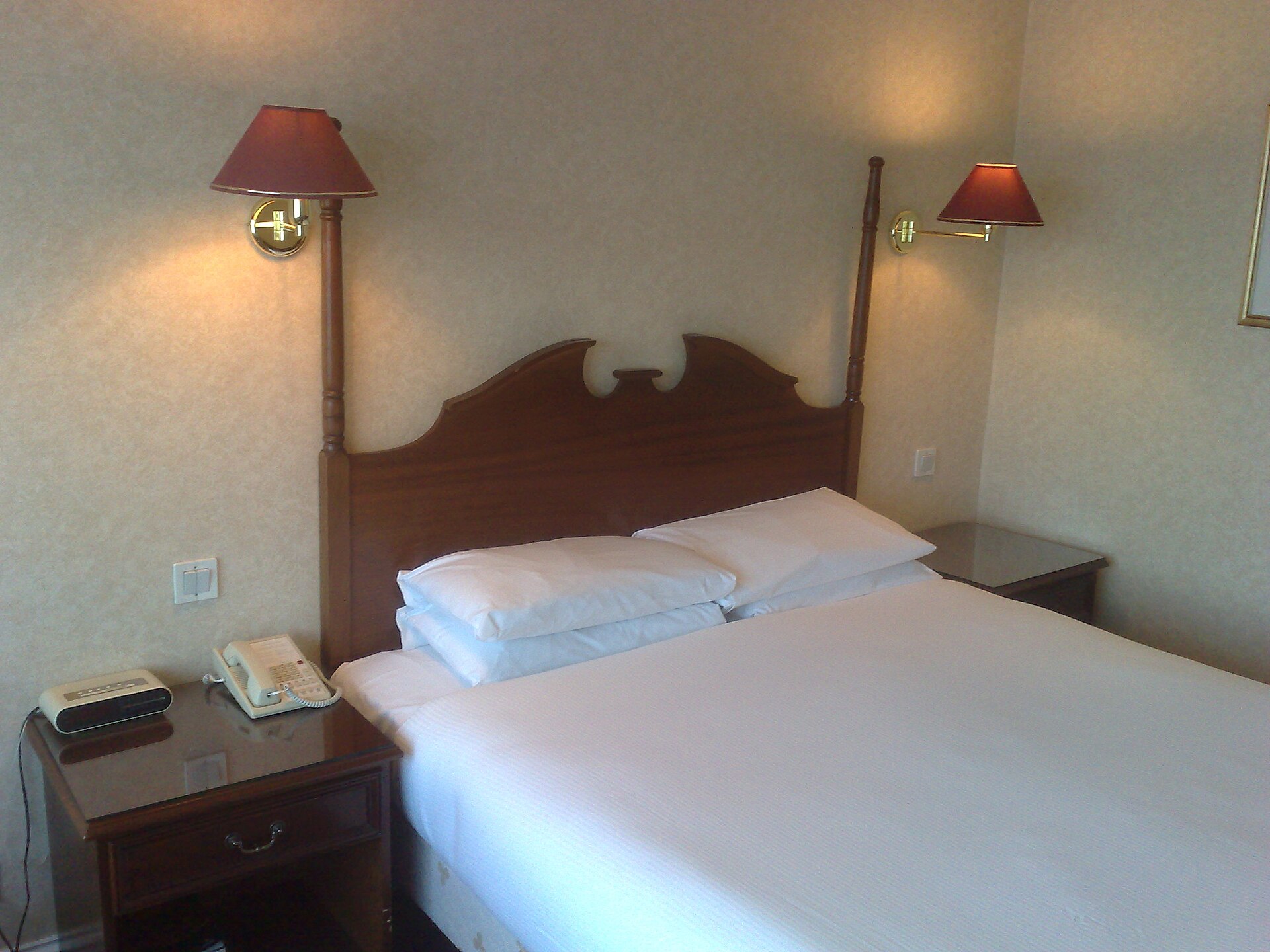
A Burlington Hotel bedroom: Burlington Hotel Bed (3171851812) by Sean MacEntee, CC BY 2.0, via Wikimedia Commons.
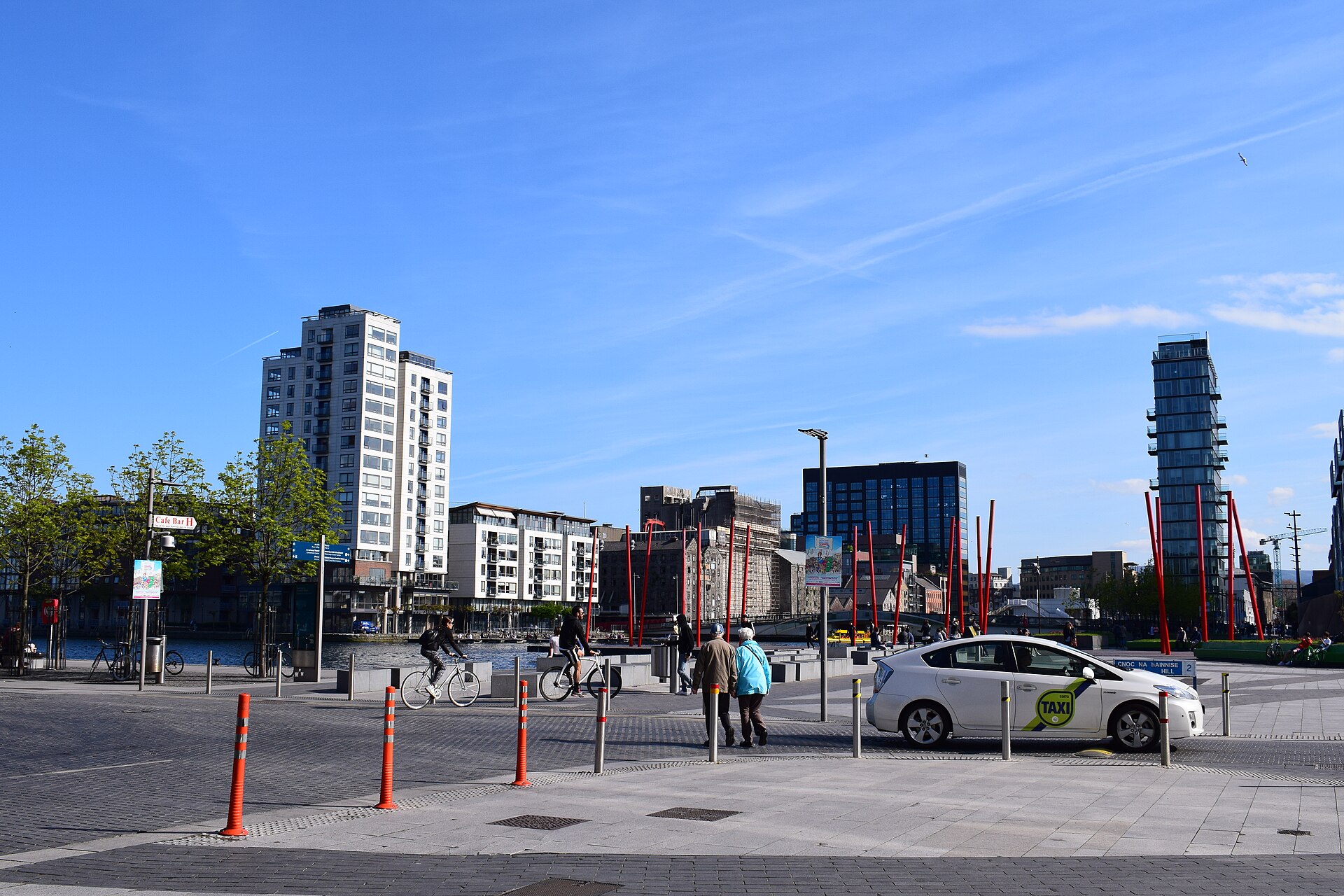
Apartments around Grand Canal Dock: Grand Canal Docks, Dublin, Ireland by MarioMagdic, CC0, via Wikimedia Commons.
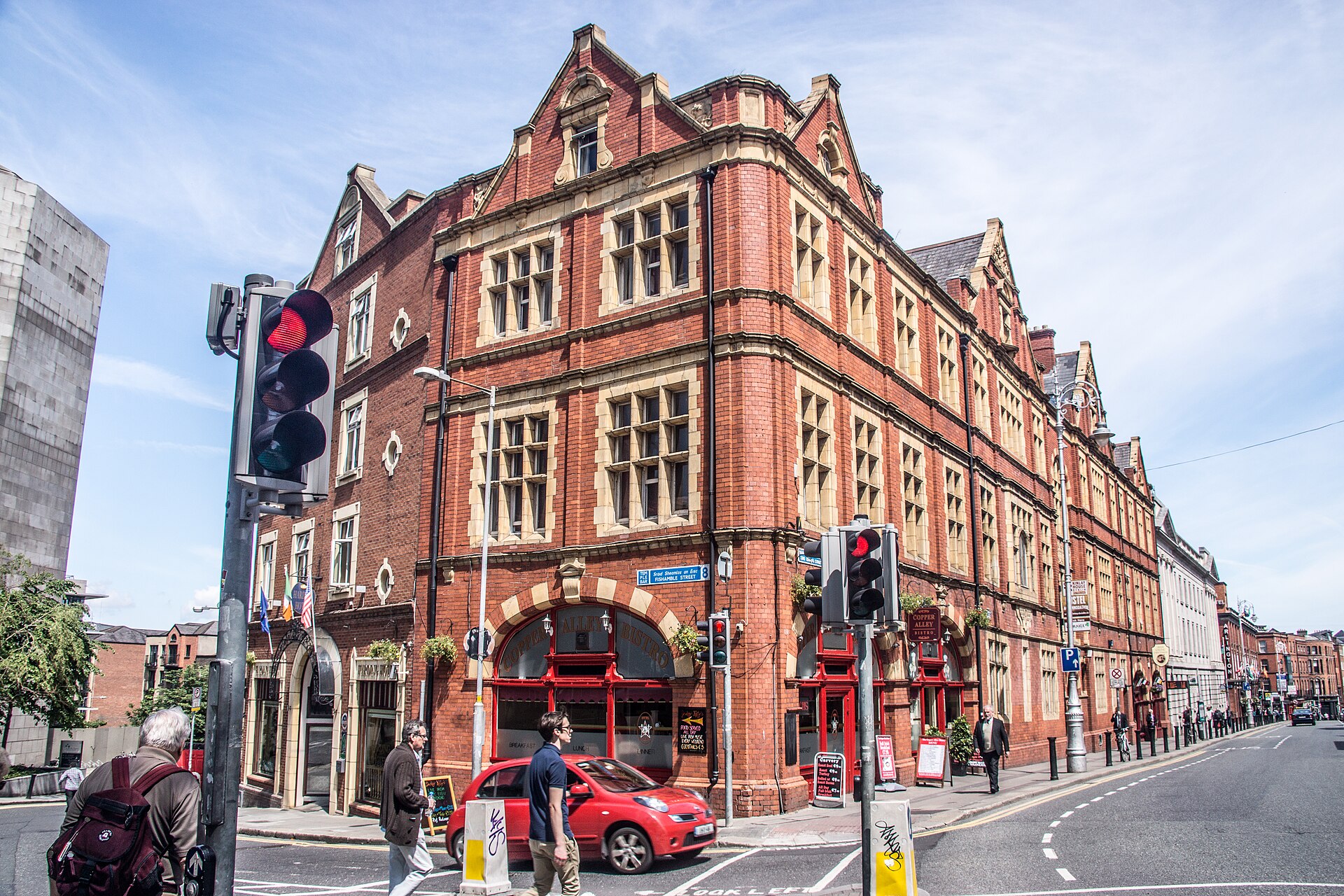
Kinlay House hostel corner: Kinlay House Hostel – Lord Edward Street (Dublin) – panoramio by William Murphy, CC BY-SA 3.0, via Wikimedia Commons.
Lean na Comharthaí — Keep following the signs