James Joyce’s Dublin: A Literary Walking Tour (2026)
Ar an gComhartha Seo — On this sign
- Why James Joyce Matters to Dublin Visitors
- James Joyce Tower and Museum, Sandycove
- North Dublin: The Heart of Joyce’s World
- Trinity College and Southside Joyce Sites
- The Ulysses Pub Crawl
- Bloomsday: Celebrating Joyce on 16 June
- A Self-Guided Joyce Walking Tour Route
- Beyond Ulysses: The Dubliners Stories
- Glasnevin Cemetery: The Hades Episode
- Guided James Joyce Walking Tours
- Reading Joyce Before Your Visit
- Practical Tips for a Joyce Dublin Visit
- Joyce’s Life: The Short Version
- Joyce’s Major Works: A Visitor’s Guide
- James Joyce’s Dublin: FAQ
- Keep Reading
No other modernist author tied himself so totally to a single city. James Joyce (1882–1941) left Dublin in 1904 and returned only briefly four times before his death, yet every word of every major work — Dubliners, A Portrait of the Artist as a Young Man, Ulysses, and Finnegans Wake — is built from the city he never wrote himself fully free of. As Joyce himself famously remarked, if Dublin were destroyed, it could be rebuilt brick by brick from Ulysses. This walking tour guide retraces Joyce’s Dublin through the locations preserved in his fiction and the places he lived, drank, studied, and dreamt of for the rest of his life.
Why James Joyce Matters to Dublin Visitors
For literary tourists, James Joyce is the central writer of Dublin. Ulysses, published in 1922, follows Leopold Bloom, Stephen Dedalus, and Molly Bloom across a single day — 16 June 1904 — through real streets, pubs, churches, and graveyards. The novel’s 18 episodes name hundreds of specific Dublin locations, most of which still exist. Joyce visitors can quite literally follow Leopold Bloom’s breakfast at 7 Eccles Street, his walk to the pub at Davy Byrne’s for a gorgonzola sandwich, his afternoon at Glasnevin Cemetery for Paddy Dignam’s funeral, his evening at the National Library’s reading room, and his night at the brothel on Tyrone Street.
Joyce’s influence on Dublin runs beyond Ulysses. Dubliners, his collection of 15 short stories published in 1914, brings to life turn-of-the-century Dublin life from working-class lodgings to middle-class dinner parties. A Portrait of the Artist as a Young Man (1916) traces Stephen Dedalus’s development through Dublin schools, university, and brothels. Finnegans Wake (1939) is set partly in Howth and reaches back to mythic Irish landscapes. For broader context on Joyce within Dublin literature, see our Dublin’s Famous Writers guide.
James Joyce Tower and Museum, Sandycove
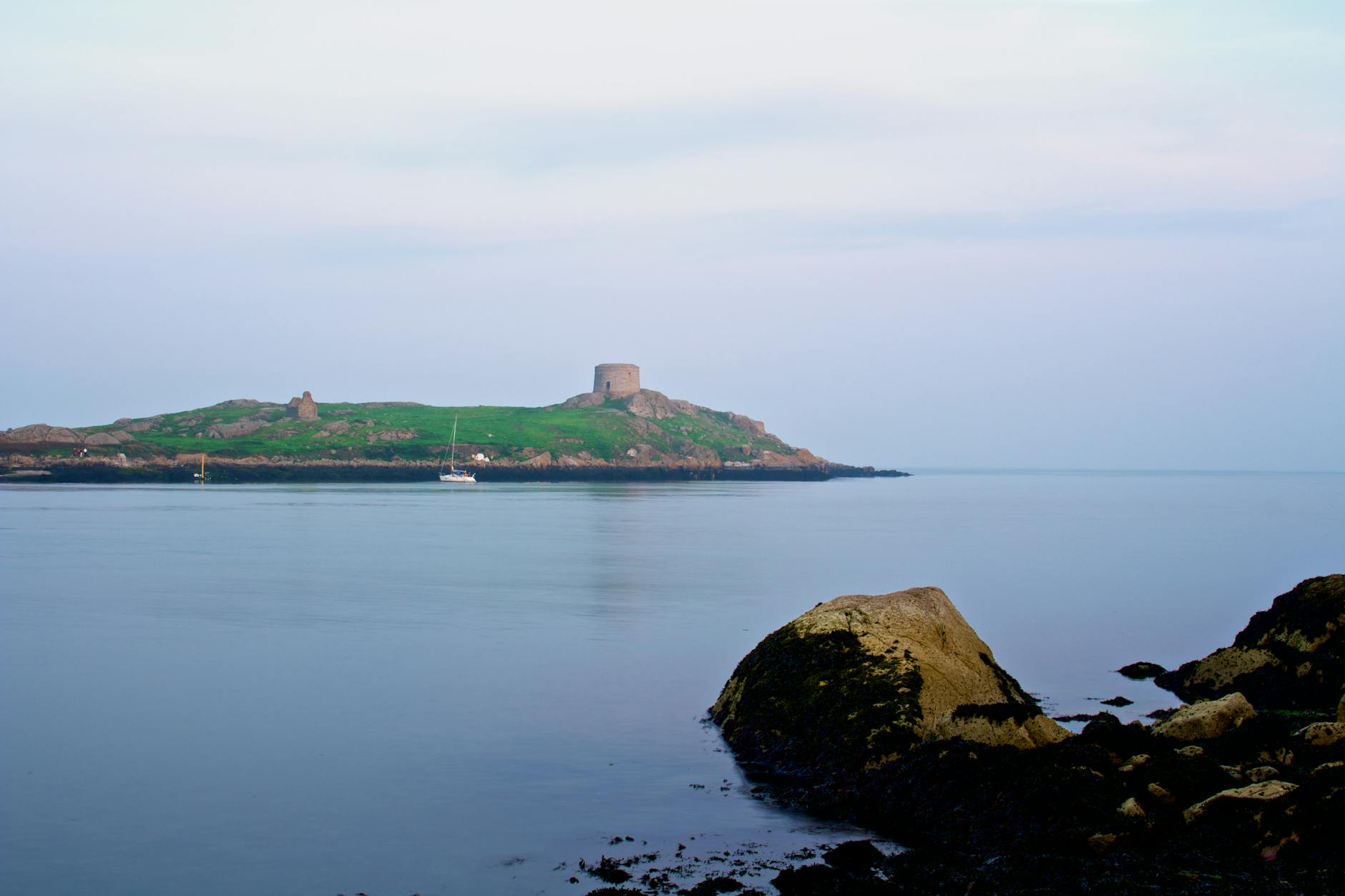
The pilgrimage starts in Sandycove, 25 minutes by DART south of central Dublin. The Martello Tower at Sandycove is the setting of the opening of Ulysses, where Stephen Dedalus, Buck Mulligan, and Haines breakfast on the parapet. Joyce stayed in the tower for six days in September 1904 as a guest of Oliver St John Gogarty, the model for Buck Mulligan. Today the tower houses the James Joyce Tower and Museum, free to visit and run by volunteer literary enthusiasts.
The museum displays Joyce’s walking stick, a copy of Ulysses with his own annotations, and his death mask. The rooftop where Buck Mulligan shaves opens to the public — you can stand at the spot where the novel begins and look out across Dublin Bay to Howth. The nearby Forty Foot bathing place, where Buck Mulligan goes for his swim, still attracts year-round swimmers including a Christmas Day plunge. Open daily 10am–6pm (April–September) or weekends only in winter. Combine with a Howth visit via the DART for an excellent half-day from Dublin centre.
North Dublin: The Heart of Joyce’s World
Joyce’s personal Dublin centred on the northside, where his family moved through a series of increasingly modest addresses as his father’s financial situation deteriorated. The James Joyce Centre at 35 North Great George’s Street is the natural starting point for a northside Joyce walk. The centre operates a Georgian townhouse from 1784, hosts exhibitions on Joyce’s life and works, runs Bloomsday events, and offers daily guided walks of the surrounding Joycean streets. Open Tuesday to Saturday, €5–8 admission.
From the centre, walk to 7 Eccles Street, the fictional address of Leopold and Molly Bloom. The original house was demolished but the front door of No. 7 was rescued and is displayed at the James Joyce Centre. The Mater Misericordiae Hospital now occupies much of the original site. Continue to Joyce’s real childhood addresses: Belvedere College (where Stephen Dedalus attends school in A Portrait), 32 Glengariff Parade, 7 St Peter’s Terrace, and Hardwicke Street. The Joyce family lived in 17 different Dublin addresses across the writer’s childhood and youth, a constant retreating to cheaper accommodation that informed his portrayal of declining middle-class Dublin life.
Trinity College and Southside Joyce Sites
Although Joyce never attended Trinity College (he studied at the Catholic counterpart University College Dublin), the area around Trinity features in Stephen Dedalus’s walks. The National Library of Ireland on Kildare Street is the setting of Episode 9 (“Scylla and Charybdis”) of Ulysses, where Stephen propounds his theory of Hamlet to assembled literary friends. The library’s Reading Room is open free to anyone who registers as a reader. Joyce-related materials in the library’s collection are extensive.
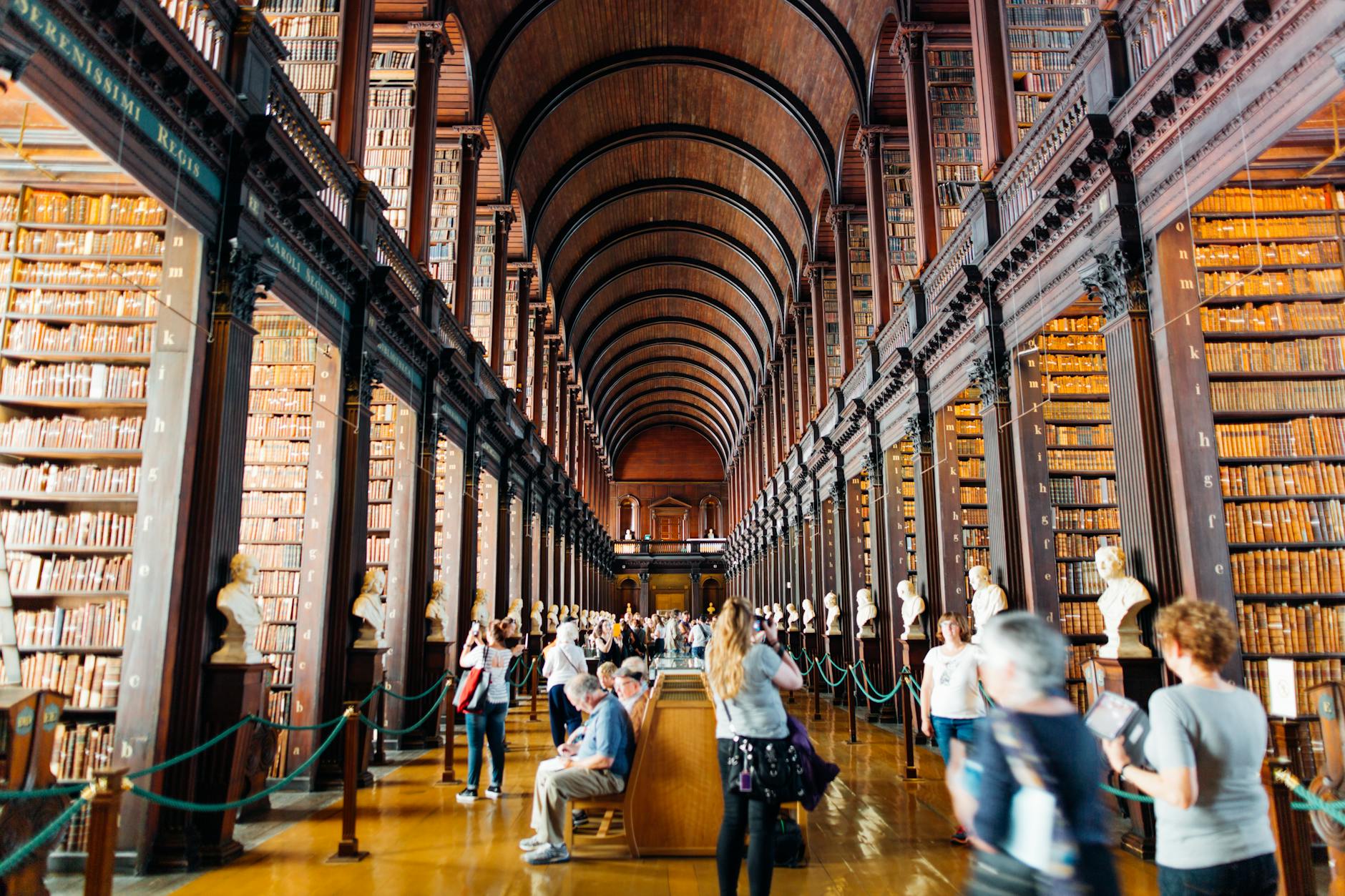
The Museum of Literature Ireland (MoLI) on St Stephen’s Green is housed in Newman House, the original buildings of University College Dublin where Joyce was a student. The museum holds Joyce’s first copy of Ulysses, several major manuscripts, and immersive multimedia exhibits on his life and work. UCD’s Aula Maxima (Great Hall) where Joyce attended lectures is open for tour. The Iveagh Gardens behind the building offer a quiet break. MoLI charges €10 admission and runs guided Joyce walks. Open daily.
The Ulysses Pub Crawl
Several Dublin pubs feature directly in Ulysses and remain operating today. A Joyce pub crawl through these establishments forms an excellent literary evening:
- Davy Byrne’s — Duke Street, the “moral pub” where Bloom eats his gorgonzola sandwich and Burgundy. Still serves both today.
- The Bailey — Duke Street, opposite Davy Byrne’s. Holds the door of 7 Eccles Street (Bloom’s fictional address) salvaged before demolition.
- The Palace Bar — Fleet Street, a Victorian classic with literary connections to The Irish Times.
- Mulligan’s — Poolbeg Street, where Joyce drank as a young man. Features in Episode 5 (“Lotus Eaters”) of Ulysses.
- The Brazen Head — Lower Bridge Street, Ireland’s oldest pub (1198). Joyce drank here regularly.
- Toner’s — Baggot Street, frequented by Joyce’s circle.
- McDaid’s — Harry Street, a 20th-century literary pub.
The Joyce pub crawl works as a self-guided 3–4 hour walk with stops for a pint at each location. Several guided tour operators run Joyce pub crawls including Hidden Dublin Walks (Wednesday and Saturday, €25 including readings and historical context) and the Dublin Literary Pub Crawl (Thursday and Friday, €20). For our complete Dublin pub guide see our Traditional Irish Pubs piece.
Bloomsday: Celebrating Joyce on 16 June
Every 16 June, Dublin celebrates Bloomsday in honour of Ulysses, which is set entirely on that single day in 1904. The first Bloomsday celebration in 1954 saw a small group of Dublin writers including Patrick Kavanagh, Brian O’Nolan (Flann O’Brien), and Anthony Cronin retrace Leopold Bloom’s journey by horse-drawn carriage. The tradition has expanded into a week-long festival drawing literary tourists worldwide.
Modern Bloomsday events include an early breakfast at Sandycove’s Joyce Tower (Bloom famously breakfasts on grilled kidneys), a daylong city centre programme of readings, costumed walking tours where participants dress in Edwardian period costume, dramatic recreations of episodes from the novel, and a closing event at Davy Byrne’s with gorgonzola sandwiches and burgundy. The James Joyce Centre coordinates the official programme. Joyce enthusiasts plan their Dublin visit specifically for 14–17 June each year. Even if you can’t make Bloomsday itself, the city’s commitment to its literary heritage shines on the anniversary.
A Self-Guided Joyce Walking Tour Route
For visitors with a half-day to explore Joyce’s Dublin on foot, the following route covers the essential city-centre sites in 2–3 hours:
- Start: James Joyce statue, North Earl Street — The iconic walking-stick-and-hat Joyce statue makes a good photo stop.
- Walk west to the GPO — While Joyce doesn’t feature the GPO directly (the Rising was a decade after Ulysses’ 1904 setting), this is the heart of the northside city Joyce knew.
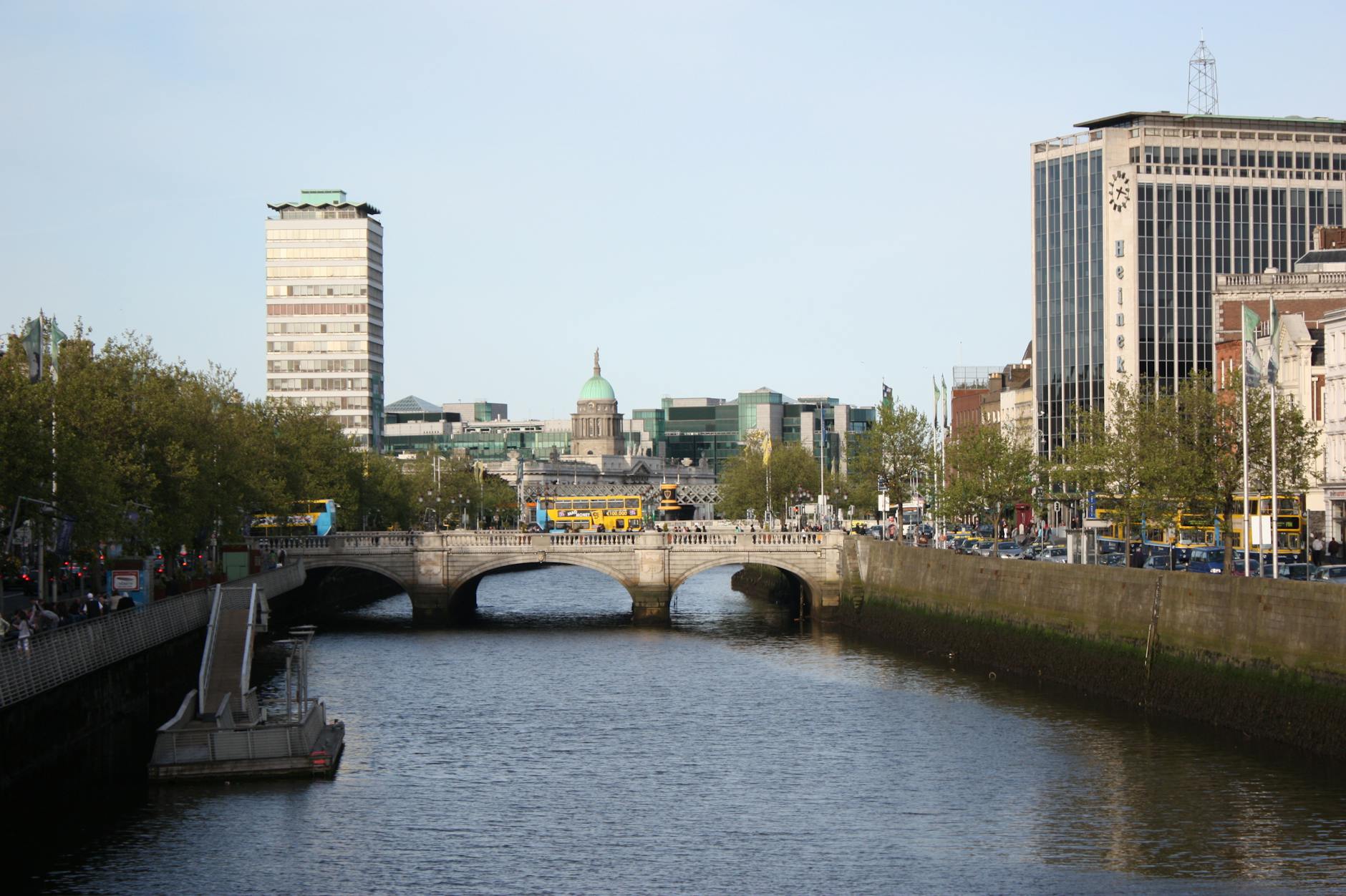
- Cross O’Connell Bridge to D’Olier Street — The path Leopold Bloom takes from the funeral.
- Trinity College front gate — The college features in Stephen Dedalus’s reflections.
- National Library, Kildare Street — Setting of Episode 9 of Ulysses. Step inside the Reading Room.
- National Museum of Ireland, Kildare Street — Bloom views the Aphrodite statue in Episode 6.
- St Stephen’s Green and MoLI — The Museum of Literature Ireland holds Joyce manuscripts.
- Davy Byrne’s, Duke Street — Lunch stop at the moral pub.
- Across Grafton Street to the Bailey — View the door of 7 Eccles Street.
- End: O’Connell Street and the James Joyce Centre — The natural information hub for any Joyce visit.
Allow 2–3 hours walking time plus stops. The entire route is under 3km of walking. Pair with the DART journey to Sandycove (45 minutes round trip plus tower visit) for a full Joyce day.
Beyond Ulysses: The Dubliners Stories
Dubliners, more accessible than Ulysses for casual readers, contains 15 short stories that locate themselves precisely across the city. “The Sisters” opens at a Great Britain Street (now Parnell Street) shop. “An Encounter” takes two boys across the Liffey via the Wall (now East Wall) Road. “Araby” is set in North Richmond Street. “Eveline” departs from North Wall. “Two Gallants” walks from St Stephen’s Green to Rutland (now Parnell) Square. “The Boarding House” is set on Hardwicke Street. “A Painful Case” centres around Chapelizod. “Ivy Day in the Committee Room” depicts political offices on Wicklow Street. “A Mother” is set in the Antient Concert Rooms on Brunswick Street.
The collection’s masterpiece, “The Dead,” is set at 15 Usher’s Island, a real Liffey-side house where Joyce’s aunts hosted annual Christmas parties. The house has been preserved as a Joyce literary site — The James Joyce House of The Dead — operating limited public openings and special events. The story’s final image of snow falling across Ireland is one of the most famous endings in 20th-century fiction.
Glasnevin Cemetery: The Hades Episode
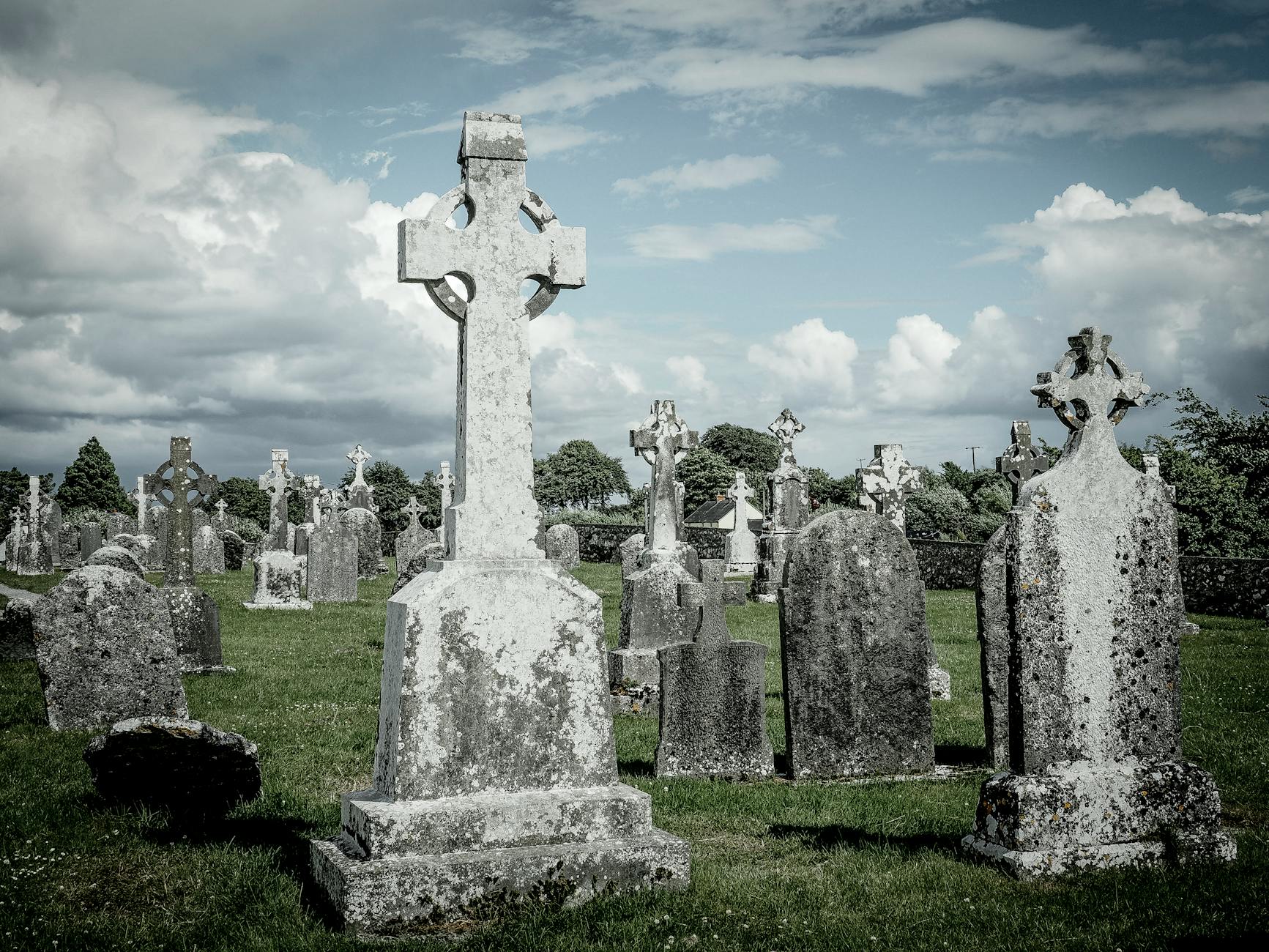
Episode 6 of Ulysses (“Hades”) follows Leopold Bloom and three companions as they ride in a funeral carriage to Glasnevin Cemetery for the burial of Paddy Dignam. The journey passes recognisable Dublin landmarks including Sandymount Strand and Phibsborough. Glasnevin Cemetery itself, founded by Daniel O’Connell in 1832, is one of Dublin’s most extraordinary historical sites — with the graves of Michael Collins, Eamon de Valera, Countess Markievicz, Brendan Behan, and dozens of other figures from Irish political and literary history.
The cemetery’s Glasnevin Museum and Visitor Centre runs daily guided tours covering both the Hades episode of Ulysses and the broader history of the burial ground. €15 adult, 2-hour tour. Combine with a visit to the National Botanic Gardens directly adjacent (free entry) for a half-day from central Dublin. The Glasnevin Round Tower above Daniel O’Connell’s grave is visible from much of north Dublin.
Guided James Joyce Walking Tours
Several operators run quality Joyce walking tours that bring expert local knowledge to your visit:
- James Joyce Centre Tours — Wednesday and Saturday, €15. Departs from 35 North Great George’s Street. Best for committed Joyce readers wanting detailed literary context.
- Hidden Dublin Walks: The Joyce Walk — Various days, €18. Covers both northside and southside Joyce sites in 2.5 hours.
- Dublin Literary Pub Crawl — Thursday and Friday evenings, €20. Not Joyce-specific but covers Joyce’s drinking pubs alongside Beckett and Behan locations.
- MoLI Audio Guides — Self-guided downloadable Joyce audio walks €5–8. Excellent for independent travellers.
- Bloomsday Special Walks (June only) — Multiple operators run period-costumed Bloomsday walks during the week of 14–17 June.
Book guided tours 1–2 weeks ahead, especially Bloomsday-period tours which sell out months early. For general Dublin walking tour options including non-Joyce alternatives, see our Dublin Walking Tours guide.
Reading Joyce Before Your Visit
You don’t need to have read Ulysses to enjoy a Joyce walking tour of Dublin, but some preparation enhances the experience. Dubliners is the natural starting point — 15 short stories at varying lengths, accessible prose, and locations spread across the city. Read the collection over a flight or weekend and you’ll have direct mental associations with dozens of Dublin streets.
A Portrait of the Artist as a Young Man is the next step — a single autobiographical novel following Stephen Dedalus’s journey through Dublin schools, Catholicism, and emerging artistic vocation. Ulysses itself is famously dense — first-time readers benefit from an annotated edition like Gifford’s Ulysses Annotated or the Penguin Modern Classics edition with introduction. Even reading only Episodes 4 (Calypso, Bloom’s breakfast), 8 (Lestrygonians, Davy Byrne’s), and 17 (Ithaca, Bloom returning home) gives you the essential Joyce Dublin landmarks.
Practical Tips for a Joyce Dublin Visit
Plan your Joyce day with the James Joyce Centre opening hours in mind (Tuesday–Saturday only) and book MoLI ahead in summer when literary tourism peaks. The Sandycove tower requires the DART journey — allow 90 minutes round trip plus 30 minutes at the tower. Pack waterproofs — Dublin weather is unpredictable any time of year. Wear comfortable shoes for the 3km+ walking. Bring your copy of Ulysses or Dubliners to read passages at the relevant locations — it’s genuinely memorable.
For a deeper literary experience, combine Joyce sites with our Dublin Writers and Landmarks guide to include Beckett, Wilde, Behan, and Yeats locations. Allow at least one full day for Joyce alone; two days if you want to include MoLI in detail, the Sandycove tower, the James Joyce House of The Dead, and a Joyce pub crawl. Pair Joyce visits with our broader Dublin History and Literary Heritage pillar guide.
Joyce’s Life: The Short Version
James Augustine Aloysius Joyce was born in Rathgar on 2 February 1882, the eldest of ten surviving children of John Stanislaus Joyce and Mary Jane “May” Murray. His father’s declining career as a tax collector pushed the family through 17 Dublin addresses in two decades, an experience that taught Joyce the geography of Dublin streets and the social calibration of Dublin neighbourhoods. He attended Clongowes Wood College in Kildare and Belvedere College in Dublin before studying Modern Languages at University College Dublin at Newman House.
Joyce met Nora Barnacle, a Galway-born chambermaid at Finn’s Hotel on Leinster Street, on 10 June 1904. Their first date on 16 June 1904 became the date he chose to set Ulysses. The pair left Dublin together in October 1904 and lived for the rest of Joyce’s life in Trieste, Zurich, and Paris. They had two children: Giorgio (1905) and Lucia (1907). Joyce returned to Dublin only four times after 1904, none after 1912. He died in Zurich on 13 January 1941, aged 58, from a perforated ulcer. He is buried in Fluntern Cemetery, Zurich. Nora outlived him by ten years.
Joyce’s Major Works: A Visitor’s Guide
Chamber Music (1907) — Joyce’s first published book, a slim collection of 36 lyric poems. Pleasant but not essential reading for Dublin visitors. Dubliners (1914) — Fifteen short stories that remain the perfect introduction to Joyce. Read at minimum “Araby,” “Eveline,” “A Painful Case,” and “The Dead” before a Dublin trip. A Portrait of the Artist as a Young Man (1916) — Joyce’s autobiographical novel following Stephen Dedalus from age 6 to 22. Essential context for Ulysses. Exiles (1918) — Joyce’s one play, rarely performed but occasionally staged in Dublin. Ulysses (1922) — The 18-episode novel chronicling 16 June 1904 in Dublin. Famously dense; reward proportional to effort invested. Pomes Penyeach (1927) — Thirteen more poems, mostly slight. Finnegans Wake (1939) — Joyce’s final and most difficult work; an experimental novel partially set in Howth and Chapelizod. Most readers sample rather than read fully.
James Joyce’s Dublin: FAQ
What is Bloomsday?
Bloomsday is the annual celebration of James Joyce’s Ulysses on 16 June — the date the novel is set in 1904. The festival features readings, costumed walking tours, dramatic recreations, period meals, and pub events. The James Joyce Centre coordinates the official Dublin programme. Bloomsday has been celebrated since 1954 and now draws literary tourists worldwide.
Do I need to read Ulysses before visiting Dublin?
No — Dubliners is a much better entry point. Reading the 15 short stories before your Dublin visit gives you direct associations with dozens of city locations. Save Ulysses for after the visit when you’ll have visual memory of the locations to ground the novel’s density. Guided Joyce tours provide adequate literary context for non-readers.
Where did James Joyce live in Dublin?
The Joyce family lived at 17 different Dublin addresses across the writer’s childhood and youth, mostly on the northside. The retreating progression from Rathgar to Bray to North Strand reflected James’s father’s declining finances. Joyce attended Clongowes Wood College and Belvedere College, then University College Dublin at Newman House on St Stephen’s Green.
Is the Sandycove Joyce Tower worth visiting?
Yes — especially for Joyce readers. The Martello Tower is the opening setting of Ulysses and one of the few preserved literary heritage buildings in Dublin. The 25-minute DART journey from city centre passes through the southside coastal suburbs. Combine with a Sandycove swim at Forty Foot or seafood lunch in nearby Dún Laoghaire.
What pubs feature in Ulysses?
Davy Byrne’s on Duke Street is the most famous — the “moral pub” where Leopold Bloom eats his gorgonzola sandwich. Other Ulysses pubs include Mulligan’s on Poolbeg Street and Barney Kiernan’s on Little Britain Street (no longer operating). Joyce-associated pubs that don’t feature directly in the novel include The Brazen Head, Toner’s, McDaid’s, and the Palace Bar.
How much does the James Joyce Centre cost?
The James Joyce Centre on North Great George’s Street charges €5–8 admission for adults depending on the exhibition. Guided walking tours from the centre cost €15. The centre is open Tuesday to Saturday with limited Sunday hours during Bloomsday week (14–17 June).
Can I do a self-guided Joyce walking tour?
Yes — Dublin is one of the most self-guided literary tourism cities in the world. Use this guide’s walking tour route, the James Joyce Centre’s free downloadable map, or the MoLI audio guide app. The full city-centre walk takes 2–3 hours and is under 3km of total walking on flat ground.
What other writers should I explore in Dublin?
Dublin has produced four Nobel literature laureates (Yeats, Shaw, Beckett, Heaney) plus Oscar Wilde, Jonathan Swift, Bram Stoker, Brendan Behan, and contemporary writers like Sally Rooney and Anne Enright. The Museum of Literature Ireland (MoLI) covers all these writers comprehensively. See our Dublin Famous Writers guide for a complete tour.
Keep Reading
Lean na Comharthaí — Keep following the signs