Dublin Bus Routes Tourists Use 2026: The Complete Guide
Ar an gComhartha Seo — On this sign
- Quick Picks: The Tourist Dublin Bus Routes
- How to Find a Dublin Bus Stop
- Real-Time Bus Arrivals
- How to Pay on Dublin Bus
- Dublin Bus Fare Zones
- Essential Dublin Bus Routes for Tourists
- How to Board a Dublin Bus
- Dublin Bus Etiquette
- Nitelink: Night Bus Services
- Hop-on Hop-off vs Regular Dublin Bus
- Bus Éireann for Day Trips
- Common Dublin Bus Mistakes
- Accessibility on Dublin Bus
- Related Reading
- Dublin Bus vs Luas vs DART: Which Should I Use?
- The Dublin Bus App: Worth Installing?
- Avoiding Rush Hour on Dublin Bus
- Saving Money on Dublin Bus
- Travelling with Children on Dublin Bus
- Dublin Bus Routes Tourists Use: FAQ
Dublin Bus is the backbone of the city’s public transport — 137 routes, 3,500 stops, 800 buses, 137 million passenger trips a year. For tourists, the yellow double-deckers are one of the cheapest and most flexible ways to reach attractions, neighbourhoods and day-trip points beyond the city centre walking radius. Here’s Dublin bus routes tourists actually use, how to pay, how to find your stop, what etiquette applies, and how to avoid the three rookie mistakes that cost visitors time.
Whether you’re heading to Phoenix Park, Kilmainham, Howth, the coast or a suburb hotel, this guide lists the route number, where to board, where to get off and what to expect.
This sits inside our broader Dublin transport guide, which is the place to start if you are planning from scratch.
Quick Picks: The Tourist Dublin Bus Routes
- Route 13: O’Connell Street → Phoenix Park (Dublin Zoo) → Castleknock. Every 15 minutes.
- Route 40: O’Connell Street → Phoenix Park → Liffey Valley. Every 15 minutes.
- Route 79: Aston Quay → Kilmainham → Ballyfermot. Every 10-15 minutes.
- Route 16: Airport → Drumcondra → O’Connell Street → Rathfarnham. Every 20-30 minutes (24-hour service).
- Route 41: Airport → Swords → O’Connell Street. Every 15-30 minutes.
- Route 25/25a/26/66/67: Heuston Station → Lucan, Maynooth, Celbridge. Every 10-15 minutes for Heuston-Kilmainham trips.
- Route 47/116: City centre → Goatstown → Dundrum. Useful for Dundrum Town Centre shopping.
- Route H1/H2/H3: City centre → Howth and Howth Junction. Every 15 minutes.
- Route C1-C6: Spencer Dock → City Centre → west Dublin. The new (2024) cross-city orbital routes.
- Dublin Express 782/784: Dublin Airport → city centre. The express airport coach; Aircoach and Dublin Bus 16/41 also run to the airport.
How to Find a Dublin Bus Stop
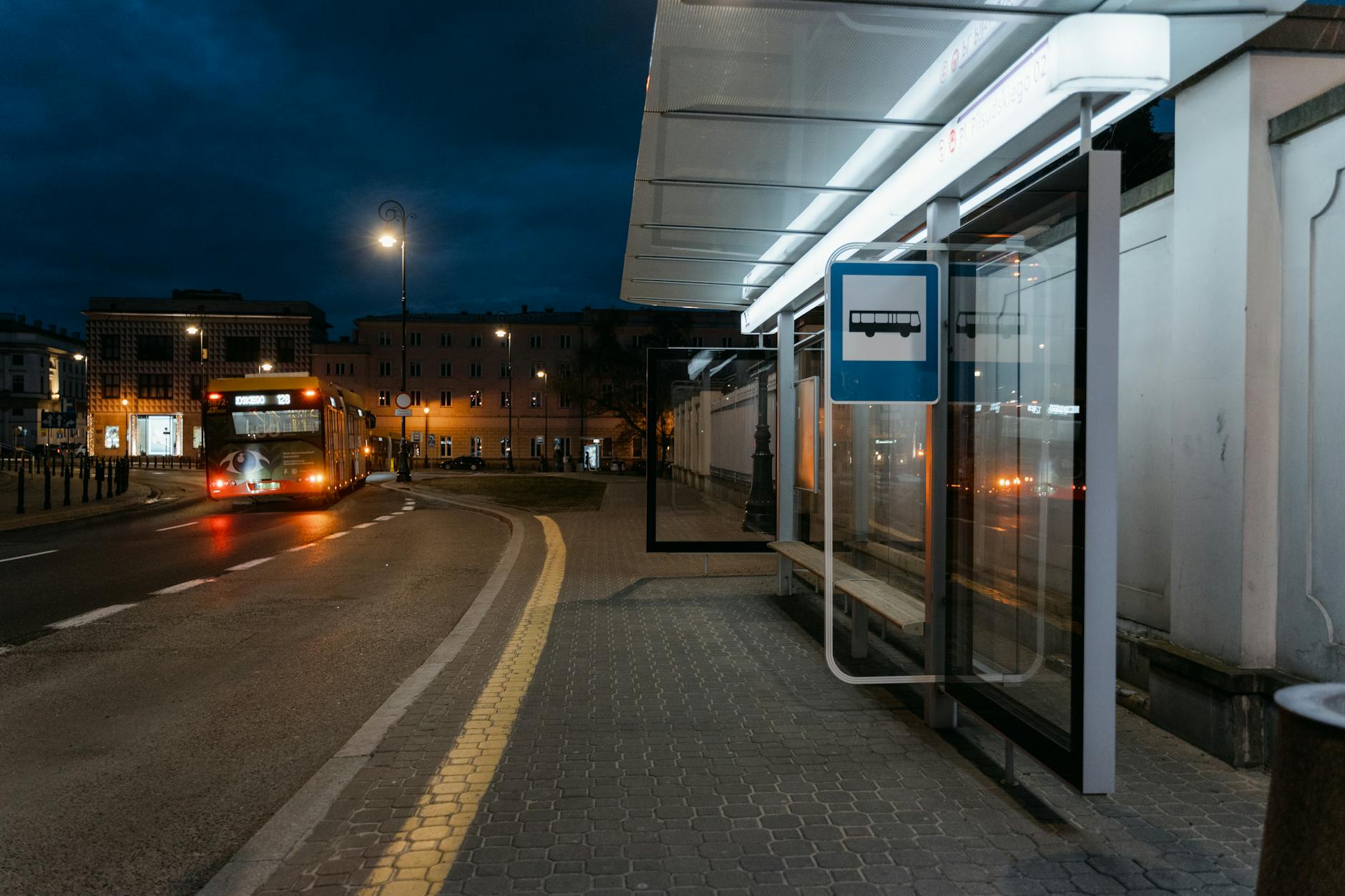
Every Dublin Bus stop is a yellow pole marker with a black-and-yellow flag. The pole shows:
- Route numbers that stop there (often 4-8 routes share one stop)
- Stop number (5-digit number used to look up real-time arrivals)
- Direction of travel (the arrow shows where the bus is heading next)
- Route diagram (small map showing the full route)
Use the Transport for Ireland Live app or Google Maps to find the nearest stop. Search any Dublin destination in Google Maps and tap “Directions” with public transport selected — the app returns route numbers, stop locations, walking distance and real-time arrival predictions.
Real-Time Bus Arrivals
Three reliable real-time arrival sources:
- Transport for Ireland Live app: The official app. Free on iOS/Android. Search by stop number, route or destination. Updates every 30 seconds.
- Google Maps: Search any Dublin Bus route or stop number; the “Live” tag shows real-time predictions.
- Stop number SMS: Text the 5-digit stop number to 53503 (€0.30 per SMS); receive next-bus predictions instantly. Works on any phone.
Dublin Bus is generally punctual on dedicated bus-lane corridors (the QBC system) but can run 5-15 minutes late on traffic-heavy routes during evening rush. Real-time apps are essential.
How to Pay on Dublin Bus
Leap Card (Recommended)
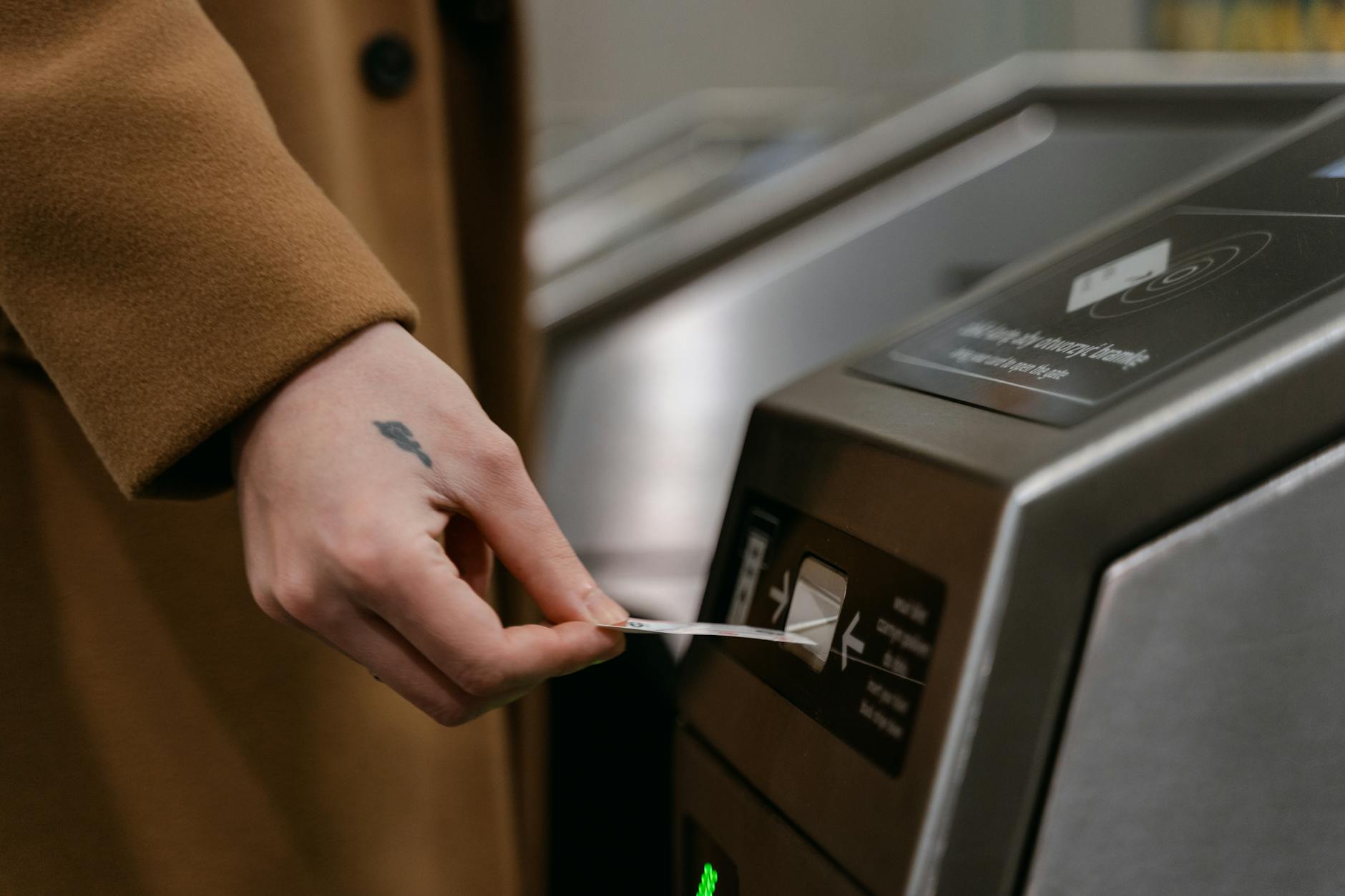
Tap the green reader as you board. Don’t tap off (Dublin Bus is flat-fare). A Leap single is €1.50 for a short hop or €2.00 for a longer trip. The €6 daily cap means heavy travel days cost the same whether you take 5 trips or 50. See our Dublin Leap Card Guide for the full breakdown.
Cash
Drop the exact fare into the metal box behind the driver as you board. The driver will not give change — overpaying means losing the difference. City zone single €2.60 cash. Tell the driver your destination if asked (some routes have different zones).
Contactless Bank Card
Check Transport for Ireland’s site to see whether the route you need takes contactless bank cards. Leap Card fares are €2.00 against €2.60 cash, and the €8 Visitor Card is the simplest option for a short stay.
Pay on the Driver’s App
The Dublin Bus mobile app (free on iOS/Android) allows mobile ticketing for some routes. Less common; most tourists use Leap Card or cash.
Dublin Bus Fare Zones
Dublin Bus has just two fare zones:
- City Zone: Most of Dublin city and suburbs (Howth, Tallaght, Dundrum, etc.). €1.50-2.00 Leap, €2.00-2.60 cash, depending on distance.
- Long-Distance: Some commuter routes (Maynooth, Drogheda) charge higher. €3.20-4.50 cash, €2.40-3.20 Leap. Always check the driver if unsure.
Airport trips on Dublin Bus 16 and 41 cost the same as any other city-zone journey; the Dublin Express 782/784 and Aircoach coaches price their tickets separately. Nitelink night services (described below) are charged higher than daytime fares.
Essential Dublin Bus Routes for Tourists
To Phoenix Park & Dublin Zoo
Routes 13, 40 from O’Connell Street. Get off at Phoenix Park Gate (route 13) or Aston Quay then walk; routes 25/25a/26 also serve the south Liffey Park edge. Journey time 25-35 minutes from city centre. Every 15 minutes 6am-11pm.
To Kilmainham Gaol
Routes 13, 40, 79 from Aston Quay or O’Connell Street. Journey time 25 minutes; the 13 and 40 also continue to Phoenix Park. Or take the Luas Red Line from Connolly to Suir Road then 10-minute walk.
To Guinness Storehouse
Routes 13, 27, 40, 56a, 77a, 123, 150 from various central stops. Or take the Luas Red Line from Connolly to James’s (3 stops, 8 minutes). Walking from St Stephen’s Green takes 25 minutes via The Liberties.
To Trinity College
Almost any city-centre Dublin Bus route stops within 200m of Trinity College front gate. The College Green stop serves 30+ routes.
To Dublin Airport
The dedicated airport express is Dublin Express 782/784, with Aircoach as the other coach option. Public Dublin Bus routes 16 (24-hour service) and 41 also serve the airport at standard fares.
To Howth
Routes H1, H2, H3 from Custom House Quay/O’Connell Street. Journey 45-55 minutes; runs every 15-20 minutes. Alternative: faster DART from Connolly (25 minutes).
To Dun Laoghaire & Coastal South
Route 7 from O’Connell Street to Sandymount, Blackrock, Monkstown, Dun Laoghaire. Journey 45-60 minutes. DART from Pearse Station is faster.
To Stoneybatter (Foodie Neighbourhood)
Routes 10, 25, 39, 70, 122, 123 from Parnell Square or Aston Quay. Journey 10-15 minutes from city centre.
To Ranelagh & Portobello (Restaurant Neighbourhoods)
Routes 14, 15, 16, 65, 122 from Trinity/Stephen’s Green. Journey 15-20 minutes. Luas Green Line is the faster alternative for Ranelagh (4 stops from Stephen’s Green).
How to Board a Dublin Bus
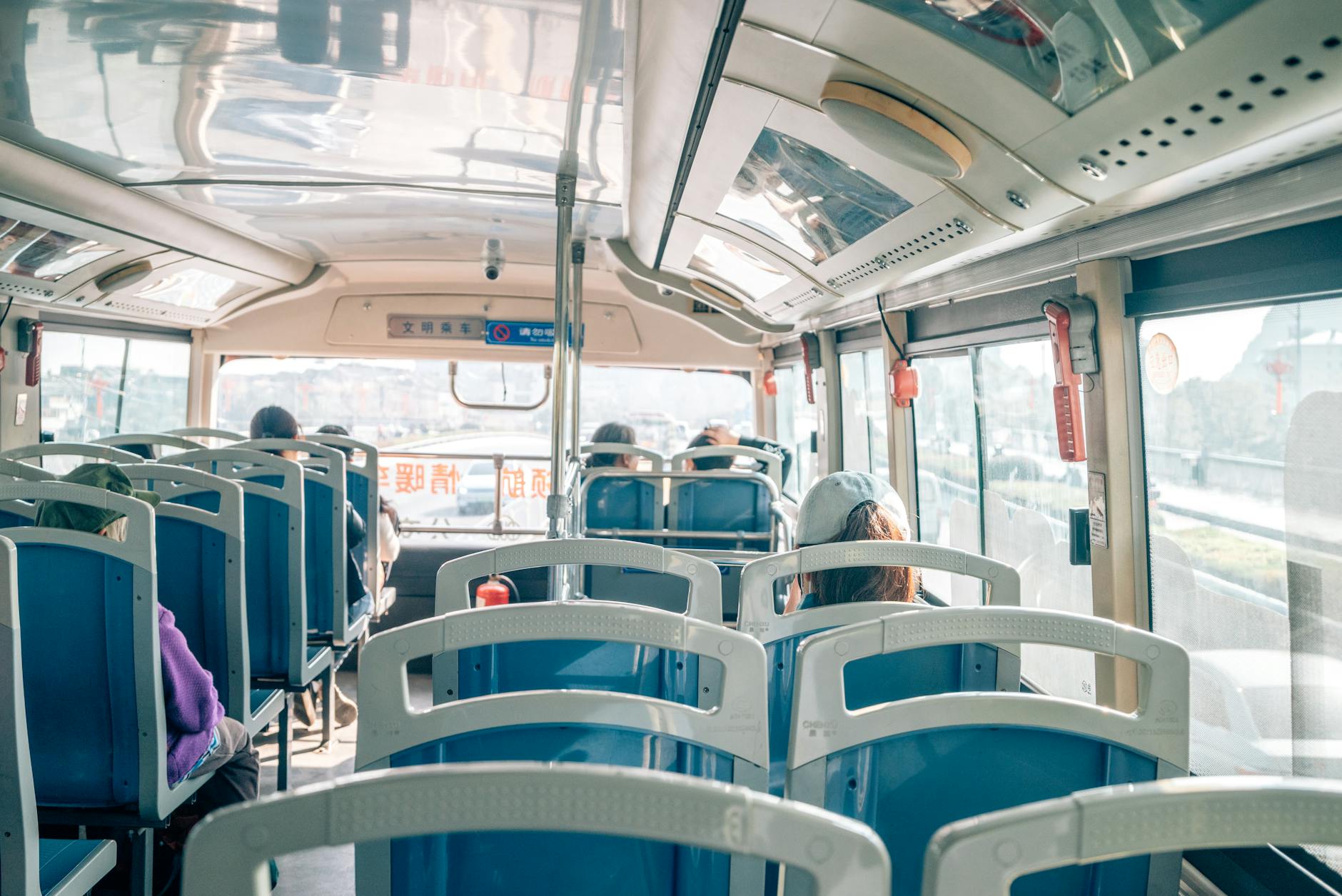
- Wait at the yellow stop pole. As your bus approaches, raise your hand or step toward the kerb so the driver sees you. Buses don’t stop automatically.
- Board through the front door only. The driver checks tickets/cards at the front.
- If paying by Leap Card, tap the green reader pillar just inside the door. The reader beeps and shows your new balance.
- If paying cash, drop coins into the metal fare box. No change given.
- Walk to a seat. Upper deck (front row) is the tourist’s seat for views; lower deck rear is the local-commuter zone.
- To request your stop, press the red “Stop” button on a handrail or pillar at least 100m before the stop. The driver hears a bell.
- Exit through the middle doors. The driver opens them automatically at each stop.
Dublin Bus Etiquette
- Have your card or fare ready. Holding up the boarding line is the cardinal sin.
- Give up the front seats on the lower deck to elderly, pregnant or mobility-impaired passengers.
- Buggies and wheelchairs have priority in the dedicated space at the front of the lower deck. Move bags if asked.
- Eating is permitted but discouraged; strong-smelling food (chips, kebabs) draws side-eyes.
- Drinking alcohol is banned on Dublin Bus — inspectors will remove you and you may be fined.
- Loud phone calls are tolerated but seen as rude. Use headphones.
- Smoking is banned on all buses (and the upper deck in particular).
- Thank the driver as you alight — Dublin custom and appreciated.

Nitelink: Night Bus Services
Dublin Bus runs Nitelink night buses Friday and Saturday nights, departing College Green between 12.30am and 4am. Routes serve major suburban corridors:
- 15N: College Green → Rathmines, Terenure, Tallaght
- 33N: College Green → Howth, Sutton, Donabate
- 47N: College Green → Goatstown, Dundrum
- 67N: College Green → Lucan, Maynooth
- 70N: College Green → Castleknock, Blanchardstown
Nitelink fare is €7 cash or €5.50 Leap. Buses run hourly on most routes. The 16 route to the airport runs 24 hours daily (every 30-60 minutes overnight).
If you miss the last Nitelink home, taxis (Free Now, Bolt) are the fallback. Central city to suburb is typically €12-25.
Hop-on Hop-off vs Regular Dublin Bus
Tourist-oriented Hop-on Hop-off bus services (CitySightseeing, DoDublin) operate separately from Dublin Bus — they cost €25 24-hour or €30 48-hour, run a fixed tourist loop with audio commentary, and stop only at top attractions.
Hop-on Hop-off is worth the money if: your trip is 1-2 days, you have mobility issues, you want commentary, you don’t want to figure out Dublin Bus routes.
Regular Dublin Bus is better if: you have 3+ days, you’re happy to navigate using apps, you want flexibility to visit non-tourist areas, or you’re on a tight budget. A 1-day Leap Visitor Card at €8 is cheaper than €25 Hop-on Hop-off — and covers more of the city.
Bus Éireann for Day Trips
For trips beyond Greater Dublin, Bus Éireann (Ireland’s national bus operator) takes over from Dublin Bus. Key tourist routes:
- Expressway 116 Dublin → Glendalough (Wicklow): €14 each way, 90 minutes.
- Expressway 100 Dublin → Newgrange/Drogheda: €13 each way, 50 minutes.
- Expressway 1 Dublin → Belfast: €25 each way, 2.5 hours.
- Expressway 4 Dublin → Galway: €25 each way, 3 hours.
Bus Éireann departs from Busaras (Dublin Bus Station, Store Street — behind the Liffey near Connolly Station). Leap Card accepted on most services.
Common Dublin Bus Mistakes
- Not raising your hand at the stop. Dublin buses won’t automatically stop if no one waves them down. The driver only stops if (a) someone presses the bell to get off or (b) someone visibly signals to board.
- Boarding through the rear doors. Front door only.
- Trying to pay with notes. Cash payment requires exact change in coins. The fare box doesn’t accept paper money.
- Tapping off when there’s no tap-off requirement. Dublin Bus is tap-on only. Tapping off does nothing.
- Missing the bell. If you don’t press “Stop” before your stop, the driver might fly past. Each bus stop has 100m approach; press the bell as you see your stop name on the route board.
- Not allowing extra time during rush hour. 8-9am inbound, 4.30-6.30pm outbound. Add 15-20 minutes to journey times.
- Trying to use Bus Éireann tickets on Dublin Bus. Different ticketing system. Leap Card works on both, but tickets bought from one operator don’t cross over.
Accessibility on Dublin Bus
- All Dublin Bus vehicles are low-floor wheelchair-accessible with retractable ramp at the middle door.
- Dedicated space at the front of the lower deck holds one wheelchair or one buggy.
- Audio and visual stop announcements are standard on newer buses (rolling out across fleet 2024-2026).
- Guide dog access is permitted on all services.
- Driver assistance is provided on request — ring the dedicated assistance number 1800 50 40 50 to confirm wheelchair-accessible service for specific routes.
Related Reading
For more transport guides, see Dublin Leap Card, DART & Luas Dublin, Dublin Taxi Guide, Dublin Airport to City Centre, Walking in Dublin, and Renting a Car in Dublin.
Dublin Bus vs Luas vs DART: Which Should I Use?
Dublin’s three main public transport systems each have different strengths. The Luas tram is faster than Dublin Bus on its two corridors (Green Line south, Red Line east-west) but only serves a narrow strip of the city — if your destination isn’t close to a Luas stop, Dublin Bus is the only option. The Luas runs every 5-7 minutes during the day with dedicated track separated from car traffic, so it’s reliable for getting to/from Trinity, Stephen’s Green, Heuston Station, James’s (Guinness Storehouse) and the Liberties.
The DART is Dublin’s coastal commuter rail line connecting Howth in the north to Greystones in the south through the city centre. For trips to Howth, Bray, Dun Laoghaire, Sandycove or Killiney, the DART is dramatically faster than the bus equivalent (Howth: DART 25 minutes vs bus 50-55 minutes). Use the DART for coast-bound day trips; use Dublin Bus for everything else inside the city.
Dublin Bus covers everywhere the Luas and DART don’t reach — including Phoenix Park, Stoneybatter, the southside suburbs (Rathmines, Donnybrook), and most outlying day-trip points. For a typical first-time visitor, the daily routine ends up being Luas for short city-centre hops, Dublin Bus for further attractions, DART for coast trips. The Leap Card covers all three at the same daily cap (€6), so mixing modes costs no more than sticking to one.
The Dublin Bus App: Worth Installing?
For a Dublin trip longer than 2-3 days, install both the official Transport for Ireland Live app (real-time arrivals) and the standalone Dublin Bus app (route planning, mobile ticketing for a few routes). The TFI Live app is the more useful for tourists: it covers Dublin Bus, Luas, DART and Bus Éireann arrivals in one interface. Google Maps also displays the same real-time data for any Dublin route; if you’re already using Google Maps for walking directions, you don’t strictly need the dedicated apps unless you want fewer permissions or offline access.
The TFI Live app also includes Luas service alerts (very useful when there’s a Croke Park match, Aviva Stadium event, or rugby weekend that disrupts the Green Line) and one-tap journey planning across all transport modes. Free, ad-free, available in English and Irish.
Avoiding Rush Hour on Dublin Bus
Dublin Bus rush hours are 7.30-9.30am inbound and 4.30-7pm outbound. Buses can run 10-25 minutes late on traffic-heavy corridors during these windows. The worst-affected routes are the southside arteries (Rathmines/Rathgar/Terenure on routes 14, 15, 65, 122) and the eastbound 7/8/45 along the south quays. North-side routes through Drumcondra (16, 41) also slow significantly.
Tourists doing classic Dublin sightseeing typically don’t need to travel during rush hour — most major attractions open 9.30-10am, so a 9.45am bus from your hotel arrives just as queues form. If you do need to cross town during rush hour, the Luas Green Line (dedicated track) is more reliable than parallel bus routes. For airport transfers, the M50 motorway is congested 7-9am inbound and 4-6.30pm outbound; allow extra time both ways.
Saving Money on Dublin Bus
Three concrete ways tourists can save on Dublin Bus fares. First: buy a Leap Visitor Card on Day 1 (1-day €8, 3-day €18 or 7-day €24, each with unlimited rides on bus, Luas, DART). For visits longer than a day with 3+ rides per day, this beats pay-as-you-go and beats cash by 60%+. Second: use the TFI 90 Minute Fare. Within 90 minutes of your first tap, a second bus or Luas trip is covered by the same €2.00 fare. Sequenced visits (e.g., Trinity at 10am, Phoenix Park at 11.30am) often qualify for this discount automatically — you just have to know it’s there.
Third: hit the daily cap. The standard adult Leap Card stops charging once you’ve spent €6 in a day across all Dublin Bus, Luas and DART rides. After that, every additional ride that day is free. Long, multi-stop touring days easily hit the cap by midday; the afternoon and evening rides cost nothing extra.
Travelling with Children on Dublin Bus
Dublin Bus welcomes families. Children under 3 travel free on the lap or in a stroller. Children 5-15 pay reduced cash fare (€1.30) or full Leap fare with a Child Leap Card. Buggies are stowed in the dedicated wheelchair/buggy space at the front of the lower deck — one buggy per bus typically, occasionally two if both fold. If the space is full when you board with a buggy, you may need to wait for the next bus. Folding buggies are quicker to manage; rigid Bugaboo-style buggies need the priority space.
Most central Dublin attractions are reachable by bus with kids in tow. The 13 and 40 to Phoenix Park/Dublin Zoo are particularly family-friendly — double-decker upper-deck front seats are a guaranteed kid hit. School-uniform-clad teenagers often ride for free on weekday afternoons during term — don’t be surprised by crowded after-school buses 3-4pm.
Dublin Bus Routes Tourists Use: FAQ
How do I use Dublin Bus as a tourist?
Buy a Leap Card (1-day €8, 3-day €18, or standard €5 deposit + topped-up credit), tap on the green reader when boarding, press the bell before your stop, exit through the middle doors. Use the Transport for Ireland Live app or Google Maps for real-time arrivals.
How much does a Dublin Bus ticket cost?
A single costs €1.50 for a short trip or €2.00 for a longer one with Leap Card, against €2.00-2.60 in cash. Leap stops charging at €6 a day for adults across all Dublin Bus, Luas and DART. Children pay reduced fares.
Which Dublin Bus goes to Phoenix Park?
Routes 13 and 40 from O’Connell Street to Phoenix Park Gate (the main entrance), every 15 minutes. Routes 25, 25a and 26 also serve the southern edge of the park near Heuston Station.
Does Dublin Bus run 24 hours?
Most routes operate 5.30am-11.30pm. Route 16 to the airport runs 24 hours daily. Friday-Saturday Nitelink services run from College Green to suburbs from 12.30am-4am.
How do I find the right Dublin Bus stop?
Use Google Maps or the Transport for Ireland Live app — enter your destination, select public transport, and the app shows the nearest stop, route number and walking distance. Yellow pole markers identify Dublin Bus stops in the street.
Can I pay cash on Dublin Bus?
Yes — exact-coin cash payment is accepted at the metal fare box behind the driver. The driver does not give change. Most tourists use a Leap Card (up to about 30% cheaper, no exact-change requirement).
Are Dublin Buses wheelchair-accessible?
Yes — all Dublin Bus vehicles are low-floor wheelchair-accessible with retractable ramp at the middle door. Dedicated wheelchair space at front of lower deck. Guide dog access permitted.
What is the Airlink 747?
It was Dublin Bus’s old airport express, withdrawn around 2020. Dublin Express routes 782 and 784 now do that job, Aircoach is the other express coach, and Dublin Bus 16 and 41 run to the airport at ordinary fares, the 16 around the clock.
Lean na Comharthaí — Keep following the signs