Irish Rail for Tourists: Dublin to Cork, Galway, Limerick & Killarney by Train
Iarnród Éireann do Thurasóirí
Ar an gComhartha Seo — On this sign
- Quick Answer: How Irish Rail Works
- The One Thing to Get Right: Heuston or Connolly
- The Routes Worth Taking
- Tickets, Fares and When to Book
- What the Trains Are Actually Like
- Day Trips by Train from Dublin
- Luggage, Children and Accessibility
- Building an Ireland Trip Around the Railway
- Where the Train Does Not Go
- Gotchas
- FAQ: The Irish Rail Tourist Guide Questions We Get Asked
- Keep Planning
- Keep Reading
- Photo Credits
Ireland’s railway is small, slow by continental standards, and does not go to a great many of the places visitors most want to see. It also puts you in Cork in under three hours, in Galway in about the same, and along some genuinely beautiful stretches of country for the price of a decent dinner — and it saves you from driving on unfamiliar roads in the rain. Used well, the train is the best way to build a trip around Dublin. Used badly, it strands you at the wrong station on the wrong side of the city watching your train leave from somewhere else.
That last problem is the one this Irish Rail tourist guide exists to solve first, because it is by far the most common mistake: Dublin has two main-line stations, they serve completely different halves of the country, and they are a Luas ride apart. Everything else — journey times, what the trains are like, when to book, which routes are worth taking and which places the railway simply does not reach — follows from getting that right.
Quick Answer: How Irish Rail Works
Dublin Heuston, on the western edge of the city near Kilmainham, serves Cork, Galway, Limerick, Waterford, Tralee — which is the Killarney train — and Westport and Ballina in Mayo. Dublin Connolly, in the north inner city near the quays, serves Belfast, Sligo and Rosslare Europort, and is also a DART station. The two are on opposite sides of the centre and are linked by the Luas Red Line. Check which one your ticket says before you set out.
Journey times from Dublin run roughly two and a half hours to Cork, Galway and Limerick, about three and a half to Killarney, a little over two hours to Belfast and around three to Sligo. Cork is roughly hourly; most other intercity routes run about every two hours. Book online in advance for the cheapest fares, which are tied to a specific train, and travel off-peak — the quoted windows are 09:30 to 16:00 and after 19:00. Note that a Leap Card does not cover intercity travel, only Dublin buses, the DART, the Luas and Dublin-area commuter trains.
| Destination | Dublin station | Typical time | Frequency |
|---|---|---|---|
| Cork | Heuston | About 2h 30m–2h 50m | Roughly hourly |
| Galway | Heuston | About 2h 30m–2h 45m | Roughly every 2 hours |
| Limerick | Heuston | About 2h 30m–2h 45m | Roughly every 2 hours |
| Killarney / Tralee | Heuston | About 3h 30m via Mallow | Several a day |
| Waterford | Heuston | About 2h 15m–2h 30m | Roughly every 2 hours |
| Westport / Ballina | Heuston | About 3h 30m | Several a day |
| Kilkenny | Heuston | About 1h 30m | Roughly every 2 hours |
| Sligo | Connolly | About 3h | Roughly every 2 hours |
| Belfast | Connolly | About 2h 08m | ~15 a day Mon–Sat, 8 Sunday |
| Rosslare Europort | Connolly | About 3h | A few a day |
The One Thing to Get Right: Heuston or Connolly
If you take one thing from this Irish Rail tourist guide, take this. Dublin’s two main-line termini are not interchangeable and are not near each other.
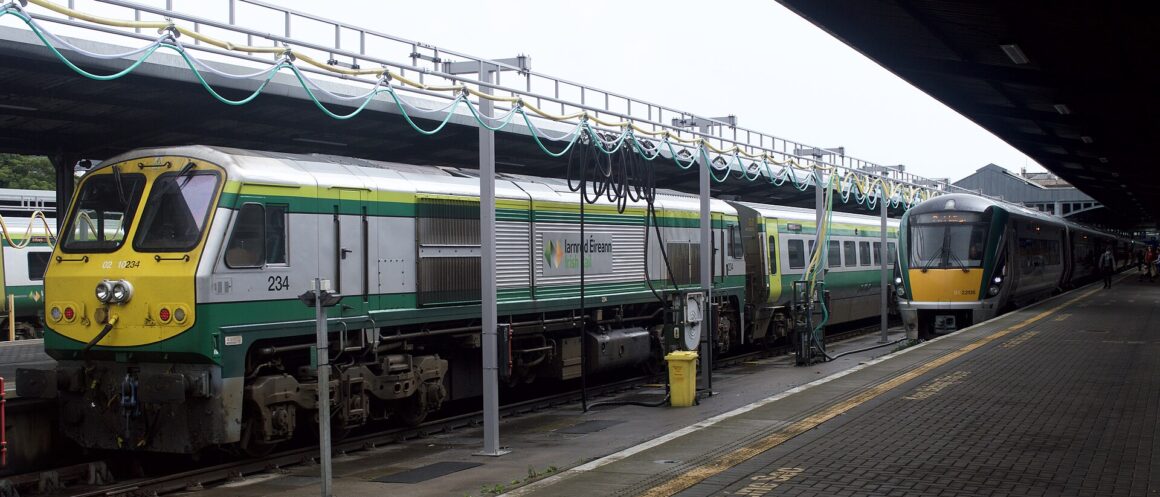
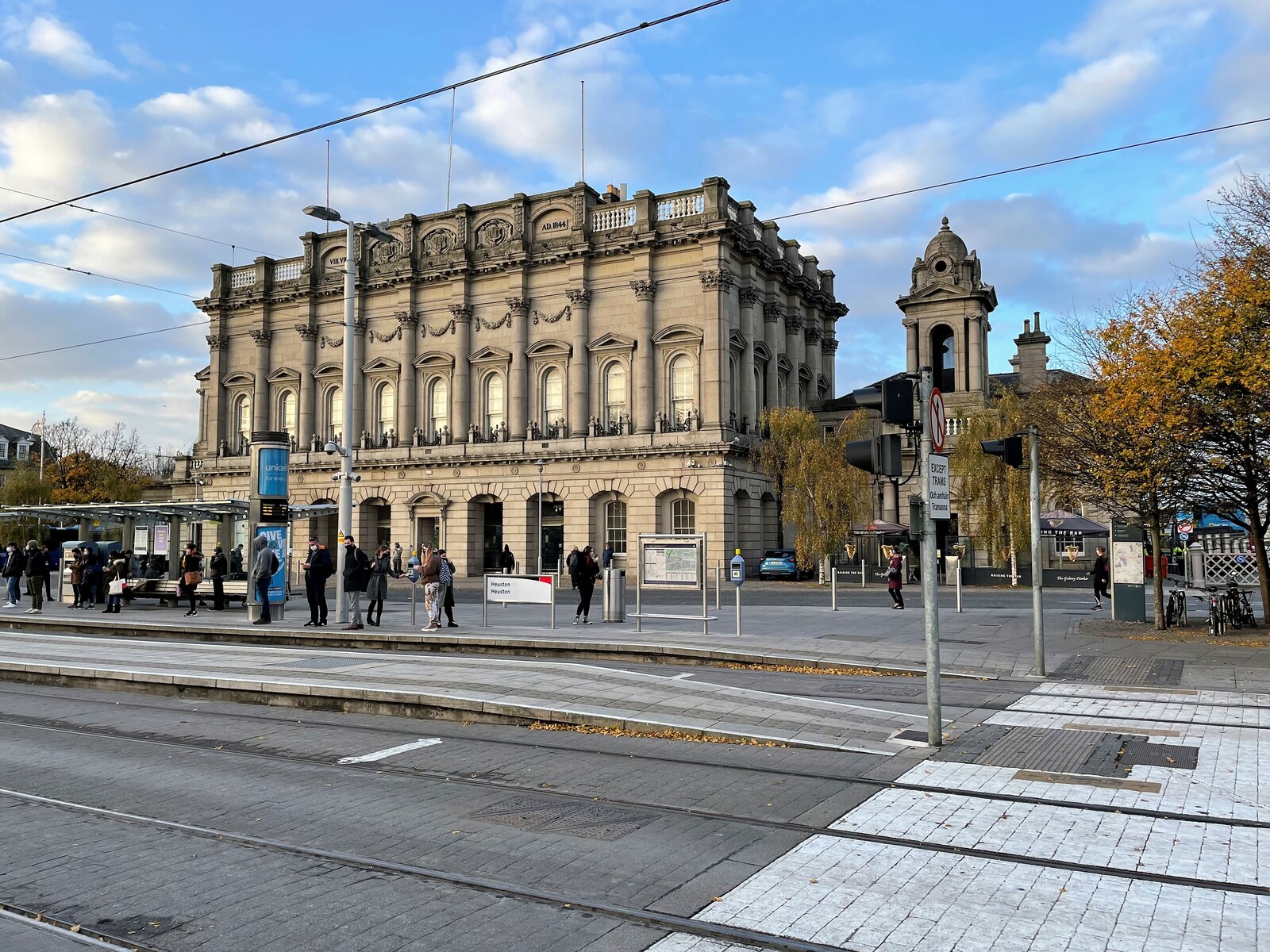
Dublin Heuston sits on the north bank of the Liffey at the western end of the quays, beside the Phoenix Park and a short walk from Kilmainham Gaol. It handles everything to the south and west: Cork, Galway, Limerick, Waterford, Tralee, Westport, Ballina, Kilkenny. It is about a twenty-five minute walk from Temple Bar, or a straightforward Luas Red Line ride.
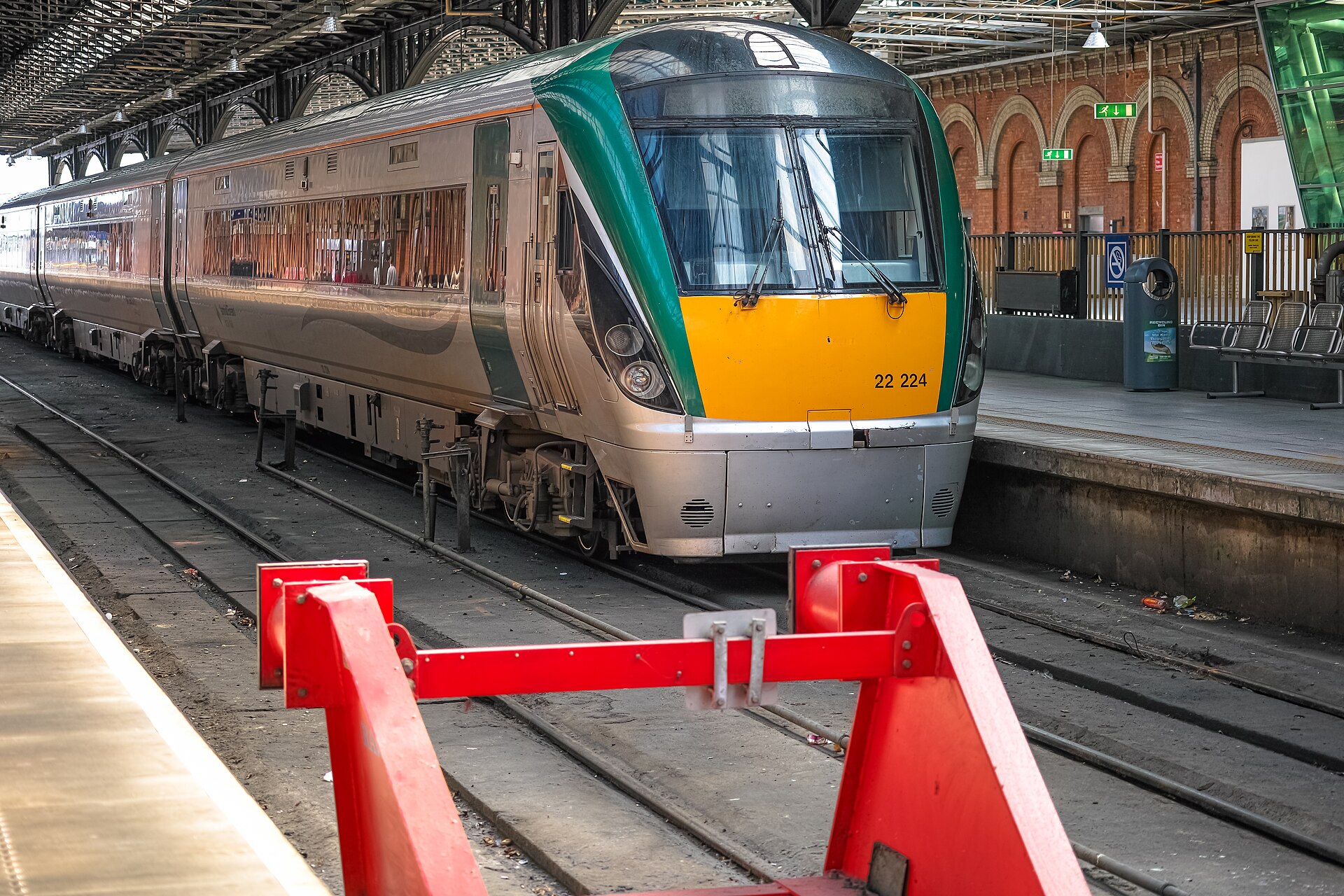
Dublin Connolly sits in the north inner city near Amiens Street and Talbot Street, ten minutes from O’Connell Street. It handles the north and the east coast: the Enterprise to Belfast, Sligo, and Rosslare Europort — and it is a DART station, so it is also where you catch the coast trains to Howth and Bray.
The Luas Red Line runs between them, seven stops from Connolly to Heuston, and is the standard way to transfer. Allow more time than you think if you are changing between a Connolly arrival and a Heuston departure, particularly with luggage — see getting around Dublin.
The Routes Worth Taking
Every Irish Rail tourist guide lists the same destinations; what follows is what each one is actually for.
Dublin to Cork
The flagship route: roughly hourly from Heuston, about two and a half to two and three-quarter hours, calling at Limerick Junction (change for Tipperary) and Mallow (change for the Killarney and Tralee line). Cork is Ireland’s second city, it has the English Market, a genuinely good food scene and a distinct accent that will take you a day to tune into, and it is the obvious base for Kinsale, Cobh and west Cork.
Dublin to Galway
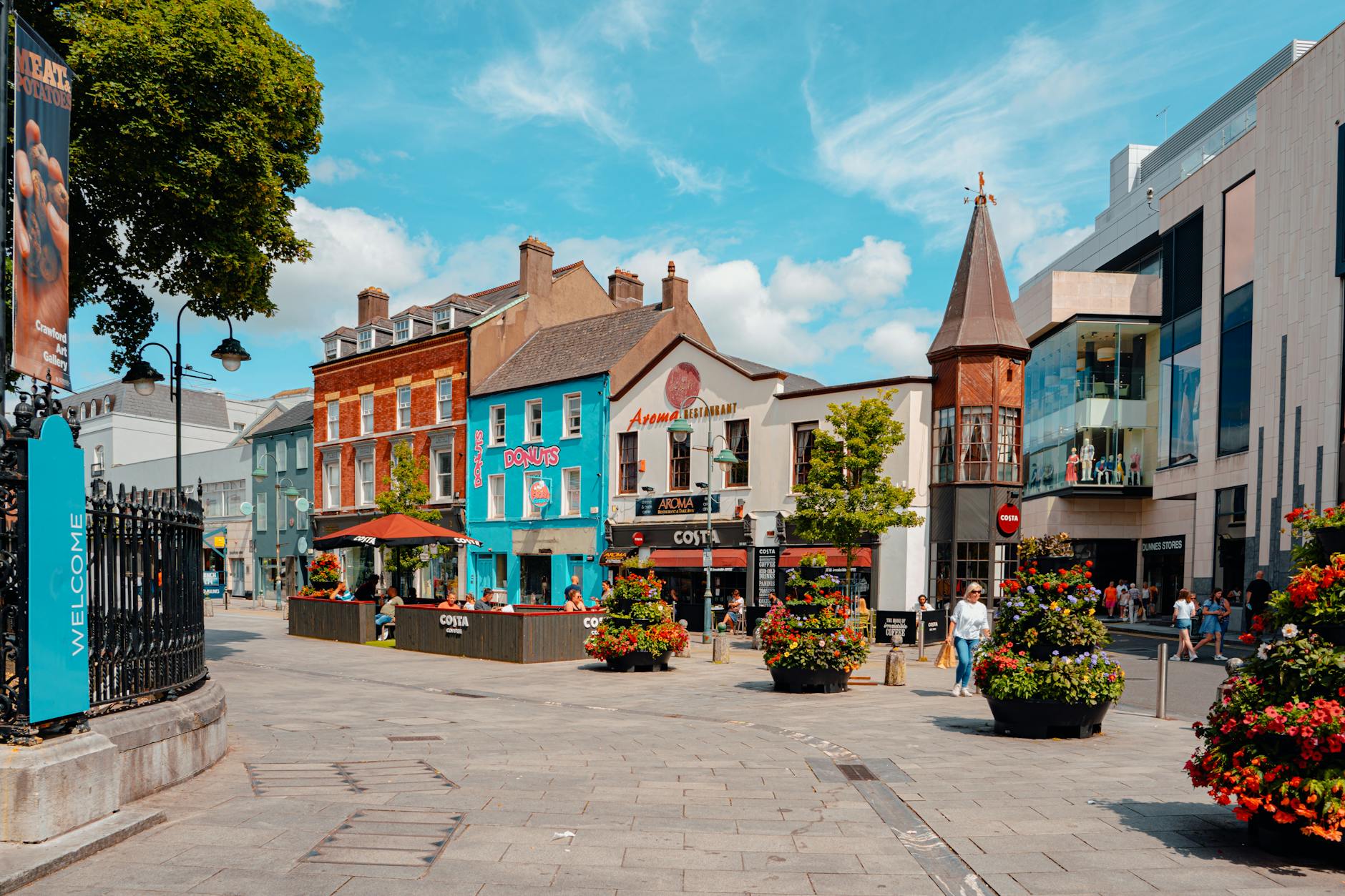
About two and a half hours from Heuston, roughly every two hours, across the middle of the country to the Atlantic. Galway is the best small city in Ireland for a weekend — compact, musical, and the gateway to Connemara, the Burren, the Aran Islands and the Cliffs of Moher. If the west is what you came to Ireland for, this is the train to take, and it is exactly why we tell people not to attempt the Cliffs as a day trip from Dublin. See Galway from Dublin and the Cliffs of Moher.
Dublin to Limerick
About two and a half hours from Heuston. There are two routes — a direct service and a slower one via Nenagh — so check which one your ticket is for. Limerick has King John’s Castle, the Hunt Museum and the Milk Market, and it is the base for the Wild Atlantic Way’s middle section.
Dublin to Killarney and Tralee
The longest of the standard routes at about three and a half hours from Heuston, running via Mallow. Killarney is the gateway to the Ring of Kerry, the Gap of Dunloe and Killarney National Park, and it is one of the few Irish towns where you genuinely do not need a car once you arrive — the park starts at the edge of the town and jaunting cars, bikes and boats do the rest. This is the best long rail journey in the country for a visitor.
Waterford, Westport and Ballina
Waterford is about two and a quarter hours from Heuston and gives you the Viking Triangle and the House of Waterford Crystal. Westport, about three and a half hours, is the prettiest planned town in Ireland and sits under Croagh Patrick beside Clew Bay, with the Great Western Greenway for cycling. Both are underrated and both are easy.
Kilkenny and Waterford: the short hops
Kilkenny is about an hour and a half from Heuston and is the single best short rail journey out of Dublin — a medieval town small enough to walk in an afternoon, with a castle, a cathedral with a climbable round tower, and the Butler gallery. It works comfortably as a day trip, which most of the longer routes do not. Waterford, about 45 minutes further on the same general line, gives you Ireland’s oldest city, founded by Vikings in 914, and the Viking Triangle. See Kilkenny from Dublin.
From Connolly: Sligo, Rosslare and Belfast
Sligo is about three hours and puts you in Yeats country under Benbulben. Rosslare Europort is the ferry terminal for France and south Wales. And the Enterprise to Belfast is the best cross-border service on the island — about two hours and eight minutes to Belfast Grand Central, roughly fifteen departures a day Monday to Saturday and eight on Sunday, with cheap singles from around €15.99. Note that online booking closes 80 minutes before departure and a Leap Card is not valid. See the Enterprise guide and Dublin vs Belfast.
Tickets, Fares and When to Book
The booking rules are the part of any Irish Rail tourist guide that saves you real money.
- Book online in advance. Advance fares are the cheapest and are tied to a specific train rather than a time band, so you lose flexibility in exchange for the price.
- Travel off-peak. The quoted cheap windows are 09:30 to 16:00 and after 19:00. Friday evening and Sunday trains are often busy.
- Reserve a seat where the option exists, particularly on the Cork and Galway routes at weekends.
- A Leap Card does not work on intercity services. It covers Dublin Bus, the DART, the Luas and Dublin-area commuter trains. Intercity needs its own ticket. See the Leap Card guide.
- Children, students and seniors get reduced fares; bring the relevant card if you are claiming one.
- Timetables change. Versions carry validity dates and a December 2026 timetable consultation was under way as of autumn 2026, so check irishrail.ie rather than an old printout.
As a rough planning figure, an intercity single booked in advance is usually well under the cost of a day’s car hire plus fuel and parking, and for one or two people travelling city to city the train wins comfortably on money as well as on stress. For three or four people going to places the railway does not serve, a car wins — see renting a car in Dublin.
What the Trains Are Actually Like
Worth setting expectations, because an Irish Rail tourist guide written for continental travellers will disappoint you and one written for Americans will oversell it.
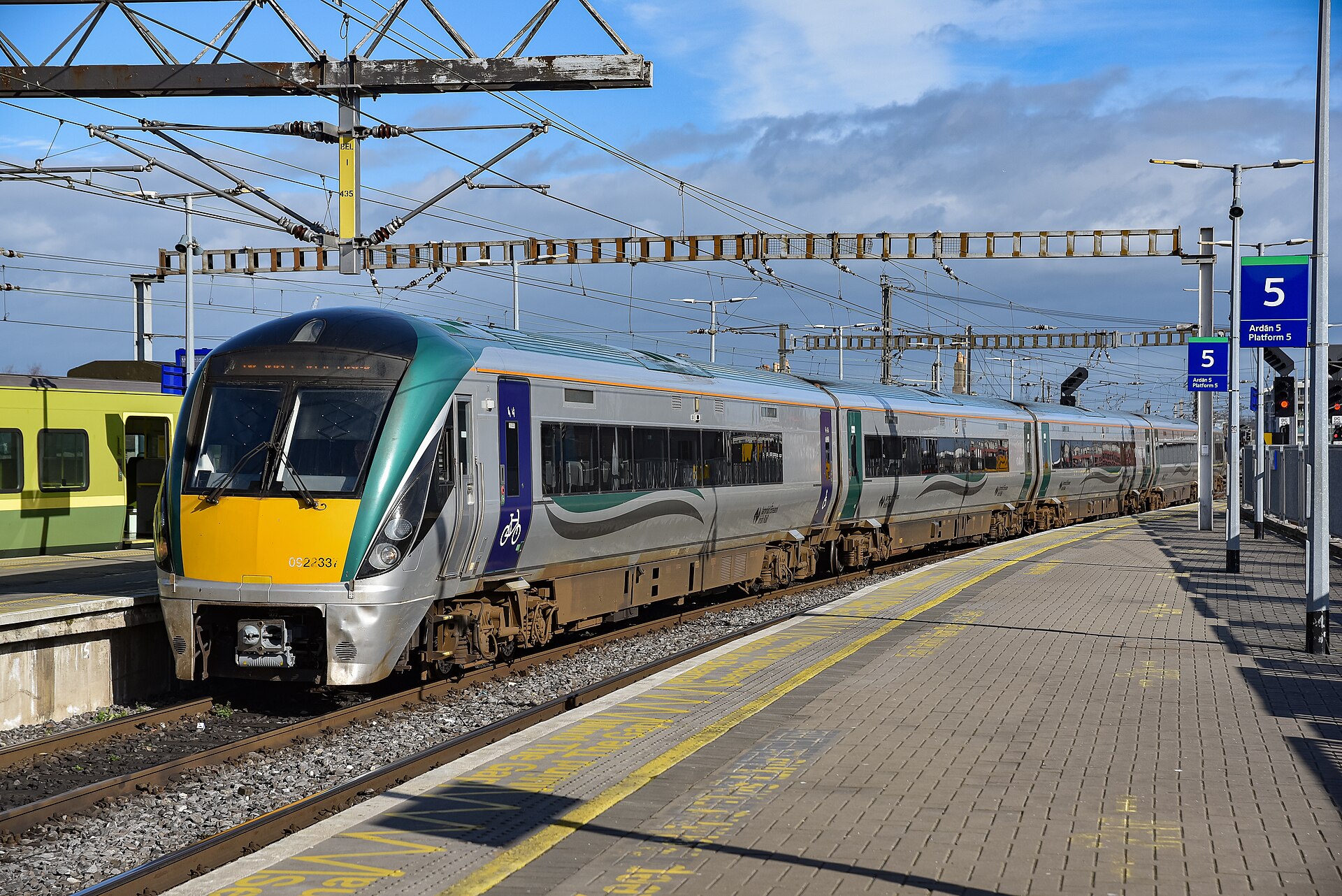
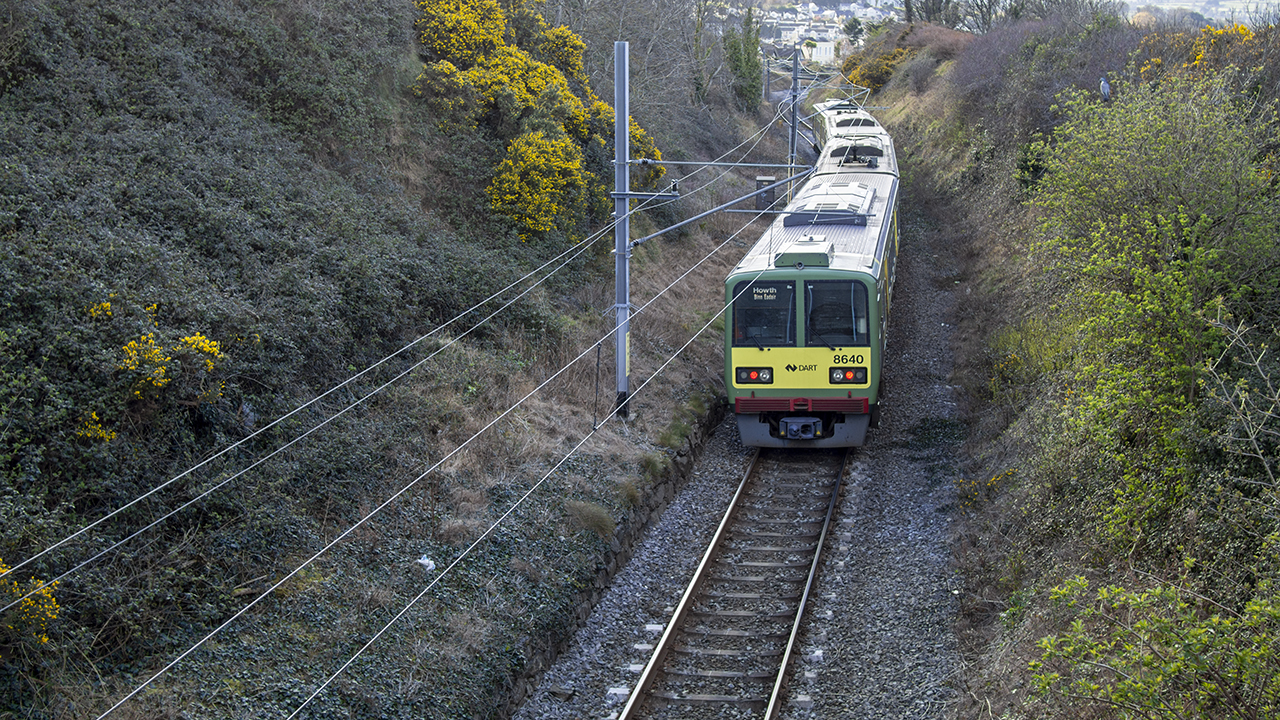
Better than most visitors expect and worse than the Continent. The intercity fleet is modern, clean and comfortable, with power sockets, tables at some seats, a catering trolley or a café car on the longer runs, and generally reliable wifi that you should not depend on. Luggage space is adequate rather than generous. There is no separate first class on most services, though some routes offer a premium carriage.
Punctuality is decent. Frequency is the real limitation: outside the Cork line, “roughly every two hours” means a missed train costs you a substantial chunk of the day, and Sunday services are thinner everywhere. Plan around the timetable rather than assuming you can turn up.
The scenery is the underrated part. The Dublin–Cork run crosses the midlands, which are flat and green and not much else, but the Killarney line through Mallow, the Westport line into Mayo and the DART along Dublin Bay are genuinely lovely. The single most beautiful short rail journey in the country is arguably the DART between Dublin and Bray — see the DART guide and the Bray to Greystones walk.
Day Trips by Train from Dublin
The most useful section of an Irish Rail tourist guide for anyone staying put in Dublin.
Not everything needs an overnight. Within comfortable day-trip range on the rail network:
- Howth — about half an hour on the DART from Connolly, a cliff walk and a fishing harbour. See the Howth cliff walk.
- Dún Laoghaire, Dalkey and Killiney — DART south, gentler and with a good castle. See the southside coast guide.
- Bray to Greystones — DART to Bray, walk the cliff path, DART home from Greystones.
- Malahide — north on the DART for the castle and gardens. See Malahide Castle.
- Kilkenny — about an hour and a half from Heuston, and the prettiest medieval town in the country. See Kilkenny from Dublin.
- Belfast — two hours from Connolly, and a full day. See the Belfast day trip.
- Galway — possible in a day at two and a half hours each way, but a stretch. Better as an overnight.
Our day trips without a car guide covers the whole set including the coach-only options.
Luggage, Children and Accessibility
Three practical things an Irish Rail tourist guide usually leaves out, and all three matter more than the timetable if they apply to you.
- Luggage. There is no separate baggage car and no weight limit, but rack space is finite and fills on busy services. Large cases end up in the vestibule. If you are travelling with big bags on a popular Cork or Galway service, board early rather than at the last whistle.
- Children. Reduced fares apply and under-fives generally travel free, but they need a seat reservation of their own if you want them sitting with you on a busy train. Family groups do far better booking together in one transaction than separately.
- Accessibility. Irish Rail asks for advance notice for wheelchair users and passengers needing boarding assistance — an hour at major stations such as Heuston, Connolly, Galway, Waterford and Kilkenny, four hours at other intercity stations and for DART and commuter services — and staffing at smaller stations is limited. Book the assistance when you book the ticket, not on the day.
- Bikes. Carriage varies by route and by service, and space is limited where it exists at all. Check before you turn up with one; the greenways are usually the better plan.
Building an Ireland Trip Around the Railway
The network radiates from Dublin like spokes, which has one important consequence: travelling between two provincial cities usually means changing, and sometimes means going back through Dublin. Cork to Galway, for instance, is not a simple journey. Plan a rail trip as a series of returns from Dublin, or as a single line out and back, rather than as a loop.
Two shapes work particularly well.
The line, seven to eight days. Dublin for three nights, train to Cork for two, on to Killarney for two, and fly home from Kerry or Shannon — or come back up the line. This never doubles back, uses the frequent Dublin to Cork main line, and finishes in Killarney.
The two spokes, seven days. Dublin for three nights, Galway for two with a day into Connemara or out to the Aran Islands, back through Dublin, then Belfast for two on the Enterprise. More train time, but it gives you the west coast and a second country, and every leg is under three hours.
What does not work is trying to string provincial cities together — Cork to Galway, Galway to Killarney, Sligo to anywhere — without accepting long changes or a return through Dublin. Our Dublin and Ireland itinerary and one-week itinerary set out the options in more detail.
Where the Train Does Not Go
No honest Irish Rail tourist guide can skip this, because the gaps are exactly where visitors most want to be.
Being straight about this matters more than listing the routes, because the gaps are exactly where visitors most want to be.
- The Cliffs of Moher — no station. Nearest is Ennis, then a bus, taxi or tour.
- The Ring of Kerry — Killarney is the railhead; the ring itself needs a car, a bus tour or a bike.
- Connemara and the Wild Atlantic Way — Galway is the railhead and no further.
- The Giant’s Causeway — Belfast by train, then the coast by bus or tour. See the Causeway guide.
- Glendalough and the Wicklow Mountains — no railway at all. Bus or car. See Glendalough.
- Newgrange and the Boyne Valley — no railway. Coach tour or car; see Newgrange and Trim Castle.
- Donegal — no railway in the county at all.
The honest summary: the train is excellent for city-to-city travel and useless for the countryside. Most well-planned Irish trips use rail between cities and a car, bus or tour for the two or three days spent in the landscape.

Gotchas
The mistakes that cost people a day, collected from every Irish Rail tourist guide question we get asked.
- Heuston and Connolly are different stations on opposite sides of Dublin. Check your ticket. The Luas Red Line links them, seven stops apart.
- A Leap Card does not cover intercity trains or the Enterprise to Belfast.
- Advance fares are tied to a specific train. Miss it and the ticket may not be valid on the next one.
- Most routes run about every two hours, not every thirty minutes. A missed train is a serious delay.
- Sunday services are thinner across the whole network.
- Enterprise online booking closes 80 minutes before departure from the origin station.
- Two different Limerick routes exist, one direct and one slower via Nenagh.
- Killarney is on the Tralee line via Mallow, not a separate service.
- Timetables carry validity dates and do change — a December 2026 revision was under consultation. Check the operator.
- Cork to Galway is not a simple journey. The network radiates from Dublin; plan lines, not loops.
FAQ: The Irish Rail Tourist Guide Questions We Get Asked
Is it easy to travel Ireland by train?
Easy between cities, impossible in the countryside. The intercity network is modern, comfortable and straightforward to book, and it links Dublin to Cork, Galway, Limerick, Killarney, Waterford, Sligo and Belfast in two to three and a half hours. But it radiates from Dublin, most routes run only every two hours, and it does not reach the Cliffs of Moher, the Ring of Kerry, Connemara, Glendalough or Donegal. Use it for city hops and something else for the landscape.
Which Dublin station do I need for Galway?
Dublin Heuston, on the western edge of the city beside the Phoenix Park. Heuston handles everything to the south and west — Galway, Cork, Limerick, Waterford, Tralee, Westport, Ballina and Kilkenny. Connolly, in the north inner city, handles Belfast, Sligo and Rosslare plus the DART. The two are linked by the Luas Red Line, seven stops apart, and turning up at the wrong one is the most common mistake visitors make.
How far in advance should I book Irish Rail?
As far ahead as your plans are firm, because advance online fares are the cheapest and they sell in limited numbers. They are tied to a specific train, so you are trading flexibility for price. For a weekend journey to Cork or Galway, book at least a week or two out and reserve a seat. Off-peak windows of 09:30 to 16:00 and after 19:00 are cheapest.
Can I use a Leap Card on intercity trains?
No. A Leap Card covers Dublin Bus, the DART, the Luas and Dublin-area commuter rail. Intercity services need their own ticket, and the Enterprise to Belfast is not covered either. This trips up a lot of visitors who have used the card successfully all week in Dublin and assume it extends to the whole network.
How long is the train from Dublin to Cork?
About two and a half to two and three-quarter hours from Dublin Heuston, running roughly hourly. It calls at Limerick Junction, where you change for Tipperary, and Mallow, where you change for the Killarney and Tralee line. Cork is comfortably doable as an overnight from Dublin and is a poor day trip.
Is the train cheaper than hiring a car?
For one or two people travelling city to city, often — an advance intercity single is frequently cheaper than car hire plus fuel and parking, and you avoid driving on unfamiliar roads. For three or four people, or for anywhere the railway does not serve, a car wins on both cost and access. Many good Irish trips use both: rail between cities, a car or tour for the countryside days.
Can you get to the Cliffs of Moher by train?
No. There is no station at the Cliffs and no railway anywhere near them. The nearest station is Ennis, on the Limerick to Galway line and about 40 minutes’ drive away; from there you need a bus, a taxi or an organised tour for the last leg, and Bus Éireann’s 350 links both Ennis and Galway to the Cliffs. With no direct rail link, the Cliffs make a very long day trip from Dublin.
What are Irish trains like?
Modern, clean and comfortable, with power sockets, a catering trolley or café car on longer runs, and wifi you should not rely on. Luggage space is adequate rather than generous and there is no separate first class on most services. Punctuality is decent. The real limitation is frequency rather than quality — outside the Cork line, roughly every two hours, and thinner again on Sundays.
Which is the most scenic Irish train journey?
For a short one, the DART along Dublin Bay between the city and Bray, which runs right along the sea and through Killiney. For a longer one, the Killarney line through Mallow into Kerry, or the Westport line into Mayo under Croagh Patrick. The Dublin to Cork main line crosses the midlands and is comfortable rather than beautiful.
Keep Planning
- Getting Around Dublin — the parent guide to bus, DART, Luas and taxis.
- The Dublin to Belfast Train — the Enterprise in detail.
- Galway from Dublin — the western terminus and what to do there.
- Kilkenny from Dublin — the best short rail day trip.
- Day Trips Without a Car — rail, coach and DART options.
- The DART Guide — the coastal line, and the best cheap journey in Ireland.
- Dublin & Ireland Itinerary — building a trip around the network.
- Renting a Car in Dublin — for everywhere the train does not go.
Keep Reading
Photo Credits
InterCity trains at Heuston: 21.08.21 Dublin Heuston 234 and 22135 (51400570800) by Phil Richards, CC BY-SA 2.0, via Wikimedia Commons.
InterCity railcar under Connolly’s roof: CONNOLLY TRAIN STATION-1001 (14701961440) by William Murphy, CC BY-SA 2.0, via Wikimedia Commons.
InterCity railcar at Connolly: 22337 Dublin Connolly by The Nikon User, CC BY 2.0, via Wikimedia Commons.
Heuston station forecourt: Dublin Heuston railway station (geograph 7024410) by Nigel Thompson, CC BY-SA 2.0, via Wikimedia Commons.
DART in Bray: DART train, Bray – geograph.org.uk – 6781511 by Rossographer, CC BY-SA 2.0, via Wikimedia Commons.
Lean na Comharthaí — Keep following the signs