Holyhead to Dublin Ferry: Stena vs Irish Ferries, Times, Prices & Tips
Bád Farantóireachta ó Chaergybi go Baile Átha Cliath
Ar an gComhartha Seo — On this sign
- Quick Answer: What You Need to Know
- The Passport Rule: Read This Before You Book
- The Two Operators
- Crossing Times, Frequency and Fares
- Foot Passengers: The Bit Nobody Warns You About
- Taking a Car
- Getting to Holyhead
- Ferry or Fly?
- What the Crossing Is Actually Like
- When You Land: Getting into Dublin
- Gotchas
- FAQ: The Holyhead to Dublin Ferry
- Keep Planning
- Keep Reading
- Photo Credits
The sea route between Wales and Ireland has been the main way between the two islands for a very long time, and it is still the way most cars, most caravans, most dogs and a surprising number of people cross. Eight sailings a day leave Holyhead on Anglesey for Dublin Port, run by two operators, on ships ranging from a large conventional ferry with cabins and a cinema to a high-speed catamaran that does the crossing in a little over two hours. It is comfortable, it is scenic on a clear day, and until very recently you could board it with a driving licence.
You cannot any more. From Monday 28 September 2026, every passenger on the Holyhead–Dublin route needs a valid passport — every nationality, every age, both directions, no exceptions. That is the single most important thing on this page and it caught a lot of regular travellers out. This guide covers the Holyhead to Dublin ferry in full: the new document rules, the two operators compared, real crossing times and fares, the foot-passenger problem at Dublin Port that nobody warns you about, taking a car, and the honest comparison against flying.
Quick Answer: What You Need to Know
Two operators — Irish Ferries and Stena Line — run roughly eight crossings a day between them, about four each, year-round. A conventional sailing takes about three hours and a quarter; the fast craft is quicker when it runs, and the range across the fleet is roughly two and a quarter to three and a half hours. Foot-passenger fares vary by date and operator, so check the booking page for the day you want to sail; vehicles are priced separately.
Two things will trip you up if nobody tells you. The first is the passport rule from 28 September 2026 — driving licences and national ID cards are no longer accepted by either operator. The second is that Irish Ferries and Stena Line use different terminals at Dublin Port, they are a ten- to twelve-minute walk apart, and only one of them is served by a public bus. If you are travelling on foot with Stena, book their transfer coach when you book the crossing. The Holyhead to Dublin ferry is a good way to travel; it is a bad way to improvise.
| Detail | |
|---|---|
| Operators | Irish Ferries and Stena Line |
| Crossings a day | About 8 combined, roughly 4 each, year-round |
| Crossing time | ≈3h 15m typical; range about 2h 15m–3h 30m |
| Foot passenger fare | Varies by date and operator |
| Documents | Passport required for all passengers from 28 Sep 2026 |
| Dublin terminals | T1 Irish Ferries · T2 Stena Line · 10–12 min apart |
| Bus from T1 | Dublin Bus 53, from Talbot Street via Connolly |
| Bus from T2 | Stena’s own transfer coach — book with your ticket |
| Port to city centre | A short bus or taxi ride |
The Passport Rule: Read This Before You Book
From Monday 28 September 2026, Stena Line and Irish Ferries require a valid passport, or an Irish passport card, from every passenger travelling between Ireland and Britain by sea. It applies to the Dublin–Holyhead route and to the Rosslare crossings to Pembroke and Fishguard, in both directions.
- Everyone is covered. Irish citizens, British citizens, children and infants — there is no exemption by nationality or by age.
- Driving licences and national identity cards are no longer accepted, nor are the other forms of photo ID that used to be enough.
- The stated reason is alignment with airline document checks and compliance with UK Border Force requirements on the accuracy and integrity of passenger data before boarding.
- It is a carrier rule, not an immigration one. The Common Travel Area is unchanged and there is no passport control between Ireland and Britain. That distinction is of no use whatsoever at a check-in desk in Holyhead.
Check your own booking against Stena Line’s document requirements or the Irish Ferries help pages, because policies of this kind get amended. If you are not a British or Irish citizen you also need to satisfy Irish entry rules in your own right — a UK visa does not admit you to Ireland. See Dublin visa requirements.
One piece of good news: Ireland is not in the Schengen area, so the EU’s Entry/Exit System and the ETIAS authorisation do not apply here. Your checklist is a passport and, if it applies to you, an Irish visa.
The Two Operators
Only two companies run the Holyhead to Dublin ferry, they have carved the route up fairly evenly, and the differences between them are real but modest.
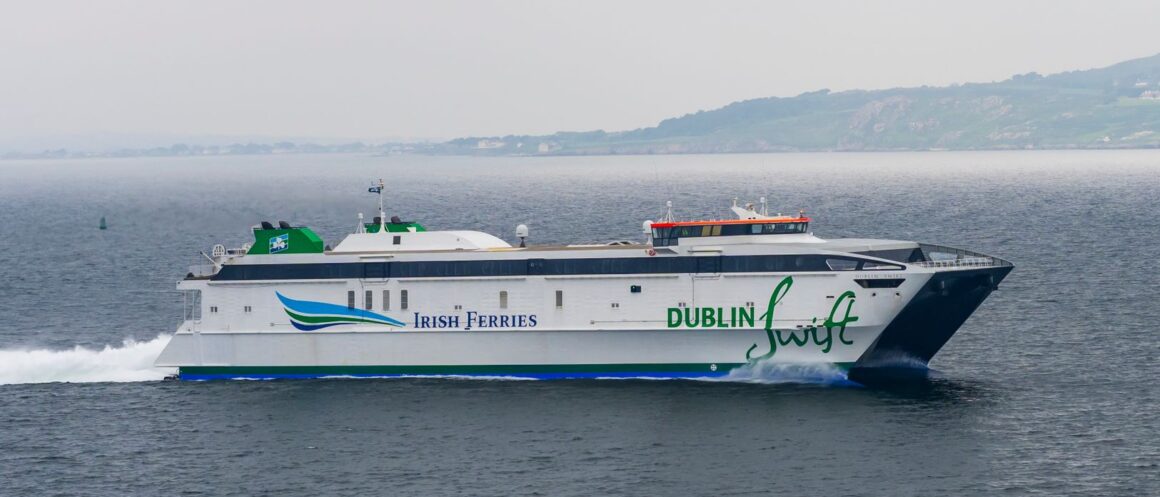
- Irish Ferries sail into Terminal 1 at Dublin Port and operate both a large conventional ferry and, seasonally, the Dublin Swift fast craft, which cuts the crossing to around two hours. The conventional ship is the bigger and more comfortable of their two; the Swift is quicker but more weather-sensitive and does not carry the same facilities.
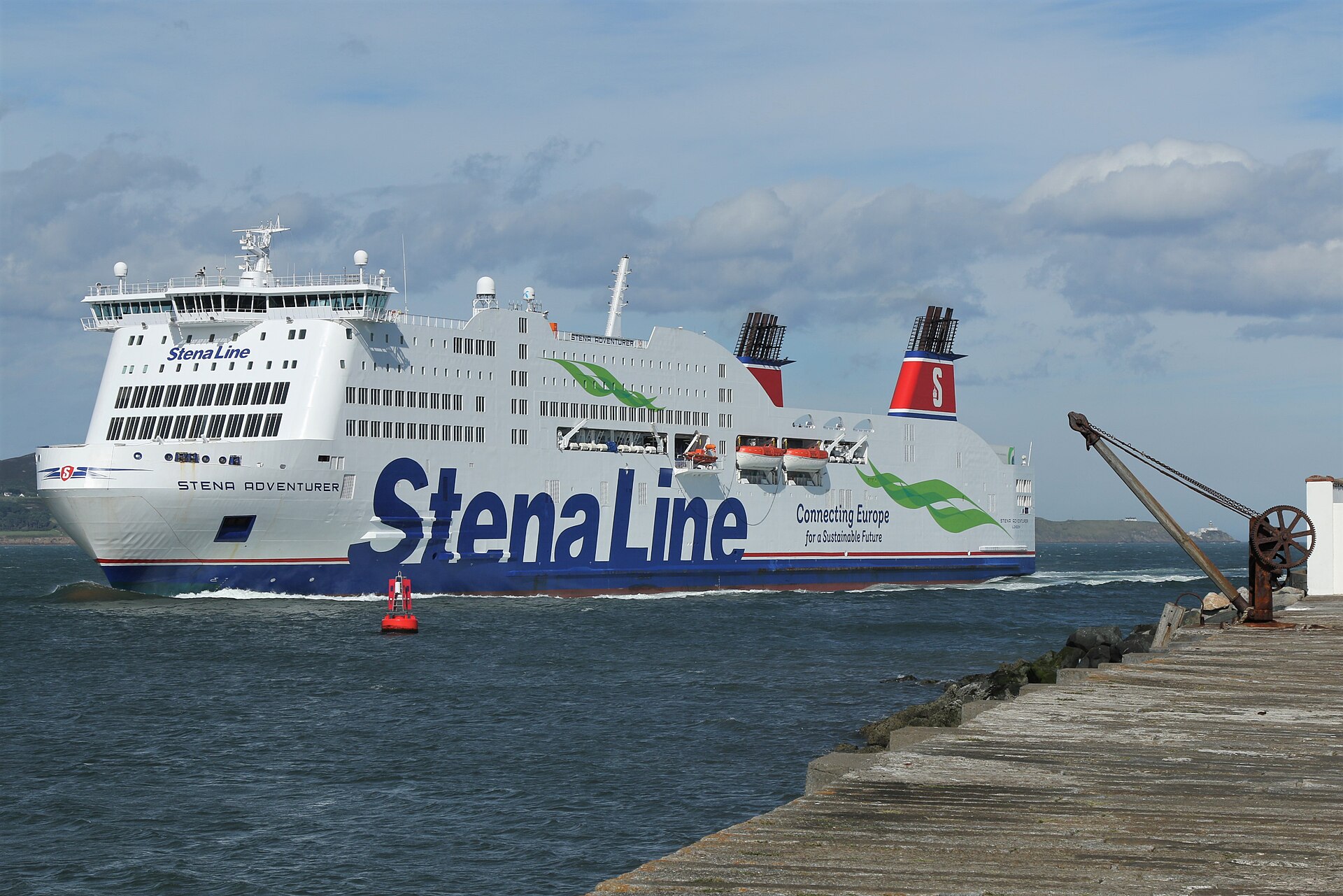
- Stena Line sail into Terminal 2 and run conventional ferries throughout, with cabins, lounges and a decent food offer. Stena also operate the dedicated foot-passenger transfer coach at Dublin Port, which matters more than it sounds.
For a foot passenger, the deciding factor is usually the terminal and the onward transfer rather than the ship. For a driver, it is the sailing time and the price on your date. Both operators sell the same route on price-led fares that move a great deal with season and demand, so check both.
Crossing Times, Frequency and Fares
The two operators run about four sailings each per day, giving roughly eight crossings daily in each direction, all year. A conventional crossing takes about three hours and a quarter. The fast craft, when it is operating, is materially quicker — around two hours and a quarter — but it is more likely to be cancelled or downgraded in bad weather, which on the Irish Sea in winter is not a remote possibility.
Foot-passenger fares move with the date and the operator, and with school holidays, bank holidays and the summer. Vehicle fares are separate and depend on the length of the vehicle and the number of passengers in it. Book ahead: this is a route where the walk-up fare and the advance fare are very different numbers.
Worth knowing that a fare comparison against flying has to include the cost of getting to Holyhead, which for anyone starting in London is a four-hour train from Euston. Our Dublin weekend from London guide runs that comparison properly.
Foot Passengers: The Bit Nobody Warns You About
This is where the Holyhead to Dublin ferry most often goes wrong, and it is entirely avoidable if you know in advance.
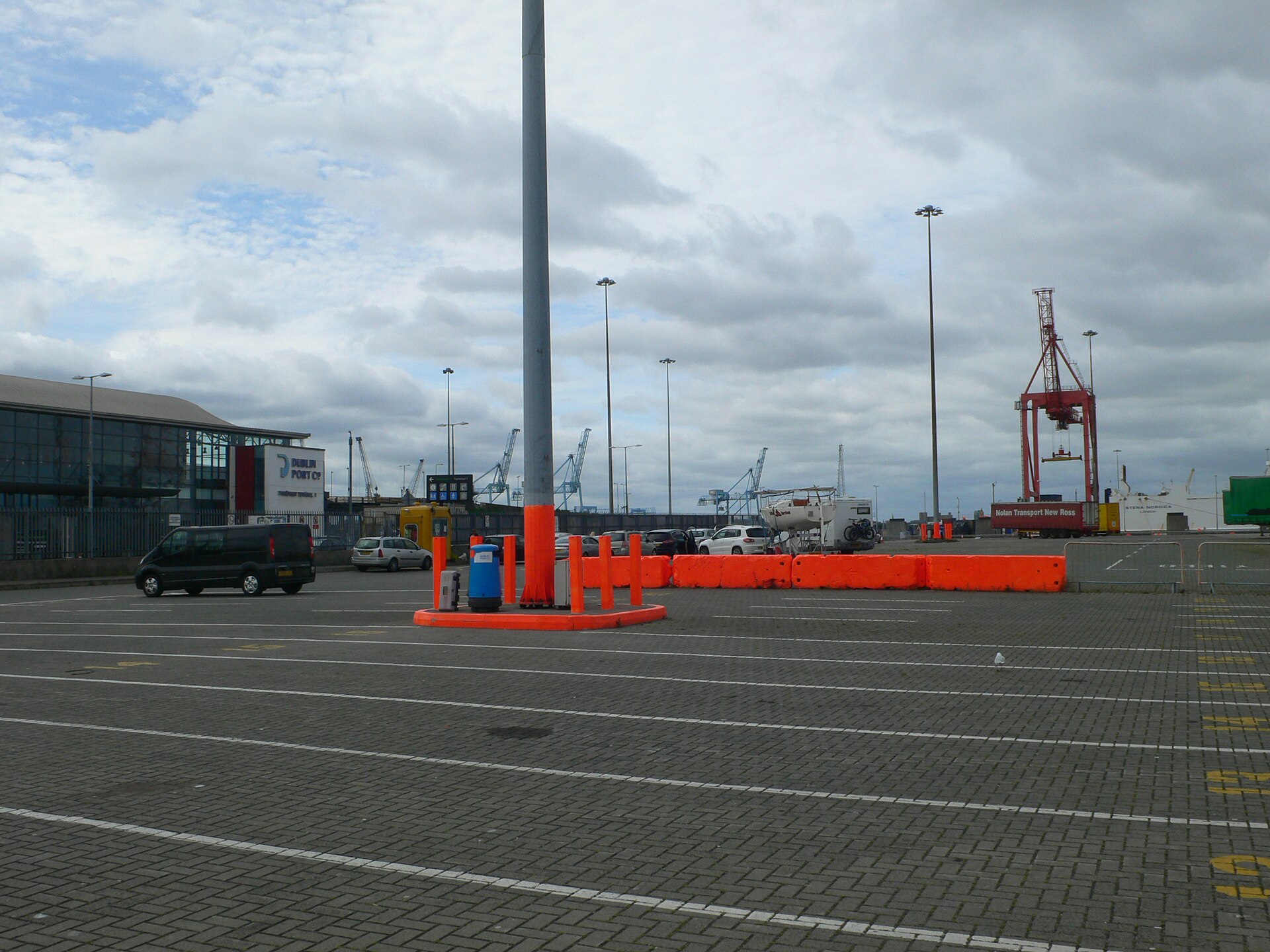
Dublin Port has two ferry terminals. Terminal 1 is Irish Ferries (and the Isle of Man Steam Packet). Terminal 2 is Stena Line. They are a ten- to twelve-minute walk apart, and — this is the important part — they are not served the same way:
- Terminal 1: Dublin Bus route 53 runs to it, departing the city centre from Talbot Street via Connolly Station. That is a normal public bus on a normal fare, and a Leap Card works. See the bus routes guide and the Leap Card guide.
- Terminal 2: the 53 does not serve it. Stena Line run their own dedicated transfer coach for foot passengers, and it is bookable at the same time as your ferry ticket. Book it with the crossing. Turning up at Terminal 2 on foot without transport arranged is the classic mistake on this route.
- The Luas Red Line has a stop at The Point, opposite the port entrance, which gives you another way in and out — though it still leaves a walk on the port side.
- Taxis serve both terminals and the run into town is short. See the taxi guide.
Dublin Port itself is a working freight port, not a passenger facility with a promenade — it is only a few kilometres from the city centre but it is not somewhere to walk out of casually with luggage. Plan the last two kilometres as carefully as you plan the sea crossing.
Taking a Car
This is the main reason to sail rather than fly, and it is a good one. A car on the ferry means you arrive in Ireland with your own vehicle, your own luggage allowance and your own child seats, and the price of a car plus two adults is frequently less than four budget airline tickets plus a hire car.
A few practical points:
- Both countries drive on the left, so there is no adjustment. Irish speed limits and distances are in kilometres, not miles.
- Check your insurance covers the Republic. Many UK policies do, some only at a reduced level, and a green card is worth asking about.
- A car is a liability in Dublin itself. City-centre parking is expensive and scarce and much of the core is bus-gated or pedestrianised. Park it and use the buses, or leave it out of the city altogether and use it for day trips instead. Renting a car in Dublin explains when a car does and does not make sense.
- Arrive at the check-in window the operator gives you, not at the sailing time. Vehicle check-in closes well before departure.
- Bicycles and motorbikes carry cheaply and are a good way to do this route.
Getting to Holyhead
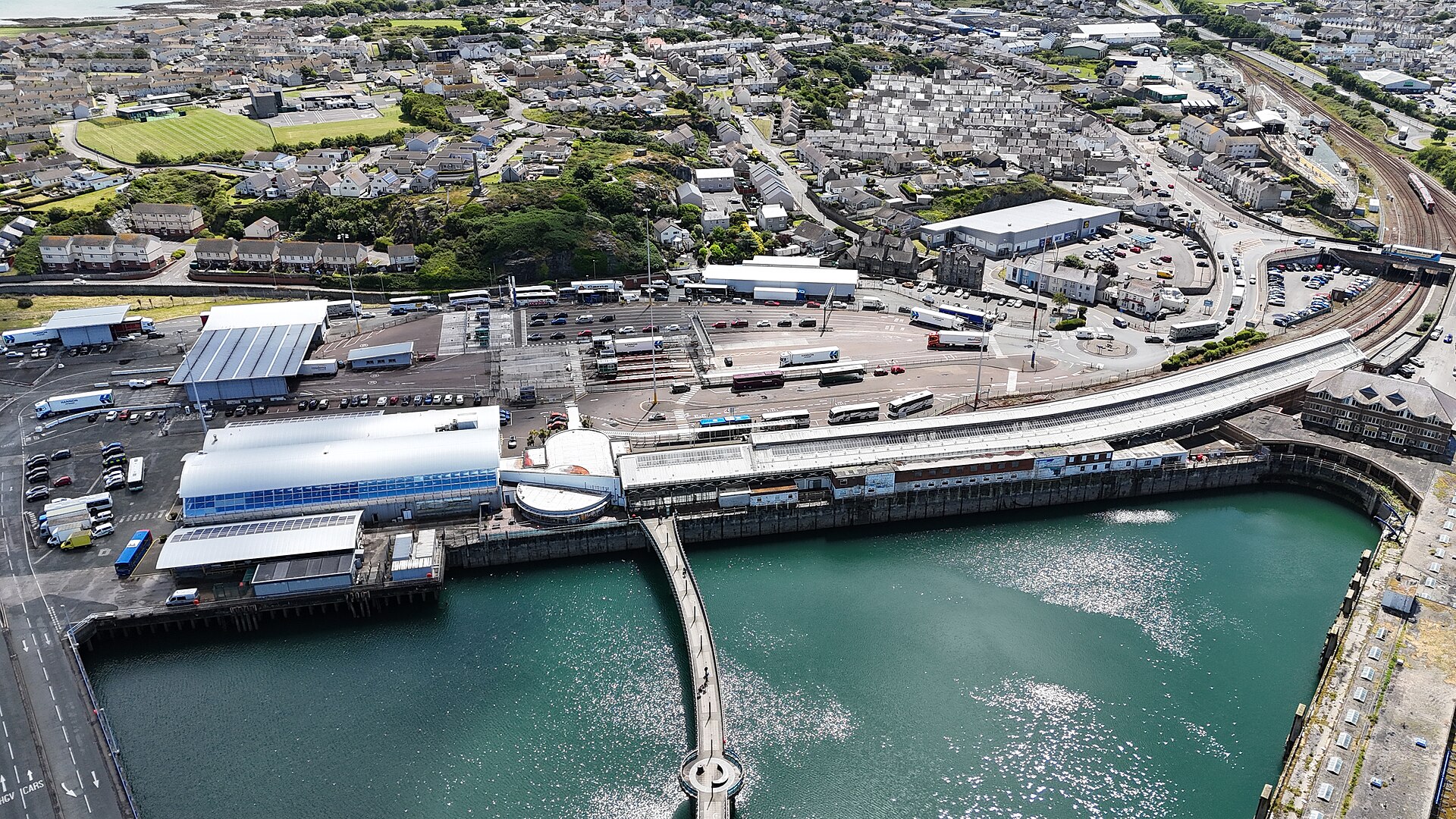
Half the journey happens before you see a ship. Holyhead sits at the far end of Anglesey in north-west Wales, and the railway station is right beside the ferry terminal — one of the neatest interchanges in these islands, and a genuine advantage over an airport.
From London, it is about four hours from Euston via Chester and the north Wales coast, and the last hour of that runs along the sea with the mountains of Snowdonia inland. From Manchester, Liverpool or Birmingham it is considerably shorter, which is why the ferry makes far more sense from the north-west and the Midlands than it does from the south-east. Compare it with flying into Dublin Airport on your own numbers before booking. Coach services also run to the port.
Allow proper time for the connection. If your train is late and you miss the sailing, the next one may be three hours away, and there are only eight a day.
Ferry or Fly?
Honest comparison, because a lot of pages selling ferry tickets will not give you one.
| Ferry | Flying | |
|---|---|---|
| Time at sea or in the air | ≈3h 15m | ≈80 minutes |
| Door to door from London | Much longer | Much shorter |
| Door to door from Manchester | Longer | Shorter |
| Luggage | Generous, effectively free | Charged and strictly enforced |
| Cars, bikes, dogs | Yes | No |
| Comfort | Walk about, cabins, proper food | Seated throughout |
| Weather risk | Real, especially on the fast craft | Lower |
| Arrives | Dublin Port, just east of the centre | Dublin Airport, about 10 km (6 miles) north |
Take the ferry if you are bringing a vehicle, a bike or a dog; you have a lot of luggage; you are travelling from north Wales, the north-west or the Midlands; you do not fly; or you want the journey to be part of the trip. Fly if you are on a short city break from London with hand luggage, because the ferry will eat two days of a two-night trip.
What the Crossing Is Actually Like
Better than most people expect. The conventional ships are large, stable in normal conditions, and set up for a three-hour crossing: reserved seating, lounges, bars, cafés and restaurants, cabins on some sailings, shops, and outside deck space. There is enough room to walk about, which after four hours on a train is genuinely welcome, and the food is a considerable improvement on an aircraft.
The Irish Sea is not always kind. Winter crossings can be rough, and Met Éireann’s storm-naming season starts on 1 September, so autumn sailings are the ones to watch. Check Met Éireann and the operator’s service page before you set off, and if you are prone to seasickness, take something before boarding rather than after.
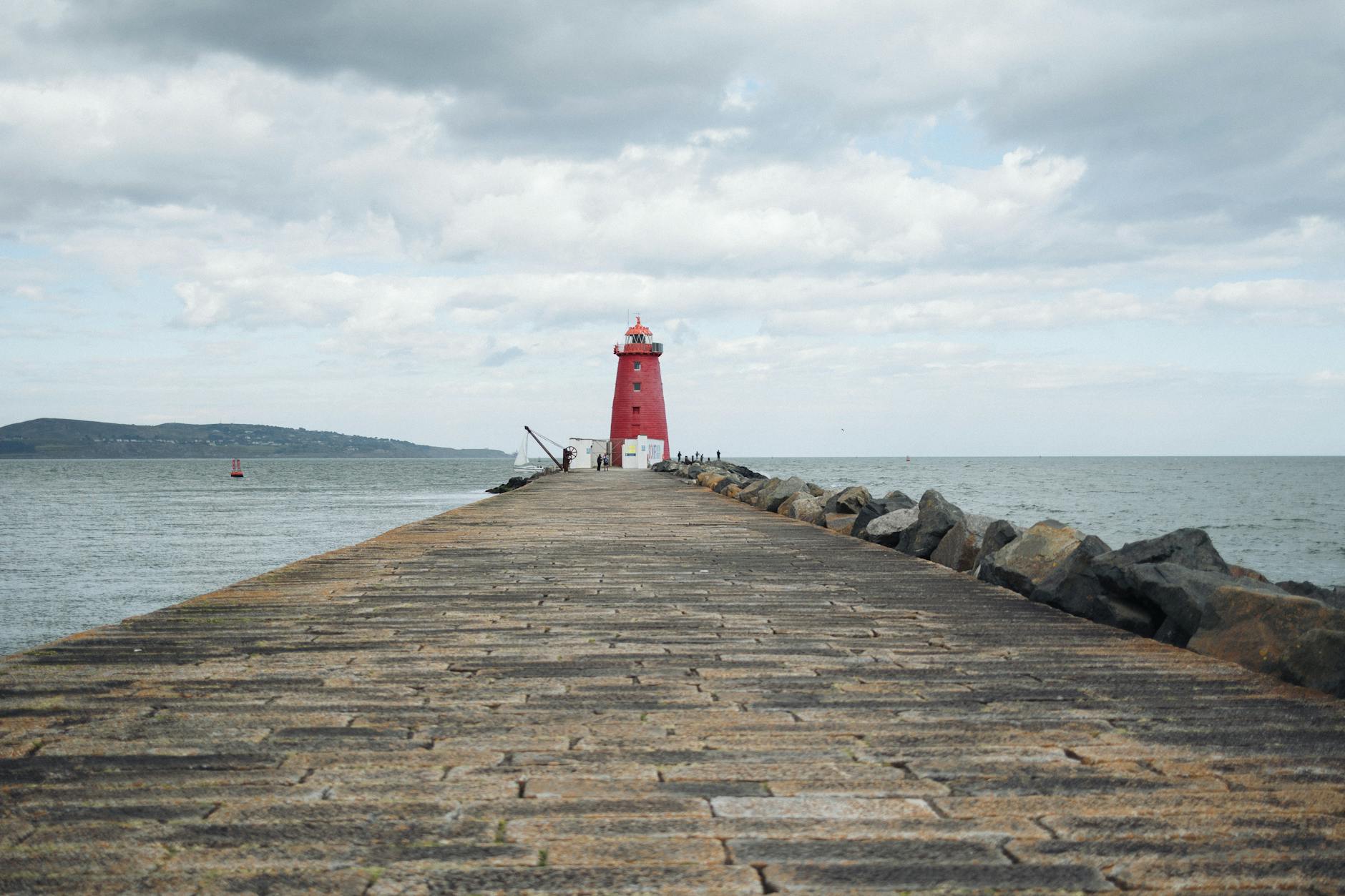
On a clear day the approach into Dublin Bay is the best part — Howth Head to the north, the Wicklow Mountains to the south, the Poolbeg chimneys marking the port, and the city opening up in front of you. It is a considerably better arrival than a runway.

When You Land: Getting into Dublin
Dublin Port sits on the north bank of the Liffey about three kilometres east of the centre, in the middle of the Docklands. Once you are out of the terminal, the city is close: a short hop by road, or the 53 bus from Terminal 1. The Luas Red Line stops at The Point, opposite the port entrance, but that is about a 40-minute walk from Stena’s terminal, so take the ferry bus or the 53 instead.
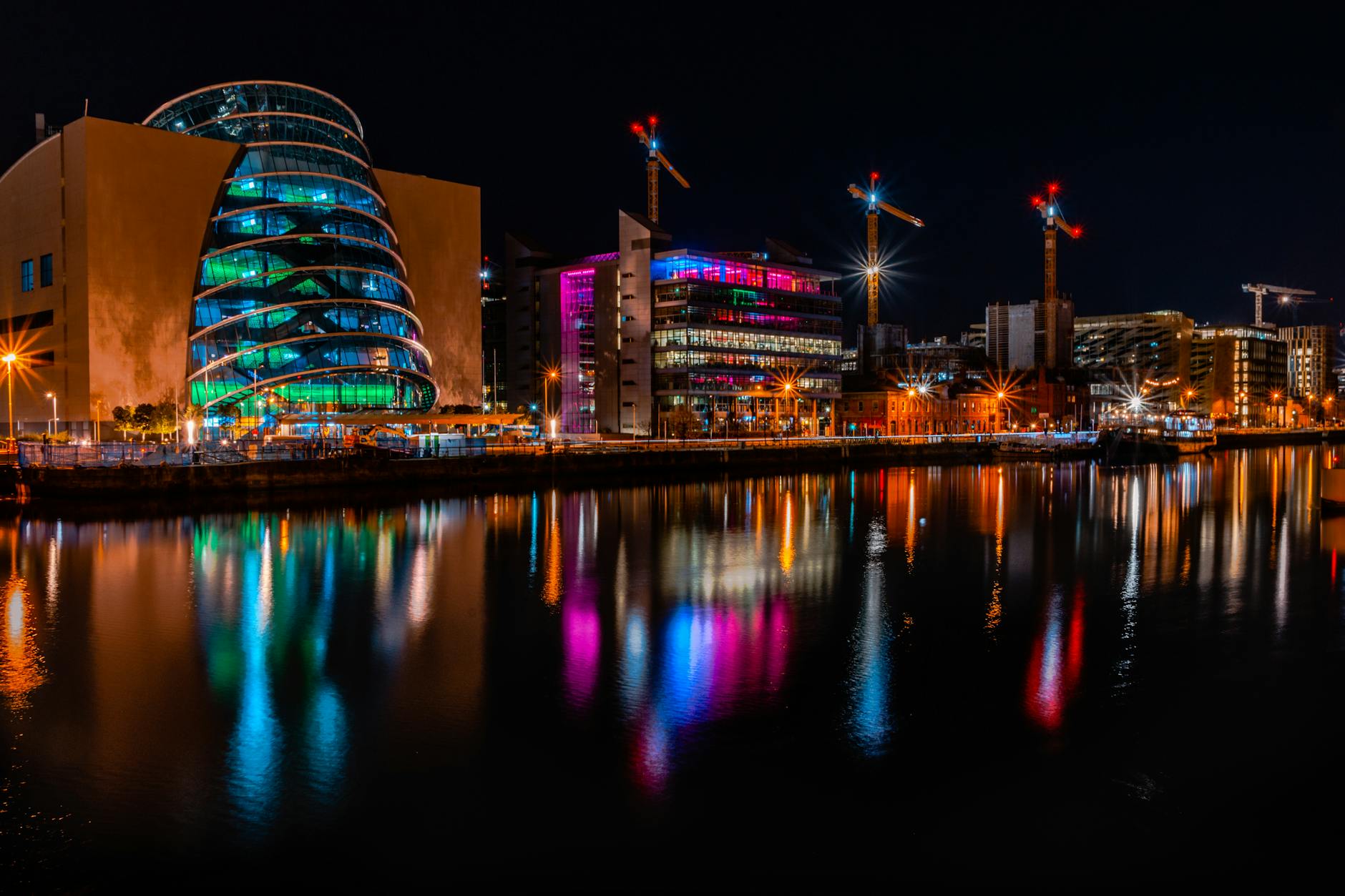
The Docklands immediately west of the port are worth an hour in their own right, and one day in Dublin is easily done from a morning arrival — the Samuel Beckett Bridge, the Jeanie Johnston famine ship, the EPIC emigration museum at CHQ and the Grand Canal Dock basin are all on the way in. If you have arrived early and cannot check in yet, that is where to spend the time. Our transport guide covers the whole network, and the cruise port guide deals with the other kind of arrival by sea.
Gotchas
Everything that most reliably goes wrong on the Holyhead to Dublin ferry, in rough order of how much it costs you.
- A passport is required for every passenger from 28 September 2026. No exemptions by age or nationality; driving licences and ID cards are not accepted.
- Terminal 1 is Irish Ferries, Terminal 2 is Stena. They are 10–12 minutes apart and are not interchangeable.
- Dublin Bus 53 serves Terminal 1 only. Stena foot passengers need Stena’s own coach, booked with the ticket.
- Dublin Port is a working freight port. It is not a place to wander out of with suitcases and no plan.
- The fast craft is more weather-sensitive than the large ferries. Build slack into an autumn or winter itinerary.
- Vehicle check-in closes well before the sailing time. Use the operator’s window, not the departure time.
- Advance fares and walk-up fares are very different. Book ahead.
- A car is a liability in Dublin city centre. Park it once you arrive.
- Miss a sailing and the next may be three hours away. There are only about eight a day.
- Ireland uses the euro, not sterling, and is not in Schengen — so no EES or ETIAS, but also no shared visa with the UK.
FAQ: The Holyhead to Dublin Ferry
How long is the ferry from Holyhead to Dublin?
About three hours and a quarter on a conventional ferry, which is what runs most of the time. The high-speed craft, when it operates, does the crossing in around two hours and a quarter, and across the whole fleet the range is roughly two and a quarter to three and a half hours. Add check-in time before departure and the walk out of Dublin Port at the other end, and the realistic port-to-city-centre figure is closer to four and a half hours.
Is the ferry cheaper than flying?
For a foot passenger from London, usually not, once you add the Euston-to-Holyhead train to the ferry fare. For a family with a car it is frequently much cheaper than four flights plus a hire car, and for anyone starting in north Wales, the north-west or the Midlands the arithmetic improves sharply because Holyhead is close. The ferry also carries luggage, bikes and dogs effectively free, which changes the comparison again.
Can you walk on the ferry?
Yes, both operators take foot passengers. The complication is at the Dublin end rather than at sea: Irish Ferries use Terminal 1, which Dublin Bus route 53 serves from Talbot Street via Connolly Station, while Stena Line use Terminal 2, which the 53 does not serve at all. Stena run their own transfer coach for foot passengers and you should book it at the same time as the crossing.
Do I need a passport for the Holyhead to Dublin ferry?
Yes. From 28 September 2026 both Stena Line and Irish Ferries require a valid passport or an Irish passport card from every passenger, of every nationality and every age, in both directions. Driving licences and national identity cards are no longer accepted. The Common Travel Area still means no immigration control between Ireland and Britain, but that does not help you at check-in — bring the passport.
How many ferries a day are there?
About eight crossings a day in each direction, year-round, split roughly evenly between Irish Ferries and Stena Line at about four each. That is frequent by ferry standards but sparse compared with the air route, so a missed sailing can cost you three hours. Sailings can be disrupted in severe weather, and the fast craft is more weather-sensitive than the large ferries.
Which is better, Stena Line or Irish Ferries?
They are closely matched on the same route at similar prices, so book on sailing time and fare rather than brand loyalty. The practical differences are the terminal at Dublin Port — Irish Ferries at Terminal 1, Stena at Terminal 2 — and the onward transfer, where Stena’s own foot-passenger coach is genuinely useful and Irish Ferries passengers have the public 53 bus. Irish Ferries also run the seasonal fast craft if speed matters to you.
Can you take a dog on the ferry to Dublin?
Yes, and it is one of the main reasons people sail rather than fly. Both operators carry pets, with arrangements varying between staying in the vehicle, kennels on board and, on some sailings, pet-friendly cabins. Rules on pet passports and tapeworm treatment for travel into Ireland are separate from the carrier’s own rules and must be checked with the operator and the veterinary requirements well before you travel.
How do I get from Dublin Port to the city centre?
Dublin Bus route 53 from Terminal 1, running to Talbot Street via Connolly Station; Stena’s own transfer coach from Terminal 2, booked with your ticket; the Luas Red Line from The Point stop opposite the port entrance, though that is a 3.2 km walk (about 40 minutes) from Stena’s Terminal 2 and 3.7 km from Irish Ferries’ Terminal 1; or a taxi, which is a short run. The port is only a few kilometres from the centre. It is a working freight port, so do not plan to walk out of it with luggage.
Is the crossing rough?
It can be. The Irish Sea is exposed and winter crossings are genuinely bumpy, though the conventional ships are large and stable in ordinary conditions. The fast craft is more weather-sensitive than the large ferries, so it is the sailing most likely to be disrupted or swapped. Met Éireann’s storm-naming year starts on 1 September, so the first named storms often arrive in October. If you are prone to seasickness, take something before boarding.
Keep Planning
- Getting Around Dublin — the parent guide to bus, DART, Luas and taxis.
- Dublin from London & the UK — plane against ferry, and the document rules in full.
- Dublin Airport to the City Centre — the other way in, timed and priced.
- Renting a Car in Dublin — and why you should park it once you arrive.
- Dublin Visa Requirements — for anyone who is not a UK or Irish citizen.
- The Leap Card Guide — the cheapest way to move once you land.
- The Docklands — what is between the port and the city.
- Dublin & Ireland Itinerary — if the car is going further than Dublin.
Keep Reading
Photo Credits
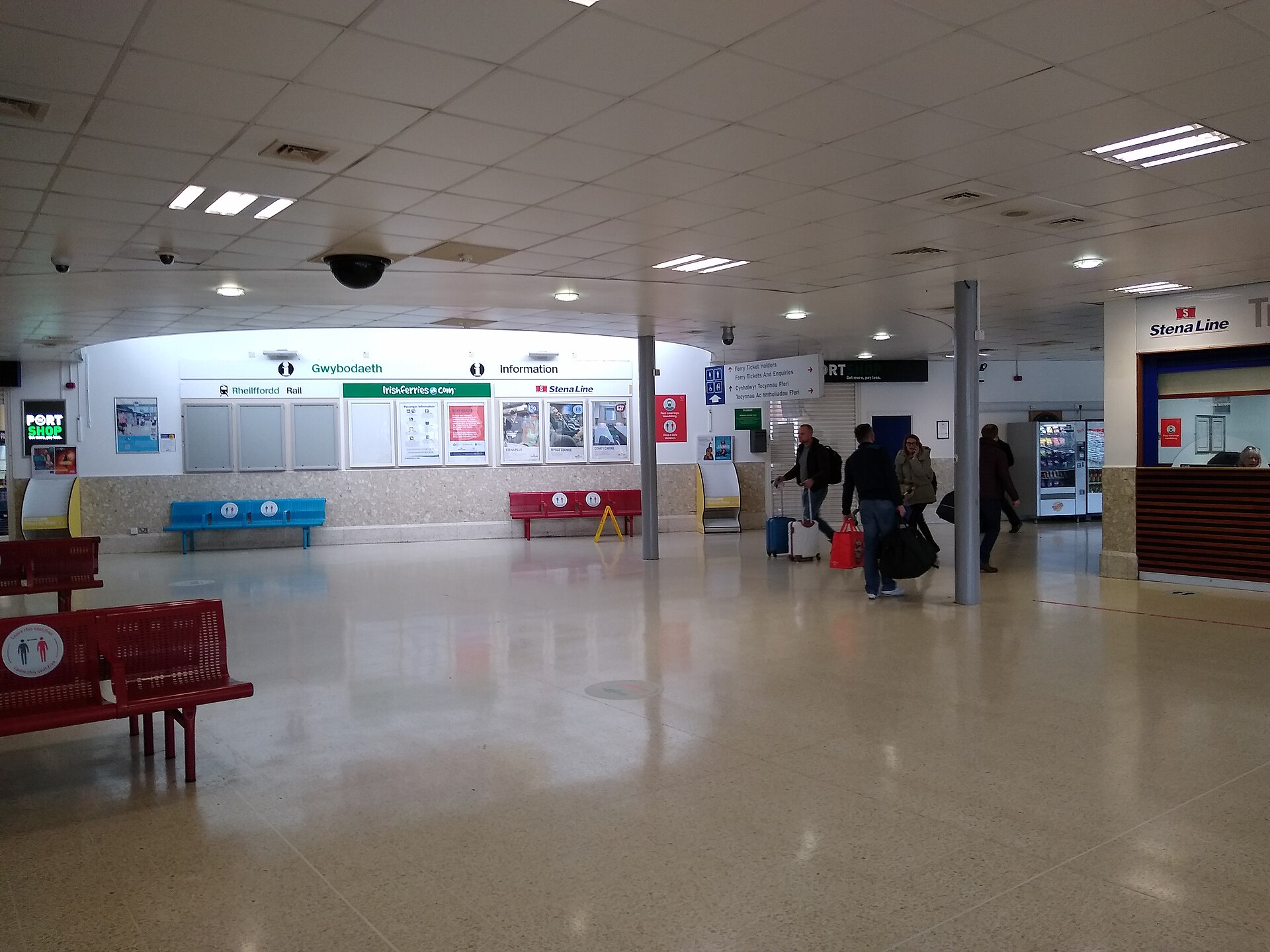
Holyhead station and ferry terminal: Holyhead Ferry Terminal & Holyhead Railway Station – 2024-06-15 by 瑞丽江的河水, CC BY-SA 4.0, via Wikimedia Commons.
Vehicle waiting area at Dublin Port: Car parking area for boarding the ferry to Holyhead – geograph.org.uk – 6410026 by Eirian Evans, CC BY-SA 2.0, via Wikimedia Commons.
The combined railway station and ferry terminal hall at Holyhead: Railway station and ferry terminal in Holyhead by Mx. Granger, CC0, via Wikimedia Commons.
Stena Adventurer entering Dublin Port: Stena Adventurer (50221153908) by Cityswift – Ireland, CC BY 2.0, via Wikimedia Commons.
Lean na Comharthaí — Keep following the signs