Dublin Docklands & Silicon Docks (2026 Guide)
Ar an gComhartha Seo — On this sign
- Understanding the Docklands
- Iconic Modern Architecture
- Cultural Attractions in the Docklands
- Docklands Restaurants
- Docklands Bars and Pubs
- Docklands Walks
- Docklands Hotels
- How to Get to the Docklands
- Suggested Docklands Half-Day
- Annual Docklands Events
- Best Docklands Photo Spots
- The Future of Dublin Docklands
- Combining Docklands with Nearby Areas
- A Brief Docklands History
- The Grand Canal Houseboat Community
- Cycling the Docklands
- Living in Dublin Docklands
- Adjacent Ringsend and Sandymount
- Dublin Docklands: FAQ
- Keep Reading
The Dublin Docklands are Dublin’s newest neighbourhood, transformed from disused dock warehouses into a modern mixed-use district since the 1990s. The area extends along both sides of the Liffey east of the IFSC (International Financial Services Centre) to Dublin Port. Nicknamed “Silicon Docks” for the tech company headquarters that line the streets, the Docklands combine business headquarters with cultural attractions, hotels, restaurants, and residential apartments. This guide covers what to see, where to eat, what to do, and how the modern Docklands fits into a Dublin visitor itinerary.
Understanding the Docklands
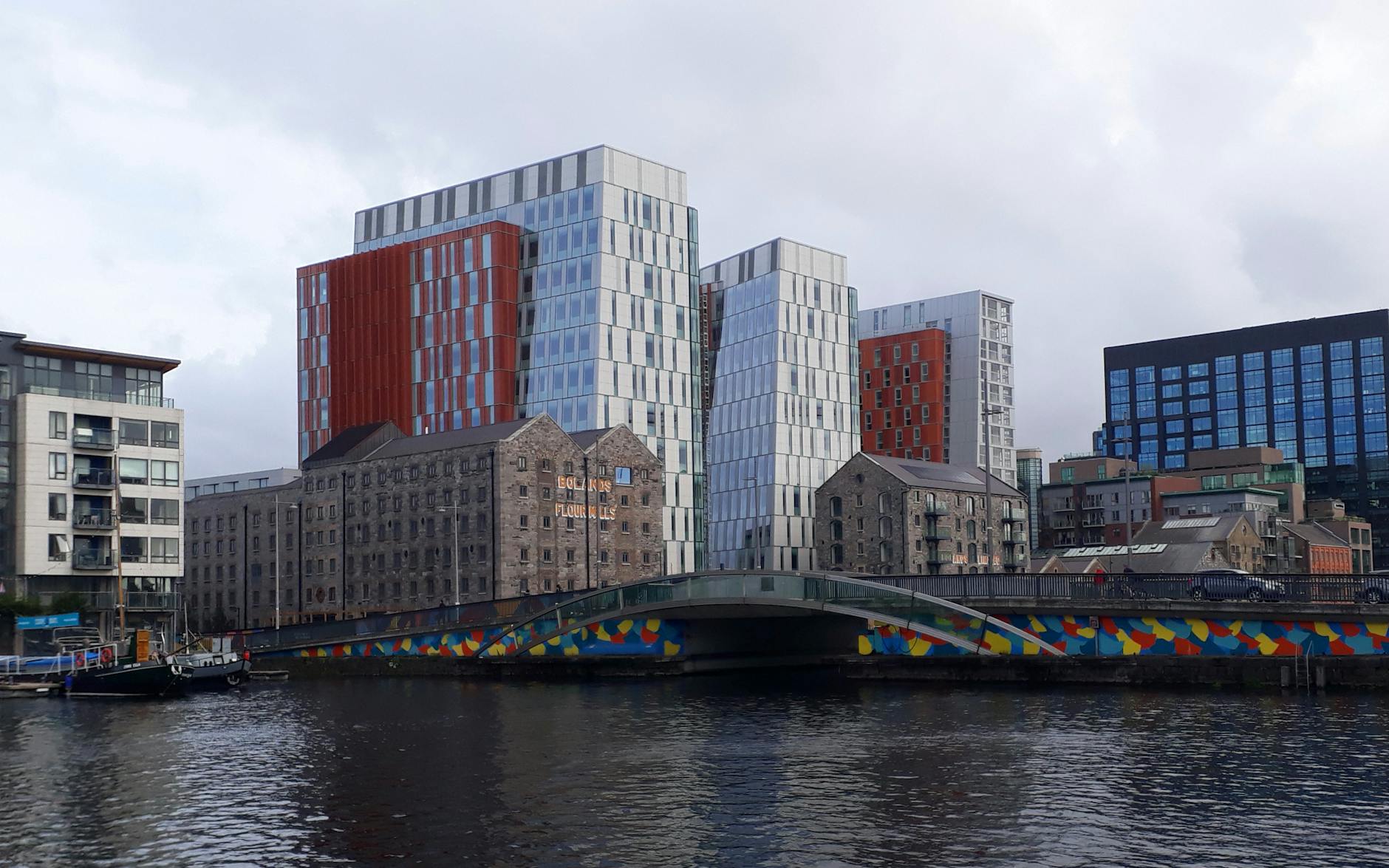
The Docklands occupy roughly 520 hectares along the Liffey from Custom House Quay to the East-Link Bridge, on both sides of the river. The North Docks side includes the IFSC, the CHQ Building, the Convention Centre Dublin, and the 3Arena. The South Docks side includes Grand Canal Dock, the Bord Gáis Energy Theatre, Pearse Street, and the headquarters of major tech companies including Google, Meta (Facebook), LinkedIn, Airbnb, Twitter/X, and Stripe.
Until the 1980s the area was Dublin’s working port with cargo handling, warehouses, and shipping infrastructure. Containerisation moved most port operations downriver to Dublin Port, leaving the Docklands derelict. The Dublin Docklands Development Authority (1997–2012) led the regeneration that transformed the area. Major projects included the IFSC (1987 onwards), the Samuel Beckett Bridge (2009), the Convention Centre Dublin (2010), and the Grand Canal Theatre/Bord Gáis Energy Theatre (2010). The 2008 financial crisis temporarily halted development but it resumed by 2014. The area continues to expand with new offices, apartments, and amenities.
Iconic Modern Architecture
Samuel Beckett Bridge (2009)
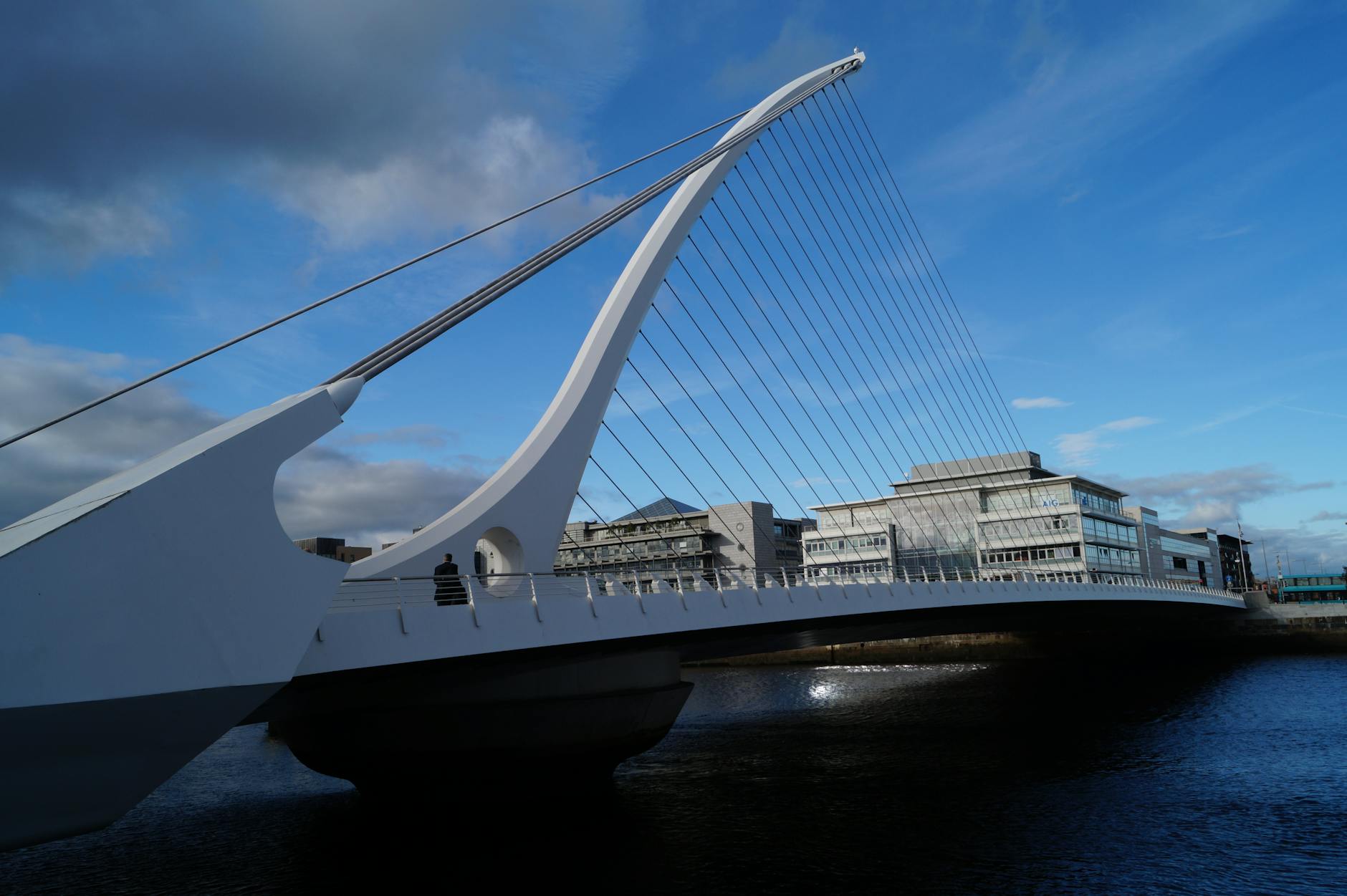
Designed by Spanish architect Santiago Calatrava and opened in 2009, the Samuel Beckett Bridge is Dublin’s most iconic modern landmark. The 120-metre cable-stayed bridge spans the Liffey in the shape of a harp lying on its side — an elegant tribute to Beckett’s Irish heritage. The bridge can rotate 90 degrees to allow ships to pass (though this happens rarely). Free pedestrian access throughout. Best photographed at dawn or evening with the city centre as backdrop.
Convention Centre Dublin (2010)
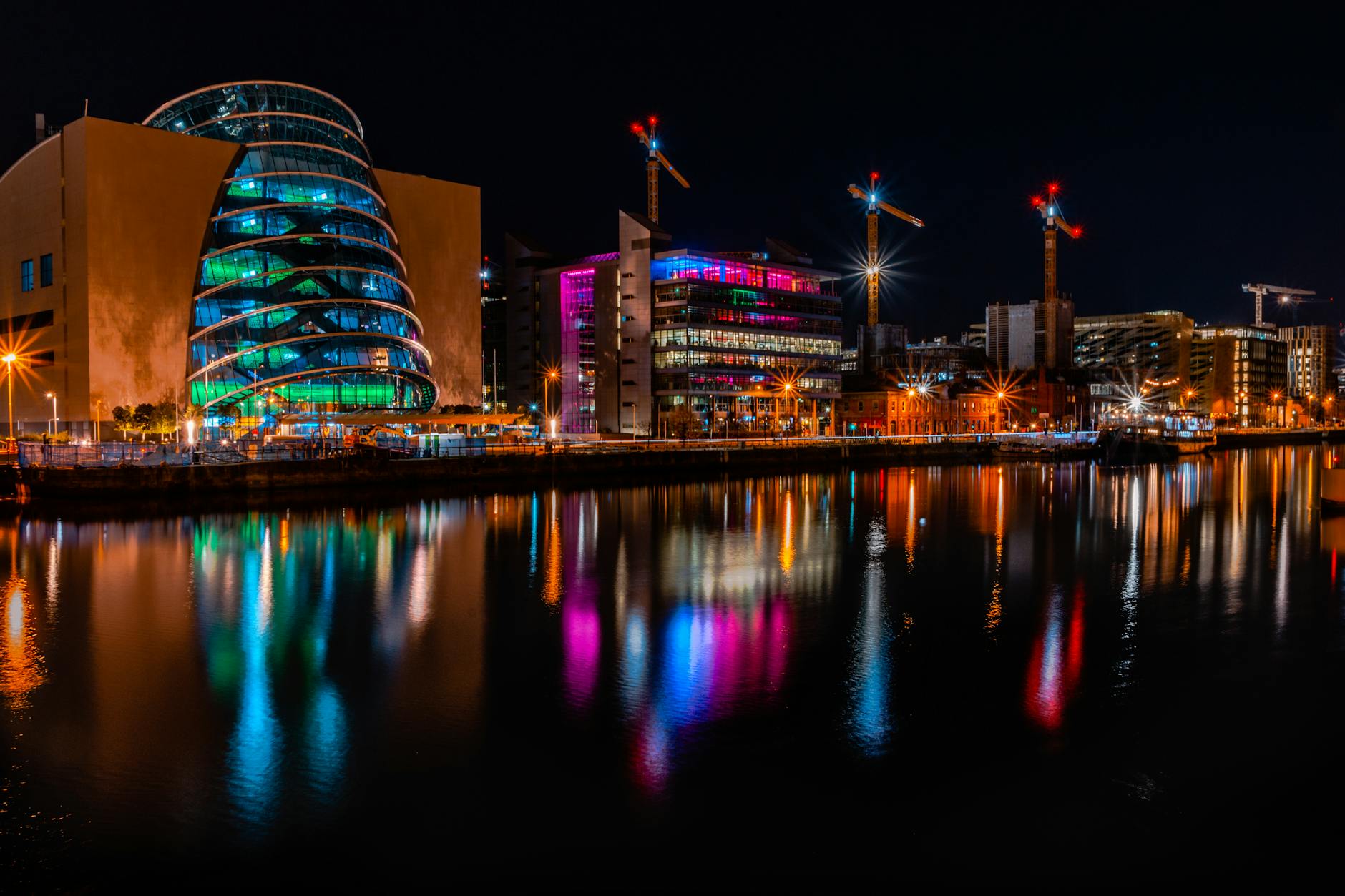
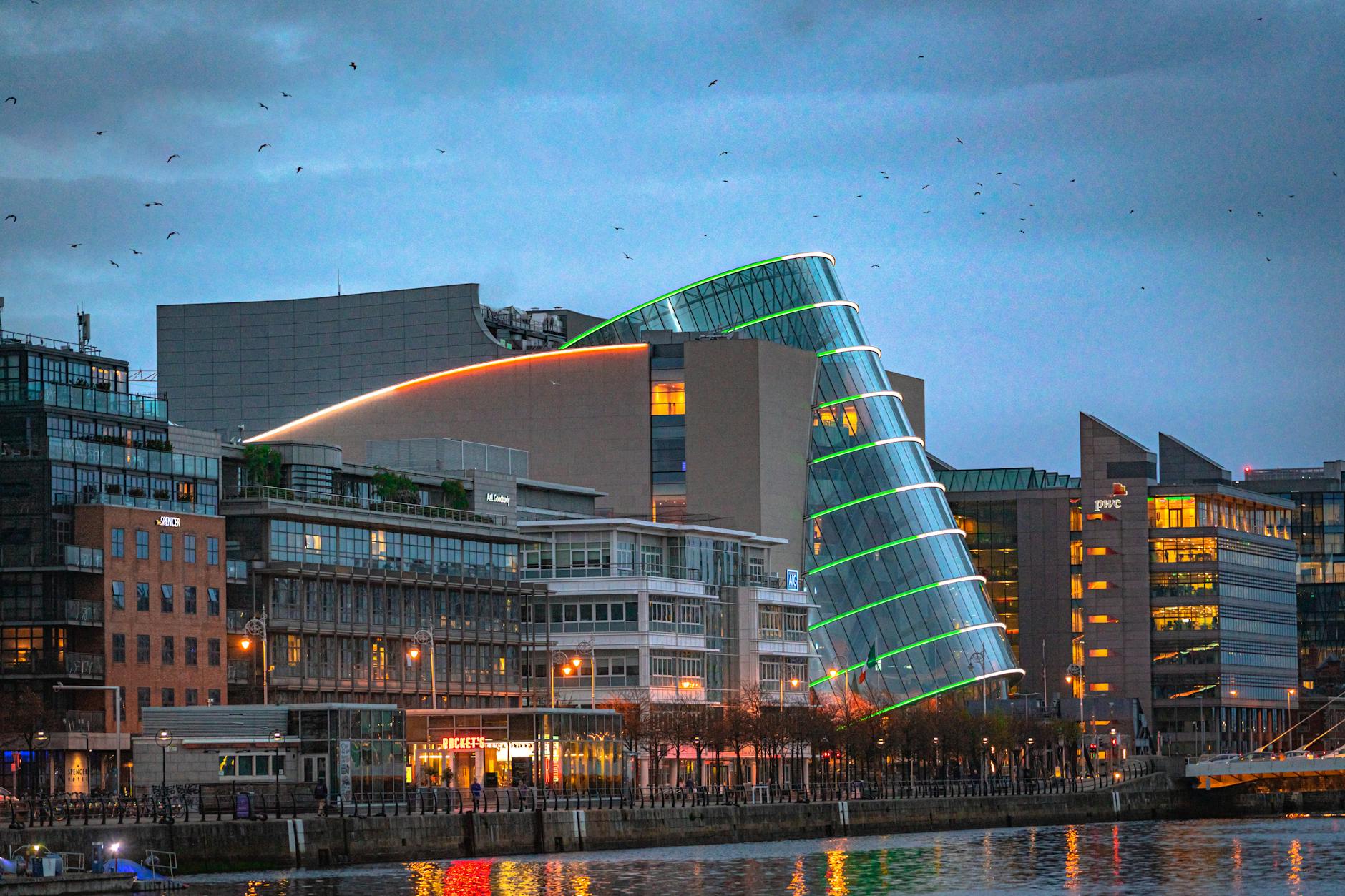
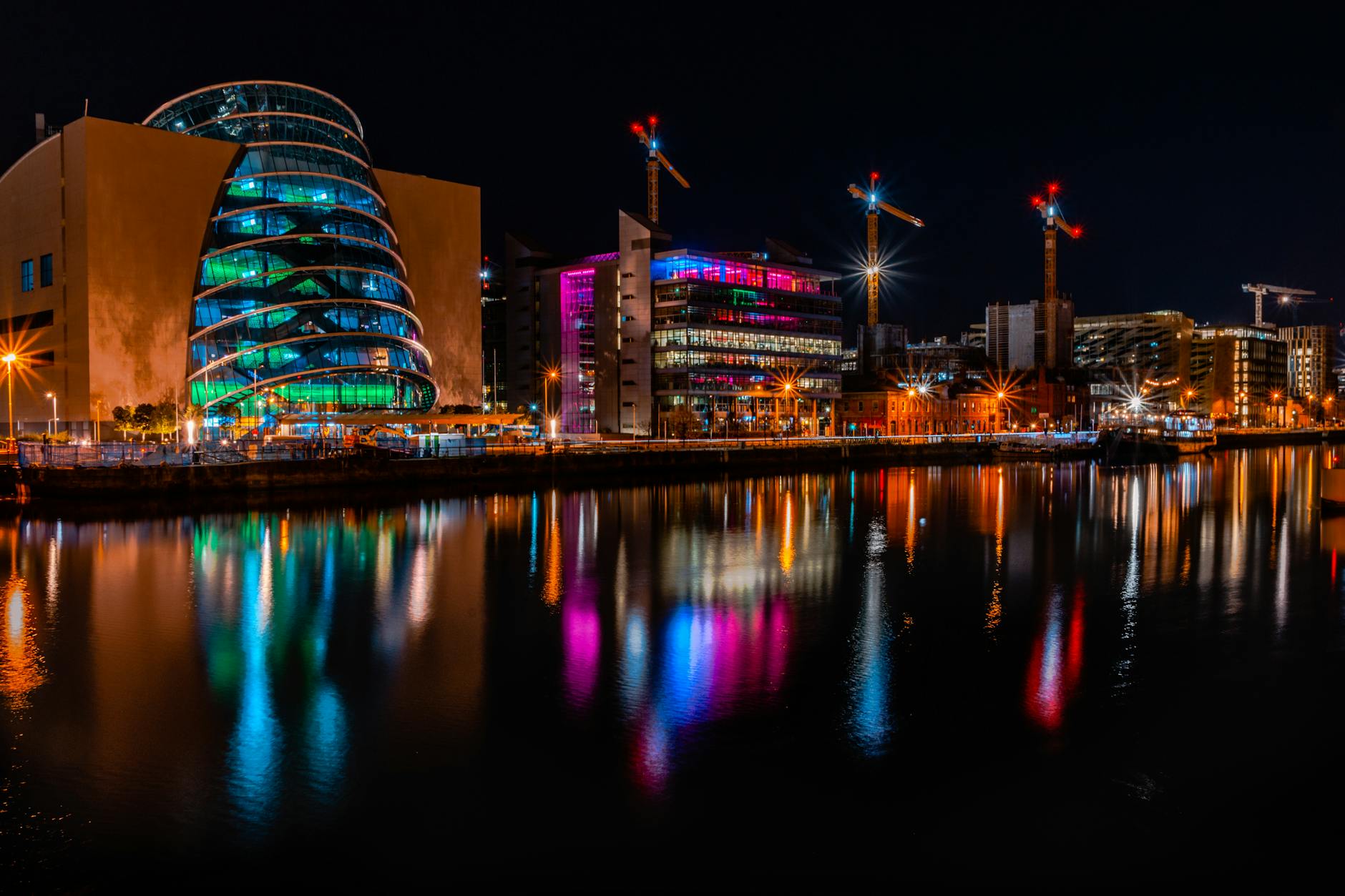
The Convention Centre Dublin (CCD) is the world’s first carbon-neutral constructed convention centre. The dramatic glass cylinder building designed by Kevin Roche dominates the North Docks skyline. The interior glass atrium offers spectacular Liffey views. The Forum Restaurant on the 5th floor is open to non-conference visitors with bookings.
Bord Gáis Energy Theatre (2010)
Designed by Daniel Libeskind, the Bord Gáis Energy Theatre on Grand Canal Square is Dublin’s main major venue for musicals, concerts, opera, and ballet. The 2,111-seat venue regularly hosts West End and Broadway shows. The dramatic angular glass facade is a Grand Canal Dock landmark.
3Arena (1996, reopened 2008)
Dublin’s largest concert venue (14,500 capacity) hosts major international touring acts including arena tours from artists like Taylor Swift, Adele, Coldplay, and Ed Sheeran. The venue is in the former Point Depot warehouse on East Wall Road. Connect via Luas Red Line to The Point stop.
Grand Canal Square (2007)
The public plaza fronting the Bord Gáis Energy Theatre, designed by landscape architect Martha Schwartz with distinctive red and green angled poles. The square hosts public events and provides Liffey views. The surrounding Grand Canal Dock area combines apartment blocks, restaurants, and a quirky houseboat community.
Cultural Attractions in the Docklands
EPIC The Irish Emigration Museum
EPIC at the CHQ Building has won European Museum of the Year twice and is one of Dublin’s top contemporary museum experiences. The fully interactive 20-gallery exhibition traces 1,500 years of Irish emigration through multimedia displays, animated maps, and video. €22 adult, €13 child. Open daily 10am–6:45pm. Allow 90 minutes–2 hours. Particularly recommended for Irish-American family visitors interested in diaspora history.
Jeanie Johnston Tall Ship
A working replica of an 1840s emigrant ship moored at Custom House Quay. The 50-minute tour explores Famine-era emigration to North America with costumed guides. €12 adult, €7 child. Open Tuesday–Sunday in summer.
Famine Memorial
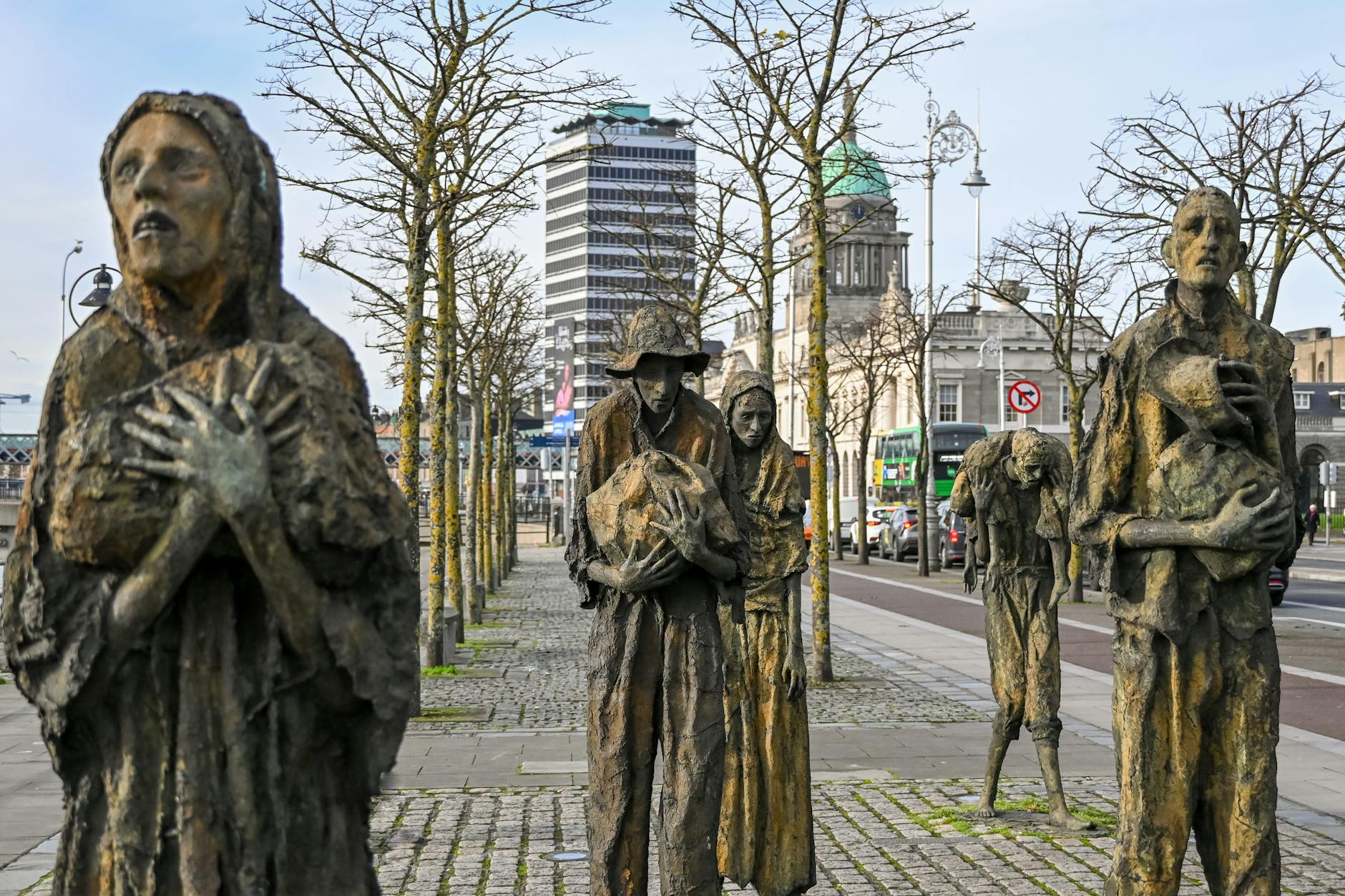
The bronze sculpture group by Rowan Gillespie (1997) on Custom House Quay commemorates the 1845–1849 Irish Famine. The seven figures depict emigrants walking toward boats. Free, open daily. Particularly moving at sunset.
The Custom House (1791)
James Gandon’s masterpiece Georgian public building on the Liffey, just upstream from the Docklands proper. The Custom House Visitor Centre on the river-facing side has free historical exhibits. The building’s 1921 burning during the War of Independence destroyed the interior but the exterior was preserved.
Docklands Restaurants
The Docklands restaurant scene reflects the area’s upmarket business demographic with quality but generally expensive options:
- The Marker Hotel Restaurant — Grand Canal Square. Premium hotel dining with afternoon tea.
- Ely Bar & Brasserie — Hanover Quay. Quality Irish/European cooking.
- The Forum Restaurant — Convention Centre Dublin. Liffey views from 5th floor.
- Charlotte Quay Restaurant — Grand Canal Quay. Local-sourced Irish food.
- Herbstreet — Hanover Quay. Casual dining with strong lunch programme.
- The Old Spot — Bath Avenue. Modern Irish gastropub.
- The Greenway — Pearse Street. Family-friendly Irish food.
- Pichet Docklands — The Marker Hotel area. Sister to the Trinity Street restaurant.
Docklands Bars and Pubs
- The Marker Hotel rooftop bar — Stunning Liffey and city centre views.
- The Ferryman — Sir John Rogerson’s Quay. Traditional pub atmosphere in the Docklands.
- Hyde Bar — Pearse Street. Cocktail-focused bar.
- The Liffey Tavern — East Wall Road. Local pub near the 3Arena.
- The Bath — Bath Avenue. Local Ringsend pub.
- Bru Brewery — Custom House Quay. Craft beer with food.
Docklands Walks
The Liffey Boardwalk on the North Quays provides a scenic 2km walk from O’Connell Bridge to the Convention Centre Dublin and beyond. The Grand Canal Walk extends from Grand Canal Square along the canal toward Portobello and the Liberties. Both walks pass major architectural landmarks and have benches throughout. The South Docks waterfront walk along Sir John Rogerson’s Quay continues past the Jeanie Johnston ship to the South Bull Wall.
The South Bull Wall walk extends 4km out into Dublin Bay from the Poolbeg Lighthouse area. Free, dramatic sea views, particularly impressive in stormy weather. The walk is exposed and unsheltered — bring warm waterproof layers. Reach by Dublin Bus 1 from city centre or by car.
Docklands Hotels
- The Marker Hotel — Grand Canal Square. 5-star with rooftop bar and afternoon tea. From €320.
- Anantara The Marker Dublin — Marriott group, same building as above.
- Gibson Hotel — Point Square. Near 3Arena. From €180.
- Hilton Garden Inn Dublin Custom House — Family-friendly modern hotel. From €170.
- The Hyatt Centric Dublin — Customs House Quay. From €220.
- Spencer Hotel — IFSC. Business-focused. From €180.
- Maldron Hotel Pearse Street — Pearse Street. Family rooms. From €150.
The Docklands hotels suit business travellers, families wanting modern amenities, and concert-goers attending 3Arena or Bord Gáis Energy Theatre events. The area is quieter than central Dublin at night, making it good for sleep, but slightly further from major sightseeing.
How to Get to the Docklands
- Luas Red Line — Stops at George’s Dock, Spencer Dock, Mayor Square, and The Point cover the North Docks. The Green Line doesn’t serve this area.
- Walking from city centre — 15–20 minutes from O’Connell Bridge along the Liffey Boardwalk.
- Dublin Bus — Multiple routes including 1, 47, 56A, 77A.
- Cycling — Excellent cycle paths along both Liffey quays. Dublin Bike stations throughout.
Suggested Docklands Half-Day
Start at Custom House Quay viewing the Famine Memorial sculptures (free, 20 minutes). Walk to the Jeanie Johnston tall ship tour (€12 adult, 50 minutes). Continue to EPIC The Irish Emigration Museum at the CHQ Building (€22 adult, 90 minutes). Lunch at Ely Bar & Brasserie or The Greenway. Walk across the Samuel Beckett Bridge to the South Docks. Visit Grand Canal Square and the Bord Gáis Energy Theatre exterior. Walk back via the Liffey Boardwalk for sunset photos.
Annual Docklands Events
- Major concerts at 3Arena — International touring acts year-round.
- Bord Gáis Energy Theatre productions — West End musicals, opera, ballet year-round.
- Conferences at Convention Centre Dublin — Major international conferences year-round.
- Docklands Marathon — Annual May running event.
- Liffey Swim — Annual September traditional Dublin swimming race.
- Christmas markets at CHQ — December seasonal events.
- Tall Ships Regatta — Periodic events bringing visiting tall ships to Custom House Quay.
Best Docklands Photo Spots
- Samuel Beckett Bridge — The iconic harp-shaped bridge. Best at dawn or evening with city centre as backdrop.
- Convention Centre Dublin — The dramatic glass cylinder photographs particularly well from across the Liffey.
- Custom House at sunset — James Gandon’s Georgian masterpiece with the Liffey reflections.
- Grand Canal Square red poles — The Martha Schwartz landscape design with the Bord Gáis Energy Theatre.
- Famine Memorial — Particularly moving in evening light, with the Custom House behind.
- Liffey Boardwalk panoramas — Wide-angle shots looking back at the Custom House and city centre.
- Poolbeg Lighthouse — The 4km South Bull Wall walk leads to one of Dublin’s most photographable lighthouses.
- The Jeanie Johnston tall ship — Wooden 19th-century ship contrasting with modern Docklands skyline.
The Future of Dublin Docklands
The Docklands continue to expand and evolve. The North Lotts and Grand Canal Dock Strategic Development Zone has phased development through to 2030+ including new offices, apartments, hotels, and cultural venues. The Spencer Place complex is the largest current development project. The proposed Dublin MetroLink underground rail system (planned for opening in the 2030s) would significantly improve Docklands transport access from the city centre and airport.
Public space improvements continue with new Liffey-side walking and cycling paths, additional bridges (the Rosie Hackett Bridge opened 2014 connects Hawkins Street to Marlborough Street), and the planned development of additional green spaces. The Dublin Docklands have evolved from disused warehouses to one of Europe’s most active urban regeneration zones in just three decades — an example of post-industrial transformation that visitors interested in urban planning will find rewarding to explore.
Combining Docklands with Nearby Areas
The Docklands combine naturally with several nearby Dublin areas. The IFSC (the original 1980s financial district) extends west from the Docklands toward the city centre. O’Connell Street and the GPO are 15 minutes walk via the Liffey Boardwalk. Trinity College and Pearse Street are 10 minutes south. Ringsend and Sandymount villages (along the South Strand toward Dublin Bay) connect via the South Docks walks. A full Docklands day could include EPIC museum, Samuel Beckett Bridge, Grand Canal Dock, and an evening 3Arena concert or Bord Gáis Energy Theatre show. For broader Dublin neighbourhood context see our Dublin Neighbourhoods pillar.
A Brief Docklands History
Dublin’s docks developed over centuries as the city’s primary port. The 17th-century Custom House (the older building now occupied by Dublin City Council) and the 18th-century replacement (James Gandon’s 1791 Custom House) anchored the river trade. The 19th century brought industrial expansion with warehouses, the construction of the Grand Canal Dock for canal trade with the Shannon River, and the development of cargo handling facilities along Sir John Rogerson’s Quay. The 20th century saw shipping containerisation move most port operations downriver to the modern Dublin Port at Dublin Bay.
The Docklands stood derelict through the 1970s and 1980s. The 1987 establishment of the IFSC (International Financial Services Centre) on the old Custom House Quay began the regeneration. The Dublin Docklands Development Authority (1997–2012) led comprehensive area redevelopment. The 2008 financial crisis temporarily halted development but it resumed by 2014 with tech companies replacing financial services as the dominant employer. The Docklands continue to expand with new offices, apartments, and cultural venues through the 2030s.
The Grand Canal Houseboat Community
One of the Docklands’ most charming features is the Grand Canal Dock houseboat community. Approximately 40 narrow boats and barges moor permanently in Grand Canal Dock, creating an unexpected riverside village within the modern Docklands. Many of the boats are converted to live-aboard homes; others operate as Airbnb stays for visitors wanting a unique Dublin accommodation experience. The houseboats can be viewed from the Grand Canal Square boardwalk — respect the residents’ privacy by viewing from public walkways only. The community is a vivid contrast to the surrounding modern glass architecture and tech HQs.
Cycling the Docklands
The Docklands have excellent cycling infrastructure with dedicated paths along both Liffey quays, the Grand Canal, and connecting to wider Dublin cycle routes. Dublin Bikes (the city’s bike share scheme) has dozens of stations throughout the Docklands. The Liffey Boardwalk cycle path connects the Docklands to the city centre. The Grand Canal Greenway extends from Grand Canal Dock through Portobello to the Royal Canal. The Sutton-to-Sandycove (S2S) coastal cycle path begins from the Docklands area and runs all the way to Dún Laoghaire (40km full route). For visitors, a 1–2 hour cycle exploring the Docklands and Liffey areas provides excellent sightseeing and exercise.
Living in Dublin Docklands
The Docklands have transformed from non-residential industrial area to one of Dublin’s densest apartment districts. Modern apartment blocks along Hanover Quay, Grand Canal Quay, and Pearse Street house Dublin’s tech worker population. Rents are among Dublin’s highest (1-bedroom apartments €2,500–3,500 monthly in 2026). The area’s population skews young, international, and professional. The Docklands community has its own residents’ association, the Docklands Living Network, organising community events and engagement with developers. Visitors interested in seeing modern Dublin urban living can stroll the residential streets without difficulty.
Adjacent Ringsend and Sandymount
Just south of the Docklands proper, Ringsend and Sandymount villages retain working-class Dublin character. Ringsend (immediately south of Grand Canal Dock) is a fishing village neighbourhood with the Ringsend Park, the Old Coastguard Station, and traditional pubs including The Bath. Sandymount Strand (15 minutes walk south) is the long sandy beach made famous by the “Proteus” episode of James Joyce’s Ulysses. The Sandymount Strand walks at low tide give dramatic views of Dublin Bay, the Poolbeg twin chimneys, and Howth headland across the bay. Combining a Docklands cultural morning with a Sandymount afternoon beach walk makes an excellent contrast.
For visitors interested in Ringsend specifically, the Aviva Stadium tour (covers football and rugby) operates here, the Ringsend Sports Centre has indoor swimming, and the Poolbeg Lighthouse 4km Bull Wall walk is one of Dublin’s most dramatic seaside walks. Sandymount village has the iconic Sandymount Hotel, several cafes including the Sandymount Hotel cafe, and the Sandymount Strand walks toward the Poolbeg Twin Chimneys.
Dublin Docklands: FAQ
What is Dublin Docklands known for?
Dublin Docklands are nicknamed “Silicon Docks” for the major tech company headquarters (Google, Meta, LinkedIn, Airbnb, Twitter/X, Stripe) clustered here. The area combines modern glass architecture with restored Victorian warehouses, the Samuel Beckett Bridge, the 3Arena concert venue, the Bord Gáis Energy Theatre, and the EPIC The Irish Emigration Museum.
Is it worth visiting Dublin Docklands?
Yes for visitors interested in modern architecture, contemporary museums, or attending concerts. EPIC museum is one of Dublin’s top contemporary attractions. The Samuel Beckett Bridge is Dublin’s most iconic modern landmark. The Liffey Boardwalk and Grand Canal Dock walks provide scenic urban experiences. The area is less essential than Trinity College or Temple Bar for first-time visitors but rewarding for those with time.
What is the Samuel Beckett Bridge?
The Samuel Beckett Bridge (2009) is a 120-metre cable-stayed bridge designed by Santiago Calatrava that spans the Liffey in the shape of a harp lying on its side — an architectural tribute to Beckett’s Irish heritage. The bridge can rotate 90 degrees to allow ships through. Free pedestrian access. Dublin’s most iconic modern architectural landmark.
How do I get to 3Arena?
Luas Red Line to The Point stop directly outside 3Arena. The journey takes 15–20 minutes from city centre. For major concerts, allow extra time as the Luas gets very busy 1–2 hours before showtime. Some visitors walk back to city centre after shows (25–30 minutes along the Liffey Boardwalk) to avoid post-concert Luas crowds.
Are there good restaurants in Dublin Docklands?
Yes — the Docklands restaurant scene is upmarket with quality options. Recommendations include The Marker Hotel restaurants, Ely Bar & Brasserie, Charlotte Quay Restaurant, and The Old Spot. Most are mid-range to premium pricing. For casual options, The Greenway and Herbstreet work well for families. The Forum Restaurant at the Convention Centre offers Liffey views.
Where can I stay in Dublin Docklands?
Hotels include The Marker Hotel (5-star, €320+), Hyatt Centric Dublin (€220+), Hilton Garden Inn Custom House (€170+), Gibson Hotel near 3Arena (€180+), and Maldron Pearse Street (€150+). The area suits business travellers, families wanting modern amenities, and concert-goers attending venue events.
What companies are headquartered in Silicon Docks?
Major tech companies with Dublin Docklands headquarters include Google, Meta (Facebook/Instagram/WhatsApp), LinkedIn, Twitter/X, Airbnb, Stripe, HubSpot, Salesforce, and Microsoft (Sandyford suburb). The EU headquarters of many major US tech companies locate in Dublin Docklands for tax and regulatory reasons.
Can I visit the Docklands tech offices?
No — the tech offices are working corporate buildings without public tours. Some companies run occasional public events including university recruitment days, hackathons, and community programmes — these are advertised through Eventbrite and the companies’ community pages. The Trinity College Innovation and Entrepreneurship Hub at Pearse Street runs tech-focused public events.
Keep Reading
- Portobello & Rathmines: Dublin’s Village Vibe — Canal-side walks and the Camden Street strip — village character ten minutes from Grafton Street.
- The Liberties: Dublin’s Oldest Neighbourhood — Christ Church, St Patrick’s and the Guinness Storehouse, in the medieval quarter that still feels lived-in.
- Dublin Northside: Phibsborough, Drumcondra & Beyond — Croke Park, the Botanic Gardens and far better food value than the tourist centre.
- the best coffee shops — a related guide from elsewhere on the site.
- Dublin Cruise Port Guide — what sits between the cruise berths and the city centre.
- EPIC The Irish Emigration Museum — the Docklands’ one genuine visitor attraction, in the vaults of the CHQ Building.
Lean na Comharthaí — Keep following the signs