Dublin’s Georgian Architecture: A Walking Guide (2026)
Ar an gComhartha Seo — On this sign
- What Defines Georgian Architecture?
- A Brief History of Georgian Dublin
- Merrion Square: The Most Prestigious Address
- Fitzwilliam Square and Mount Street
- Parnell Square and Mountjoy Square
- James Gandon’s Public Buildings
- Trinity College and College Green
- Other Major Georgian Buildings
- A Self-Guided Georgian Walking Tour
- Georgian Museums and Visitor Sites
- Practical Tips for Exploring Georgian Dublin
- Inside the Georgian Townhouse
- Plasterwork and Decorative Crafts
- Georgian Dublin: FAQ
- Keep Reading
Georgian Dublin is the most architecturally cohesive chapter in the city’s built history. Between 1714 and 1830, the city expanded south and east from its medieval core, creating a network of broad streets, elegant squares, and red-brick terraced townhouses that remain Dublin’s most photographed and architecturally significant district. The painted doors of Merrion Square, the grand public buildings along the Liffey, and the symmetrical proportions of Fitzwilliam Square all date to this period. This guide is a self-guided walking exploration of Georgian Dublin — the buildings, squares, and streets that made Dublin briefly the second city of the British Empire and gave it the architectural identity that has survived two centuries of subsequent change.
What Defines Georgian Architecture?
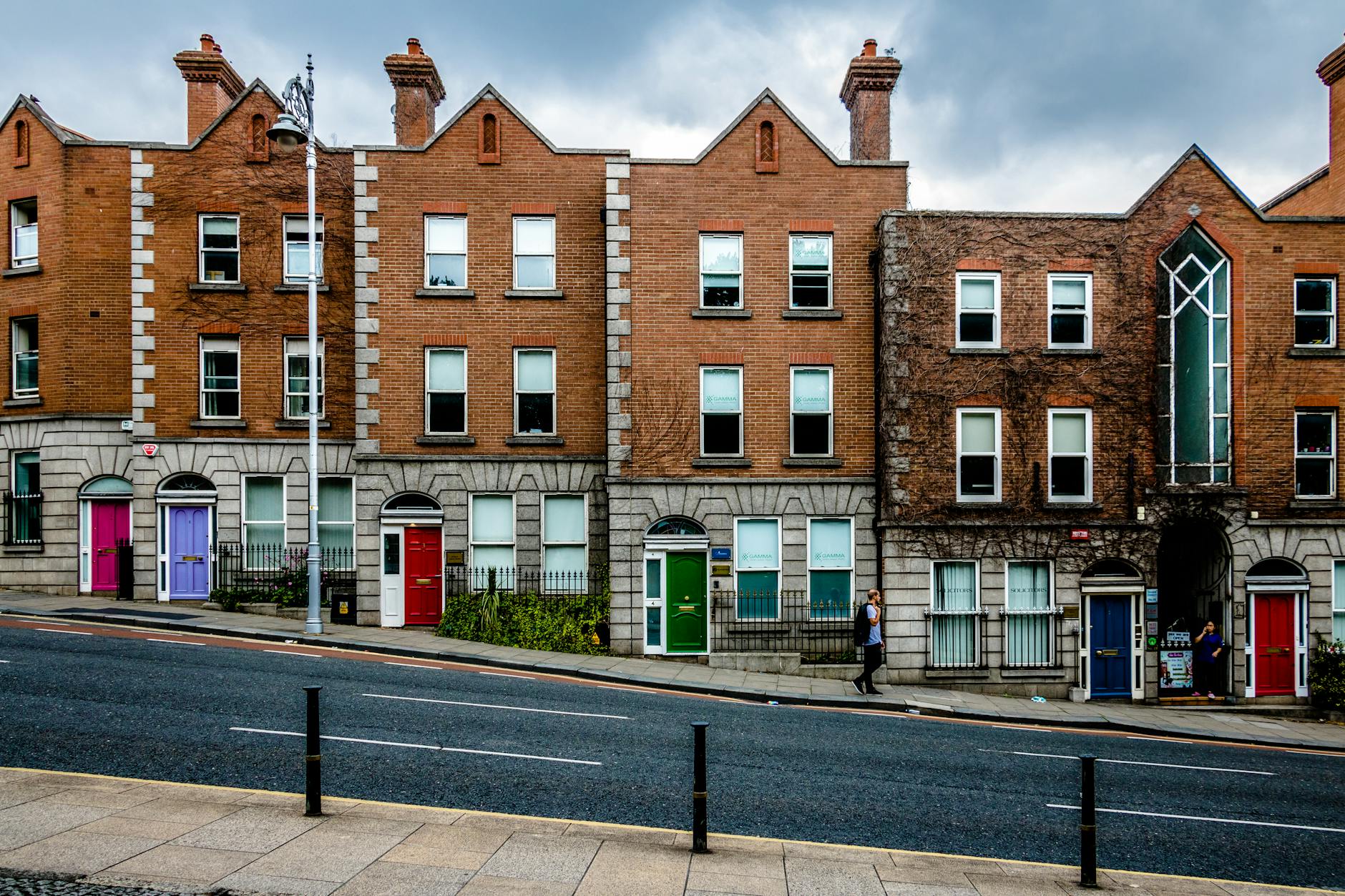
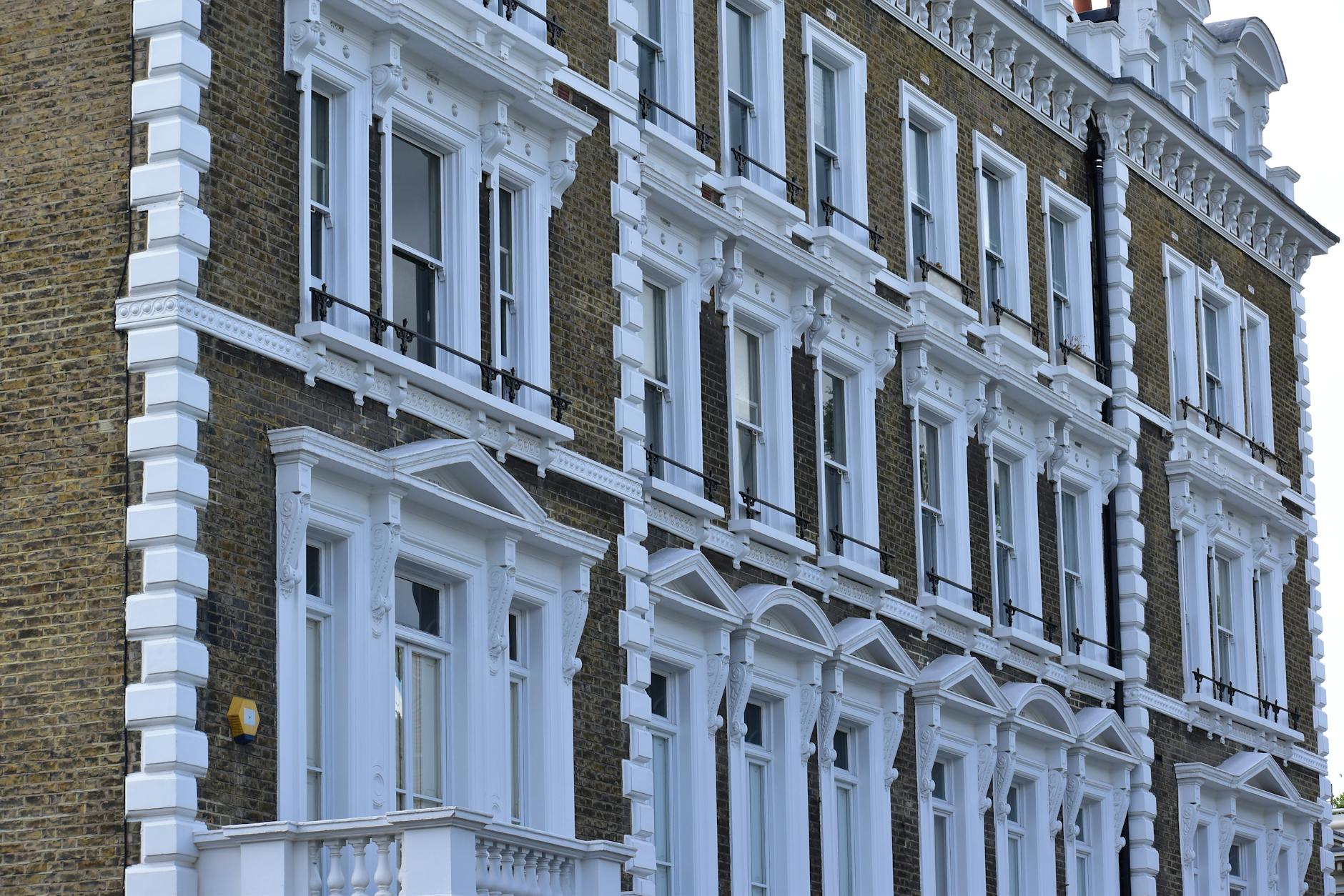
The Georgian period in architecture takes its name from the four British kings named George who reigned successively from 1714 to 1830. Georgian style emphasises classical symmetry, mathematical proportion, elegant restraint, and decorative refinement. In Dublin specifically, Georgian architecture features red-brick or limestone facades, sash windows arranged in symmetrical bays, paneled doors with fanlight transom windows above, decorative wrought-iron railings, and limited but elegant ornamentation. Inside, the buildings typically feature high ceilings with elaborate plasterwork, marble fireplaces, intricate staircase joinery, and reception rooms running the full depth of the house.
What makes Dublin’s Georgian heritage unique within Britain and Ireland is the cohesive scale of the surviving architecture. Entire streets of original Georgian houses remain intact, often with their original interior plasterwork, fireplaces, and joinery preserved. Few other cities in Britain or Ireland can match this concentration. Bath, Edinburgh New Town, and parts of London match Dublin in quality but Dublin’s scale arguably exceeds them all.
A Brief History of Georgian Dublin
Eighteenth-century Dublin emerged from a small medieval walled city into Europe’s second-largest English-speaking city after London. The 1690 victory of William of Orange over James II stabilised Protestant ascendancy, and the new ruling class needed appropriate housing. Anglo-Irish aristocracy, professionals, and merchants built grand townhouses to support the social season around Dublin Castle and the Irish Parliament on College Green.
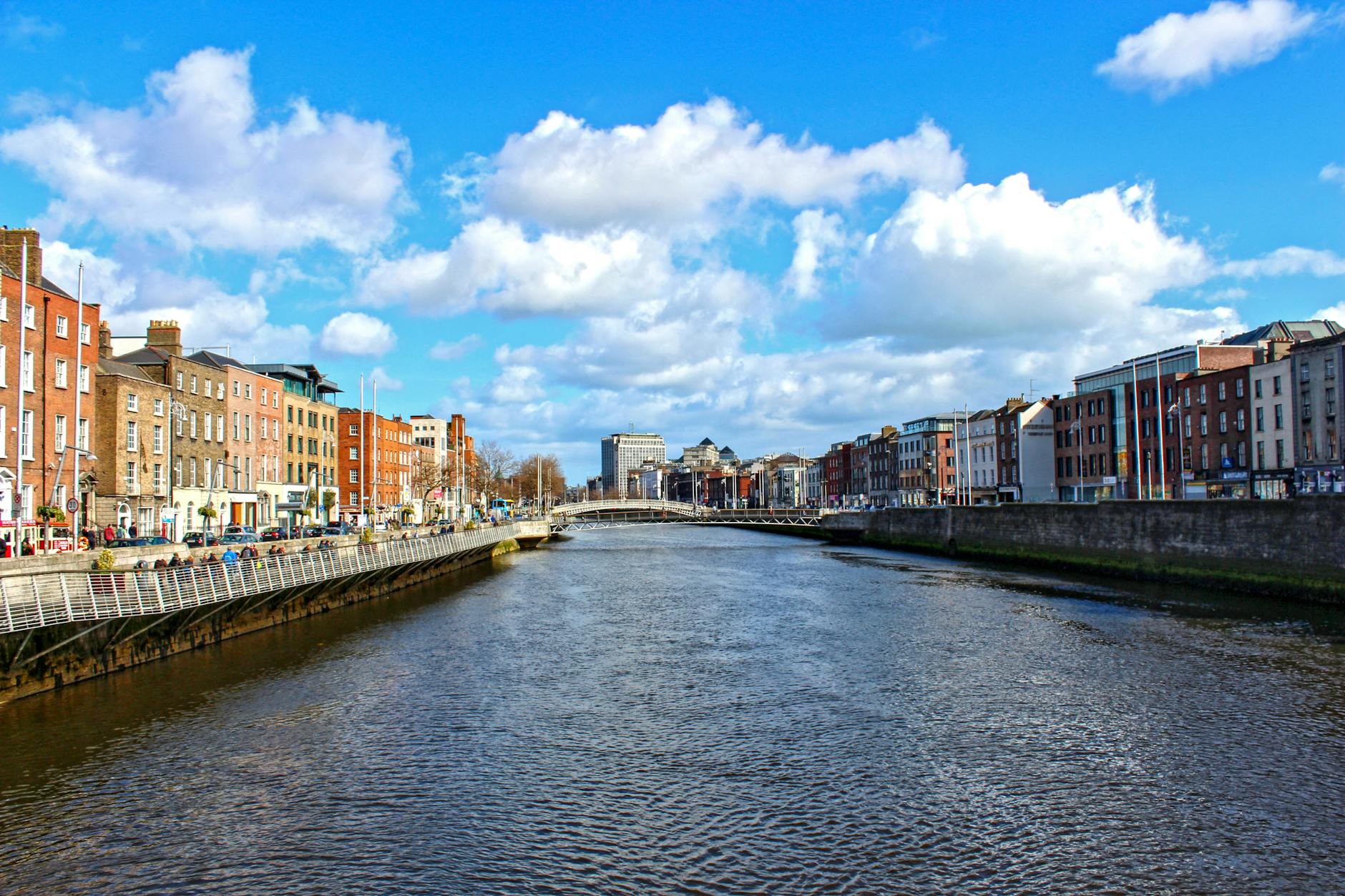
The Wide Streets Commissioners, established in 1758, transformed Dublin’s urban form by purchasing and demolishing medieval buildings to create the broad streets that became the city’s arterial pattern. They created O’Connell Street (originally Sackville Street, the widest residential street in Europe at the time), College Green, Westmoreland Street, and D’Olier Street. Architect James Gandon designed Dublin’s greatest Georgian public buildings: the Custom House (1791), the Four Courts (1796–1802), and the King’s Inns (1802–1817).
The 1782 Constitution gave Ireland legislative independence and reinforced Dublin’s status. The brief Grattan’s Parliament (1782–1800) sat in the Parliament House on College Green (now the Bank of Ireland). The Act of Union in 1800 dissolved the Irish parliament and shifted power to Westminster, beginning Georgian Dublin’s long decline. Many Anglo-Irish families abandoned their Dublin townhouses for London or rural estates, and by the mid-19th century the once-elegant Georgian houses were subdivided into tenement housing. For broader Dublin history, see our Dublin History pillar.
Merrion Square: The Most Prestigious Address
Merrion Square is Georgian Dublin’s grandest residential square. Developed from 1762 by the Fitzwilliam Estate, the square is bordered by 79 four-storey red-brick Georgian townhouses on its north, south, and west sides, with the Leinster House complex (Government Buildings, National Library, National Museum, National Gallery) on the east. The square’s central garden, once private but now open to the public, contains the iconic Oscar Wilde Memorial Sculpture facing toward Wilde’s childhood home at No. 1.
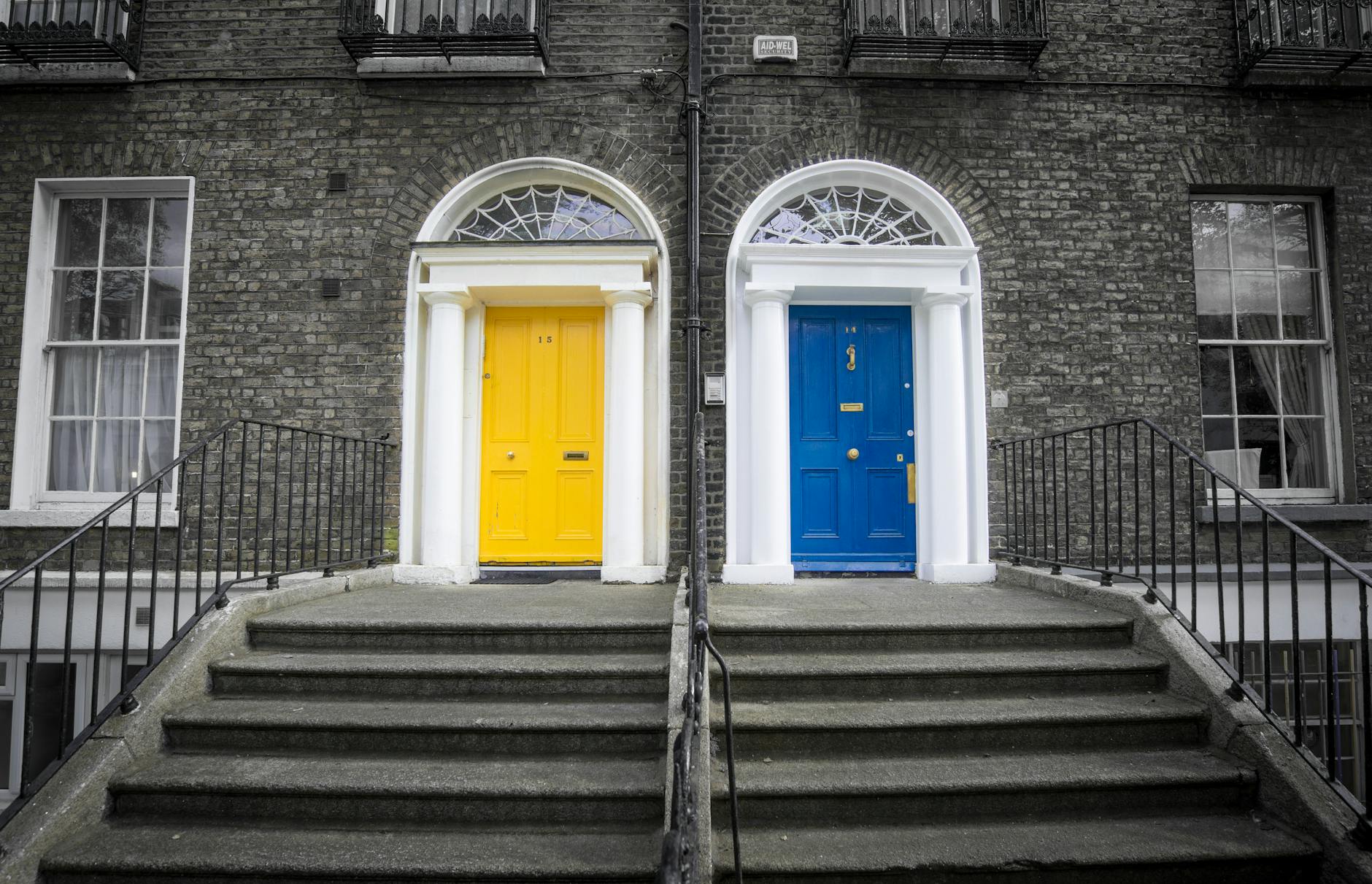
Famous residents of Merrion Square included Oscar Wilde’s parents (No. 1), W.B. Yeats (No. 82), Daniel O’Connell (No. 58), and George William Russell, the poet known as Æ (No. 84). The doors of the square are perhaps the most photographed feature of Dublin — legend says they were originally painted contrasting colours so that Georgian gentlemen returning home after late-night drinking sessions wouldn’t mistakenly enter the wrong house. The reality is more prosaic: the colour-coding emerged in the 20th century as a deliberate aesthetic choice. Today the doors are protected and homeowners need permission to change paint colours.
Fitzwilliam Square and Mount Street
Fitzwilliam Square (developed 1791–1825) is smaller and quieter than Merrion Square but retains its original private central garden — only residents of the surrounding houses can access it. The houses are uniformly Georgian in style and many have been preserved as private residences while others house solicitors, accountants, and consultancies. Walk around the perimeter to appreciate the architectural cohesion.
The streets connecting Merrion Square and Fitzwilliam Square — Upper Mount Street, Fitzwilliam Street Upper, and Lower Pembroke Street — form Europe’s longest unbroken Georgian streetscape. Walk north along Fitzwilliam Street from Fitzwilliam Square toward Merrion Square and you’ll pass an unbroken line of Georgian townhouses, most retaining their original 18th-century proportions. Number 29 Fitzwilliam Street Lower was preserved as a Georgian House Museum, although it has been closed for restoration in recent years — check the OPW website for reopening status.
Parnell Square and Mountjoy Square
The northside Georgian squares developed earlier than their southside counterparts. Parnell Square (originally Rutland Square, 1755) was Dublin’s first Georgian square and once held more Earl-level residents than any address in Britain or Ireland. Today the square retains its Georgian buildings (now hosting the Hugh Lane Gallery, the Dublin Writers Museum at No. 18, and the Garden of Remembrance) but has lost some of its original cohesion.
Mountjoy Square (developed 1798–1818) was the last great Georgian square. It declined dramatically through the 19th and 20th centuries, with many houses falling into ruin or being demolished entirely. Restoration efforts since the 1980s have rebuilt or refurbished much of the square. The east side retains an unbroken run of Georgian houses while the west and north sides have suffered more 20th-century intrusions. Mountjoy Square remains worth visiting as an example of both Georgian grandeur and the challenges of historic preservation.
Henrietta Street, between King’s Inns and Bolton Street, is Dublin’s earliest Georgian street (1720s). It declined into the worst tenement slum in Dublin by 1900 — James Connolly and other working-class Dubliners lived here in appalling conditions. The 14 Henrietta Street tenement museum preserves this complex social history. €9 adult admission, open Tuesday to Sunday, booking recommended.
James Gandon’s Public Buildings
English architect James Gandon (1743–1823) designed Dublin’s finest Georgian public buildings. His masterpieces define the city’s skyline along the Liffey:
The Custom House (1791)
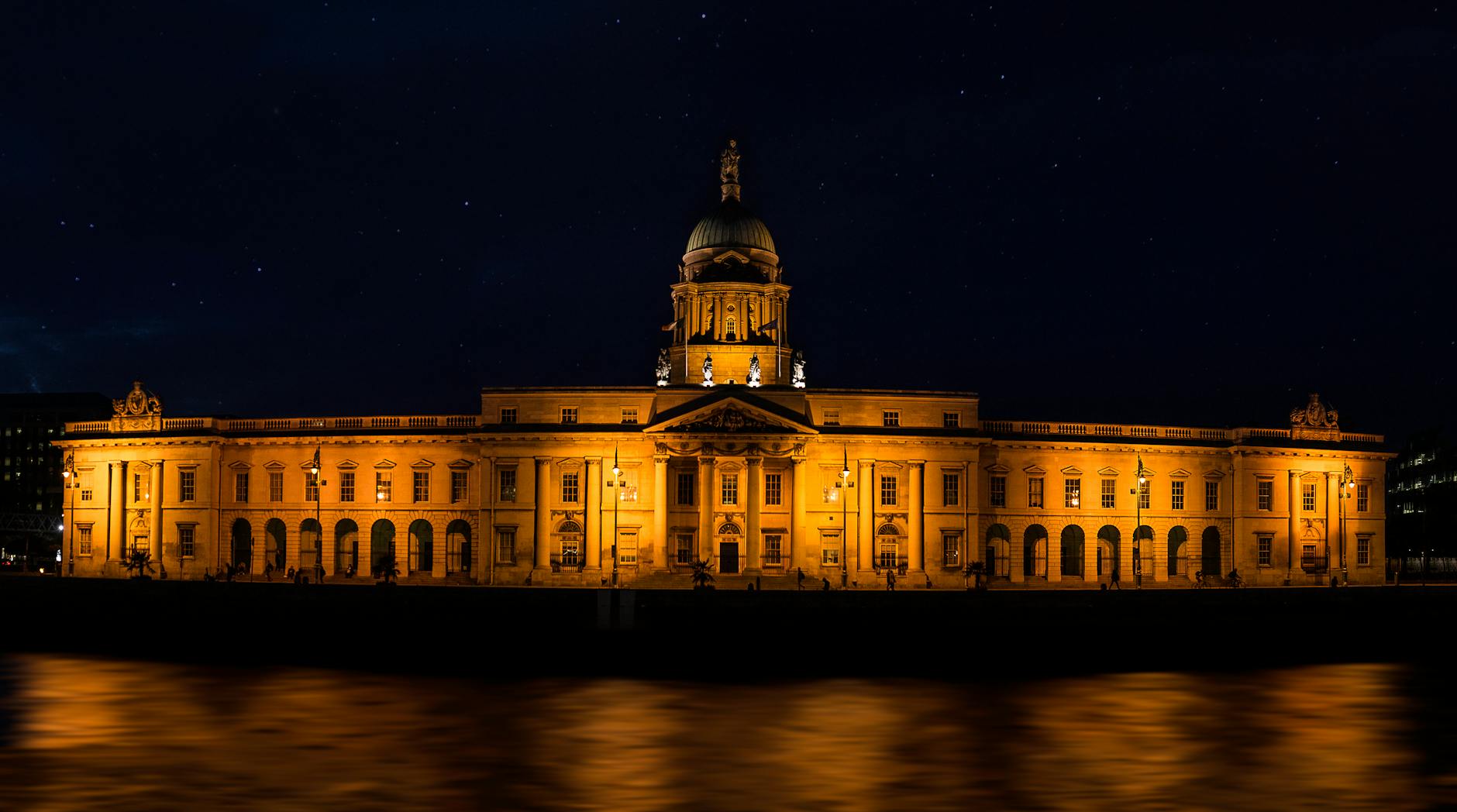
The Custom House on the Liffey’s north bank is Ireland’s finest Georgian public building. Its 114-metre Doric facade, surmounted by a green copper dome and statue of Commerce, dominates the river view. The building originally housed the customs collection authorities; today it operates as government offices. The 1921 burning of the Custom House by IRA fighters during the War of Independence destroyed its interior, but the exterior was preserved and the interior subsequently rebuilt. Walk past at any hour for the architectural view; access the visitor centre on the river-facing side for free historical exhibition.
The Four Courts (1802)
The Four Courts on the Liffey’s north bank houses Ireland’s High Court and Supreme Court. Its distinctive Corinthian portico and copper dome are recognisable from any view of the Liffey. The building was severely damaged during the 1922 Civil War shelling that destroyed the Public Records Office in the adjoining wing — the loss of seven centuries of Irish historical records was a national catastrophe. The Four Courts was rebuilt by 1932 and remains a working court complex. The exterior viewing point on Inns Quay is publicly accessible; interior access requires court business.
King’s Inns (1817)
The King’s Inns on Henrietta Street is the training institution for Irish barristers. Gandon’s design features a Doric colonnade and ceremonial gates. The grounds are publicly accessible from Constitution Hill side. The library, with its Georgian interior, is occasionally open during heritage events. Less visited than the Custom House and Four Courts but architecturally significant.
Trinity College and College Green
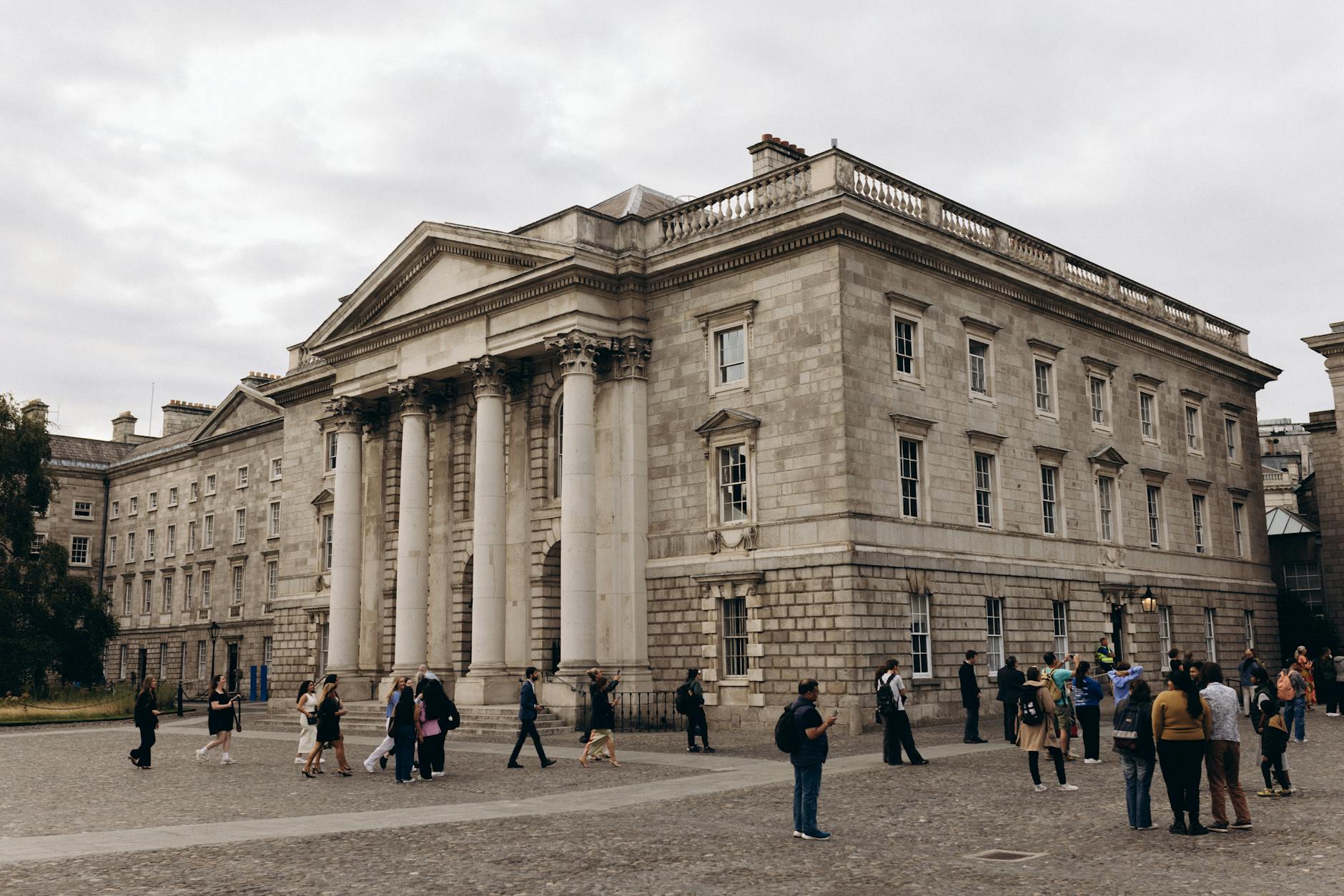
Trinity College preserves a Georgian campus largely intact. The Front Gate (1759), Provost’s House (1759), and Examination Hall (1779–1791) all date to the Georgian period. The cobbled Front Square retains its original 18th-century proportions. The Long Room library, completed in 1732, hosts the Book of Kells exhibition and is one of Dublin’s great Georgian interiors.
Opposite Trinity, the Bank of Ireland building on College Green was originally the Irish Parliament House (1729–1739), designed by Edward Lovett Pearce. The first purpose-built bicameral parliament building in Europe, it became the Bank of Ireland headquarters after the Act of Union dissolved the Irish parliament in 1800. The interior House of Lords chamber survives largely intact and can be visited free of charge during banking hours. Look for the original 1733 tapestries depicting the Battle of the Boyne and the Siege of Derry.
Other Major Georgian Buildings
Several other Georgian buildings beyond the major monuments deserve attention:
- Dublin City Hall (1779) — Originally the Royal Exchange, a circular Corinthian rotunda by Thomas Cooley. Free admission to the ground floor exhibition. Open Monday–Friday.
- Powerscourt Townhouse — A grand Georgian residence at South William Street, now repurposed as a luxury shopping arcade. Free to enter the central courtyard.
- Leinster House (1745) — Designed by Richard Cassels for the Duke of Leinster, now the seat of the Irish parliament. Tours available by booking through your local representative or in summer through the Office of Public Works.
- Casino at Marino (1762–1775) — A small but extraordinary neoclassical garden building designed by William Chambers. Often overlooked by tourists but architecturally exceptional. €5 admission.
- Newman House on St Stephen’s Green — Georgian townhouses that became University College Dublin’s original buildings, now home to the Museum of Literature Ireland (MoLI). €10 admission.
- The Rotunda Hospital (1757) — The world’s first purpose-built maternity hospital, designed by Richard Cassels. The chapel (1762) has spectacular plasterwork by Bartholomew Cramillion.
- St Werburgh’s Church (1719) — Small but elegant Georgian parish church on Werburgh Street, behind Dublin Castle.
A Self-Guided Georgian Walking Tour
This 2–3 hour walking route covers the essential Georgian Dublin sites:
- Start: Trinity College Front Gate — The 18th-century campus and library.
- Cross College Green to the Bank of Ireland — The original Irish Parliament House. Visit the House of Lords chamber inside.
- Walk to Dame Street and Dublin Castle — The 18th-century State Apartments are particularly fine (closed to visitors until January 2027).
- Continue west to City Hall — Thomas Cooley’s 1779 Corinthian rotunda.
- South along South Great George’s Street to Powerscourt Townhouse — A Georgian residence as luxury shopping arcade.
- Continue south to St Stephen’s Green — The Georgian Square’s perimeter buildings. Stop at the Museum of Literature Ireland (Newman House).
- Walk east along Earlsfort Terrace to Iveagh Gardens — The secret garden behind the Georgian houses.
- North to Fitzwilliam Square — The private central garden and surrounding Georgian houses.
- Walk along Fitzwilliam Street to Merrion Square — Europe’s longest unbroken Georgian streetscape.
- End: Merrion Square — The most photographed Georgian district. Visit the National Gallery (free) on the east side.
Total walking distance: about 4km, all on flat city centre pavement. Allow 2–3 hours including stops. Add 30 minutes if you visit the Bank of Ireland House of Lords or 60 minutes for the National Gallery. For more guided options, see our Dublin Walking Tours guide.
Georgian Museums and Visitor Sites
Several Dublin sites give visitors access to fully furnished Georgian interiors:
- 14 Henrietta Street — A preserved tenement museum showing how a Georgian townhouse became a slum housing 100+ people. €9 adult, book ahead.
- Museum of Literature Ireland (MoLI) — Newman House on St Stephen’s Green retains Georgian rooms including the Apollo Room with original plasterwork. €10.
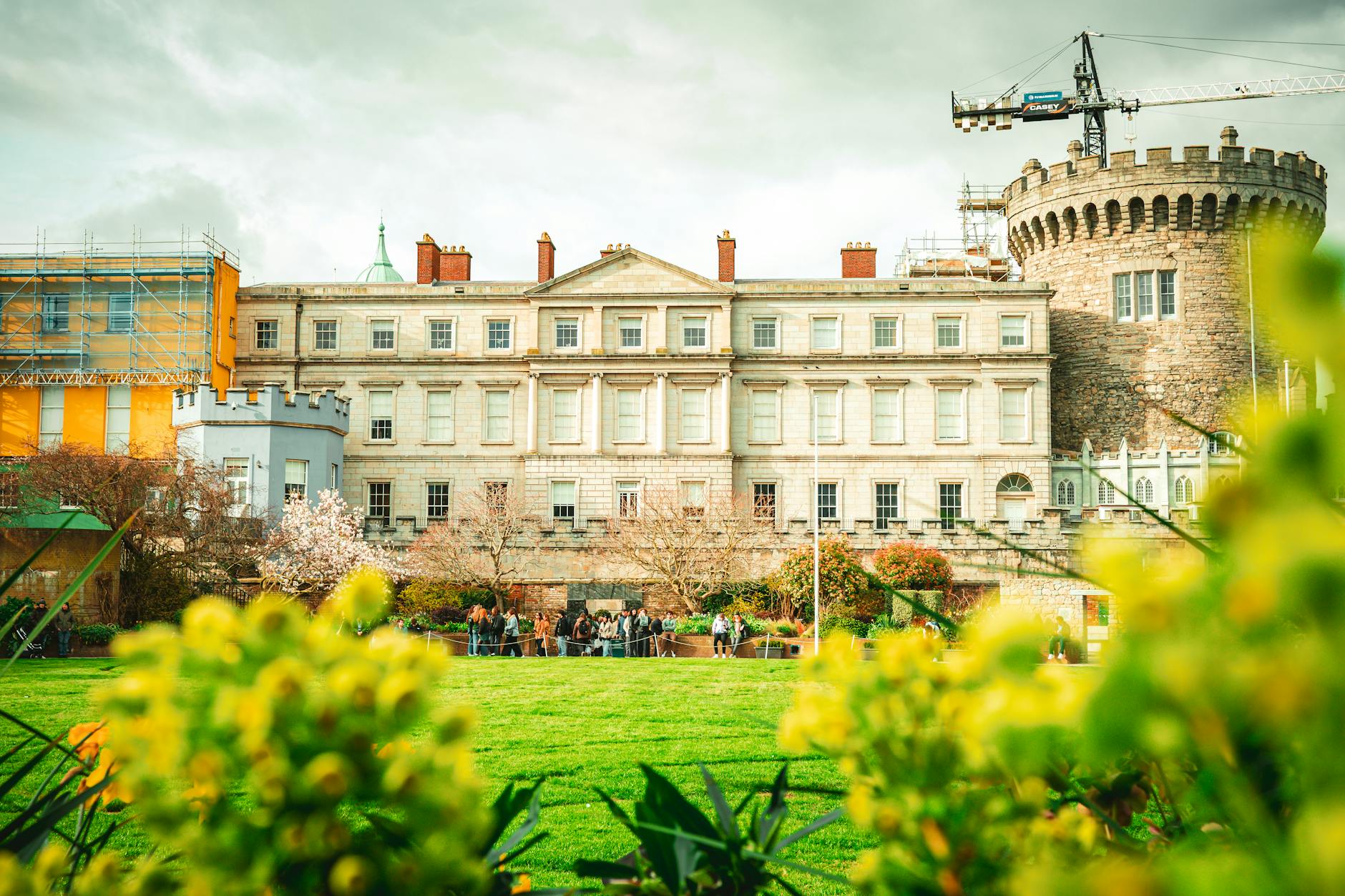
- Dublin Castle State Apartments (closed until January 2027) — Georgian-era state rooms with chandeliers, throne, and tapestries. €12.
- Casino at Marino — Small neoclassical garden building with intact Georgian interior. €5.
- The Little Museum of Dublin — A Georgian townhouse hosting Dublin social history. €13.
- Bank of Ireland House of Lords — The Irish Parliament chamber preserved with original tapestries. Free.
- National Museum of Ireland (Decorative Arts) — Collins Barracks holds Georgian silverware, ceramics, and furniture. Free.
The OPW Heritage Card (€40) covers Casino at Marino, Dublin Castle (closed until January 2027), and Kilmainham Gaol — useful for anyone visiting multiple sites.
Practical Tips for Exploring Georgian Dublin
The exterior architectural sites can be visited anytime in good weather; pick a dry day for the best photography conditions. Soft afternoon light (3–5pm in spring/autumn, 4–7pm in summer) gives the brick facades their richest colour. Photography enthusiasts arrive early or late to avoid bus tour groups at Merrion Square. The Iveagh Gardens (entrance from Clonmel Street) are open daily and offer a quiet break from walking. Bring waterproofs — the route involves significant walking with limited shelter.
For visitors with deep architectural interest, the Irish Georgian Society (igs.ie) runs occasional public lectures, building tours, and architectural awards events. The society’s Dublin offices are at 58 South William Street and visitors can drop in to browse their bookshop and exhibitions. The Royal Institute of the Architects of Ireland (RIAI) also runs occasional public events and walking tours focused on Dublin’s architectural history. For a deeper read on Dublin architecture, Christine Casey’s Dublin (Yale, 2005) in the Pevsner Architectural Guides series is the definitive academic reference.
Inside the Georgian Townhouse
Most Georgian Dublin townhouses follow a remarkably consistent plan despite their owners’ varying status and wealth. The ground floor typically housed a dining room at the rear (facing onto the garden or mews) and a smaller front room used for receiving callers and conducting business. The piano nobile (first floor) contained the two best rooms — the drawing room (front) and the saloon (rear) — connected by sliding doors that could be opened for entertaining. These were the rooms with the highest ceilings, finest plasterwork, and most elaborate chimneypieces.
The second floor housed family bedrooms and the master’s study. The top floor (often half-height attic level) housed nursery, governess, and servants’ bedrooms. The basement, lit by light wells from the street, housed the kitchen, scullery, larder, butler’s pantry, and wine cellar. A back staircase ran from basement to attic for staff movement that wouldn’t interfere with family use of the main staircase. The 14 Henrietta Street museum is the best place to see this internal layout preserved, including the brutal subdivision of these spaces when the house became a tenement.
Plasterwork and Decorative Crafts
One of the most distinctive features of Georgian Dublin interiors is the elaborate plasterwork ceilings produced by skilled stuccodores. Italian stuccodores Paolo and Filippo Lafranchini worked in Dublin from the 1730s, executing some of Europe’s finest decorative plasterwork at Rotunda Hospital Chapel, Russborough House, and several Dublin townhouses. The next generation, Robert West and Michael Stapleton, developed an Irish style of stuccowork that emphasized neo-classical motifs, urns, and figural plaques.
To see Georgian plasterwork in person, visit the Rotunda Hospital Chapel (open during heritage events), Newman House Apollo Room (MoLI museum), Dublin Castle State Apartments (from January 2027), and the Bank of Ireland House of Lords. The Lafranchini brothers’ Rotunda Chapel plasterwork is widely considered the finest example of Georgian decorative work in Ireland. Free admission during church services and heritage open days.
Georgian Dublin: FAQ
What is the best Georgian square in Dublin?
Merrion Square is generally considered the finest preserved Georgian square in Dublin and one of the best in Europe. Its 79 four-storey townhouses surround a public central garden with the iconic Oscar Wilde Memorial Sculpture. Famous residents included Oscar Wilde’s parents, W.B. Yeats, and Daniel O’Connell.
Why are Dublin’s Georgian doors painted different colours?
Despite the popular legend about drunken Georgian gentlemen, the colour-coded doors emerged in the 20th century as a deliberate aesthetic and tourism choice. Today the colours are protected and homeowners need permission to change paint colours. The most famous Georgian doors are along Merrion Square North.
Can I see inside a Georgian Dublin house?
Yes — 14 Henrietta Street tenement museum (€9), Newman House at the Museum of Literature Ireland (€10), Dublin Castle State Apartments (€12; closed until January 2027), and the Casino at Marino (€5) all provide interior access to Georgian buildings. The Bank of Ireland House of Lords is free.
Who designed Dublin’s major Georgian buildings?
English architect James Gandon (1743–1823) designed Dublin’s greatest Georgian public buildings: the Custom House (1791), the Four Courts (1802), and the King’s Inns (1817). Edward Lovett Pearce designed the Irish Parliament House (now Bank of Ireland). Richard Cassels designed Leinster House and the Rotunda Hospital.
How long should I spend exploring Georgian Dublin?
A 2–3 hour self-guided walking tour covers the essential exterior Georgian sites. Add 90 minutes if you want to visit one major interior site like 14 Henrietta Street or Newman House. Architecture enthusiasts can easily fill a full day exploring Dublin’s Georgian heritage.
Are Dublin’s Georgian squares free to visit?
Merrion Square’s central garden is open to the public free of charge. St Stephen’s Green is also free. Fitzwilliam Square’s central garden is private — only residents can access it, but you can walk the perimeter for free. Iveagh Gardens (behind St Stephen’s Green) are also free to visit.
What’s the difference between Georgian and Victorian architecture?
Georgian (1714–1830) emphasises classical symmetry, restraint, and red brick. Victorian (1837–1901) embraces ornament, polychrome brick, Gothic revival, and elaborate decoration. Dublin’s Victorian architecture includes the railway stations (Heuston, Connolly), Iveagh Markets, and the Iveagh Trust housing.
Are there guided Georgian Dublin tours?
Pat Liddy’s Walking Tours run architectural-focused tours that cover Georgian Dublin in detail. Hidden Dublin Walks offers a specifically Georgian-themed walking tour several times monthly. The Irish Georgian Society occasionally runs members-only and public building tours. For tour options see our Dublin Walking Tours guide.
Keep Reading
- Viking & Medieval Dublin: 1,000 Years of History — Before the Georgians and the Rising, Dublin was a Norse trading port — Christ Church, Dublinia and the walled town.
- Dublin’s Famous Writers & Literary Landmarks — Four Nobel laureates from one small city, and the pubs, houses and libraries where they worked.
- Best History Museums in Dublin — From the free national institutions to EPIC and Glasnevin — which ones are worth your limited hours.
- Dublin Castle — a related guide from elsewhere on the site.
Lean na Comharthaí — Keep following the signs