Kilmainham Gaol: Dublin’s Most Powerful Historical Site (2026)
Ar an gComhartha Seo — On this sign
- Why Kilmainham Gaol is a Must-Visit Dublin Site
- A Brief History of Kilmainham Gaol
- What the Kilmainham Tour Covers
- Booking Kilmainham Gaol Tickets
- Practical Tips for Visiting Kilmainham Gaol
- How to Get to Kilmainham Gaol
- Combining Kilmainham with Other Sites
- Famous Kilmainham Prisoners
- Kilmainham in Film and Television
- Best Time to Visit Kilmainham Gaol
- Who Should Visit Kilmainham Gaol
- The Plunkett-Gifford Wedding
- Civil War Prisoners at Kilmainham
- The Restoration of Kilmainham Gaol
- Kilmainham Gaol: FAQ
- Keep Reading
Kilmainham Gaol is unlike any other Dublin attraction. The former prison, in continuous operation from 1796 to 1924, held political prisoners spanning every major episode of Irish revolutionary history — the 1798 United Irishmen rebellion, the 1803 rebellion of Robert Emmet, the 1848 Young Irelanders, the 1867 Fenians, the Land War of the 1880s, the 1916 Easter Rising, the War of Independence, and the Civil War. Fourteen of the executed 1916 leaders were shot here. This guide covers everything you need to know to plan, book, and get the most from your Kilmainham Gaol visit.
This guide goes deeper on one part of our complete guide to Dublin’s history and literary heritage.
Why Kilmainham Gaol is a Must-Visit Dublin Site
Visitors consistently describe Kilmainham Gaol as the most moving historical experience in Dublin. The combination of a perfectly preserved prison building, the weight of its political history, and the rigorously researched guided tour creates an atmosphere that puts visitors directly in contact with Irish revolutionary history. The stonebreakers’ yard where Patrick Pearse, James Connolly, and twelve other 1916 leaders were executed remains overwhelming for visitors regardless of their prior historical knowledge.
Beyond the 1916 connections, Kilmainham preserves the architecture and atmosphere of late-18th and 19th century penal philosophy. The East Wing’s panopticon design (built 1860–1862) is one of the finest surviving examples of Victorian prison architecture in Europe. The earlier West Wing dates to the prison’s 1796 founding. Together they tell a story not just of Irish nationalism but of the development of modern incarceration as a social practice.
A Brief History of Kilmainham Gaol
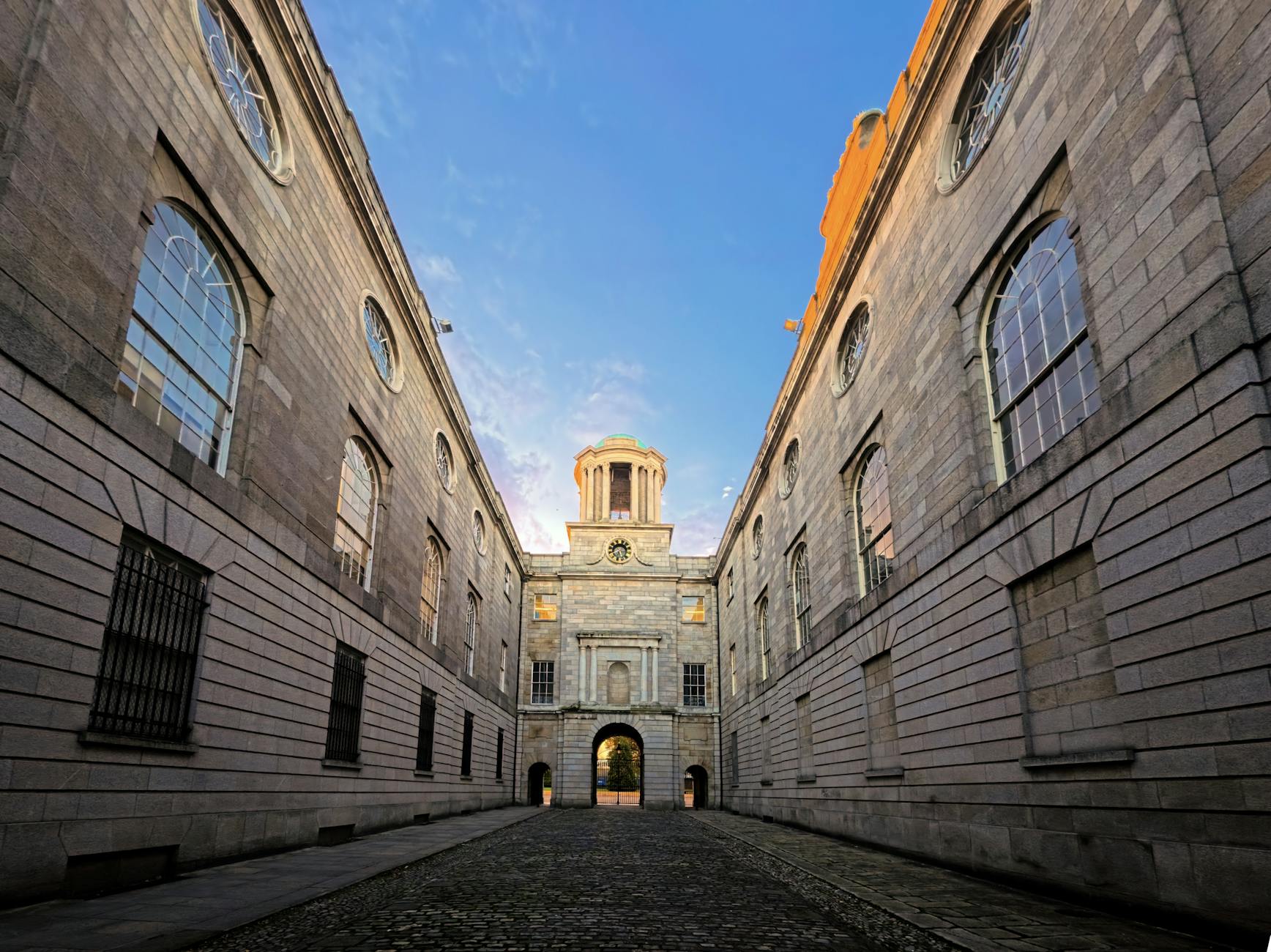
Kilmainham Gaol opened in 1796 as the County Gaol for Dublin, replacing the older prison at the former courthouse on Bow Lane. Architect John Trail designed the original building according to the era’s reformist principles — individual cells (replacing the overcrowded communal cells of older prisons), an emphasis on isolation as moral reform, and a clear hierarchy from the Governor’s residence down to the basement cells for “the worst class.”
The prison held political prisoners from its first decade. Henry Joy McCracken, Robert Emmet, and dozens of United Irishmen passed through after the 1798 and 1803 rebellions. During the Great Famine (1845–1849), the prison filled with petty thieves — mostly desperate Dubliners imprisoned for stealing food. The East Wing was built in 1860–1862 in response to severe overcrowding, adopting the panopticon design pioneered by Jeremy Bentham. The Land War of the 1880s saw mass imprisonment of tenant farmers and their supporters including Charles Stewart Parnell.
The Fenian and post-1916 political prisoners gave the prison its revolutionary association. Robert Emmet was hanged just outside the gaol in 1803. The 1916 leaders were shot in the stonebreakers’ yard. After the Civil War (1922–1923), the Irish Free State imprisoned and executed Anti-Treaty IRA prisoners here, including Erskine Childers. The prison closed in 1924 and stood derelict until restoration began in the 1960s. It opened as a museum in 1971 and is now operated by the Office of Public Works (OPW). For broader 1916 context, see our 1916 Rising Sites guide.
What the Kilmainham Tour Covers
Kilmainham Gaol can only be visited as part of a guided tour. The 90-minute tour covers the prison’s evolution from 1796 to 1924 across its three main physical spaces:
The 1796 West Wing
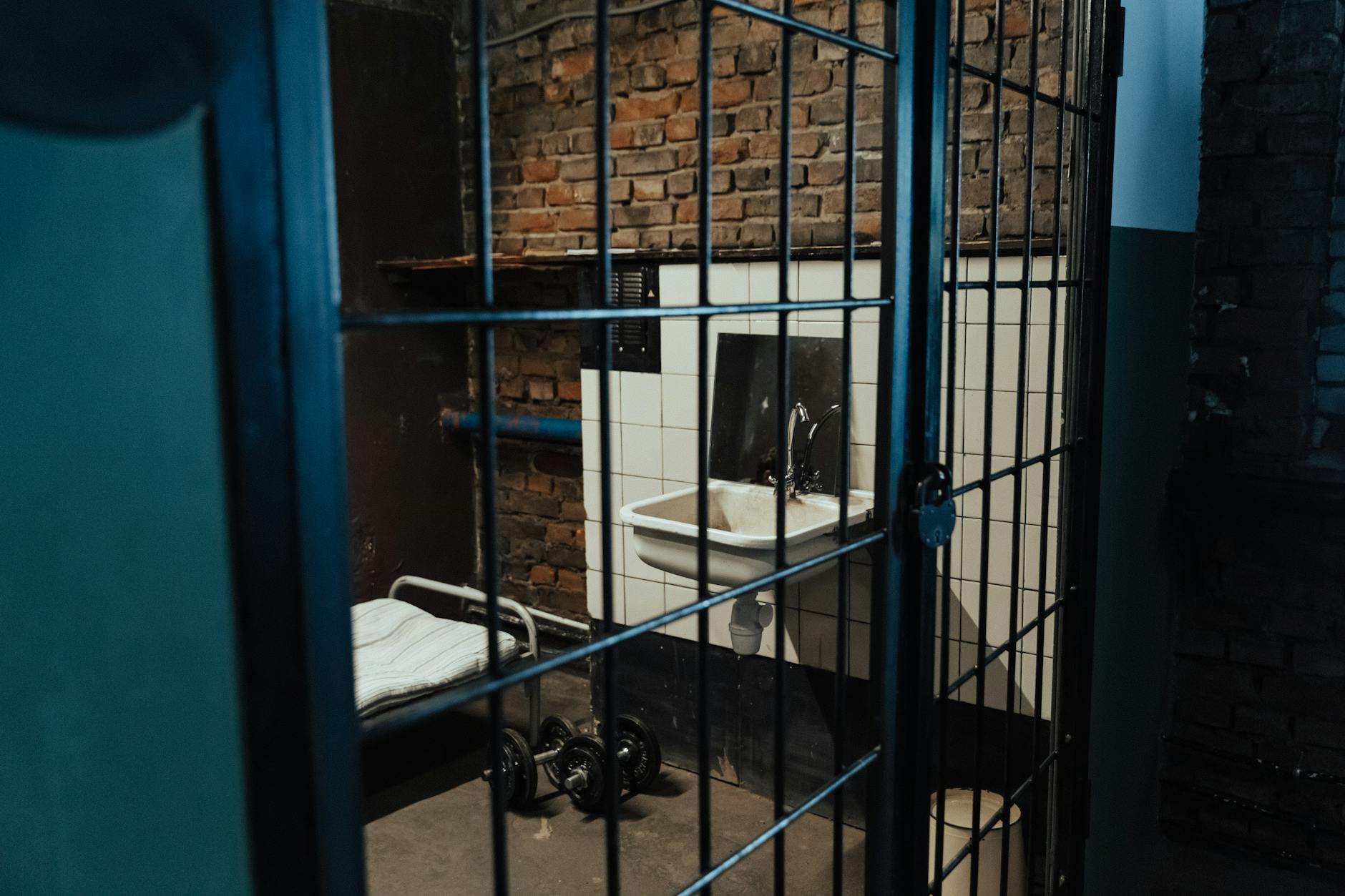
The original prison building. Stone-floored corridors, individual cells (originally housing 2–3 prisoners despite being designed for one), and the chapel where Joseph Plunkett married Grace Gifford on the morning of his execution. The cell of Charles Stewart Parnell, who held political prisoner status, is identifiable through original wallpaper and furnishings far better than the standard cells.
The 1860s East Wing (Panopticon)
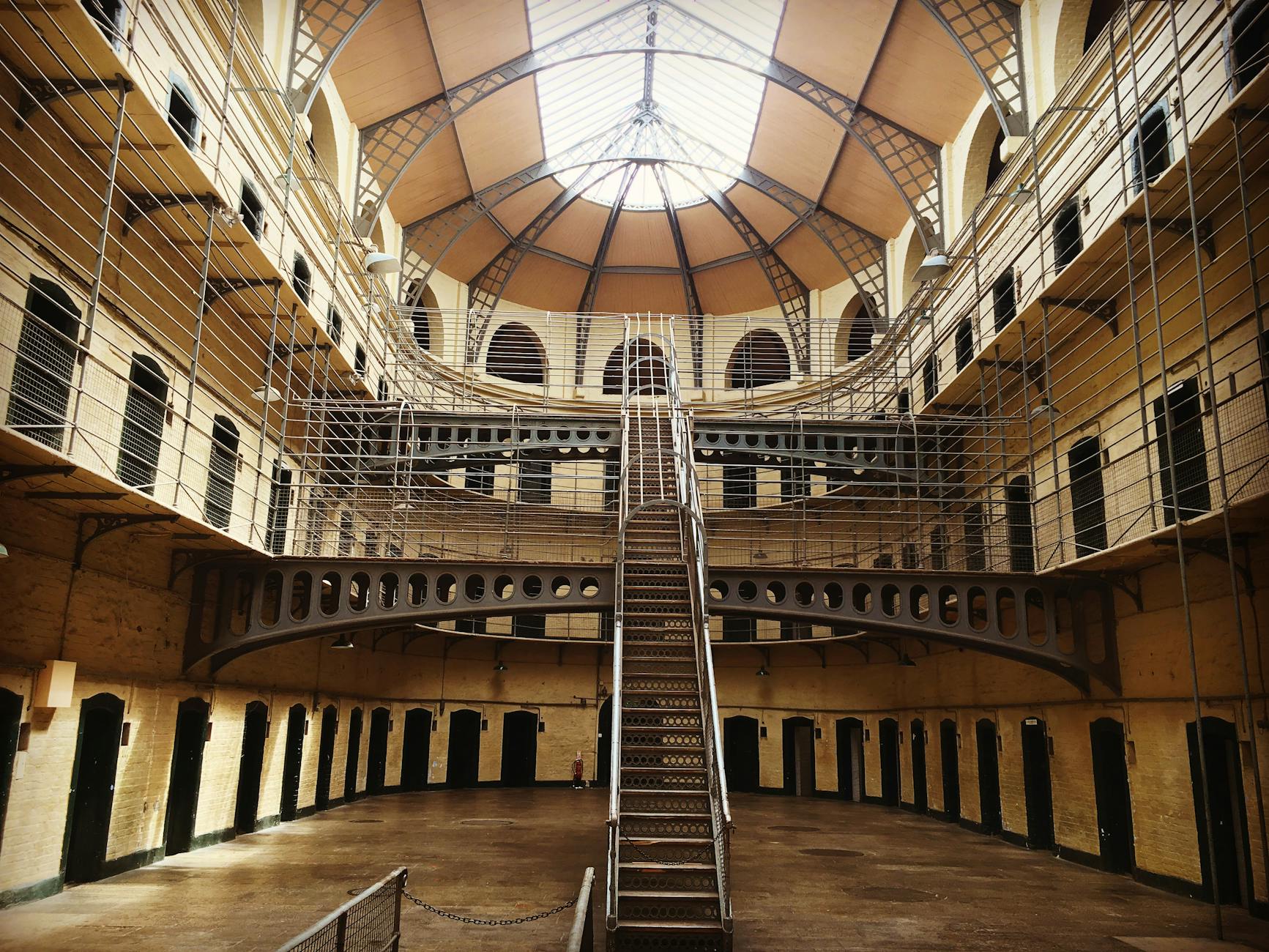
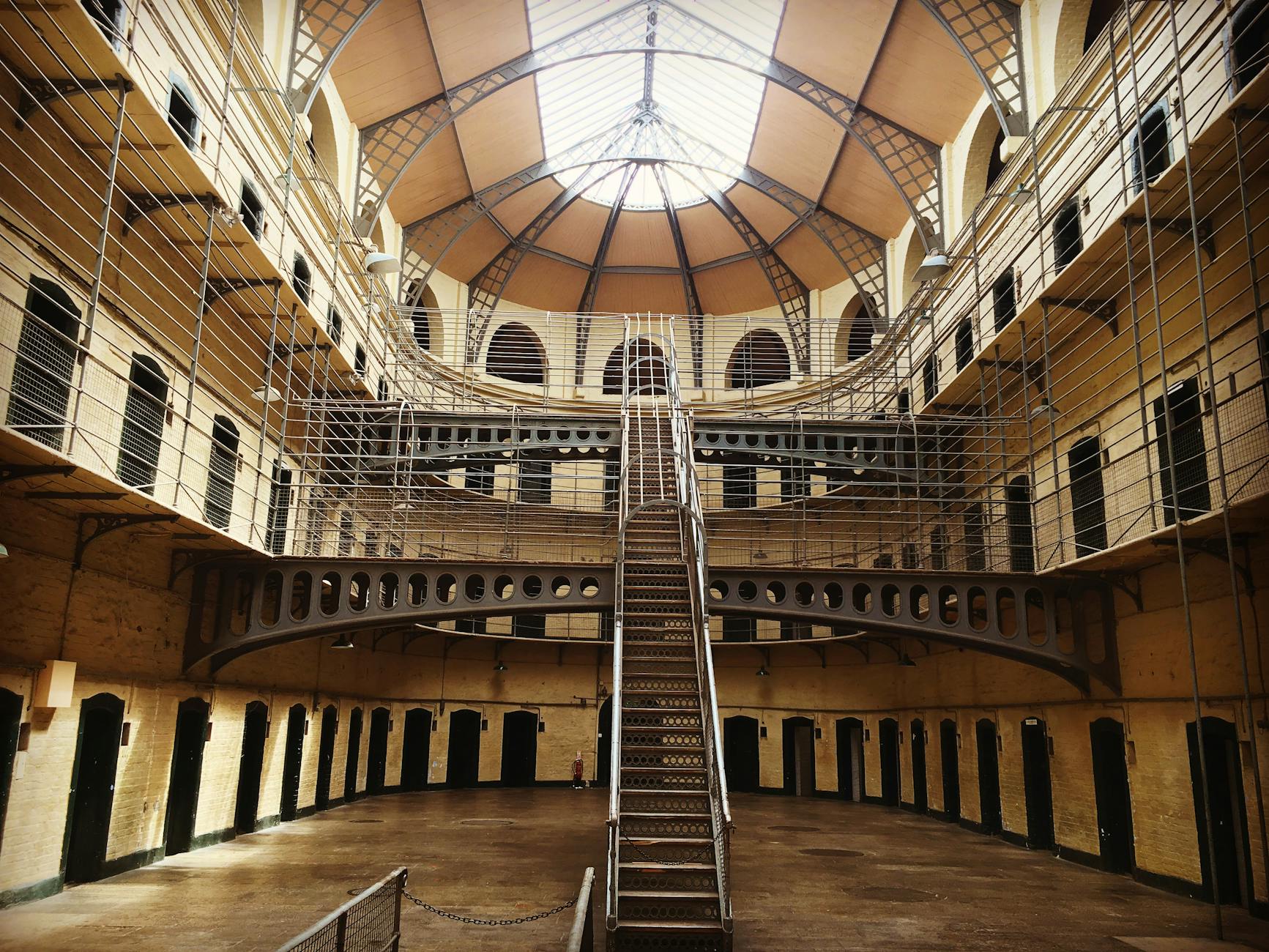
The panopticon design centres on a glass-roofed atrium with cells arrayed on three levels around its circumference. From a single central position, guards could observe every cell door simultaneously. The architectural rationality — light, surveillance, isolation, height — is visually striking and uncomfortable in equal measure. Most film and television depictions of the gaol use this space. The East Wing is also where most 1916 Rising prisoners and many Civil War prisoners were held.
The Stonebreakers’ Yard
The exercise yard where prisoners broke stone for road-building as part of their punishment. Between 3 and 12 May 1916, fourteen leaders of the Easter Rising were executed here by firing squad. Crosses mark the spots where each leader was shot. The first execution was Patrick Pearse on 3 May; the last were Sean MacDermott and James Connolly on 12 May. Connolly, severely wounded during the Rising and unable to stand, was tied to a chair to be shot. The yard is the emotional focal point of every Kilmainham tour.
Booking Kilmainham Gaol Tickets
Booking ahead is essential. Kilmainham is one of Dublin’s most popular attractions and the tour is regularly sold out 4–6 weeks in advance during summer months. Bookings open 28 days ahead at heritageireland.ie. Set a calendar reminder for exactly 28 days before your intended visit date and book the moment availability appears.
Adult tickets cost €8, child (under 12) tickets €4, students and seniors €6, family tickets (2 adults + 2–3 children) €20. The OPW Heritage Card (€40 for 12 months) covers Kilmainham plus all other state heritage sites in Ireland including Dublin Castle (closed until January 2027), Newgrange, Rock of Cashel, and dozens more — pays for itself after 3–4 visits. Even at the standalone €8 ticket price, Kilmainham is one of Dublin’s best value attractions.
Tours run roughly every 30 minutes from 9:30am to 4:45pm (last tour) during the busy summer season, with reduced frequency in winter. The site is closed Christmas Day, Stephen’s Day, and Good Friday. Arrive 15 minutes before your scheduled tour. Late arrivals cannot join in progress.
Practical Tips for Visiting Kilmainham Gaol
The prison interior is cold year-round — the temperature inside the stone walls hovers at 8–12°C even in summer. Bring a jacket or sweater regardless of outside weather. The tour involves significant walking on uneven stone floors and some stairs. Comfortable closed-toe shoes are essential. Photography is allowed throughout the prison without flash.
The introductory video before the tour starts (run continuously in the visitor centre) is excellent at setting historical context. Watch it even if you arrived ahead of schedule. The on-site museum includes original artefacts, the door of 16 Moore Street where Pearse and Connolly surrendered, original letters by the executed leaders, and a comprehensive timeline of Irish revolutionary history. Spend 30 minutes here before or after the tour.
The tour is emotionally heavy — particularly the section in the chapel about Joseph Plunkett’s wedding and the stonebreakers’ yard. Children under 8 may find parts of the tour distressing. The guides handle sensitive material professionally, but be prepared to find the experience moving rather than purely informational.
How to Get to Kilmainham Gaol
Kilmainham Gaol sits at Inchicore Road, about 3km west of Dublin city centre. Several transport options work well:
- Luas Red Line — Suir Road stop is a 12-minute walk from the gaol. Total journey from city centre 25 minutes including walk. Cheapest option at €1.55 with Leap Card.
- Dublin Bus 13 or 40 — Direct buses to Kilmainham from O’Connell Street. 20–30 minutes depending on traffic. €1.55 with Leap.
- Hop-on Hop-off Bus tour — Most loops stop directly outside Kilmainham. €25 day pass.
- Walking from city centre — 35–40 minutes along the Liffey via Heuston Station and Inchicore Road. Pleasant in good weather.
- Taxi — €12–15 from city centre. Useful in rain or if pressed for time.
The Luas option is recommended for most visitors — reliable, cheap, and avoids the traffic that often delays bus routes. From Suir Road, the walk passes the Royal Hospital Kilmainham (now IMMA museum) for a scenic approach.
Combining Kilmainham with Other Sites
Kilmainham Gaol pairs naturally with several nearby attractions for a half-day or full-day historical itinerary. The Royal Hospital Kilmainham (1684), now the Irish Museum of Modern Art (IMMA), sits 200m from the gaol. The 17th-century building is itself one of Dublin’s finest works of architecture. Free admission, open daily, allow 60–90 minutes.
The War Memorial Gardens at Islandbridge, designed by Edwin Lutyens, commemorate the 49,400 Irish soldiers killed in World War I. Free admission, open daily. The Guinness Storehouse is a 10-minute walk east toward the city centre. The Irish Museum of Modern Art (IMMA), Phoenix Park, and Heuston Station are all within 15 minutes’ walk.
Famous Kilmainham Prisoners
Kilmainham’s prisoner roster reads like a who’s who of Irish revolutionary history:
- Henry Joy McCracken (1767–1798) — United Irishmen leader, executed in Belfast but his comrades held at Kilmainham.
- Robert Emmet (1778–1803) — Held at Kilmainham before his execution outside the prison.
- Charles Stewart Parnell (1846–1891) — The leader of the Irish Parliamentary Party held at Kilmainham 1881–1882 during the Land War.
- James Stephens — Founder of the IRB, famously escaped from Richmond Bridewell before his transfer to Kilmainham.
- The 1916 Rising leaders — Pearse, Connolly, Clarke, MacDermott, MacDonagh, Plunkett, Ceannt, Heuston, Daly, MacBride, Mallin, O’Hanrahan, Pearse (Willie), Colbert.
- Eamon de Valera — Held at Kilmainham after the 1916 Rising and during the Civil War.
- Michael Collins — Brief Kilmainham detention after 1916.
- Erskine Childers (1870–1922) — Author of The Riddle of the Sands and 1922 Anti-Treaty leader, executed at Beggars Bush after Kilmainham detention.
- Countess Markievicz — Briefly held at Kilmainham before transfer to Aylesbury Prison in England.
The tour guides bring these prisoners’ stories alive through cell visits, original letters and possessions, and well-researched personal narratives. Each prisoner’s cell, where identifiable, is highlighted during the tour.
Kilmainham in Film and Television
Kilmainham Gaol’s distinctive architecture has featured in numerous films and TV productions. In the Name of the Father (1993) was filmed extensively at Kilmainham, with Daniel Day-Lewis playing Gerry Conlon. Michael Collins (1996) used Kilmainham for prison scenes. The Italian Job (1969 original) shot here. Paddington 2 (2017) used the East Wing as the fictional prison. Penny Dreadful (2014–2016) and Vikings (2013–2020) both used Kilmainham locations. Film enthusiasts can spot familiar architectural details during the tour and afterwards.
Best Time to Visit Kilmainham Gaol
Kilmainham Gaol is busy year-round but pace varies significantly by season and time of day. Peak summer (June–August) sees the longest waits and earliest sellouts — book 6–8 weeks ahead. Shoulder seasons (April–May, September–October) need 3–4 weeks ahead booking. Winter (November–March) is the quietest season — sometimes walk-up tickets are available on quieter weekdays but never count on it.
Within a day, the first tour (9:30am) and the last tours (4:30pm and 4:45pm) tend to be slightly less crowded than mid-day slots. The site is open most public holidays except Christmas Day, Stephen’s Day, Good Friday. St Patrick’s Day (17 March) sees particularly high demand because of the holiday’s connection to Irish heritage. Book even earlier than normal for March visits. Bloomsday (16 June) and Easter week (the historical anniversary of the Rising) also see elevated demand.
Who Should Visit Kilmainham Gaol
Kilmainham Gaol is essentially a must-visit for any Dublin trip lasting longer than 2 days. The combination of accessible history, world-class guided tours, and the emotional weight of the site makes it appealing across visitor types — from first-time tourists with no Irish historical knowledge to serious historians. The guides are skilled at adjusting their delivery for school groups, family visitors, foreign tourists, and Irish nationals.
The exceptions: very young children may find the tour’s length and emotional content challenging — the OPW recommends ages 8 and up. Visitors with mobility impairments should call ahead about specific accessibility (the prison has many stairs and uneven floors). Anyone visiting on a strict timeline should not attempt Kilmainham — the tour runs to schedule and arriving late means losing your booking entirely.
The Plunkett-Gifford Wedding
Among the most affecting Kilmainham stories is the marriage of Joseph Plunkett to Grace Gifford on the morning of his execution. Plunkett, one of the seven signatories of the Proclamation, was condemned to die by firing squad on 4 May 1916. Grace Gifford, an artist and Plunkett’s long-term fiancée, made her way to Kilmainham Gaol on 3 May to marry Joseph before his death.
The wedding ceremony took place in the prison chapel just hours before the execution, with two soldiers serving as witnesses. The couple were permitted ten minutes together after the ceremony before Joseph was returned to his cell. He was executed at dawn the following morning. The Plunkett-Gifford wedding is depicted in the famous ballad “Grace,” performed by countless Irish artists including The Dubliners and Rod Stewart. The chapel where the wedding took place is preserved within the prison and is a key stop on the tour. Tour guides handle this story with particular care — many visitors find it the most moving moment of their Kilmainham visit.
Civil War Prisoners at Kilmainham
The Anti-Treaty IRA campaign of the Irish Civil War (1922–1923) saw Kilmainham used again as a prison, this time for republicans imprisoned and executed by the Irish Free State that had emerged from the 1921 Anglo-Irish Treaty. The most famous Civil War prisoner held at Kilmainham was Erskine Childers, author of The Riddle of the Sands and son of an English mother and Irish father, who served as Republican propaganda chief during the war. He was court-martialled in November 1922 and executed at Beggars Bush Barracks.
Eamon de Valera, who became the dominant figure of 20th-century Irish politics, was held at Kilmainham during both 1916 and the Civil War. In a striking historical reversal, Republicans were now imprisoned by the very state they had fought to establish — a tension that defined Irish politics for generations. The tour explores this Civil War period sensitively, recognising that Kilmainham’s history doesn’t end with the Easter Rising heroes but extends into the more complex and painful period that followed.
The Restoration of Kilmainham Gaol
After closing as a working prison in 1924, Kilmainham Gaol stood derelict for nearly four decades. Successive Irish governments debated what to do with the site, with proposals ranging from demolition to commercial development. In 1958, a small group of veterans of the 1916 Rising and War of Independence founded the Kilmainham Gaol Restoration Society to save the building from collapse. The society’s volunteers spent over a decade clearing rubble, repairing walls, and preserving cells — literally rebuilding the site by hand from the foundations up.
The prison reopened to the public in 1971 with limited tours. The Office of Public Works (OPW) took over operations in 1986 and has progressively expanded the visitor experience, adding the museum, introductory film, and modern visitor centre. Major preservation works in 2014–2016 prepared the site for the centenary of the 1916 Rising, when visitor numbers tripled overnight. The current site combines original 1796 and 1860s prison architecture with modern visitor facilities thoughtfully integrated to avoid disturbing the historical fabric.
For visitors interested in the conservation history of Kilmainham itself, the visitor centre includes an exhibit on the restoration society’s work, with photographs of the building in its derelict state in the 1950s and 1960s alongside the volunteers who rebuilt it. The story of how Kilmainham was saved is itself an important chapter in Dublin’s historical preservation tradition.
Kilmainham Gaol: FAQ
How much does Kilmainham Gaol cost?
Adult tickets cost €8, child (under 12) €4, student/senior €6, family ticket (2 adults + 2–3 children) €20. The OPW Heritage Card (€40 for 12 months) covers Kilmainham plus all other state heritage sites — excellent value for travellers visiting multiple Irish sites.
How far in advance should I book Kilmainham Gaol?
Book 4–6 weeks ahead in summer (June–August), 2–4 weeks ahead in shoulder seasons. The booking system opens 28 days before each tour date at heritageireland.ie. Set a calendar alert and book the moment availability opens. Walk-up tickets are not available.
How long is the Kilmainham Gaol tour?
The guided tour runs 90 minutes including the introductory video. Add 30–60 minutes for the museum and exhibits before or after the tour. Plan for a 2.5–3 hour total visit.
Can children visit Kilmainham Gaol?
The OPW recommends Kilmainham for visitors aged 8 and up. The tour includes content about executions and political violence that may be too intense for very young children. Older children with historical interest typically find the experience powerful and educational.
Is Kilmainham Gaol accessible for wheelchairs?
The prison has limited wheelchair accessibility because of its historic stone construction, narrow corridors, and stairs. The visitor centre, museum, and ground floor of the East Wing are accessible. Call the gaol ahead at +353 1 453 5984 to discuss specific access needs.
Can I take photographs at Kilmainham Gaol?
Yes — photography is allowed throughout the prison without flash. Tripods and selfie sticks are not permitted. The East Wing panopticon is particularly photogenic. The stonebreakers’ yard photographs respectfully but should be approached as a place of historical commemoration rather than a tourist photo opportunity.
How do I get to Kilmainham Gaol from Dublin city centre?
The Luas Red Line to Suir Road (12-minute walk to the gaol) is the easiest option from city centre. Total journey 25 minutes for €1.55 with Leap Card. Alternative options include Dublin Bus 13 or 40 direct to Kilmainham, the Hop-on Hop-off tour bus, or a 35-minute walk along the Liffey.
What should I do near Kilmainham Gaol?
The Irish Museum of Modern Art (IMMA) at Royal Hospital Kilmainham sits 200m from the gaol — free admission and one of Dublin’s finest 17th-century buildings. The War Memorial Gardens at Islandbridge are a 10-minute walk. The Guinness Storehouse is a 15-minute walk east. Phoenix Park is a 20-minute walk northwest.
Keep Reading
- Dublin’s Georgian Architecture: A Walking Guide — Doorways, fanlights and red-brick terraces: the 1714–1830 building boom that shaped the southside squares.
- Viking & Medieval Dublin: 1,000 Years of History — Before the Georgians and the Rising, Dublin was a Norse trading port — Christ Church, Dublinia and the walled town.
- Dublin’s Famous Writers & Literary Landmarks — Four Nobel laureates from one small city, and the pubs, houses and libraries where they worked.
- the Guinness Storehouse — a related guide from elsewhere on the site.
Lean na Comharthaí — Keep following the signs