Viking & Medieval Dublin: 1,000 Years of History (2026)
Ar an gComhartha Seo — On this sign
- The Viking Founding of Dublin
- Wood Quay: The Excavated Viking City
- Dublinia: The Medieval Dublin Experience
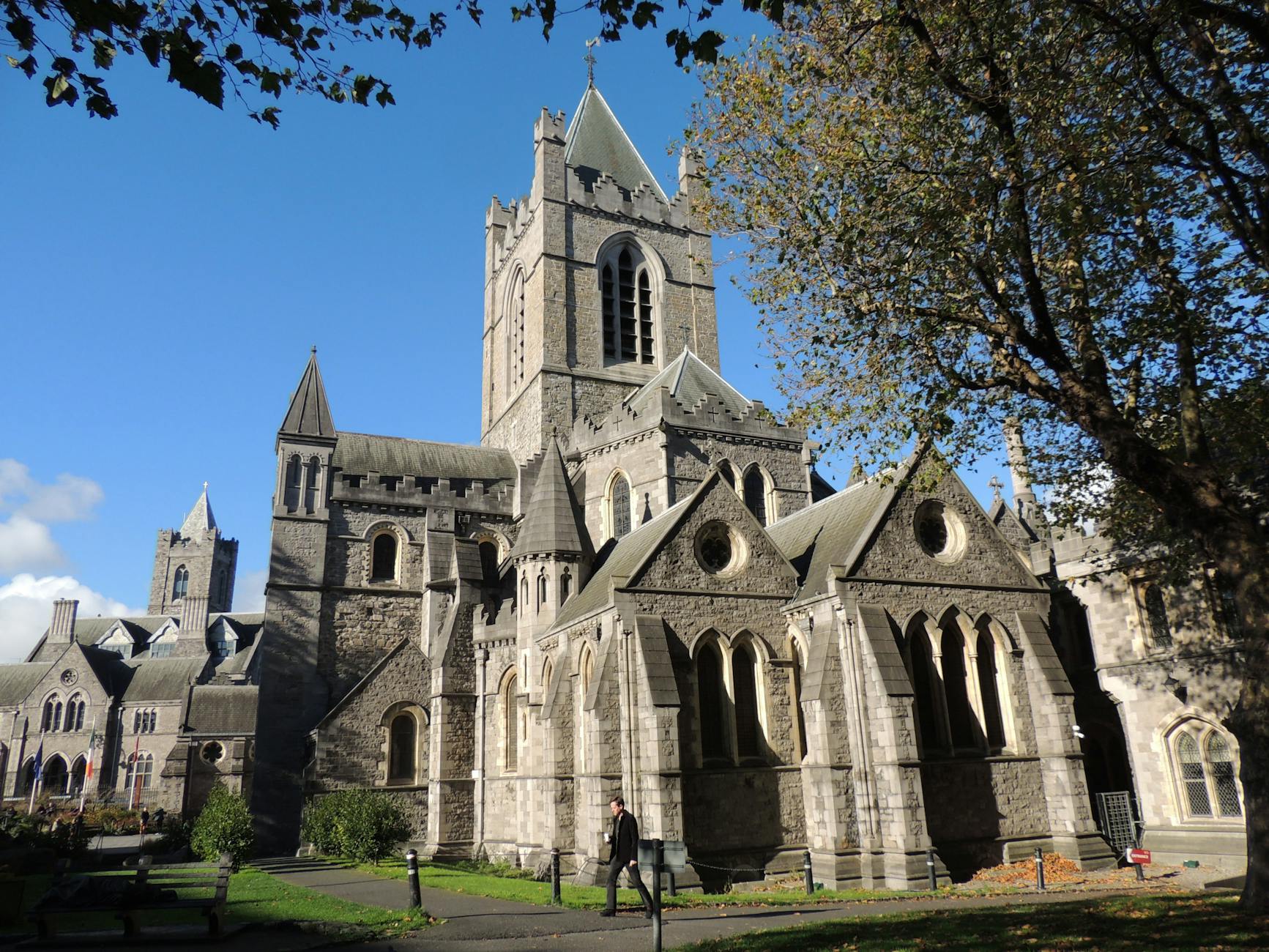
- Christ Church Cathedral
- St Patrick’s Cathedral
- Dublin Castle
- Medieval City Walls and Gates
- St Audoen’s Church and the Medieval Parish
- Other Medieval Sites
- National Museum of Ireland: Medieval Collections
- A Self-Guided Viking and Medieval Dublin Walking Tour
- Guided Medieval Dublin Tours
- Viking and Medieval Day Trips from Dublin
- Practical Tips for Viking and Medieval Dublin
- The Black Death and its Impact on Dublin
- Eating and Drinking in Medieval Dublin Style
- Viking and Medieval Dublin: FAQ
- Keep Reading
Before the Georgian elegance, before the Easter Rising, before all the literary giants — Dublin was a Viking trading port, a Norman fortified town, and a medieval Hiberno-Norse city. The Viking and medieval era covers approximately seven centuries from 841 AD to the early 1500s and laid the foundations of every Dublin landmark that followed. This guide walks you through the surviving Viking and medieval sites, museums, and archaeological remains that allow today’s visitor to step back into pre-Reformation Dublin. From the longphort beach landings on the Liffey to the great Gothic cathedrals and the Norman walls, here’s where to experience 1,000 years of Dublin’s earliest history.
The Viking Founding of Dublin
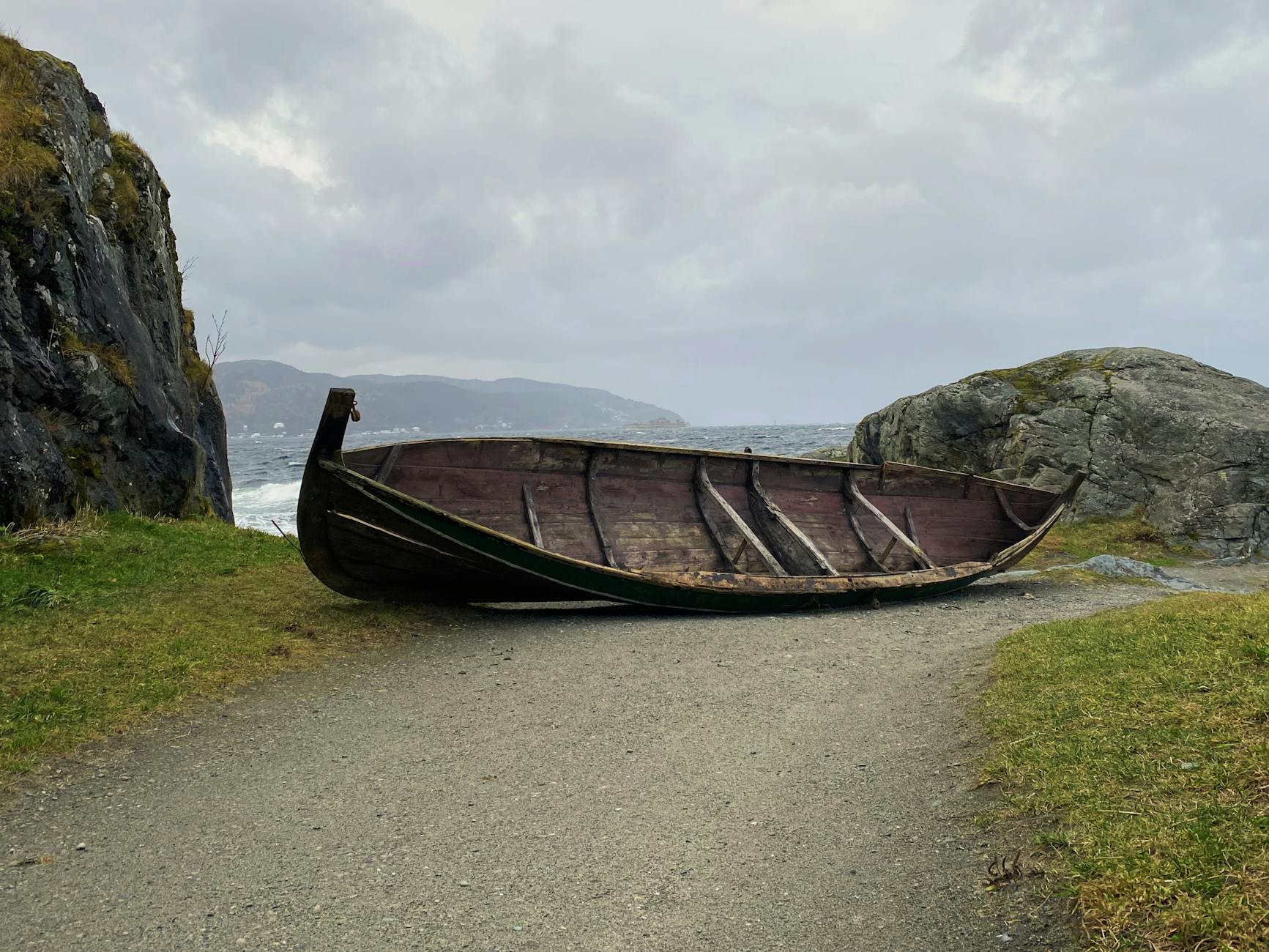
Vikings first raided the Irish coast in 795 AD. In 841 AD, Norse traders established a permanent settlement at the “black pool” (Dubh Linn in Irish) where the small Poddle River met the Liffey. This pool, no longer visible above ground but preserved beneath Dublin Castle, gave the city its name. The Vikings called their settlement Dyflin and used it as a trading post for amber, slaves, silver, and craft goods. The original Viking longphort (ship landing) was at modern Wood Quay, just below Christ Church Cathedral.
Viking Dublin grew quickly into one of the most important trading centres in northern Europe. By 950 AD, Dublin minted its own silver coinage and traded as far as Constantinople and the Volga River. The settlement had defined streets, defended walls, craft workshops producing combs, leatherwork, and metalwork, and homes for several thousand inhabitants. The Battle of Clontarf in 1014, where Brian Boru defeated the Viking king Sigtrygg Silkbeard, traditionally marked the end of Viking political power in Ireland — though Norse families continued to dominate Dublin’s commercial life well into the Norman period.
Wood Quay: The Excavated Viking City
The most extensive Viking archaeology in Dublin came from excavations at Wood Quay between 1962 and 1981, when the demolition of medieval buildings to construct Dublin Civic Offices revealed extensive Viking settlement remains. Archaeologists uncovered house foundations, animal pens, craft workshops, defensive earthworks, and tens of thousands of small artefacts from amber pieces to wooden gaming pieces to leather shoes preserved in waterlogged ground.
Despite a public campaign to preserve the site (which drew the largest civic protests in Dublin’s 20th-century history), much of the site was destroyed by the Civic Offices construction in the 1980s. Today, the Wood Quay Venue beneath the Civic Offices preserves some original Viking structures and runs occasional exhibitions about the excavation. The recovered artefacts are displayed at the National Museum of Ireland (Archaeology) on Kildare Street. A memorial plaque at the corner of Wood Quay and Winetavern Street commemorates the lost archaeology.
Dublinia: The Medieval Dublin Experience
The best place to immerse yourself in Viking and medieval Dublin is Dublinia, the interactive museum attached to Christ Church Cathedral. The museum occupies the former Synod Hall building (1875) and recreates Viking Dublin life through full-scale street reconstructions including a longphort, Viking houses, craft workshops, and a Viking ship reconstruction you can climb aboard.
The medieval section recreates 12th-century Dublin including a recreated medieval merchant’s house, displays on the Black Death (1348), and exhibitions on the city’s medieval markets, trades, and religious life. The History Hunters exhibition shows how archaeologists study Dublin’s past. The St Michael’s Tower viewpoint at the top of the building provides excellent views over the medieval city centre. €15 adult admission includes Christ Church Cathedral entry as a combined ticket. Open daily 10am–6:30pm in summer, 10am–5:30pm in winter. Best for families with children aged 6–14 and history enthusiasts.
Christ Church Cathedral
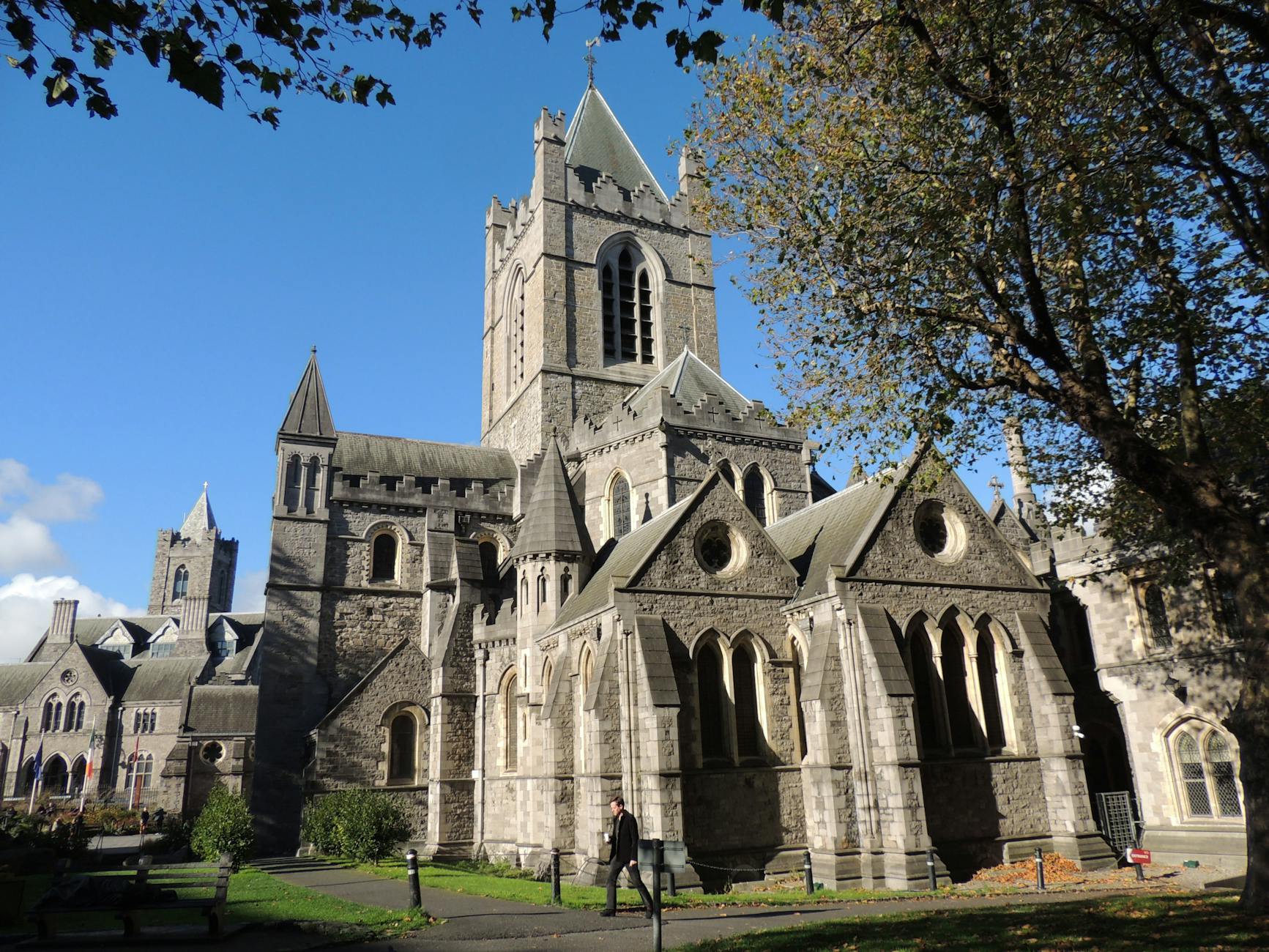
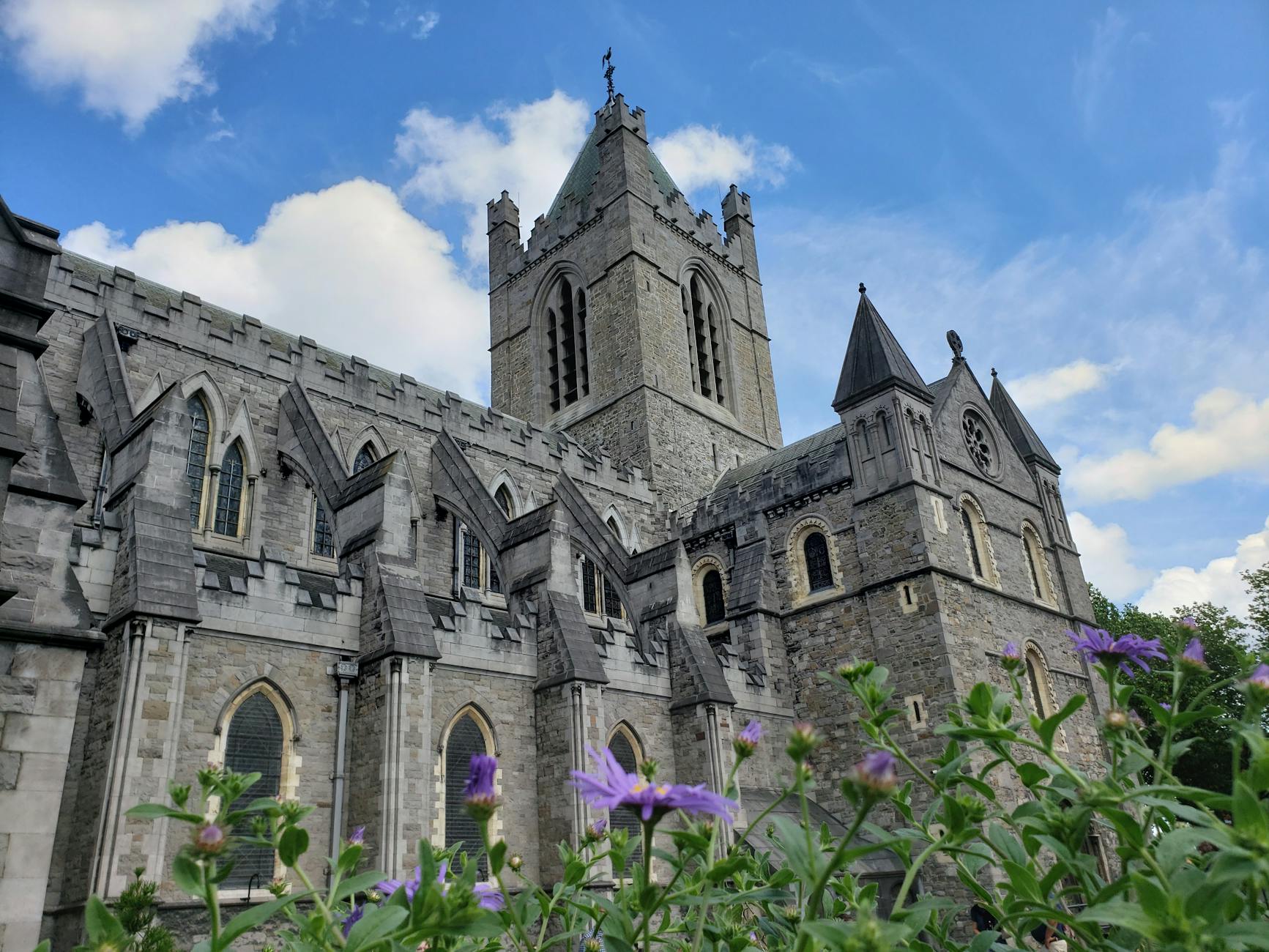
Christ Church Cathedral was founded around 1030 by Sigtrygg Silkbeard, the Viking king of Dublin who had recently converted to Christianity. The original Hiberno-Norse wooden church was replaced in 1172 by Strongbow, the Anglo-Norman leader, with a stone Romanesque cathedral. The current building incorporates Strongbow’s nave, the 12th-century crypt (the largest medieval crypt in Britain and Ireland), and substantial Victorian restoration work in 1871–1878.
The crypt is the cathedral’s most extraordinary feature — a vast vaulted underground space 64 metres long that runs the entire length of the cathedral. Crucially, the crypt is the only original part of the Norman cathedral to survive substantially intact. It houses an exhibition including the Treasury of Christ Church, a mummified cat and rat (preserved in the cathedral organ in the 1860s), the manacles of King John’s 1210 visit, and various medieval relics. Strongbow’s tomb effigy stands in the nave.
€9 adult admission, €15 combined with Dublinia, open daily 9:30am–6pm. Christ Church Cathedral Choir sings evensong daily at 5pm (sung by visiting choirs on weekdays during summer); attending is free and offers an authentic medieval cathedral experience.
St Patrick’s Cathedral
St Patrick’s Cathedral was founded in 1191 next to a holy well where Patrick reputedly baptised converts in the 5th century. The current Gothic building dates from 1220–1259 and is Ireland’s largest cathedral. It became the seat of Jonathan Swift (1667–1745), author of Gulliver’s Travels and dean of the cathedral from 1713 until his death. Swift’s grave is in the south aisle near Stella’s grave (Esther Johnson, his close companion). The cathedral’s “Door of Reconciliation” from 1492 commemorates a famous chapter house dispute resolved by cutting a hole in the door and shaking hands through it — the origin of the phrase “chancing your arm.”
St Patrick’s also holds memorials to Carolan the harper, Douglas Hyde (first President of Ireland), and many others. The 12-acre St Patrick’s Park behind the cathedral was the gardens of the medieval cathedral close. Free public access to the park; cathedral admission €9 adult, open daily 9am–6pm.
Dublin Castle
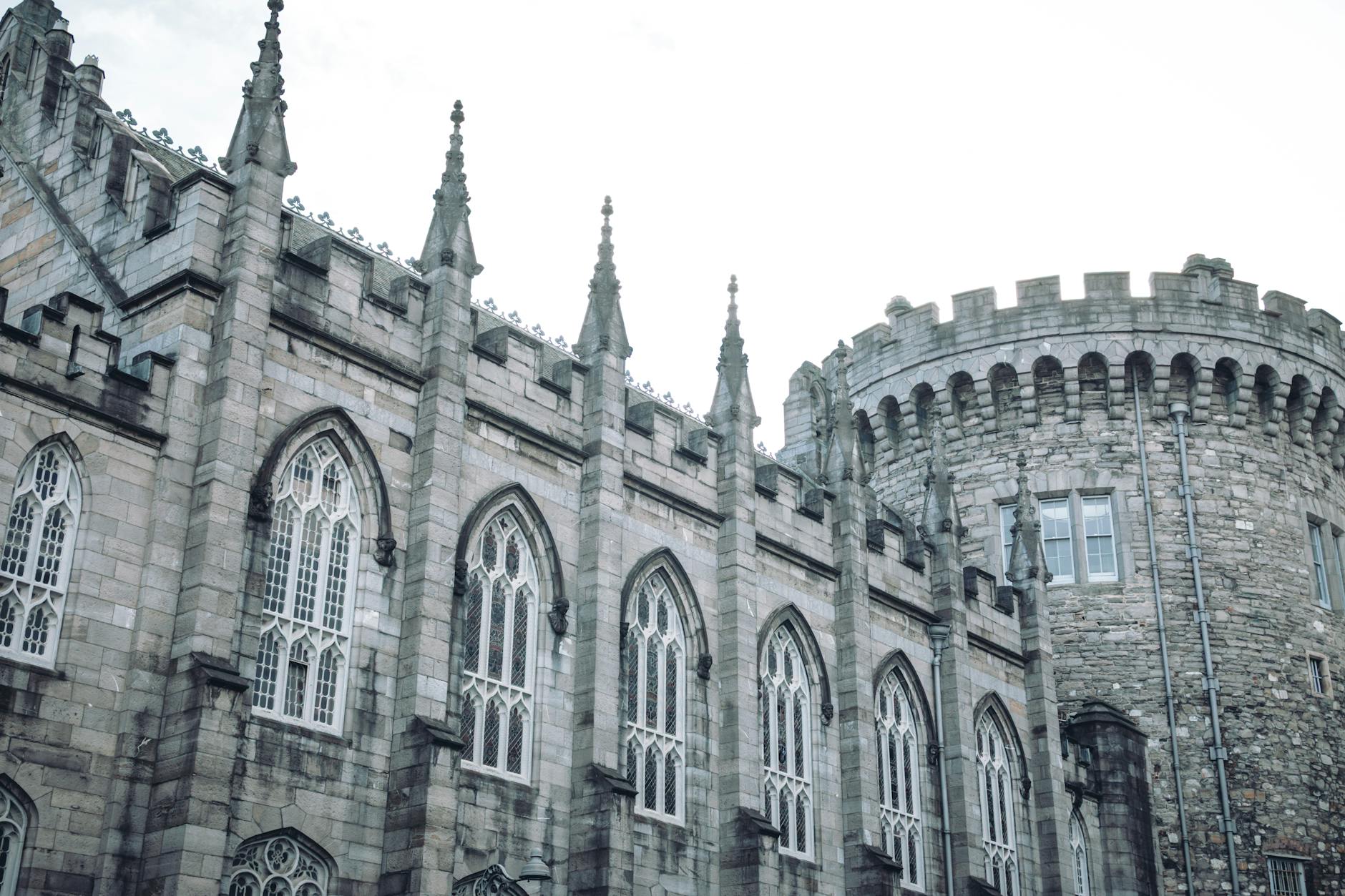
Dublin Castle was built between 1204 and 1230 by order of King John of England as a fortified administrative centre for English rule in Ireland. The castle stood for 700 years as the seat of British power in Ireland until 1922 when it was handed over to the new Irish Free State government. The medieval castle was substantially destroyed by fire in 1684, leaving only the Record Tower (1228) of the original Norman castle structure visible above ground.
The castle is closed to visitors until January 2027 while Ireland holds the EU Council presidency. What today’s visitor sees is mostly the 18th-century reconstruction in Georgian style, but the castle’s medieval foundations and the original 13th-century Powder Tower are visible in the underground excavation tour. The Record Tower contains the Garda Museum (free). The State Apartments tour shows the Georgian reception rooms used by Lord Lieutenants. The Chapel Royal (1814) was built on the original Norman castle chapel site. €12 adult admission for State Apartments and underground excavations, free for ground-level public courtyards.
Medieval City Walls and Gates
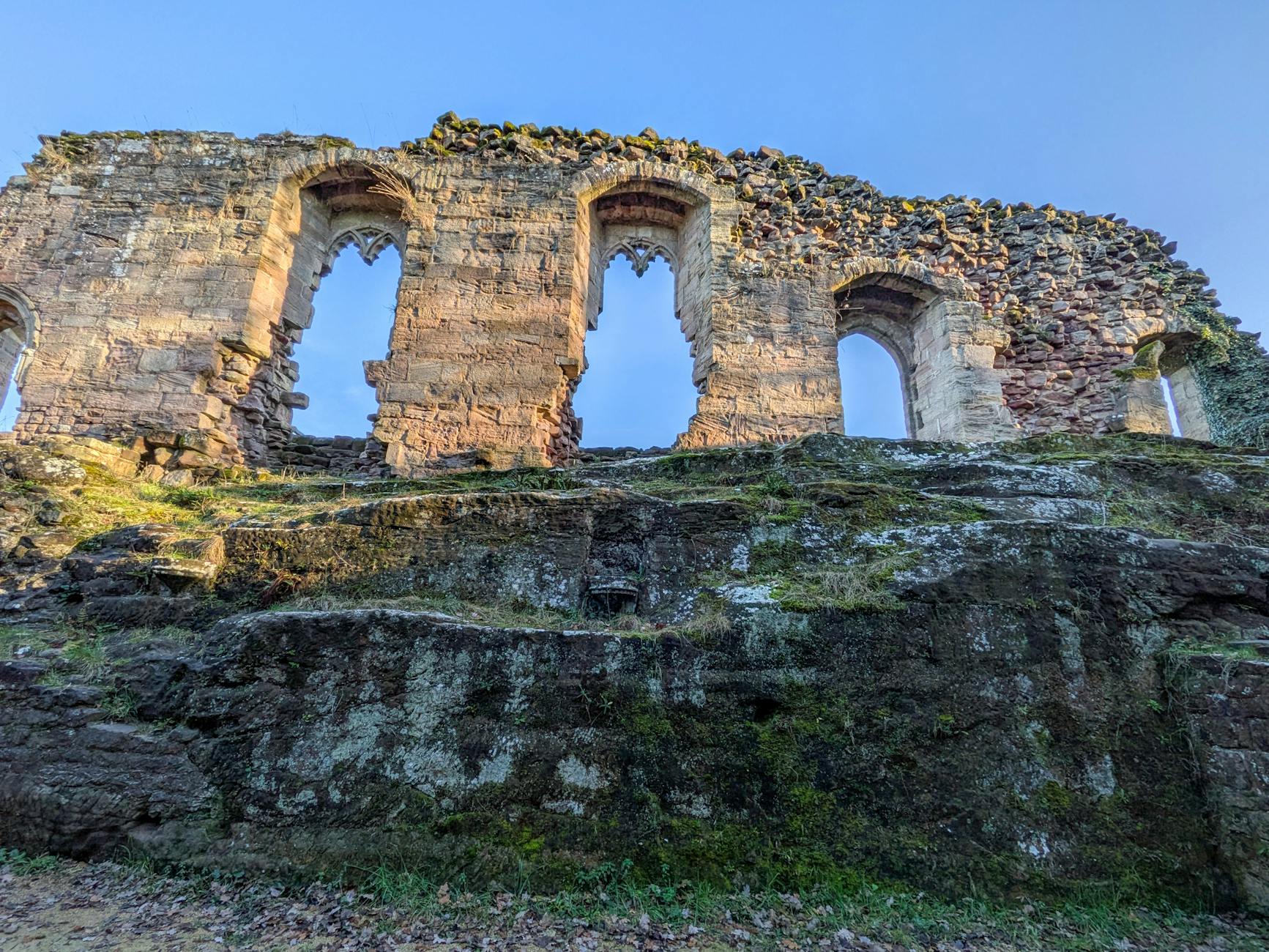
Dublin’s medieval city walls were built between 1100 and 1300, eventually enclosing about 12 hectares. The walls had eight gates and ran in an irregular oval around Christ Church Cathedral, Dublin Castle, and the houses between. The walls were demolished progressively through the 17th and 18th centuries as the city expanded beyond them, but small sections survive.
The best preserved section of the medieval walls is at Cook Street and Lamb Alley, behind St Audoen’s Church — about 60 metres of original 12th-century wall up to 3 metres high. St Audoen’s Arch (1240), set into the wall, is the only surviving medieval city gate. The Newgate Tower at Cornmarket Street and the foundations of the medieval Tholsel (city hall) at Christ Church Place can also be seen. Look for blue heritage signs along Christchurch Place, Cook Street, and Lamb Alley marking original wall locations.
St Audoen’s Church and the Medieval Parish
St Audoen’s Church on Cornmarket Street, founded 1190, is Dublin’s oldest surviving parish church. The 12th-century west door is the oldest church doorway still in regular use in Ireland. The tower bells (cast 1423 and 1432) are the oldest still in use in Britain and Ireland. The active Church of Ireland congregation worships in the still-roofed portion while the OPW operates a visitor centre in the medieval portion that has been preserved as a ruin since the 18th century.
The visitor centre (free, open daily) includes exhibitions on medieval Dublin parish life, plaster casts of medieval gravestones, and access to the bells. The adjoining Catholic St Audoen’s (1841–1846) is a different and later building, sometimes confused with the older Protestant church. Combine St Audoen’s with a walk along the surviving medieval walls at Lamb Alley directly behind the church.
Other Medieval Sites
Beyond the major monuments, several smaller medieval sites reward a thorough Dublin visit:
- St Michan’s Church, Church Street — Founded 1095 (Hiberno-Norse origin), although the current building is 17th-century. The crypt contains mummified bodies preserved by the limestone walls’ methane content, including the 800-year-old “Crusader.” Bram Stoker reputedly visited as research for Dracula. €7 admission.
- The Brazen Head, Lower Bridge Street — Claims to be Ireland’s oldest pub (1198), though much of the current building dates to the 18th century. The cellars are reputedly medieval.
- Tailors Hall, Back Lane — Dublin’s only surviving medieval guild hall (1706, on medieval site). Now headquarters of the Irish Georgian Society. Occasional public openings.
- St Mary’s Abbey, Meetinghouse Lane — The chapter house of the 12th-century Cistercian abbey survives. Free, by appointment only.
- The Casino at Marino — While 18th-century, the foundations sit on a medieval monastic site.
- The Liberties — The area west of Dublin Castle and south of the Liffey was Dublin’s medieval craft and trade district. Walking the Liberties gives a sense of the medieval street pattern even where the buildings are later.
National Museum of Ireland: Medieval Collections
The National Museum of Ireland (Archaeology) on Kildare Street holds the world’s most important collection of early medieval Irish artefacts. The Treasury room displays the Ardagh Chalice, the Derrynaflan Chalice, the Tara Brooch, and the Cross of Cong — the “four jewels” of early Christian Irish metalwork dating from the 8th and 9th centuries. The Viking Ireland exhibition displays the Wood Quay archaeology including swords, gaming pieces, leather shoes, combs, and the Lusk Cross fragment.
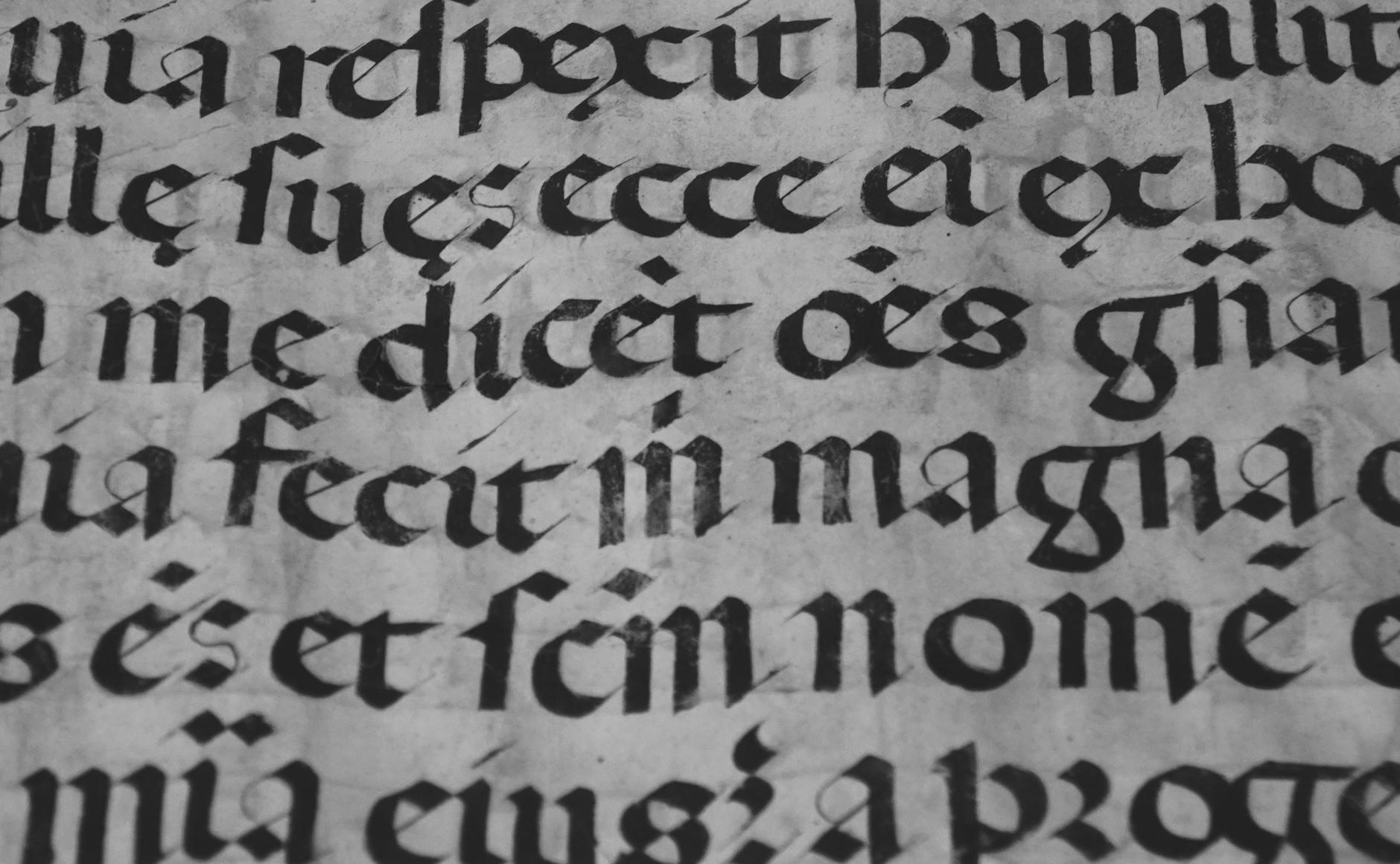
The Or display showcases Ireland’s extraordinary Bronze Age gold collection (3,000–500 BC) including torcs, dress fasteners, and lunulae. The Faddan More Psalter, a 9th-century manuscript discovered in a Tipperary bog in 2006, is displayed alongside the medieval Irish gospel manuscripts. The National Museum is free, open Tuesday–Sunday 10am–5pm. Allow 2–3 hours for a thorough visit. See our Dublin History Museums guide for more.
A Self-Guided Viking and Medieval Dublin Walking Tour
This 3–4 hour walking route covers the essential Viking and medieval Dublin sites. Most of the route lies in the medieval walled city, which is now Dublin’s most compact historic district:
- Start: National Museum of Ireland, Kildare Street — Free. Begin with the Viking Ireland and early Christian metalwork exhibitions. 60–90 minutes.
- Walk west to Dublin Castle — Including the Record Tower and underground medieval excavations (closed until January 2027).
- Walk to Christ Church Cathedral — Visit the medieval nave and crypt.
- Continue to Dublinia next door — The recreated Viking and medieval city. 60 minutes.
- Walk down Lamb Alley — See the preserved medieval city walls.
- Visit St Audoen’s Church and Arch — Dublin’s oldest church doorway and the only surviving medieval gate.
- Walk to St Patrick’s Cathedral via Patrick Street — Visit Jonathan Swift’s grave and the Door of Reconciliation.
- End at St Patrick’s Park — The medieval cathedral close, now a public park.
Optional add-on: walk north to St Michan’s Church to see the medieval crypt with mummified bodies. Combine with The Brazen Head for a pint break. Total walking distance about 4km. Wear comfortable shoes and bring waterproofs.
Guided Medieval Dublin Tours
Several operators run guided tours focused specifically on Viking and medieval Dublin:
- Dublin Viking Splash Tour — A novelty land-and-water tour in a yellow amphibious vehicle covering Viking and medieval sites. €30 adult. Good for kids.
- Pat Liddy’s Walking Tours: Medieval Dublin Walk — Two-hour expert walking tour from Christ Church. €18.
- Hidden Dublin Walks: Vikings and Medieval Dublin — Weekly walking tour focusing on the medieval city. €18.
- Christ Church Cathedral Choir Evensong — Authentic medieval cathedral experience. Free.
- The Generation Tour: Vikings of Dublin — Lively, younger-vibe tour. Free, tips-based.
For more options see our Dublin Walking Tours guide.
Viking and Medieval Day Trips from Dublin
Several important Viking and medieval sites lie within day-trip range of Dublin:
- Newgrange and the Boyne Valley — 5,200-year-old passage tombs that pre-date Stonehenge. Earlier than medieval but essential for any deep Irish heritage trip. €18 adult.
- Glendalough — 6th-century monastic city founded by St Kevin, with round tower, churches, and stone crosses. Free, in the Wicklow Mountains.
- Kilkenny — Walled medieval city with Norman castle, cathedral, and round tower. 90 minutes south.
- Trim Castle — Largest Norman castle in Ireland (1172), where Braveheart was filmed. 45 minutes northwest.
- Monasterboice — 10th-century high crosses and round tower, the finest example of early medieval Irish stone carving. 30 minutes north.
- The Hill of Tara — Sacred royal site of the High Kings of Ireland with Bronze Age and medieval remains. 45 minutes northwest.
For organised day trip options see our Day Trips from Dublin pillar guide. Several operators run combined Viking-and-medieval day tours visiting multiple sites.
Practical Tips for Viking and Medieval Dublin
The OPW Heritage Card (€40 for 12 months) covers Dublin Castle (closed until January 2027), Kilmainham Gaol, Newgrange, Trim Castle, Monasterboice, and dozens of other state heritage sites — excellent value if you’re combining city and rural medieval sites. The Dublinia + Christ Church combined ticket (€15) is the best value within the city. The National Museum (free), St Audoen’s (free), and the medieval walls (free) make a Viking and medieval Dublin day inexpensive overall.
Pack waterproofs and warm layers — medieval Dublin’s cathedrals and crypts are cold year-round. Wear comfortable closed-toe shoes for stone-floor walking. Allow at least one full day for a thorough Viking and medieval city tour, two days if you want to include day-trip sites like Glendalough or Newgrange. For broader Dublin historical context, see our Dublin History pillar guide.
The Black Death and its Impact on Dublin
The Black Death reached Dublin in 1348, brought by ships landing at Howth. The plague killed perhaps half the city’s 8,000–10,000 inhabitants within two years, with mass graves dug at Newgate and outside the walls. The city’s recovery took the rest of the 14th century, with the population not returning to pre-plague levels until the late 1400s. The plague’s long-term effect was to weaken English control over the city — Anglo-Norman families withdrew to fortified strongholds or returned to England, allowing Gaelic Irish influence to grow through the 15th century in what became known as the Hiberno-Norman period.
The Dublinia museum’s Black Death exhibition is the most thorough public treatment of this history in Dublin, including a reconstructed plague-doctor figure, archaeological evidence of mass burials, and contemporary written accounts. A small medieval cemetery near Newgate, partially excavated in 2010, is preserved beneath the modern Bridge Street and Cornmarket street junction. Dublin’s relatively small population through the 14th and 15th centuries meant the medieval walled city remained the only urban core until the 17th century, when post-Reformation expansion finally pushed Dublin beyond its medieval walls.
Eating and Drinking in Medieval Dublin Style
If you want to round out your Viking and medieval Dublin experience with appropriate food and drink, several Dublin establishments lean into the historical theme. The Brazen Head pub on Lower Bridge Street claims to be Ireland’s oldest (1198) and hosts a Folklore and Fairies dinner show that recreates medieval Irish storytelling traditions. Dublinia’s onsite cafe serves medieval-themed snacks. The Bull and Castle Gastropub on Lord Edward Street sits opposite Christ Church Cathedral and serves traditional Irish food with a name referencing the medieval city.
For a more substantial medieval-themed meal, the Mongolian BBQ restaurant on Anglesea Street uses long communal tables that approximate medieval feasting hall arrangements. Bewley’s Cafe on Grafton Street, while Victorian rather than medieval, occupies a site that was part of Dublin’s medieval grain market. For full Dublin restaurant guidance, see our Traditional Irish Restaurants Dublin guide. A historical pub crawl combining The Brazen Head, The Stag’s Head, and Mulligan’s gives you authentic Dublin drinking culture across multiple centuries.
Viking and Medieval Dublin: FAQ
When was Dublin founded?
Vikings established Dublin as a permanent settlement in 841 AD, making the city approximately 1,185 years old in 2026. The original Viking settlement at Dyflin sat where the Poddle River met the Liffey, beneath what is now Christ Church Cathedral and Dublin Castle. Earlier Celtic settlements existed in the wider area but Dublin as a continuous city dates from the Viking era.
Where can I see Viking artefacts in Dublin?
The National Museum of Ireland (Archaeology) on Kildare Street holds the most extensive Viking Dublin collection, including artefacts from the Wood Quay excavations. The museum is free, open Tuesday–Sunday. Dublinia at Christ Church Cathedral has interactive Viking reconstructions. The cathedral itself was founded around 1030 by Viking King Sitric Silkbeard.
What is the oldest building in Dublin?
The medieval crypt of Christ Church Cathedral, dating from 1172, is the oldest substantially intact building space in Dublin. The Record Tower of Dublin Castle (1228) is the oldest surviving secular building. St Audoen’s Church (1190) has the oldest church doorway still in regular use in Ireland.
Are Dublin’s medieval city walls still standing?
Small sections survive. The best preserved is at Cook Street and Lamb Alley behind St Audoen’s Church — about 60 metres of original 12th-century wall up to 3 metres high. St Audoen’s Arch (1240) is the only surviving medieval city gate. Heritage signs throughout the medieval district mark original wall locations.
How much does Christ Church Cathedral cost?
Christ Church Cathedral admission is €9 adult, €15 combined with Dublinia museum next door. The combined ticket offers the best value for any Viking and medieval Dublin visit. Cathedral evensong service at 5pm daily is free and provides an authentic medieval cathedral experience.
What was the Battle of Clontarf?
The Battle of Clontarf, fought on Good Friday 23 April 1014, saw High King Brian Boru defeat a Viking-Leinster alliance led by King Sigtrygg Silkbeard of Dublin. Brian Boru died in the battle but the victory traditionally marked the end of Viking political power in Ireland. The battle site at Clontarf is now suburban Dublin, with a small memorial near Clontarf Castle.
Can I visit St Michan’s Church crypt?
Yes — St Michan’s Church on Church Street offers guided tours of the medieval crypt containing mummified bodies preserved by the limestone walls’ methane content. The 800-year-old “Crusader” mummy is particularly famous. €7 admission, tours run Monday–Saturday. Bram Stoker reputedly visited as research for Dracula.
How long should I spend on Viking and medieval Dublin?
A full day covers the major sites: National Museum (morning), Dublin Castle (from January 2027), Christ Church Cathedral and Dublinia, medieval walls walk, and St Patrick’s Cathedral. Add a second day for day-trip sites like Glendalough, Newgrange, or Trim Castle. History enthusiasts can easily fill 2–3 days exploring Dublin’s Viking and medieval heritage.
Keep Reading
- Trim Castle & the Boyne Valley — where the Norman story leads once it leaves Dublin.
- Christ Church Cathedral Dublin — founded around 1030 by the Hiberno-Norse king of Dublin, and still standing on the ridge.
- Oldest pubs in Dublin — whether a tavern really has stood by the old bridge since 1198.
- St Patrick’s Cathedral Dublin — founded 1191 on St Patrick’s well, and outside the medieval walls for a reason.
Lean na Comharthaí — Keep following the signs