Kilkenny from Dublin 2026: Medieval Day Trip Complete Guide
Ar an gComhartha Seo — On this sign
- Quick Picks: Kilkenny Day Trip Essentials
- How to Get to Kilkenny from Dublin
- Kilkenny Castle
- St Canice’s Cathedral & Round Tower
- The Medieval Mile
- The Smithwick’s Experience
- Where to Eat in Kilkenny
- Sample Kilkenny Day Trip Itinerary
- When to Visit Kilkenny
- Kilkenny Festivals
- Overnight in Kilkenny
- Combining Kilkenny with Other Trips
- Common Kilkenny Day Trip Mistakes
- Kilkenny Accessibility
- Related Reading
- A Short History of Kilkenny
- Kilkenny Shopping & Crafts
- Kilkenny’s Pubs and Traditional Music
- How Kilkenny Compares to Dublin and Other Cities
- Kilkenny with Children
- Kilkenny Day Trip Budget
- Kilkenny from Dublin: FAQ
- Keep Reading
- Photo Credits
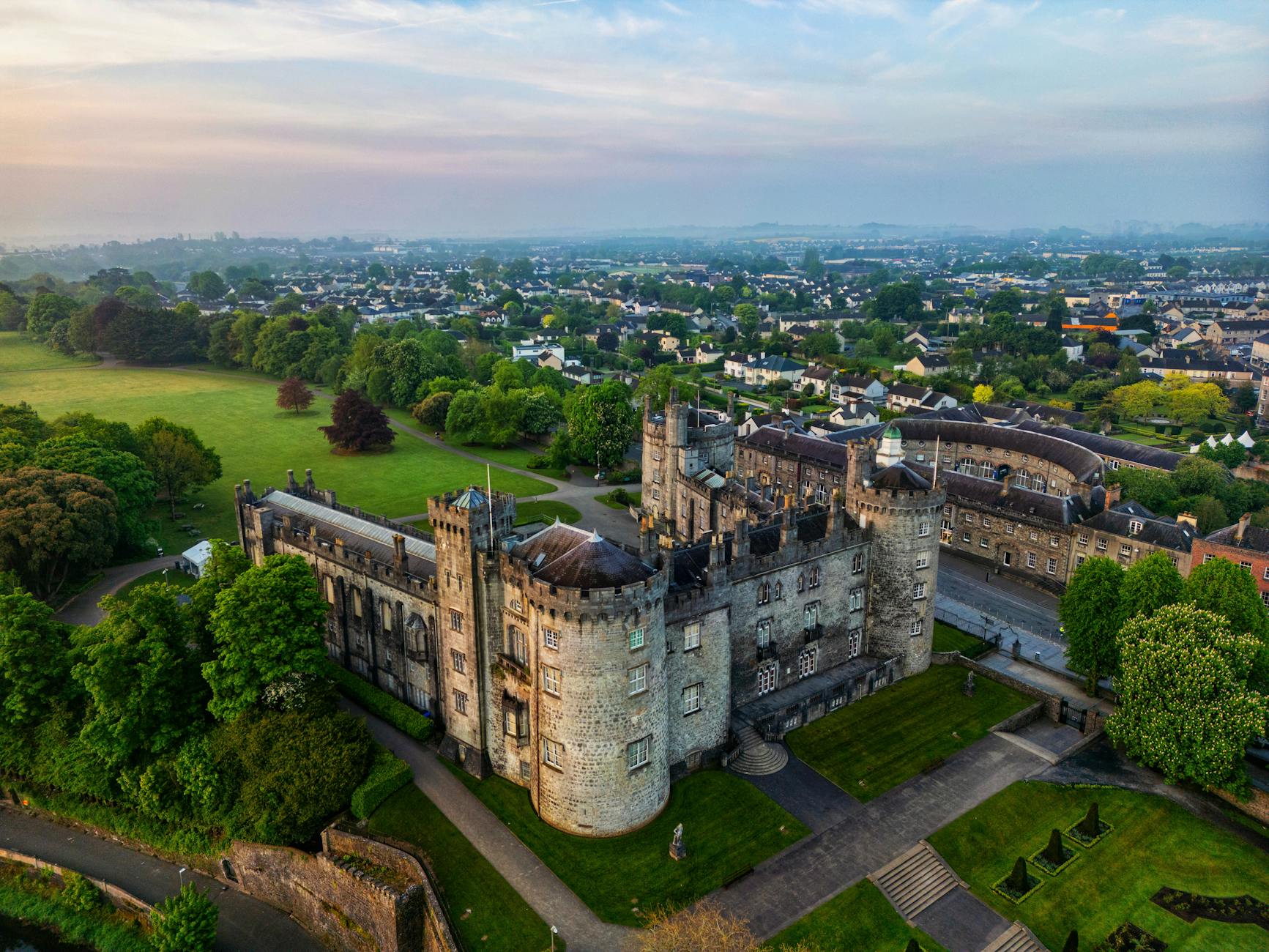
A Kilkenny from Dublin day trip is the underrated medieval Ireland experience — 90 minutes by train, a perfectly compact city with a 12th-century Norman castle, two climbable medieval round towers, and Ireland’s densest food and drink scene per square kilometre. This guide is the complete day-trip planner: train versus bus, what to see, where to eat, and how Kilkenny’s Medieval Mile delivers more atmosphere per hour than any other Dublin day trip.
Whether you have a full day or just an afternoon, this guide tells you exactly how to make the most of Ireland’s medieval capital.
Read it alongside the complete day trips from Dublin guide for the fuller view of your options.
Quick Picks: Kilkenny Day Trip Essentials
- Distance from Dublin: 117km / 73 miles. 90 minutes by train, 2 hours by car.
- Train: Heuston Station to Kilkenny, €25 return, every 1-2 hours
- Top must-see: Kilkenny Castle, St Canice’s Cathedral round tower, Medieval Mile
- Best lunch: Campagne (Michelin-starred) or Foodworks (modern Irish bistro)
- Time required: 8 hours total including travel; 5-6 hours in Kilkenny itself
- Best season: April-September; the city is walkable year-round
- Coach tour alternative: Various operators run combined Kilkenny + Wicklow tours from €55-79
How to Get to Kilkenny from Dublin
Train (Recommended)
Iarnrod Eireann runs the Dublin Heuston to Kilkenny service:
- Departures: Roughly every 90 minutes 7am-9pm Monday-Saturday; less frequent Sundays
- Journey time: 90-100 minutes each way
- Cost: €25 return (advance online), €30 return on the day
- Class: Standard class only; reserved seating available for €5 extra
- Bags: Free luggage racks; small lockers at Kilkenny station for €5
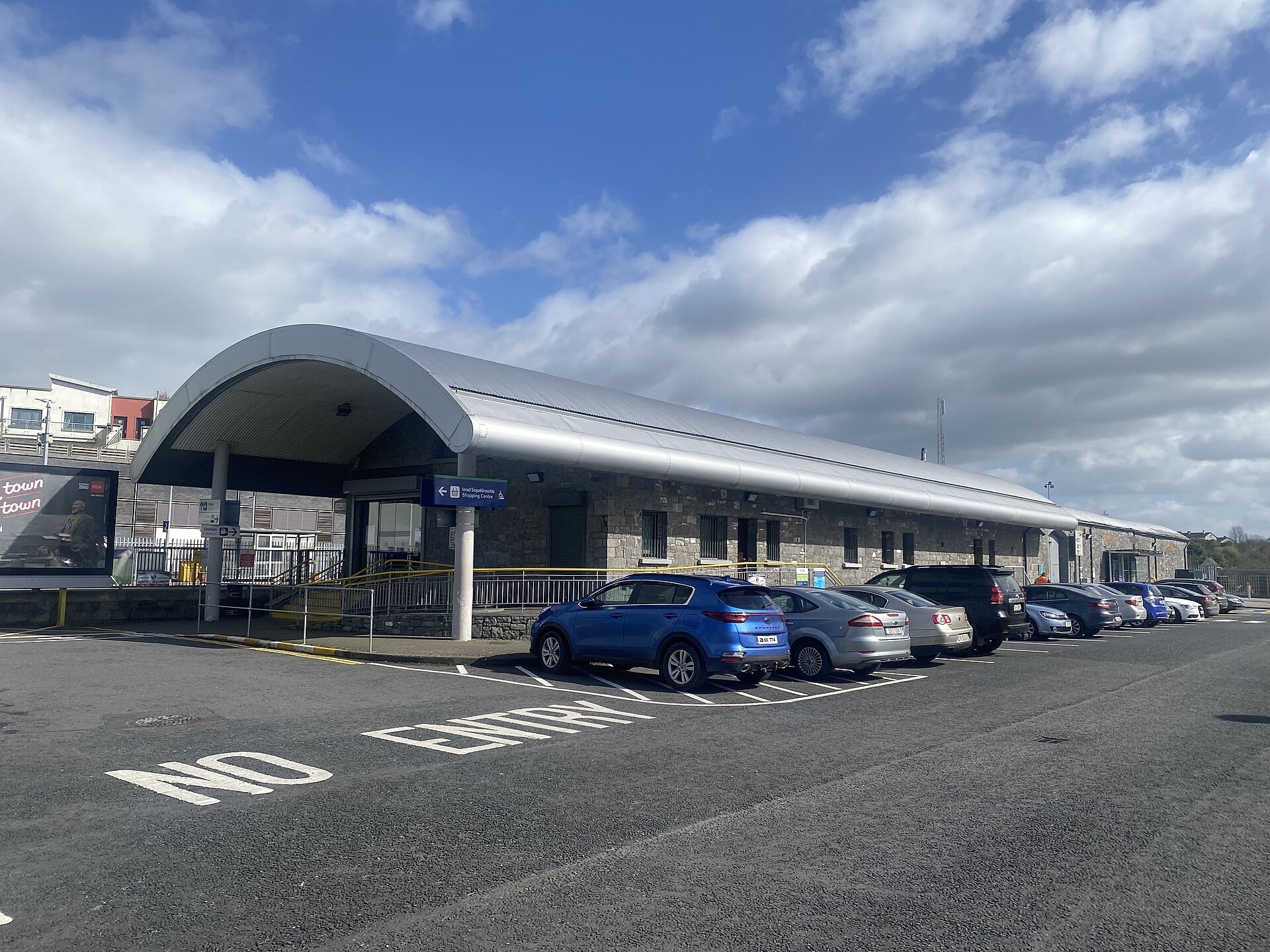
Kilkenny station is on John Street, a 12-minute walk to the castle and the Medieval Mile. Free walking from station to centre passes the canal, Lavery’s Bar and the Black Abbey.
Bus Éireann
Route 4 from Dublin Busaras to Kilkenny. 90-120 minutes each way, €15-20 return. Less comfortable than the train; useful only if train tickets are sold out.
Coach Tour
Several operators run combined Kilkenny + Wicklow Mountains tours (€55-79). The advantage is two destinations in one day; the disadvantage is limited Kilkenny time (typically 2-3 hours). Best if Kilkenny is a secondary interest paired with another priority.
Self-Drive
2 hours via M9. €3.20 M50 toll + M9 toll €2 + fuel. Parking in central Kilkenny: pay-and-display €1.50-2.50/hour or use the Q-Park Kilkenny (€10-12 all day). Best option if combining with onward travel south (Cork, Waterford).
Kilkenny Castle
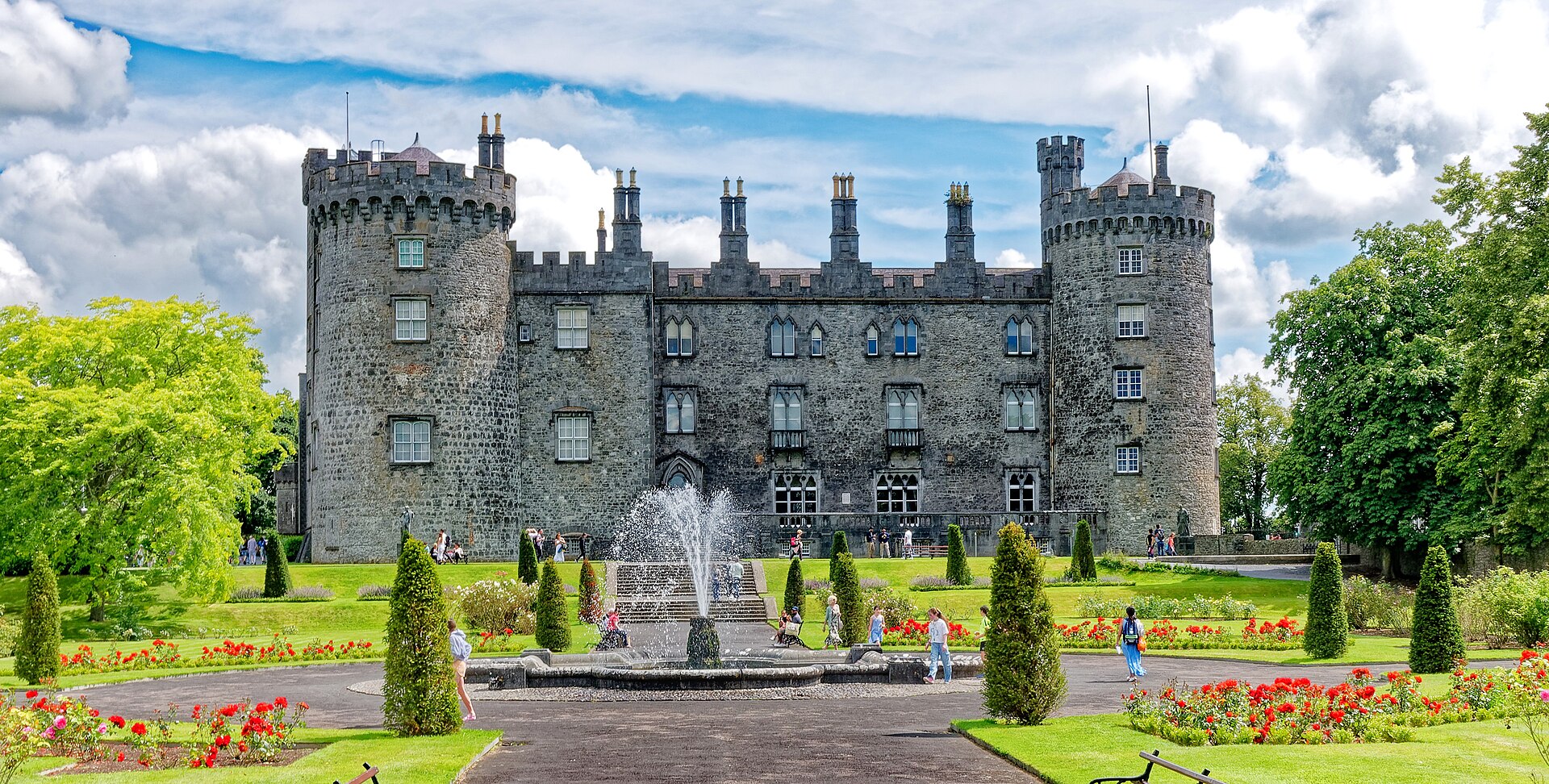
Kilkenny Castle is the centrepiece of any visit. Built 1192 by William Marshal (4th Earl of Pembroke); the Butler family acquired it in 1391 and held it for nearly 600 years. Restored in the 20th century and gifted to the people of Ireland in 1967.
- Entry: €9 adult; €7 student/senior; €25 family ticket. Pre-book at heritageireland.ie for guaranteed entry in peak season.
- Opening hours: 9.30am-5.30pm March-October; 9.30am-4.30pm November-February.
- Tour duration: 45-60 minute guided tour, or self-guided with audio guide.
- Highlights: The Long Gallery (Victorian portrait gallery with hammerbeam roof), the Picture Gallery, the Library, the Drawing Room. The castle’s 50-acre Parklands are free to walk anytime; great picnic spot.
- The Long Gallery: The most-photographed castle room in Ireland; hammerbeam timber ceiling carved with Celtic motifs.
Kilkenny Castle frequently hosts art exhibitions in the basement galleries; check the OPW website for current programming.
St Canice’s Cathedral & Round Tower
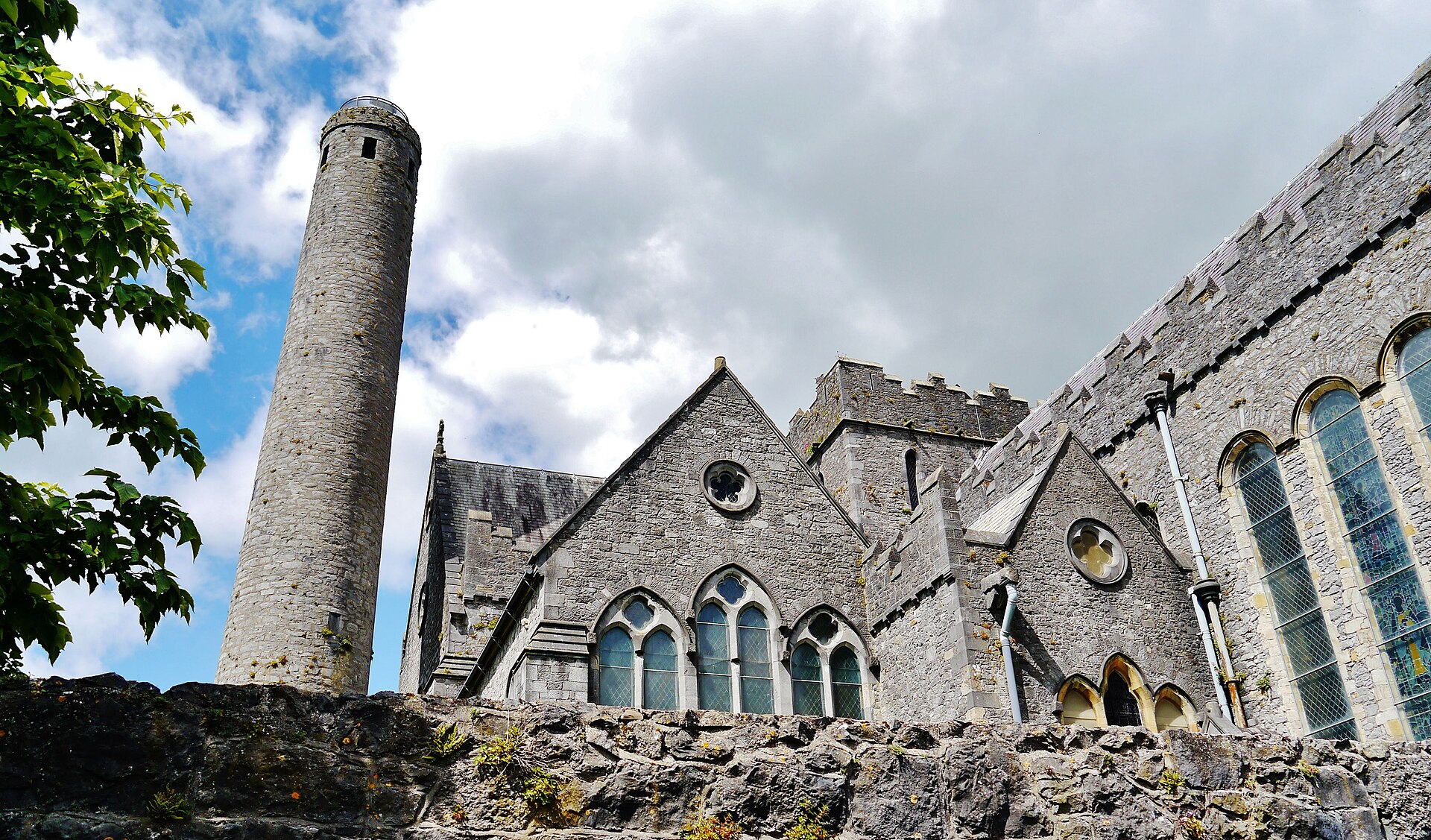
The other essential Kilkenny stop. The cathedral dates to the 13th century; the round tower beside it is older (likely 9th century).
- Cathedral entry: €5 adult.
- Round Tower climb: €5 extra; combined ticket €9.
- The round tower: 30m tall, one of only two climbable round towers in Ireland (the other is Devenish Island, Northern Ireland). Steep wooden ladders to the top; views over the entire city.
- Highlights: 13th-century stained glass, medieval tombs, Black Tom Butler’s monument, the Norman porch carvings.
- Allow: 60 minutes for cathedral + round tower combo.
The Medieval Mile
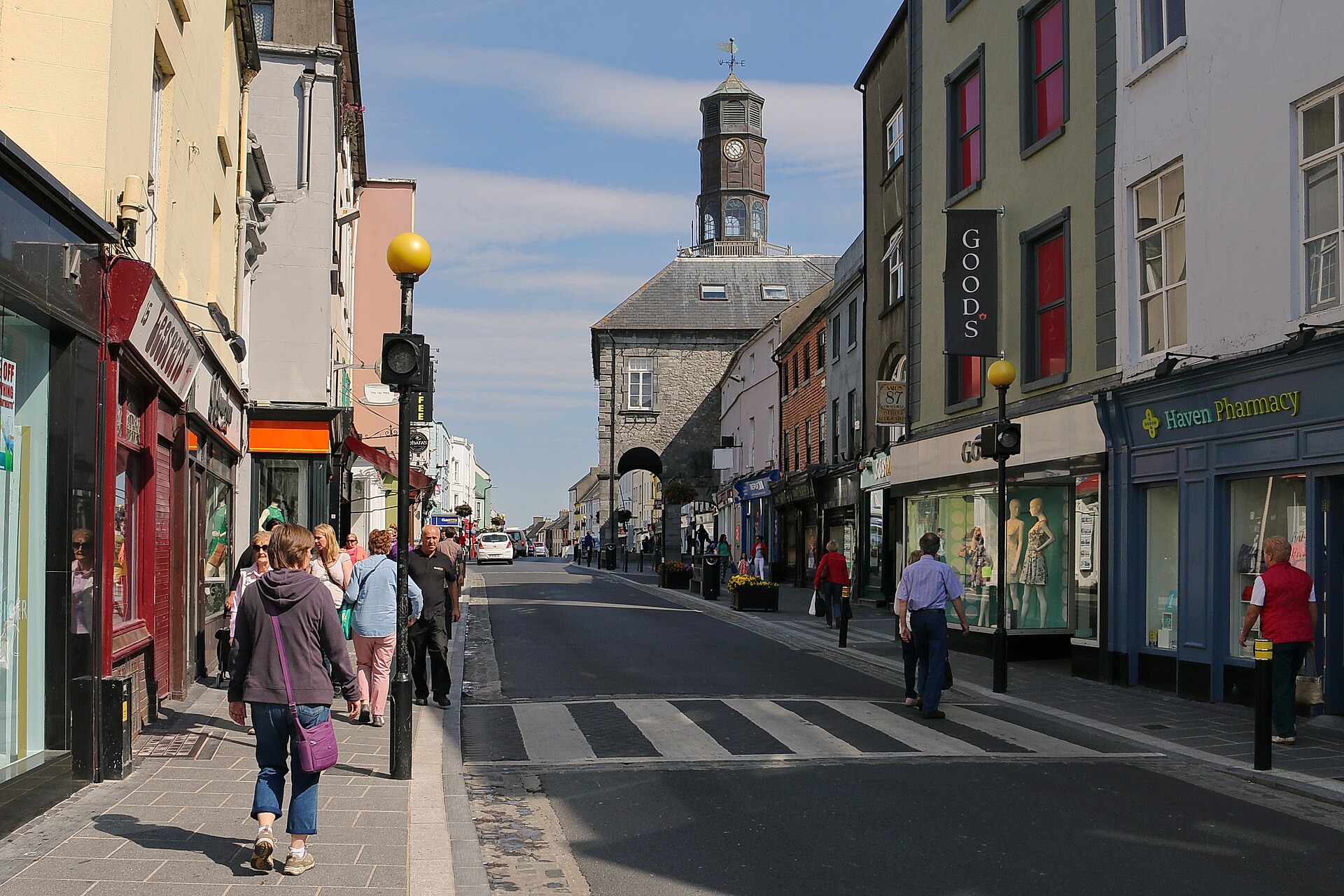
The Medieval Mile is the 1-mile walking route from Kilkenny Castle through the medieval city centre to St Canice’s Cathedral. The OPW added wayfinding signs in 2016 making it a self-guided heritage walk. Key stops:
- The Tholsel (1761): 18th-century tollhouse; today the city’s tourist office.
- The Butter Slip: Narrow medieval lane (1616) connecting High Street to Low Lane.
- The Smithwick’s Experience: Heritage centre on the site of the old Smithwick’s brewery.
- St Mary’s Medieval Mile Museum: 13th-century church now housing Kilkenny’s medieval-mile exhibition. €8 entry.
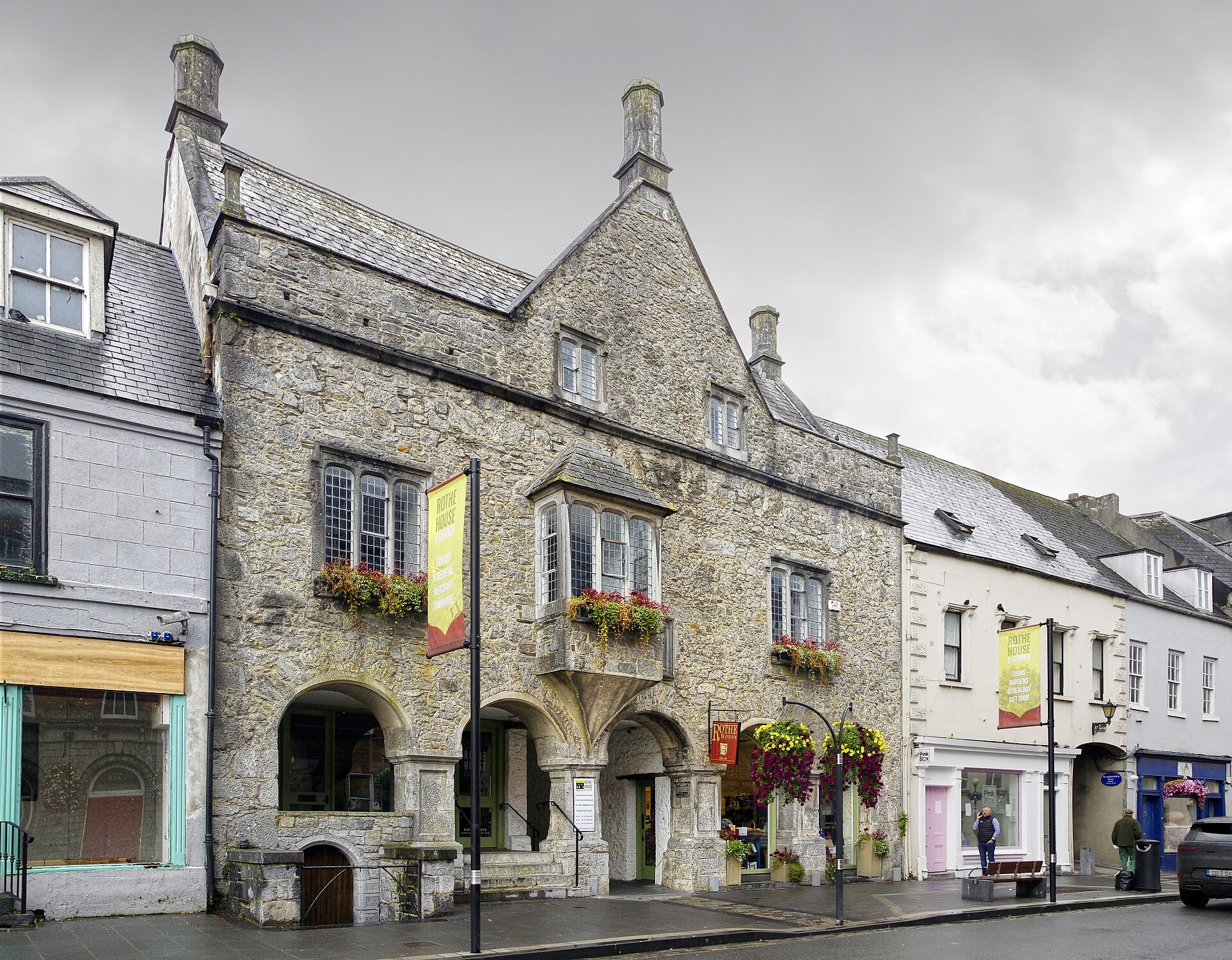
- Rothe House: 16th-century Tudor merchant’s house. €8 entry; preserved courtyards and original timber.
- Black Abbey: 13th-century Dominican friary; still operating. Free entry.
The Medieval Mile takes 90 minutes at a casual pace with stops. Add 60 minutes if entering St Mary’s Museum or Rothe House.
The Smithwick’s Experience
Smithwick’s ale was brewed in Kilkenny from 1710 to 2013; the brewery closed when Diageo (Guinness) consolidated production. The Smithwick’s Experience is a heritage centre on the historic site, telling the brewing story through interactive exhibits.
- Cost: €17 adult; includes one pint of Smithwick’s ale at the end.
- Tour duration: 75 minutes.
- Highlights: 13th-century original brewing well; 18th-century brewing equipment; the “Smithwick’s Story” interactive films.
- Best for: Beer enthusiasts and visitors interested in industrial heritage. Some find it less compelling than the Guinness Storehouse Dublin experience.
Where to Eat in Kilkenny
Campagne (1 Michelin Star)
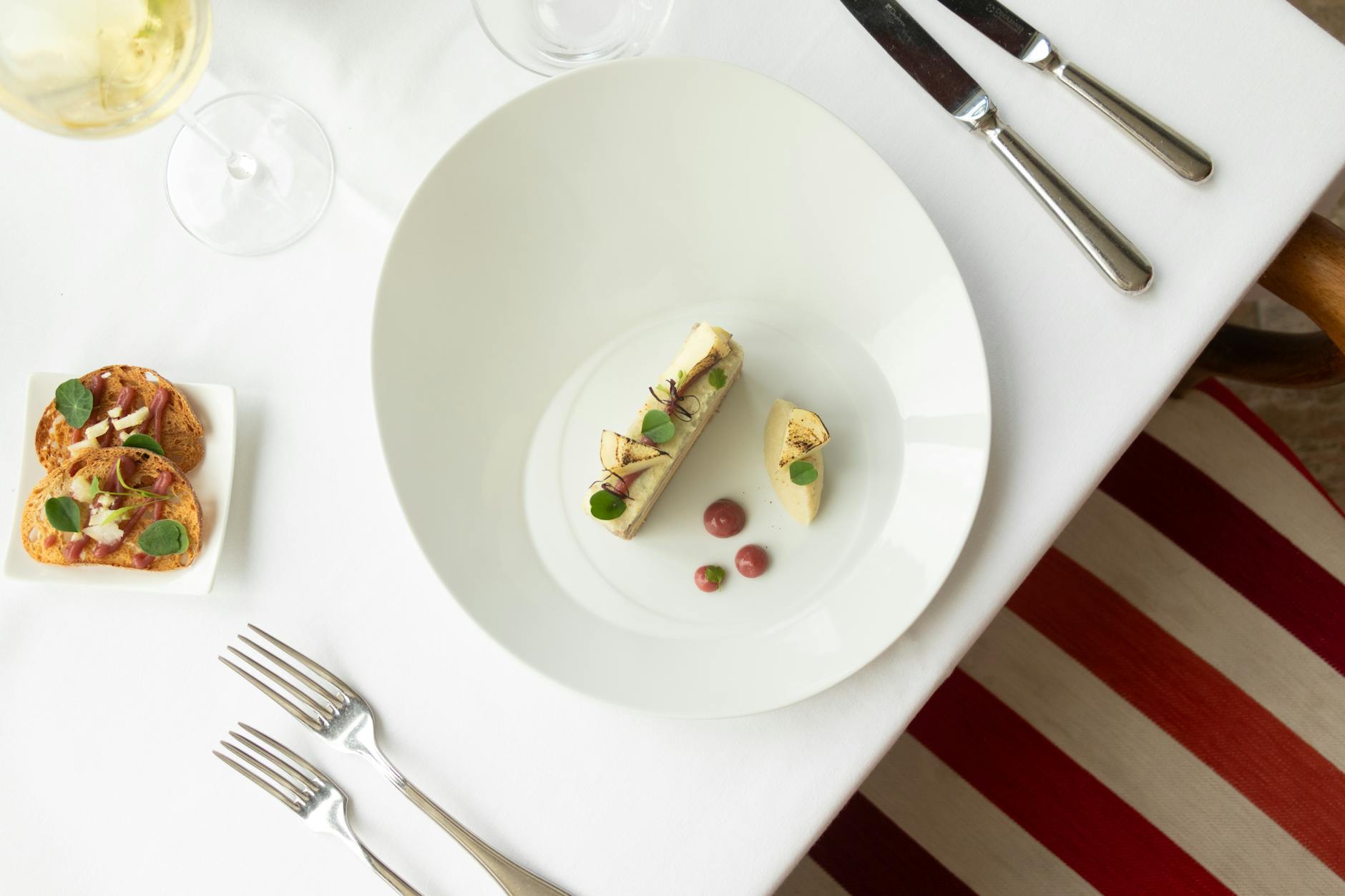
Kilkenny’s Michelin-starred restaurant; chef Garrett Byrne’s modern French-Irish cooking. Set lunch €42; tasting menus €75-110. Book 1-2 weeks ahead for weekends.
Foodworks
Mid-range modern Irish bistro. Mains €22-32. Reliably excellent; the city’s most popular sit-down lunch venue.
Ristorante Rinuccini
Italian restaurant beneath the castle. €18-28 mains. Family-run since 1989; pasta is the strength.
The Hibernian Hotel
Historic hotel restaurant on Patrick Street. Modern Irish menu, set lunch €30. Excellent value.
Mocha’s Vintage Tea Rooms
Twin-set retro tearoom; afternoon tea €25, light lunches €12-18.
Kilkenny Design Centre Cafe
Castle Yard location. Soup, sandwiches, salads, baked goods. €10-15. Quick lunch option with castle views.
Pub Lunches
Kyteler’s Inn (1324; one of Ireland’s oldest pubs), Matt the Miller’s, Lavery’s, Brewery Corner all serve good pub food for €14-22.
Sample Kilkenny Day Trip Itinerary
- 8.30am — Coffee and breakfast in Dublin (3fe, Brother Hubbard or Two Pups)
- 9.30am — Train departs Heuston Station
- 11.00am — Arrive Kilkenny; walk to Kilkenny Castle (12 minutes)
- 11.15am — Kilkenny Castle guided tour (60 minutes)
- 12.30pm — Walk through Castle Park to High Street and the Medieval Mile
- 1.15pm — Lunch at Foodworks or Campagne
- 2.45pm — Walk the Medieval Mile north to St Canice’s Cathedral
- 3.15pm — St Canice’s Cathedral and Round Tower climb (60 minutes)
- 4.30pm — Optional: Smithwick’s Experience (75 minutes) or Rothe House (45 minutes)
- 5.45pm — Pint at Kyteler’s Inn or Lavery’s
- 6.30pm — Walk to station
- 6.55pm — Train departs Kilkenny
- 8.25pm — Arrive back in Dublin
When to Visit Kilkenny
- April-May: Mild weather, smaller crowds, daffodils in Castle Park. Sweet spot.
- June-August: Peak season with the Kilkenny Cat Laughs comedy festival (June) and the Kilkenny Arts Festival (August). Lively atmosphere; book restaurants ahead.
- September-October: Autumn colours in Castle Park, mild weather, smaller crowds.
- November-March: Cool, often wet, but the medieval centre is atmospheric in winter mist. Christmas market (November-December) adds festive appeal.
Kilkenny Festivals
- Kilkenny Cat Laughs Comedy Festival (June): Ireland’s most-celebrated comedy festival; major international and Irish comics. 5-day program.
- Kilkenny Arts Festival (August): 10-day classical music, opera, theatre and visual arts festival. Acclaimed program in major venues including the Castle.
- Savour Kilkenny Food Festival (October): Long weekend of food and drink events with farmers’ market, demonstrations, tastings.
- Smithwick’s Kilkenny Roots Festival (April-May): Roots music festival; folk, blues, country across pubs and venues.
Festival weeks are excellent for atmosphere but require advance restaurant booking and accommodation if you’re combining with an overnight stay.
Overnight in Kilkenny
- Mount Juliet Estate: 5-star country house hotel 15 minutes from Kilkenny. €320-650/night. Golf course, spa, fine dining.
- Pembroke Hotel: 4-star in the centre. €165-220/night.
- Hibernian Hotel: Historic central hotel. €145-200/night.
- Butler House: Boutique guesthouse adjacent to Kilkenny Castle. €180-260/night.
- Kilkenny Hibernian Hostel: Budget option. Dorm beds €30; privates €75.
An overnight in Kilkenny unlocks evening atmosphere — the Medieval Mile lit at night, dinner at Campagne with proper time, traditional music at Kyteler’s Inn or John Cleere’s Bar. A 2-day Kilkenny visit is one of Ireland’s underrated short breaks.
Combining Kilkenny with Other Trips
- Kilkenny + Glendalough: Several coach tours combine both. Long but doable in one day.
- Kilkenny + Waterford: 50km south of Kilkenny; Waterford Crystal Factory tour is the highlight. Self-drive only.
- Kilkenny + Jerpoint Abbey: 15km south of Kilkenny; 12th-century Cistercian abbey. Easy add-on.
- Kilkenny + Cahir Castle: 60km south-west; medieval castle on the River Suir. Self-drive day trip from Kilkenny.
- Kilkenny on a Dublin-Cork drive: Natural lunch and afternoon stop on a self-drive route south.
Common Kilkenny Day Trip Mistakes
- Taking a late train: 11am-arriving train cuts into the day. Aim for the 9.30am train from Heuston.
- Trying to fit too much: 6 hours in Kilkenny is enough for Castle + Cathedral + Medieval Mile + lunch. Don’t try to add the Smithwick’s Experience and Rothe House on top.
- Not pre-booking Campagne: The Michelin-starred restaurant books out weekends 1-2 weeks ahead.
- Skipping the Round Tower climb: It’s one of only two climbable round towers in Ireland and the unique Kilkenny experience.
- Missing the train back: Last reliable train is around 7pm. Walking from St Canice’s to the station takes 15 minutes plus arrival buffer.
- Bringing too much luggage: Kilkenny Station has small lockers (€5) but they fill up. Travel light or leave heavy bags at your Dublin hotel.
Kilkenny Accessibility
- Train: Heuston and Kilkenny stations both step-free.
- Kilkenny Castle: Ground floor and gardens accessible; upper floors via lift to most areas.
- St Canice’s Cathedral: Step-free ground level; the Round Tower climb is NOT accessible.
- Medieval Mile: Mostly accessible; cobblestone sections on the High Street are uneven.
- Castle Park: Paved paths throughout; wheelchair-friendly.
- Most restaurants: Ground floor seating common; Campagne has step-free access.
Related Reading
For more day trip planning, see Glendalough Day Trip, Cliffs of Moher from Dublin, Newgrange Day Trip, Galway Day Trip, 3 Days in Dublin Itinerary, and Dublin and Ireland Itinerary.
A Short History of Kilkenny
Kilkenny’s history reaches back to the 6th century when Saint Canice founded a monastic settlement on the hill where the cathedral now stands. The Normans arrived in 1169, and William Marshal began building Kilkenny Castle in 1192; the Butler family acquired it in 1391 and ruled from it for nearly six centuries. In the medieval period Kilkenny was Ireland’s richest provincial city, second only to Dublin in importance. The 1366 Statutes of Kilkenny — passed in the city — banned Anglo-Norman settlers from speaking Irish, intermarrying with Irish families, or adopting Irish customs; one of medieval Europe’s most striking pieces of cultural legislation.
The Confederation of Kilkenny (1642-1649) made the city briefly the de-facto capital of Catholic Ireland during the Wars of the Three Kingdoms. Oliver Cromwell’s forces took the city in 1650, ending its political prominence. The Butlers continued to dominate Kilkenny socially through the Georgian and Victorian eras; the family produced the Marquesses of Ormonde, and Black Tom Butler (12th Earl of Ormonde, 1531-1614) is buried in St Canice’s Cathedral with a striking medieval tomb. The family handed Kilkenny Castle to the people of Ireland in 1967 for €50 token payment, ending six centuries of Butler ownership.
Kilkenny Shopping & Crafts
Kilkenny built its modern reputation in part on craft and design. The Kilkenny Design Centre in the Castle Yard occupies the old castle stables and showcases the best Irish ceramics, glasswork, textiles, jewellery and food products. The associated Kilkenny Castle Yard Craft & Design Studios host working studios open to the public; you can watch jewellers, potters and weavers at their craft. The Kilkenny Design Workshops, established in 1965 by the Irish Government, were Ireland’s flagship modern-design institution and put Kilkenny on the international design map. The legacy continues through dozens of small workshops and galleries throughout the medieval centre.
Specific Kilkenny shopping highlights: Truffle Fairs (artisan chocolate), Heffernan’s of Kilkenny (Irish woollens), Murphy Jewellers (Irish silver and Celtic designs), Cooper’s Yard off Patrick Street (vintage and antiques), Books Upstairs Kilkenny (independent bookshop with Irish literature focus). For food souvenirs, the Kilkenny Saturday Farmers’ Market at the Mayor’s Walk runs every Saturday 9am-2pm and offers local produce, breads, cheeses and prepared foods. Day-trip visitors typically have 90 minutes for shopping; serious craft browsers should plan an overnight.
Kilkenny’s Pubs and Traditional Music
Kilkenny has one of Ireland’s best pub scenes per capita. Kyteler’s Inn on St Kieran’s Street dates to 1324 — one of Ireland’s oldest pubs, named for Dame Alice Kyteler who lived there before being convicted of witchcraft in 1324 (the first such conviction in Ireland). The pub has three floors of medieval-feel rooms, traditional music sessions Wednesday-Sunday evenings, and reasonable pub food. John Cleere’s Bar on Parliament Street is the local musicians’ pub — nightly trad sessions in a tiny snug, very authentic, often packed. The Watergate Theatre Bar serves a literary crowd with pre/post-show drinks. Lavery’s on William Street is the workaday local; Brewery Corner at the old Smithwick’s brewery site is the craft beer specialist.
For day-trip visitors, a 30-45 minute pub stop at Kyteler’s or John Cleere’s before the return train is a perfect Kilkenny ending. Music sessions typically start 9pm; afternoon visits offer the atmosphere without the music. Try a pint of Smithwick’s — even though Kilkenny brewing ended in 2013, the brand remains locally beloved.
How Kilkenny Compares to Dublin and Other Cities
Visitors comparing Kilkenny to Dublin notice a different scale and pace immediately. Kilkenny has 28,000 residents to Dublin’s 600,000+, and the city centre is walkable end-to-end in 20 minutes (Dublin city core requires 45+ minutes to traverse). The medieval atmosphere is more intact in Kilkenny — original 13th-century street patterns, narrow lanes (Butter Slip, Pudding Lane), 17th-century shopfronts. Dublin has Trinity College and the Georgian squares; Kilkenny has the castle, the Medieval Mile, and Norman heritage in concentrated form.
Compared to other European medieval cities — York (England), Bruges (Belgium), Tallinn (Estonia) — Kilkenny is smaller in scale but more atmospheric in feel. It lacks the foreign-tourist crush of Bruges and the chocolate-box prettiness of medieval Tallinn, but compensates with a working-city atmosphere where locals still drink in Kyteler’s and shop the Saturday market alongside tourists. For visitors who’ve seen the famous medieval European cities, Kilkenny offers a quieter, more authentic medieval experience.
Kilkenny with Children
Kilkenny is unusually family-friendly for a medieval city. Kilkenny Castle’s 50-acre Parklands behind the castle are perfect for kids to run free — the rose garden, the river walk, the open meadows. The Castle itself engages children 8 and over with the State Apartments tour; younger children may find the formal rooms tedious but enjoy the gardens. The Round Tower climb at St Canice’s is a memorable adventure for confident children aged 8+; vertigo and tight spaces mean it’s not suitable for very young kids.
Practical family tips: bring a picnic for Castle Park (no formal cafe inside the park; nearest cafe is the Kilkenny Design Centre across the road). The Smithwick’s Experience is adults-focused; skip for families. Restaurants with kid-friendly menus: Ristorante Rinuccini (Italian; high chairs available), The Hibernian Hotel (kids’ menu available); Mocha’s Vintage Tearooms for afternoon tea. The Family Train Ticket (€50 return for 2 adults + up to 5 children) makes the day trip extremely good value with kids.
Kilkenny Day Trip Budget
What does a Kilkenny day from Dublin actually cost? Realistic budget breakdown for one adult: Train return €25, Kilkenny Castle €9, St Canice’s Cathedral + Round Tower €9, Lunch at Foodworks €25-30, Afternoon coffee/cake €6-9, Evening pint at Kyteler’s €7. Total: €81-89 per person for a comprehensive day. Add €15 for the Smithwick’s Experience and €8 for Rothe House if including both. Family of 4: €200-280 all-in, well below the cost of any combined coach tour day.
Budget version (skip paid attractions; explore the free Medieval Mile, Castle Park, exterior of buildings; pub lunch at Kyteler’s): €45-55 per person. Splurge version (Campagne Michelin lunch €42-65, two paid attractions, evening at the Pembroke Hotel bar, overnight at Mount Juliet Estate): €420+ per person. The train-only day is genuinely good value for a comprehensive Ireland experience.
Kilkenny from Dublin: FAQ
How do I get to Kilkenny from Dublin?
Train from Dublin Heuston Station to Kilkenny: 90-100 minutes each way, €25 return. Trains run roughly every 90 minutes 7am-9pm. Bus Éireann route 4 from Busaras is the slower alternative (€15-20 return). Self-drive 2 hours via M9.
Is Kilkenny worth a day trip from Dublin?
Yes — Kilkenny is one of Dublin’s most rewarding short trips, combining a 12th-century castle, a climbable medieval round tower, a 1-mile Medieval Mile walking route and Ireland’s densest food scene per square kilometre. 90-minute train each way; 6 hours in town is the sweet spot.
How much time do I need in Kilkenny?
5-6 hours in town covers Kilkenny Castle, St Canice’s Cathedral, the Round Tower climb, the Medieval Mile, lunch and a pint. Full day (8-10 hours including travel) is ideal. An overnight stay unlocks evening atmosphere and Michelin-starred dining.
What is the best Kilkenny tour from Dublin?
Self-organized via train is the most flexible and cost-effective option. Coach tours that combine Kilkenny with the Wicklow Mountains run €55-79; useful if you want two destinations in one day but limited Kilkenny time.
How much does Kilkenny Castle cost to visit?
€9 adult for the State Apartments tour; €7 student/senior; €25 family ticket. Open 9.30am-5.30pm March-October. Pre-book at heritageireland.ie in peak season.
Where should I eat in Kilkenny?
Campagne (Michelin-starred, €42-110), Foodworks (modern Irish bistro, €22-32), Ristorante Rinuccini (Italian, €18-28), or pub food at Kyteler’s Inn (1324) or Lavery’s.
Can I climb the Kilkenny Round Tower?
Yes — St Canice’s Round Tower is one of only two climbable round towers in Ireland. €5 climb fee on top of the €5 cathedral entry. Steep wooden ladders; not suitable for those with mobility issues or claustrophobia. Spectacular views over Kilkenny.
What is Kilkenny famous for?
Medieval architecture (Kilkenny Castle, the Medieval Mile, two round towers); Smithwick’s ale (brewed here 1710-2013); Irish craft (Kilkenny Design Centre); Norman heritage (Butler family seat for 600 years); and annual festivals (Cat Laughs Comedy in June; Kilkenny Arts Festival in August).
Keep Reading
- Irish Rail for Tourists — the best short rail day trip, and everything else on the line.
Photo Credits
High Street in Kilkenny: High St, Kilkenny (506859) (29075413126) by Robert Linsdell, CC BY 2.0, via Wikimedia Commons.
Kilkenny Castle gardens: “Ein beeindruckendes Schloss in Kilkenny”. 08 by Holger Uwe Schmitt, CC BY-SA 4.0, via Wikimedia Commons.
St Canice’s Cathedral and round tower: Kilkenny St. Canice’s Cathedral Exterior Choir 3 by Zairon, CC BY 4.0, via Wikimedia Commons.
Rothe House in Kilkenny: Ireland Kilkenny Rothe House BW 2025-09-15 10-49-52 by Berthold Werner, CC BY-SA 4.0, via Wikimedia Commons.
Kilkenny railway station entrance: Kilkenny Railway Station, 2024-03-22 01 by 瑞丽江的河水, CC BY-SA 4.0, via Wikimedia Commons.
Lean na Comharthaí — Keep following the signs