Dublin’s 1916 Rising: History & Key Sites (2026 Guide)
Ar an gComhartha Seo — On this sign
- Background: Why the 1916 Rising Happened
- The General Post Office (GPO)
- Other Buildings Held by the Rebels
- Kilmainham Gaol: The Executions
- Arbour Hill Cemetery
- Glasnevin Cemetery: The Broader 1916 Connection
- Richmond Barracks: Where Trials Took Place
- National Museum 1916 Exhibition
- Moore Street: The Final Surrender Site
- Suggested 1916 Walking Tour Route
- Annual 1916 Commemorations
- Practical Tips for 1916 Sites Visit
- Key 1916 Figures You Should Know
- The Pearse Museum at St Enda’s
- 1916 Rising Sites Dublin: FAQ
- Keep Reading
The 1916 Easter Rising remains the defining event in modern Irish history. Over six days from Easter Monday, 24 April 1916, a coalition of Irish republicans and socialist Citizen Army members seized strategic buildings across central Dublin and declared an independent Irish Republic. Militarily defeated within a week, the Rising’s leaders were court-martialled and executed at Kilmainham Gaol, transforming Irish public opinion and laying the foundation for the War of Independence (1919–1921) and the eventual creation of the Irish state. This guide walks you through every significant 1916 site in Dublin — the buildings, monuments, museums, and graves — so you can experience this history first-hand.
Background: Why the 1916 Rising Happened
The Rising emerged from decades of failed constitutional efforts to achieve Irish Home Rule and the growth of more radical separatist movements. The Irish Republican Brotherhood (IRB), founded 1858, had long advocated armed insurrection. The Easter 1916 Rising was planned by a small Military Council of seven IRB members — Patrick Pearse, James Connolly, Tom Clarke, Sean MacDermott, Thomas MacDonagh, Eamonn Ceannt, and Joseph Plunkett — who used the cover of Irish Volunteers field manoeuvres to gather forces.
James Connolly contributed the Irish Citizen Army, formed during the 1913 Dublin Lockout. Eoin MacNeill, head of the Irish Volunteers, was deliberately kept out of the planning and famously countermanded the order on Easter Sunday when he learned the truth. Despite this confusion, approximately 1,200 rebels rose on Easter Monday, seized the GPO and a ring of strategic buildings, and held out for six days against British army reinforcements. The Rising ended on 29 April when Pearse ordered unconditional surrender to limit further civilian casualties. The military death toll included 132 British soldiers, 64 rebels, and over 250 civilians killed in crossfire.
The General Post Office (GPO)
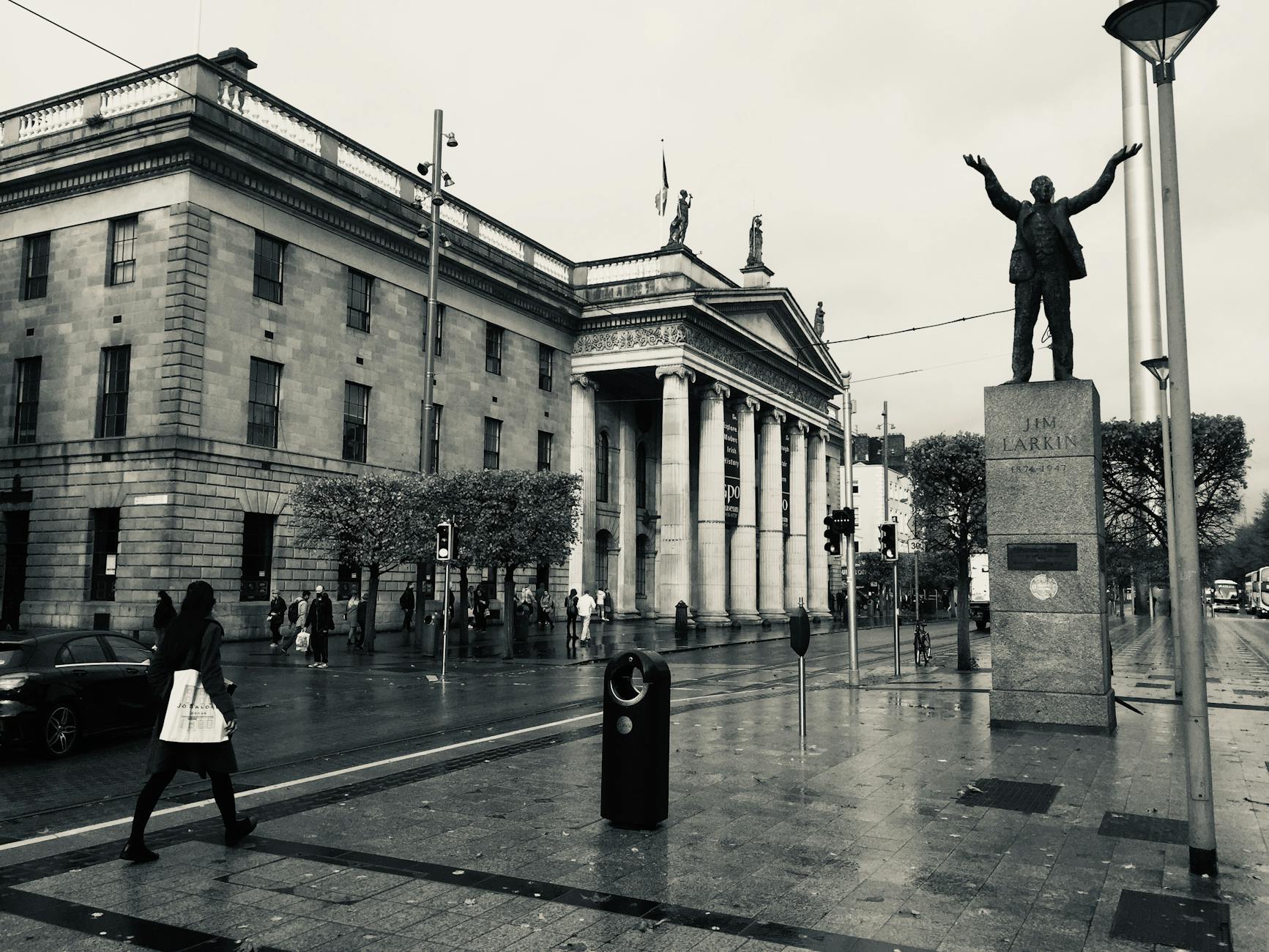
The General Post Office on O’Connell Street is the most important 1916 site. Patrick Pearse read the Proclamation of the Irish Republic from the GPO’s front steps shortly after noon on Easter Monday, declaring “Irishmen and Irishwomen” the rights of the Irish nation to sovereignty. The seven signatories — Pearse, Connolly, Clarke, MacDermott, MacDonagh, Ceannt, and Plunkett — were all executed within weeks of the Rising’s defeat.
The GPO building, designed by Francis Johnston and completed in 1818, still operates today as Dublin’s main post office. Bullet holes from the 1916 fighting and subsequent Civil War battles are visible in the front Ionic columns and pediment. The interior was destroyed by fire during the Rising and rebuilt in 1929. The GPO Witness History exhibition (opened 2016 for the centenary) is housed in the building’s former courtyard and uses multimedia, original artefacts, and personal stories to tell the full Rising narrative. €15 adult admission, open daily, 10am–5:30pm.
The statue of Cú Chulainn by Oliver Sheppard in the GPO front window commemorates the Rising leaders. The original Proclamation document was destroyed during the Rising, but surviving printed copies are displayed at the National Museum and in the GPO exhibition.
Other Buildings Held by the Rebels
The Rising involved more than just the GPO. The rebels seized a ring of strategic buildings across Dublin:
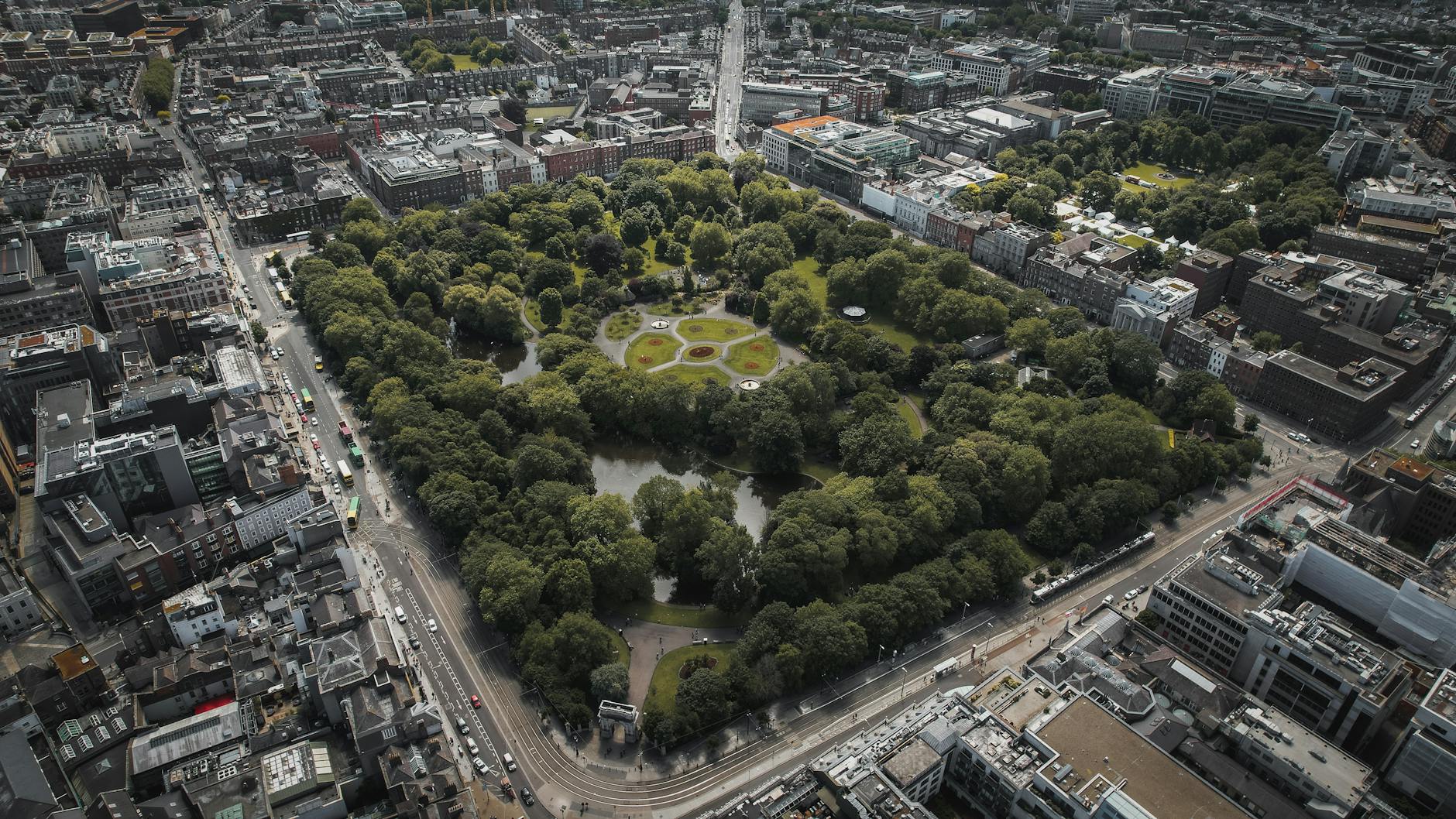
- St Stephen’s Green — Michael Mallin and Constance Markievicz commanded a unit that dug trenches in the park. They later withdrew to the College of Surgeons building on the west side of the Green, which still stands.
- Jacob’s Biscuit Factory — Now the National Archives and parts of Dublin Institute of Technology buildings near Aungier Street. Thomas MacDonagh commanded this garrison.
- Boland’s Mill — Near Grand Canal Dock. Eamon de Valera commanded this garrison, the most successful military action of the Rising. The mill has been partially demolished but parts remain.
- South Dublin Union — Now the site of St James’s Hospital, where Eamonn Ceannt’s garrison fought.
- The Four Courts — Edward Daly commanded this garrison. The Four Courts itself was famously destroyed in the 1922 Civil War, then rebuilt in 1932.
- City Hall — Briefly held by the Irish Citizen Army before being abandoned.
- Mendicity Institution — Sean Heuston commanded a small unit at this Liffey-side building (no longer standing).
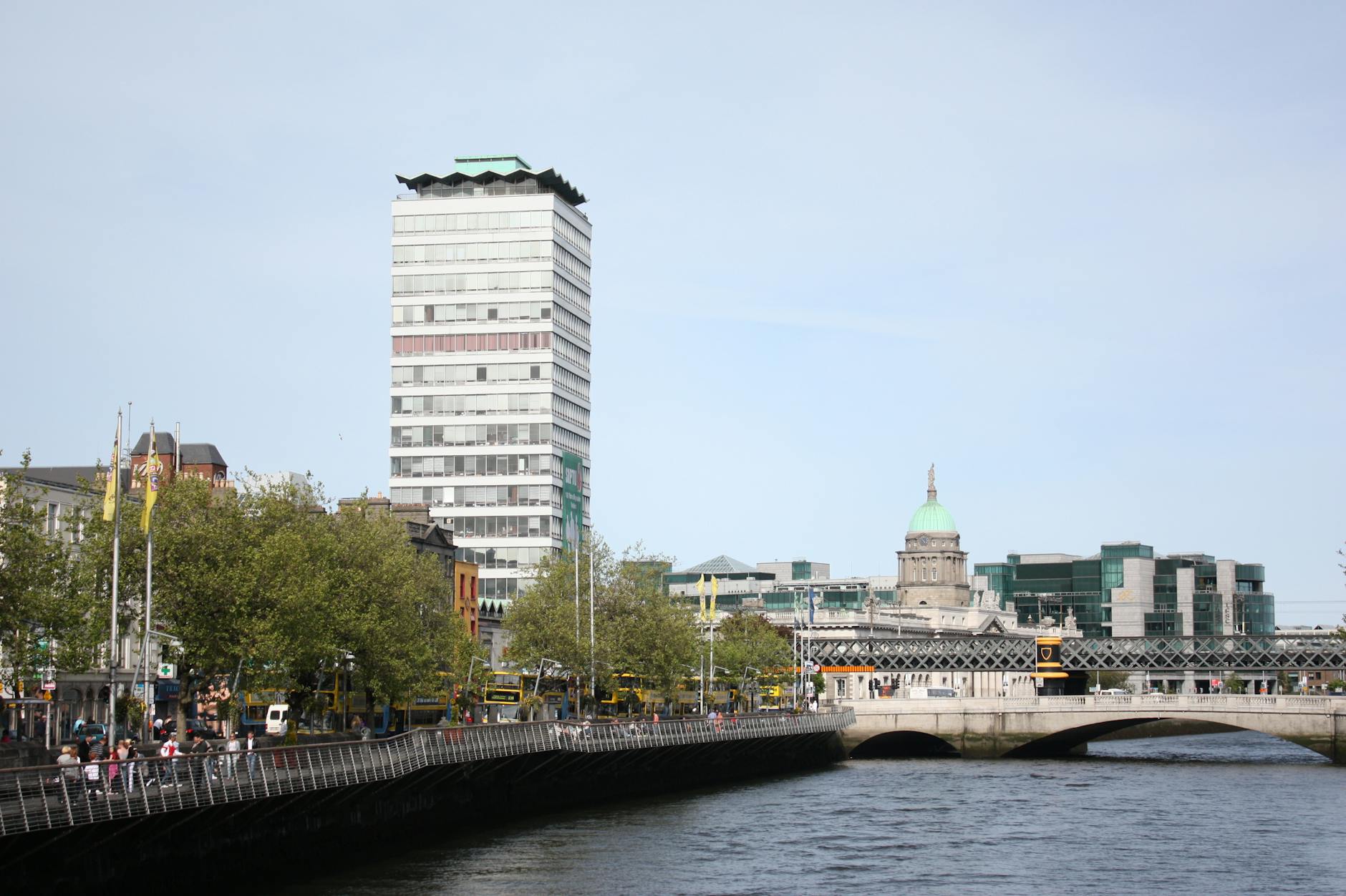
- Liberty Hall — James Connolly’s headquarters of the Irish Citizen Army before the Rising. The original building was shelled and destroyed; the current Liberty Hall on Eden Quay dates from 1965.
Several of these locations are marked with commemorative plaques. Liberty Hall has a James Connolly statue outside. St Stephen’s Green and the Four Courts are open to the public. The rest are integrated into modern Dublin buildings — visit for the history rather than dramatic preservation.
Kilmainham Gaol: The Executions
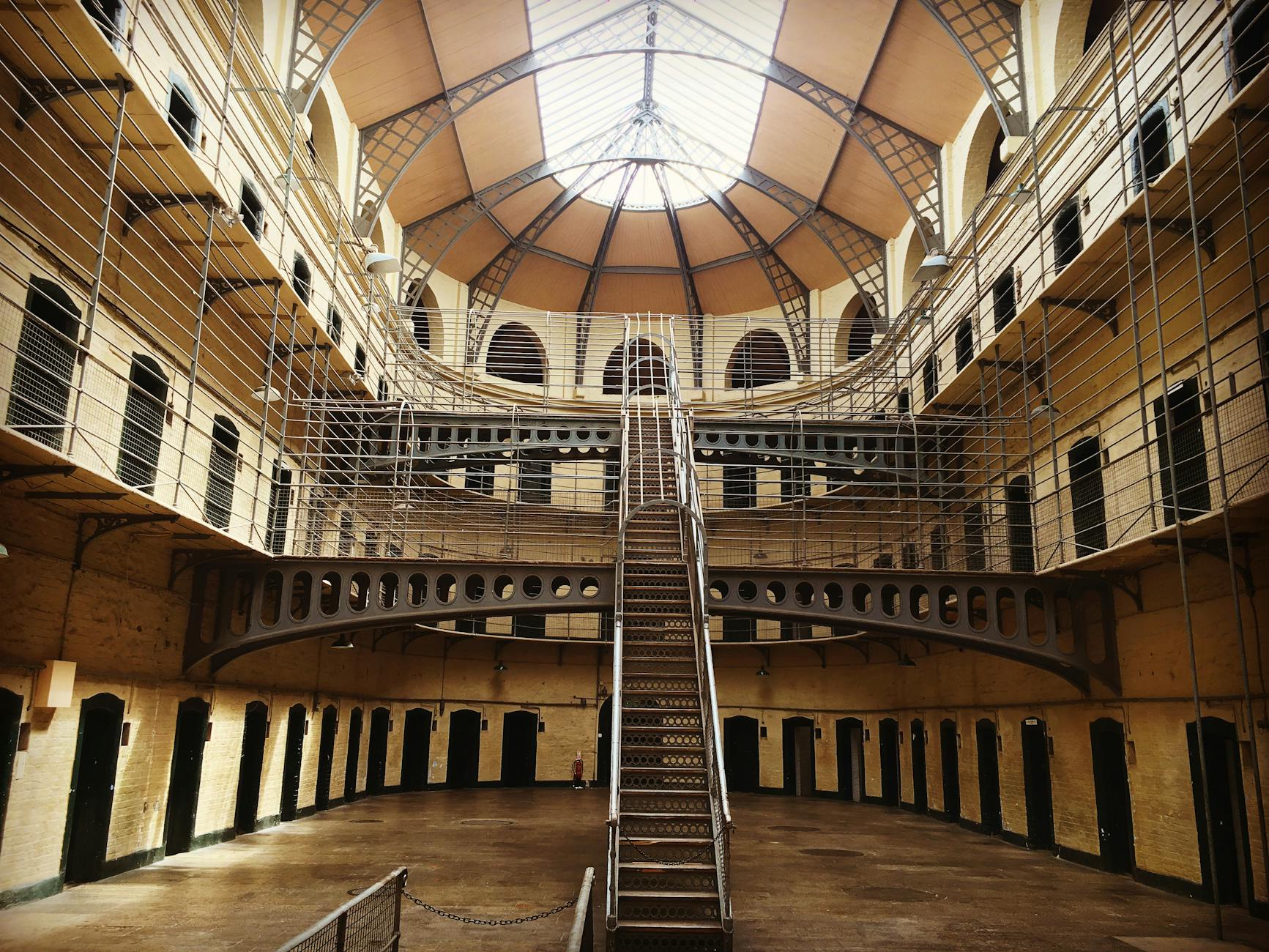
After the Rising’s surrender, the leaders were court-martialled in secret at Richmond Barracks (Inchicore) and most were transferred to Kilmainham Gaol for execution. Between 3 and 12 May 1916, fourteen of the Rising’s leaders were executed by firing squad in Kilmainham’s stonebreakers’ yard. James Connolly, too wounded to stand, was tied to a chair to be shot. The executions transformed Irish public opinion — what had been a militarily defeated, unpopular insurrection became a moral cause through the executions’ perceived cruelty.
Kilmainham Gaol’s guided tour is Ireland’s most powerful historical experience. The tour visits the cells where the leaders were held, the chapel where Joseph Plunkett married Grace Gifford hours before his execution, and the stonebreakers’ yard where the firing squads operated. Crosses mark the spots where each leader was shot. The visit takes 90 minutes and includes an introductory film and museum. €8 adult, book at heritageireland.ie at least 6–8 weeks ahead in summer. Closed Christmas Day, Stephen’s Day, and New Year’s Day. See our dedicated Kilmainham Gaol guide.
Arbour Hill Cemetery
The fourteen executed Rising leaders are buried together at Arbour Hill Cemetery in a single mass grave near Collins Barracks. The names of all signatories of the Proclamation are inscribed on the wall above the grave site. The cemetery is operated by the Defence Forces and is open to public visitors during daytime hours. Free entry, allow 30 minutes. The setting is sombre and powerful.
The names buried here: Patrick Pearse, James Connolly, Tom Clarke, Sean MacDermott, Thomas MacDonagh, Joseph Plunkett, Eamonn Ceannt, Edward Daly, Michael O’Hanrahan, Willie Pearse (Patrick’s brother), John MacBride, Cornelius Colbert, Sean Heuston, and Michael Mallin. A 15th executed leader, Roger Casement, was hanged in London and is buried separately at Glasnevin. James Connolly Heuston Station, Heuston Park, and Pearse Street take their names from these leaders.
Glasnevin Cemetery: The Broader 1916 Connection
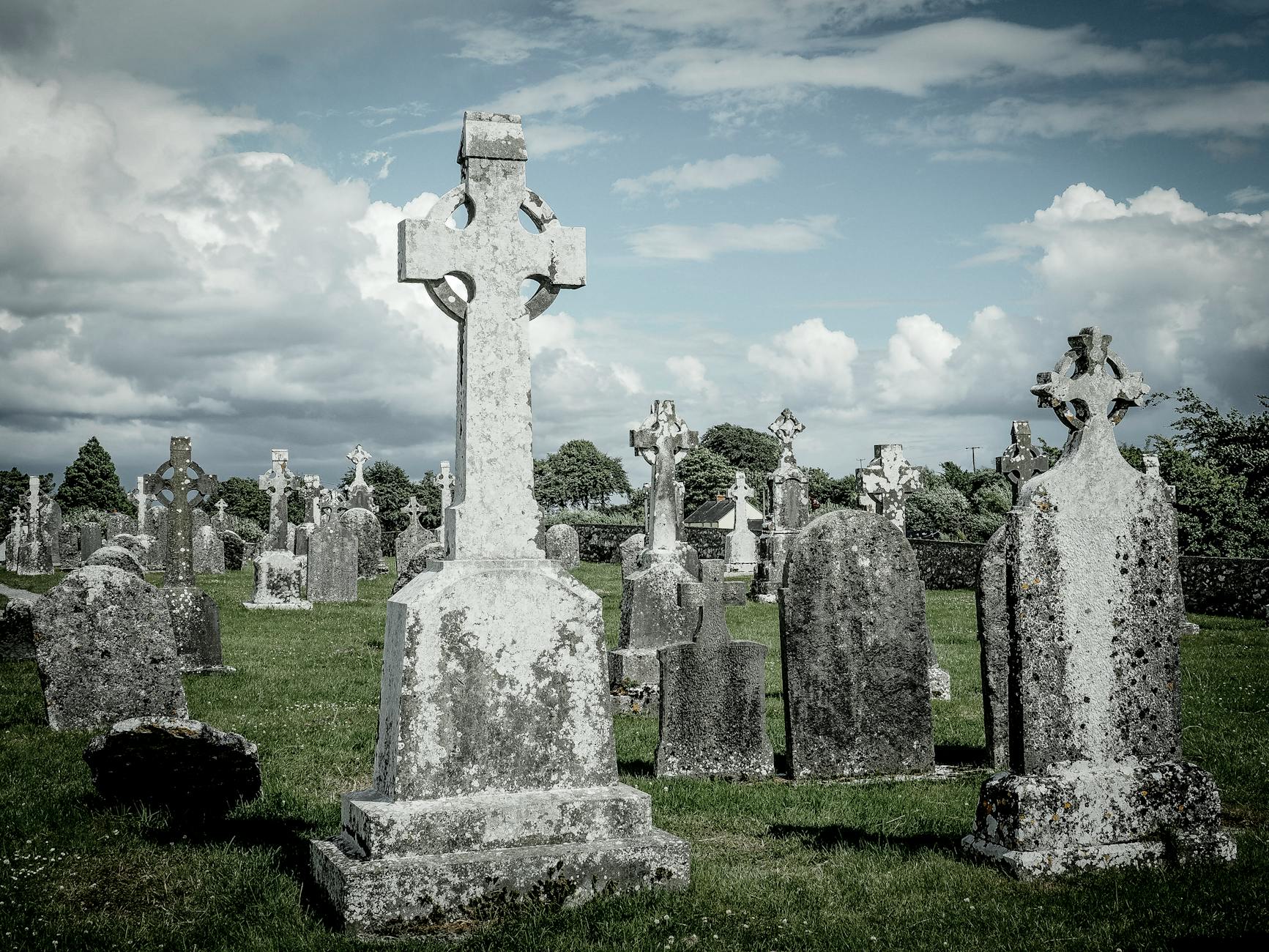
Glasnevin Cemetery, north of the city centre, holds the graves of dozens of figures connected to 1916 and the subsequent revolutionary period. Roger Casement (executed in London for treason in August 1916) was re-buried at Glasnevin in 1965. Countess Constance Markievicz, who fought at St Stephen’s Green and became the first woman elected to the British House of Commons, is buried in the Sigerson plot. Other 1916 figures buried at Glasnevin include Maud Gonne MacBride, Cathal Brugha, and many of the hundreds of civilians killed in the Rising’s crossfire.
Glasnevin Museum runs daily guided historical tours that cover the 1916 connections in detail alongside the broader history of the cemetery. €15 adult, 90-minute tour. Combine with the adjacent National Botanic Gardens (free) for a half-day from Dublin centre.
Richmond Barracks: Where Trials Took Place
Richmond Barracks in Inchicore is where the captured Rising leaders were held and court-martialled before being transferred to Kilmainham Gaol for execution. The barracks complex was restored and reopened as a 1916-themed visitor centre in 2016 for the Rising centenary. Exhibitions cover the court-martial process, the personal stories of the leaders, and the experience of the 77 women rebels who were also held at the barracks. €5 adult admission, open Tuesday to Saturday.
The site sits adjacent to Goldenbridge Cemetery, which holds several Rising-era graves. Walk-on access from Bulfin Road. Reach by Luas Red Line to Bluebell or bus 13 from city centre.
National Museum 1916 Exhibition
The National Museum of Ireland at Collins Barracks holds a permanent exhibition titled “Soldiers and Chiefs” which includes substantial 1916 Rising content. The exhibition displays original weapons used in the Rising, personal effects of the leaders, the original Proclamation poster (one of fewer than 50 surviving copies), the door of 16 Moore Street where Pearse and Connolly surrendered, and a reconstructed scene of the GPO interior during the Rising.
The National Museum (Archaeology) on Kildare Street also holds Rising-related collections including James Connolly’s vest (with bullet hole) and personal effects of Patrick Pearse. Both museums are free to visit, open Tuesday to Sunday 10am–5pm. Collins Barracks is reached by Luas Red Line to Museum stop. See our Dublin History Museums guide for more.
Moore Street: The Final Surrender Site
16 Moore Street, off Henry Street, is where the Rising’s final council of war was held on 29 April 1916. With the GPO in flames, the rebel leaders tunnelled through the walls of adjoining buildings on Henry Place and Moore Street, ending at No. 16 where Pearse made the decision to surrender to limit civilian casualties. The street has been the subject of intense preservation campaigns — planning permission for major redevelopment was repeatedly fought by Rising descendants. Nos. 14–17 Moore Street are protected as a national monument.
The 1916 Easter Rising Walking Tour led by historian Lorcan Collins (2 hours, €14) departs from the International Bar on Wicklow Street and covers the surrender route through Moore Street in detail. Daily 11:30am, no booking required. This tour is widely regarded as the definitive 1916 walking experience in Dublin.
Suggested 1916 Walking Tour Route
The following half-day walking route covers the main 1916 sites in the Dublin city centre. Allow 3–4 hours including museum stops:
- Start: GPO, O’Connell Street — The natural beginning. Take the GPO Witness History exhibition tour (60–90 minutes).
- Walk down O’Connell Street to Liberty Hall — View the James Connolly statue and read the dedicated plaque about the original 1916 building.
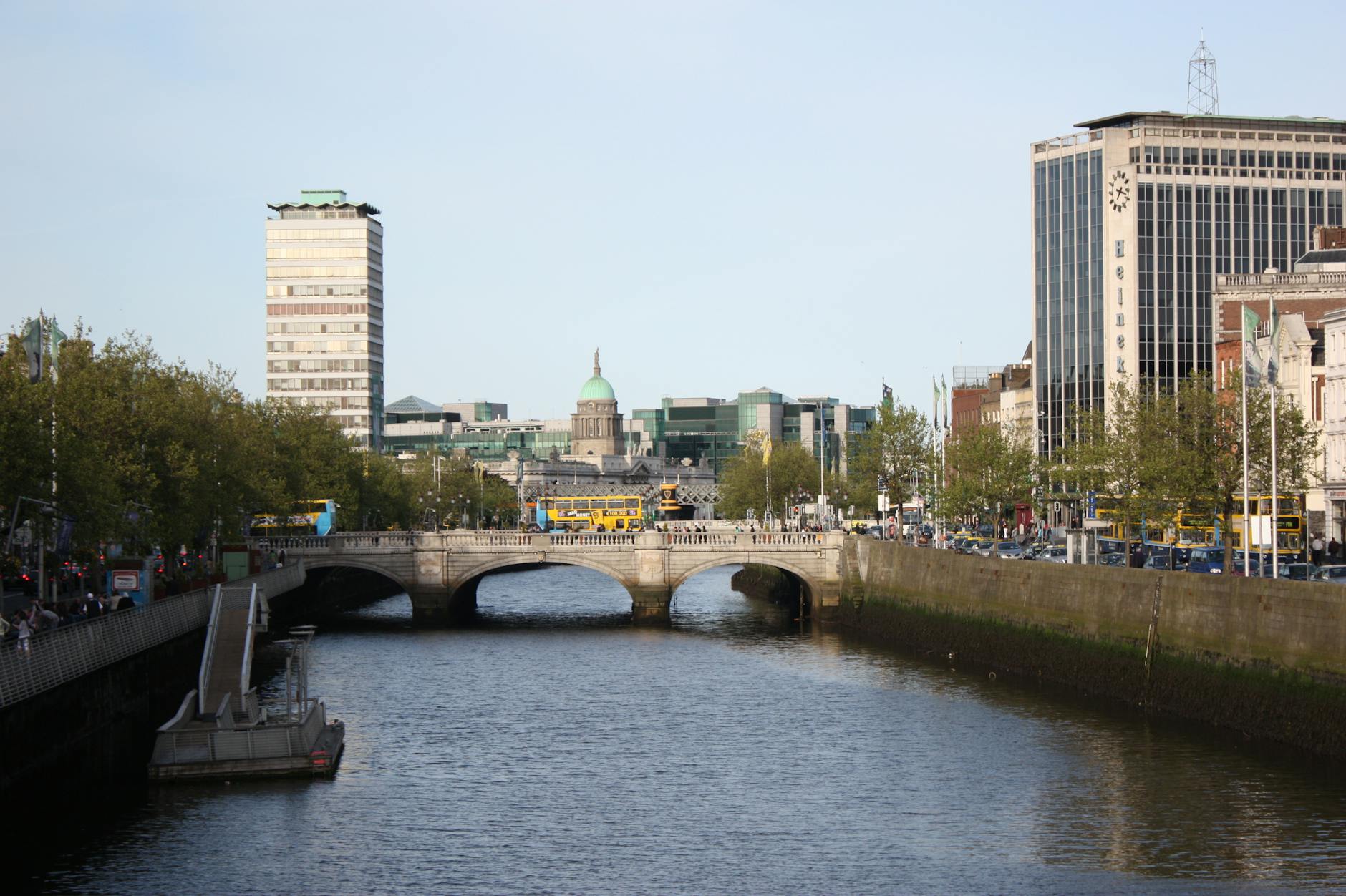
- Cross to Eden Quay and walk along the Liffey to the Four Courts — The 1916 Rising garrison commanded by Edward Daly.
- Cross to City Hall and Dublin Castle — The Rising’s briefly held City Hall and adjacent castle.
- Walk to St Stephen’s Green — View the trenches site (now park lawns) and the College of Surgeons across the road.
- Visit the Royal College of Surgeons — Look up to see bullet marks on the exterior.
- Lunch break at a Grafton Street area pub — Try McDaid’s, Davy Byrne’s, or the Bailey.
- Walk to Henry Street and Moore Street — View Nos. 14–17 Moore Street where the surrender took place.
- End: Return to O’Connell Street and the GPO — Close the symbolic loop where the Rising began.
For a deeper experience, dedicate a second half-day to Kilmainham Gaol (book tickets weeks ahead) and Glasnevin Cemetery. Total walking distance: about 4km, all on flat city-centre pavement.
Annual 1916 Commemorations
The Easter Rising is officially commemorated each year on Easter Sunday (or on the actual calendar date of 24 April when these align). Annual events include a military parade by the Defence Forces from St Stephen’s Green to the GPO, a reading of the Proclamation at the GPO, and a wreath-laying at the Garden of Remembrance on Parnell Square. The President of Ireland traditionally leads the official commemoration.
The Garden of Remembrance, opened in 1966 for the 50th anniversary of the Rising, sits at the top of Parnell Square. The Children of Lir sculpture by Oisin Kelly commemorates all who died for Irish freedom. The garden is open daily 9:30am–sunset, free admission. The 1916 leaders’ speeches, including Pearse’s famous “The fools, the fools, the fools” oration over O’Donovan Rossa’s grave, are inscribed on plaques throughout the garden.
Practical Tips for 1916 Sites Visit
Book Kilmainham Gaol weeks ahead — in summer the tour is regularly sold out 4–6 weeks in advance. The OPW Heritage Card (€40 for 12 months) covers both Kilmainham Gaol and Dublin Castle (closed to visitors until January 2027), paying for itself after 2–3 visits. Wear comfortable walking shoes — a full 1916 day involves 5–8km of walking across the city. Bring waterproofs — Dublin weather is unpredictable. Allow at least one full day for a comprehensive 1916 experience; two days if you want to include Arbour Hill, Richmond Barracks, and Glasnevin in detail.
For visitors with deeper interest in the Irish revolutionary period, expand beyond 1916 to include sites from the War of Independence (1919–1921) and Civil War (1922–1923). The Garda Museum at Dublin Castle (closed with the castle until January 2027) covers the immediate post-Rising period. The Michael Collins House Museum in Clonakilty, County Cork, requires a day trip but is worthwhile for serious enthusiasts. For broader context, see our Dublin History and Literary Heritage pillar guide.
Key 1916 Figures You Should Know
Patrick Pearse (1879–1916) — Schoolteacher, barrister, poet, and Gaelic League activist. President of the Provisional Government declared by the Proclamation. Founded St Enda’s School in Rathfarnham, now the Pearse Museum (free entry). Executed 3 May 1916.
James Connolly (1868–1916) — Marxist trade unionist, founder of the Irish Citizen Army during the 1913 Dublin Lockout. Author of Labour in Irish History. Wounded during the Rising; executed tied to a chair on 12 May 1916 because he could not stand. Statue stands outside Liberty Hall.
Tom Clarke (1858–1916) — Veteran Fenian who served 15 years in British prisons before becoming a tobacconist on Parnell Street. The senior signatory of the Proclamation. Executed 3 May 1916.
Sean MacDermott (1883–1916) — Polio survivor and IRB organiser who built the network that produced the Rising. Executed 12 May 1916 alongside Connolly.
Constance Markievicz (1868–1927) — Polish-Irish countess and Citizen Army officer who fought at St Stephen’s Green. Sentence commuted from death to life imprisonment because of her gender. Later first woman elected to British House of Commons (1918) and first woman cabinet minister in Europe (1919).
Eamon de Valera (1882–1975) — Commander of the Boland’s Mill garrison, the most successful Rising action. Spared execution because of his American birth. Later President of Ireland (1959–1973) and the dominant figure of 20th-century Irish politics.
Roger Casement (1864–1916) — British consular official knighted for exposing colonial atrocities in the Congo and Peru. Arranged German arms shipments for the Rising but was captured on a Kerry beach before it began. Hanged in London on 3 August 1916; re-buried at Glasnevin in 1965.
The Pearse Museum at St Enda’s
A less-visited but rewarding Rising site is the Pearse Museum at St Enda’s in Rathfarnham, south Dublin. Patrick Pearse founded St Enda’s as a bilingual Irish-language secondary school in 1908, moving it to The Hermitage, an 18th-century house with extensive grounds, in 1910. The school taught in Irish, blended Gaelic Athletic Association sports with art and drama, and produced students who would later fight in the Rising. The house is now a free state museum dedicated to Pearse’s life as educator and political thinker.
Exhibits include the room where Pearse wrote much of his political philosophy, original school equipment, photographs of pupils, and personal effects. The 50-acre grounds include a walled garden, woodland walks, and the riverside Pearse Memorial. Free admission, open daily, allow 90 minutes. Reach by bus 16 from O’Connell Street to Rathfarnham. Combine with a visit to the nearby Hellfire Club walking trail or Marlay Park for a half-day from city centre.
1916 Rising Sites Dublin: FAQ
When did the 1916 Rising happen?
The Easter Rising began on Easter Monday, 24 April 1916, and ended on 29 April when the rebel leaders surrendered. The executions of the leaders followed between 3 and 12 May 1916 at Kilmainham Gaol. Roger Casement, the 15th executed leader, was hanged in London on 3 August 1916.
What was the Proclamation of the Irish Republic?
The Proclamation, read by Patrick Pearse from the GPO steps on Easter Monday 1916, declared Irish independence from Britain. The document was signed by seven Military Council members. It established core principles including religious and civil liberty, equal rights regardless of gender, and the rights of the Irish nation to self-determination. Original printed copies are displayed at the National Museum and GPO Witness History exhibition.
How many days do I need for 1916 Rising sites?
One full day covers the main city-centre 1916 sites: the GPO exhibition, walking the surrender route, viewing key garrison buildings, and visiting Garden of Remembrance. Add a second day for Kilmainham Gaol (book ahead), Glasnevin Cemetery, and Arbour Hill. Serious history enthusiasts can fill three days with deeper Rising and Civil War sites.
Where can I see the original 1916 Proclamation?
Fewer than 50 original printed copies of the 1916 Proclamation survive. Originals are displayed at the National Museum of Ireland (Archaeology) on Kildare Street and at the GPO Witness History exhibition. Both are open to the public; the National Museum is free, the GPO exhibition charges €15.
Is the GPO still a working post office?
Yes — the GPO on O’Connell Street still operates as Dublin’s main post office. The front public area is open during postal hours (Monday–Saturday). The GPO Witness History exhibition operates from the rear courtyard and is accessible through a separate entrance.
Who were the seven signatories of the Proclamation?
The seven signatories were Patrick Pearse, James Connolly, Tom Clarke, Sean MacDermott, Thomas MacDonagh, Eamonn Ceannt, and Joseph Plunkett. All were executed by firing squad at Kilmainham Gaol between 3 and 12 May 1916. Their names are inscribed on the wall above their shared grave at Arbour Hill Cemetery.
How do I book Kilmainham Gaol tickets?
Book at heritageireland.ie at least 6–8 weeks ahead in summer, 2–3 weeks ahead in shoulder seasons. Tickets cost €8 adult, €4 child. The 90-minute guided tour is the only way to enter the prison. The OPW Heritage Card (€40 for 12 months) covers Kilmainham plus all other state heritage sites.
Are there guided 1916 walking tours?
Yes — the 1916 Rebellion Walking Tour led by historian Lorcan Collins is widely regarded as definitive. The 2-hour tour departs daily 11:30am from the International Bar on Wicklow Street and costs €14. Hidden Dublin Walks also runs 1916-themed walks several times weekly.
Keep Reading
- Kilmainham Gaol: Dublin’s Most Powerful Historical Site — The prison where fourteen 1916 leaders were shot — how to book the tour and what to expect inside.
- Dublin’s Georgian Architecture: A Walking Guide — Doorways, fanlights and red-brick terraces: the 1714–1830 building boom that shaped the southside squares.
- Viking & Medieval Dublin: 1,000 Years of History — Before the Georgians and the Rising, Dublin was a Norse trading port — Christ Church, Dublinia and the walled town.
- Dublin’s museums — a related guide from elsewhere on the site.
Lean na Comharthaí — Keep following the signs