Dublin Travel Insurance 2026: Do You Need It? Complete Guide

Ar an gComhartha Seo — On this sign
- Quick Picks: Dublin Travel Insurance
- Understanding Irish Healthcare
- Travel Insurance for EU Visitors
- Travel Insurance for UK Visitors
- Travel Insurance for Non-EU Visitors
- Theft and Luggage Cover
- Trip Cancellation and Disruption
- Adventure Activities Coverage
- Family and Group Travel Insurance
- Pre-Existing Conditions
- How Long Should Your Cover Last?
- If You Need to Make a Claim
- Travel Insurance Cost Comparison
- What Travel Insurance Typically Doesn’t Cover
- Travel Insurance Best Practice
- Common Travel Insurance Mistakes
- Related Reading
- Specific Coverage Scenarios for Dublin
- Insurance for Rental Cars in Ireland
- Insurance for Older Travellers
- Annual Multi-Trip vs Single Trip Insurance
- Dublin Insurance Considerations vs Other Cities
- Dublin Travel Insurance: FAQ
- Photo Credits

Do you need Dublin travel insurance for your trip? The honest answer depends on where you’re from. EU and UK visitors get baseline healthcare cover through reciprocal agreements; US, Australian, Canadian and other non-EU visitors are strongly advised to have private travel insurance covering medical emergencies. Beyond healthcare, travel insurance also covers theft, lost luggage, trip cancellation and disruption — risks that affect any visitor regardless of nationality. This guide covers everything you need to know about insuring a Dublin trip in 2026.
Whether you’re heading to Dublin for a weekend or a month, the right insurance protects you from the realistic risks.
The complete Dublin travel tips guide pulls all of this together if you want the overview first.
Quick Picks: Dublin Travel Insurance
- EU visitors: European Health Insurance Card (EHIC) is essential. Optional private travel insurance for non-medical coverage.
- UK visitors: GHIC (Global Health Insurance Card) provides equivalent coverage. Optional private travel insurance recommended.
- US, Canadian, Australian, NZ visitors: Private travel insurance strongly recommended; medical care otherwise can be expensive.
- Adventure activities: Wicklow hiking, cliff walks, Cliffs of Moher visits may need adventure-add-on cover.
- Medical-only minimum: €1-2 million medical and repatriation cover.
- Standard comprehensive policy: Add lost luggage, theft, trip cancellation, delay disruption.
- Typical cost: €15-50 for a single week from major providers.

Understanding Irish Healthcare
Ireland has a mixed public-private healthcare system. Key facts for visitors:
- Public Hospital Emergency Department (A&E): Free for emergencies; long waiting times common (3-12 hours for non-urgent treatment).
- Private hospitals: Faster service; covered by private travel insurance.
- GP (family doctor): Drop-in clinic costs €50-80; book ahead recommended.
- Prescription medication: Pharmacy charges €15-25 per item.
- Dental care: Private only for tourists; emergency dental €50-150 per visit.
- Pharmacies: Open 9am-6pm typically. 24-hour pharmacy at O’Connell Street (Hickey’s) and Westmoreland Street (Boots).
- Emergency number: 999 or 112 (free; ambulance arrives 8-15 minutes at major locations).
- Hospital choice: St James’s and Mater University Hospital are the main central public hospitals; Beacon Hospital, Mater Private and Blackrock Clinic are major private options.
Travel Insurance for EU Visitors
European Health Insurance Card (EHIC)
- What it covers: Emergency public healthcare on the same terms as Irish residents. Hospital emergency department free.
- What it doesn’t cover: Private hospital care, repatriation, ongoing treatment, lost luggage, trip cancellation.
- How to get one: Free from your home country’s health insurance authority. Apply 4-6 weeks before travel.
- Carrying the card: Have the physical card and a digital copy on your phone.
- Validity: 5-10 years depending on country.
Additional Private Insurance
While EHIC covers basic medical, private travel insurance adds substantial coverage for the same trip:
- Repatriation: Flight home for serious illness; not covered by EHIC.
- Trip cancellation: Refund non-refundable bookings if you can’t travel.
- Theft and lost luggage: Hotel theft, airline lost bags.
- Trip delay and disruption: Compensation for flight delays, missed connections.
- Activities cover: Adventure activities (rock climbing, surfing, scuba) often need add-ons.
- Typical cost: €15-30 for a single week to Dublin from European providers.
Travel Insurance for UK Visitors
GHIC (Global Health Insurance Card)
The post-Brexit replacement for EHIC for UK visitors. Provides emergency public healthcare in Ireland on the same basis as Irish residents.
- How to get one: Free from NHS Business Services Authority. Apply 4-6 weeks before travel.
- Same coverage as EHIC: Emergency public healthcare; no private hospital, repatriation or non-medical coverage.
- Validity: 5 years.
Common Travel Agreement
UK and Ireland have a separate Common Travel Area agreement that predates EU membership. UK visitors retain reciprocal healthcare regardless of EU membership status. Bring your GHIC and a UK driving licence as ID.
Travel Insurance for Non-EU Visitors
For US, Canadian, Australian, NZ and other non-EU visitors, travel insurance is essential rather than optional. Reasons:
- Medical care can be expensive: Public hospital emergency department is free but ongoing treatment, specialist care, and private hospital stays cost typical Western prices (€500-3,000+ per day).
- Repatriation flights are very expensive: Medical emergency flight home from Dublin can be €25,000-100,000.
- Common travellers’ insurance needs: Lost luggage, theft, trip cancellation all relevant.
- Adventure activities: Wicklow hiking, cliff walking may need add-on coverage.
Reputable Travel Insurance Providers
- World Nomads: Strong on backpacker and longer trips; adventure-activity coverage.
- SafetyWing: Monthly subscription; ideal for digital nomads or extended stays.
- Allianz Travel: Standard provider; reliable.
- Travel Guard (AIG): US visitors’ commonly chosen provider.
- Insure My Trip / Travel Insurance Review: Comparison sites for quotes.
- Credit card travel insurance: Premium cards (Amex Platinum, Visa Infinite, Mastercard World Elite) often include travel insurance as a perk. Check coverage levels before relying on it.
Theft and Luggage Cover
Theft is the most common tourist insurance claim in Dublin. Specific coverage to look for:
- Personal possessions cover: €1,500-3,000 typical; covers phones, cameras, valuables.
- Single article limits: Often €300-500 per item. Higher-value items (premium camera, laptop, jewellery) may need separate cover.
- Excess: €50-200 typical excess on theft claims.
- Requirements: Garda (police) report essential for any claim. File the report at any Garda station within 24 hours.
- Photographic proof: Photo of expensive items before travel helps claims processing.
- Receipts: Keep original purchase receipts for valuable items (proof of value).
- Lost luggage by airline: Separate from theft cover; check your airline ticket terms first.
Trip Cancellation and Disruption
Trip Cancellation Cover
- What it covers: Non-refundable booking costs if you can’t travel due to specified reasons (illness, family emergency, jury duty, redundancy).
- What it doesn’t cover: “Change of mind” cancellations.
- Coverage levels: €1,500-10,000 typical; higher for luxury trips.
- Documentation: Doctor’s note, accident reports, employment letters needed for claims.
Trip Delay Cover
- What it covers: Hotel, food, transport costs during long flight delays.
- Threshold: Typically activated after 6+ hour delay.
- Coverage: €100-300 per day; capped at trip cost.
- Documentation: Receipts essential for claims.
Missed Connection Cover
- What it covers: New flights and accommodation when connections are missed.
- Common scenario: Bad weather closing Dublin Airport; pre-booked tours missed.

Adventure Activities Coverage
Standard travel insurance often excludes specific activities. For Dublin and Ireland trips, watch for these specific cover requirements:
- Cliff walking (Howth, Bray-Greystones, Cliffs of Moher): Usually included in standard cover.
- Glendalough Spinc Loop hike: Usually included.
- Surfing: Add-on; the Salthill or Wicklow surf scene needs adventure cover.
- Open-water swimming (Forty Foot): Often included but check.
- Cycling: Standard cycling included; mountain biking may need add-on.
- Skiing (rare in Ireland but in Wicklow Mountains conditions): Add-on.
- Sailing on Dublin Bay: Add-on typically.
- Hill walking and hiking: Standard cover for marked trails; add-on for off-trail.
Family and Group Travel Insurance
- Family policies: One policy covers entire family; typically cheaper per person than individual policies.
- Children under 18: Often included free with parent policies.
- Group policies: For 4+ travelling together; ask provider for group rates.
- Activity-specific concerns: Children’s activities (Dublin Zoo, beach swimming) standard cover.
- Pre-existing conditions: Declare all members’ conditions; the policy may have exclusions otherwise.
Pre-Existing Conditions
Pre-existing medical conditions affect insurance:
- Always declare: Not declaring conditions voids the policy.
- Common declarable conditions: Diabetes, asthma, heart conditions, mental health, recent surgery.
- Coverage availability: Most insurers cover declared conditions; some charge higher premiums.
- Specialist providers: Free Spirit Travel Insurance specialises in pre-existing conditions; useful for travellers with complex medical needs.
- Bring medication and prescriptions: Pack medication in carry-on luggage; bring physical prescription documentation.
How Long Should Your Cover Last?
- Single trip: Cover for specific Dublin trip dates plus 1-2 days buffer for delays. Most common option.
- Annual multi-trip: Single annual policy covers multiple trips up to 30 days each. Cost-effective for frequent travellers.
- Long-stay: 60+ day trips need extended cover; some insurers limit standard policies to 31 or 60 days.
- Year-long stay: SafetyWing, IMG, IMG Global subscriptions designed for digital nomads.
If You Need to Make a Claim
Medical Emergency
- Call 999 or 112 first for life-threatening emergencies (free from any phone).
- Then call your travel insurance emergency line: Most provide 24-hour assistance. Have your policy number ready.
- Insurance can pre-authorise treatment: Important for expensive care.
- Keep all receipts: Pharmacy receipts, hospital bills, transport to/from hospital.
- Get medical reports: Doctors and hospitals provide written reports on request; needed for claims.
- File claim within 30 days of return home typically.
Theft Claim
- Report to Garda: Any Garda station within 24 hours. Pearse Street is central. Get the Garda Pulse Number from the report.
- Photograph the theft scene: Useful for insurance.
- Notify your hotel: If theft happened on hotel premises.
- Save the police report: Insurance won’t pay without it.
- File claim via your insurer’s online system or phone.
- Provide receipts: Original purchase receipts and replacement quotes.
Trip Cancellation Claim
- Document the reason: Doctor’s note, accident report, employment letter.
- Contact your insurer before cancelling bookings if possible.
- Cancel non-refundable bookings: Note dates and amounts.
- Save all communications: Email correspondence, cancellation confirmations.
- File claim with full documentation.
Travel Insurance Cost Comparison
For 7-Day Dublin Trip
- Basic medical only: €10-15 per person
- Standard comprehensive: €20-35 per person
- Premium with adventure cover: €40-65 per person
- Family of 4, comprehensive: €55-100 total
- Family of 4, premium: €120-180 total
For 30-Day Ireland Trip
- Basic medical only: €25-40 per person
- Standard comprehensive: €50-85 per person
- Premium with adventure cover: €90-150 per person
For 90-Day Trip
- Basic: €60-100 per person
- Comprehensive: €120-220 per person
- SafetyWing monthly: €42/month, comprehensive
What Travel Insurance Typically Doesn’t Cover
- Pre-existing conditions not declared.
- Accidents while drunk (over local drink-drive limit).
- Reckless behaviour: Activities clearly outside policy scope.
- Theft from unattended luggage in public places.
- Lost cash: Most policies don’t cover cash theft.
- Pandemic-related disruption: Coverage varies; check specific policy terms.
- Acts of war or terrorism: Often excluded.
- Adventure activities without specific add-on.
- Cancellations due to known events: If you book during a strike notice, the insurer may not cover related disruption.
Travel Insurance Best Practice
- Buy before you leave home: Policies bought after departure rarely cover existing trip issues.
- Read the policy: Specifically the exclusions and excess amounts.
- Carry contact details: Insurer’s emergency number on your phone and a paper copy.
- Take photos of valuables before travel.
- Keep all original receipts: Hotels, restaurants, attractions.
- Garda report essential: For any theft claim.
- Doctor’s note for medical claims.
- Share insurance details with family: In case of emergency.
Common Travel Insurance Mistakes
- Skipping insurance for a “safe” country: Dublin is safe but accidents happen; insurance is genuinely necessary for non-EU visitors.
- Buying cheapest option: Low-premium policies often have high excesses; you may pay more in claim if something happens.
- Not declaring pre-existing conditions: Voids the entire policy.
- Forgetting EHIC/GHIC: EU and UK visitors should still get these even with private insurance.
- Not filing Garda report for theft claims.
- Letting policy expire mid-trip: Extend coverage if your trip runs longer than originally planned.
- Buying after a known disruption: Insurance won’t cover problems you already knew about.
- Assuming credit card insurance is sufficient: Check coverage levels; often less than standalone policies.
Related Reading
For more Dublin trip planning, see Is Dublin Safe, Dublin Visa Requirements, First Time in Dublin, Dublin Trip Cost, Tipping in Dublin, and Dublin Weather.
Specific Coverage Scenarios for Dublin
Dublin trips generate specific insurance scenarios worth knowing about. Lost or damaged Trinity College Book of Kells Fast Track ticket: Not covered by travel insurance; book through tcd.ie which holds a digital record. Cancelled coach day-tour (Wild Wicklow, Cliffs of Moher) due to weather: Most tour operators offer refunds or rescheduling without needing insurance. Missed Aer Lingus or Ryanair flight: Standard travel insurance covers if due to insurable causes (illness, traffic on M50); doesn’t cover “woke up late.” Lost or stolen Leap Visitor Card: Replacement cost €8-40 depending on type; unlikely to claim on insurance.
Theft of premium camera at Trinity College: Standard personal possessions cover applies; Garda report essential; single-item limits may cap reimbursement at €500. Mobile phone theft on the Luas O’Connell stop: Common; standard cover applies with Garda report. Slip and fall on wet Temple Bar cobbles: Standard medical cover applies for hospital treatment; ongoing physiotherapy may need specialist add-on. Heart attack on the Howth Cliff Walk: Standard medical cover plus repatriation; ambulance access to remote cliff sections is challenging so cover for helicopter evacuation is reassuring.
Insurance for Rental Cars in Ireland
If your Dublin trip involves renting a car for wider Ireland exploration, car rental insurance is a separate consideration from travel insurance. Standard rental rates include mandatory third-party insurance. Collision Damage Waiver (CDW) is typically included with a high excess (€1,500-3,500). Super CDW reducing excess to zero costs €15-25/day. Third-party excess insurance (Insurance4CarHire, RentalCover.com) at €5-9/day is the cheaper alternative.
Some premium credit cards (Visa Signature, Mastercard World Elite, Amex Platinum) include rental car CDW as a perk; check your card’s terms before relying on it. Ireland-specific note: Irish rental cars require notification of any cross-border driving into Northern Ireland; standard CDW covers cross-border but some operators charge a surcharge. See our Renting a Car in Dublin guide for complete rental insurance breakdowns.
Insurance for Older Travellers
Travel insurance pricing rises sharply for older travellers, particularly those 70+. Specialist providers including Saga Travel Insurance (UK, age 50+), Free Spirit Travel Insurance (pre-existing conditions specialist), InsureandGo and Staysure all offer policies for older travellers without age caps. Expect to pay 2-3x the rate of a younger traveller for equivalent coverage; the cost is genuinely justified given higher medical risks.
Key considerations for older travellers: declare all medications and conditions; carry medication and prescription documentation in carry-on luggage; check whether your policy covers cardiac events specifically (some have additional conditions); consider higher medical and repatriation limits (€5 million rather than €1 million). Dublin’s public healthcare is reliable but private hospitals like Beacon and Mater Private offer faster service for older travellers needing immediate attention; private cover helps access these.
Annual Multi-Trip vs Single Trip Insurance
For frequent travellers, annual multi-trip policies make economic sense. Single trip rates for a week-long Dublin visit: €20-35 comprehensive. Annual multi-trip rates: €100-180/year covering multiple trips up to 30-45 days each. Two or three trips a year cost less per trip on an annual policy than buying single-trip cover repeatedly.
Best annual multi-trip providers: Allianz Travel, Aviva, Staysure, World Nomads. Compare features: trip-length limits (typically 30-45 days), age restrictions (some policies cap at 65 or 70), pre-existing condition cover, adventure activities. For travellers visiting Dublin from the EU or UK 2-3+ times annually for business and leisure, the annual policy is the smart choice.
Dublin Insurance Considerations vs Other Cities
Dublin sits in a manageable insurance risk profile compared to other European destinations. Lower crime than Paris or Rome means lower theft claims; reliable public healthcare means medical claims are less expensive than in Switzerland or Norway; reasonable weather means weather-related disruption claims are less common than in winter Alpine destinations. The result: Dublin travel insurance premiums tend to sit at the lower end of European city-break rates from major providers.
Specific Dublin risk factors that justify good insurance: Atlantic weather disruption can cancel Cliffs of Moher tours and ferry crossings to Wales/UK (Brexit ferries from Dublin to Holyhead occasionally cancel in severe weather). Aer Lingus or Ryanair disruption: As Dublin’s dominant airlines, their strike actions and disruption affect many tourists. Dublin Airport baggage delays: T1 and T2 occasionally see luggage delays of 24-48 hours, particularly during peak summer.
Dublin Travel Insurance: FAQ
Do I need travel insurance for Dublin?
EU and UK visitors have reciprocal public healthcare cover via EHIC/GHIC cards but should still consider private insurance for non-medical coverage (theft, lost luggage, trip cancellation). Non-EU visitors (US, Canadian, Australian, NZ) should always have private travel insurance covering medical emergencies.
How much does travel insurance for Dublin cost?
Single-trip 7-day cover: €10-15 basic; €20-35 comprehensive; €40-65 premium with adventure cover. Family of 4 comprehensive cover €55-100 total. Annual multi-trip policies start around €100/year.
What is the EHIC and GHIC?
European Health Insurance Card (EU) and Global Health Insurance Card (UK) provide emergency public healthcare in Ireland on the same basis as Irish residents. Free to apply for. Both cards cover emergency public hospital treatment but not repatriation, private hospital, or non-medical costs.
What insurance do US visitors need for Dublin?
Private travel insurance with at least €1-2 million medical and repatriation cover. US visitors are not covered by Irish public healthcare for ongoing treatment. Reputable providers: Allianz Travel, Travel Guard (AIG), World Nomads, Insure My Trip aggregator.
Does my credit card travel insurance cover Dublin?
Premium cards (Amex Platinum, Visa Infinite, Mastercard World Elite) often include travel insurance. Check specifically: medical coverage levels, repatriation, theft cover, trip cancellation, and exclusion list. Credit card insurance often covers less than standalone policies.
Can I buy travel insurance after I arrive in Dublin?
Some providers allow it but the cover usually starts 24-48 hours after purchase and excludes any existing trip issues. Buy travel insurance before leaving home; the price difference is minimal.
How do I claim travel insurance for theft in Dublin?
Report to Garda within 24 hours at any Garda station (Pearse Street central). Get the Garda Pulse Number. Notify your insurer’s emergency line. File the full claim within 30 days of return with police report, receipts, photos and replacement quotes.
What if I get sick in Dublin?
For emergencies, call 999 or 112 (free; ambulance arrives 8-15 minutes). For non-urgent illness, visit a GP drop-in clinic (€50-80) or pharmacy. Notify your travel insurance emergency line; they can pre-authorise expensive treatment. Keep all receipts for claim.
The other admin task worth sorting before you fly is connectivity — see the Dublin SIM card and connectivity guide.
Photo Credits
O’Connell Street from the bridge: 20130807 dublin125 by Jean Housen, CC BY-SA 3.0, via Wikimedia Commons.
Grafton Street flower stalls: 20130810 dublin251 by Jean Housen, CC BY-SA 3.0, via Wikimedia Commons.
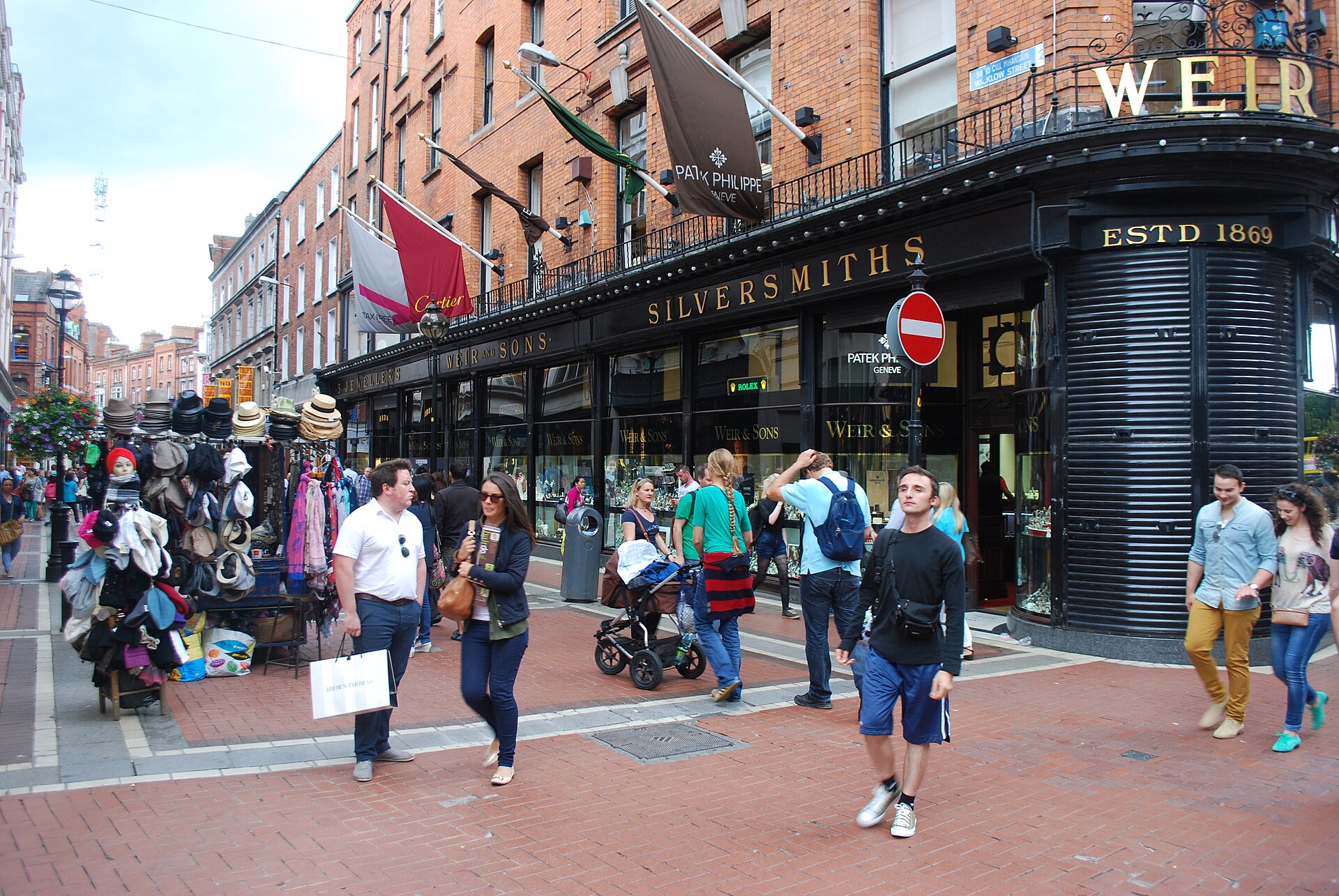
Wicklow Street junction: 20130810 dublin253 by Jean Housen, CC BY-SA 3.0, via Wikimedia Commons.
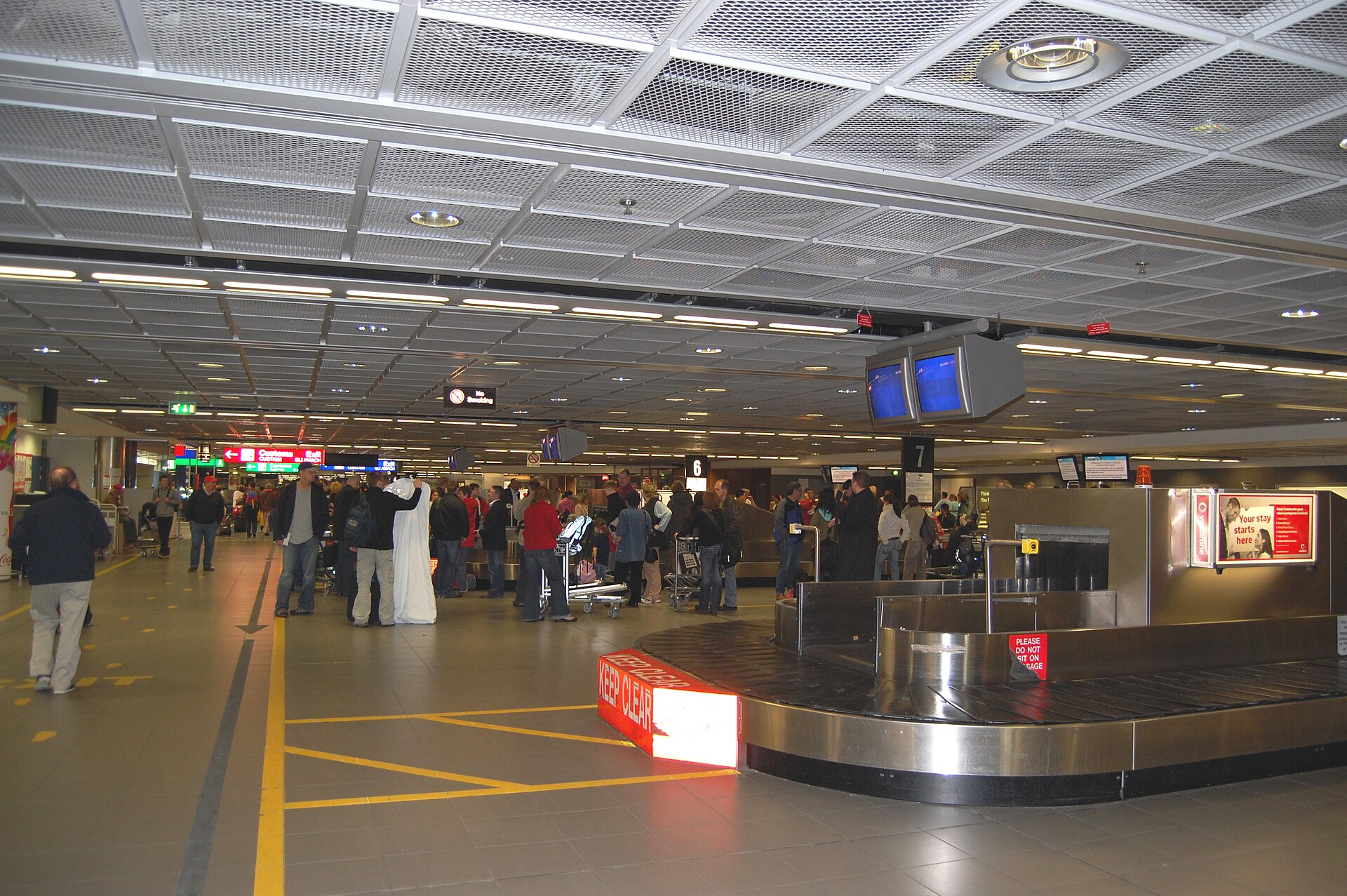
Baggage reclaim at Dublin Airport: DublinAirport31mar2007-02 by Dantadd, CC BY-SA 2.5, via Wikimedia Commons.
Aircraft at Dublin Airport Terminal 2 gates: 20130811 dublin airport15 by Jean Housen, CC BY-SA 3.0, via Wikimedia Commons.
Lean na Comharthaí — Keep following the signs