Dublin Weather 2026: What to Pack & What to Expect

Ar an gComhartha Seo — On this sign
- Quick Picks: Dublin Weather Essentials
- Dublin Rain Reality
- Dublin Wind
- Dublin Sun and Daylight
- What to Pack for Dublin: All Seasons
- The Waterproof Jacket: Dublin’s Most-Important Item
- Reading Dublin Weather Forecasts
- Weather Impact on Dublin Attractions
- Weather and Dublin Day Trips
- Seasonal Weather Realities
- Dublin Weather Myths
- Dublin Weather Apps
- Dublin Weather Records
- Common Dublin Weather Mistakes
- Related Reading
- Dublin Weather Trends and Climate Change
- Dublin Microclimates
- Rainy Day Dublin Strategy
- Dublin Weather vs Other European Cities
- Quick Packing Checklists by Trip Length
- Dublin Weather with Children
- Dublin Weather: FAQ
- Keep Reading
Dublin weather has a reputation that exceeds reality. Yes, it rains. Yes, the wind off the Irish Sea is real. But Dublin averages 1,400 hours of sunshine a year, milder winters than continental Europe, less rainfall than Amsterdam or Brussels, and weather conditions that rarely cancel a trip. This guide is the comprehensive Dublin weather and packing playbook: what to expect month-by-month, what to wear, and how to make the most of the conditions you encounter.
Every statistic in this guide is based on Met Eireann long-term averages and observed conditions through 2025. Whether you’re visiting in July sun or December drizzle, this guide tells you what to pack.
If you are still building the shape of your trip, the guide to essential Dublin travel tips covers how this fits with the rest of the city.
Quick Picks: Dublin Weather Essentials
- Average annual rainfall: 758mm; rain on 60-65% of days (mostly light)
- Average sunshine: 1,400 hours/year (about 3.8 hours/day)
- Average temperatures: 4-9℃ winter; 14-21℃ summer
- Wind: Persistent moderate; Atlantic exposure means rarely calm
- Best months: May-September for warmest weather; April-October for least rain
- Mandatory pack item: Waterproof jacket with hood (any season)
- Best forecast source: Met Eireann (met.ie) or the Met Eireann app
- Snow days: 2-3 days per year average
Dublin Rain Reality
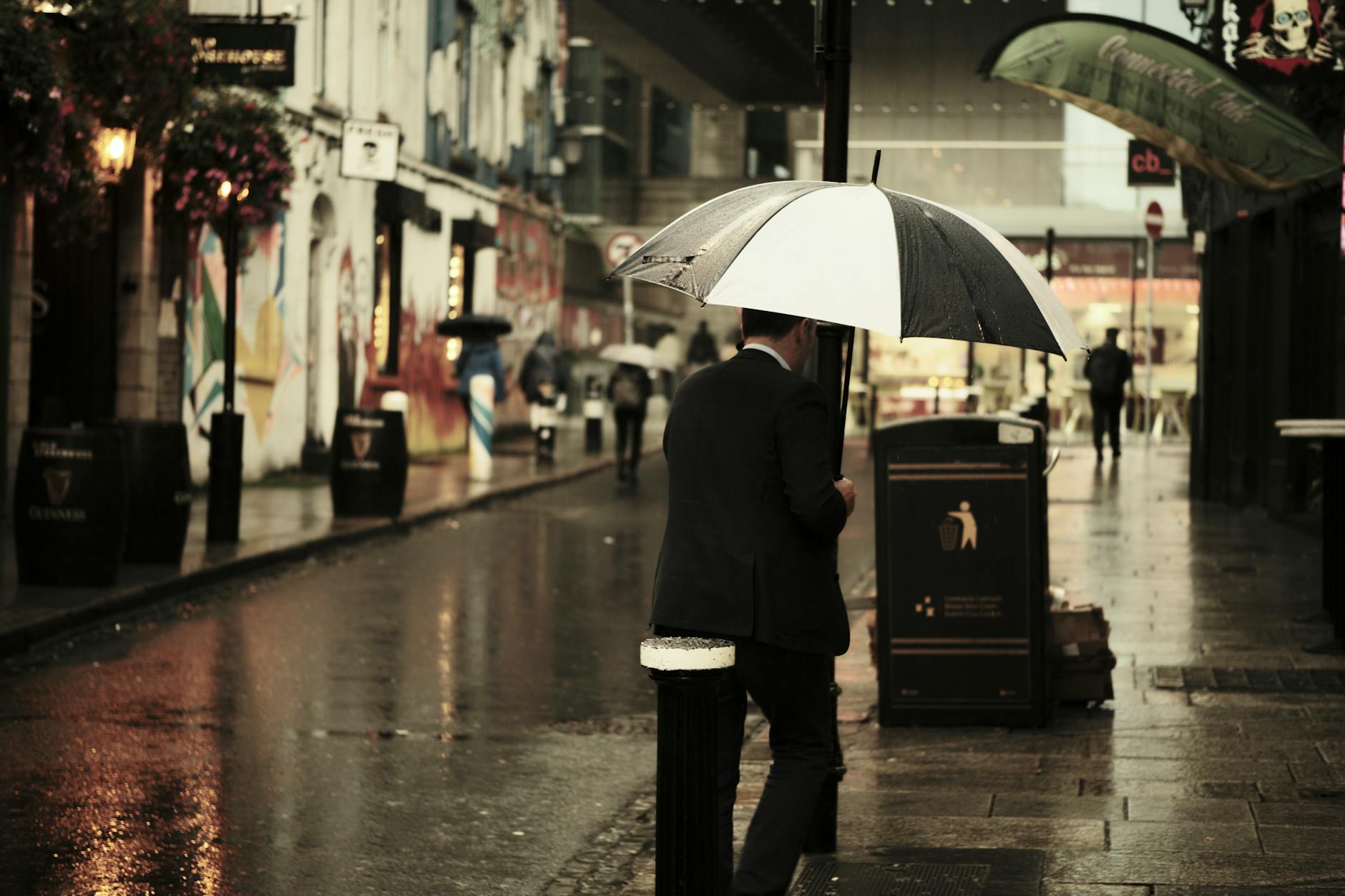
Dublin’s rain reputation is greater than reality. Specific statistics:
- Average annual rainfall: 758mm. Less than London (754mm but similar), Amsterdam (787mm), Brussels (851mm).
- Days with rain: 60-65% of days have some measurable precipitation; most is light.
- Days with heavy rain: 8-12 days per year (sustained heavy rain).
- Typical rain pattern: 30-60 minute showers with sunshine before and after.
- Driest month: April (45mm average).
- Wettest month: November/December (75-80mm average).
- Snow days: 2-3 per year on average; rarely accumulates significantly.
- Hailstorms: Occasional in spring and autumn; brief and localised.
The honest comparison: Dublin gets less rain than many continental European cities but more days with light rain than Mediterranean Europe. The local saying “you can experience all four seasons in one day” is accurate — Dublin weather changes frequently within hours.
Dublin Wind
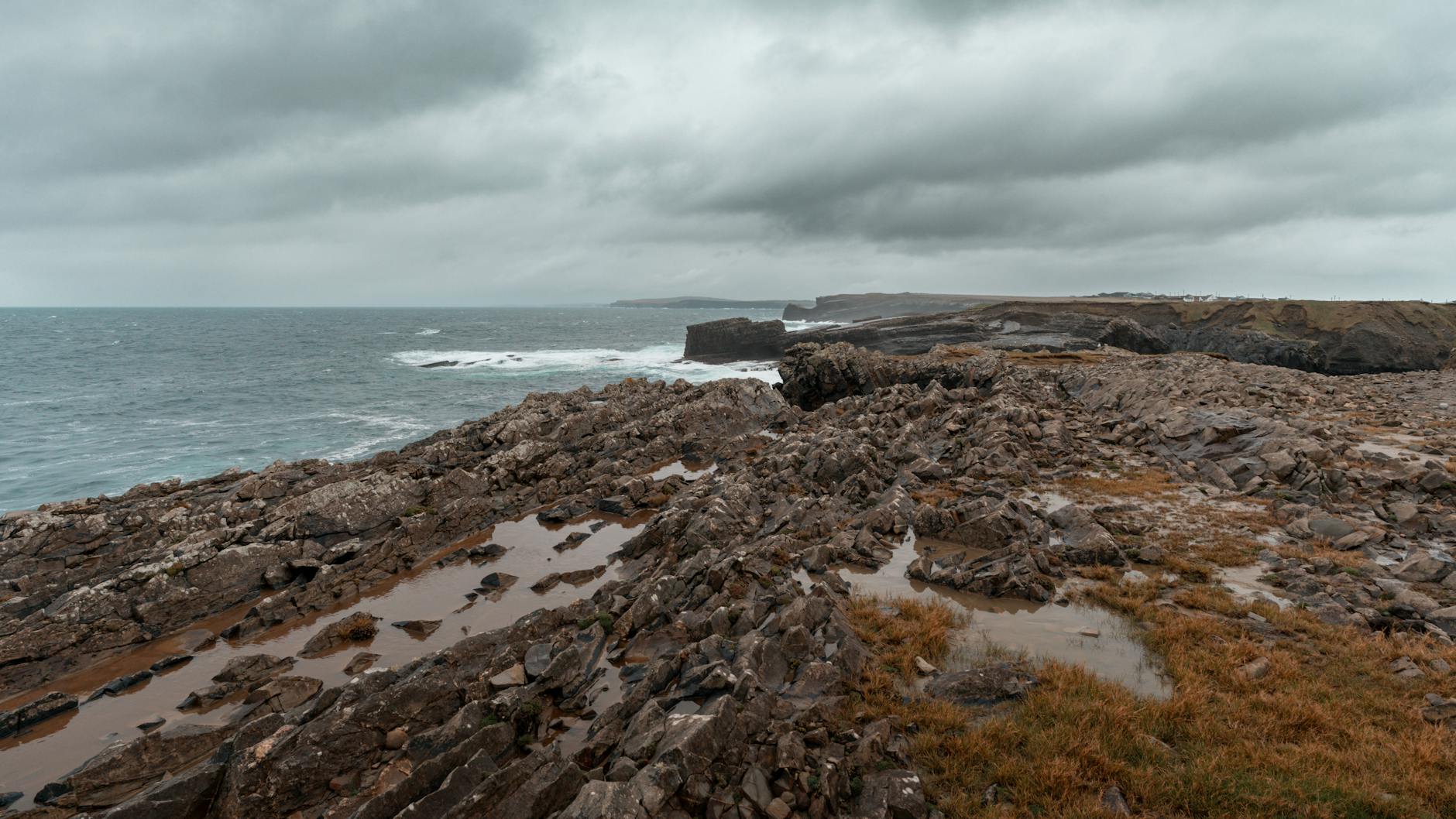
- Average wind speed: 16-18 km/h (Atlantic-facing exposure)
- Windiest months: October-March
- Calmest months: June-August
- Storm warnings: 5-10 named storms per year reach Dublin Bay; Met Eireann issues colour-coded warnings (Yellow, Orange, Red)
- Impact on transport: Strong storms occasionally close the M50 ring road or interrupt ferry services; flights affected at Atlantic-coast airports more than Dublin Airport
- Impact on activities: Strong winds close the Cliffs of Moher and Carrick-a-Rede Rope Bridge; the Howth Cliff Walk can be hazardous in 70+ km/h winds
The wind is the reason umbrellas often fail in Dublin and why hooded waterproof jackets are the local default. A flimsy umbrella in 25 km/h wind blows inside out.
Dublin Sun and Daylight
- Annual sunshine hours: 1,400 (3.8 hours/day average; less than Mediterranean Europe but more than visitors expect)
- Sunniest months: May-July (5-6 hours/day average)
- Cloudiest months: November-January (1.5-2 hours/day)
- UV index: Up to 7 on clear summer days; sunscreen is genuinely necessary
- Sunburn risk: Pale skin can burn in 25 minutes on clear July days
- Sunglasses: Useful 4-6 months of the year; the Liffey reflects light
Dublin Daylight Hours by Month
- January: 8 hours daylight (sunrise 8.30am, sunset 4.30pm)
- March: 12 hours (sunrise 7am, sunset 7pm)
- June: 17 hours (sunrise 5am, sunset 10pm)
- September: 12 hours (sunrise 7am, sunset 7pm)
- December: 7.5 hours (sunrise 8.30am, sunset 4.30pm)
The summer-winter daylight difference (8 vs 17 hours) is significant. Plan accordingly: summer evenings extend tourist time enormously; winter days require earlier museum and attraction visits before dark.

What to Pack for Dublin: All Seasons
The Essentials (Any Season)
- Hooded waterproof jacket: The single most important item. Don’t bring just a wind-breaker; you need waterproof.
- Sturdy walking shoes or low boots: Waterproof preferred. Trinity cobbles, Temple Bar setts, Phoenix Park gravel.
- Layers: Long-sleeve base layer, mid-weight sweater, light jacket. The layered approach handles temperature swings.
- Compact umbrella: As backup to the hooded jacket. Skip large umbrellas (Dublin wind blows them inside out).
- Plug adapter: Ireland uses UK-style 3-pin G plugs (same as UK).
- Portable phone charger: Day-trip days drain batteries.
- Small day pack: 10-20 litre for water, snacks, layers, waterproof.
Winter Add-Ons (December-February)
- Thermal base layer (long-sleeve top, leggings)
- Wool sweater or fleece
- Warm hat
- Gloves
- Scarf
- Thick socks
- Waterproof boots
Spring/Autumn Add-Ons (March-May, September-November)
- Wool sweater
- Light hat (March; mid-October onwards)
- Light gloves (March; mid-October onwards)
- Sunglasses (April-May; September-October)
Summer Add-Ons (June-August)
- T-shirts
- Light cardigan or sweater for evenings (13-16℃ cool)
- Sunglasses and sunscreen
- Light long pants or jeans (shorts only for very warm days — 25℃+)
- Light hat for sun protection
Smart-Casual Outfit (Any Season)
One smart-casual outfit for the Michelin-starred dinner, hotel afternoon tea or the Trinity Summer Series concert. Jeans plus collared shirt or sweater works; smart trainers acceptable; black-tie rarely required outside formal events.

The Waterproof Jacket: Dublin’s Most-Important Item
If you bring one weather item to Dublin, make it a properly-waterproof jacket with a hood. The hood matters because Dublin wind makes umbrellas only partially useful. Specific features that matter:
- Genuinely waterproof (not just water-resistant). Look for “waterproof” on the label, not just “showerproof.”
- Attached hood that fits snugly: A drawstring hood works in wind.
- Length: Hip-length or longer; covers lower back when you sit.
- Pockets: Front pockets for hands; ideally an inner pocket for valuables.
- Lightweight enough to fold and carry when not in use. Dublin weather can shift; you may want the jacket off for 4 hours then on within 10 minutes.
If buying once you arrive, the Dublin TK Maxx and Penneys (Henry Street) sell reasonable rain jackets €40-80; Brown Thomas (Grafton Street) sells premium options €150-300.

Reading Dublin Weather Forecasts
Met Eireann (met.ie)
The Irish meteorological authority. Use the Met Eireann app (free on iOS/Android) or met.ie website for the most-accurate Dublin forecasts. Updates 4 times daily; 5-day forecast typically reliable to within 70%.
BBC Weather (Ireland Section)
BBC Weather Ireland covers Dublin with reliable forecasts. Often more cautious in rain predictions than Met Eireann.
Apple Weather and Google Weather
Both pull from Met Eireann ultimately. Convenient for at-a-glance checks. Less detailed than the dedicated Met Eireann app.
Storm Warnings
Met Eireann issues colour-coded warnings:
- Yellow: Be aware; check conditions before planned activities.
- Orange: Be prepared; some outdoor activities may be cancelled.
- Red: Take action; significant disruption likely; major outdoor activities cancelled.
Red warnings are rare (1-2 per year in Dublin); Orange warnings happen 5-10 times annually, typically October-March. Yellow warnings are common and usually mean “light disruption.”
Weather Impact on Dublin Attractions
Indoor Attractions (Weather-Independent)
- Trinity College Old Library and Long Room
- Guinness Storehouse
- Kilmainham Gaol
- EPIC Irish Emigration Museum
- National Museum of Ireland (Archaeology, Decorative Arts and History)
- National Gallery of Ireland
- Chester Beatty Library (closed until January 2027)
- Hugh Lane Gallery
- Dublin Castle State Apartments (closed until January 2027)
- Dublin Writers Museum
- Museum of Literature Ireland (MoLI)
Outdoor Attractions (Weather-Dependent)
- Phoenix Park (open in all weather; less appealing in rain)
- Howth Cliff Walk (postpone in heavy rain or wind)
- Bray to Greystones Cliff Walk (closed until further notice after landslides; the DART still serves both ends)
- St Stephen’s Green (still pleasant in light rain)
- Wicklow Mountains day trip (poor weather can obscure views)
- Cliffs of Moher (closes in severe weather)
- Trinity Front Square (photographs better in dry weather)
Weather and Dublin Day Trips
- Howth Cliff Walk: Cancel in heavy rain or 60+ km/h wind. Light rain manageable with waterproofs.
- Wicklow Mountains day tour: Operates rain or shine; views can be obscured by cloud.
- Cliffs of Moher: Closes in severe weather; check Met Eireann before traveling.
- Glendalough: Walkable in most weather; Spinc Loop wooden boardwalks slippery in rain.
- Powerscourt: Mostly indoor (the House); gardens still pleasant in light rain.
- Newgrange: Mostly indoor; outdoor walking minimal.
- Belfast Day Trip: Train journey unaffected by weather; Titanic Belfast indoor.
Seasonal Weather Realities
Winter Reality (December-February)
Cool (4-9℃) but rarely cold by Northern European standards. Rain on 60-65% of days. Short daylight (sunrise 8.30am, sunset 4.30pm). Christmas atmosphere mid-November to early January. Day trips weather-dependent. Indoor focus works well; pubs and museums at their best.
Spring Reality (March-May)
Cool to mild (5-16℃). Daffodils March-April; bluebells April-May. Lengthening daylight. Variable weather; pack for everything. May is the year’s sweet spot.
Summer Reality (June-August)
Warm (14-21℃) but rarely hot. Long daylight (10pm sunsets in June). Rain on 40-45% of days; mostly light. UV strong on clear days. Festivals every weekend.
Autumn Reality (September-November)
Mild to cool (6-18℃ depending on month). Beautiful autumn colour mid-October. Storms increase from October onwards. September is the shoulder-season sweet spot.
Dublin Weather Myths
“It rains all the time in Dublin”
False. Rain on 60-65% of days but mostly light and brief. Annual rainfall less than Amsterdam or Brussels.
“Dublin is always cold”
False. Cool yes, but milder than continental winters. Summer reaches 20-22℃ regularly.
“You need a heavy coat all year”
False. Summer needs only T-shirt plus light cardigan plus waterproof. Winter is layered but rarely below freezing.
“Just bring an umbrella; you’ll be fine”
False. Dublin wind blows umbrellas inside out; hooded waterproof jacket is the local default.
“Dublin gets a lot of snow”
False. 2-3 snow days per year on average; rarely accumulates. The Wicklow Mountains see more snow visible from Dublin.
Dublin Weather Apps
- Met Eireann (free, iOS/Android): The Irish authority. Most-accurate Dublin forecasts; storm warnings; coastal weather.
- BBC Weather: Reliable Ireland coverage; sometimes more cautious than Met Eireann.
- Apple Weather / Google Weather: Convenient quick checks; pull data from Met Eireann.
- Windy.com: Detailed wind forecasts; useful if you plan to cycle or walk the cliffs.
- Carrot Weather: Premium app; pulls Met Eireann data with humor.
Dublin Weather Records
- Highest recorded temperature: 33.3℃ (July 2022) — record summer heatwave
- Lowest recorded temperature: -13.7℃ (January 1982) — rare deep cold snap
- Heaviest rainfall in 24 hours: 138mm (August 1986) — localized severe flooding
- Strongest wind gust: 175 km/h (October 2017, Storm Ophelia)
- Longest sunny spell: Summer 1995 (the famous Irish “long summer”)
- Snowiest day: 31cm in 24 hours (February 2009, “The Big Freeze”) — rare event
These extremes are rare. Most Dublin weather sits well within mild ranges; the records are mentioned for context but rarely affect typical visits.
Common Dublin Weather Mistakes
- Not packing a waterproof jacket: The single biggest packing mistake.
- Bringing only an umbrella: Wind makes umbrellas unreliable; hood-based protection is local standard.
- Packing too much heavy gear: Dublin is rarely below freezing; layers beat heavy coats.
- Wearing dress shoes for cobbles: Trinity, Temple Bar and Long Hall have uneven cobbles; sturdy walking shoes minimum.
- Forgetting sunscreen for clear summer days: UV reaches 7 on Dublin clear days; pale skin burns in 25 minutes.
- Underestimating evening cool: 13-16℃ July evenings; carry a light layer.
- Assuming rain cancels the day: Most Dublin attractions are indoor; light rain is manageable for walks.
- Not checking weather warnings for day trips: Cliffs of Moher closes in severe weather; check Met Eireann before traveling.
Related Reading
For more Dublin trip planning, see Best Time to Visit Dublin, First Time in Dublin, Rainy Day Dublin, Walking in Dublin, Howth Cliff Walk, and Cliffs of Moher from Dublin.
Dublin Weather Trends and Climate Change
Dublin’s weather has shifted noticeably over the last 30 years. Average annual temperature: Up approximately 1℃ since 1990, in line with global warming trends. Heatwaves: More frequent. The July 2022 record (33.3℃) was the first time Dublin exceeded 33℃; previous record was set in 1887. Rainfall: Approximately stable in annual total but distribution has shifted to fewer, heavier events. Storm frequency: Increased, particularly Atlantic-facing winter storms. Snow: Decreased significantly; the rare big snow event (2009 “Big Freeze”) is now less likely in any given year.
For visitors, the practical implications: pack for variable conditions; clear summer days now reach 25-28℃ more often (rather than the long-term average max of 21℃); winter snow is increasingly rare. Met Eireann’s 5-day forecasts have improved accuracy with better modelling. The historical averages cited in older guidebooks slightly underrepresent modern Dublin highs.
Dublin Microclimates
Dublin has distinct micro-climates within a small geographic area. Dublin city centre sits in a sheltered valley; consistently 1-2℃ warmer than coastal areas and the suburbs. Coastal areas (Howth, Sandymount, Dun Laoghaire): 1-3℃ cooler than the city, persistent breeze, occasional sea fog. Wicklow Mountains (Glendalough, Powerscourt): 5-7℃ cooler than Dublin city, more rainfall, more wind, frequent fog at higher elevations. Phoenix Park: Slightly warmer than the surrounding city due to its scale and shelter.
When packing for Dublin plus day trips, build for the coldest place you’ll visit. A summer Dublin city day at 20℃ could be a 13℃ afternoon at the Cliffs of Moher; a 9℃ central Dublin morning could be 4℃ in the Wicklow Mountains. Carry an extra layer in your day pack on Wicklow or coastal days even when Dublin city forecast feels mild.
Rainy Day Dublin Strategy
If the forecast turns wet for most of your trip, Dublin still delivers excellent indoor tourism. The classic rainy-day Dublin schedule: Morning: Trinity College Old Library and Long Room (90 minutes); Late morning: walk through Temple Bar with breaks under arcades and into shops; Lunch: long pub lunch at The Stag’s Head or The Long Hall; Afternoon: National Gallery, Chester Beatty Library (closed until January 2027) or the National Museum of Ireland (all free, all indoor); Coffee: Bewley’s Café for upstairs window views; Evening: traditional music session in a warm pub (The Brazen Head, O’Donoghue’s, The Cobblestone). A rainy Dublin day can be one of the most-atmospheric versions of the city.
For visitors with longer rainy stretches, the day-trip alternative: Belfast Day Trip by train (the journey is entirely indoor, Titanic Belfast is 2-3 hours of indoor museum, Cathedral Quarter for late lunch). Kilkenny Day Trip by train (medieval city; the cathedral, Smithwick’s Experience and the castle interior all indoor; Campagne restaurant for lunch). Both alternatives use the rainy day productively without forcing outdoor activities in unpleasant conditions.
Dublin Weather vs Other European Cities
Comparative climate data for visitors choosing between European destinations. Dublin: 758mm annual rain, 14-21℃ July, 4-9℃ January, 1,400 sun hours/year. London: 754mm rain, 13-22℃ July, 2-8℃ January, 1,500 sun hours/year. Edinburgh: 700mm rain, 11-19℃ July, 1-7℃ January, 1,400 sun hours/year. Amsterdam: 787mm rain, 13-22℃ July, 0-6℃ January, 1,650 sun hours/year. Paris: 637mm rain, 15-25℃ July, 2-7℃ January, 1,660 sun hours/year. Berlin: 570mm rain, 14-25℃ July, -2 to 4℃ January, 1,640 sun hours/year.
The honest picture: Dublin is milder in winter than most European capitals; cooler in summer than continental Europe; rains slightly less than Amsterdam or Brussels; sees less sun than Mediterranean Europe. Compared to its closest competitor for Anglophone visitors (London), Dublin has near-identical rainfall, slightly cooler summers, slightly milder winters, and similar sun hours. The two cities’ weather is more alike than different.
Quick Packing Checklists by Trip Length
Weekend trip (3 days): 1 hooded waterproof jacket, 2-3 long-sleeve tops, 1 sweater, 2 pairs trousers/jeans, 1 smart-casual outfit, sturdy walking shoes, 1 pair smart shoes, 4 pairs socks/underwear, plug adapter, phone charger, portable charger, basic toiletries, prescription medications, small day pack. Add hat/gloves October-April; sunglasses April-October. Total: one cabin-bag-sized suitcase.
Week-long trip: Add 3-4 additional long-sleeve tops, 1 additional sweater, 2 more pairs of trousers, swimwear (for Forty Foot or hotel pool), additional smart-casual outfit, additional socks/underwear. The week-long pack still fits a medium-checked bag; Dublin laundromats (multiple central locations) handle longer trips for €10-15 per load.
2-week Ireland combined trip: Add hiking boots (Cliffs of Moher, Wicklow), warmer mid-layer (fleece or wool sweater) regardless of season, swim shoes for rocky coast entries, headlamp for any low-light photography or evening walks. Pack one week of clothes plus laundry mid-trip rather than two weeks of clothes; Irish laundromats are reliable.
Dublin Weather with Children
Children need a slightly different weather kit. Waterproof jacket and trousers: Kids’ waterproof trousers (overtrousers) make outdoor activities possible in light rain that adults can shrug off. Decathlon and Penneys (Henry Street) sell affordable kids’ rain gear. Waterproof boots: Wellington boots for younger children; sturdy waterproof trainers for older kids. Extra socks: Kids’ feet get wet faster; bring two spare pairs per child per day. Hat that covers ears: October-April; the wind chills small ears faster than adults.
For Dublin attractions with children in mixed weather: EPIC Irish Emigration Museum, Dublin Zoo in Phoenix Park (some sheltered indoor exhibits), and the National Aquarium SEA LIFE Bray all work as wet-weather options. The Howth and Wicklow day trips are better saved for clear-forecast days; children find rainy cliff walks miserable in a way adults can rationalise.
Dublin Weather: FAQ
How often does it rain in Dublin?
Rain falls on 60-65% of days year-round — more in winter, slightly less in summer. Most rain is light and brief (15-45 minutes). Annual rainfall (758mm) is less than London, Amsterdam or Brussels.
Does Dublin get snow?
Rarely — 2-3 snow days per year on average; usually doesn’t accumulate. Wicklow Mountains visible from Dublin see more snow than the city itself. Christmas snow is unusual; January is the most likely month.
What is the warmest month in Dublin?
July (14-21℃ daytime average). August is similar. Spring and autumn shoulder seasons are cooler but more variable. Dublin rarely exceeds 25℃ (heatwave events).
What should I wear in Dublin?
Year-round essentials: hooded waterproof jacket, sturdy walking shoes, layered clothing. Add thermals and hat/gloves in winter; add sunglasses and sunscreen for summer clear days. One smart-casual outfit for evening venues.
What is the best weather app for Dublin?
Met Eireann (free on iOS/Android) is the Irish weather authority. Apple Weather and Google Weather are convenient quick-check options. BBC Weather Ireland provides reliable secondary coverage.
Is Dublin windy?
Yes — average wind speed 16-18 km/h; Atlantic-facing exposure means persistent moderate wind. Storms are 5-10 per year; severe storms 1-2 per year. Wind makes umbrellas unreliable; use hooded waterproof jackets instead.
How many sunny days does Dublin have?
Approximately 1,400 hours of sunshine per year (about 3.8 hours/day average). Summer months (May-July) average 5-6 hours/day. Winter months (November-January) average 1.5-2 hours/day.
Should I bring an umbrella to Dublin?
A compact umbrella as backup, yes. As your primary rain protection, no — Dublin wind blows umbrellas inside out. The local default is a hooded waterproof jacket which handles both rain and wind effectively.
Keep Reading
- Dublin in March — 10.2 °C, 55 mm of rain and the biggest daylight swing of the Dublin year.
- Dublin in December — 8.5 °C, thirteen wet days and the shortest daylight of the year, with the dates to plan around.
- Dublin in November — 10.4 °C, 75 mm of rain over twelve days, and how to build a trip around seven hours of light.
- Dublin in October: Weather, Halloween, Marathon & What to Do
- Dublin SIM Card Tourists: Phone, WiFi & Connectivity Guide
- Dublin Travel Insurance: Do You Need It? Complete Guide
- Dublin Visa Requirements: Complete Entry Guide
Lean na Comharthaí — Keep following the signs