Dublin Airport Guide: Terminal 1 vs 2, US Preclearance, Lounges & Parking
Aerfort Bhaile Átha Cliath

Ar an gComhartha Seo — On this sign
- Quick Answer: The Dublin Airport Guide in Two Minutes
- Terminal 1 vs Terminal 2: Which One Do You Need?
- US Preclearance at Dublin Airport: How It Actually Works
- Arriving at Dublin Airport
- Getting from Dublin Airport into the City
- Dublin Airport Lounges: What They Cost and Whether to Bother
- Dublin Airport Parking: The Numbers
- Car Hire at Dublin Airport
- Eating, Shopping and Killing Time
- Hotels at Dublin Airport
- Layovers, Long Waits and Delays
- Families, Accessibility and Practicalities
- Gotchas
- Dublin Airport Guide FAQ
- Keep Planning
- Keep Reading
Dublin Airport is a strange airport to explain, because it does two completely different jobs. For most of the eight-odd million people who pass through it each year it is an ordinary, efficient, slightly cramped European hub: two terminals, a lot of Ryanair, a bus into town every ten minutes. For anyone flying to the United States it is something almost no other European airport is — a place where you clear American immigration and customs before you board, walk off the plane at JFK or O’Hare as a domestic arrival, and skip the queue that everyone else is standing in. Getting that second part right changes how early you need to arrive, which terminal you use, and what you can carry.
This Dublin Airport guide covers the whole thing properly: which airlines sit in Terminal 1 and which in Terminal 2, exactly how US Preclearance works and what it does to your timings, what the lounges cost and whether they are worth it, what parking actually costs if you turn up without booking, and how to get into the city when you land. It is written for people flying out of Dublin and for people flying in, and it assumes you would rather have the numbers than the reassurance.
Quick Answer: The Dublin Airport Guide in Two Minutes
Dublin Airport (DUB) has two terminals side by side, about ten kilometres north of the city centre. Terminal 1 handles Ryanair and most European short-haul; Terminal 2 handles Aer Lingus, the long-haul carriers and every US-bound flight, because US Preclearance lives there. Your terminal is printed on your boarding pass and it is the one thing worth checking twice, because there is no airside connection between the two — a terminal change means leaving security and clearing it again.
If you are flying to the United States, treat Dublin as two airports in one. You check in, clear Dublin security, then clear US immigration and customs inside Terminal 2 before boarding, at a time slot displayed on the flight information screens. The airport itself warns that Terminal 2 is at its busiest between 05:00 and 12:00, which is exactly when the transatlantic bank departs. Give yourself more time than you would at any other European airport, and do not plan on a leisurely duty-free browse afterwards.
| Code | DUB |
|---|---|
| Terminals | Two, side by side, landside walkway only |
| Terminal 1 | Ryanair and most European short-haul |
| Terminal 2 | Aer Lingus, long-haul, all US-bound flights |
| Distance to city centre | About 10 km north |
| Bus to the city | Dublin Express 782/784, Aircoach or Dublin Bus 16/41 |
| US Preclearance | Ground floor of Terminal 2, beyond security |
| Busiest window | 05:00–12:00 in Terminal 2 |
| Lounges | Phoenix (T1) from €35; 51st & Green (T2) from €42 |
| Turn-up parking | €4 first hour, €6 per hour after, €50 daily cap |
Terminal 1 vs Terminal 2: Which One Do You Need?
The split is not about short-haul versus long-haul, whatever people tell you. It is closer to a split between Ryanair and everyone else, with the US flights pulling Terminal 2 into a shape of its own.
| Terminal | Who flies from it | What it feels like |
|---|---|---|
| Terminal 1 | Ryanair, and most European short-haul carriers | Older, busier, more functional. Long piers, heavy morning peaks. |
| Terminal 2 | Aer Lingus, American Airlines, Delta, United, Emirates and other long-haul carriers | Newer, brighter, higher ceilings. Home of US Preclearance. |
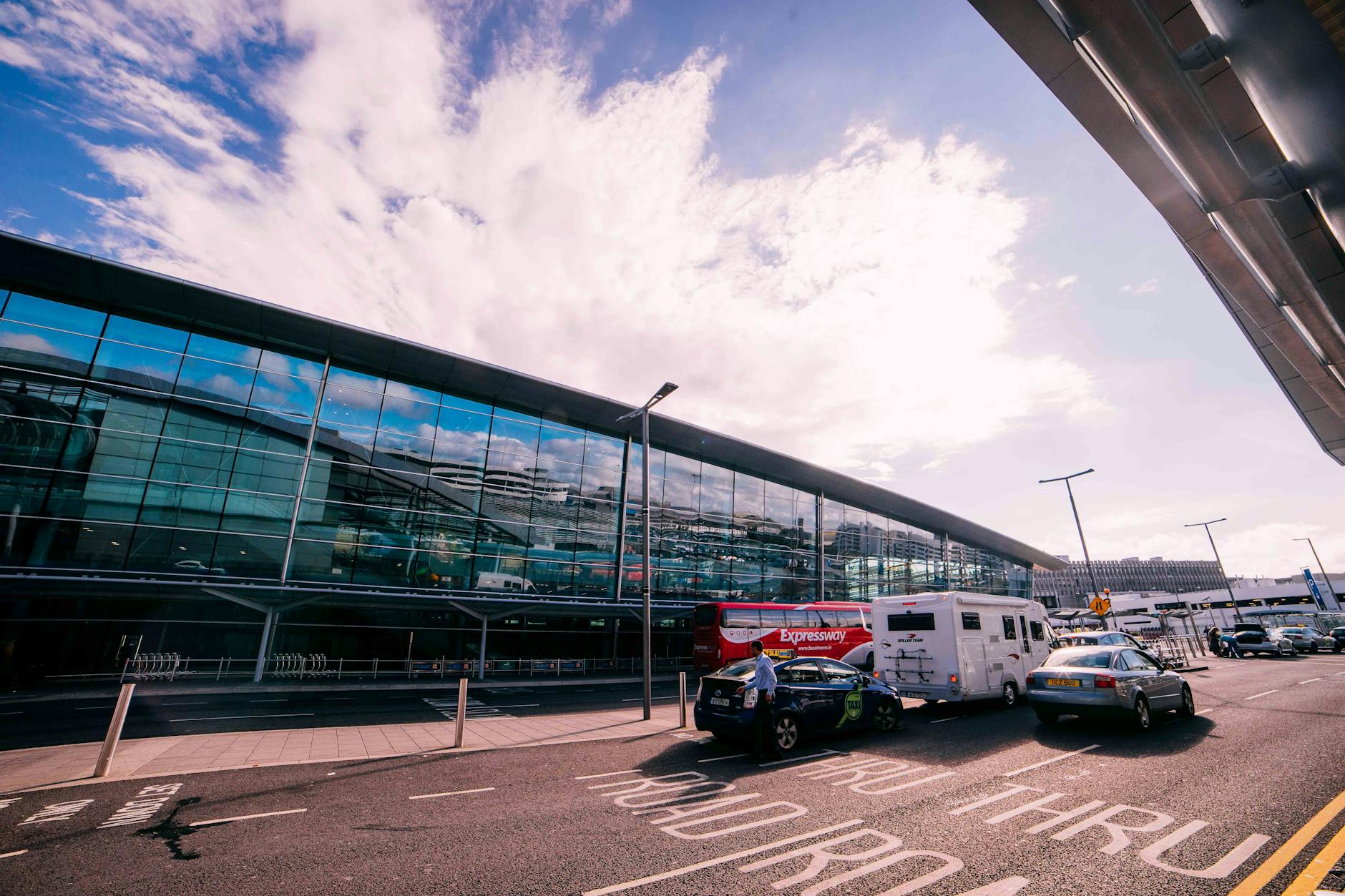
Airlines do move between terminals, so the boarding pass is the authority and not this table, not this Dublin Airport guide, not a memory of your last trip, and not the taxi driver. The terminals sit next to each other and are linked landside by a signposted walk of a few minutes; allow ten with bags and a child. What matters far more is that there is no airside connection. If you are connecting between a Terminal 1 arrival and a Terminal 2 departure, you exit, walk across, check in again and clear security again — which is why a self-connected itinerary through Dublin needs a much bigger gap than the schedule suggests. Our Dublin layover guide covers how much time is genuinely enough.
US Preclearance at Dublin Airport: How It Actually Works
This is the part of any Dublin Airport guide that earns its keep, because preclearance is genuinely unusual and it catches out first-timers every day. Dublin is one of a small handful of airports worldwide where US Customs and Border Protection operates on foreign soil. You are inspected and admitted to the United States in Dublin. When you land in the US you walk off as a domestic passenger — no immigration hall, no customs queue, straight to baggage reclaim or a connecting gate.
The process, step by step
- Check in with your airline as normal in Terminal 2. Bags are tagged through.
- Clear Dublin Airport security — the standard screening everyone goes through.
- Wait for your time slot. This is the bit nobody expects. Preclearance is called by flight, and your slot appears on the flight information screens airside. You do not simply join a queue when you feel like it.
- Go to the Preclearance area when advised. The facility is on the ground floor of Terminal 2, beyond security. You will pass through US immigration and then a US customs check with your hand luggage.
- Board from the precleared gates. Once through, you are in a sealed area. Going back out to the main terminal is not a normal option.
How early should you arrive?
Dublin Airport does not publish an official arrival-time recommendation specifically for preclearance, and you should be suspicious of any blog that invents one. What the airport does say is that Terminal 2 is at its busiest from 05:00 to 12:00 and to allow plenty of time to check in, clear security and complete preclearance. In practice that means treating a US departure as a three-stage process rather than the usual two, and giving yourself materially longer than you would for a flight to Málaga. Check your airline’s own recommended arrival time for your specific flight and take the longer of the two figures. Not every US-bound departure from Dublin is precleared, either — confirm with the airline rather than assuming.
What you can and cannot bring through
US rules apply from the moment you enter the facility, not from the moment you land. Food must be carried in your hand luggage, declared, and presented for inspection — the friendly-looking sandwich in your bag is a customs matter here, not a snack. The standard US personal exemptions apply: one litre of alcohol, 200 cigarettes, and up to $800 worth of goods per person. Buying two litres of whiskey in Dublin duty free on the way to Boston is a decision, not an accident.
The practical consequence for shopping: do your duty free before preclearance, keep it within the allowance, and be aware that liquids bought landside will not survive Dublin security. If you have a US passport or visa question rather than a customs one, our Dublin visa requirements guide covers entry to Ireland, which is a separate matter entirely.
Arriving at Dublin Airport
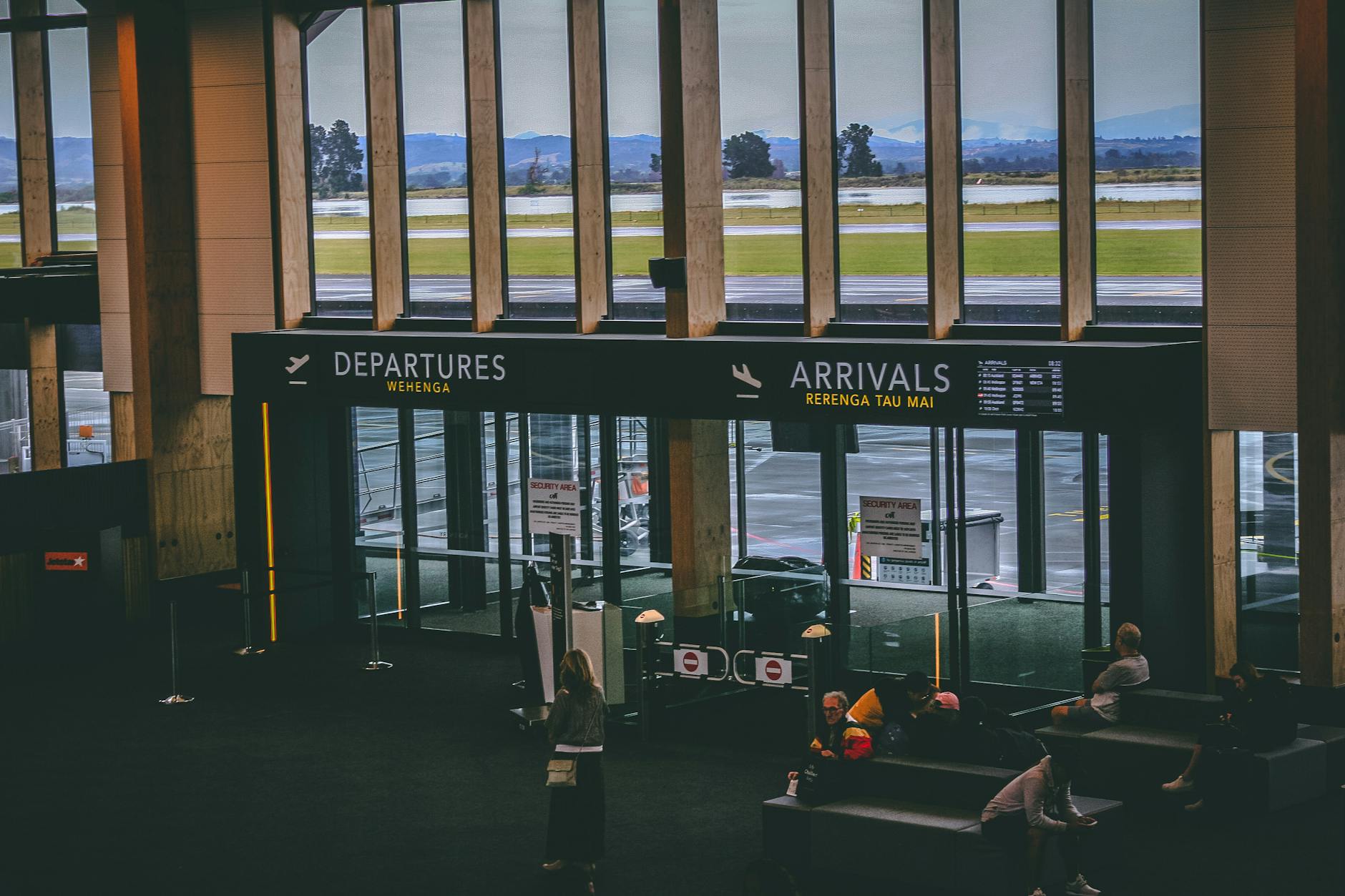
Departures take up most of any Dublin Airport guide, but arrivals are refreshingly simple. Ireland is not in the Schengen Area, so everyone clears Irish immigration on arrival regardless of where they have flown from, and EU and non-EU passengers use separate lanes. Queues at the non-EU desks build in the same 05:00–12:00 window that clogs departures, and again in the late afternoon transatlantic bank. Baggage reclaim is straightforward, customs is usually a walk-through, and both terminals put you out into a landside hall with car hire desks, buses and taxis clearly signed.
Two arrival-day details worth knowing. There is no train station at Dublin Airport — the DART does not come here and neither does the Luas, so every route into the city is by road. And Irish immigration will sometimes ask where you are staying, so have the address written down rather than buried in an email you cannot load without wifi. If it is your first trip, things to know before visiting Dublin and first time in Dublin cover the rest of the landing routine.
Getting from Dublin Airport into the City
About ten kilometres, no rail link, and four realistic options. The buses are frequent enough that they are the default for almost everybody, and the airport is the one place in Dublin where a taxi rank is genuinely well managed.
| Option | Roughly how long | Best for |
|---|---|---|
| Dublin Express 782/784 | Depends on traffic | City-centre hotels |
| Aircoach | 30–50 min | Southside and suburban stops, runs through the night |
| Local Dublin Bus routes | 45–70 min | The cheapest option if your stop is on the route |
| Taxi | 25–40 min | Late arrivals, luggage, families, three or more people |
Get a Leap Card if you are staying more than a day — it works on Dublin Bus (including the 16 and 41 airport routes), the Luas and the DART, and it is cheaper than paying per journey. Check the current fare before you travel rather than trusting a figure from an old blog post; airport fares in particular get revised. For the full breakdown of every route, times and where each one stops, see our dedicated Dublin Airport to city centre guide, and Dublin taxis for how the meter works and what to expect to pay.
Dublin Airport Lounges: What They Cost and Whether to Bother
This is the question a Dublin Airport guide gets asked more than any other, and the answer is not the same in both terminals. Dublin has a small lounge scene and one genuinely useful proposition. Terminal 1 got a new Phoenix Lounge in April 2026, roughly doubling the seating of the room it replaced and adding showers and a business zone. Terminal 2 has 51st & Green, which sits before US Preclearance, and two Aer Lingus lounges that you cannot buy your way into.
| Lounge | Terminal | Hours | Price |
|---|---|---|---|
| Phoenix Lounge | T1 | 04:00–21:00 daily, two-hour maximum | €40 walk-up, €35 booked online |
| 51st & Green | T2 | 07:15–17:00 daily, two-hour maximum | €50 walk-up, €42 booked online |
| Aer Lingus lounges | T2 (departures and arrivals) | Airline hours | No paid access |
Complimentary access to 51st & Green comes with business class and eligible loyalty tiers on Aer Lingus, American, Delta and United. Book online rather than walking up and you save €5 in Terminal 1 and €8 in Terminal 2 — small money, but it is the same room.
The honest verdict: a lounge is poor value for a 45-minute wait before a short-haul hop, and good value on exactly two occasions. One is an early Terminal 1 departure, when the Phoenix Lounge opens at 04:00 and the rest of the terminal is a scrum of people who also got up at three. The other is a transatlantic departure where you want to eat properly before preclearance, because your options afterwards are limited and you are about to spend seven hours in a seat. Note the two-hour maximum stay in both lounges — they are not a place to spend a long delay.

Dublin Airport Parking: The Numbers
Parking is where turning up unprepared costs the most money of anything in this Dublin Airport guide. The official car parks charge a flat turn-up rate of €4.00 for the first hour, €6.00 for each additional hour or part of one, and a maximum of €50.00 per day. Express Red, the closest option to the terminals, is €25.00 per day. Pre-booking is materially cheaper than any of that, and the gap widens the longer you stay.
| Situation | What it costs |
|---|---|
| First hour, no booking | €4.00 |
| Each additional hour, no booking | €6.00 |
| Daily maximum, no booking | €50.00 |
| Express Red, per day | €25.00 |
| Any longer stay | Book ahead — the turn-up rate is punitive |
The practical rules are short. Book before you travel, always. Use the short-stay car parks only for genuine short stays, because the hourly rate compounds fast — four hours of waiting for a delayed arrival is €22 before you have done anything. Off-site park-and-ride operators undercut the official long-stay car parks for multi-week trips, at the cost of a shuttle at each end. And if you are only dropping someone off, use the designated set-down area and read the signage, because the free window is short.

Car Hire at Dublin Airport
The car rental village is a short shuttle from both terminals and holds all the major operators, and it is the part of this Dublin Airport guide where the money you lose is usually lost at the desk rather than online. Two things trip up visitors more than anything else. The first is insurance: Irish car hire excess and collision damage waiver terms are stricter than in much of Europe, many credit-card policies specifically exclude the Republic of Ireland, and the desk will happily sell you cover you may or may not need. Read your own policy before you arrive rather than deciding at the counter at seven in the morning.
The second is the manual gearbox. Automatics are a minority of the Irish fleet, they cost more, and they sell out — book one specifically if you need it. Beyond that, driving out of the airport is easy: the M50 orbital is signposted from the exit and takes you to almost anywhere in the country without going near the city centre. Our renting a car in Dublin guide covers the tolls, the insurance traps and whether you need a car at all, and for most city-only trips the answer is no. If you are heading straight out to the countryside, day trips from Dublin and the Dublin and Ireland itinerary are the better starting points.

Eating, Shopping and Killing Time
Both terminals have the usual airport spread — a few sit-down restaurants, a lot of grab-and-go, the standard duty-free run. Terminal 2 is the better of the two for a proper meal, Terminal 1 the better for speed. Neither is a destination, and prices are airport prices; if you want a decent breakfast before an early flight you will do better in the city and travel out fed.
Three practical notes. Free wifi runs throughout both terminals. Power sockets are plentiful in the newer T2 areas and patchy in the older T1 piers, so charge before you go through. And the duty-free liquid rules are the ones that catch people: buy at the airport, keep the sealed bag and the receipt, and if you have a connection in another country check whether that country will let the bag through. If you are stocking up on presents, Irish souvenirs covers what is worth buying and what to skip, and almost all of it is cheaper in town than airside — see Dublin shopping and markets.
Hotels at Dublin Airport
An airport hotel makes sense in exactly three situations: a departure before about 07:00, an arrival after about 23:00, and a long park-and-fly trip where the hotel’s parking package is cheaper than the car park alone. Otherwise you are paying to sleep ten kilometres from a good city for no reason.
The airport hotels run free shuttle buses to both terminals around the clock, which is the whole point of staying at one; confirm the frequency at your specific hotel, because “24 hours” can mean hourly at four in the morning. Several bundle long-stay parking into the room rate, which is often the cheapest way to leave a car for a fortnight. Our hotels near Dublin Airport guide compares them, and if the flight is not that early, where to stay in Dublin and the best area to stay will serve you better.
Layovers, Long Waits and Delays
Every Dublin Airport guide eventually has to answer the layover question, and Dublin is a good layover airport for one reason and a poor one for another. The good reason: the city is close, the bus is frequent, and a genuine six-hour gap is enough for a fast look at the centre. The poor reason: the lack of an airside connection between terminals means a self-connection is slower than the map suggests, and left-luggage options at the airport are limited compared with a big hub.
If you have the time, our Dublin layover guide sets out how long is long enough and what fits into each window, and one day in Dublin works as an aggressive version of the same plan. If the delay is not your choice, EU passenger rights apply to flights departing Dublin and to EU carriers arriving into it, which is worth knowing before you accept a voucher — and worth checking against your travel insurance. Onward, Dublin is also the launch point for a great deal of the island: the train north for a Belfast day trip, or the long coach west towards Galway.
Families, Accessibility and Practicalities
The last practical section of this Dublin Airport guide is the one most easily skipped and most often needed. Dublin Airport handles families well by European standards — buggies go to the aircraft door, family lanes open at security during peak periods, and both terminals have changing facilities airside and landside. The one thing to plan around is the walk: the Terminal 1 piers in particular are long, and the gate you are given at 05:30 may be a genuine fifteen-minute march away. Our Dublin with a baby or toddler guide covers the rest of the journey, and Dublin for families covers what to do when you land.
Reduced-mobility assistance must be requested through your airline in advance, ideally at least 48 hours before departure, and it is provided free. Assistance points are signposted in both terminals. Two more small practicalities that save real time: pick up a local SIM card if you are outside the EU roaming zone, and get cash out in the city rather than at the airport, where the exchange rates are what airport exchange rates always are. If you are counting every euro, cheap transport in Dublin and Dublin on a budget will save you more than anything airside.
Gotchas
If you read nothing else in this Dublin Airport guide, read this list. Every item on it is something that costs travellers time or money at DUB most weeks of the year.
- There is no airside link between the terminals. A terminal change means exiting and clearing security again. Do not book a tight self-connection.
- Terminal 2 is worst between 05:00 and 12:00 — the same window as the transatlantic departure bank.
- Preclearance is called by time slot, shown on the airside screens. You do not just join the queue when you arrive.
- Not every US flight from Dublin is precleared. Confirm with your airline instead of assuming.
- Food must be declared at preclearance. US customs rules apply in Dublin, before you board.
- Duty-free over the allowance is a customs problem, not a bargain — one litre of alcohol and $800 of goods per person.
- Turn-up parking is €6 an hour after the first, with a €50 daily cap. Always book ahead.
- Both lounges cap you at two hours. They are not a solution to a long delay.
- There is no train to Dublin Airport. No DART, no Luas. Buses and taxis only.
- Automatic hire cars are scarce in Ireland and sell out. Book one specifically if you need it.
- Airlines change terminals. The boarding pass is the only authority worth trusting.
Dublin Airport Guide FAQ
Which terminal do I need at Dublin Airport?
Terminal 1, in the short version of this Dublin Airport guide, handles Ryanair and most European short-haul carriers. Terminal 2 handles Aer Lingus, the long-haul airlines and every US-bound flight, because US Preclearance is located there. Your terminal is printed on your boarding pass, and since airlines do move between terminals, that is the only source worth trusting.
How early should I arrive for US preclearance?
Dublin Airport does not publish a single official figure, so use your airline’s recommended arrival time for that specific flight and add margin. The airport warns that Terminal 2 is busiest from 05:00 to 12:00, which is when most US departures leave, and you have three stages to clear rather than two: check-in, Dublin security, then US immigration and customs.
Are there lounges at Dublin Airport?
Yes. Terminal 1 has the Phoenix Lounge, open 04:00 to 21:00 daily, at €40 walk-up or €35 booked online. Terminal 2 has 51st & Green, open 07:15 to 17:00, at €50 walk-up or €42 online, with complimentary access for business class and eligible loyalty tiers on Aer Lingus, American, Delta and United. Aer Lingus also runs two Terminal 2 lounges with no paid access. Both paid lounges cap stays at two hours.
How much is parking at Dublin Airport?
Turning up without a booking costs €4.00 for the first hour, €6.00 for each additional hour or part of one, and a maximum of €50.00 per day in the official car parks. Express Red is €25.00 per day. Pre-booking is significantly cheaper, and off-site park-and-ride operators undercut the official long-stay rates for trips of a week or more.
Is there a train from Dublin Airport to the city?
No. Neither the DART nor the Luas serves Dublin Airport, and there is no mainline rail station there. Every route into the city is by road: Dublin Express 782 or 784, Aircoach, local Dublin Bus routes such as the 16 and the 24-hour 41, or a taxi. Dublin Bus accepts the Leap Card, which is the cheapest sensible option for most visitors.
How long does it take to get from Dublin Airport to the city centre?
Roughly 30 to 50 minutes on Aircoach depending on your stop, 45 to 70 on a local bus route, and 25 to 40 by taxi outside rush hour; Dublin Express times depend on the same traffic. The airport is about 10 km north of the centre, and the variable is traffic on the Port Tunnel and the northside approaches rather than the distance.
Can I walk between Terminal 1 and Terminal 2?
Yes, landside — they sit next to each other and the walk is signposted and takes a few minutes, longer with bags. There is no airside connection, though, so if you are connecting between flights in different terminals you must exit, walk across, check in again and clear security again. Build that into your connection time.
What can I take through US preclearance in Dublin?
US rules apply from the moment you enter the facility. Food must be carried in hand luggage, declared and presented for inspection. The personal exemptions are one litre of alcohol, 200 cigarettes and up to $800 of goods per person. Buy duty free before preclearance rather than after, and keep it within the allowance.
Is Dublin Airport good for a layover?
For a genuine six hours or more, yes — the city is about 10 km away with frequent buses, and you can see the centre properly. For a tight connection between terminals, no, because the lack of an airside link means exiting and re-clearing security. Left-luggage options at the airport are also more limited than at a large hub, so check before you plan to store bags.
Keep Planning
- Dublin Airport to the city centre — every route, with times and stops.
- Getting around Dublin — buses, Luas, DART and when to just walk.
- Hotels near Dublin Airport — which ones are worth the early start.
- Dublin layover guide — how much time you actually need.
- The Leap Card explained — the cheapest way to move around the city.
- Dublin visa requirements — entry rules for Ireland, which are separate from US preclearance.
- Things to know before visiting Dublin — the practical briefing before you fly.
Keep Reading
Lean na Comharthaí — Keep following the signs