Irish Slang & Phrases Every Dublin Visitor Should Know
Béarlagair na hÉireann do Chuairteoirí
Ar an gComhartha Seo — On this sign
- Quick Answer: The Words You Actually Need
- Craic: the Word That Carries Everything
- Everyday Irish Slang You Will Hear in Dublin
- Dublin Slang: the City’s Own Vocabulary
- Hiberno-English: Why the Grammar Sounds Different
- Irish Words That Survive in Everyday Speech
- What Not to Say
- Slagging: the Bit Visitors Find Hardest
- Weather Words, Because You Will Need Them
- Gotchas
- FAQ: Irish Slang for Dublin Visitors
- Keep Planning
- Keep Reading
You will understand every word a Dubliner says to you and still occasionally have no idea what they mean. That is the peculiar problem with Ireland for English-speaking visitors: there is no language barrier to warn you one exists. Somebody asks if you are grand, tells you your man over there is a legend, says the whole thing was a bit of a disaster but sure look, and finishes with “I will, yeah” — which means no. The vocabulary is familiar; the operating system underneath it is not.
This is a working guide to Irish slang for visitors to Dublin: what the words mean, when they are used, which ones you can safely say yourself, and which ones will mark you out instantly as somebody who has watched a film about Ireland. It covers the everyday vocabulary you will actually hear in a pub or a shop, the specifically Dublin words that even other Irish people find odd, the grammar of Hiberno-English that makes Irish speech sound the way it does, and the small number of phrases best left at home. Nobody expects you to talk like a local — trying to is worse than not — but understanding what is being said to you makes the difference between watching a conversation and being in one.
Quick Answer: The Words You Actually Need
If you learn ten pieces of Irish slang before you arrive, make it these. Craic (pronounced “crack”) means fun, atmosphere and good company all at once. Grand means fine, and is the single most-used word in Ireland. Sound means decent, reliable, a good person. Deadly means excellent. Gas means funny. Your man and your one mean that bloke and that woman, whether or not you know them. Slagging is affectionate mockery and is how friendship is expressed here. Bold means naughty. Press means cupboard. And sure look is a complete sentence meaning roughly “well, what can you do”.
The one piece of grammar worth knowing: Irish English very often avoids a plain yes or no, because the Irish language has neither word. So the answer to “Are you coming?” is “I am” or “I am not”, and the answer to “Did you see it?” is “I did”. You will hear this constantly. Combined with a habit of understatement, it produces the most confusing sentence in Irish slang — “I will, yeah” — which, delivered flatly, means absolutely not.
| Word | Means | Used like |
|---|---|---|
| Craic | Fun, atmosphere, news | “What’s the craic?” / “It was great craic” |
| Grand | Fine, okay, adequate | “You’re grand” / “It’s grand” |
| Sound | Decent, dependable, thanks | “He’s very sound” / “Sound, cheers” |
| Deadly | Excellent | “That was deadly” |
| Gas | Funny, amusing | “She’s gas” / “It was gas” |
| Yer man / yer one | That man / that woman | “Yer man behind the bar” |
| Slagging | Affectionate teasing | “I’m only slagging you” |
| Bold | Naughty, badly behaved | “He’s a bold child” |
| Press | Cupboard | “It’s in the hot press” |
| Sure look | Oh well, never mind | Ends any conversation |
Craic: the Word That Carries Everything
No piece of Irish slang works harder. Craic covers fun, enjoyment, atmosphere, gossip, news and the general quality of an occasion, and the same three letters do all of it depending on the sentence.
- “What’s the craic?” — Hello, how are you, what’s happening. It is a greeting, not a question about entertainment. The correct response is “not much” or “no craic at all”, not a description of your evening.
- “The craic was ninety.” — It was a tremendous night. Nobody agrees where the ninety comes from and everybody uses it.
- “He’s great craic.” — He is good company.
- “It was only for the craic.” — We did it for fun, with no other motive, and possibly it was a bad idea.
- “That place has no craic.” — Dull pub, dead room, avoid.
A note on the spelling, because it comes up. The word came into Irish English from English “crack”, meaning news or chat, was borrowed into the Irish language as craic, and came back into English in the Gaelic spelling in the 1970s. The Irish spelling is now standard in Ireland and the older English spelling looks wrong here. Either way it is pronounced exactly the same. See our things to know before visiting Dublin for the other cultural landmines.

Everyday Irish Slang You Will Hear in Dublin
This is the core of everyday Irish slang, grouped by the situation you will meet it in. Most of this vocabulary is national rather than Dublin-specific, and all of it is in daily use rather than being folkloric.
Greetings, small talk and getting away
- “How’s it going?” / “What’s the story?” / “Well?” — All mean hello. None require a real answer. “Well?” on its own, with rising intonation, is a complete greeting.
- “Grand, yourself?” — The correct reply to almost any greeting, whatever your actual condition.
- “Good man yourself.” — Thanks, well done, or simply acknowledgement. Used to strangers.
- “I’ll let you go.” — I am ending this conversation, politely, and pretending it is for your benefit.
- “Story?” — Dublin shorthand for “what’s the story”, meaning hello.
- “Now.” — Said when handing you something, finishing a task, or serving your pint. Means “there you are”.
Yes, no, and the great Irish avoidance of both
The Irish language has no words for yes and no; you answer by repeating the verb. Hiberno-English inherited the habit wholesale, and it is the most reliable marker of Irish speech there is.
- “Are you going?” “I am.” — Yes.
- “Did you eat?” “I did not.” — No.
- “I will, yeah.” — Delivered flat, this means no, and specifically “no, and I am mildly amused you asked”. One of the great traps in Irish slang for visitors.
- “Ah no, you’re grand.” — Don’t worry about it, it’s fine, please stop apologising.
- “It’ll be grand.” — It will be fine. Deployed regardless of evidence.
Describing people
- Sound — decent, reliable, kind. The highest ordinary compliment in Ireland. “He’s very sound.”
- A legend — someone who has just done you a favour.
- Gas / a gas ticket — funny, entertaining.
- Chancer — someone trying their luck, usually with charm and usually not to be trusted.
- Messer — a person who does not take things seriously. Mildly affectionate.
- Eejit — idiot, but gently. From “idiot”. Almost never genuinely hostile.
- Culchie — someone from outside Dublin, used by Dubliners. Jackeen is the return fire, used by the rest of the country about Dubliners. Both are teasing rather than abusive, but both are for locals to use about each other, not for you.
- Yer man / yer one — that man, that woman. Works whether the person is a stranger, a celebrity or the subject of the last four sentences.
Good, bad and indifferent
- Deadly, savage, class, mighty, unreal — all mean excellent.
- Grand — fine. Note the ceiling: “grand” is not praise, it is the absence of complaint.
- Shocking, desperate, woeful, brutal — all mean bad, and are used about weather far more than about tragedy. “The traffic was desperate.”
- Manky, minging, cat — dirty, unpleasant, poor quality. “The weather was cat” is standard Dublin usage and confuses everybody.
- Fair play (to you) — well done, genuine congratulation.
- Feck — a milder relative of the obvious word, broadcast on Irish television without complaint. Not polite, but not shocking either.

Drink, the pub and the round
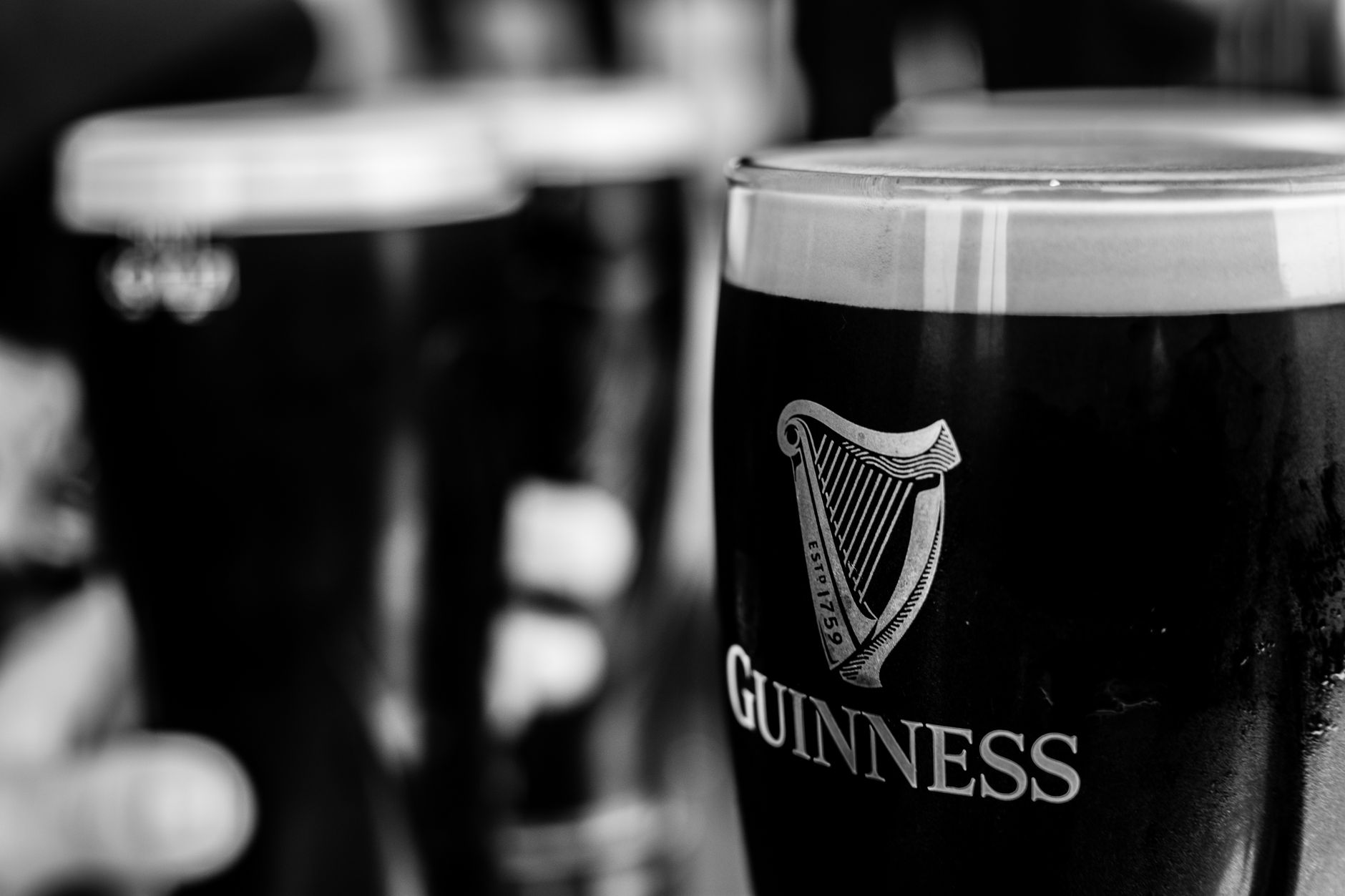
- A pint — unless specified, a pint of Guinness. Ordering “a pint” in a Dublin pub will get you stout.
- A glass — a half pint. Ask for “a glass of Guinness” and you get 284ml, not a pint in a different vessel.
- The session / a sesh — either a night’s drinking or a live traditional music session, and context does the work. See live music in Dublin for the musical kind.
- Your round / getting a round in — the fundamental social contract of the Irish pub. Everyone buys for everyone in turn. Getting this wrong is the fastest way to be quietly judged; Irish pub etiquette explains the whole system.
- Scoop — a drink. “Going for a few scoops.”
- Locked, ossified, in flitters, hanging — drunk, very drunk, wrecked, hungover.
- The cure — a drink taken the following day to address the consequences of the previous one.
- Curing sandwich / a feed — a substantial meal. “We got a great feed in there.”
Money, food and shopping
- A tenner, a score, fifty quid — €10, €20, €50. Ireland uses the euro, but the old sterling nicknames survive intact.
- Rapid / a steal — good value.
- Robbery / daylight robbery — expensive. You will hear this about Temple Bar pints, correctly.
- Chipper — a fish and chip shop. Essential vocabulary; see the best chippers in Dublin.
- A spice bag — the great Irish culinary invention of the last twenty years: chips, shredded chicken, peppers and onions tossed in salt-and-chilli seasoning, from a Chinese takeaway. Universally beloved. Ordering one correctly is worth more social credit than any amount of vocabulary.
- Batch / blaa / crisps / minerals — a batch loaf, a soft Waterford bread roll, potato chips, and fizzy soft drinks respectively.
- Taking the piss / having you on — joking, but also overcharging. Context decides.
Dublin Slang: the City’s Own Vocabulary
Dublin has a dialect of its own, and a fair amount of it baffles people from Cork, never mind from Chicago. This is the layer of Irish slang you will only meet here.
- The jacks — the toilet. This is the answer to the question every visitor eventually needs. “Where’s the jacks?” is entirely normal in a pub. It probably descends from “jakes”, an old English word for a privy.
- Bleedin’ — the all-purpose Dublin intensifier. “Bleedin’ deadly.”
- Ride — an attractive person. Be careful with this one; it is complimentary but it is not polite.
- Gaff — house. “A free gaff” is a house with no parents in it.
- Rapid — brilliant, in north Dublin especially.
- Scarlet — embarrassed. “I was scarlet for him.”
- Buzzin’ — delighted.
- Muppet, gowl, gobshite — ascending grades of fool. The last is stronger than it sounds.
- Howiya — “how are you”, compressed. A greeting and, said a certain way, an entire social class marker.
- The Northside and the Southside — the Liffey divides the city and the division carries an enormous amount of cultural freight, most of it exaggerated and all of it enjoyed. Dubliners will slag each other about it endlessly. Our Northside guide and the neighbourhoods guide cover the real geography.
- D4 — Dublin 4, and by extension a particular accent and a particular kind of affluence. Used as an adjective and rarely as a compliment.
Hiberno-English: Why the Grammar Sounds Different
The vocabulary is only half of it. Irish English carries structures borrowed directly from the Irish language, and once you notice them you hear them everywhere. This is not Irish slang so much as a genuinely distinct grammar, and it is why Irish speech has the rhythm it does.
The “after” perfect
“I’m after eating.” — I have just eaten. From the Irish construction tar éis, meaning “after”. It expresses something completed in the immediate past, and English has no neat equivalent. “I’m after losing my keys” means the keys went missing five minutes ago.
“Do be” and habitual action
“He does be working late.” — He habitually works late. Irish distinguishes between something happening now and something that happens regularly, and Hiberno-English reproduces the distinction with “do be”. It is more common in Dublin working-class speech and in the west than in a boardroom, but it is entirely systematic, not an error.
Reduplication and emphasis
“It was so it.” / “I did, yeah.” / “That’s the thing now.” — Tag phrases used for emphasis and to soften a statement. Irish English hedges relentlessly; direct contradiction is rare, and disagreement usually arrives as “ah now” or “I suppose” rather than as “no”.
Numbers, time and directions
“Half two” means 2:30, not 1:30 — this catches out German speakers particularly. “Just up the road” can mean anything from fifty metres to eleven kilometres. “A good while” is longer than “a while” and shorter than “ages”. And if you ask for directions and are told “you can’t miss it”, you can and probably will.
Irish Words That Survive in Everyday Speech
A handful of Irish-language words are used in English sentences by people who speak no Irish at all. You will see them on signs, hear them in shops and meet them on your travel documents.
- Fáilte (FAWL-cha) — welcome. Céad míle fáilte is “a hundred thousand welcomes”.
- Sláinte (SLAWN-cha) — health, used as “cheers”. The correct toast, and one piece of Irish it is entirely fine for a visitor to use.
- Garda / Gardaí (GAR-da / GAR-dee) — the police, singular and plural. Never “the Irish police force” in conversation; always the guards or the Gardaí.
- Taoiseach (TEE-shock) — the prime minister. Tánaiste (TAW-nish-ta) is the deputy.
- Dáil (DOYL) — parliament. Oireachtas (UH-rock-tas) is the whole legislature.
- Slán (SLAWN) — goodbye.
- Amadán (OM-a-dawn) — fool. Gentler than the English equivalents.
- Sceal / scéal (SHKAYL) — story, news. The root of “what’s the story”.
- Poitín (pot-CHEEN) — the traditional illicit spirit, now legal and sold in whiskey bars.
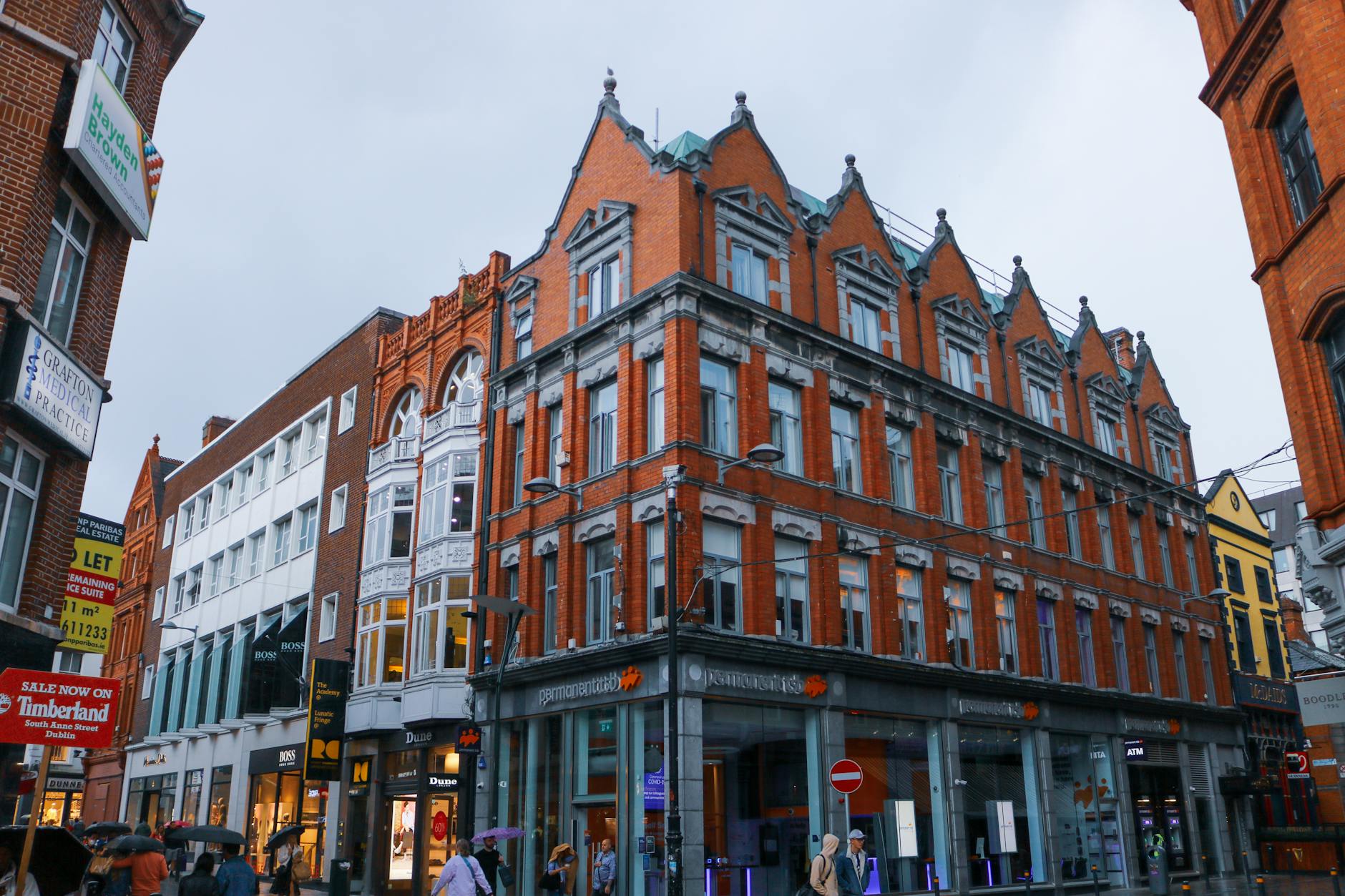
Street signs across Dublin are bilingual, Irish above English, and the Irish is not decorative — it is the first official language of the state. Baile Átha Cliath is Dublin, and it is what you will see on the front of every bus in the city. Our history and literary heritage guide covers how the language came to be in that position.

What Not to Say
Not everything filed under Irish slang in guidebooks is actually said here. This is a short list, and worth taking seriously, because these are the ones that produce a visible reaction.
- “Top of the morning to you.” Nobody in Ireland has ever said this. It is a nineteenth-century stage-Irish invention, kept alive by Hollywood and breakfast cereal advertising, and saying it will get you a very particular look. If there is one item on this whole page to take away, it is this one.
- “Begorrah”, “bejaysus”, “faith and begorrah”. Same category. Museum pieces.
- Calling Ireland part of Britain or the UK. The Republic of Ireland is an independent state and has been since 1922; Northern Ireland is part of the United Kingdom. The distinction matters enormously and getting it wrong is the single most common visitor mistake. If you are day-tripping north, our Belfast day trip guide covers the practicalities.
- “Paddy”. Fine as a name; not fine as a generic term for an Irish person.
- “St Patty’s Day”. It is Paddy, from Pádraig. “Patty” is a burger. Irish people notice this one every single March — see the St Patrick’s Day guide.
- Attempting the accent. Even a good impression lands badly. Speak normally; nobody minds where you are from.
- “Erin go bragh”, shamrock-heavy anything. Diaspora vocabulary, not domestic vocabulary. Harmless but immediately identifying.
Slagging: the Bit Visitors Find Hardest
If there is one thing behind all the Irish slang on this page, it is this. Irish social life runs on mockery. Being slagged — teased, wound up, taken the piss out of — is a sign of acceptance, and the more you are liked the worse it gets. It is affectionate, it is expected to be returned, and taking visible offence is the only way to actually fail at it. Conversely, sincerity is delivered obliquely: a Dubliner will insult you warmly and compliment you sideways, and the compliments are the harder ones to spot.
The practical advice for a visitor is simple. If someone is slagging you, they like you. Give some back if you can, and if you cannot, laughing is a completely acceptable response. Do not apologise, do not explain, and do not take it literally. This is more useful than any list of Irish slang vocabulary, because it is the thing the vocabulary is in service of.

Weather Words, Because You Will Need Them
No branch of Irish slang gets more daily use than the weather vocabulary. Ireland has more expressions for rain than any place its size has a right to, and Dublin — which is actually the driest part of the country, sitting in the Wicklow rain shadow with about 770 mm a year across roughly 137 rain days — still uses all of them.
- A soft day — light, continuous drizzle. Said approvingly.
- Lashing / bucketing / pelting — heavy rain.
- Spitting — barely raining.
- A grand stretch in the evenings — said from February onwards, meaning the days are getting longer. A genuinely important national ritual.
- Baltic / perishing — cold.
- Close / muggy / warm out — humid.
- “Four seasons in one day” — accurate, and the reason the local answer to rain is a hooded waterproof rather than an umbrella, which the wind will destroy. See the Dublin weather guide.
Gotchas
The pieces of Irish slang that most reliably trip visitors up, in rough order of how often we hear about them.
- “I will, yeah” means no. Flat delivery, no enthusiasm. It is the most-missed piece of Irish slang there is.
- “Grand” is not praise. It means adequate. “It was grand” about a restaurant is a mild warning.
- “Half two” is 2:30. Not 1:30.
- “Now” handed to you with a pint means “there you go”, not “immediately”.
- The jacks is the toilet. Asking for the restroom or the bathroom will be understood but marks you instantly.
- Culchie and jackeen are for locals to use about each other. Both are affectionate between Irish people and awkward from a visitor.
- Never say “top of the morning”. Ever.
- Ireland is not in the UK. Northern Ireland is; the Republic is not. Different currency, different everything.
- “Sorry” is used to mean “excuse me”. Somebody saying sorry as they pass you is not apologising.
- Directions are approximate. “Just up the road” is not a distance.
FAQ: Irish Slang for Dublin Visitors
What does craic mean?
Fun, enjoyment, atmosphere, good company and news, all at once, depending on the sentence. “What’s the craic?” is a greeting meaning “what’s happening”. “It was great craic” means it was a very good night. “He’s great craic” means he is good company. “There’s no craic in there” means the pub is dead. It is pronounced “crack” and spelled the Irish way, which is standard in Ireland and looks odd elsewhere.
What is Dublin slang for toilet?
The jacks. “Where’s the jacks?” is entirely normal in any Dublin pub and nobody will blink. The word is thought to come from “jakes”, an old English term for a privy. You can also say the loo, which is understood everywhere; asking for the bathroom or the restroom will be understood too, but immediately identifies you as a visitor.
Do Irish people say “top of the morning”?
No. Never. It is a stage-Irish invention from nineteenth-century theatre, kept in circulation by Hollywood and advertising, and no Irish person has said it sincerely in living memory. Saying it in Dublin will get you a polite, slightly pained expression. The equivalent everyday greetings are “how’s it going”, “what’s the story” and “howiya”.
What does “grand” mean in Ireland?
Fine, okay, satisfactory — and no more than that. It is the most-used word in Irish English and it has a strict ceiling. “The hotel was grand” means the hotel was acceptable. “You’re grand” means don’t worry about it. “I’m grand” is the standard response to “how are you”, whatever the truth. If an Irish person genuinely liked something, they will say deadly, savage, class or unreal instead.
Is Irish slang the same all over Ireland?
The core vocabulary is national — craic, grand, sound, deadly, slagging and the yes-and-no grammar are used everywhere. But Dublin has a substantial dialect of its own, Cork and Limerick have theirs, and some words genuinely do not travel. “The jacks”, “bleedin'” and “scarlet” are strongly Dublin. What you learn here will get you through the whole island, but you will hear different words within an hour’s drive.
Should I try to use Irish slang myself?
Use the easy ones and skip the rest. “Sláinte”, “grand”, “cheers” and “sound” from a visitor are fine and even welcome. Attempting the accent, deploying “begorrah”, or using culchie and jackeen about people you have just met will land badly. The safest approach is to understand everything and say very little of it — which is, incidentally, exactly what Irish people do when they travel.
What is a spice bag?
Chips, shredded fried chicken, sliced peppers and onions tossed together with salt-and-chilli seasoning in a paper bag, sold by Chinese takeaways all over Ireland. It was invented in Dublin some time around 2010, has been voted the country’s favourite takeaway more than once, and is a genuine cultural artefact rather than a novelty. Ordering one after a night out is close to a rite of passage — see late-night food in Dublin.
Why do Irish people avoid saying yes and no?
Because the Irish language has no words for them. In Irish you answer a question by repeating its verb, and Hiberno-English inherited the pattern directly. So “Are you coming?” gets “I am”, “Did you like it?” gets “I did”, and “Have you been before?” gets “I have not”. It is completely systematic once you hear it, and it is the single clearest fingerprint of Irish speech.
What does it mean if someone is slagging me?
That they like you. Slagging is affectionate mockery and it is the primary way friendship and acceptance are expressed in Ireland, particularly among men and particularly in a pub. The correct response is to laugh and, if you can manage it, give some back. Taking offence, explaining yourself or getting quiet are the only ways to get it wrong. It has no equivalent in most cultures and it is the thing visitors most often misread.
Keep Planning
- Dublin Travel Tips — the parent guide to everything practical.
- Things to Know Before Visiting Dublin — plugs, tipping, weather, etiquette.
- Irish Pub Etiquette — rounds, ordering and not looking like a tourist.
- First Time in Dublin — what to expect on day one.
- Traditional Pubs in Dublin — where you will hear all of this in use.
- Tipping in Dublin — how much, where, and when not to.
- Dublin’s History & Literary Heritage — where the language comes from.
- Famous Writers & Landmarks — Joyce, Beckett, Behan and the city they wrote in.
Keep Reading
Lean na Comharthaí — Keep following the signs