Temple Bar Dublin: Beyond the Tourist Trap (Honest Guide 2026)
Ar an gComhartha Seo — On this sign
- Temple Bar: What Actually Is It?
- Why Locals Tell You to Avoid Temple Bar
- Temple Bar Pubs: Worth It or Not?
- Temple Bar Cultural Institutions
- Temple Bar Food: Where to Eat
- Temple Bar Shopping
- Temple Bar by Day
- Temple Bar by Night
- Best Temple Bar Photo Spots
- The Halfpenny Bridge
- Temple Bar Safety
- Should You Stay Near Temple Bar?
- Better Alternatives Just Outside Temple Bar
- Practical Temple Bar Tips
- Temple Bar History
- Temple Bar Dublin: FAQ
- Keep Reading
Temple Bar is Dublin’s most polarising neighbourhood. The cobblestoned cultural quarter on the south bank of the Liffey draws millions of tourists annually with its colourful pubs, live music, and street art — while locals routinely tell visitors to avoid it. This honest guide explains what Temple Bar genuinely offers, what it doesn’t, when to visit, how to enjoy it without getting fleeced, and what to do nearby for a more authentic Dublin experience. Whether you’re committed to a Temple Bar night or trying to decide if it’s worth a visit at all, this guide gives you the straight story from Dublin locals.
Temple Bar: What Actually Is It?
Temple Bar is a small neighbourhood occupying roughly 20 blocks on the south bank of the Liffey between Dame Street, Westmoreland Street, Fishamble Street, and the river. The neighbourhood gets its name from Sir William Temple, a 17th-century resident, not from the famous pub of the same name (which opened later). The narrow medieval street pattern survived 19th and 20th century redevelopment to create the dense cobblestoned character that defines the area today.
The area was nearly demolished in the 1980s to build a central bus station, but local artists, designers, and businesses occupied empty buildings cheaply during the planning process, creating an organic cultural quarter. When the bus station plan was scrapped in 1991, Dublin Corporation invested IR£40 million in regenerating Temple Bar as a cultural quarter. The investment included building rehabilitation, public squares, and dedicated cultural institutions (the Gallery of Photography, Project Arts Centre, the Irish Film Institute, the Ark Children’s Cultural Centre).
Today Temple Bar combines genuine cultural institutions with mass-market tourism. The cultural quarter origins explain why the area still has galleries, theatres, and cinemas alongside its more famous pubs. The mass tourism reality explains why those institutions sometimes feel overshadowed by hen and stag party crowds, especially at weekends.
Why Locals Tell You to Avoid Temple Bar
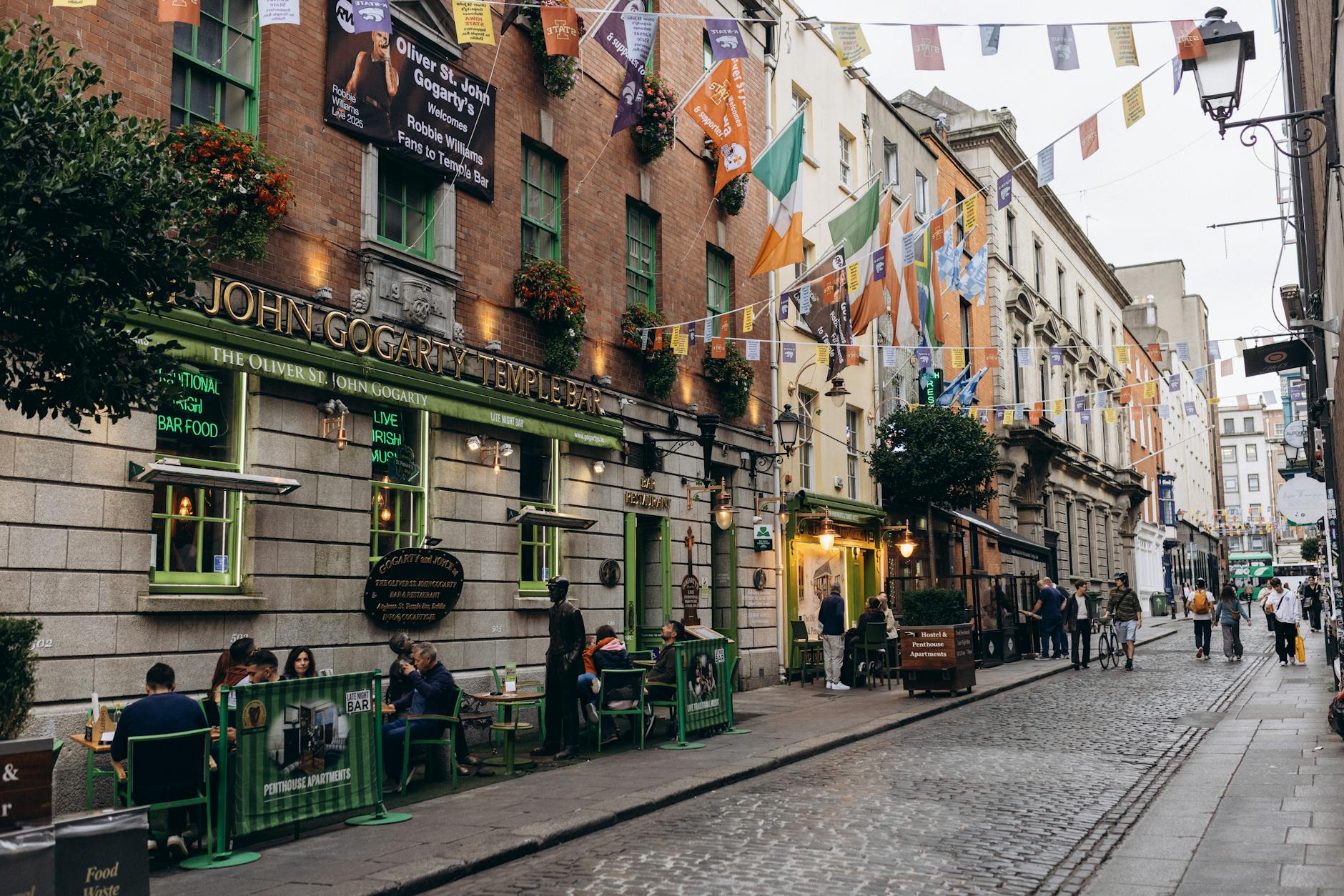
The standard local advice to visitors is “skip Temple Bar.” The reasons are real but oversimplified. Pint prices are 50–80% above the Dublin average — expect €8–10 for a Guinness or €9–11 for cocktails versus €5.50–6.50 at neighbourhood pubs just 5 minutes away. The trad music can feel performative — commercial sessions with set repertoire of “classics” rather than the organic neighbourhood sessions you’ll find at The Cobblestone or O’Donoghue’s. The hen and stag party density at weekends can overwhelm anyone wanting a calmer Dublin experience.
But the local dismissal is overblown. Temple Bar by day is genuinely pleasant for casual exploration. The cultural institutions deliver high-quality experiences. The Saturday Temple Bar Food Market and Sunday outdoor activities work well for families. The Halfpenny Bridge across the Liffey is one of Dublin’s most iconic photo locations. Even the pub scene works if you choose the right venues and times. Most local Dubliners haven’t actually visited Temple Bar in years and rely on stereotype-based advice.
Temple Bar Pubs: Worth It or Not?
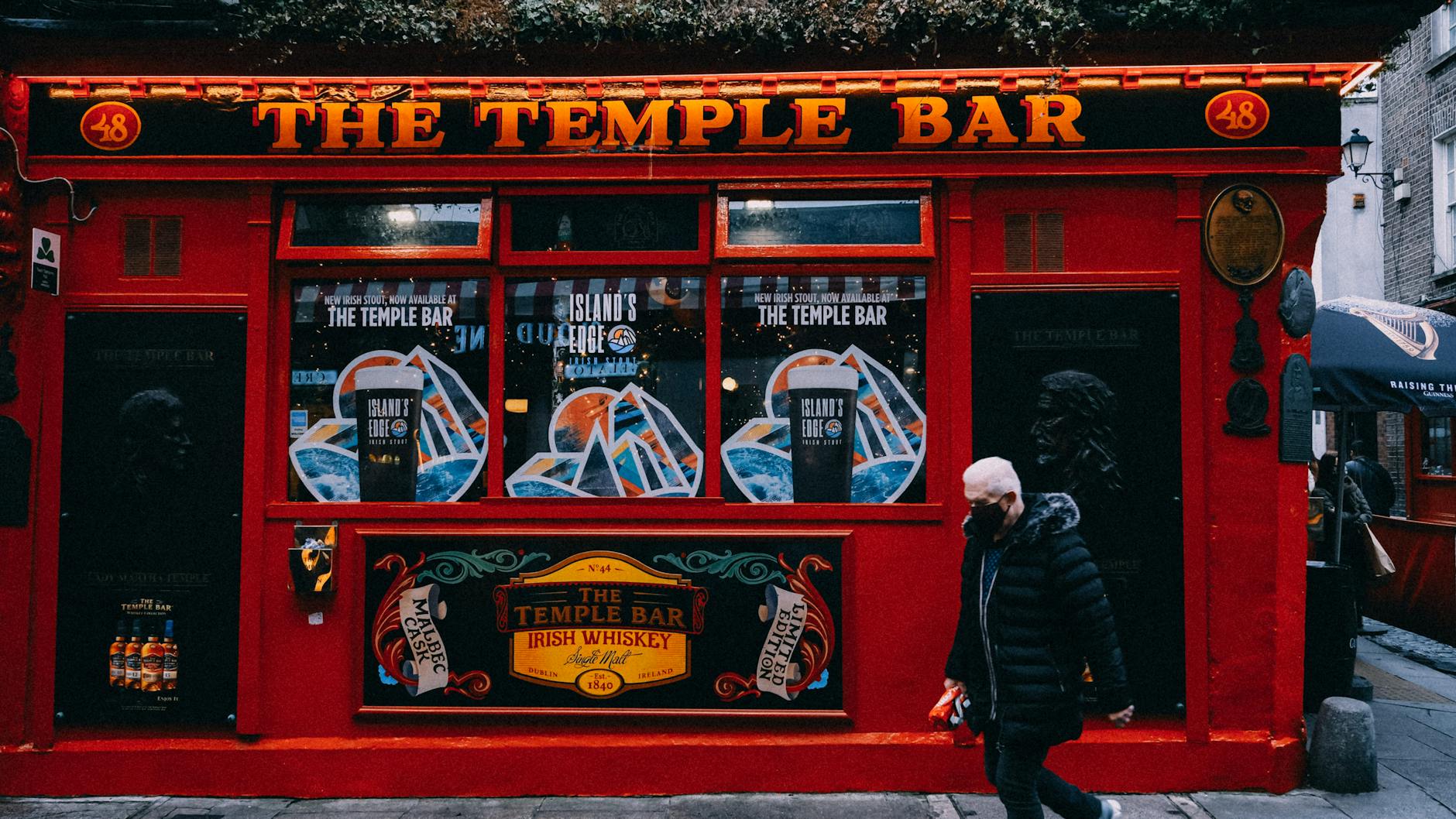
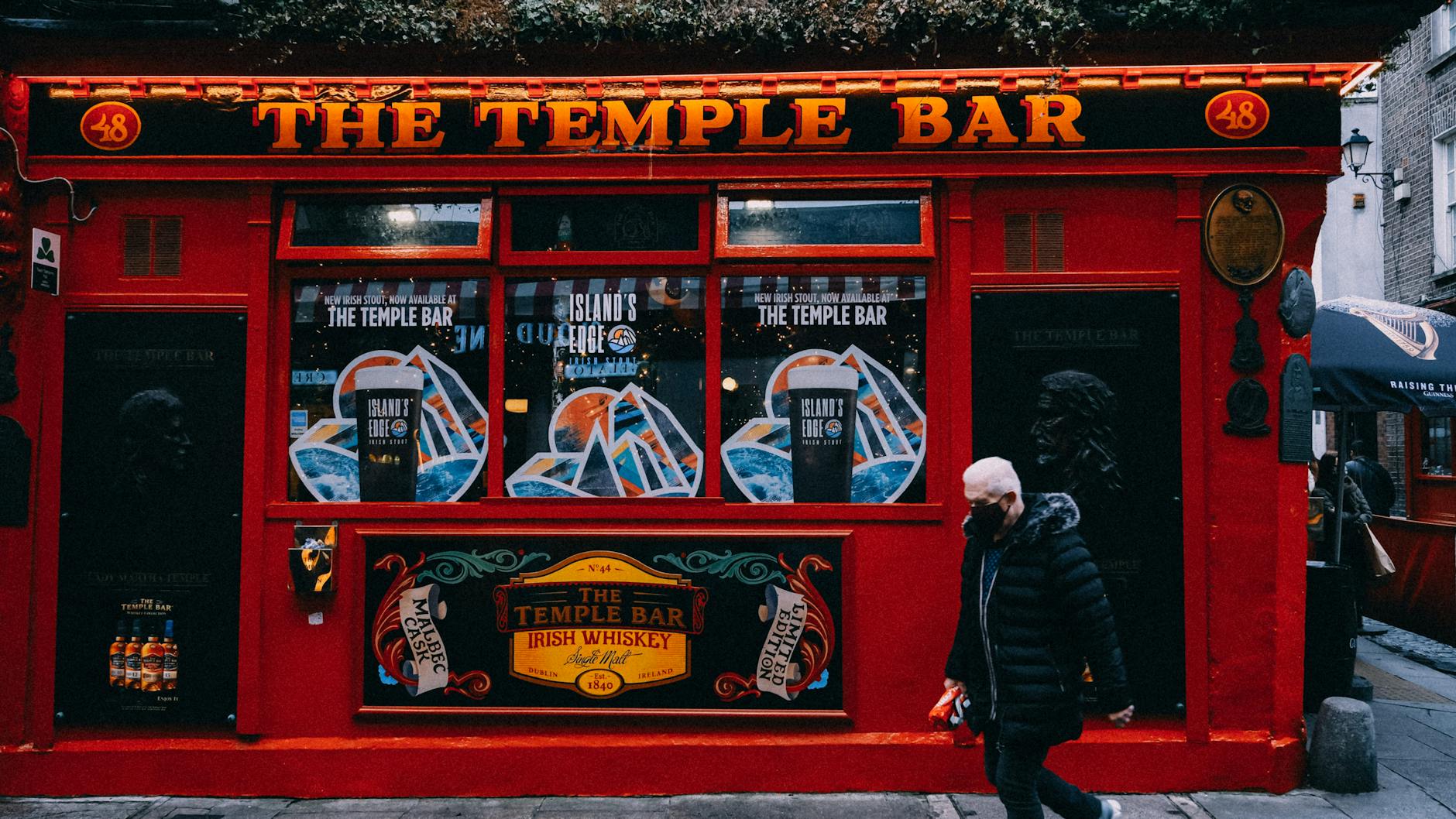
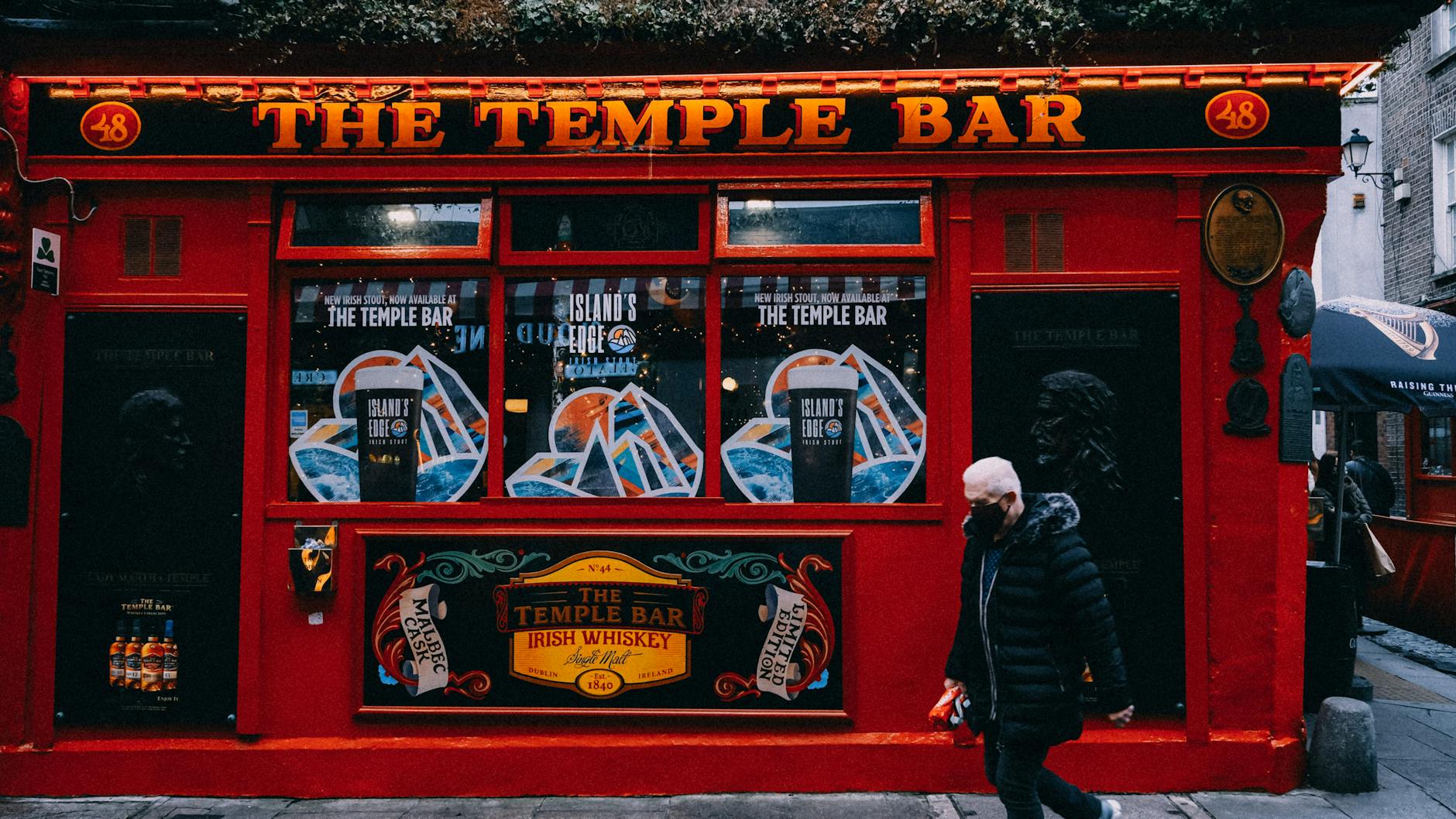
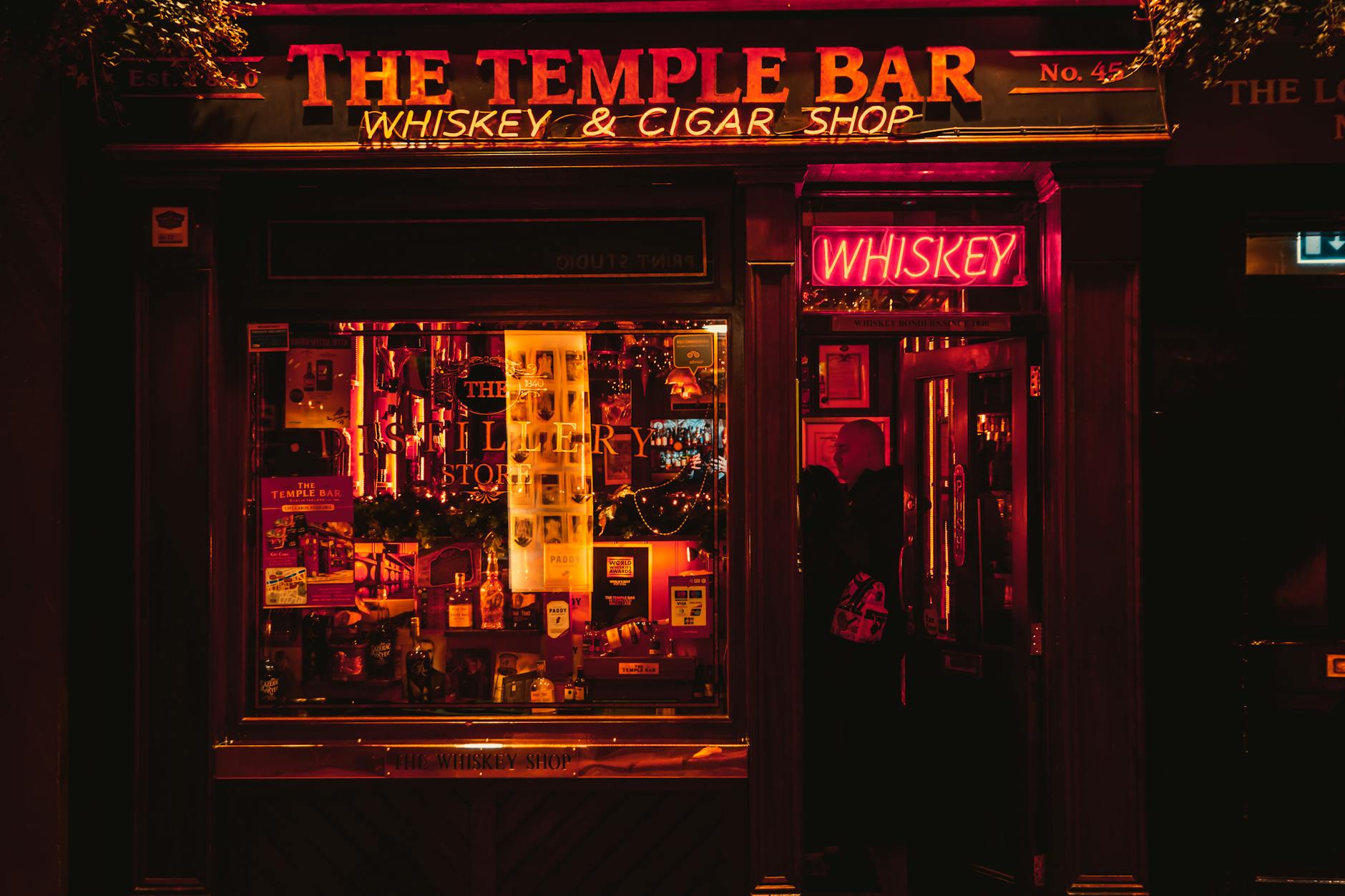
The Temple Bar Pub (the famous red exterior at Crown Alley) deserves at least one visit. It’s expensive (€8–10 for a pint) but the atmosphere is unique, the trad music is professionally performed, and the Whiskey Bar on the second floor stocks 450+ Irish whiskeys. Visit once for the iconic Dublin experience, then drink elsewhere.
Worthwhile Temple Bar pubs
- The Temple Bar Pub — The iconic red exterior, 450+ Irish whiskeys, professional trad music. Expensive but worth one visit.
- The Auld Dubliner — Anglesea Street. Old Dublin character, less touristy than expected.
- The Quays — Temple Bar Square. Live music, large venue, particularly fun on summer evenings.
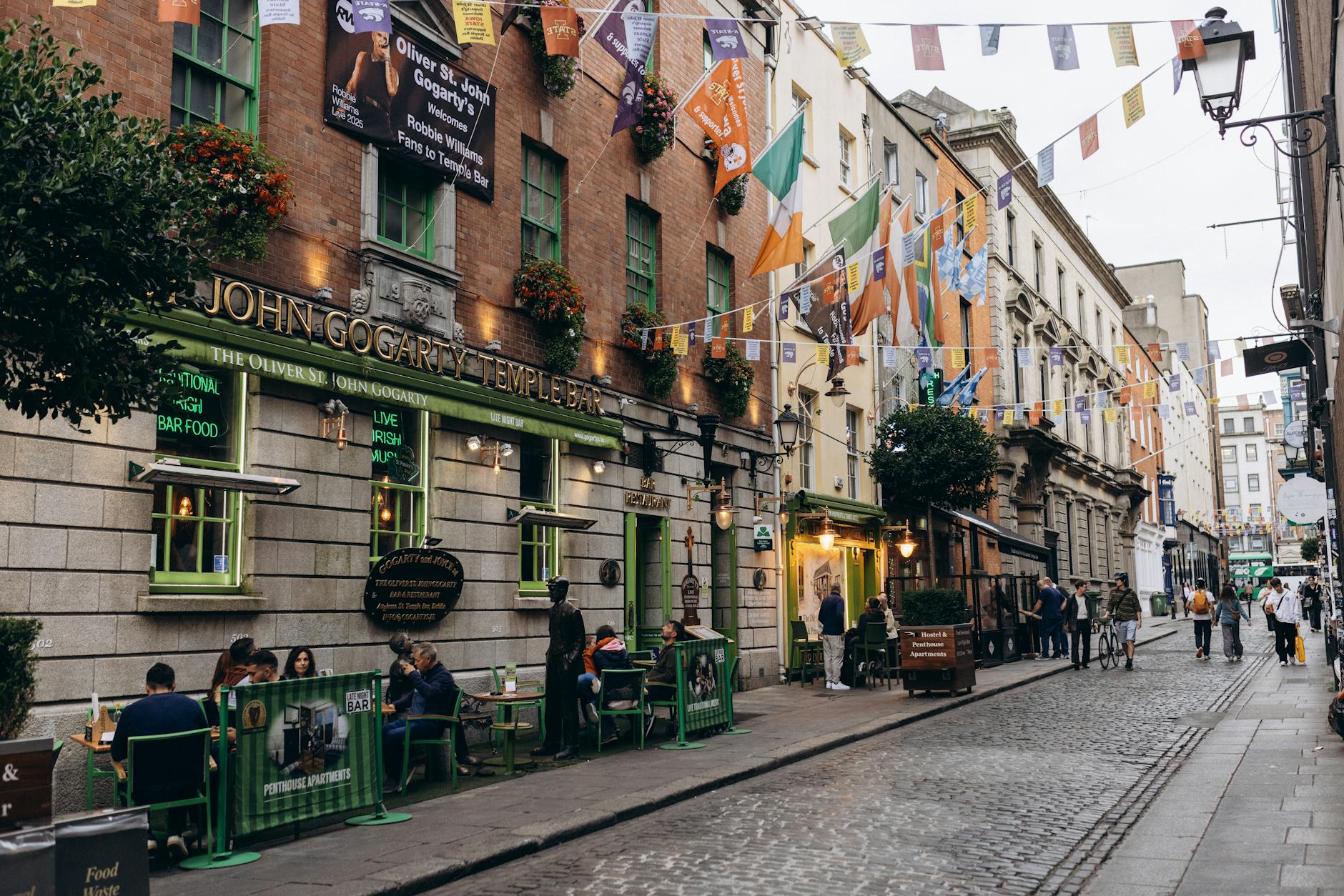
- Oliver St John Gogarty’s — Anglesea Street. Multi-floor venue with trad music sessions throughout the day.
- The Old Storehouse — Crown Alley. Three floors of live music covering trad, rock, and contemporary.
- The Foggy Dew — Wellington Quay. Slightly outside Temple Bar proper, but cheaper pints and a younger crowd.
- The Palace Bar — Fleet Street, technically Temple Bar adjacent. Victorian classic with strong literary heritage.
Pubs to skip
The smaller chain-branded pubs along Temple Bar Square and Anglesea Street often charge premium prices for mediocre experiences. The leprechaun-themed novelty pubs are aimed entirely at tourists with no local clientele. If a pub looks more like a tourism brand than a real pub, it probably is.
Temple Bar Cultural Institutions
The cultural quarter origins of Temple Bar produced genuinely excellent institutions that locals do visit:
- The Irish Film Institute (IFI) — Eustace Street. Independent and arthouse cinema, IFI Family weekend screenings, and excellent cafe. Major Dublin film festival venue.
- Project Arts Centre — Essex Street East. Multi-disciplinary contemporary arts venue with theatre, dance, and visual art.
- Gallery of Photography Ireland — Meeting House Square. Ireland’s dedicated photography institution with rotating exhibitions.
- Photo Museum Ireland — Meeting House Square. Photography workshops, exhibitions, and education programmes.
- The Ark Children’s Cultural Centre — Eustace Street. Ireland’s only dedicated children’s cultural centre with theatre, art workshops, and storytelling.
- Temple Bar Gallery + Studios — Temple Bar. Artist studios with associated public gallery.
- The New Theatre — Essex Street East. Small contemporary theatre venue.
- Smock Alley Theatre — Lower Exchange Street. Historic theatre (founded 1662) with contemporary programming.
All these venues run reasonable admission prices (typically €5–20) and offer authentic cultural experiences that contrast with the commercial pub scene. Spend a few hours visiting any combination of these and Temple Bar becomes a different neighbourhood.
Temple Bar Food: Where to Eat
Temple Bar dining is mixed. Quality varies from genuine Dublin institutions to tourist-trap restaurants charging double normal prices for mediocre food. Recommendations:
Reliably good Temple Bar restaurants
- The Bad Ass Cafe — Crown Alley. Dublin family institution since 1983 with overhead cash railway, kids’ menu, and decent burgers/pizzas.
- Gallagher’s Boxty House — Temple Bar. Traditional Irish boxty pancakes — the only specialist boxty restaurant.
- Elephant & Castle — Temple Bar Square. American-style comfort food, reliable family option.
- The Larder Restaurant — Parliament Street. Local-sourced Irish food, lunchtime sets €20–25.
- Klaw — Crown Alley. Seafood specialist with oyster bar and lobster rolls.
- The Old Mill Restaurant — Temple Bar Square. Mid-range Irish/European with seasonal menu.
- Octopussy’s Seafood Tapas — Howth (not Temple Bar but worth mentioning for seafood comparison).
Saturday Temple Bar Food Market
Meeting House Square hosts the Temple Bar Food Market every Saturday 10am–4:30pm. The market combines artisan food producers, ready-to-eat meals, and craft food retail. Quality is high and prices reasonable (€8–15 for a substantial cooked meal). The covered seating area works in any weather. Excellent family option and authentic Dublin food experience. Saturday morning is the best time to visit Temple Bar for this reason alone.
Temple Bar Shopping
Beyond the tourist tat shops selling shamrock keychains and leprechaun hats, Temple Bar has genuinely good independent retail:
- Cow’s Lane Designer Market — Saturday market with Irish designers, crafts, and vintage clothing.
- Designyard — Nassau Street (just outside Temple Bar). Contemporary jewellery and design gallery.
- Hodges Figgis Bookshop — Dawson Street (just outside Temple Bar). Ireland’s oldest bookshop (1768).
- Tower Records — Wicklow Street. Independent record store, one of Dublin’s last.
- Dublin Vintage Factory — Temple Bar. Vintage and second-hand clothing.
- Carraig Donn — Multiple Dublin locations. Authentic Irish handmade Aran sweaters, scarves, and jewellery.
- Avoca — Suffolk Street (just outside Temple Bar). Premium Irish design, food, and homeware.
Temple Bar by Day
Temple Bar transforms completely between day and night. By day, the area is busy with tourists doing standard sightseeing but maintains a casual exploration character. The cobblestoned streets are photogenic. The cultural institutions are open. The food market on Saturday creates a community feel. Coffee at Coffee Angel or KC Peaches works well. The street art (visible throughout the neighbourhood) is at its best in daylight.
Suggested day itinerary: Morning Halfpenny Bridge photos, walk through Crown Alley admiring the red pub exterior. Coffee at Coffee Angel. Visit the Gallery of Photography Ireland or the Irish Film Institute. Late morning shopping at Cow’s Lane Saturday market or independent shops. Lunch at the Temple Bar Food Market or Gallagher’s Boxty House. Afternoon walking through Temple Bar Square and the street art alleys. Cross the Halfpenny Bridge for the iconic photo. Exit by 4–5pm before the evening drinking crowd arrives.
Temple Bar by Night
Temple Bar by night is a busy drinking and partying district. From around 7pm the area fills with hen and stag parties, tourist groups, and Dublin twenty-somethings using Temple Bar as a starting point for longer city centre nights out. The energy is high. The drinking is heavy. The pints are expensive.
If you’re committed to a Temple Bar night, suggested strategy: Start at the Temple Bar Pub for the iconic experience and one expensive drink. Move to The Quays or Oliver St John Gogarty’s for cheaper pints and live music. Eat dinner at one of the recommended restaurants. Move outside Temple Bar around 10pm to South William Street, Drury Street, or the Camden Street area for the rest of the night where prices are lower and the crowd less aggressively touristy. Or move into the cocktail bar scene at Peruke & Periwig or The Sidecar.
Avoid Temple Bar at night entirely if you’re looking for authentic Dublin pub culture — head to Mulligan’s on Poolbeg Street, The Cobblestone in Smithfield, or The Long Hall on South Great George’s Street instead.
Best Temple Bar Photo Spots
- The Temple Bar Pub red exterior — Crown Alley. The iconic Dublin photo. Best in late afternoon light.
- Halfpenny Bridge — Liffey crossing. Best in dawn light or evening with the Custom House visible.
- Crown Alley street art — Multiple murals on the walls leading up to the Temple Bar Pub.
- Temple Bar Square — The central public square. Particularly photogenic during the Saturday Food Market.
- Meeting House Square — The covered cultural quarter centre with the dramatic retractable umbrellas.
- Fownes Street — The narrow cobblestoned street running through Temple Bar with multiple photogenic angles.
- Cow’s Lane — Pedestrianised passage with shops and the Saturday Designer Market.
The Halfpenny Bridge
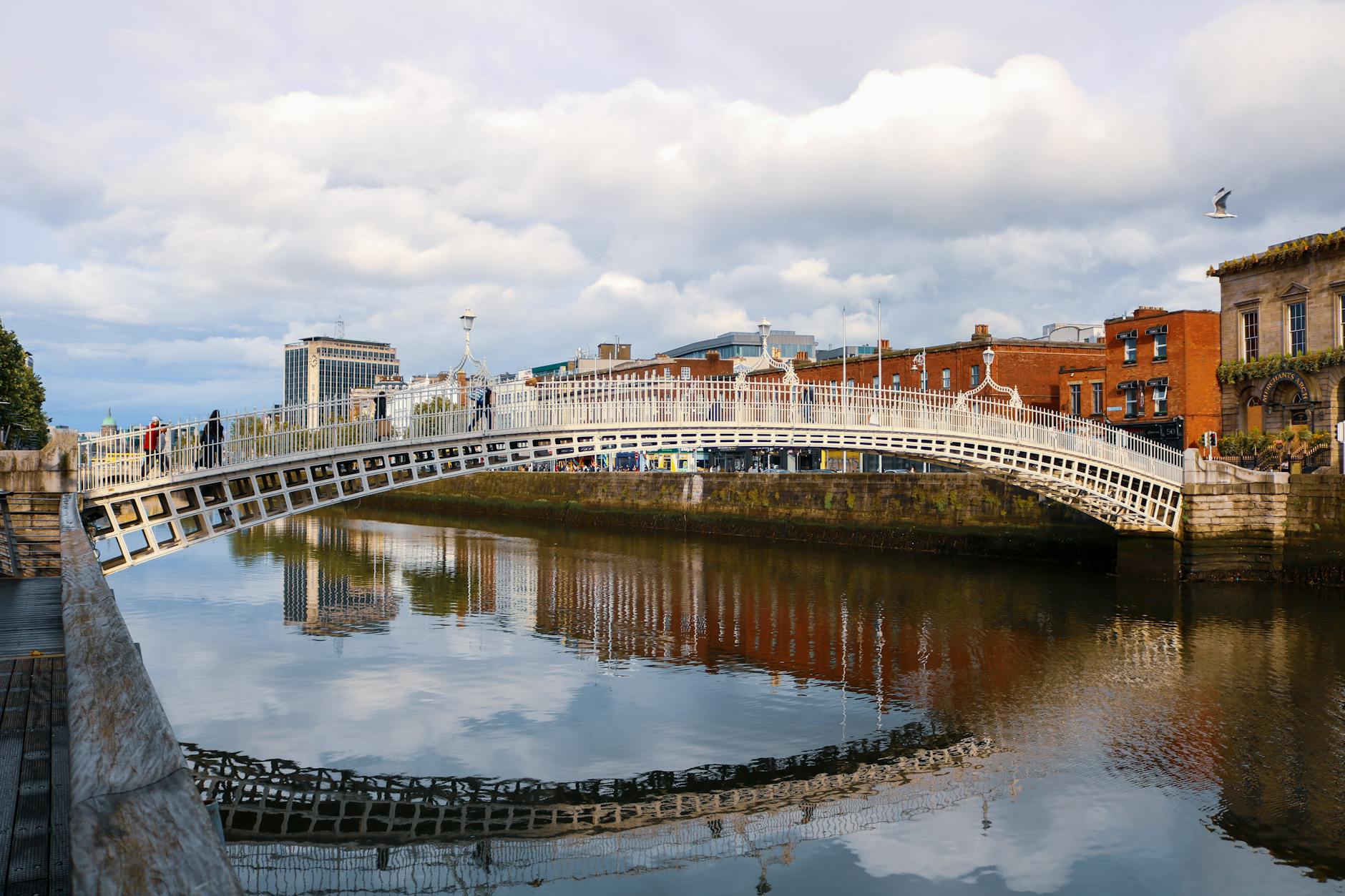
The Liffey Bridge, universally known as the Halfpenny Bridge (Ha’penny Bridge), is the pedestrian bridge crossing the Liffey from Temple Bar to the north quays. Built in 1816, it’s one of Dublin’s most iconic landmarks. The bridge originally charged a halfpenny toll for crossing (hence the name), abolished in 1919. The white cast-iron bridge is now Dublin City Council protected. The thousands of love padlocks attached by tourists in the 2010s have all been removed for safety reasons (the bridge couldn’t support the weight).
The Halfpenny Bridge connects Temple Bar to Bachelor’s Walk on the north side of the Liffey. Crossing the bridge gives access to Henry Street shopping, the GPO, and the broader north Dublin area. The bridge is one of Dublin’s most photographed sites — dawn and evening light produce the best photos.
Temple Bar Safety
Temple Bar is generally safe but follow standard urban precautions. Pickpocketing happens in crowded pubs and the Saturday Food Market — keep phones and wallets in front pockets. Aggressive drunk tourists are more likely a noise concern than a violent threat, but avoid getting drawn into confrontations. The Garda Pearse Street station is within 200m of Temple Bar and there’s significant Garda visibility throughout the night.
For solo travellers, particularly women, the Temple Bar night atmosphere can feel intense. Sticking to the busier pubs (Temple Bar Pub, Oliver St John Gogarty’s, The Quays) where staff manage the crowd is safer than wandering into smaller venues alone. Using FreeNow taxi for the return journey rather than walking back to hotels late at night is recommended. The streets between Temple Bar and most south-side hotels are well-lit but quiet after midnight.
Should You Stay Near Temple Bar?
Hotels in and immediately around Temple Bar offer excellent location for sightseeing but suffer from significant night-time noise. The Westin Dublin, the Clarence Hotel (Bono and The Edge’s former hotel), and the Temple Bar Hotel are all centrally placed but expect substantial street noise from the surrounding pub scene through to 2–3am, especially weekends.
For families with children or anyone wanting good sleep, stay one or two blocks away. Hotels on Dame Street, College Green, or around Grafton Street offer Temple Bar proximity without the noise. The Westbury Hotel and the Trinity College Hotel both offer better sleep with 5-minute walk to Temple Bar. For couples and party visitors, staying in Temple Bar itself can be part of the experience. See our Temple Bar Hotels guide for the full assessment.
Better Alternatives Just Outside Temple Bar
If you decide Temple Bar isn’t for you, several genuinely excellent Dublin areas sit within 10 minutes walk:
- Grafton Street area — Premium shopping, Bewley’s Cafe, Trinity College, the National Museum. Family-friendly and cultural.
- South William Street and Drury Street — Cocktail bar scene, fashionable restaurants, the Powerscourt Townhouse food hall.
- Wexford Street and Camden Street — Live music venues, Anseo, Whelan’s, the Bernard Shaw.
- Smithfield and Stoneybatter — Dublin’s hippest neighbourhood with The Cobblestone (authentic trad music), independent cafes, and craft breweries.
- The Liberties — Guinness Storehouse, medieval Dublin, The Brazen Head pub (Ireland’s oldest).
- O’Connell Street and Henry Street — North side shopping, GPO, the wider city centre experience.
All of these neighbourhoods offer different experiences from Temple Bar and most have considerably more local character. See our Dublin Neighbourhoods pillar guide for the full overview.
Practical Temple Bar Tips
- Visit by day rather than night — Most of the genuine Temple Bar character is visible 10am–5pm without the night-time excess.
- Hit the Saturday Food Market — The single best Temple Bar experience for visitors and locals alike.
- Take the iconic Temple Bar Pub photo, then drink elsewhere — One expensive drink at the iconic venue is worth it for the photo and atmosphere; further drinks should happen at cheaper pubs.
- Don’t bring children at night — Leave Temple Bar by 7–8pm with kids.
- Eat at the recommended restaurants — Avoid the random pub food and chain venues; stick to specifically recommended places.
- Cross the Halfpenny Bridge at least once — Even if just for the photo, the bridge is one of Dublin’s most iconic landmarks.
- Visit one cultural institution — The IFI, Gallery of Photography, or Project Arts Centre delivers an authentic experience that contrasts the commercial scene.
- Plan your exit — Temple Bar streets get more crowded as the evening progresses; agree a meeting point and time with your group.
- Bring a jumper or jacket — Temple Bar pubs are crowded but the cobblestoned streets between them can be cool, especially in summer evenings.
- Be polite to locals — The few Dubliners working and living in Temple Bar are weary of tourists; basic courtesy goes a long way.
Temple Bar History
Temple Bar’s history runs back to the medieval city. The area developed as a craft and trade district outside the city walls, with metalwork, leather, and tannery businesses based here. The 17th-century Sir William Temple owned much of the area and gave it his name. The 18th and 19th centuries saw the area become a publishing and printing district — the original location of the Dublin Penny Journal and the Freeman’s Journal newspapers.
The 20th century saw industrial decline transform Temple Bar into derelict warehouses and underused buildings. The 1980s near-demolition crisis was averted partly by the alternative cultural community that occupied the empty buildings. The Temple Bar Development Authority (1991–2008) led the regeneration that created the cultural quarter character. Dublin City Council’s Temple Bar Cultural Trust (founded 2008) now manages the cultural institutions and public spaces. The neighbourhood is protected under specific planning controls to maintain its character.
Temple Bar Dublin: FAQ
Is Temple Bar worth visiting?
Yes, for at least one short visit. Temple Bar offers iconic Dublin sights (the Temple Bar Pub, Halfpenny Bridge), genuine cultural institutions (IFI, Gallery of Photography, Project Arts Centre), and the excellent Saturday Food Market. Visit by day, take the iconic photo, then move to other Dublin neighbourhoods for evening drinking and dining.
Why do locals say to avoid Temple Bar?
Pints cost 50–80% more than elsewhere in Dublin, the trad music can feel commercial rather than authentic, and weekend hen/stag parties create an aggressive atmosphere. Most local Dubliners haven’t actually been to Temple Bar in years and rely on stereotype-based advice. By day, the neighbourhood is reasonable; by night, it’s commercial tourism.
How expensive are pints in Temple Bar?
A Guinness in Temple Bar costs €8–10 versus €5.50–6.50 at neighbourhood pubs just 5 minutes away. Cocktails run €14–18 versus €10–13 elsewhere. The premium reflects the tourist demand and the rates that famous-name pubs charge.
Is Temple Bar safe?
Yes, with standard urban precautions. Garda visibility is high throughout the area, especially at night. Pickpocketing in crowded pubs and the Saturday Food Market is the main petty crime concern. Avoid confrontations with drunk tourists. Use FreeNow taxi rather than walking back to hotels alone after midnight.
Can I visit Temple Bar with children?
Yes by day. Temple Bar by day welcomes families with the Bad Ass Cafe (family institution since 1983), the Ark Children’s Cultural Centre, the Irish Film Institute family screenings, and the Saturday Food Market. Leave Temple Bar by 7–8pm before the drinking crowd arrives.
When is the Temple Bar Food Market?
Every Saturday 10am–4:30pm at Meeting House Square. Excellent food, family-friendly atmosphere, and covered seating. Genuinely the best Temple Bar visitor experience for many.
Should I stay in a Temple Bar hotel?
Central location is excellent but night-time noise is significant through to 2–3am especially weekends. Families with children or anyone wanting good sleep should stay 1–2 blocks away (College Green, Dame Street, Grafton Street area). Party visitors and couples on short city breaks may enjoy the central location.
What time does Temple Bar get busy?
Busy hours by day are 11am–4pm, particularly during the Saturday Food Market. Evening crowds build from 6pm and peak 9pm–midnight on Fridays and Saturdays. Sundays and weekday evenings are calmer. The early-morning pre-9am hours offer the quietest Temple Bar experience and best photography light.
Keep Reading
- Grafton Street & St Stephen’s Green Quarter — The pedestrianised heart of the southside, from Trinity’s gates to the Green’s Victorian gardens.
- Smithfield & Stoneybatter: Dublin’s Hippest Neighbourhood — Jameson Distillery, independent cafes and trad sessions in the city’s coolest contemporary district.
- Dublin Docklands & Silicon Docks — Tech-company glass and restored Victorian warehouses along both banks of the lower Liffey.
- Temple Bar nightlife — a related guide from elsewhere on the site.
- Dublin Tourist Scams & Rip-Offs — the honest accounting on what the postcode costs you.
- Best Restaurants Near Temple Bar & Trinity — the four or five places in the quarter worth your money, and where to go instead.
Lean na Comharthaí — Keep following the signs