Grafton Street & St Stephen’s Green Quarter (2026 Dublin Guide)
Ar an gComhartha Seo — On this sign
- Understanding the Grafton Street Quarter
- Grafton Street Shopping
- St Stephen’s Green Park
- Trinity College
- Grafton Street Cafes and Restaurants
- Grafton Street Buskers and Street Performance
- Cocktail Bars in the Grafton Street Quarter
- Powerscourt Townhouse
- Kildare Street Cultural Cluster
- Dawson Street and Mansion House
- South William Street and Drury Street
- Where to Stay in the Grafton Street Quarter
- Annual Events on Grafton Street
- Practical Tips for Grafton Street Visits
- Self-Guided Grafton Street Walking Tour
- The Molly Malone Statue
- Grafton Street Dublin: FAQ
- Keep Reading
- Photo Credits
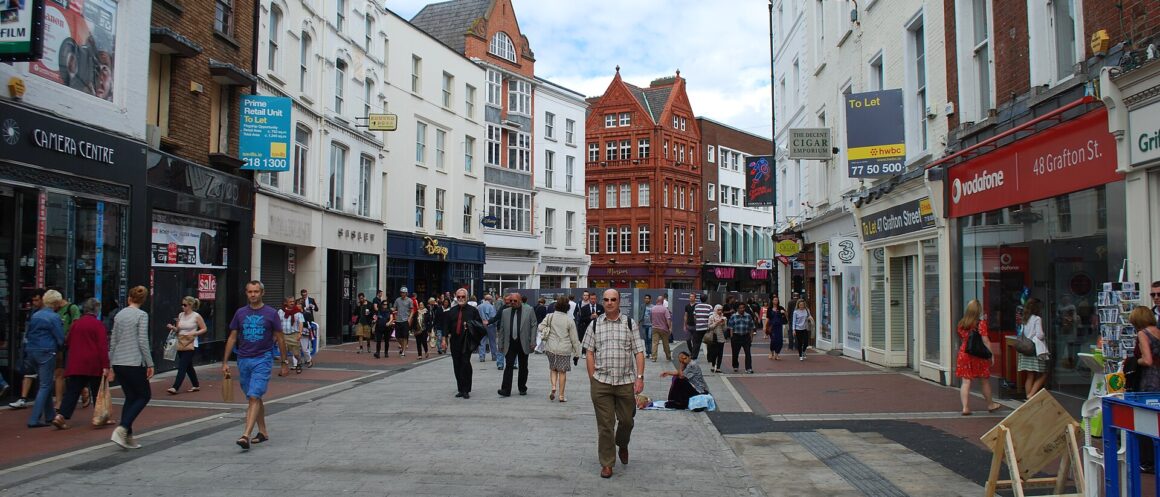
Grafton Street and the St Stephen’s Green quarter form the heart of central Dublin south of the Liffey. The pedestrianised shopping street, bracketed by Trinity College at its north end and St Stephen’s Green at its south, draws more tourists, shoppers, and buskers than any other Dublin location. The surrounding streets — Dawson Street, Wicklow Street, Anne Street, South William Street, and Drury Street — combine the city’s premier retail, iconic cafes, restaurants, fashionable cocktail bars, and family-friendly attractions. This guide is your complete map to the Grafton Street and Stephen’s Green Quarter: the shops, restaurants, attractions, hotels, and atmosphere that makes this one of Europe’s most vibrant city centre districts.
Read it as a companion to our full Dublin neighbourhood guide.
Understanding the Grafton Street Quarter
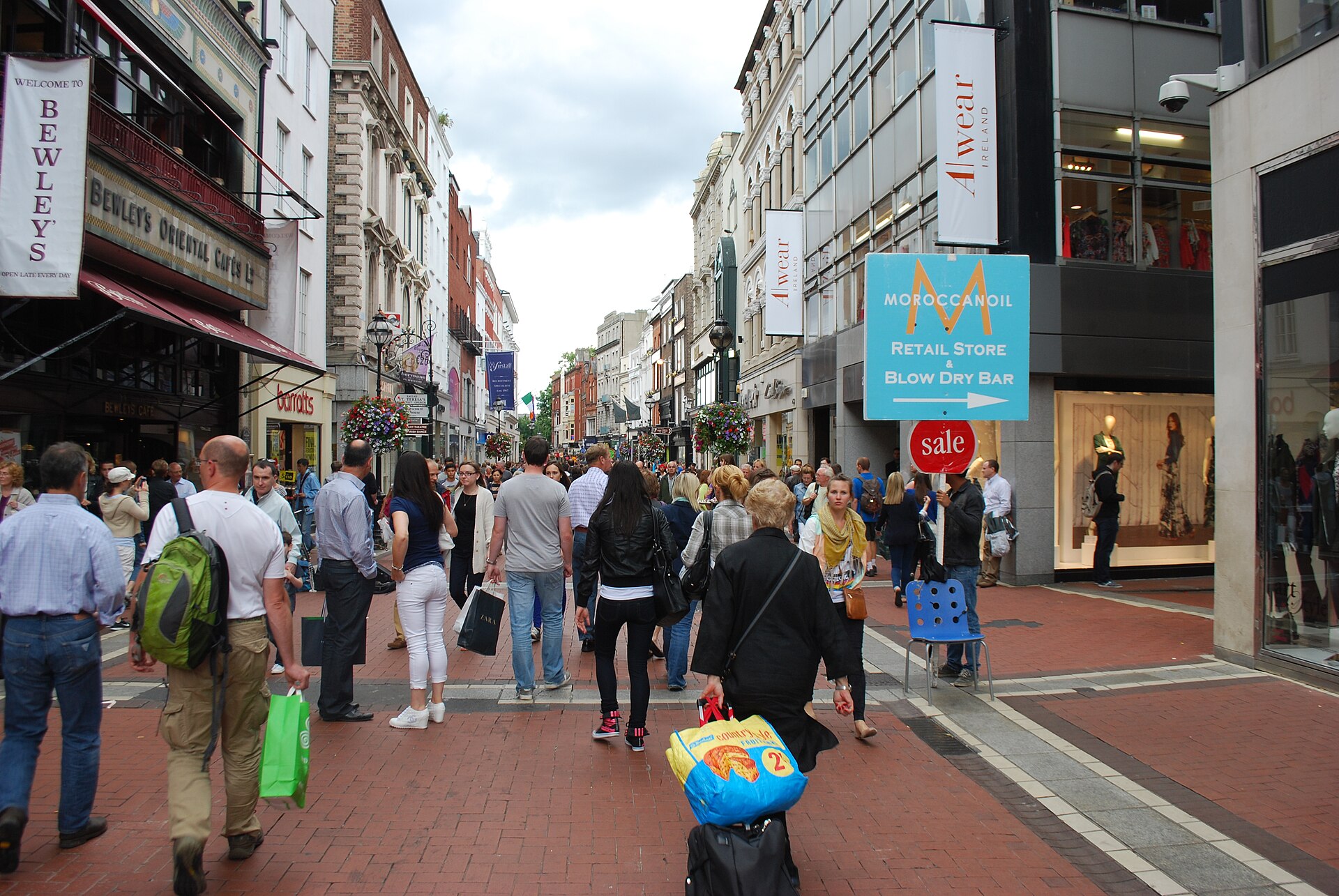
Grafton Street itself runs about 750m between College Green (Trinity College) and St Stephen’s Green. The street was pedestrianised in 1982 and now hosts continuous foot traffic of tourists, shoppers, and buskers throughout daylight hours. The surrounding streets form a roughly square area bounded by Nassau Street, Kildare Street, Stephen’s Green North, and Wicklow Street.
Architecturally, the area combines Victorian and Edwardian buildings (Bewley’s, Brown Thomas) with modernised retail units. Some buildings retain heritage features — Bewley’s Café keeps its Egyptian Revival mosaic façade and the Harry Clarke stained glass windows installed in 1928. Powerscourt Townhouse on South William Street is a beautifully preserved Georgian residence repurposed as a luxury shopping arcade. The Westbury Hotel and the Shelbourne (just off the area on Stephen’s Green) anchor the premium hospitality offering.
Grafton Street Shopping
Grafton Street and its side streets house Dublin’s premier shopping. Major retailers include:
- Brown Thomas — Dublin’s flagship luxury department store. Designer fashion, beauty, homeware. Hermes, Chanel, Louis Vuitton boutiques inside. Iconic Christmas windows annually.
- Marks & Spencer — British department store with fashion and food halls.
- Dunnes Stores — Irish department store with broader fashion, homeware, and supermarket combined.
- Penneys (Primark) — Penneys stores on Mary Street and O’Connell Street, a short walk north of Grafton Street. Budget fashion.
- Avoca — Suffolk Street. Premium Irish design, food, and homeware.
- Aran Sweater Market — Lower Grafton Street. Aran sweaters and Irish knitwear.
- Hodges Figgis — Dawson Street. Ireland’s oldest bookshop (1768).
- Tower Records — Dawson Street. Records and music.
- Lush — Wicklow Street and other locations. Handmade cosmetics.
- The Designyard — South Frederick Street. Contemporary Irish jewellery.
For shopping centres: Stephen’s Green Shopping Centre at the south end of Grafton Street covers basic chains plus food court. The Powerscourt Townhouse on South William Street is a Georgian townhouse converted into a shopping centre of boutiques, antiques, cafes and restaurants. The Westbury Mall is a smaller cluster of premium boutiques.
St Stephen’s Green Park
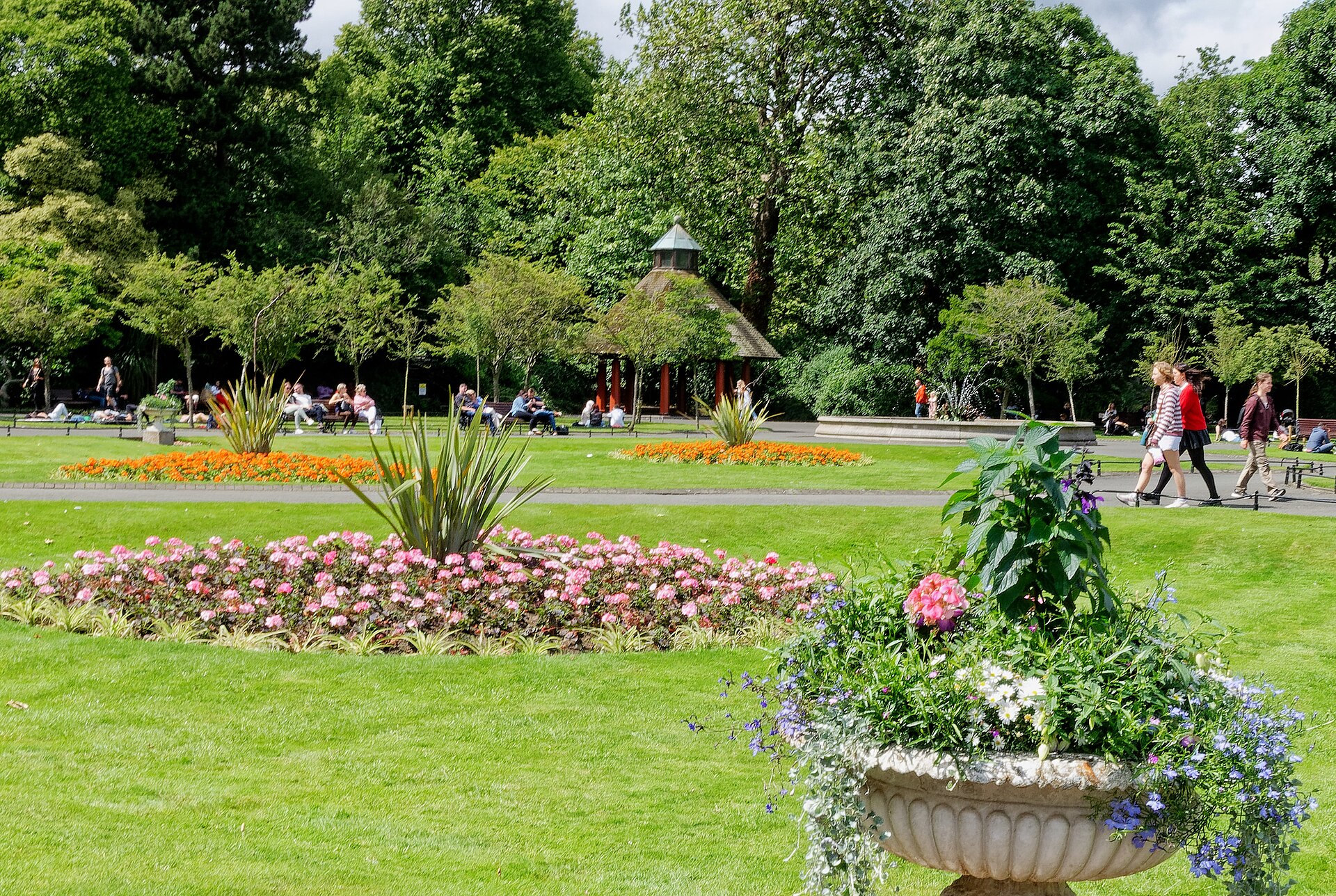
St Stephen’s Green is the 22-acre Victorian park at the south end of Grafton Street. The park combines formal flowerbeds, the central duck pond, multiple walking paths, a Yeats memorial garden, the Three Fates statue, a children’s playground, and benches throughout. During the 1916 Easter Rising, the garrison under Michael Mallin and Countess Markievicz dug defensive positions in the park.
The park opens at 7:30am Monday to Saturday and at 9:30am on Sundays and bank holidays; on Christmas Day it is open 9:30am–12:30pm. Free entry. Particularly busy on weekend afternoons. The Iveagh Gardens immediately behind St Stephen’s Green (entrance from Clonmel Street) offers a quieter alternative with maze, rosarium, and woodland walks. Both are excellent picnic spots if you bring food from the surrounding area.
Trinity College
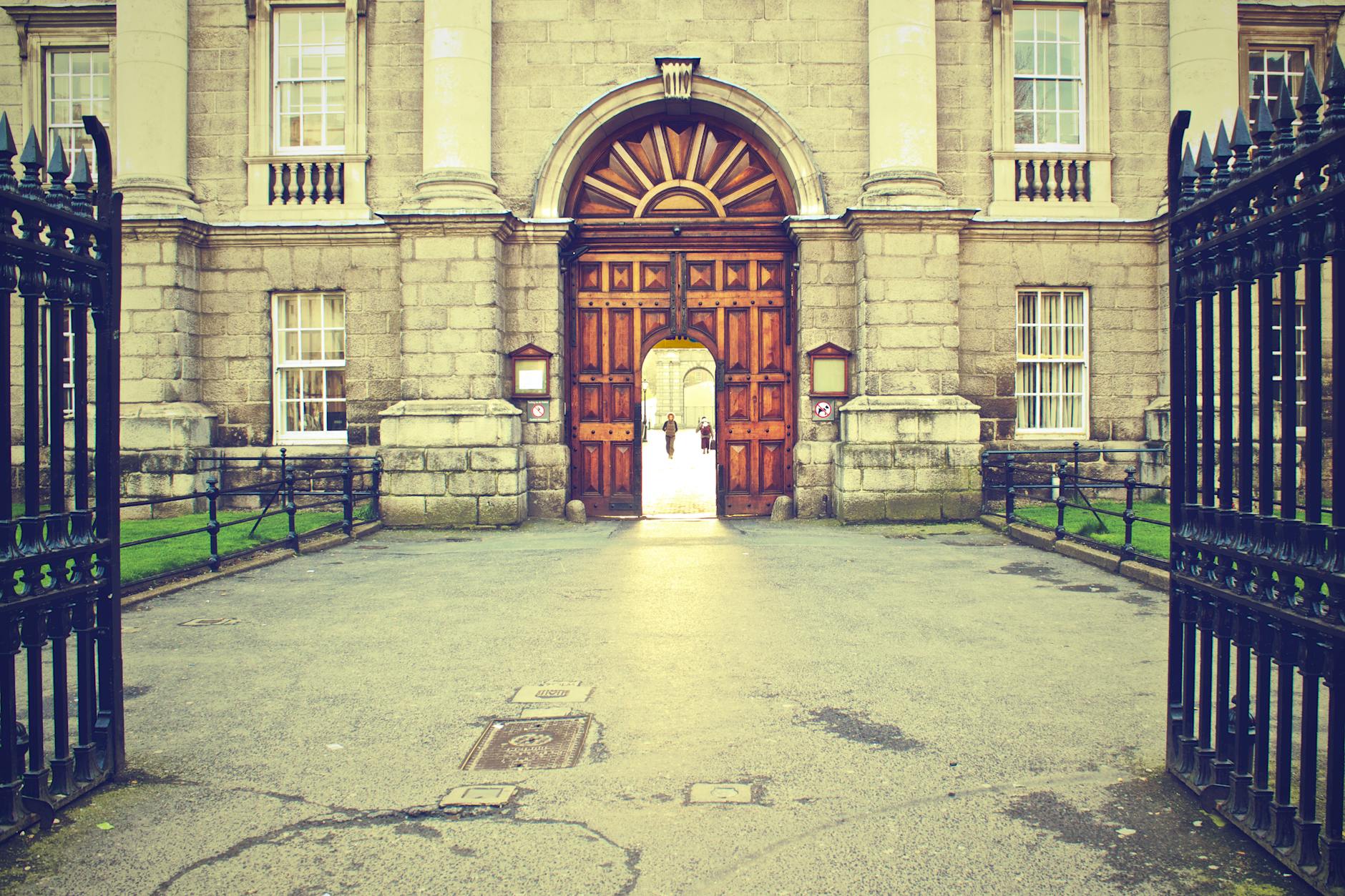
Trinity College Dublin, founded 1592 by Queen Elizabeth I, sits at the north end of Grafton Street. The 47-acre campus combines Georgian and Victorian buildings around a central cobbled square. Front Gate (1759), the Provost’s House (1759), the Campanile bell tower (1853), and the Long Room library (1732) are the architectural highlights.
The Book of Kells Experience in Trinity’s Old Library starts at €25 for adults, with concession tickets for students and seniors. The 9th-century illuminated gospel manuscript is the headline exhibit, but the Long Room is arguably more impressive: it normally holds about 200,000 books, though most have been taken out for conservation and about 20,000 remain in its first four bays. Book ahead online, especially in summer. Allow 75–90 minutes for a thorough visit.
Beyond the Book of Kells, Trinity’s campus is free to walk through and explore. The Trinity Long Room Hub and the Provost’s House Garden are occasionally open for public events. The campus pubs (The Pavilion Bar) welcome non-student visitors during academic term.
Grafton Street Cafes and Restaurants
Bewley’s Café
Bewley’s Café at 78–79 Grafton Street is one of Dublin’s historic cafes. The company dates from 1840, and its Grafton Street café opened in 1927 in an existing building, behind an Egyptian Revival mosaic façade; the Harry Clarke stained glass windows, installed in 1928, are considered some of Ireland’s finest decorative art. The cafe combines a ground-floor cafe and bakery with upper-floor Café Sussex (full restaurant) and the Café Theatre lunchtime performance venue. The daily Kids Afternoon Tea (€15 child, €25 adult) is a family Dublin tradition. Open daily 8am–6pm.
Other notable cafes
- Avoca Suffolk Street — Premium Irish cafe with restaurant upstairs.
- Coffee Angel — South Anne Street and other locations. Independent Dublin coffee chain.
- 3FE Coffee — Grand Canal Street. The Dublin specialty coffee pioneer.
- Brother Hubbard — Capel Street and Harrington Street. Excellent brunch.
- Wuff — Benburb Street. Dog-friendly cafe with strong coffee.
- KC Peaches — Dame Street and Stephens Green. Casual cafe with wholesome food.
Restaurants near Grafton Street
- The Westbury Hotel restaurants — The Wilde and Sidecar. Premium dining with afternoon tea.
- Restaurant Forty One — Stephen’s Green. Michelin-starred fine dining.
- Cleaver East — Lower Camden Street (just south). Casual Asian-influenced cooking.
- Sokito — Pembroke Street. Asian fusion mid-range.
- The Ivy Dawson Street — Premium restaurant with afternoon tea programme.
- Pichet — Trinity Street. French-Irish cooking, lunchtime sets.
Grafton Street Buskers and Street Performance
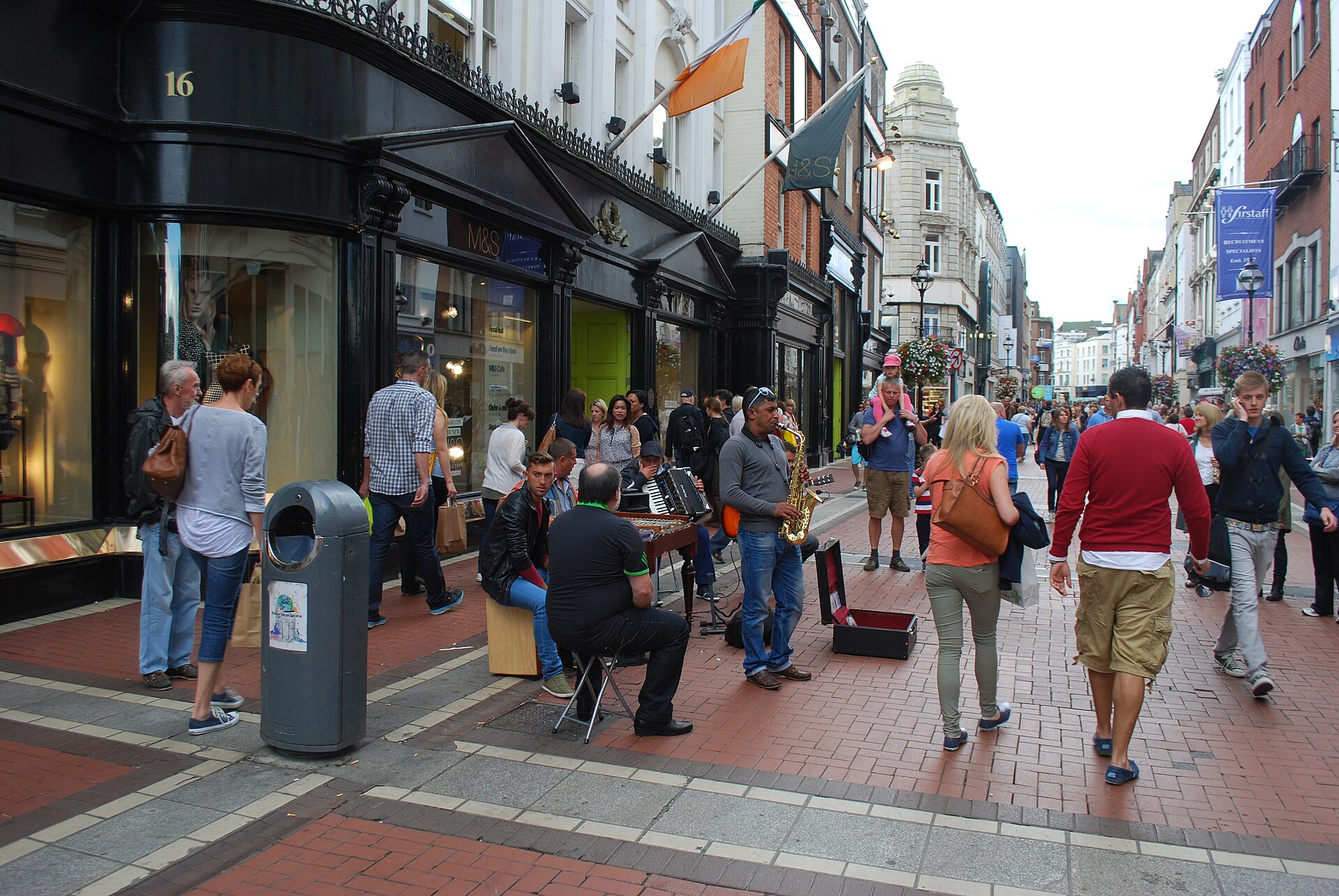
Grafton Street’s busker scene is iconic. Glen Hansard from The Commitments and the film Once performed here for years before achieving international fame. Hozier, Dermot Kennedy, and Picture This all busked Grafton Street as teenagers. Dublin City Council operates a busker permit system that ensures quality performance — most Grafton Street buskers are genuinely skilled musicians earning a living from performance.
Peak busking hours are Saturday afternoons and weekday lunchtimes. The buskers range from acoustic singer-songwriters to traditional Irish musicians to occasional brass bands and string quartets. Tipping is appreciated (€1–5 typical) — cards as well as cash are now accepted through QR code donations. Many buskers sell EPs and merchandise direct to crowds.
Cocktail Bars in the Grafton Street Quarter
The streets around Grafton Street have Dublin’s best cocktail bar scene:
- Peruke & Periwig — South William Street. Award-winning speakeasy with theatrical drinks.
- The Sidecar at the Westbury — Westbury Mall. Premium hotel cocktail bar.
- The Wilde at the Westbury — Westbury Mall. Cocktails plus mezze.
- Vintage Cocktail Club — Powerscourt Townhouse, South William Street. Speakeasy-style with extensive menu.
- The Blind Pig — Suffolk Street. Theatrical cocktails with reservation-only access.
- Anseo — Camden Street (south of the quarter). Pretty cocktails with brutalist decor.
Most cocktail bars charge €14–18 per cocktail. Book ahead for weekend nights, especially at Peruke & Periwig and the Blind Pig. The cocktail scene is more cosmopolitan and upscale than the Temple Bar pub scene a short walk away.
Powerscourt Townhouse
Powerscourt Townhouse on South William Street is a beautifully preserved Georgian residence (built 1771–1774) now operating as a luxury shopping and dining arcade. The central glass-roofed courtyard houses cafes, boutique food retailers (Sheridans Cheese Shop, Lemon Crepe), independent designer shops, and the Powerscourt Wine Cellars. The Solomon Fine Art and Powerscourt Gallery occupy upper floors.
The building’s original 18th-century plasterwork survives in many rooms. The cafes and restaurants make it an atmospheric Dublin lunch stop, with a sheltered Georgian setting. Open Monday–Saturday with reduced Sunday hours. Free entry.
Kildare Street Cultural Cluster
Kildare Street, parallel to Grafton Street one block east, hosts major Dublin cultural institutions:
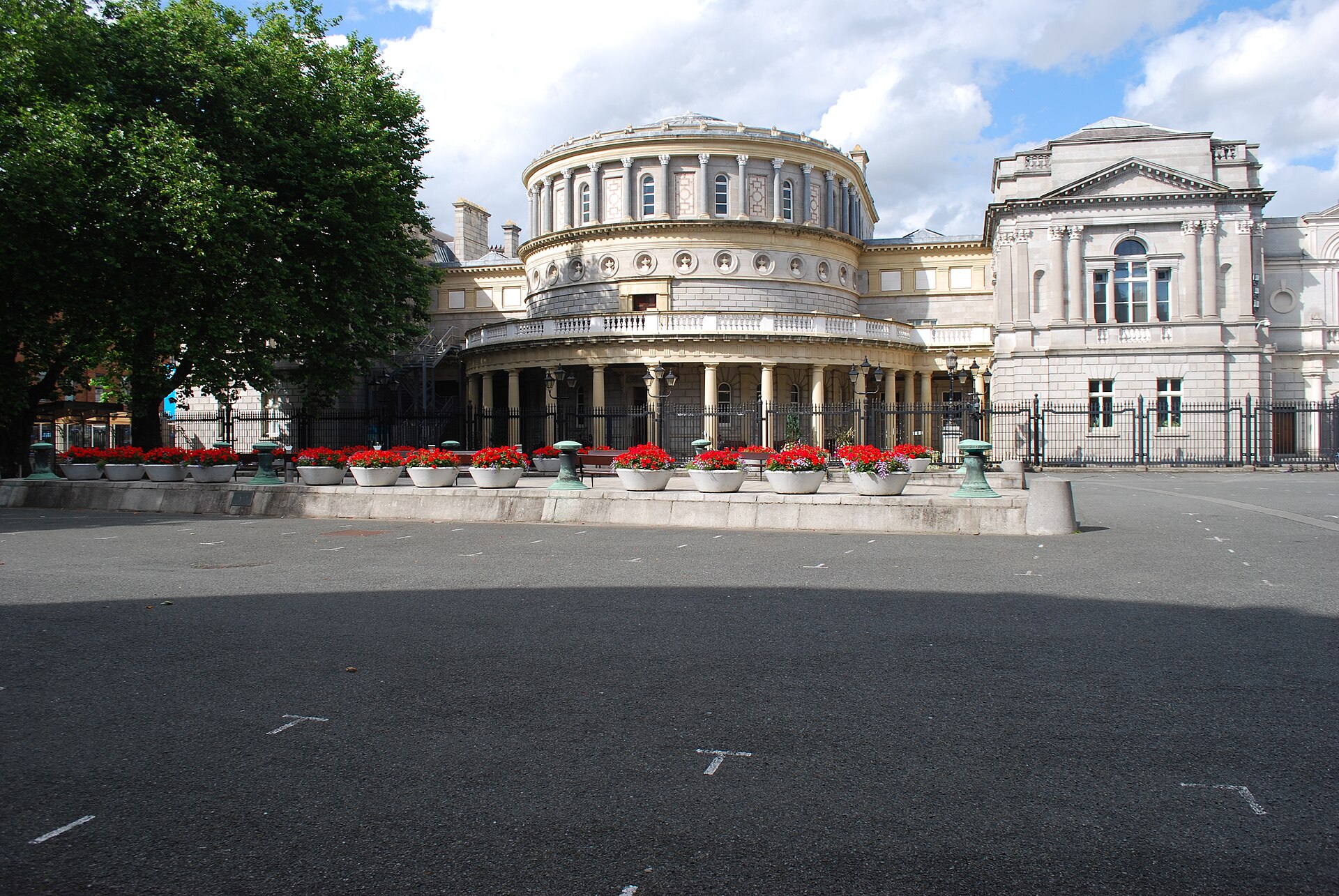
- National Museum of Ireland (Archaeology) — Free. Viking artefacts, bog bodies, the Treasury, Egyptian mummies.
- National Library of Ireland — Free. Yeats Exhibition permanently displayed. Reading Room access for free with simple registration.
- Leinster House — The Irish parliament. Pre-booked guided tours during summer.
- Government Buildings — Department of the Taoiseach. Saturday tours.
All these are a short walk from Grafton Street. Combining a Grafton Street shopping morning with a Kildare Street cultural afternoon makes a strong family Dublin day. The Trinity College Long Room and Book of Kells fits naturally between these two clusters.
Dawson Street and Mansion House
Dawson Street, parallel to Grafton Street one block east, hosts the Mansion House (built 1710), Dublin’s civic palace and the Lord Mayor’s official residence since 1715. The Mansion House Round Room (1821) hosted the First Dáil (Irish parliament) on 21 January 1919 — the formal declaration of Irish independence. Free public access to the Round Room when not booked for civic events.
Dawson Street itself runs from Trinity College to St Stephen’s Green parallel to Grafton Street. The street combines Hodges Figgis bookshop, the iconic Café en Seine bar, the Royal Hibernian Academy (just off), and several restaurants. Quieter than Grafton Street with more local character.
South William Street and Drury Street
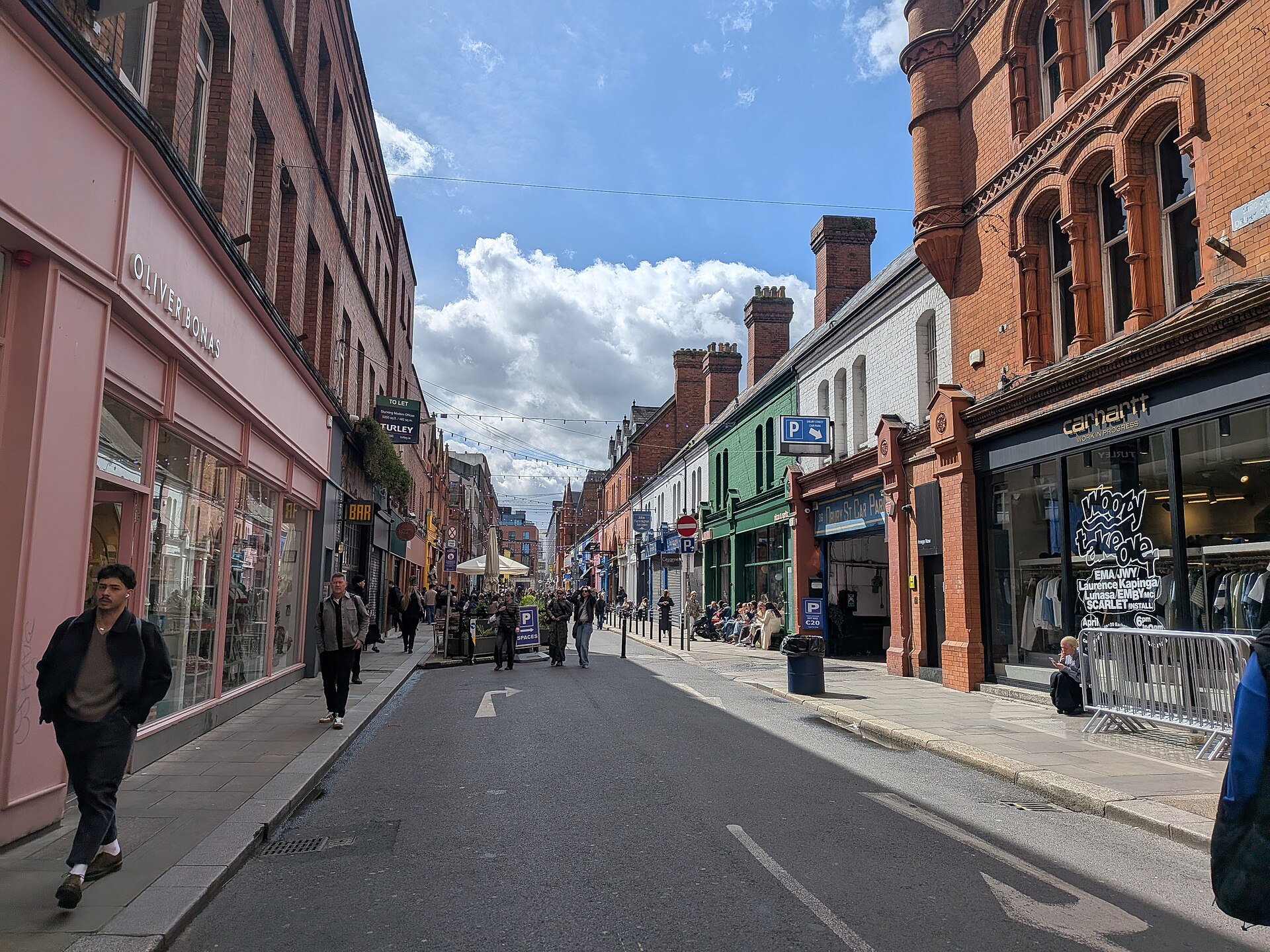
The streets immediately west of Grafton Street have emerged as Dublin’s most fashionable contemporary food and drink area. South William Street runs from Wicklow Street to Stephen Street, hosting the Powerscourt Townhouse plus Pinocchio Italian, Pichet French-Irish, Sokito Asian fusion, and many other quality restaurants. Drury Street has the Kerlin Gallery (one of Dublin’s top contemporary art galleries), Murphy’s Ice Cream, and a strong concentration of independent retail.
Both streets are pedestrianised at weekends. The Saturday street market in Drury Street/South William Street area offers good shopping. The Vintage Cocktail Club and Peruke & Periwig anchor the evening cocktail scene here. The area combines daytime shopping and lunching with evening drinking and dining without the Temple Bar tourist crowd intensity.
Where to Stay in the Grafton Street Quarter
The Grafton Street area has premium hotel options:
- The Westbury Hotel — Off Grafton Street. 5-star with afternoon tea and family rooms. From €280 per night.
- The Shelbourne — Stephen’s Green. The 1824 luxury landmark. From €320.
- The Stephen’s Green Hotel — Stephen’s Green. Right on the Green, a short walk from Grafton Street. From €180.
- The Trinity Townhouse Hotel — South Leinster Street. Boutique hotel near Trinity. From €220.
- The Mercer Hotel Dublin — Mercer Street Lower. Smaller boutique option. From €200.
- The Conrad Dublin — Earlsfort Terrace, just south of the Green. From €260.
Budget options nearby include Kinlay House Dublin (a hostel on Lord Edward Street) and Generator Dublin, north of the river in Smithfield. For mid-range, the Maldron Hotel Pearse Street and Premier Inn’s central hotels, including Temple Bar and Gloucester Street South, offer good value within walking distance.
Annual Events on Grafton Street
- St Patrick’s Parade (17 March) — The route runs from Parnell Square down O’Connell Street and across O’Connell Bridge to the Cuffe Street and Kevin Street junction. Grafton Street is not on it. Massive crowds.
- Christmas lights switch-on — Free family event, held ahead of Christmas. The Grafton Street lights are illuminated through to early January.
- Bloomsday (16 June) — Joyce sites in the area, Davy Byrne’s among them, mark the day; check the festival programme for each year’s events.
- Heritage Week (mid-August) — Free guided tours of heritage buildings throughout the area.
- Pride Festival (late June) — Pride parade route runs through Grafton Street.
- Culture Night (late September) — Free admission to dozens of cultural venues. Multiple venues in the Grafton Street area participate.
- Brown Thomas Christmas Windows (late November onwards) — Iconic Dublin Christmas tradition. Free viewing.
- Saturday Designer Market — Weekly market at Cow’s Lane just west of Grafton Street area.
Practical Tips for Grafton Street Visits
- Book Trinity College Book of Kells ahead — Entry is timed and subject to availability, so book online before you go, especially in summer.
- Know the busking hours — Dublin City Council bye-laws don’t allow street performance before 9am or after 11pm, so an early walk down Grafton Street comes without the music.
- Use St Stephen’s Green for breaks — The park’s benches and lawns offer free rest between attractions.
- Plan around weather — Powerscourt Townhouse, Stephen’s Green Shopping Centre, and the cafes offer covered shelter for sudden rain.
- Walk Grafton Street north-south or south-north — The 750m length is perfectly walkable; the street rewards leisurely exploration.
- Check for free events — Bloomsday, Heritage Week, and Culture Night all run free programmes in the area.
- Take the iconic photos — Trinity Front Gate, the Molly Malone statue at Suffolk Street, the Bewley’s Cafe exterior, the Halfpenny Bridge view from the river.
- Sample Bewley’s — At least once for the iconic Dublin cafe experience and Harry Clarke windows.
- Try afternoon tea — Bewley’s Kids Afternoon Tea, the Westbury, or the Shelbourne all offer family-friendly options.
Self-Guided Grafton Street Walking Tour
This 2–3 hour walking route covers the essential Grafton Street and Stephen’s Green Quarter:
- Start: College Green — Photograph the Trinity College front gate and the Bank of Ireland building (the original Irish Parliament House).
- Enter Trinity College — Walk through Front Square. Optional: Long Room library and Book of Kells (book ahead, €25 adult).
- Exit Trinity onto Suffolk Street — Photograph the Molly Malone statue.
- Walk north on Grafton Street to Bewley’s — Coffee or afternoon tea at Bewley’s. See the Harry Clarke stained glass windows.
- Continue south on Grafton Street — Browse Brown Thomas (luxury shopping), the Aran Sweater Market on lower Grafton Street, and the smaller boutiques.
- Detour west onto South William Street — Visit Powerscourt Townhouse, a Georgian shopping centre with cafes and restaurants for lunch.
- Continue south to Stephen’s Green — Walk through the park to the central fountain.
- Visit the Iveagh Gardens — Hidden “secret garden” behind Stephen’s Green. Entry from Clonmel Street.
- East to Merrion Square — Photograph the famous Georgian doorways and the Oscar Wilde Memorial Sculpture.
- End: National Gallery or National Museum — Free entry, both within walking distance.
Total walking distance about 3km. Add the Trinity Long Room visit (75 minutes) and one museum (90 minutes) for a full half-day. The route covers Dublin’s most iconic central sights in a compact area.
The Molly Malone Statue
The Molly Malone statue at the corner of Suffolk Street and Andrew Street (just outside Grafton Street proper) is one of Dublin’s most photographed sites. The bronze statue commemorates the legendary 17th-century fishmonger and the famous Dublin song “Cockles and Mussels (Alive, Alive-O!).” The statue, sculpted by Jeanne Rynhart in 1988 to mark Dublin’s 1,000th anniversary, depicts Molly with her wheelbarrow of cockles and mussels.
The statue is informally known to locals as “The Tart with the Cart” among other affectionate nicknames. Whether Molly Malone was a real historical figure or fictional remains debated. The song itself dates from around 1880, well after any historical Molly would have lived. Whatever the truth, the statue is now a Dublin photo institution.
Grafton Street Dublin: FAQ
What is Grafton Street known for?
Grafton Street is Dublin’s premier pedestrianised shopping street running between Trinity College and St Stephen’s Green. Famous for shops including Brown Thomas, Marks & Spencer, and Penneys nearby, plus the iconic Bewley’s Café (on Grafton Street since 1927) and the buskers, whose former ranks include Glen Hansard and Damien Rice.
Is Grafton Street worth visiting?
Yes — Grafton Street is essential for any Dublin visit. The pedestrianised shopping street, surrounding restaurants and cafes, Trinity College at the north end, and St Stephen’s Green at the south end all combine in walking distance. Most Dublin visitors spend significant time in this area.
What can I do in St Stephen’s Green?
St Stephen’s Green is a 22-acre Victorian park with the central duck pond, multiple walking paths and a children’s playground. Entry is free; gates open at 7:30am Monday to Saturday and 9:30am on Sundays and bank holidays. The Iveagh Gardens immediately behind offer a quieter alternative.
Should I visit Trinity College Long Room?
Yes — the Long Room library is one of Dublin’s most impressive interiors. Its usual collection is about 200,000 books, though most are out for conservation and only about 20,000 are left in the first four bays. The Book of Kells exhibition is the headline attraction but the library architecture is arguably more impressive. Tickets from €25 for adults, with student and senior concessions. Book ahead online.
Where do the Grafton Street buskers play?
Buskers perform on Grafton Street itself, the pedestrianised stretch between Trinity College and St Stephen’s Green. Peak hours are Saturday afternoons and weekday lunchtimes. Dublin City Council permit system ensures quality performers. Tipping is appreciated.
What are the best restaurants near Grafton Street?
Premium options include Restaurant Forty One (Michelin star), the Ivy Dawson Street, The Wilde and Sidecar at the Westbury. Mid-range options include Pichet, Cleaver East, and Sokito. Casual family options include Bewley’s, the Carluccio’s, and Pizza Express nearby.
Is the Grafton Street area expensive?
Yes, generally more expensive than other Dublin neighbourhoods. Premium hotels (the Westbury, Shelbourne, Conrad), designer shopping (Brown Thomas, Powerscourt boutiques), and high-end restaurants reflect the central location. Budget options exist (Bewley’s casual cafe, Penneys nearby, free park visits) but the area skews upscale.
How long should I spend in the Grafton Street area?
A full day is reasonable. Morning at Trinity College and the Long Room. Lunch at Bewley’s. Afternoon shopping on Grafton Street. Late afternoon at St Stephen’s Green park. Evening cocktails at Peruke & Periwig or dinner at a recommended restaurant. Multi-day Dublin visitors typically return to this area daily for at least food or sightseeing.
Keep Reading
- Smithfield & Stoneybatter: Dublin’s Hippest Neighbourhood — Jameson Distillery, independent cafes and trad sessions in the city’s coolest contemporary district.
- Dublin Docklands & Silicon Docks — Tech-company glass and restored Victorian warehouses along both banks of the lower Liffey.
- Portobello & Rathmines: Dublin’s Village Vibe — Canal-side walks and the Camden Street strip — village character ten minutes from Grafton Street.
- shopping on Grafton Street — a related guide from elsewhere on the site.
- The Best Afternoon Tea in Dublin — three five-star lounges within ten minutes of the Green, compared on price and on room.
Photo Credits
Grafton Street in Dublin: 20130810 dublin117 by Jean Housen, CC BY-SA 3.0, via Wikimedia Commons.
Street musicians on Grafton Street: 20130810 dublin252 by Jean Housen, CC BY-SA 3.0, via Wikimedia Commons.
Bewley’s on Grafton Street: 20130810 dublin249 by Jean Housen, CC BY-SA 3.0, via Wikimedia Commons.
National Library of Ireland: 20130810 dublin216 by Jean Housen, CC BY-SA 3.0, via Wikimedia Commons.
Flower beds in St Stephen’s Green: “Eine grüne Oase inmitten der Stadt Dublin”. 03 by Holger Uwe Schmitt, CC BY-SA 4.0, via Wikimedia Commons.
Drury Street in Dublin: Dublin – Drury Street from the North (04.2026) by Sebleouf, CC BY-SA 4.0, via Wikimedia Commons.
Lean na Comharthaí — Keep following the signs