Christ Church Cathedral Dublin: Crypt, Tickets & Christ Church vs St Patrick’s
Ardeaglais Chríost
Ar an gComhartha Seo — On this sign
- Quick Answer: Is Christ Church Cathedral Worth Visiting?
- Tickets, Hours and Last Admission
- The Crypt: The Reason to Come
- Upstairs: What Is Actually Old
- Dublinia and the Combination Ticket
- Christ Church or St Patrick’s?
- Where It Sits, and What Else Is Nearby
- How to Visit Well
- Choral Evensong and the Working Church
- Photography, Access and Practicalities
- Gotchas
- Christ Church Cathedral Dublin FAQ
- Keep Planning
- Keep Reading
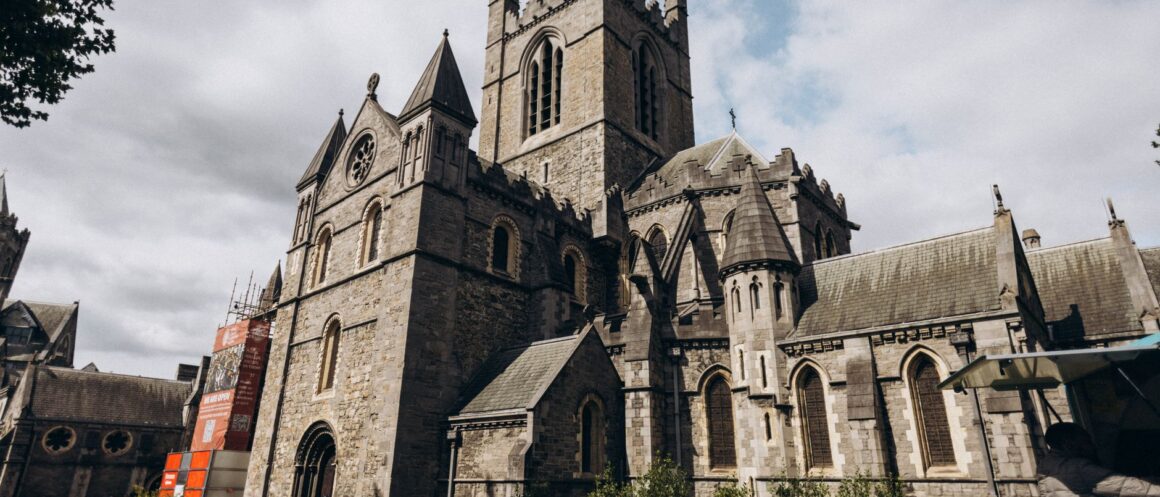
The best thing in Christ Church is underneath it. The cathedral above ground is a handsome medieval building heavily rebuilt by the Victorians, and it is worth an hour. The crypt below is the largest in Britain or Ireland, it runs the full length of the church, it has been there since the 1170s, and it is the oldest structure in Dublin still doing the job it was built for. Most visitors give it ten minutes on the way out. That is the wrong way round, and correcting it is most of what this guide is for.
What follows covers Christ Church Cathedral Dublin as a visit: the real prices and the seasonal hours, whether the Dublinia combination ticket is worth €25, what is actually in the crypt, the honest comparison with St Patrick’s up the road, and the small number of things inside that repay stopping at. It also tells you what the audio guide will not — which parts of the building are genuinely medieval and which are 1870s.
Quick Answer: Is Christ Church Cathedral Worth Visiting?
Yes, and mainly for the crypt. Adult admission is €12 and includes a self-guided tour with an audio guide, taking about an hour. That is good value for the oldest building in continuous use in the city, a genuinely strange collection of objects, and the tomb of the Norman knight who started the English involvement in Ireland. Children under 12 are €4 and under-fours are free, which makes it one of the more affordable major sights in Dublin.
The combination ticket with Dublinia next door is €25 for an adult and takes about two and a half hours. Buy it if you have any interest in Viking and medieval Dublin, or if you have children — Dublinia is a hands-on museum and it does the job the cathedral cannot. Buy the cathedral alone if you are short of time, and spend the hour you save on the crypt rather than the nave.
| Adult | €12.00 |
|---|---|
| Senior / Student | €10.00 |
| Child (under 12) | €4.00 |
| Toddler (under 4) | Free |
| Family (2 adults, 2 children) | €28.00 |
| Disabled visitor and carer | Free |
| Combined with Dublinia — adult | €25.00 (senior/student €21.50, child €13.00, family €66.00) |
| Ticket includes | Self-guided tour, audio guide, the crypt |
| Time needed | About an hour; 2.5 hours with Dublinia |
| Founded | Around 1030; rebuilt in stone from the 1180s |
Tickets, Hours and Last Admission
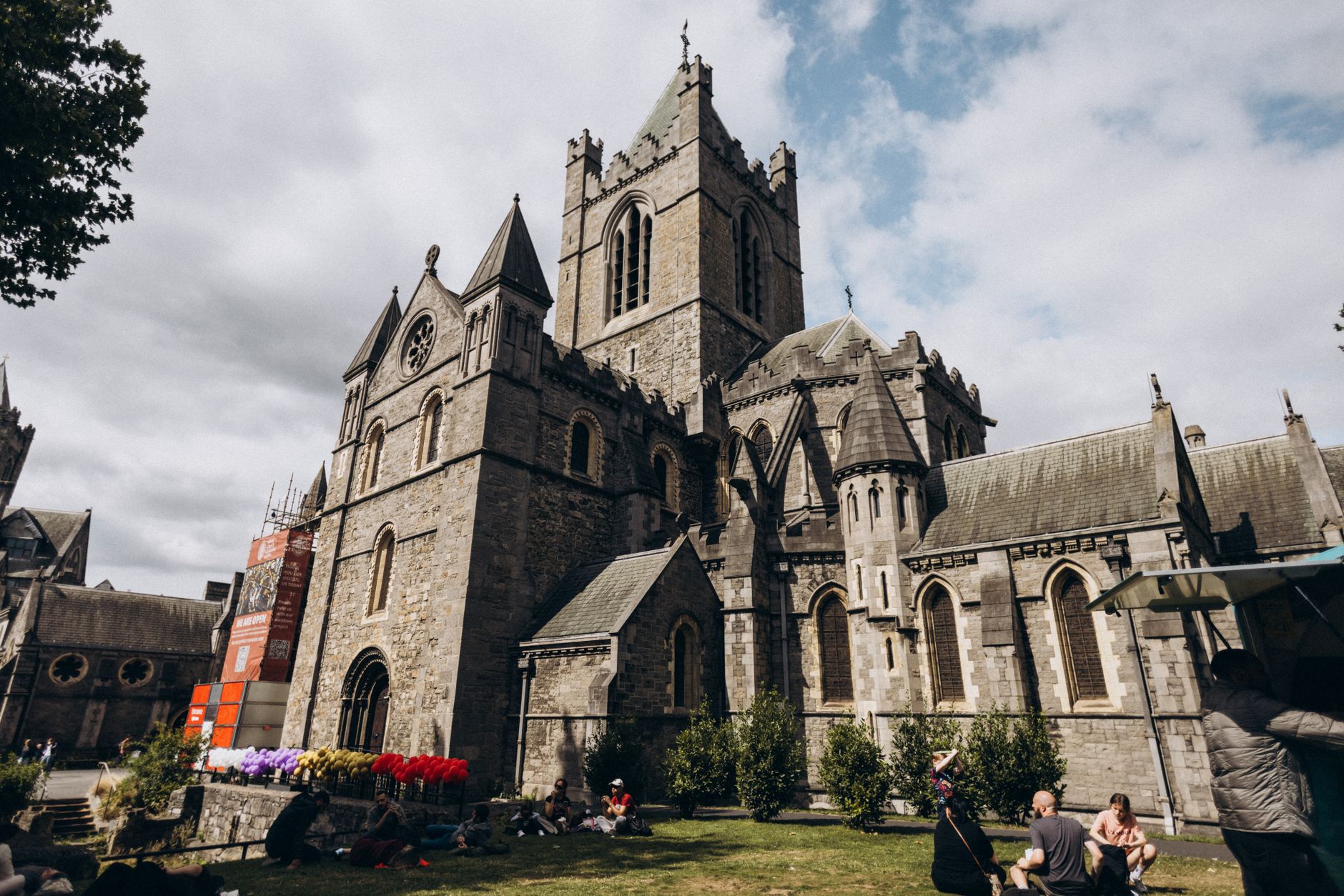
Admission to Christ Church Cathedral Dublin is €12 for an adult, €10 for seniors and students, €4 for children under 12, and free for under-fours, disabled visitors and their carers. A family ticket for two adults and two children is €28. That price includes the self-guided route and the audio guide, which runs about an hour and is better than most of its kind. Online booking usually carries a discount over the welcome-desk price.
| Monday | 09:00–18:15 |
|---|---|
| Tuesday | 09:00–17:30 |
| Wednesday | 09:00–18:15 |
| Thursday | 09:00–17:30 |
| Friday | 09:00–18:30 |
| Saturday | 09:00–18:30 |
| Sunday | 12:30–15:00 and 16:30–18:30 |
| Last admission | 45 minutes before closing, every day |
Two things to note. Last admission is 45 minutes before closing, and since the audio route takes an hour, arriving at the cut-off means being moved along at the end. And Sunday is broken into two windows around services, so a Sunday visit needs planning — the cathedral is a working church first and an attraction second. Hours also shift seasonally, so check before you travel.
Guided tours, including belfry access, are booked at the welcome desk rather than online. If you can get on one, do — the bell tower is the part of the building nobody sees and the guides let you ring.
The Crypt: The Reason to Come
Built in the 1170s and 1180s and running roughly 63 metres beneath the church, this is the largest crypt in Britain or Ireland and the oldest structure in Dublin still in use. It is not a burial vault in the gothic-novel sense — it is a vast, low, vaulted undercroft that has been a market, a meeting place, a storeroom and at various points a tavern. Dublin Corporation once complained about the drinking down here. That is the kind of building it is.
What to look for:
- The mummified cat and rat. Known to everyone in Dublin as Tom and Jerry, found in the 1860s inside an organ pipe where the cat had apparently pursued the rat and both had got stuck. They desiccated rather than rotted. James Joyce reached for them as a simile in Finnegans Wake, which is a strange afterlife for a cat and a rat that got stuck in an organ.
- The Treasures of Christ Church exhibition, including the cathedral plate — some of it given by William III after the Battle of the Boyne in 1690, which he attended in person.
- The stocks, seventeenth-century, from the cathedral’s own court, which had civil jurisdiction over the surrounding liberty.
- The heart of St Laurence O’Toole, Dublin’s patron saint, kept in a heart-shaped iron reliquary. It was stolen in 2012 and recovered in 2018 — a genuinely odd episode that says something about how strange a place this is.
- The columns themselves. Massive, squat, Romanesque, and eight and a half centuries old. Put your hand on one.
Allow twenty-five minutes down here at minimum, not the five most people give it. If the rest of Christ Church Cathedral Dublin is a fine but much-restored medieval church, the crypt is the real thing, largely untouched.
Upstairs: What Is Actually Old
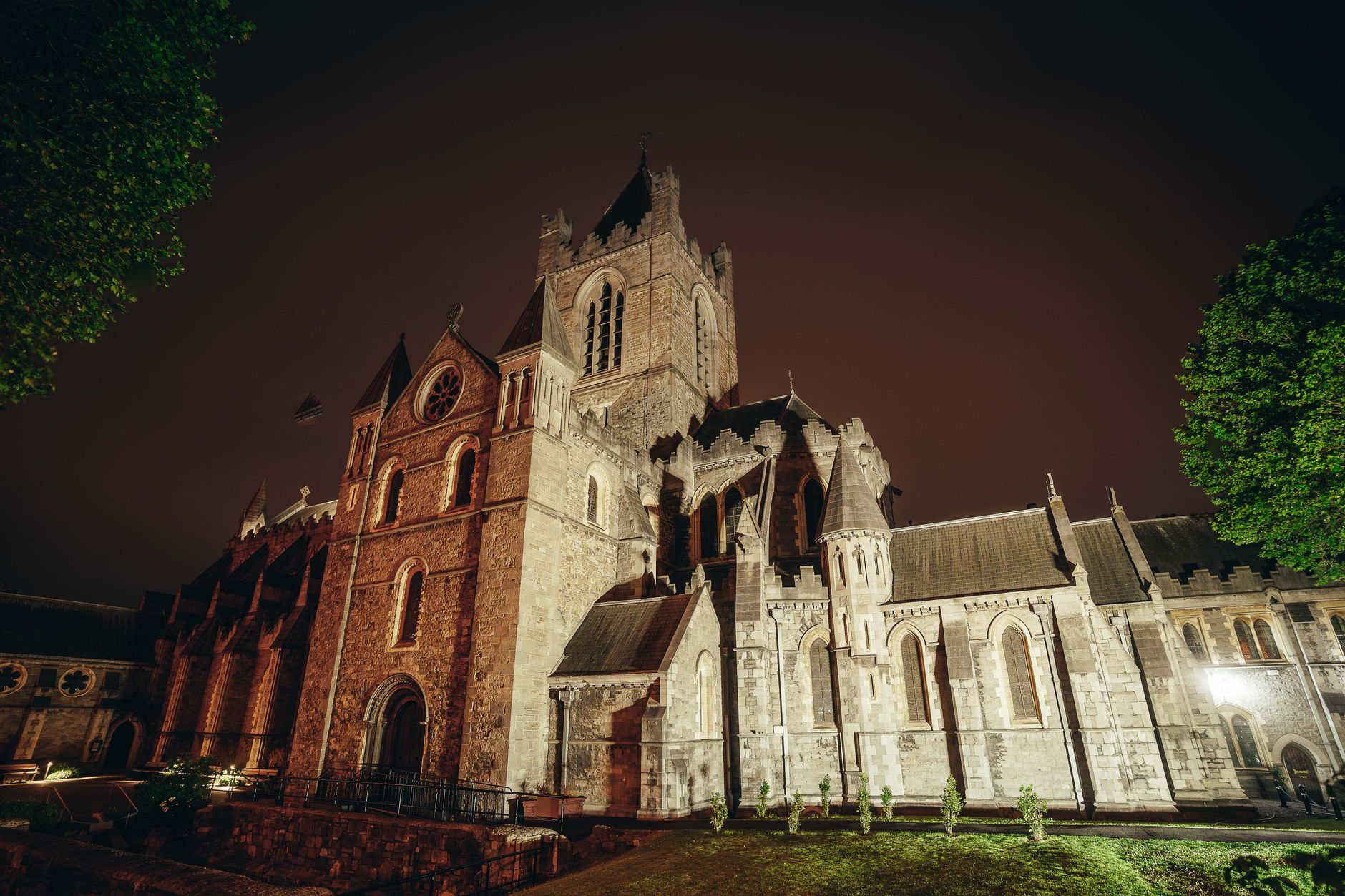
Be clear-eyed about the building. Christ Church was founded around 1030 by Sitriuc Silkenbeard, the Hiberno-Norse king of Dublin, as a wooden church, and rebuilt in stone from the 1180s under the Norman lord Richard de Clare — Strongbow — and Archbishop Laurence O’Toole. Then in 1562 the roof and the south wall of the nave collapsed. And in the 1870s the architect George Edmund Street rebuilt a great deal of it, paid for by Henry Roe, a whiskey distiller who spent an enormous private fortune on the project.
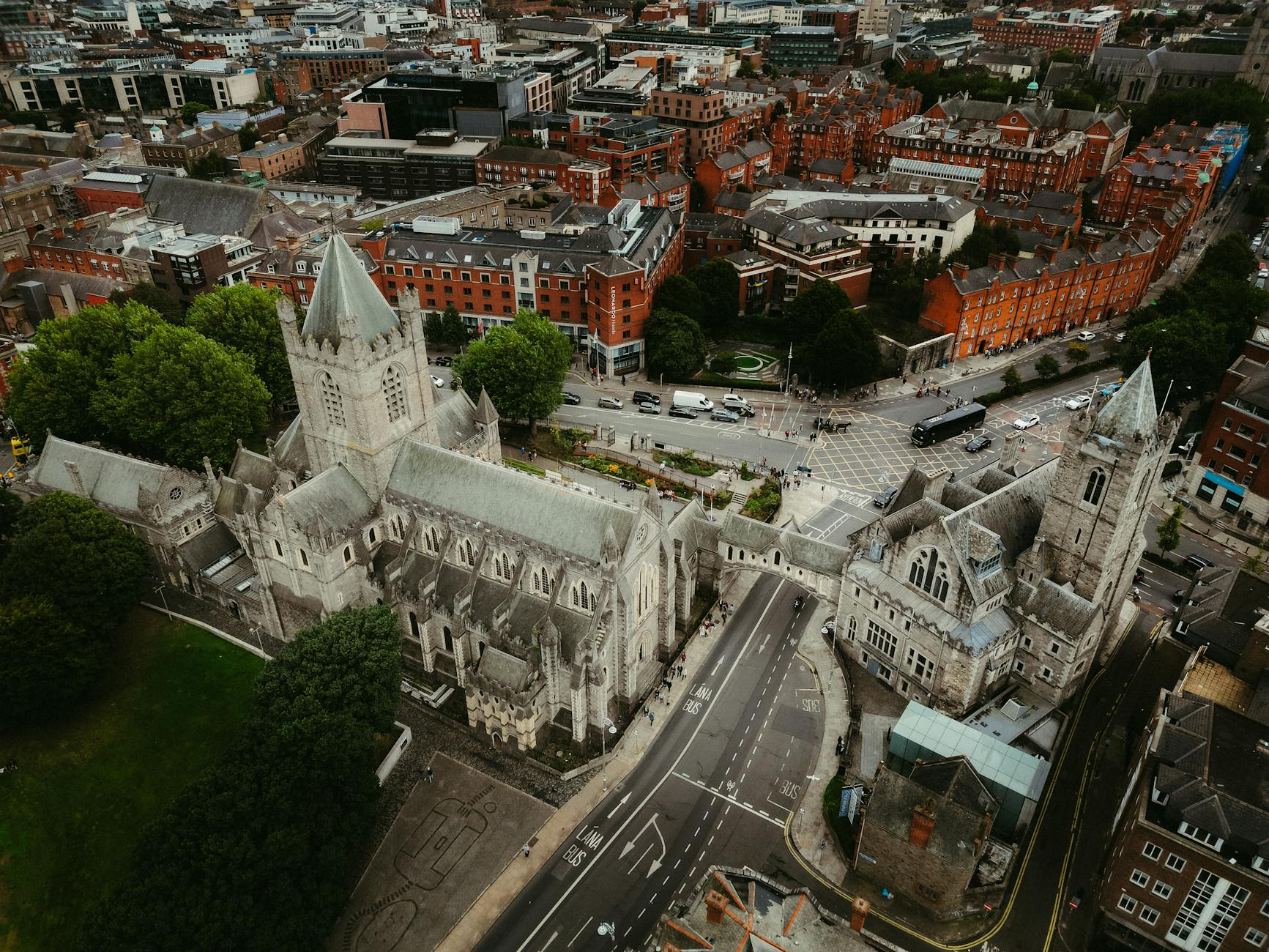
The consequence is that a lot of what you see outside — including the covered bridge over St Michael’s Hill — is high Victorian rather than medieval. This is not a criticism; Street’s work saved the building. But it is worth knowing which centuries you are looking at.
Strongbow’s tomb
In the nave, and the single most historically loaded object in the cathedral. Strongbow’s Norman invasion of 1170 is the beginning of eight hundred years of English involvement in Ireland, and he is buried in the church he helped rebuild. The catch: the effigy you see is not his. The original was destroyed in the 1562 collapse and replaced with a monument brought from Drogheda. The smaller half-figure beside it has attracted several centuries of speculation. The tomb was a landmark in medieval Dublin — rents were paid and contracts sealed on it.
The leaning north wall
Look along the north side of the nave and you will see it is visibly out of true, leaning outwards by a noticeable margin. That is a survival of the 1562 collapse, and it is one of the few places where the building’s actual history is written on its fabric rather than explained on a panel.
The bells
Christ Church rings nineteen bells, among the largest peals anywhere. If you are in the old city on a Sunday morning or during practice, stop and listen — it is free, and it is the same sound the medieval city heard.
Dublinia and the Combination Ticket
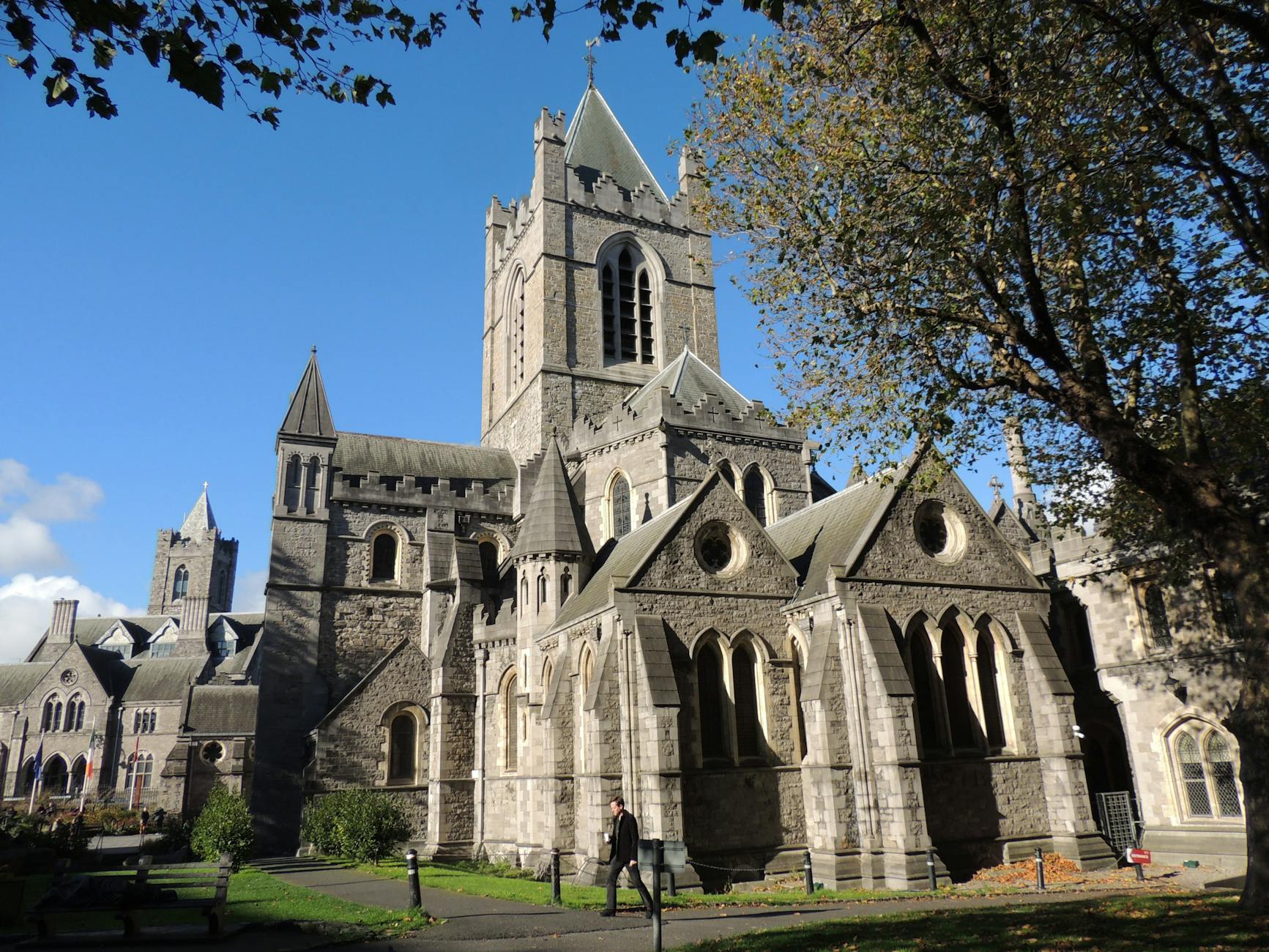
Cross the covered bridge from Christ Church Cathedral Dublin and you are in the old Synod Hall, which now houses Dublinia — a Viking and medieval Dublin experience with reconstructed streets, an archaeology floor and a climbable tower with a view over the old city. It is unashamedly a museum for families rather than a scholarly collection, and it is very good at what it does.
The combination ticket is €25 adult, €21.50 senior or student, €13 child, €66 family, against €12 for the cathedral alone, and covers about two and a half hours across both sites. Buy it if you have children, if you have any interest in the Viking city, or if the weather has turned — this is a good half-day indoors. Skip it if you are cathedral-hopping on a tight schedule, or if you have already done the Viking material at the National Museum of Ireland, whose archaeology collection is free and considerably deeper.
For the wider context, our Viking and medieval Dublin guide covers the whole old city, including the surviving stretches of the city walls a few minutes away.
Christ Church or St Patrick’s?
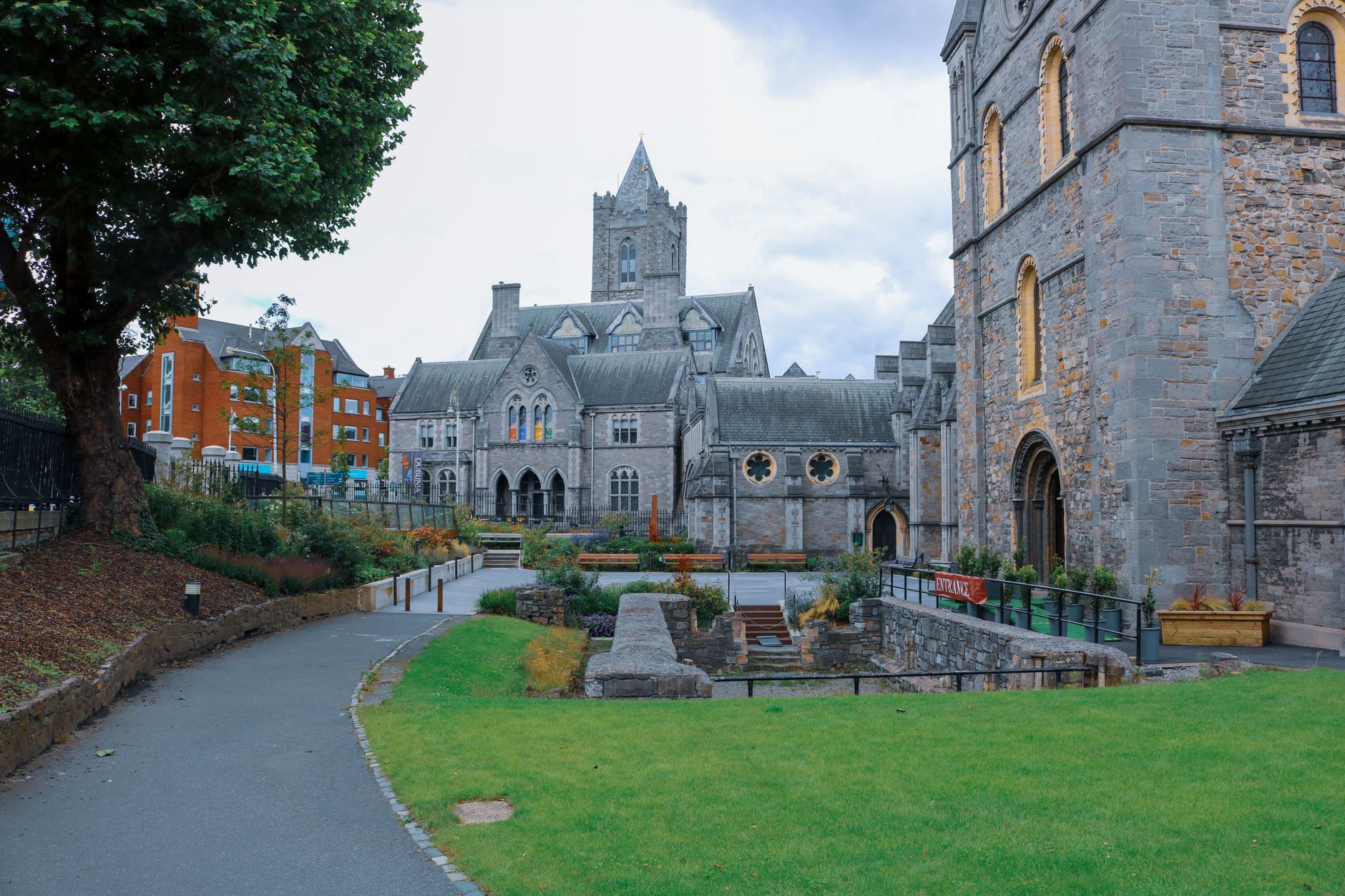
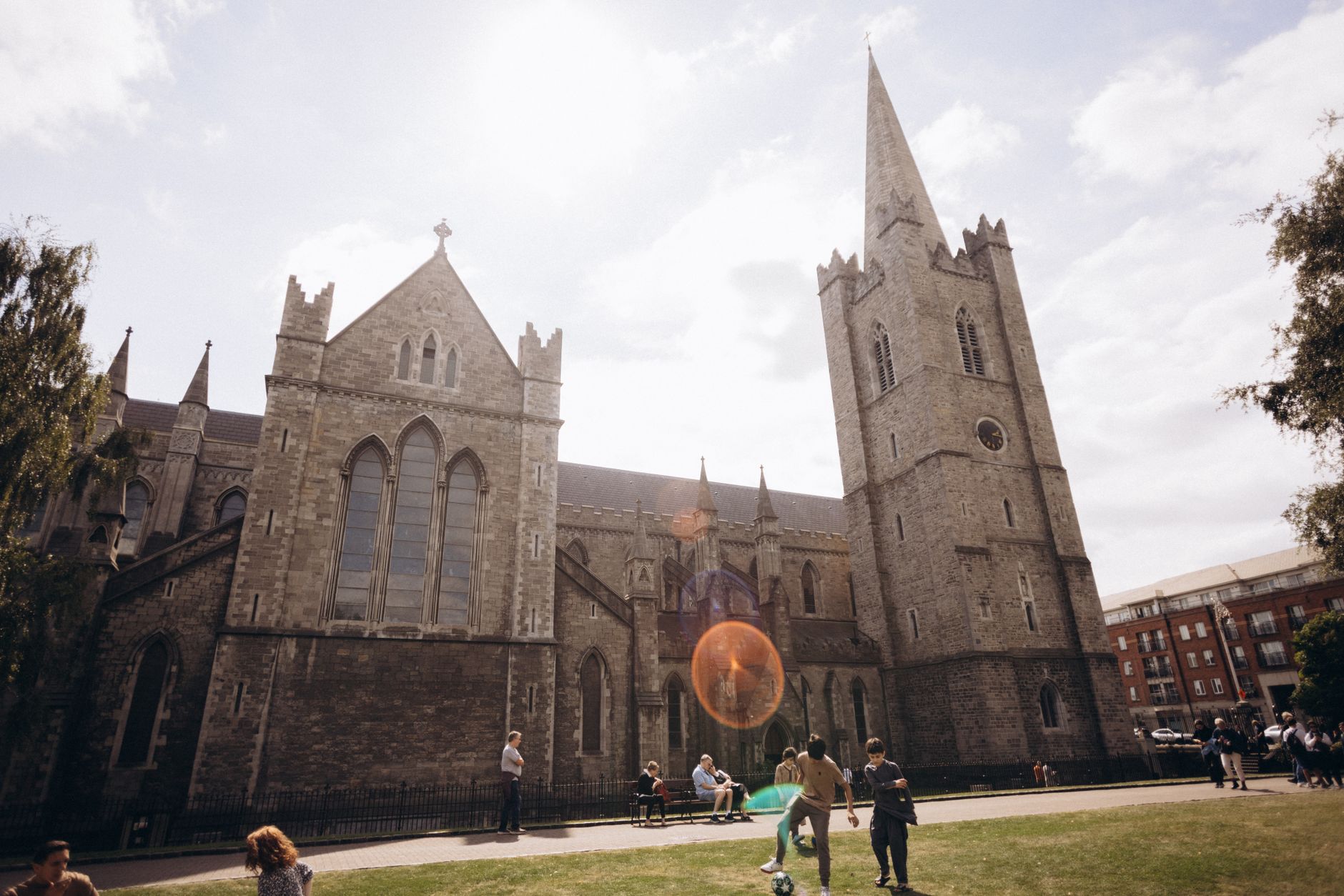
Dublin has two Church of Ireland cathedrals five minutes apart, which is the result of a jurisdictional argument that ran from the 1190s to 1300 and was settled by letting both keep the title. Christ Church is the diocesan cathedral of Dublin; St Patrick’s is the National Cathedral. Neither outranks the other in any way a visitor would notice.
| Christ Church | St Patrick’s | |
|---|---|---|
| Founded | c. 1030, rebuilt from the 1180s | 1191 |
| Status | Diocesan cathedral of Dublin | National Cathedral |
| Adult admission | €12.00 | €11.50 |
| The draw | The crypt, Strongbow, Dublinia next door | Jonathan Swift, the monuments, the scale |
| Guided tours | Booked at the desk; belfry access | Free, 10:30 and 14:30 Mon–Sat |
| Attached extra | Dublinia, on a combined ticket | Marsh’s Library, on a joint ticket |
| Time needed | An hour, or 2.5 with Dublinia | An hour, or 90 minutes with a tour |
Choose Christ Church if you want the medieval, the crypt, and something for children. Choose St Patrick’s if you want literary history, monuments and the free guided tour, which is the best thing either cathedral offers. Doing both in one morning is entirely reasonable — they are a five-minute walk apart and around €24 together — and Dublinia next door turns it into a full and excellent day in the old city.
Where It Sits, and What Else Is Nearby
The cathedral stands at the top of the ridge where the Vikings founded Dublin, between the old city and the Liberties, and everything around it is walkable.
- Dublinia, across the bridge, on the combined ticket.
- St Patrick’s Cathedral and Marsh’s Library, five minutes south.
- The Chester Beatty, free and outstanding when open, ten minutes east. Closed until the end of December 2026, because Dublin Castle around it is closed to visitors until January 2027 for Ireland’s EU Council presidency.
- The medieval city walls, including the surviving stretch at Cook Street and St Audoen’s, a few minutes north-west.
- The Guinness Storehouse, fifteen minutes west through the Liberties.
- The Brazen Head, Dublin’s oldest pub, ten minutes down towards the river.
This is the densest concentration of genuinely old Dublin anywhere in the city, and it is all on foot. Temple Bar is immediately downhill, which is worth knowing in both directions.
How to Visit Well
- Go to the crypt first, not last. It is the best part and you will have more attention for it at the start.
- Allow the full hour. The audio guide is paced for it and rushing the nave to make the crypt is the wrong economy.
- Arrive well before last admission, which is 45 minutes before closing on every day.
- Book online for the discount, unless you want a guided tour, which is desk-only.
- Ask about the belfry tour. Ringing a bell in a nineteen-bell peal is not an opportunity most cathedrals offer.
- Combine with St Patrick’s, not with Dublinia, if you are short on time and interested in buildings. Combine with Dublinia if you have children.
- Sunday needs planning. Two narrow windows either side of services, and no flexibility.
- Choral evensong is a service, not a ticket. If you would rather hear the building used than tour it, come to that instead.
Choral Evensong and the Working Church
Christ Church has kept a choral foundation since the middle ages, and its choir sang at the world premiere of Handel’s Messiah in Dublin in 1742 alongside the St Patrick’s choristers. Evensong is still sung several times a week during term, and it is the one way to experience Christ Church Cathedral Dublin as the thing it actually is rather than as an attraction with an audio guide.
You attend as a member of the congregation rather than a ticket holder, and the difference is not subtle: the lights are low, the nave is doing its job, and a trained choir in an eight-hundred-year-old stone room sounds like nothing a daytime visit can offer. Service times move with the school terms and the church year, so check the cathedral’s own listings rather than assuming. If you are only in Dublin for a few days and can fit one, this is the better hour.
Photography, Access and Practicalities
Photography for personal use is generally fine inside, though tripods and flash are another matter and services are off limits. The cathedral and crypt are largely accessible, with lifts and ramps covering most of the route, and disabled visitors and their carers enter free — a genuinely good policy that several larger Dublin attractions do not match.
There is a café and a shop on site. The nearest Luas stop is Four Courts on the Red Line, about ten minutes’ walk down the hill, and several bus routes stop on Lord Edward Street immediately outside — see getting around Dublin. Coming from Grafton Street or Trinity, walking takes about fifteen minutes and is more pleasant than working out the alternative. Wear something with grip: the approach is cobbled and Dublin cobbles in the wet are genuinely slippery, as our weather guide keeps having to point out.
Gotchas
- Last admission is 45 minutes before closing, and the visit takes an hour. Do not cut it fine.
- Sunday opening is two short windows — 12:30 to 15:00 and 16:30 to 18:30 — around services.
- Much of the exterior is 1870s, not medieval. The covered bridge to Dublinia is Victorian.
- Strongbow’s effigy is not Strongbow’s. The original was destroyed in the 1562 collapse and replaced from Drogheda.
- Most people rush the crypt. It is the oldest building in Dublin still in use. Give it twenty-five minutes.
- Dublin Castle is closed to visitors until January 2027, so a nearby-sights plan from an older guidebook will not work. The Chester Beatty is closed until the end of December 2026 too.
- Guided and belfry tours cannot be booked online — ask at the welcome desk on arrival.
- The National Museum’s Viking collection is free and deeper than Dublinia. If you only want the archaeology, save the €13.
- Hours shift seasonally. These are the current figures; confirm before you travel.
Christ Church Cathedral Dublin FAQ
Which is better, Christ Church or St Patrick’s?
Neither, and they are different enough that you can reasonably do both. Christ Church has the crypt — the largest in Britain or Ireland and the oldest building in Dublin still in use — plus Strongbow’s tomb and Dublinia next door. St Patrick’s is bigger, holds Jonathan Swift’s grave, and runs free guided tours twice a day. Choose Christ Church for the medieval and for children, St Patrick’s for literature and monuments.
What is in the Christ Church crypt?
The mummified cat and rat known as Tom and Jerry, found in an organ pipe in the 1860s and mentioned by Joyce in Finnegans Wake; the Treasures of Christ Church exhibition including plate given by William III after the Battle of the Boyne; seventeenth-century stocks from the cathedral’s own court; and the heart of St Laurence O’Toole in an iron reliquary, stolen in 2012 and recovered in 2018. It is also simply a magnificent 1170s vaulted space running the length of the church.
Can you combine Christ Church and Dublinia?
Yes, on a combined ticket at €25 for an adult, €21.50 for seniors and students, €13 for a child and €66 for a family of four. That covers both sites and takes about two and a half hours. Dublinia occupies the old Synod Hall, reached by the covered bridge from the cathedral, and is a hands-on Viking and medieval museum aimed largely at families.
How much does Christ Church Cathedral cost?
Adult admission is €12, seniors and students €10, children under 12 €4, and a family ticket for two adults and two children €28. Under-fours, disabled visitors and accompanying carers go free. The price includes a self-guided tour with an audio guide and full access to the crypt. Booking online usually gets you a discount on the desk price.
What are the opening hours of Christ Church Cathedral?
Roughly 09:00 to between 17:30 and 18:30 Monday to Saturday depending on the day, with Friday and Saturday the latest at 18:30. Sunday is split into two windows, 12:30 to 15:00 and 16:30 to 18:30, around services. Last admission is 45 minutes before closing every day, and hours shift with the season.
How old is Christ Church Cathedral Dublin?
The first church on the site was founded around 1030 by Sitriuc Silkenbeard, the Hiberno-Norse king of Dublin, in wood. The stone building went up from the 1180s under Strongbow and Archbishop Laurence O’Toole, and the crypt dates from that period. The roof and south wall collapsed in 1562, and the architect George Edmund Street rebuilt much of the church in the 1870s.
How long do you need at Christ Church Cathedral?
About an hour for Christ Church Cathedral Dublin and its crypt with the audio guide, which is what the route is paced for. Allow two and a half hours if you are taking the combination ticket and doing Dublinia as well. Give the crypt at least twenty-five minutes of that hour rather than the five most visitors manage.
Is Christ Church Cathedral free to enter?
No, it is a paid attraction at €12 for an adult, though under-fours, disabled visitors and their carers enter free. Attending a service is a different matter from a sightseeing visit — choral evensong in particular is a better way to experience the building than any ticket, and you come as a member of the congregation rather than a visitor.
Can you ring the bells at Christ Church?
On a guided tour, yes. The cathedral rings nineteen bells, among the largest peals anywhere, and guided tours include belfry access with the chance to ring. These tours are booked at the welcome desk on arrival rather than online, so ask when you buy your ticket.
Keep Planning
- St Patrick’s Cathedral — the other Dublin cathedral, five minutes away.
- Viking and medieval Dublin — the city this cathedral was founded in.
- The Liberties — the neighbourhood that starts at the cathedral gate.
- Things to do in Dublin — the master list.
- Dublin museums — including the free Viking collection at the National Museum.
- The oldest pubs in Dublin — the Brazen Head is ten minutes downhill.
- One day in Dublin — how to fit the old city into a single day.
Keep Reading
Lean na Comharthaí — Keep following the signs