St Patrick’s Cathedral Dublin: Tickets, History & What to See
Ardeaglais Naomh Pádraig

Ar an gComhartha Seo — On this sign
- Quick Answer: Is St Patrick’s Cathedral Worth Visiting?
- Tickets, Hours and the Sunday Trap
- What to Actually Look At
- A Short History, Because It Explains the Building
- The Choir, and the Case for Evensong
- St Patrick’s or Christ Church?
- What Else Is Nearby
- How to Visit Well
- Gotchas
- St Patrick’s Cathedral Dublin FAQ
- Keep Planning
- Keep Reading
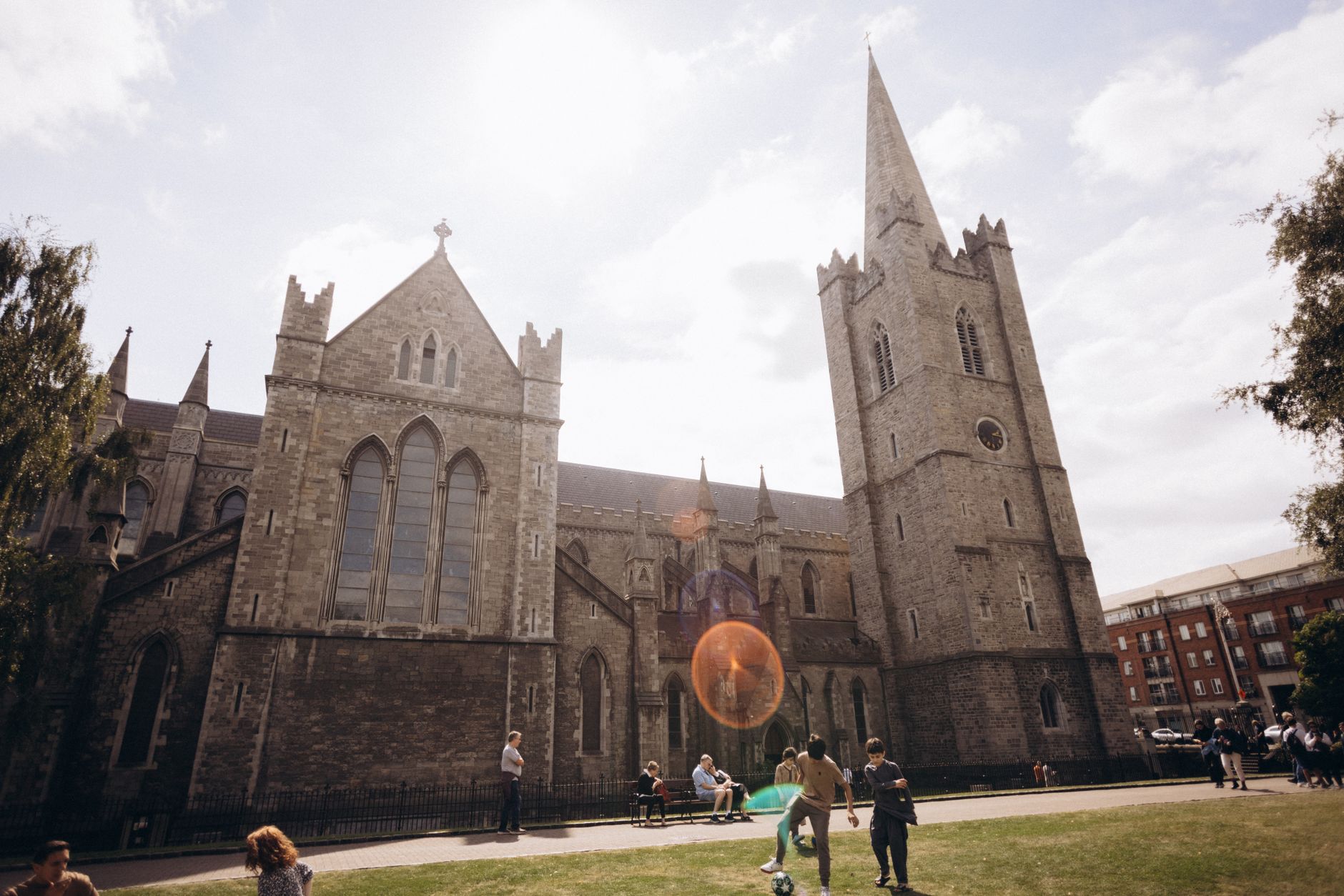
Dublin has two medieval Church of Ireland cathedrals about five minutes’ walk apart, which is one more than any city strictly needs and the result of an 800-year jurisdictional argument nobody ever quite resolved. St Patrick’s is the bigger of the two, the taller, the national one, and the one where Jonathan Swift spent thirty-two years as Dean and is buried in the floor of the nave with the epitaph he wrote for himself. It is also, unusually for a cathedral, a building whose best stories are all about people rather than architecture.
This guide covers St Patrick’s Cathedral Dublin as a visit rather than as a monument: what it costs, when to go and when not to, what is actually worth stopping at inside, how long you need, how it compares with Christ Church up the hill, and whether the whole thing justifies €11.50 in a city where the national museums are free. Short version — it does, for the right visitor, and this guide explains which visitor that is.
Quick Answer: Is St Patrick’s Cathedral Worth Visiting?
Yes, if you have any interest in Swift, in Irish history told through monuments, or in medieval buildings that have been continuously in use for eight centuries. Adult admission is €11.50, a visit takes about an hour, and free guided tours run twice a day Monday to Saturday — take one, because the building is far more interesting explained than wandered. It is the largest cathedral in Ireland and the National Cathedral of the Church of Ireland.
Say no if you are collecting cathedrals rather than enjoying them, or if your budget is tight — Dublin’s national museums and the National Gallery are all free and several are better value hour for hour. And be careful with Sundays: visiting hours are heavily restricted around services and there are no guided tours at all, which turns the best version of this visit into a much thinner one.
| Adult | €11.50 |
|---|---|
| Senior (60+) / Student | €10.00 |
| Child (6–12) | €5.50 |
| Under 5 | Free |
| Family (2 adults, up to 3 children) | €31.00 |
| Joint ticket with Marsh’s Library | €17.00 |
| Mon–Fri | Opens 09:30, last admission 17:00 |
| Saturday | Opens 09:00, last admission 18:00 |
| Sunday | Opens 09:00, last admission 13:00 and 16:30 — restricted |
| Free guided tours | 10:30 and 14:30, Monday to Saturday only |
| Time needed | About an hour; 90 minutes with a tour |
Tickets, Hours and the Sunday Trap
Admission to St Patrick’s Cathedral Dublin is €11.50 for an adult, €10.00 for students and over-60s, €5.50 for children aged six to twelve, and free for under-fives. A family ticket covering two adults and up to three children is €31.00. If you are going to Marsh’s Library next door — and you should — the joint ticket at €17.00 is the obvious buy, because Marsh’s on its own is one of the best small sights in Dublin and the combined price is barely more than the cathedral alone.
Opening is 09:30 on weekdays with last admission at 17:00, and 09:00 on Saturdays with last admission at 18:00. Sunday is the problem. The cathedral is a working church and Sunday belongs to worship, so visiting is squeezed into restricted windows with last admissions at 13:00 and 16:30, and there are no guided tours. If Sunday is your only option, go early and accept that you are getting the lesser version. If you have a choice, come on a weekday morning.
The free guided tours at 10:30 and 14:30, Monday to Saturday, are the single best thing about the visit and cost nothing extra. A cathedral is a room full of objects whose meaning is not self-evident; a guide turns forty minutes of looking at monuments into the story of a city. Time your arrival for one. Private group tours run at €18 per person for groups of ten or more, Monday to Saturday.
Entry is included with the Dublin Pass, which is worth checking against the rest of your itinerary — the pass only pays for itself if you are doing several paid attractions in a short window.
What to Actually Look At
Most visitors do a slow lap and leave having registered “big and old”. Here is what is worth stopping for.
Jonathan Swift’s grave and the self-written epitaph
Swift — Dean here from 1713 to 1745, and the author of Gulliver’s Travels and A Modest Proposal — is buried in the floor of the nave. Beside him lies Esther Johnson, the “Stella” of his letters, whose exact relationship to him remains one of Irish literature’s better arguments. His Latin epitaph, which he composed himself, says he has gone where savage indignation can no longer lacerate his heart. W. B. Yeats called it the greatest epitaph in history. Swift’s pulpit, death mask and writing table are displayed nearby.
If Swift is why you came, our famous writers’ landmarks and Dublin literary heritage guides map the rest of the city’s literary geography, and James Joyce’s Dublin covers the other end of the tradition.
The Door of Reconciliation
A battered wooden door with a rough hole hacked through it, from 1492. The Earls of Ormond and Kildare were feuding; Ormond’s people took refuge in the chapter house; Kildare, wanting to end it, cut a hole in the door and pushed his arm through to shake hands, not knowing whether it would be taken or removed. It was taken. This is where the phrase chancing your arm comes from, and the door is still here, which is a better souvenir of medieval Dublin than anything in a gift shop.
The Boyle Monument
An enormous, gaudy, four-tiered family monument erected by Richard Boyle, Earl of Cork, in 1632, and a piece of pure Jacobean self-promotion. It was originally placed where the high altar should be, which caused a furious row with the Lord Deputy and had it moved. One of the small figures on it is Boyle’s son Robert, later the chemist of Boyle’s Law.
The military colours and the memorials
The nave is hung with regimental colours and lined with memorials to Irish soldiers, which makes the building an unexpectedly direct record of a complicated national history — Irishmen who died in British uniforms, commemorated in the national cathedral of a state that spent much of the twentieth century not discussing them. It is quietly one of the more thought-provoking rooms in Ireland.
The Celtic grave slab and the well
An early Christian grave slab marks the site of the well where St Patrick is said to have baptised converts in the fifth century, which is the reason there is a cathedral on this low, damp ground beside the Poddle rather than up on the ridge with everything else.
A Short History, Because It Explains the Building
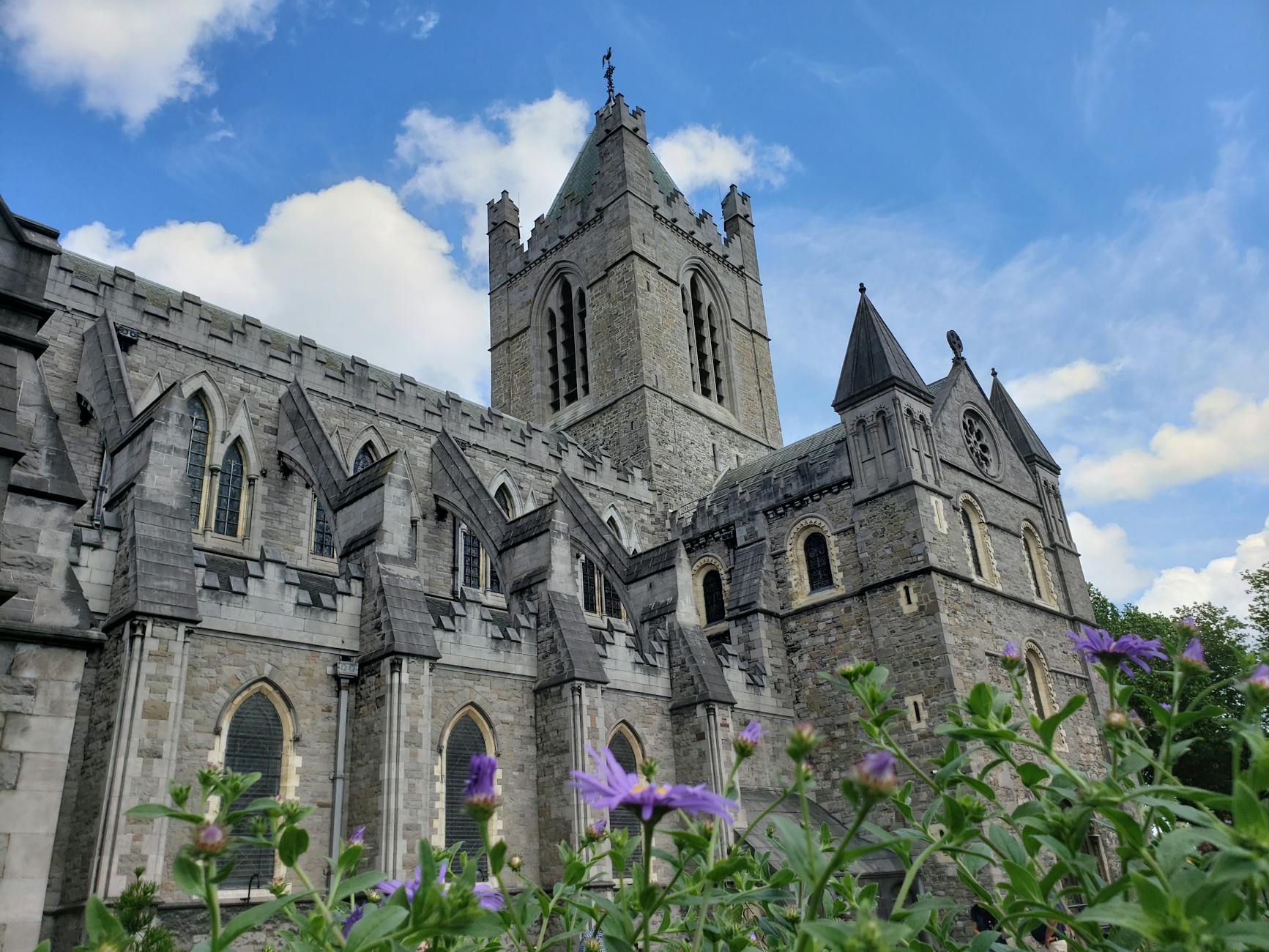
The church was founded in 1191 and raised to cathedral status shortly after, on the site of an earlier church beside St Patrick’s well. Almost immediately this created a problem: Dublin already had a cathedral at Christ Church, inside the city walls. St Patrick’s was outside them. The two spent centuries in a jurisdictional dispute finally settled in 1300 by an agreement that let both keep the title — which is why Dublin still has two, with Christ Church as the diocesan cathedral and St Patrick’s as the National Cathedral.
The building you walk into is largely thirteenth-century in plan and heavily Victorian in fabric. By the 1860s it was close to derelict, and Sir Benjamin Lee Guinness — of the brewery, a mile down the road — paid for a full restoration out of his own pocket. That is why so much of the interior looks nineteenth-century: it is. The 43-metre tower, Minot’s Tower, went up in the fourteenth century after a fire, with the spire added in the 1740s.
Two other things happened here worth knowing. Handel’s Messiah had its world premiere in Dublin in 1742 on Fishamble Street, sung by the choirs of both cathedrals — St Patrick’s choir school dates from 1432 and is still running. And Swift, as Dean, wrote most of his major political pamphlets from the deanery, making this building the address from which a large part of eighteenth-century Irish political writing was issued.
The Choir, and the Case for Evensong
The cathedral choir school was founded in 1432 and is still running, which makes it one of the oldest continuously operating choirs anywhere. Its choristers sang at the world premiere of Handel’s Messiah in Dublin in 1742, alongside the Christ Church choir, in a music hall on Fishamble Street a few minutes north of here. That is a genuinely remarkable line of continuity for a building most visitors walk through in an hour.
It also points at the best free way to experience St Patrick’s Cathedral Dublin. Choral evensong is a service rather than an attraction, so you come as a member of the congregation rather than a ticket holder, and you hear the building used for the thing it was built for. The acoustics of a medieval nave with a trained choir in it are not something a daytime visit can show you. Check the cathedral’s own service times before you plan around it, since the choir does not sing every day and the schedule changes with the school terms and the seasons.
St Patrick’s or Christ Church?
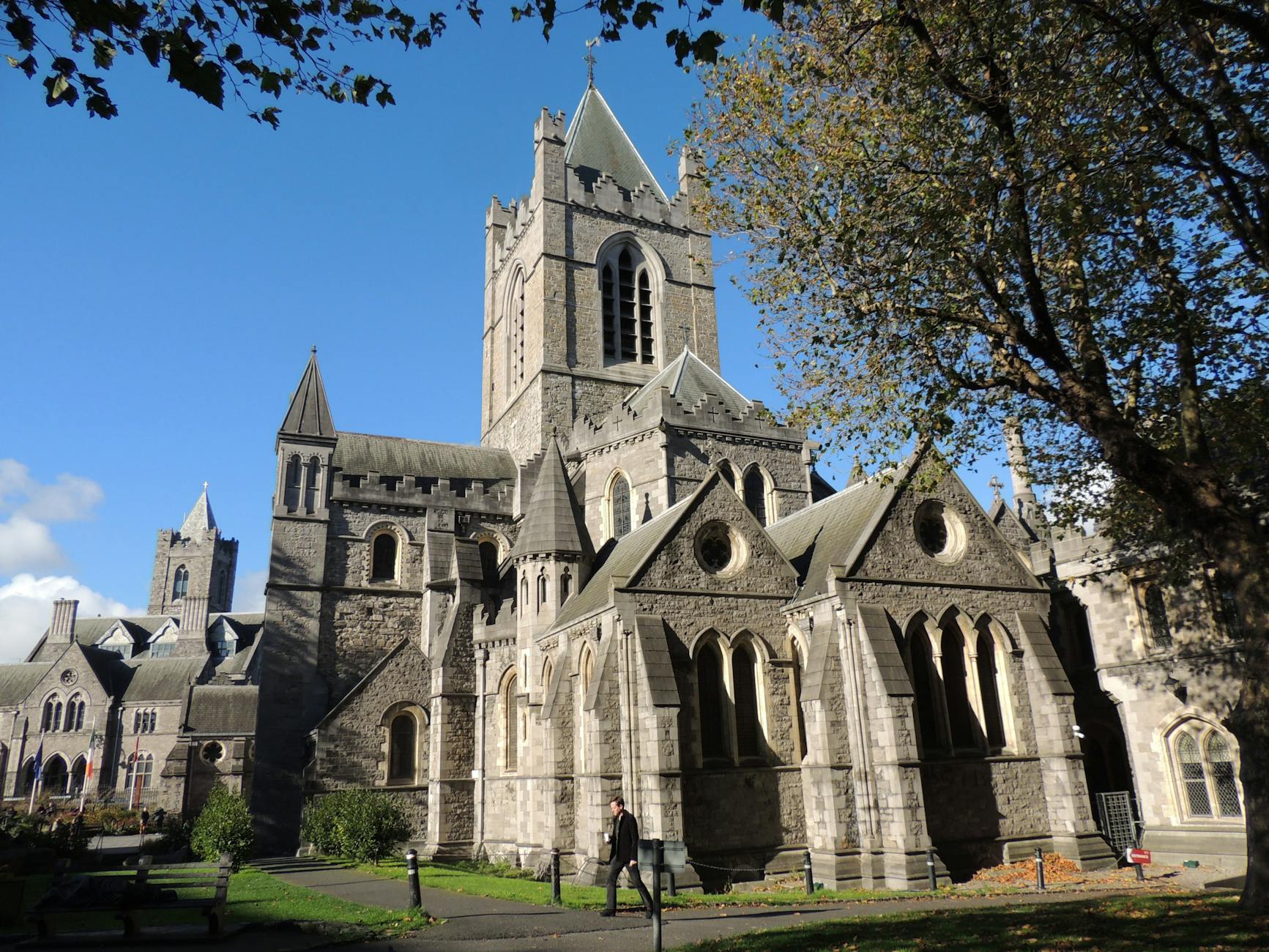
This is the question everyone asks about St Patrick’s Cathedral Dublin, and the honest answer is that they are different rather than ranked. St Patrick’s is larger, taller and richer in monuments and literary association. Christ Church has the medieval crypt — the largest in Britain or Ireland, and the single best thing either cathedral offers — plus the Dublinia exhibition attached to it and a more compact, more atmospheric interior.
| St Patrick’s | Christ Church | |
|---|---|---|
| Status | National Cathedral | Diocesan cathedral of Dublin |
| Founded | 1191 | c. 1030, rebuilt from 1180s |
| Size | Largest in Ireland | Smaller, more compact |
| The draw | Swift, the monuments, the scale | The medieval crypt, Dublinia |
| Adult admission | €11.50 | See our full guide |
| Time needed | About an hour | About an hour, more with Dublinia |
If you are only doing one and you like literature and monuments, choose St Patrick’s. If you are only doing one and you like the medieval, choose Christ Church Cathedral. If you are doing both, they are a five-minute walk apart and an easy pairing in a single morning — and with Viking and medieval Dublin and Marsh’s Library you have a full day in the old city.
What Else Is Nearby
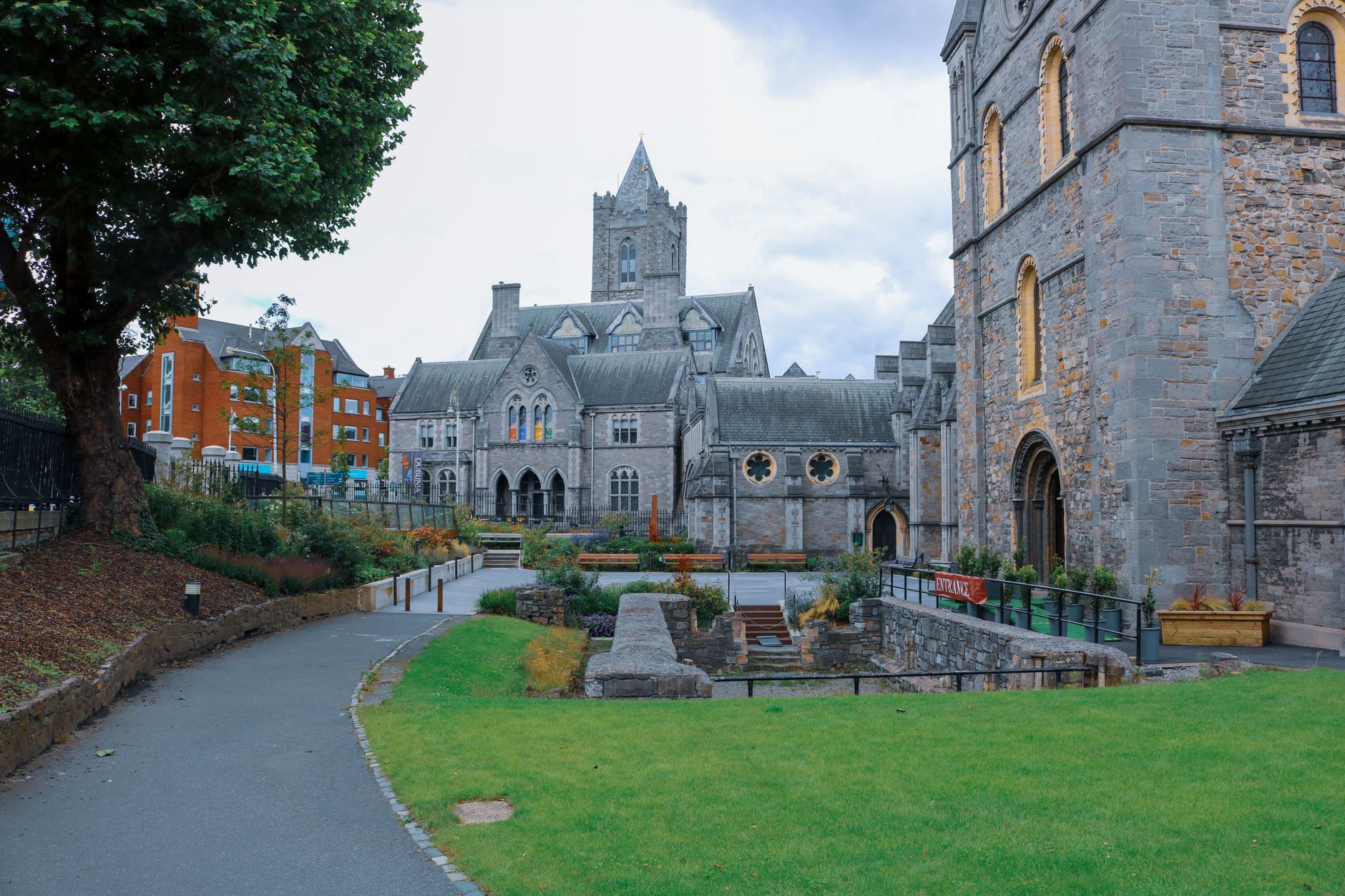
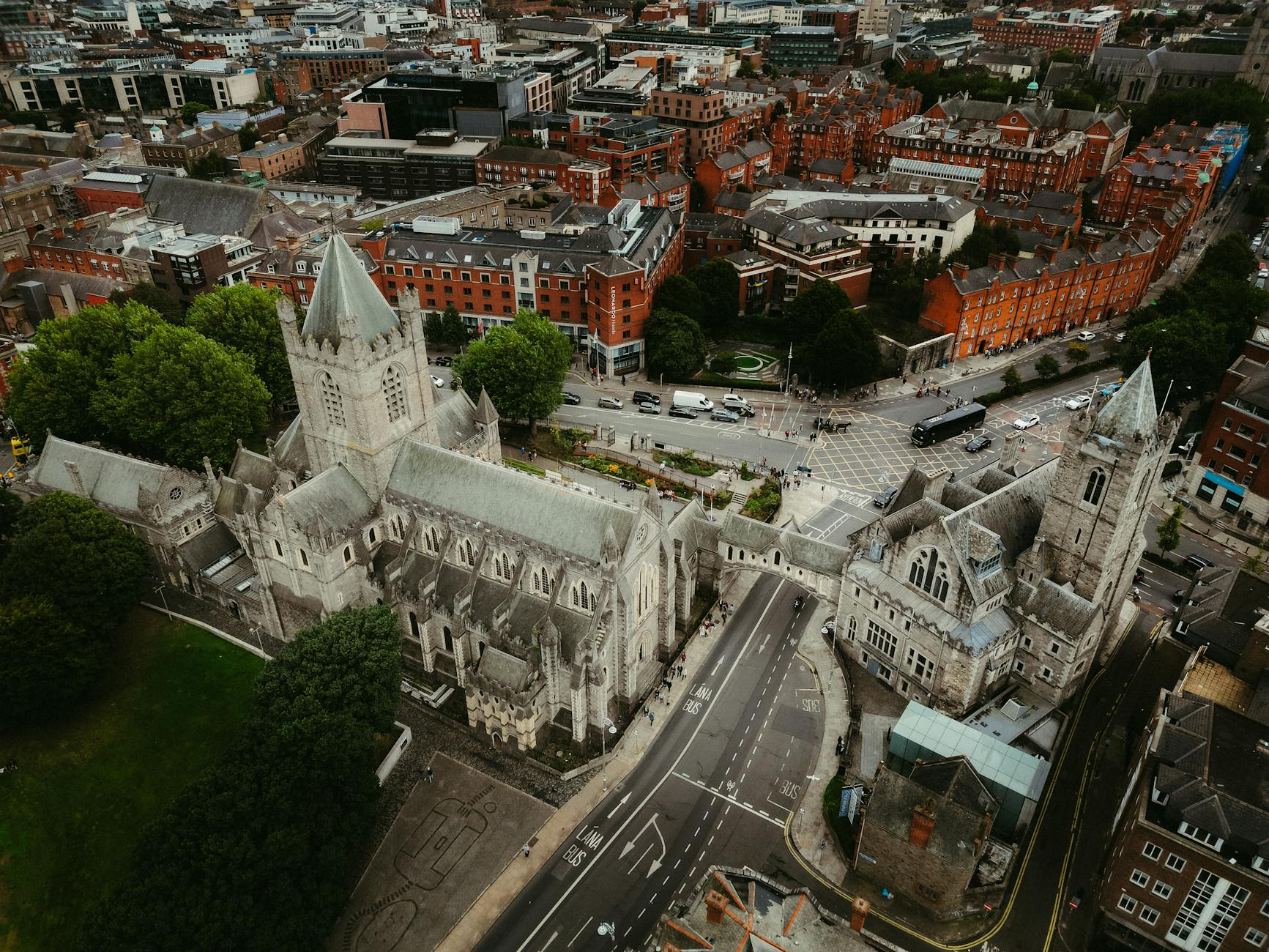
St Patrick’s Cathedral Dublin sits at the top of the Liberties, Dublin’s oldest neighbourhood, and the surroundings are a large part of what makes the visit worth the walk from the centre.
- Marsh’s Library, immediately beside the cathedral, is Ireland’s first public library, opened in 1707 and essentially unchanged since — dark oak stacks, wired reading cages, books that have been on the same shelves for three hundred years. The €17 joint ticket is the best value in this part of the city.
- St Patrick’s Park, alongside the cathedral, is free and open to everyone. It was laid out on cleared slum ground and is the best place to sit and actually look at the building.
- The Liberties proper — the Guinness Storehouse is ten minutes’ walk west, and the neighbourhood’s older pubs are among the best in the city for a decent pint.
- The Chester Beatty, free and outstanding when open, is a ten-minute walk east. Closed until the end of December 2026, because Dublin Castle around it is closed to visitors until January 2027 for Ireland’s EU Council presidency.
- Dublinia and the medieval city, attached to Christ Church, work well as the second half of the same morning.

How to Visit Well
The difference between a good visit to St Patrick’s Cathedral Dublin and a forgettable one is mostly timing.
- Come on a weekday morning and aim for the 10:30 guided tour. You get the building at its emptiest and the story told properly.
- Buy the joint ticket with Marsh’s Library. €17 instead of €11.50 for two sights is not a decision that needs thinking about.
- Allow an hour, or ninety minutes with the tour. Longer than that and you are re-reading monuments.
- Pair it with Christ Church, not with the Storehouse. Two cathedrals in a morning works; a cathedral and a brewery tour is a long day with a lot of walking.
- Sit in the park afterwards if the weather allows. The exterior repays looking at from a distance, and the park is free.
- If a service is on, you are welcome — but that is worship rather than sightseeing, and the choral evensong sung by the cathedral choir is a genuinely different experience from a ticketed visit.
Gotchas
- Sunday visiting is heavily restricted and there are no guided tours. Come Monday to Saturday if you can.
- The free tours are the whole point. Arrive for 10:30 or 14:30, or you are paying to walk around a room.
- It is not free. Unlike Dublin’s national museums, this is a paid attraction at €11.50 an adult.
- Last admission is well before closing. 17:00 on weekdays, 18:00 Saturday, and as early as 13:00 on Sunday.
- Buy the Marsh’s Library joint ticket. Nobody who skips it is glad they did.
- Dublin Castle is closed until January 2027, so a nearby-attraction itinerary built on an old guidebook will not work. The Chester Beatty is closed on the same grounds until the end of December 2026.
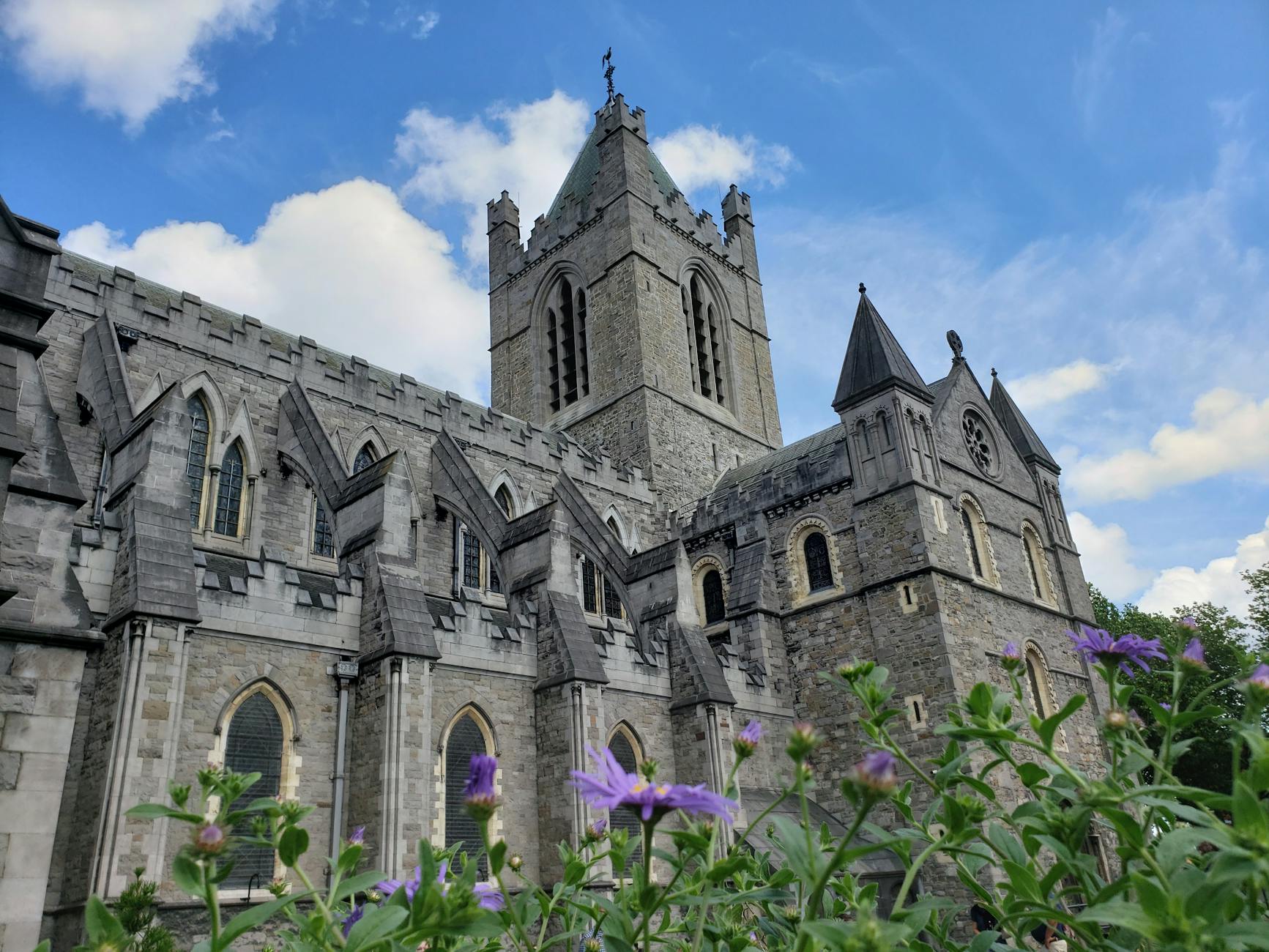
- Do not confuse it with the New York cathedral of the same name. Image searches conflate them constantly; Dublin’s is medieval grey limestone, not white marble.
- It is a working church. Services take precedence over visitors, and occasionally close sections at short notice.
- The walk from Grafton Street is fifteen minutes and mostly uphill through the old city. Comfortable shoes; wet cobbles are slippery.
St Patrick’s Cathedral Dublin FAQ
Is St Patrick’s Cathedral worth visiting?
Yes, particularly if you take the free guided tour that comes with admission to St Patrick’s Cathedral Dublin. It is the largest cathedral in Ireland, it holds Jonathan Swift’s grave and self-written epitaph, and its monuments make it an unusually direct record of Irish history. At €11.50 it is not cheap against Dublin’s free national museums, so the honest test is whether the history interests you or whether you are simply ticking off a landmark.
How long does a visit take?
About an hour at a comfortable pace, or roughly ninety minutes if you join one of the free guided tours at 10:30 or 14:30. Add another forty minutes if you buy the joint ticket and go into Marsh’s Library next door, which most people find is the better half of the pairing.
Is it free to enter St Patrick’s Cathedral?
No. Adult admission is €11.50, with concessions at €10.00 for students and over-60s, €5.50 for children aged six to twelve, and free entry for under-fives. A family ticket for two adults and up to three children is €31.00. Attending a service is a different matter from a sightseeing visit, so check the cathedral’s service times if you would rather come as a worshipper.
What are the opening hours of St Patrick’s Cathedral Dublin?
Monday to Friday it opens at 09:30 with last admission at 17:00. Saturday opens at 09:00 with last admission at 18:00. Sunday is restricted around services, with last admissions at 13:00 and 16:30 and no guided tours. Check the current hours before travelling, as they shift seasonally.
Is Jonathan Swift buried in St Patrick’s Cathedral?
Yes. Swift was Dean here from 1713 until his death in 1745 and is buried in the floor of the nave, beside Esther Johnson, the “Stella” of his correspondence. His Latin epitaph, which he wrote himself, is mounted nearby, along with his pulpit, death mask and writing table.
Which is better, St Patrick’s or Christ Church?
They are different rather than ranked. St Patrick’s is bigger, taller and far richer in monuments and literary history. Christ Church has the finest medieval crypt in Britain or Ireland and the attached Dublinia exhibition. If you like literature and monuments, choose St Patrick’s; if you like the medieval, choose Christ Church. They are five minutes apart and pair easily in one morning.
Is there a joint ticket with Marsh’s Library?
Yes, at €17.00, against €11.50 for the cathedral alone. Marsh’s Library opened in 1707 as Ireland’s first public library and is almost unchanged — dark oak stacks, the old wired reading cages, three-hundred-year-old books in their original places. For €5.50 extra it is the best-value add-on in this part of Dublin.
Do I need to book St Patrick’s Cathedral in advance?
Not usually. Unlike Kilmainham Gaol, which sells out every month of the year, the cathedral generally admits walk-ups without difficulty. Booking online can save queueing at peak times in summer and around St Patrick’s Day, but for most of the year turning up is fine — just arrive in time for one of the guided tours.
How do I get to St Patrick’s Cathedral?
Walk. It is about fifteen minutes from Grafton Street through the old city, mostly uphill, and five minutes from Christ Church. Several Dublin Bus routes stop nearby and the Luas Red Line at Four Courts or the Green Line at St Stephen’s Green both leave a manageable walk, but central Dublin is small enough that walking is usually quicker than working out the alternative.
Keep Planning
- Things to do in Dublin — the master list, and where the cathedrals sit in it.
- Viking and medieval Dublin — the old city the cathedral stands in.
- The Liberties — Dublin’s oldest neighbourhood, starting at the cathedral gate.
- Dublin museums — including the free ones, for comparison.
- Famous writers’ landmarks — Swift, and everyone who came after.
- Dublin Pass and discount cards — whether the pass is worth it for your itinerary.
- One day in Dublin — how to fit a cathedral into a single day.
Keep Reading
- Christ Church Cathedral Dublin — the other cathedral, five minutes away, and an honest comparison of the two.
- Things to Do in Dublin: The Complete Guide
- Viking & Medieval Dublin
- The Liberties: Dublin’s Oldest Neighbourhood
- Dublin Museums, Including the Free Ones
Lean na Comharthaí — Keep following the signs