Croke Park Stadium Tour & GAA Museum: Is the Skyline Tour Worth It?
Turas Staidiam Pháirc an Chrócaigh
Ar an gComhartha Seo — On this sign
- Quick Answer: Is the Croke Park Tour Worth It?
- What the Standard Stadium Tour Includes
- The GAA Museum
- The Skyline Tour: Seventeen Storeys Up
- Prices and Times in Full
- Hill 16, Rule 42 and Why This Stadium Matters
- Can You Go to an Actual Match?
- Getting There and What Else Is Nearby
- Croke Park Against the Other Dublin Attractions
- Gotchas
- FAQ: The Croke Park Tour
- Keep Planning
- Keep Reading
- Photo Credits
Croke Park holds 82,300 people, which makes it one of the largest stadiums in Europe, and the men and women who fill it on an All-Ireland final day are not paid to play. That single fact is the reason a stadium tour on the north side of Dublin is more interesting than it sounds. The Gaelic Athletic Association is an amateur organisation with a county-based structure that has survived, largely unchanged, since 1884, and its headquarters is a stadium the size of a Premier League ground where the players go back to their jobs on Monday. Add a massacre in 1920, a terrace with a disputed origin story and a rooftop walkway seventeen storeys above the pitch, and you have something rather better than the usual sports-venue circuit.
This guide covers the whole Croke Park tour offer: what the standard stadium tour includes, what the GAA Museum is actually like, whether the Skyline rooftop walk justifies the extra money, the full price list and seasonal times, whether you can visit on a match day, and the honest question of whether you would be better off skipping the tour entirely and buying a ticket to a game. It is written for a visitor who may know nothing at all about Gaelic games, because most people taking this tour do not.
Quick Answer: Is the Croke Park Tour Worth It?
Yes, if you want to understand something about Ireland that no other attraction in Dublin will teach you. The standard Croke Park tour costs €18 for an adult, €14.50 for a student or senior and €12 for a child aged three to twelve, and it includes admission to the GAA Museum, which you can wander at your own pace afterwards. It is an access-all-areas tour, taking in the dressing rooms, the press area and the corporate levels, and you get the history — the 1884 founding, Bloody Sunday in 1920, the decision to open the ground to rugby and soccer in 2007. Ninety minutes to two hours all in with the museum. For €18 that is good value by Dublin standards, where a brand museum starts at €24.
The Skyline Tour is a separate proposition at €24 for an adult and €22 for a student or senior: a guided walkway around the rim of the roof, seventeen storeys above the pitch, with a view over the whole north city to the Dublin Mountains. It is online-advance-booking only. Whether it is worth the extra depends entirely on whether you want a stadium tour or a view — and if it is a view you want, the Gravity Bar at the Guinness Storehouse gives you a comparable one with a pint included. The Skyline’s advantage is that you are outside, above an empty stadium, which is a genuinely strange and good sensation.
| Ticket | Adult | Student/Senior | Child | Includes |
|---|---|---|---|---|
| Stadium Tour | €18 | €14.50 | €12 (3–12) | GAA Museum |
| Family, 2 adults + 2 children | €48 | GAA Museum | ||
| Family, 2 adults + 3 children | €52 | GAA Museum | ||
| 1 adult + 1 child | €27.50 | GAA Museum | ||
| Kellogg’s Skyline Tour | €24 | €22 | Not published | Rooftop walkway, 17 storeys |
| Under 3 | Free | |||
What the Standard Stadium Tour Includes
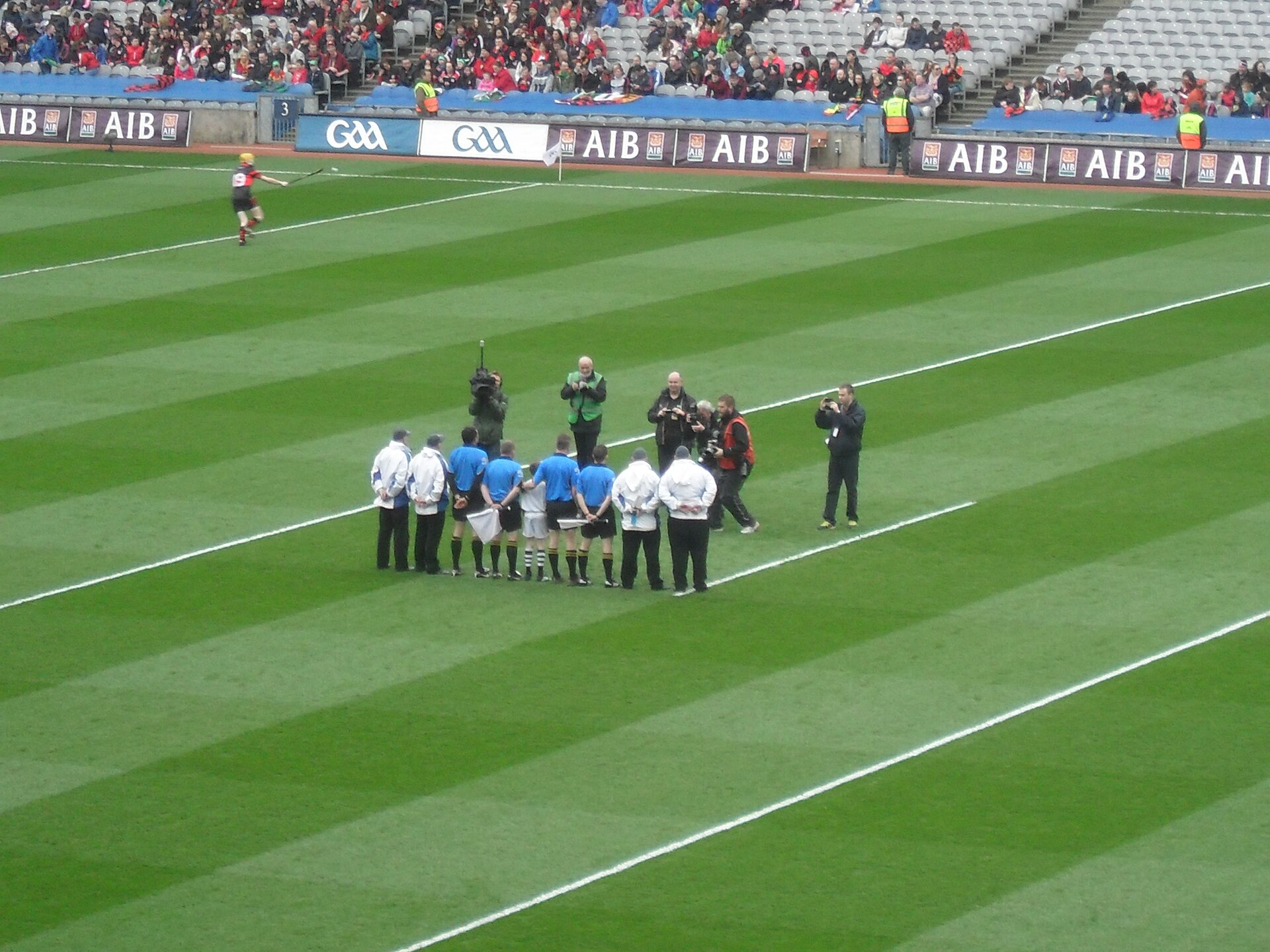
You are taken around the bowl by a guide, and the route covers the parts of a stadium the public never normally sees. The order varies with what is happening in the building, but the standard Croke Park tour takes in the dressing rooms, the players’ tunnel, the VIP and corporate levels, the media centre and press box, and the stands themselves — including the Hogan Stand, where the winning captain lifts the cup and gives the speech that half the country watches every summer.
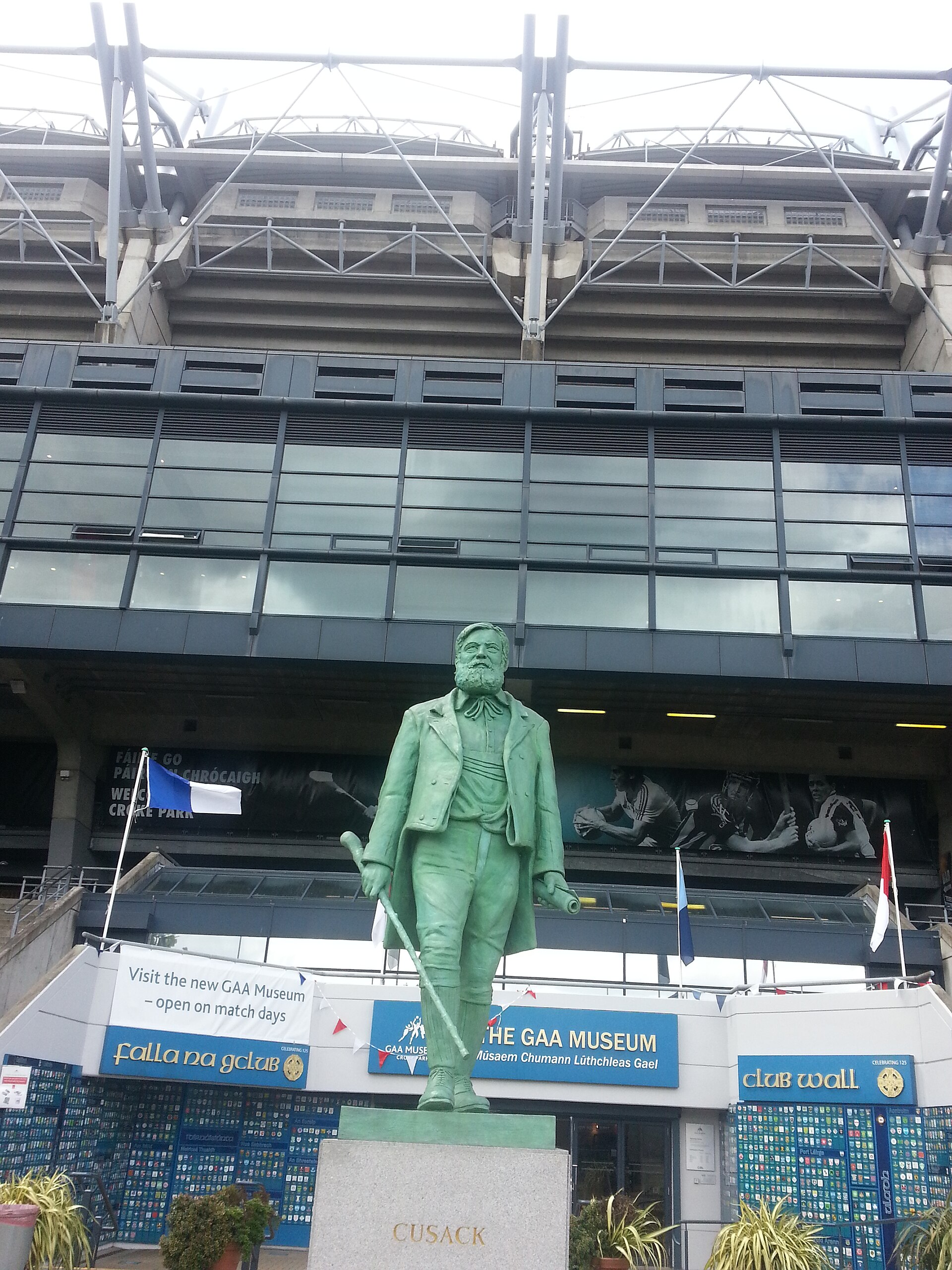
The tour includes admission to the GAA Museum, and you keep that admission afterwards, so you can go through the museum at your own speed once the guided part finishes. Arrive ten minutes before your departure time; tours leave promptly and the meeting point is inside the museum at the Cusack Stand end.
What makes it work is the guides. They tend to be people with an actual stake in the games — club players, county supporters — and the tour is less a corporate script than a conversation about why a country of five million puts eighty-two thousand people in a stadium to watch amateurs. If nobody in your group knows the difference between hurling and Gaelic football, say so at the start. The tour is better when it is pitched at beginners.
The GAA Museum
Included in your ticket and genuinely worth the hour. The museum covers the founding of the association in Thurles in 1884, the games themselves, the county system, and the tangled relationship between the GAA and Irish nationalism across the twentieth century — including the bans on foreign games and on members of the British forces, which were not lifted until 1971 and 2001 respectively. There are interactive areas where you can try hitting a sliotar with a hurley, which is harder than it looks and is the part every child in the building heads for first.
The genuinely affecting section is the one on Bloody Sunday. On 21 November 1920, during a challenge match between Dublin and Tipperary, British forces entered the ground and opened fire on the crowd, killing fourteen people. Among them was the Tipperary player Michael Hogan, and the Hogan Stand is named after him. It was a reprisal for IRA killings in the city that morning, and it is one of the defining events of the War of Independence. The museum handles it carefully and without theatrics. If you have been to Kilmainham Gaol or walked the 1916 Rising sites, this fills in a piece of the same story from an unexpected angle.
The Skyline Tour: Seventeen Storeys Up
The Kellogg’s Skyline is a guided walk along a purpose-built walkway around the rim of the stadium roof, seventeen storeys above the pitch, harnessed and in a group. Adult tickets are €24 and student or senior tickets €22; it is online advance booking only, and it does not run continuously — expect a couple of departures a day in winter and considerably more between June and September.
The view is the point. From up there you get the whole north city, the Dublin Mountains to the south, the bay to the east, and — the bit that surprises people — a proper sense of the scale of the bowl beneath you, which you simply do not get from a seat. Guides talk you through what you are looking at, so it functions as a city orientation as well as a stadium one. There are usually themed departures in the evening and around big fixtures.
Is the Skyline worth the extra money?
Honest answer: it depends what you are buying. As a stadium experience, no — the standard tour and museum teach you far more for €18, and the Skyline is a walkway with a commentary. As a view, it is one of the two or three best in Dublin and it is outdoors, which the Gravity Bar is not. As a combination of both on a clear day, it is very good indeed and people come off it grinning.
What would make us hesitate: it is weather-exposed and Dublin’s weather is what it is, so a booked slot in November is a gamble; there is no published child or family price, which makes it awkward to plan for a family; and at €24 on top of an €18 tour you are at €42 a head for an afternoon, which is a lot in a city where the National Museum, the National Gallery and the Chester Beatty (closed until January 2027) are all free. Book the Skyline if the forecast is good and you like heights. Skip it if the group is mixed or the sky is grey.

Prices and Times in Full
- Stadium Tour: adult €18, student or senior with valid ID €14.50, child aged 3–12 €12, under 3 free. Family of two adults and two children €48; two adults and three children €52; one adult and one child €27.50. Museum admission included.
- Stadium Tour departures: January to May and September to December, 11:00, 13:00 and 15:00 daily. More departures in June, eight slots in July and nine in August.
- Skyline Tour: adult €24, student or senior €22. Online advance booking only.
- Skyline times: January to May, 14:30 on weekdays and 11:30 and 14:30 at weekends; extended hours June to September; October and November, 11:30 and 14:30.
- Arrive ten minutes early. Tours depart on time.
- Match days and concert builds change everything. Tours run on adjusted schedules and routes, or not at all. Check crokepark.ie the day before rather than assuming.
Hill 16, Rule 42 and Why This Stadium Matters
Three pieces of context that make the Croke Park tour land better if you have them in advance.
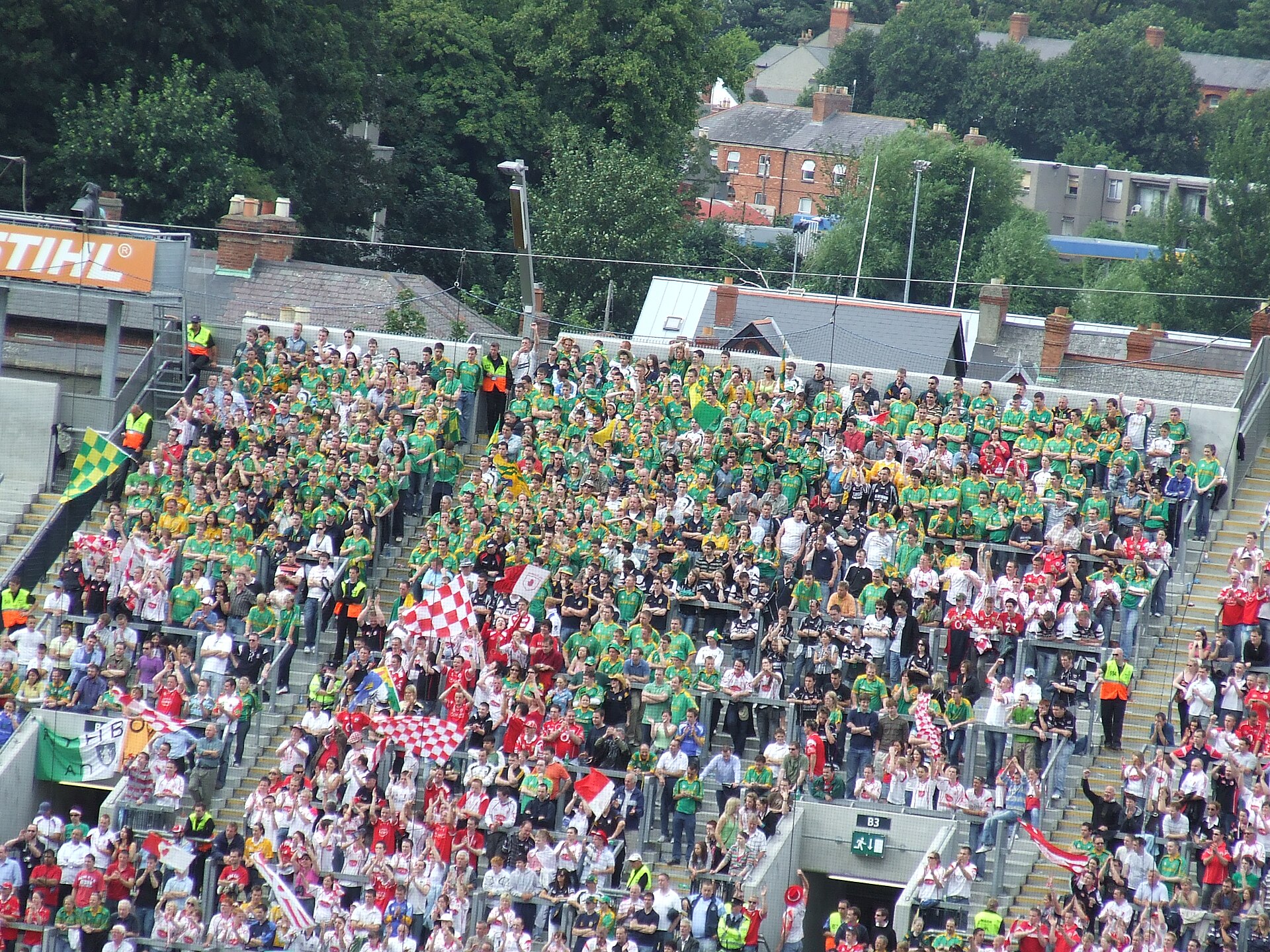
Hill 16 is the terrace at the railway end, the only standing area left, and traditionally the home of the Dublin supporters. The story you will hear is that it was built from the rubble of the 1916 Rising, which is why it is called Hill 16. The story is almost certainly not true — the embankment predates the Rising — but it has been told for a century and it is now part of the furniture. It is a good example of how the GAA and the national story became inseparable whether or not the facts cooperate.
Rule 42 barred the playing of “foreign games” at GAA grounds. When Lansdowne Road was demolished and rebuilt as the Aviva Stadium between 2007 and 2010, the GAA suspended the rule and Croke Park hosted Ireland’s rugby and soccer internationals. The England rugby match in February 2007 — with God Save the Queen played in the stadium where British forces had shot fourteen people in 1920, in front of a silent and then generous crowd — is one of the genuinely important moments in modern Irish public life. The tour tells that story well.
The amateur thing is not a technicality. Inter-county players train at professional intensity, play in front of eighty thousand people, and are not paid. They have jobs. This is the single hardest thing for visitors from countries with professional sport to absorb, and it explains almost everything about how the games feel in the stands.
Can You Go to an Actual Match?
Yes, and if your dates allow it you should — a match beats any stadium tour anywhere. The championship season runs through the spring and summer with the All-Ireland finals in July, and Croke Park hosts the big fixtures from the quarter-finals onwards. Leinster championship games and league fixtures earlier in the year are far easier to get into and are a perfectly good introduction.
Tickets for ordinary fixtures are usually available and inexpensive by international standards; tickets for an All-Ireland final are effectively impossible for a visitor, because they are distributed through clubs and counties rather than sold openly. If a final is on while you are in Dublin, the answer is a pub with a television, which is arguably the better experience anyway — the city empties into the pubs and the atmosphere is extraordinary. Our Dublin for sports fans guide covers ticketing, match-day logistics and which pubs to watch in, for both GAA and rugby.
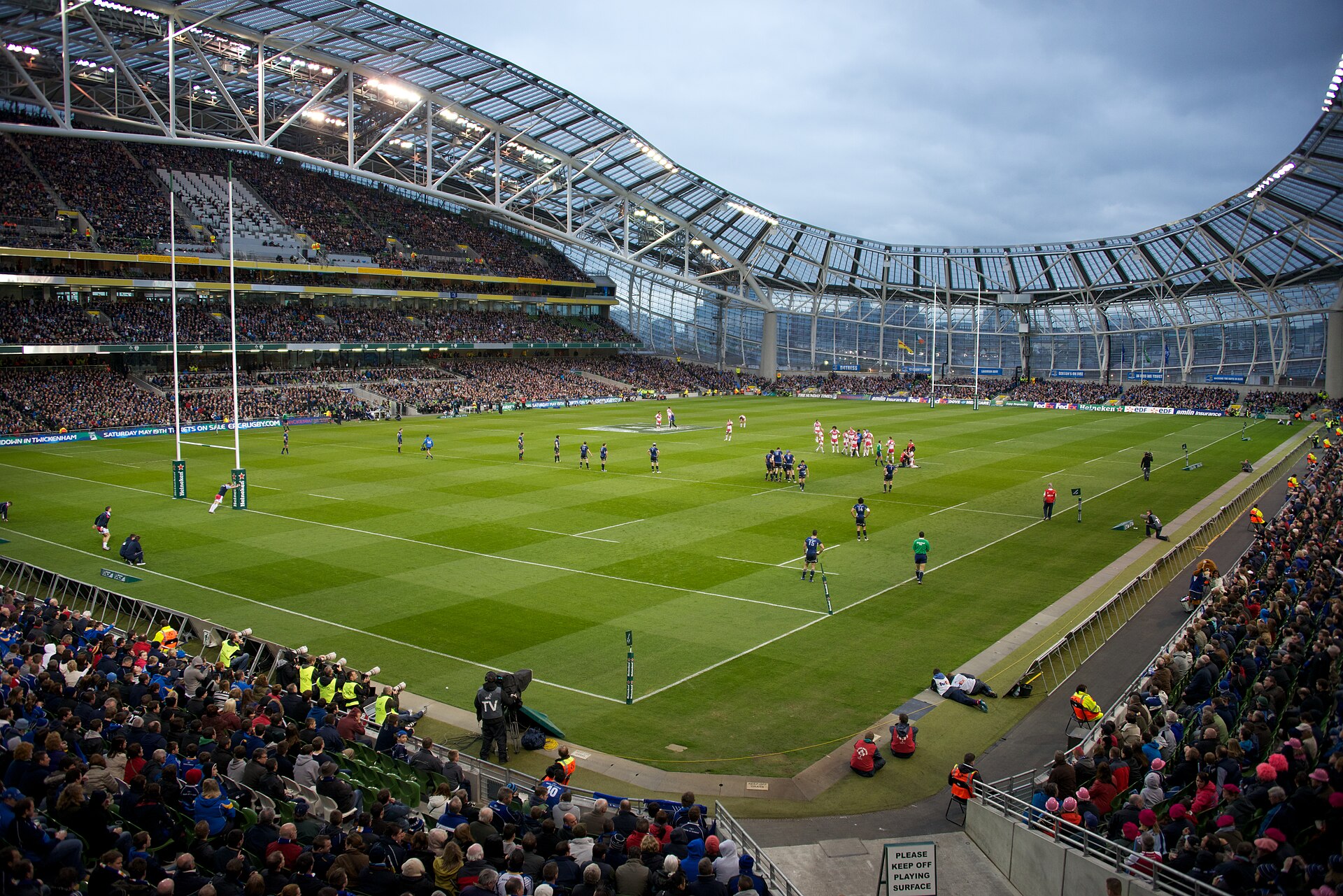
If your interest is rugby rather than Gaelic games, the Aviva Stadium on Lansdowne Road is the venue, and the Six Nations weekends — 5 February and 13 March 2027 — are the fixtures that fill the city and double the hotel rates.
Getting There and What Else Is Nearby
Croke Park is in Dublin 3, on the Drumcondra and Ballybough side of the north inner city, and it is closer to the centre than most visitors expect: about twenty-five minutes’ walk from O’Connell Street and fifteen from Connolly Station. Numerous Dublin Bus routes run along Drumcondra Road and Clonliffe Road; on match days the whole area is closed to traffic and everybody walks. See getting around Dublin and the bus routes guide for the specifics, and the Leap Card guide for the cheapest way to pay.
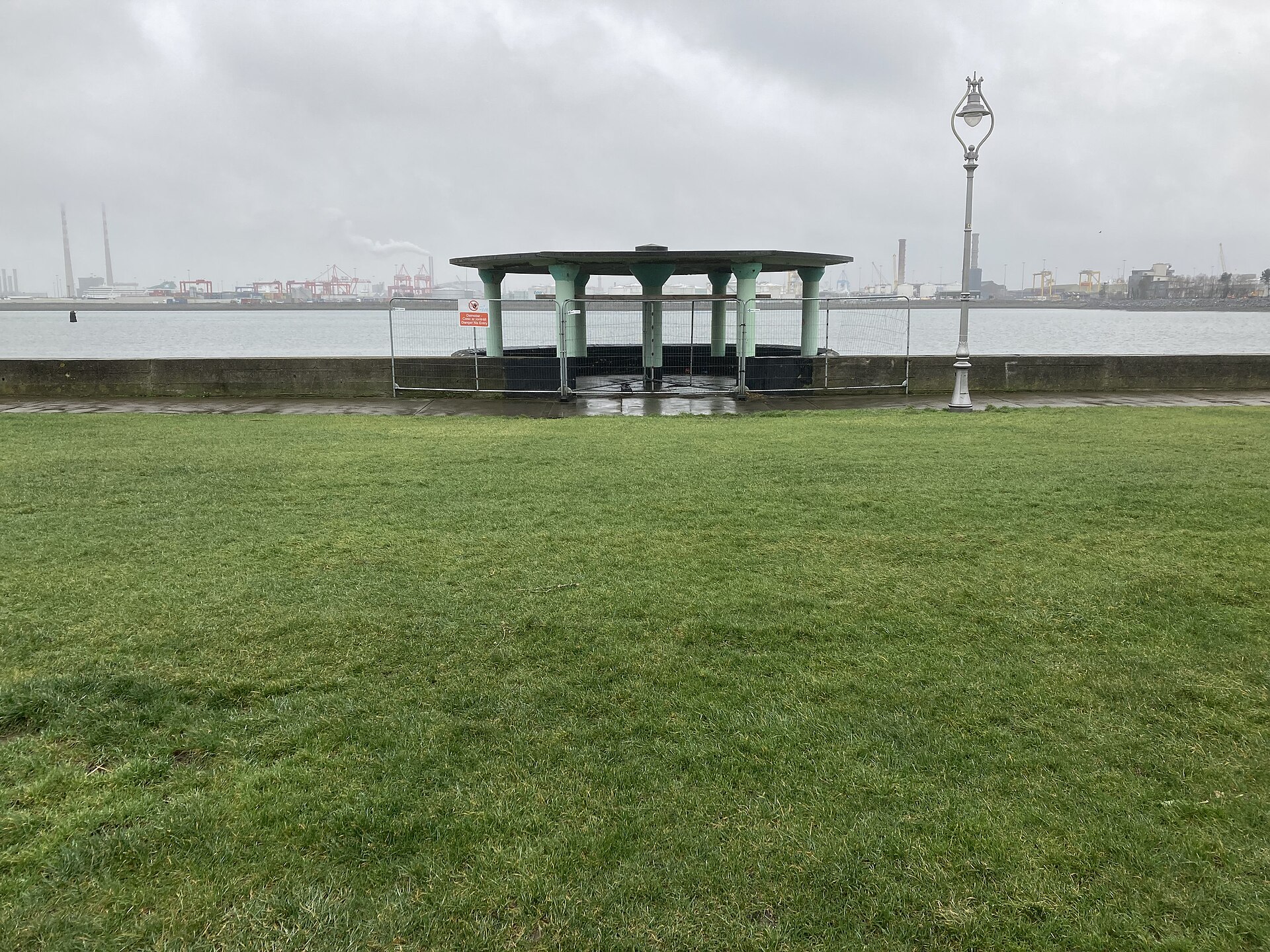
The area around the stadium is worth a little time in its own right. Glasnevin Cemetery, twenty minutes north-west, is where Daniel O’Connell, Charles Stewart Parnell, Michael Collins and Éamon de Valera are all buried, and its guided tours are among the best historical tours in the city. The Botanic Gardens next door are free. Clontarf and the Bull Island seafront are a short bus ride east. Our Northside guide covers the whole quarter, and the neighbourhoods guide puts it in context.
For food, Drumcondra Road has decent everyday places rather than destination restaurants; you are better off eating in the city centre before or after. The pubs around the ground — Gill’s, the Big Tree on Dorset Street, Quinn’s on Drumcondra Road — are proper Dublin sports pubs and are extraordinary on match days and quiet the rest of the time.
Croke Park Against the Other Dublin Attractions
At €18 including a museum, the Croke Park tour sits in the middle of Dublin’s paid-attraction market and offers something none of the others do. Here is how it compares on the things visitors actually weigh up.
| Attraction | Adult price | Time | What you get |
|---|---|---|---|
| Croke Park Tour + GAA Museum | €18 | 2 hours | Guided stadium access and a serious museum |
| Croke Park Skyline | €24 | About an hour | Rooftop walkway and the view |
| Guinness Storehouse | From €24 | 90 min+ | Self-guided, seven floors, a pint and a view |
| Kilmainham Gaol | €8 | 1 hour | Guided, and the most affecting hour in Dublin |
| Book of Kells Experience | From €19 | 1 hour | The manuscript and a largely emptied Long Room |
| National Museum of Ireland | Free | 90 min+ | Bog bodies, the Tara Brooch, Bronze Age gold |
The verdict: if you have one paid slot and you have never been to Dublin, the Storehouse or Kilmainham will probably win. If you have three or four days, or if anybody in your party likes sport at all, Croke Park earns its place — and at €48 for a family of four it is one of the better-value family outings in the city. See family attractions for the alternatives and the discount card comparison if you are stacking several.
Gotchas
- Match days and concert builds change or cancel tours. Check the operator’s site the day before rather than turning up.
- The Skyline is online advance booking only. There is no walk-up option.
- No published child or family price for the Skyline. Budget for adults and ask before booking for a family.
- The Skyline is outdoors and exposed. A booked slot in a Dublin November is a weather gamble.
- Arrive ten minutes early. The stadium tour departs on the hour it says.
- Winter departures are limited to 11:00, 13:00 and 15:00. Nine slots a day is an August thing, not a February one.
- All-Ireland final tickets are not sold to the public. They go through clubs and counties. Watch in a pub instead.
- The GAA Museum is included with the tour — do not buy it separately, and do not leave without using it.
- It is a twenty-five-minute walk from O’Connell Street, uphill and unglamorous. Allow the time or take a bus.
- Dublin Castle is closed to visitors until January 2027, so if you were pairing this with a castle day, plan around it.
FAQ: The Croke Park Tour
Is the Croke Park Skyline Tour worth it?
On a clear day, yes — it is one of the best views in Dublin, you are outdoors seventeen storeys above an empty stadium, and the guided commentary works as a city orientation as well as a stadium one. On a grey or wet day it is €24 for a windy walkway. It is also online-booking-only with no published child price, so it suits adults and couples better than families. If you can only do one, the standard tour with the GAA Museum teaches you far more for €18.
Can you visit Croke Park without a match?
Yes — the stadium tour and the GAA Museum run year-round, independently of the fixture list, with three departures a day through the winter and up to nine a day in August. It is an access-all-areas tour, taking in the dressing rooms and the stands. The only complication is that tours run on adjusted schedules or not at all on match days and during concert builds, so check the operator’s site before travelling.
How high is the Skyline walk?
Seventeen storeys above the pitch, on a purpose-built walkway around the rim of the stadium roof, with harnesses and a guide. The view takes in the whole north city, the bay to the east and the Dublin Mountains to the south. It is not a vertical drop experience — the walkway is enclosed and railed — but it is genuinely high, and anyone seriously uncomfortable with heights should take the standard tour instead.
How much is the Croke Park tour?
€18 for an adult, €14.50 for a student or senior with valid ID, €12 for a child aged three to twelve and free for under-threes, all including admission to the GAA Museum. Family tickets are €48 for two adults and two children and €52 for two adults and three children; one adult and one child is €27.50. The Skyline Tour is priced separately at €24 for an adult and €22 for a student or senior.
How long does the Croke Park tour take?
Budget about two hours in total: the guided portion of the stadium tour plus as long as you want in the GAA Museum, which stays open to you afterwards. Ninety minutes is possible if you move briskly; three hours is easy if the museum interests you. Add roughly an hour again if you are also doing the Skyline.
Do you need to know about GAA to enjoy it?
No, and most people on the tour do not. Tell the guide at the start that you are new to it — the tour is noticeably better when it is pitched at beginners, and the museum explains hurling and Gaelic football from first principles. Hurling in particular is worth understanding before you leave Ireland; it is the fastest field sport in the world and it has been played here for something like three thousand years.
Is Croke Park good for children?
Very. The family ticket at €48 for two adults and two children is good value by Dublin standards, the museum has interactive areas where children can try hurling and Gaelic football, and a huge empty stadium is inherently exciting to a seven-year-old. The Skyline is a different matter — no published child price and a real height — so plan the standard tour for families. See Dublin for families for the rest.
Can tourists get tickets to a GAA match?
For league and provincial championship fixtures, usually yes, and they are inexpensive by international standards. For the All-Ireland finals in July, effectively no — those tickets are distributed through GAA clubs and county boards rather than sold openly, and the ones that reach resale sites are priced accordingly. If a final falls during your trip, watch it in a pub, which is genuinely the better experience.
How do you get to Croke Park from the city centre?
Walk, in about twenty-five minutes from O’Connell Street or fifteen from Connolly Station, or take any of the Dublin Bus routes running up Drumcondra Road or Clonliffe Road. There is no Luas or DART station at the ground. On match days the surrounding streets close to traffic and everyone walks, which is part of the experience. A Leap Card covers the buses.
Keep Planning
- Things to Do in Dublin — the parent guide to every attraction.
- Dublin for Sports Fans — Six Nations weekends, GAA matches and match-day logistics.
- The Northside Guide — Glasnevin, Clontarf and the quarter around the stadium.
- Dublin Museums — including the free national ones.
- Family Attractions in Dublin — what works with children.
- 1916 Rising Sites — the wider history the museum touches on.
- Kilmainham Gaol — €8, guided, and the most affecting hour in the city.
- Best Dublin Experiences — everything worth booking, ranked.
Keep Reading
Photo Credits
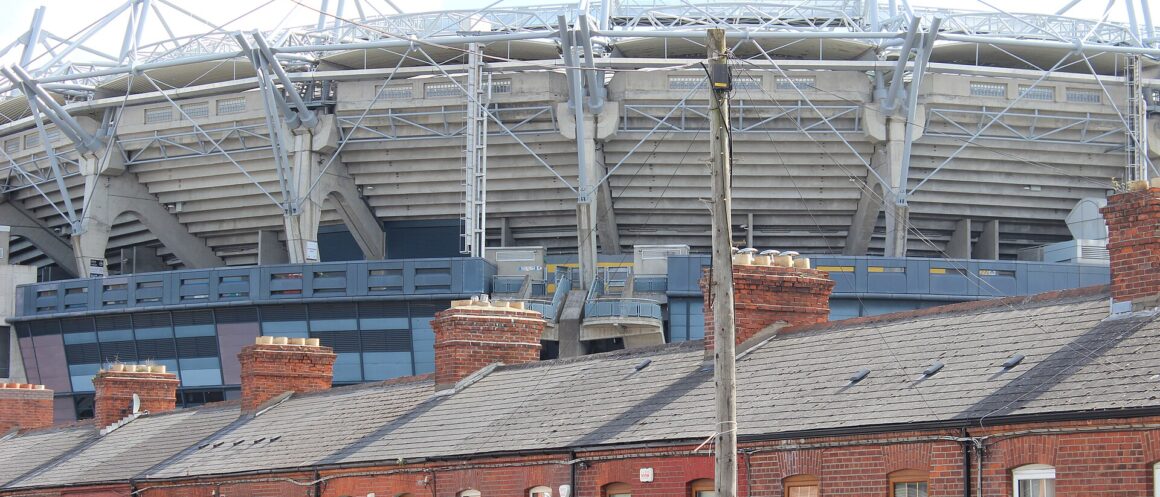
Croke Park above Dublin terraces: Croke Park (48139459926) by Metro Centric, CC BY 2.0, via Wikimedia Commons.
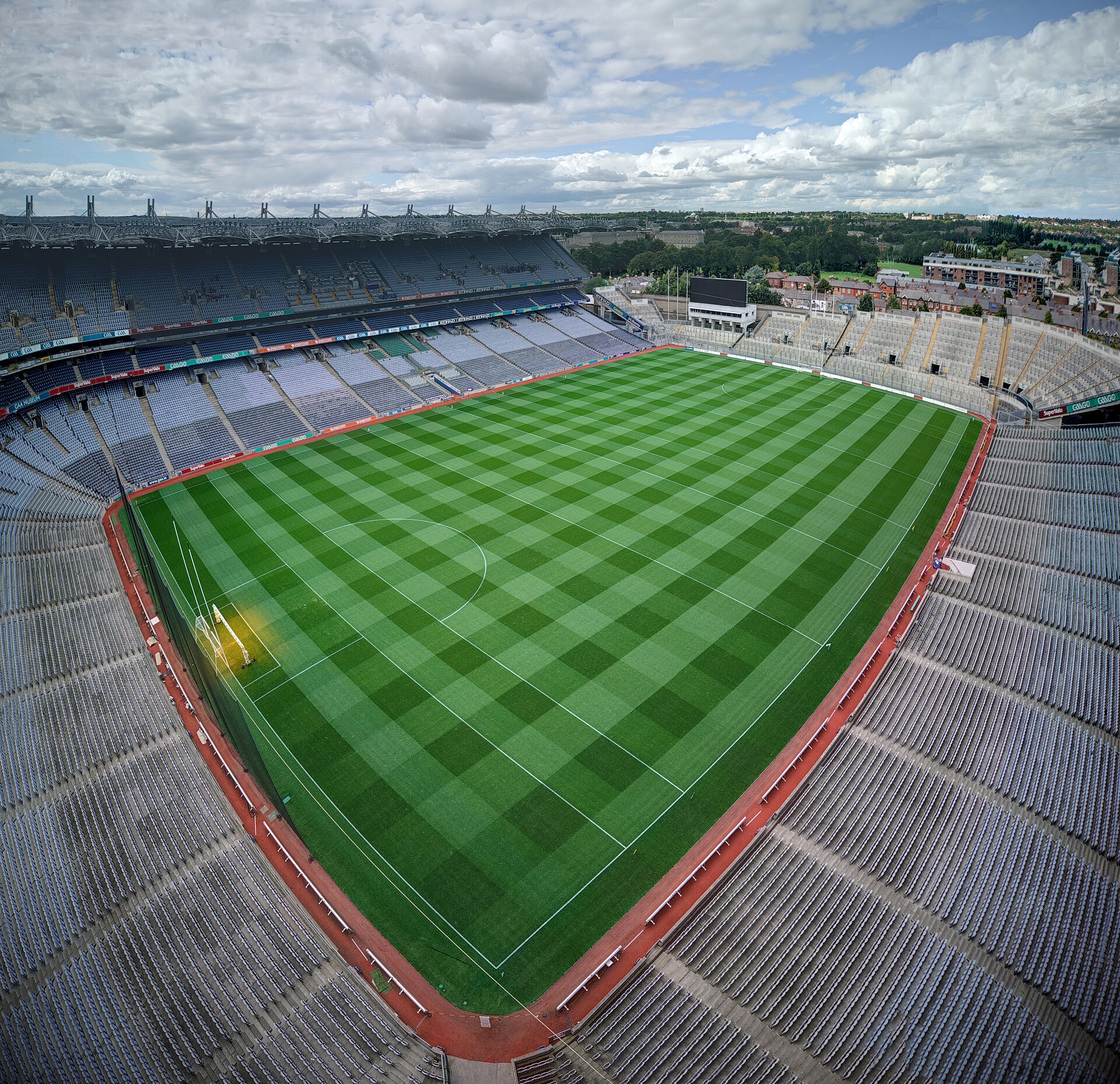
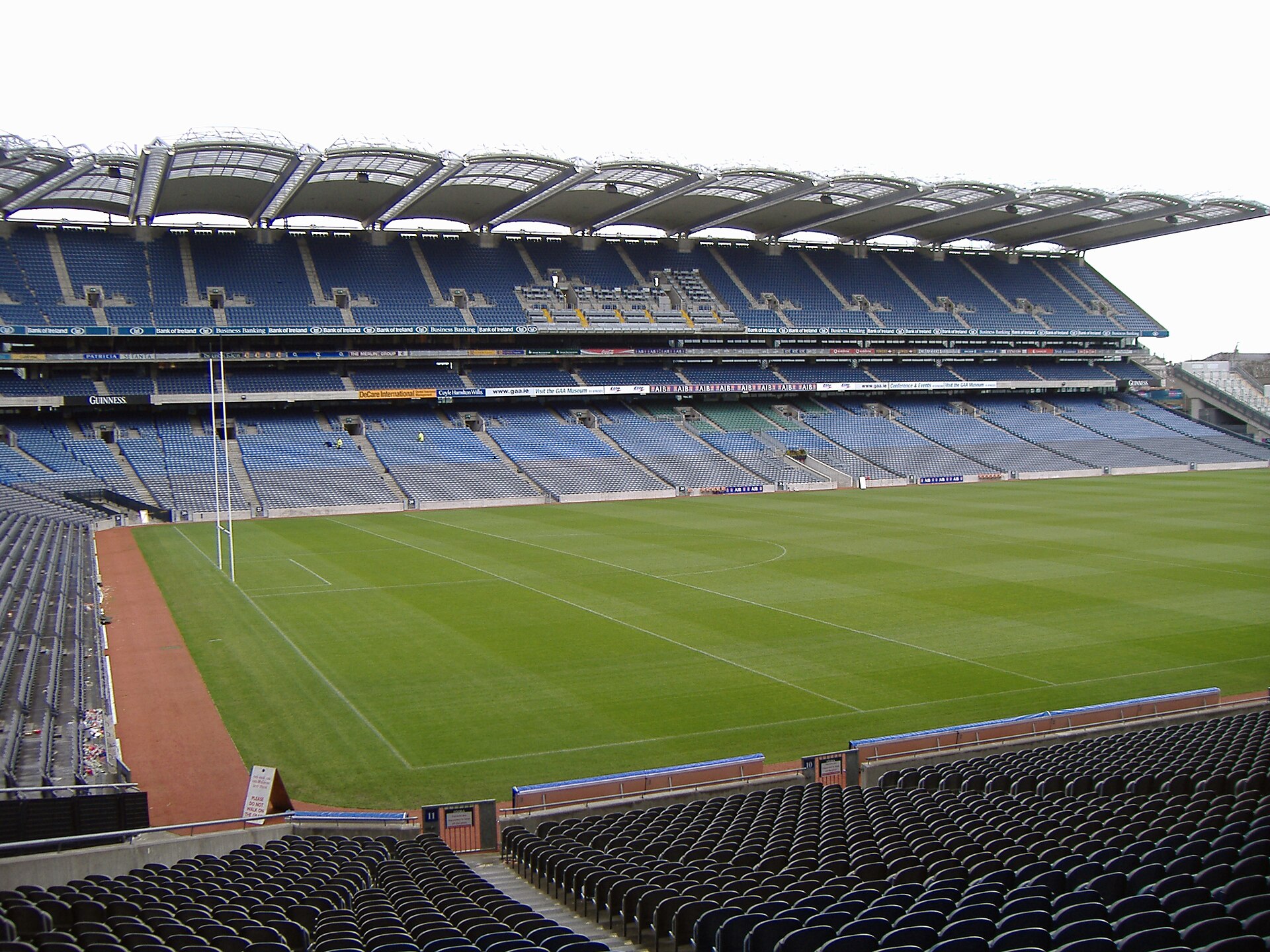
Croke Park pitch and stands: Croke park hogan stand by Tolivero, Public domain, via Wikimedia Commons.
Rugby inside the Aviva Stadium: Aviva Stadium seen from Block 312 by wynnert, CC BY-SA 2.0, via Wikimedia Commons.
The GAA Museum entrance: Statue Michael Cusack by Pytheas84, CC BY-SA 3.0, via Wikimedia Commons.
Croke Park from an upper stand: Croke Park panorama by Rob Hurson, CC BY-SA 2.0, via Wikimedia Commons.
Officials on the Croke Park pitch: Croke Park referees by Sheila1988, CC BY-SA 4.0, via Wikimedia Commons.
Clontarf Promenade beside Dublin Bay: Dublin – Bandstand, Clontarf Road – 20220208125421 by Malone0, CC BY-SA 4.0, via Wikimedia Commons.
Supporters on Hill 16: Croke Park fans on the hill by Dearbhla, CC BY-SA 2.0, via Wikimedia Commons.
Lean na Comharthaí — Keep following the signs