Dublin for Sports Fans: Six Nations Weekends, GAA Matches & Match-Day Guide
Baile Átha Cliath do Lucht Leanúna Spóirt
Ar an gComhartha Seo — On this sign
- Quick Answer: Planning a Sports Weekend in Dublin
- The 2027 Six Nations Dublin Fixtures, and Why the Friday Night Matters
- Match Day at the Aviva
- Watching Without a Ticket: Where Fans Actually Go
- Croke Park and the GAA
- The Rest of Dublin’s Sport
- What a Six Nations Weekend Costs
- Booking a Six Nations Dublin Weekend: When to Do What
- Gotchas
- FAQ: Six Nations and Sport in Dublin
- Keep Planning
- Keep Reading
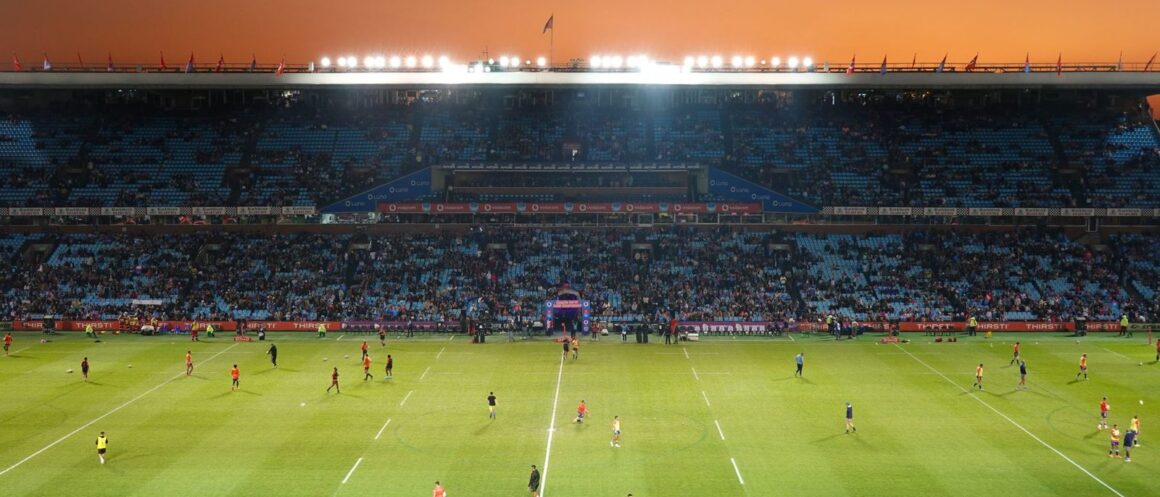
There are two stadiums in Dublin that hold more than fifty thousand people, they are three kilometres apart, and on the right weekend the whole city bends around whichever one has a match in it. The Aviva on Lansdowne Road has a DART station at the turnstiles and stands on the site of the oldest international rugby ground in the world. Croke Park holds 82,300 and the players who fill it are not paid. Between them they give Dublin a sporting culture that is genuinely worth planning a trip around — and that will, if you plan it badly, double the price of your hotel without telling you why.
This guide covers a Six Nations Dublin weekend and everything around it: the confirmed 2027 fixtures and why both of them being night kick-offs matters, how to get a ticket and what to do when you cannot, where fans actually watch when they have no ticket, how a visitor gets into a GAA match at Croke Park, what the whole weekend costs, and which other Dublin sport is worth your Saturday. It is written for someone who is coming for the sport, and for someone who has accidentally booked a weekend that collides with it.

Quick Answer: Planning a Sports Weekend in Dublin
Ireland play two home Six Nations matches in 2027, both at the Aviva Stadium and both under lights: Ireland v England on Friday 5 February at 20:10, and Ireland v France on Saturday 13 March at 20:10, the latter part of the Super Saturday finale. Book accommodation the moment the fixtures are out, because a Six Nations Dublin weekend roughly doubles hotel rates across the city and the Friday-night kick-off means the demand starts a day earlier than people expect.
Tickets are the hard part. Six Nations tickets go mainly through IRFU-affiliated clubs and members rather than a public sale, so a visitor’s realistic routes are official hospitality packages, an authorised resale platform, or a tour operator selling a match-and-hotel bundle. If none of those work, do not despair: watching an Ireland match in a Dublin pub is one of the great experiences the city offers, it is free, and a very large number of Dubliners with the option of a ticket choose it anyway.
| Sport | Where | When | Tickets for visitors |
|---|---|---|---|
| Six Nations rugby | Aviva Stadium, D4 | 5 Feb and 13 Mar 2027, both 20:10 | Very hard — hospitality or resale |
| Leinster rugby | RDS Ballsbridge or the Aviva | Sep–May | Usually available |
| GAA — All-Ireland finals | Croke Park, D3 | July | Effectively impossible |
| GAA — league and provincial | Croke Park and county grounds | Jan–June | Usually available and cheap |
| League of Ireland football | Dalymount, Tallaght, Richmond Park, Tolka | Feb–Nov, mostly Friday nights | Easy and cheap |
| Horse racing | Leopardstown, Fairyhouse, Punchestown | Most of the year; Christmas festival from 26 Dec | Easy |
| Dublin Marathon | City centre | Sun 25 Oct 2026 | Entry ballot; watching is free |
The 2027 Six Nations Dublin Fixtures, and Why the Friday Night Matters
Ireland’s two home games in the 2027 Guinness Men’s Six Nations were confirmed in March 2026 and both are evening kick-offs at the Aviva Stadium.
- Ireland v England — Friday 5 February 2027, 20:10.
- Ireland v France — Saturday 13 March 2027, 20:10, on Super Saturday.
The Friday fixture is the one that changes your planning. A Friday night kick-off means the city fills on Thursday rather than Friday, that the post-match night runs into a full Saturday rather than a Sunday departure, and that anyone flying in on Friday afternoon is arriving into the busiest airport transfer window of the weekend. If you are coming for that match, book Thursday night as well and treat Saturday as a proper day in the city rather than a hangover.
The March fixture is the more expensive of the two. Super Saturday brings the whole championship to a head, France are the marquee visitors, and the date sits in the run-up to St Patrick’s week — so Dublin is already turning towards its busiest fortnight of the year. Details and any changes are on irishrugby.ie.

Match Day at the Aviva
A Six Nations Dublin match day has a shape that regulars follow without thinking about it and visitors have to learn: pubs from mid-afternoon, the walk out along Baggot Street, the ground for an hour before kick-off, and the whole south side moving back into town afterwards.
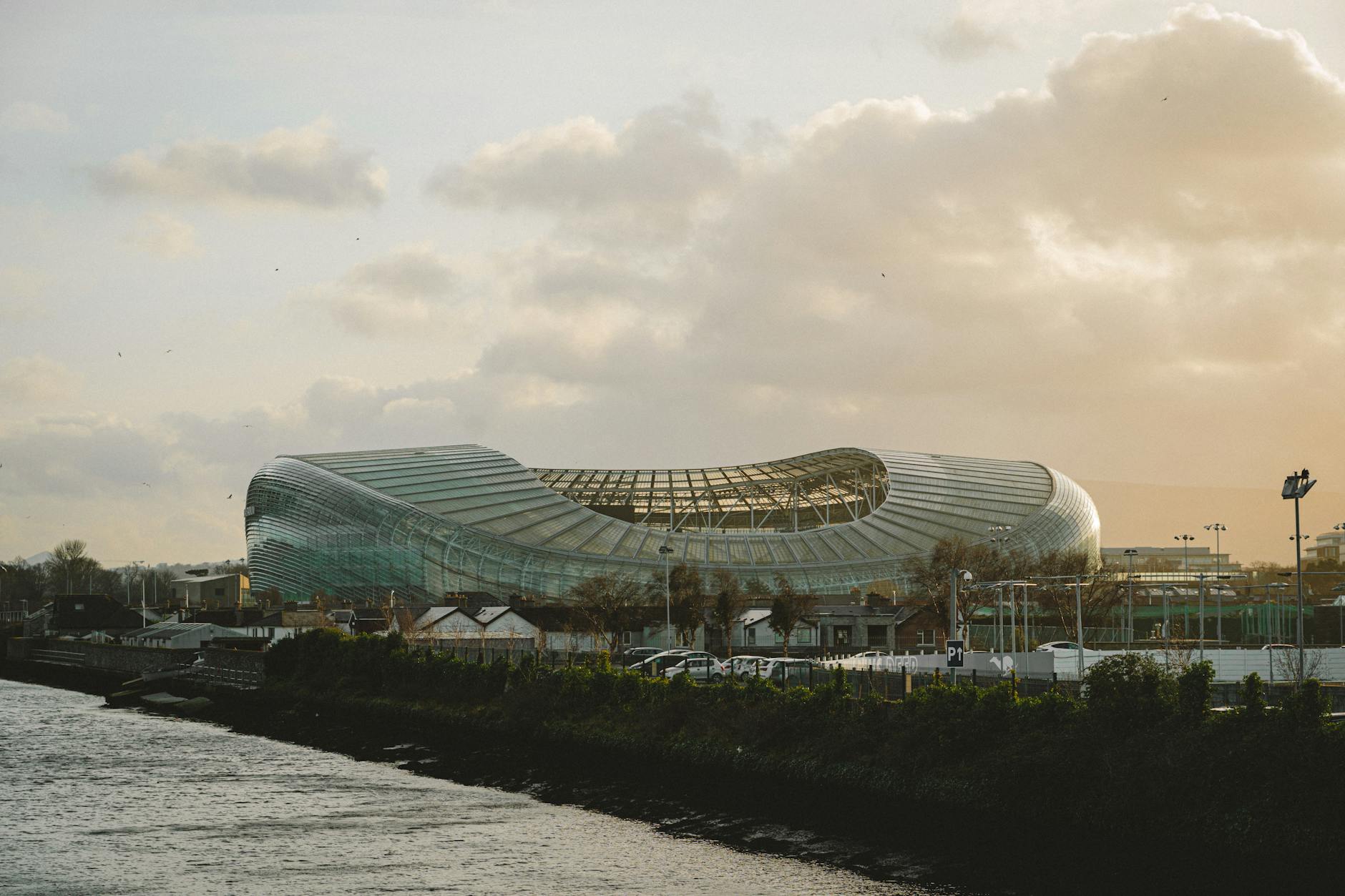
The Aviva Stadium holds a little over 51,000 and sits on Lansdowne Road in Dublin 4, on the site of a ground that opened in 1872 and has staged international rugby since 1878, rebuilt between 2007 and 2010 into the curved glass bowl you see now. It is closer to the city centre than a stadium that size has any right to be: twenty-five minutes’ walk from Trinity College, or one stop on the DART.
Getting there
The DART has a station at the ground — Lansdowne Road, on the platform-to-turnstile scale of convenience — and it is by far the easiest way in and out. It is also completely packed for an hour either side of a match, which is part of the experience. Walking from the centre takes twenty-five to thirty-five minutes along Merrion Road or through Ballsbridge and is genuinely pleasant. Do not drive; there is effectively no parking and the streets close. See the DART guide, getting around Dublin and the Leap Card guide.

Getting a ticket, honestly
This is the part most guides fudge. Ireland home tickets in the Six Nations are distributed mainly through IRFU-affiliated rugby clubs and their members, not through a general public sale — the demand vastly exceeds a 51,000 stadium, and every club in the country has a queue of its own. For a visitor with no club connection, the realistic routes are:
- Official hospitality packages sold through the stadium and its appointed agents. Expensive, guaranteed, and they include food and a seat.
- Authorised resale through the official channel, which appears in the weeks before a match as members return tickets. Watch it and be quick.
- Tour operators selling a match ticket bundled with a hotel. Check that the ticket is a genuine allocation before you pay.
- Knowing someone. Not a strategy, but it is how most tickets in the ground got there.
Be careful with unofficial resale sites. Prices are extraordinary, and Irish law restricts the resale of tickets above face value for large events. If a listing looks wrong, it probably is.
Before and after the match
The pre-match ritual is Baggot Street, Ballsbridge and the pubs along the walk in from town, which fill from mid-afternoon on a match day and are one of the best atmospheres in Dublin — a mix of home and visiting supporters, generally very good-natured. Afterwards, the crowd flows back towards the city centre and the whole south side becomes a single moving party. Our traditional pubs guide and nightlife guide cover the wider map, and late-night food covers what happens at closing time — remember pubs shut at 00:30 on a Friday and Saturday, plus thirty minutes’ drinking-up, which comes as a surprise to visitors after a 20:10 kick-off.
Watching Without a Ticket: Where Fans Actually Go
Do not treat this as second best. A Dublin pub during an Ireland match is one of the genuinely great sporting atmospheres in Europe, it costs the price of a pint, and a substantial proportion of the people in it could have gone to the ground and chose not to. For a first-time visitor, watching a Six Nations Dublin fixture in a packed pub may well be the better memory.
- Get in early. For a big match, two hours before kick-off is not excessive. Pubs fill and then stop letting people in, and the good ones fill first.
- Avoid Temple Bar unless you want to pay Temple Bar prices to watch surrounded by other visitors. The atmosphere is better and the pint cheaper almost anywhere else. The Temple Bar guide is honest about this.
- Camden Street, Wexford Street and Aungier Street are a good cluster for sports pubs with good screens and a local crowd.
- Around the ground — Baggot Street and Ballsbridge — is where the ticketless overflow ends up and it is electric, if you can get in.
- The northside pubs around Croke Park — Quinn’s, the Big Tree, Gill’s — are proper sports pubs and are far less crowded on a rugby weekend.
- Ask for a table only if you want to eat. Standing room is the norm and the front of the room goes to whoever got there first.
Read Irish pub etiquette before your first match in a Dublin pub, particularly the section on rounds — a full afternoon in a round of six will cost you more than the ticket would have.

Croke Park and the GAA
Rugby is not the only reason to plan a sporting trip here, and a Six Nations Dublin weekend is not the only way to see a full stadium in this city.
If your trip falls outside the rugby season, or if you want something you genuinely cannot see anywhere else, Gaelic games are the answer. The Gaelic Athletic Association was founded in 1884, it is organised by county rather than by club allegiance, and the inter-county players are amateurs — they train at professional intensity, play in front of eighty thousand people, and go to work on Monday. Hurling in particular is worth seeing once in your life: the fastest field sport in the world, played with a stick and a small hard ball at genuinely alarming speed.
The season and the fixtures
The National Leagues run from late January through the spring; the provincial championships follow; and the All-Ireland series builds through the early summer to the finals in July, which are held at Croke Park and are among the biggest days in the Irish sporting calendar. Dublin’s own footballers play their Leinster championship games at Croke Park, which is the easiest way for a visitor to see a serious match in the big stadium.
Can a tourist get GAA tickets?
For league and provincial championship games, usually yes, and they are inexpensive by international standards — often a fraction of a rugby ticket. Tickets are sold online and through a network of shops; buy in advance for anything at Croke Park. For the All-Ireland finals in July, effectively no: those tickets are distributed through GAA clubs and county boards rather than sold openly, and a visitor’s chance of getting one at face value is close to zero. On final day the answer is a pub, and the city empties into them.

If there is no match on
The Croke Park stadium tour runs year-round and includes the GAA Museum: €18 for an adult, €14.50 for a student or senior, €12 for a child aged three to twelve, and €48 for a family of two adults and two children. It is billed as an access-all-areas tour, and the museum covers the founding of the association, the games themselves and Bloody Sunday in 1920, when British forces opened fire on a crowd at a Dublin–Tipperary match and killed fourteen people. The Kellogg’s Skyline rooftop walk is a separate €24. Full detail in our Croke Park tour guide.

The Rest of Dublin’s Sport
If your dates do not line up with a Six Nations Dublin fixture or a championship weekend at Croke Park, the city still has plenty on — and some of it is better value than either.
Leinster rugby
The provincial side plays through the autumn, winter and spring in the United Rugby Championship and the European Champions Cup, splitting home games between the RDS Arena in Ballsbridge and the Aviva for the biggest European nights — check the fixture list for the venue, because it varies. Tickets are usually available, the standard is very high, and it is a far easier way to see top-level rugby in Dublin than a Six Nations Dublin weekend.
League of Ireland football — a good-value night out
Massively underrated and almost never recommended to visitors. Dublin has four League of Ireland clubs — Shamrock Rovers in Tallaght, Bohemians at Dalymount Park in Phibsborough, St Patrick’s Athletic at Richmond Park in Inchicore and Shelbourne at Tolka Park in Drumcondra. The season runs from February to November and most games are on Friday nights. Tickets cost a fraction of anything else on this page, the grounds are small and loud, and Dalymount in particular has an atmosphere that people travel for. If you want one sporting evening in Dublin that no other visitor on your flight will have had, this is it.
Horse racing
Leopardstown in south Dublin races through the year, with gaps between meetings, and its Christmas Festival starts on St Stephen’s Day — Saturday 26 December 2026 — and runs four days. Fairyhouse in Meath holds the Irish Grand National at Easter and Punchestown in Kildare has its festival in late April. All three are straightforward day trips and racing is deep in Irish culture in a way that repays a visit. See day trips from Dublin.
The Dublin Marathon
The Irish Life Dublin Marathon runs on Sunday 25 October 2026 — the same day the clocks go back, at 02:00 IST — through the city centre and Phoenix Park. Entry is by ballot and closes far in advance; watching is free and the city is closed to traffic along the route. If you are visiting that weekend without knowing, expect road closures, packed hotels and a very different city. Note that Monday 26 October is the October bank holiday and Irish school mid-term.

What a Six Nations Weekend Costs
Hotel prices climb on Six Nations home weekends, and almost all of the difference is in one line. The figures below are per person, two nights, sharing a room, excluding flights and excluding the match ticket, which is the wild card.
| Line | Ordinary weekend | Six Nations weekend |
|---|---|---|
| Two nights’ bed, 3★ twin | Standard rate | Higher |
| Match ticket | — | Face value if you are lucky; hospitality is far more |
| Food and drink | Standard | Higher — you will drink more |
| Local transport | €18 (3-day Leap) | €18 |
| Attractions | Standard | Lower — you will do less |
The accommodation line is the whole story. Dublin has a chronic shortage of hotel rooms and two international match weekends a year is exactly the kind of demand spike it cannot absorb. The mitigations are real, though: book the moment fixtures are announced, which is usually the previous spring; look at apartment rentals if there are more than two of you; and consider Portobello, Stoneybatter or Drumcondra rather than the centre — all are a walk or a short tram from town and all cost materially less. The full trip cost guide and where to stay have the detail.
Booking a Six Nations Dublin Weekend: When to Do What
- Fixtures are announced about eleven months ahead. The 2027 dates were confirmed in March 2026. Book accommodation that week.
- Book Thursday night for the Friday fixture. The 5 February 2027 game kicks off at 20:10 on a Friday, so the city fills on Thursday.
- Watch official resale from about a month out, when returns appear.
- Book restaurants weeks ahead. A group of six walking into a Dublin restaurant at seven on a match Saturday will not be seated.
- Do not book a hire car. Parking is impossible and the streets around both grounds close. See renting a car in Dublin for when it does make sense, which is not this.
- If the sport is not why you are coming, avoid these weekends entirely. The cheapest time to visit explains what you save.
Gotchas
The things that most reliably catch out visitors on a Six Nations Dublin weekend, in rough order of how much they cost.
- Both 2027 Ireland home games kick off at 20:10, and one is on a Friday. Plan the extra night.
- Six Nations tickets are not sold to the general public in any meaningful quantity. They go through IRFU-affiliated clubs. Hospitality and official resale are the visitor routes.
- Hotel rates roughly double on both match weekends, and again over St Patrick’s, which is four days after the March fixture.
- All-Ireland final tickets are distributed through GAA clubs and counties, not sold openly. Watch in a pub.
- Pubs close at 00:30 on Friday and Saturday, plus thirty minutes’ drinking-up time. After a 20:10 kick-off that is not as long as it sounds.
- Get into your pub two hours before a big kick-off. The good ones fill and stop admitting people.
- Lansdowne Road DART station is at the stadium and is completely overwhelmed either side of a match. Walking into town is often faster.
- Do not buy from unofficial resale sites. Prices are absurd and above-face-value resale for large events is restricted under Irish law.
- The Dublin Marathon weekend (25 October 2026) closes roads along the route and coincides with the October bank holiday and the clocks going back.
- Dublin Castle is closed to visitors until January 2027, so it is not the rainy-morning fallback it used to be.
FAQ: Six Nations and Sport in Dublin
Where do fans watch the Six Nations in Dublin?
In the pubs, overwhelmingly — a Six Nations Dublin crowd is a pub crowd first and a stadium crowd second, simply because the stadium holds 51,000 and the city does not — Camden Street, Wexford Street and Aungier Street are a good cluster of sports pubs with a local crowd, and the pubs around Baggot Street and Ballsbridge near the stadium are the most atmospheric if you can get in. Arrive two hours before a big kick-off, because good pubs fill and then stop letting people in. Avoid Temple Bar, where you will pay well over the going rate for a pint to watch surrounded by other visitors.
Can tourists get GAA tickets?
For National League and provincial championship games, usually yes, and they are cheap by international standards — sold online and through a network of shops, and worth booking in advance for anything at Croke Park. For the All-Ireland finals in July, realistically no: those tickets go through GAA clubs and county boards rather than a public sale. If a final falls during your trip, watch it in a pub, which is genuinely one of the best days in the Irish year.
Do I need tickets to watch in a pub?
No — Dublin pubs show the matches free and there is no cover charge. What you need is to arrive early, because for a big fixture the good pubs are full two hours before kick-off and will close their doors. Some larger venues take table bookings if you are eating; most do not, and standing room at the front goes to whoever got there first. Buy your round like everyone else and you will be looked after.
When are Ireland’s home Six Nations games in 2027?
Ireland v England on Friday 5 February 2027 at 20:10, and Ireland v France on Saturday 13 March 2027 at 20:10, both at the Aviva Stadium in Dublin. Both are night kick-offs, which is unusual, and the February fixture being on a Friday means the city fills from Thursday. The March game is part of the Super Saturday finale and is the more expensive weekend of the two.
How much do hotels cost on a Six Nations weekend?
Expect rates well above a normal weekend, especially around the home games on 5 February and 13 March 2027, with central four-star rooms going further still. Booking the week the fixtures are announced — usually the previous March — is the single most effective thing you can do, followed by staying in Portobello, Stoneybatter or Drumcondra rather than the centre.
Is the Aviva Stadium walkable from the city centre?
Yes — twenty-five to thirty-five minutes from Trinity College through Merrion Square and Ballsbridge, and a pleasant walk. There is also a DART station called Lansdowne Road effectively at the turnstiles, which is the fastest way there and completely jammed for an hour either side of a match. Do not attempt to drive; there is no parking and the surrounding streets close.
What sport can I see in Dublin outside the Six Nations?
Leinster rugby from September to May at the RDS or the Aviva, GAA league and championship from January to July at Croke Park, League of Ireland football from February to November on Friday nights at four small city grounds, and horse racing at Leopardstown through the year, with a four-day festival from St Stephen’s Day. The League of Ireland is a good-value night out, and Dalymount Park in Phibsborough on a Friday night is a great evening.
Is a Six Nations Dublin weekend a good first trip to the city?
Only if the rugby is the point. The city is at its most alive and its most expensive, the museums and attractions are as busy as they get, and you will spend most of the weekend in pubs. If you want to see Dublin properly, come on any other weekend, when hotels cost less — see the best time to visit. If you want to see Ireland at full volume, there is nothing else quite like it.
What is hurling, and should I watch it?
An amateur stick-and-ball field sport played in Ireland for something like three thousand years, generally described as the fastest field sport in the world, and utterly unlike anything else. Watch it once — either at Croke Park in the summer championship or on a television in a pub in July, when the All-Ireland final effectively stops the country. The GAA Museum at Croke Park explains it properly from first principles, and it is included in the stadium tour.
Keep Planning
- Is Dublin Worth Visiting? — the parent guide, and the honest case for the city.
- Croke Park Tour & GAA Museum — the stadium when there is no match on.
- Dublin Events & Festivals — the whole calendar, month by month.
- Traditional Pubs in Dublin — where to watch, and where to drink afterwards.
- The Best Pint of Guinness in Dublin — settling the other great argument.
- Where to Stay in Dublin — and how to avoid the match-weekend premium.
- Dublin Hen & Stag Weekend Guide — if the group is bigger than four.
- Dublin from London & the UK — flights, ferries and the new passport rules.
Keep Reading
Lean na Comharthaí — Keep following the signs