Belfast & Titanic Day Trip from Dublin: Train, Tour or Car?
Turas lae go Béal Feirste ó Bhaile Átha Cliath

Ar an gComhartha Seo — On this sign
- Quick Answer: Is Belfast Worth a Day Trip from Dublin?
- Train, Tour or Car?
- The Border, the Currency and the Small Print
- Titanic Belfast: What It Costs and Whether to Go
- The Rest of Belfast — Which Is Most of Belfast
- A One-Day Plan That Actually Fits
- Should You Add the Giant’s Causeway?
- Eating, Drinking and Practicalities on the Day
- Belfast or Dublin?
- Gotchas
- Belfast Day Trip from Dublin FAQ
- Keep Planning
- Keep Reading
Belfast is two hours and eight minutes from Dublin Connolly, which is less time than a lot of people spend getting to an airport. It is also a different country, a different currency and a city with a completely different temperament — harder-edged, more industrial, still visibly working out its own story in a way Dublin finished doing decades ago. That combination is what makes the trip worth taking. You are not going to see a smaller Dublin. You are going to see the place that built the ships, fought the war Dublin mostly watched, and has spent thirty years rebuilding itself in public.
This guide covers the Belfast day trip from Dublin properly: the train against the organised tour against driving yourself, with real journey times and real fares; what Titanic Belfast costs and whether two hours inside it is time well spent; the border, currency and phone-roaming details that catch people out; and a one-day plan that actually fits between the first train up and the last train back. It also says plainly where a day trip is the wrong call.
Quick Answer: Is Belfast Worth a Day Trip from Dublin?
Yes, and the train is what makes it work. The Enterprise service runs roughly hourly between Dublin Connolly and Belfast Grand Central, takes about 2 hours 8 minutes, and has around fifteen departures a day Monday to Saturday with the first near 05:50 and the last near 20:50. Sundays drop to about eight. Catch something around eight in the morning and you are in Belfast before eleven with seven or eight usable hours, which is enough for Titanic Belfast, a black cab tour and lunch, without any of it feeling like a forced march.
The honest caveat: one day gives you Belfast’s headline sights, not Belfast. And a Belfast day trip from Dublin is the wrong call if what you actually want is the Giant’s Causeway — that is another hour and a half beyond the city, and doing both in a day means seeing neither properly. If the Causeway is the goal, take a dedicated Giant’s Causeway trip from Dublin and treat Belfast as a separate day.
| Train journey time | About 2 hours 8 minutes each way |
|---|---|
| Frequency | Roughly hourly; ~15 services Mon–Sat, ~8 on Sunday |
| Stations | Dublin Connolly to Belfast Grand Central |
| Fares from Dublin | Flexible standard single from €15.99; first class from €25.99 |
| Currency in Belfast | Pound sterling — not euro |
| Border checks | None on the train, but carry photo ID |
| Titanic Belfast | £24.95 adult, £11 child (5–15), includes SS Nomadic |
| Time in the city | 7–8 hours on a sensible train pair |
| Best for | Titanic Quarter, political history, Victorian architecture |
| Not for | The Giant’s Causeway — that needs its own day |
Train, Tour or Car?
There are three realistic ways to make a Belfast day trip from Dublin work, and for most people the choice is straightforward.
| Option | Time each way | Roughly what it costs | Best for |
|---|---|---|---|
| Enterprise train | ~2h 08m | From €15.99 standard single | Almost everyone. City centre to city centre. |
| Organised coach tour | 2h 30m–3h | Tour pricing, usually with entry included | People who want Titanic plus a guide and no planning |
| Driving | ~2h | Fuel, tolls, parking, cross-border insurance | Groups of three or more, or onward travel north |
| Bus | ~2h 15m–2h 45m | Usually the cheapest | Tight budgets, flexible timing |
The train, which is the answer
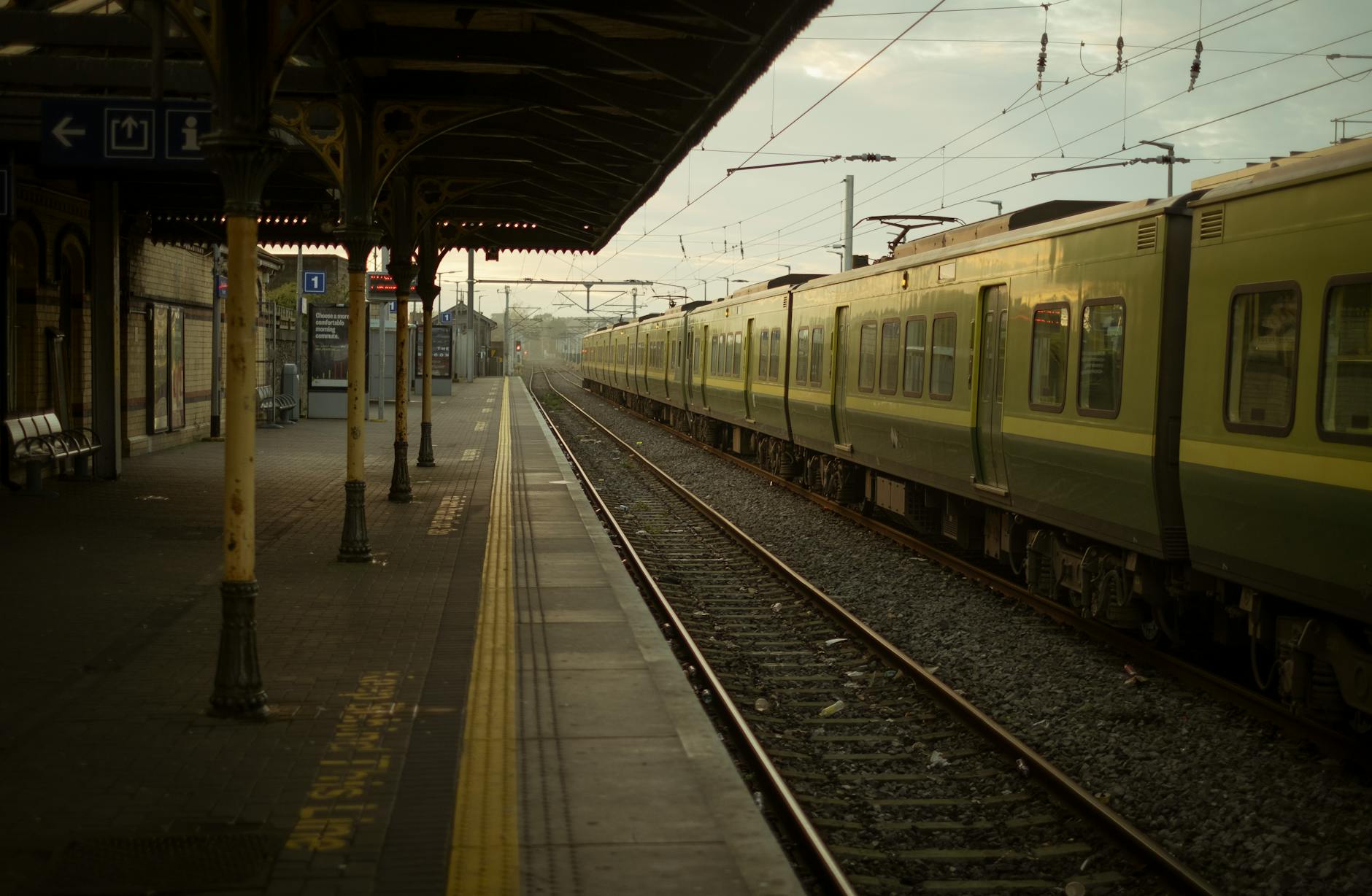
The Enterprise is jointly run by Iarnród Éireann and Translink, it leaves from Connolly in the middle of Dublin and arrives at Belfast Grand Central in the middle of Belfast, and since the service stepped up to hourly the day trip became genuinely easy. Book ahead for the cheaper fares and check the current timetable rather than trusting the numbers in any guide, including this one — cross-border services get revised.
Two practical notes. First class buys you a bigger seat and at-seat service; on a two-hour run it is a nice-to-have rather than a need. Second, the return leg is the one to plan around, not the outbound: work backwards from the last train you are willing to catch and leave yourself a margin, because missing it is an expensive mistake in a city where you have not booked a bed.
The organised tour
Coach tours from Dublin typically bundle Titanic Belfast entry with a guided city drive and a stop at the peace walls. They are a reasonable choice if you want the political and industrial history explained by someone who knows it, and a poor one if you resent being on a schedule. You will also spend longer on the road than the train takes. Compare against the wider list in our day trips from Dublin guide.
Driving
The M1 makes it about two hours and the road is good. The catch is insurance: many Republic of Ireland hire agreements restrict or surcharge travel into Northern Ireland, and you must clear this with the rental company before you set off rather than discovering it at the border, where there is nobody to ask. Parking in central Belfast is paid and the city is compact enough that you will not want the car once you arrive. See renting a car in Dublin for the cross-border details.
The Border, the Currency and the Small Print
There is no border checkpoint. The train does not stop, nobody boards to inspect passports, and if you were not paying attention you would not notice the crossing. That absence of a checkpoint is the source of most of the trouble people get into, because it makes it easy to forget you have changed countries. Four things change the moment you cross.
- Currency. Northern Ireland uses pound sterling. Euro are not accepted in most places, and where they are the rate will be poor. Card works nearly everywhere, which is the simplest answer; if you want cash, take it out in Belfast rather than changing money in Dublin.
- Immigration permission. Irish and British citizens move freely under the Common Travel Area. Other nationalities need permission to enter the United Kingdom, and many visa-exempt travellers now require an Electronic Travel Authorisation. The absence of a checkpoint does not mean the requirement does not exist — check your own nationality’s position before you travel, and see our visa requirements guide for the Irish side of the picture.
- Mobile roaming. Northern Ireland is outside the EU roaming zone. Depending on your plan, data may cost you real money from the moment your phone finds a UK network — and phones near the border will hop between networks. Check before you go, or see SIM cards for visitors.
- Health cover. The EHIC and its equivalents do not work the way they do in the Republic. Confirm your travel insurance covers the UK.
Titanic Belfast: What It Costs and Whether to Go
Titanic Belfast stands beside the slipways where the Titanic and Olympic were built, in a building whose four angular hulls are the same height as the Titanic’s bow. Inside is a nine-gallery walk through Belfast’s industrial boom, the shipyard, the launch, the voyage, the sinking and the wreck. It is well made, it is genuinely moving in places, and it does not oversell the disaster.
| Adult | £24.95 |
|---|---|
| Child (5–15) | £11 |
| Under 5 | Free |
| Family pass (2 adults, 2 children) | £62 |
| SS Nomadic | Included in standard admission |
| Entry | Timed slots every 10 minutes — book ahead |
| Last admission | 1 hour 40 minutes before closing |
| Time needed | About 2 hours, plus 30 minutes for SS Nomadic |
Book a timed slot in advance. Entry runs in ten-minute intervals and turning up hoping for the next one is how you lose an hour of a day you do not have. Opening hours are seasonal, so check them against your train times, and note that last admission to the main experience is a full hour and forty minutes before the building closes — arrive later than that and you will be turned away with a valid ticket.
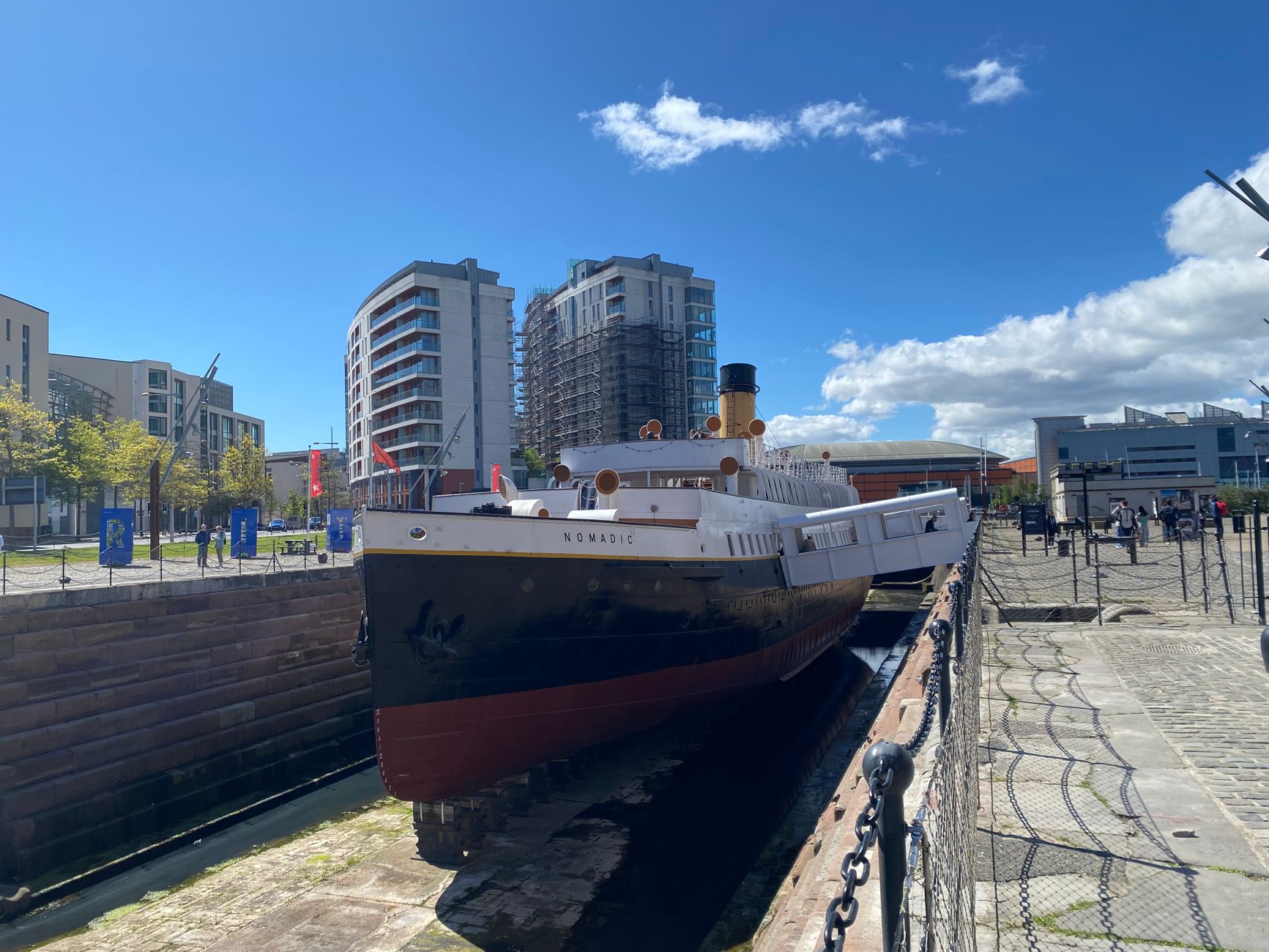
SS Nomadic is included and most people skip it, which is a mistake. She is the last White Star Line vessel afloat, the tender that ferried first and second class passengers out to the Titanic at Cherbourg, and she sits in a dry dock a two-minute walk from the main building. Half an hour on a real ship is a useful corrective after two hours of very good exhibition design. Her last admission is thirty minutes before closing.
Is it worth £24.95?
If you have any interest in ships, industry or the Edwardian world, yes. If Titanic is to you a film rather than a shipyard, you may find two hours a long time and the price steep against Dublin, where the national museums are free. It is not a museum of artefacts — very little physical Titanic material survives — so what you are paying for is interpretation, staging and the building itself. Go in knowing that and you will not be disappointed.
The Rest of Belfast — Which Is Most of Belfast
The commonest error on a Belfast day trip from Dublin is treating the Titanic Quarter as the destination. It is a twenty-minute walk or a short taxi from the centre, and making it the whole trip would be a waste. The city proper is compact, walkable and considerably more interesting than its reputation abroad.
The Titanic Quarter and the cranes
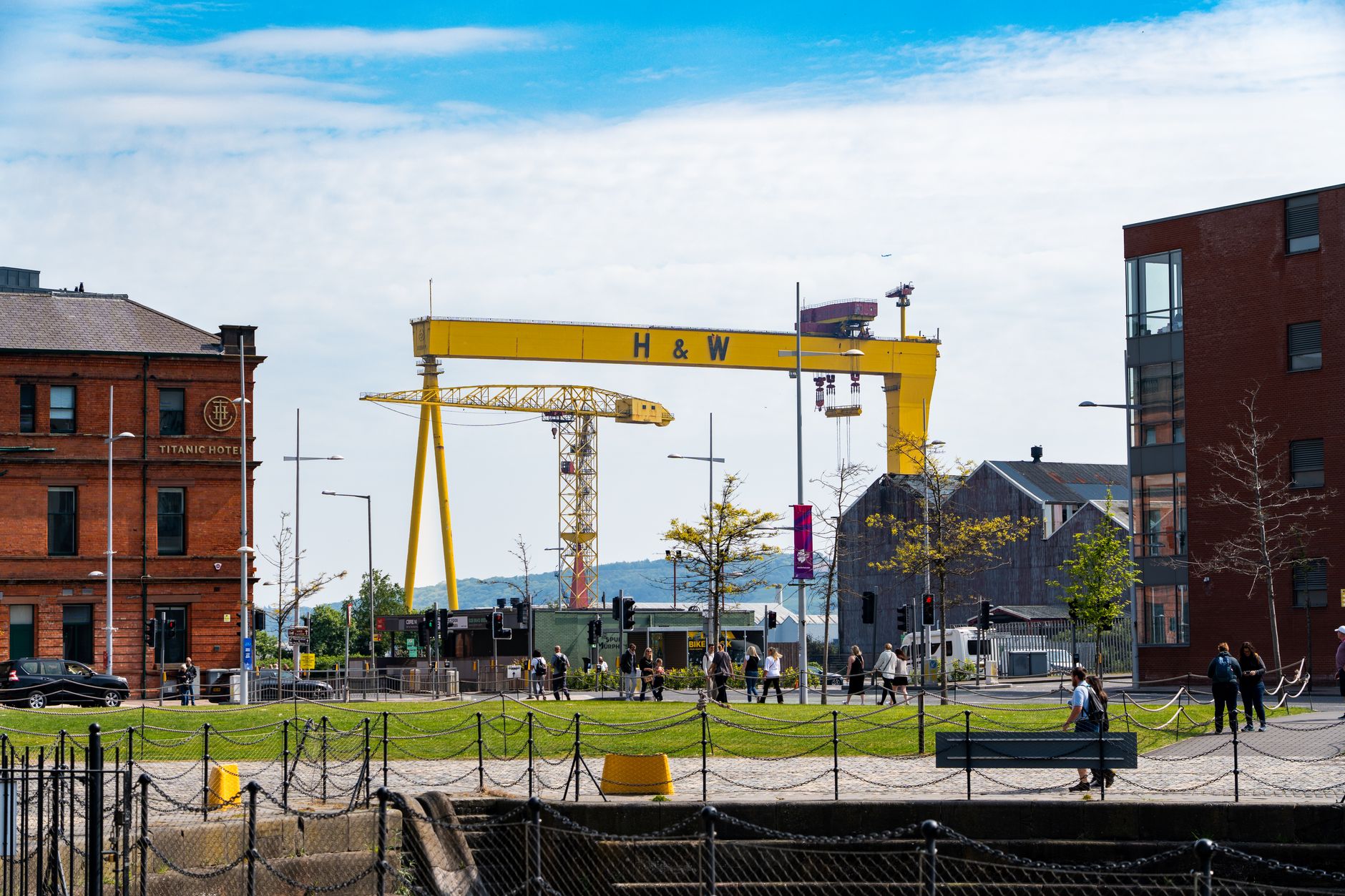
The two Harland & Wolff gantry cranes, Samson and Goliath, are the city’s real skyline. The old drawing offices where the Titanic was designed are now a hotel you can walk into, and the whole quarter is a case study in what a shipyard becomes when the ships stop. Give it a slow half-hour on foot either side of the museum.
City Hall and the centre
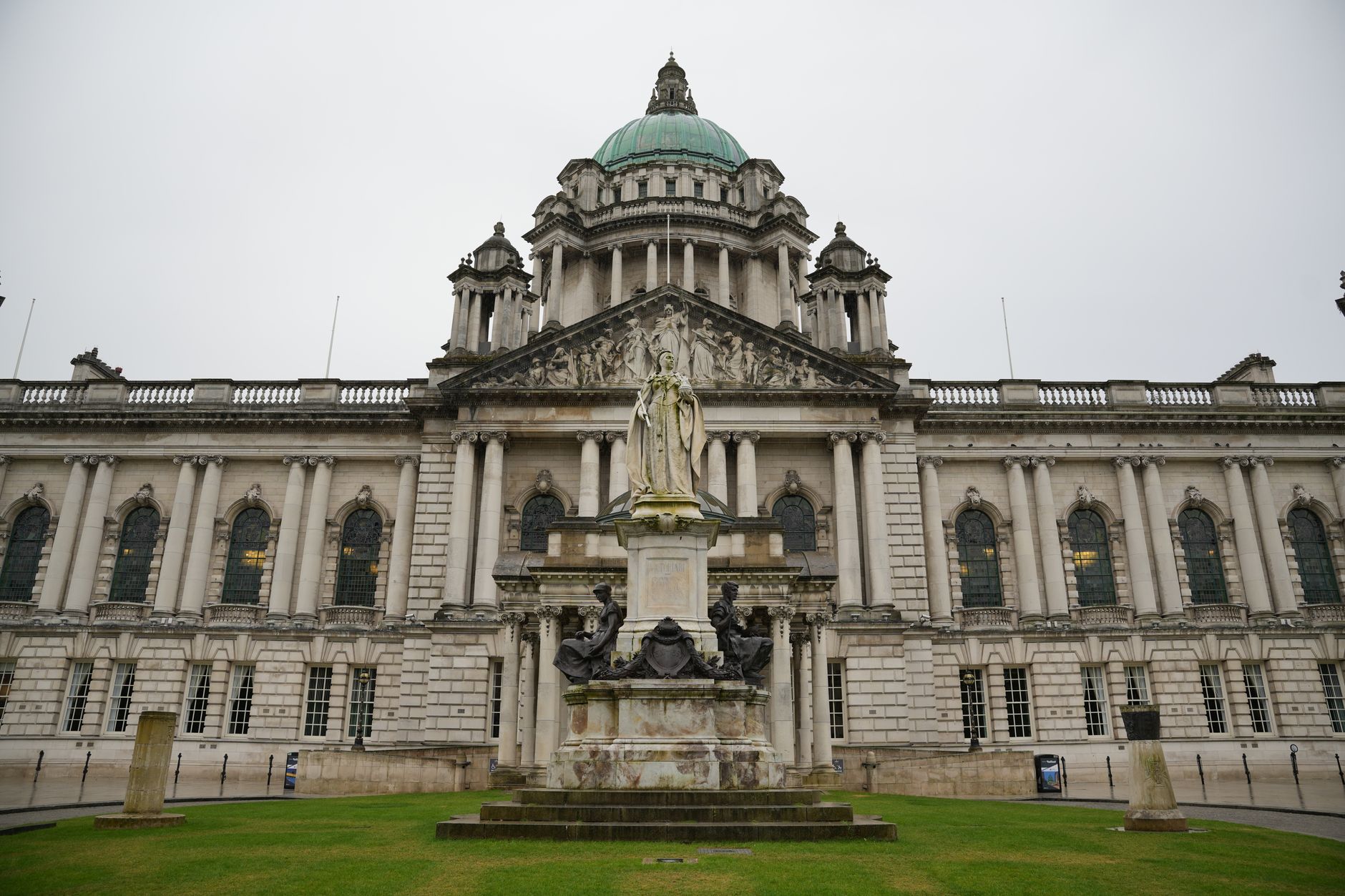
Belfast City Hall is an enormous Edwardian Portland stone pile with a copper dome, built on the money the linen and shipbuilding boom generated, and free to walk into. The grounds hold the Titanic memorial. From there the centre is fifteen minutes end to end in any direction.
The Cathedral Quarter
The old warehouse district around St Anne’s Cathedral, now the city’s eating, drinking and street-art quarter. The Duke of York and the surrounding entries — Belfast’s narrow alleyways — are where you want to be for lunch or a pint. It is also the best part of the city simply to wander without a plan.
Political history and the black cab tours
The murals, the peace walls and the divided streets of the Falls and Shankill are, for many visitors, the most affecting hours of the day. Black cab tours are the standard way to see them, driven by people who lived through it and who will give you a partisan account — which is the point, and you should take more than one if you have the time. It is not a comfortable experience and it should not be. Approach it as history rather than spectacle.
The free things
The Ulster Museum, out at the Botanic Gardens beside Queen’s University, is free and very good on both the natural history and the Troubles. St George’s Market, the last surviving Victorian covered market in the city, runs at weekends and is the best food stop in Belfast — check the current days before you build a morning around it. Crumlin Road Gaol, at the other end of the register, is a ticketed tour of a Victorian prison that stayed in use until 1996.
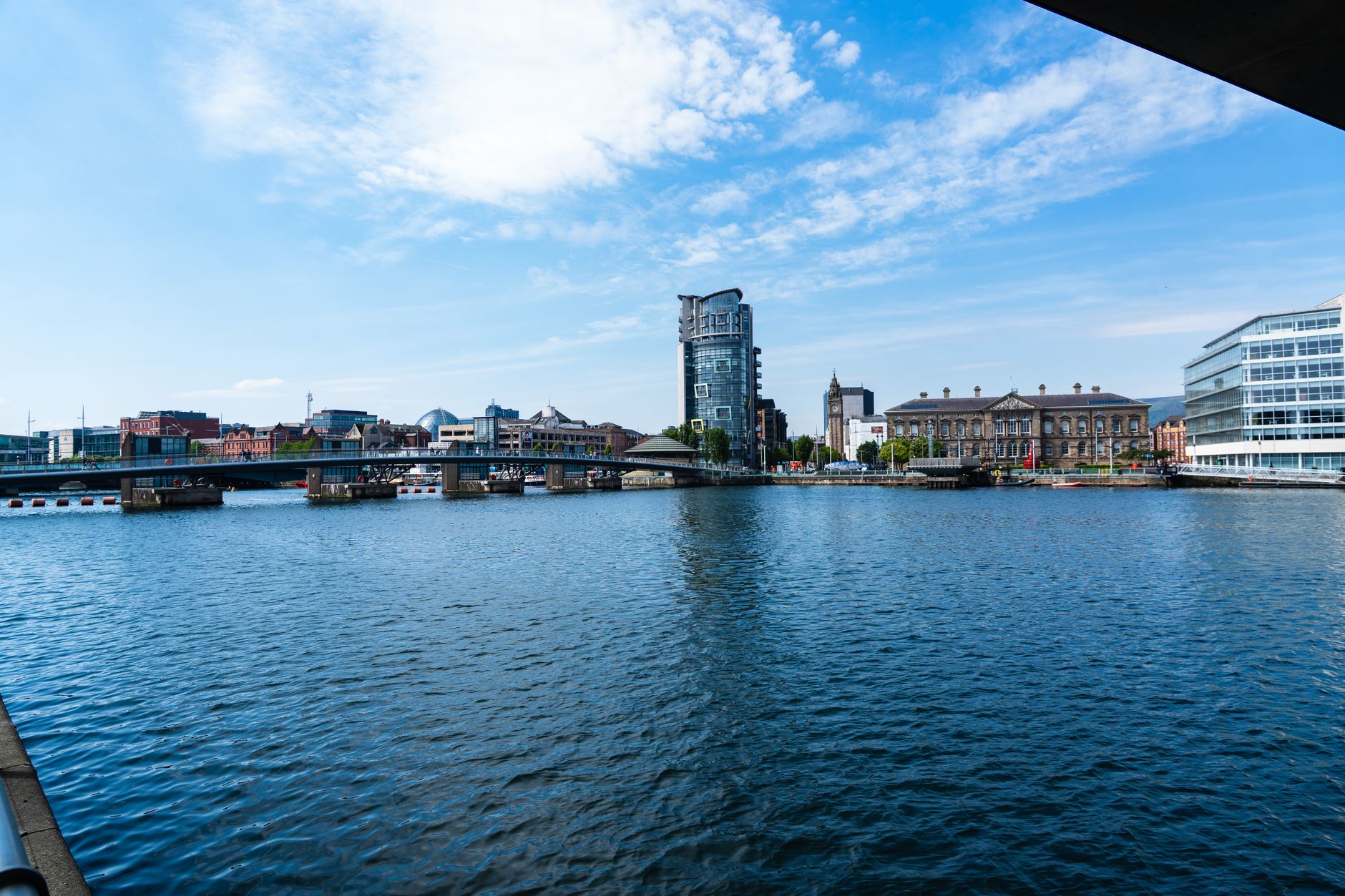
A One-Day Plan That Actually Fits
This assumes an eight o’clock train up and something around seven back, which is the standard shape of a Belfast day trip from Dublin.
- 08:00 — Enterprise from Connolly. Eat on the train or before you board.
- 10:10 — Belfast Grand Central. Walk or take a taxi straight to Titanic Quarter.
- 10:45 — Titanic Belfast, pre-booked slot. Two hours inside, then thirty minutes on SS Nomadic.
- 13:30 — Lunch in the Cathedral Quarter, or St George’s Market if it is a market day.
- 14:45 — Black cab tour of the peace walls and murals, about ninety minutes.
- 16:30 — City Hall, the centre, and whatever is left in you. The Ulster Museum if you would rather have another museum than a walk.
- 18:45 — Back to Grand Central for the evening train.
Drop the cab tour if you want a slower day, or drop Titanic Belfast if the political history is what brought you — those two are the choice, and trying to do both plus the Ulster Museum is how a good day becomes a tiring one. If you are building a longer Ireland trip, our Dublin and Ireland itinerary puts Belfast in context, and a week based in Dublin shows where it fits.
Should You Add the Giant’s Causeway?
Not on the same day, and this is the single most common mistake. The Causeway is roughly an hour and a half north of Belfast on the Antrim coast. A tour that promises both from Dublin will give you a coach seat for most of a very long day, forty minutes at the stones and a drive-past of Belfast. You will have technically been to both places and properly been to neither.
Do them separately. Our Giant’s Causeway from Dublin guide covers the full-day coast run, which also takes in Dunluce Castle, Carrick-a-Rede and the Bushmills distillery. If you have two days and a car, an overnight in Belfast with the coast the following morning is by far the best version of this trip.

Eating, Drinking and Practicalities on the Day
Belfast eats well and cheaply by Dublin standards, and the Cathedral Quarter is where to do it. The old entries — Commercial Court, Hill Street, the lanes around the Duke of York — hold most of the good lunch options, and a sit-down meal will generally cost you less than the equivalent in Dublin 2. St George’s Market, when it is running, is the single best food stop in the city and the most enjoyable place to spend an hour on a wet day.
A few practical things that make a Belfast day trip from Dublin smoother. Left luggage exists at Grand Central, which matters if you are carrying anything. Black taxis are plentiful and cheap across the small centre. The city is genuinely walkable end to end, with the Titanic Quarter the only bit that justifies a taxi. And Belfast weather is Dublin weather with more wind off the lough — the same hooded waterproof rule applies, and for the same reason.
Making it two days instead
If the schedule allows it, an overnight changes the trip completely. You get an evening in the Cathedral Quarter, which is where Belfast is at its best and which a day trip always misses, and you get the following morning for the Antrim coast without the Dublin round trip bolted on either end. Accommodation is cheaper than Dublin, sometimes markedly. This is the version to choose if you are deciding between one crowded day and two unhurried ones, and it is how most people who have done both would tell you to do it.

Belfast or Dublin?
They are not competing, and the comparison people make — Belfast as the cheaper, rougher option — is about twenty years out of date. Belfast is a smaller city with a harder history and a better museum on that history than anything in Dublin. Dublin has the literature, the Georgian architecture, the pubs and the scale. Prices in Belfast are generally lower, particularly for food and accommodation, which is worth knowing if your Dublin trip budget is under pressure.
What Belfast does that Dublin cannot is show you an industrial city and a contested one in the same afternoon. That is the reason to go, and it is a good one — see our Dublin history guide and the 1916 Rising sites for the southern half of the same story.

Gotchas
- Northern Ireland uses sterling. Euro will not be accepted in most places. Use a card, or withdraw cash after you arrive.
- No border check does not mean no requirement. Non-Irish and non-British nationals may need a UK visa or an Electronic Travel Authorisation. Check before you board.
- Your phone leaves the EU roaming zone. Data can cost real money; check your plan.
- Titanic Belfast is timed entry. Book a slot, and note last admission is 1h40 before closing.
- SS Nomadic closes earlier than the main building — last admission 30 minutes before close. Do her first if you are tight.
- Sunday has roughly half the trains. A Sunday day trip is much tighter; check the timetable before choosing the day.
- Hire cars may not be insured across the border. Clear it with the rental company in advance.
- The Giant’s Causeway is not a Belfast add-on. It is ninety minutes further and needs its own day.
- Plan the return train, not the outbound. Work backwards from the last service you would accept.
- Belfast’s free museums close earlier than you expect. The Ulster Museum is not an end-of-day option.
Belfast Day Trip from Dublin FAQ
Is Belfast worth a day trip from Dublin?
Yes. The Enterprise train runs roughly hourly and takes about 2 hours 8 minutes city centre to city centre, which leaves seven or eight usable hours in Belfast on a sensible pair of trains. That is enough for Titanic Belfast, a black cab tour of the peace walls and lunch in the Cathedral Quarter without rushing. It is not enough to see Belfast properly, but it is a genuinely good day.
Is one day enough for Titanic Belfast?
More than enough for the museum itself. Allow about two hours for the nine galleries and another thirty minutes for SS Nomadic, which is included in the ticket and sits two minutes away. Book a timed slot in advance, and check that your slot leaves you clear of the last admission cut-off, which is 1 hour 40 minutes before the building closes.
Do I need a passport to go to Belfast from Dublin?
There is no border check on the train, but you should carry photo identification. Irish and British citizens travel freely under the Common Travel Area. Other nationalities need permission to enter the United Kingdom, and many visa-exempt travellers now require an Electronic Travel Authorisation — the absence of a checkpoint does not remove the requirement, so check your own position before you go.
How much does the train from Dublin to Belfast cost?
Flexible standard singles start from around €15.99 from Dublin, with first class from about €25.99; from Belfast the equivalents start near £13.50 and £22. Booking ahead gets the lower fares. Check the current prices with Iarnród Éireann or Translink before you travel, as cross-border fares are revised periodically.
What currency is used in Belfast?
Pound sterling. Northern Ireland is part of the United Kingdom, so euro are not generally accepted and where they are the exchange rate will be unfavourable. Cards work almost everywhere, which is the simplest approach for a day trip; if you want cash, withdraw it after you arrive rather than changing money in Dublin.
Can I visit the Giant’s Causeway on a Belfast day trip?
Not sensibly. The Causeway is about ninety minutes north of Belfast on the Antrim coast, so combining the two from Dublin means a very long day mostly spent on a coach, with perhaps forty minutes at the stones. Take a dedicated Causeway trip instead, and treat Belfast as its own day — or stay overnight and do the coast the next morning.
How long is the train from Dublin to Belfast?
About 2 hours 8 minutes on the Enterprise, running from Dublin Connolly to Belfast Grand Central. Services are roughly hourly with around fifteen a day Monday to Saturday, the first near 05:50 and the last near 20:50, dropping to about eight on Sundays.
Is Belfast cheaper than Dublin?
Generally yes, particularly for food, drink and accommodation. Attractions are a different matter — Titanic Belfast is £24.95 for an adult, whereas Dublin’s national museums are free — so a day in Belfast built around one big ticketed attraction is not necessarily a cheap day. Where Belfast wins clearly is on a meal and a bed.
Are the black cab tours in Belfast worth doing?
For most visitors they are the most memorable part of the day. Drivers take you through the Falls and Shankill, the murals and the peace walls, and give you a personal and partisan account of the Troubles. Treat it as history rather than sightseeing, expect to be uncomfortable at points, and if you have time, hear more than one perspective.
Keep Planning
- Day trips from Dublin — every option ranked, with journey times.
- The Giant’s Causeway from Dublin — the Antrim coast as its own full day.
- Dublin and Ireland itinerary — where Belfast fits in a longer trip.
- Dublin visa requirements — entry rules for Ireland, and why the UK is separate.
- Renting a car in Dublin — cross-border insurance and what it costs.
- The 1916 Rising sites — the southern half of the same century.
- Glendalough day trip — the short, green alternative if two hours on a train is too much.
Keep Reading
- Dublin vs Belfast — the full comparison on cost, attractions and coast, and when to base yourself north instead.
- Dublin to Belfast by Train — how to get there and back: times, tickets, and building the day around the timetable.
- Day Trips from Dublin: Every Option Ranked
- The Giant’s Causeway from Dublin
- Dublin & Ireland Itinerary
- Glendalough Day Trip from Dublin
Lean na Comharthaí — Keep following the signs