Dún Laoghaire, Dalkey & Killiney Hill: Dublin’s Coastal DART Day Trip
Dún Laoghaire, Deilginis agus Cill Iníon Léinín

Ar an gComhartha Seo — On this sign
- Quick Answer: Is This Day Trip Worth It?
- Dún Laoghaire: The Harbour at the Start of the Line
- Sandycove, the Forty Foot and the Joyce Tower
- Dalkey Dublin: The Prettiest Village on the Coast
- The Vico Road
- Killiney Hill
- The Dalkey Dublin Route: How to Actually Do It
- Getting to Dalkey Dublin: DART Logistics
- Where to Eat
- When to Go
- Dalkey Dublin Versus the Other Coastal Day Trips
- Gotchas
- Dalkey Dublin Day Trip FAQ
- Keep Planning
- Keep Reading
Twenty-five minutes south of the city on the DART, the line stops pretending to be urban. Sandymount gives way to Booterstown, Booterstown to Blackrock, and by Dún Laoghaire you are looking at a Victorian harbour with two granite piers reaching out into the bay. Eight minutes further on, the train runs so close to the water at White Rock that on a rough day the spray hits the windows. This is the best hour of coastline in County Dublin, and almost none of it requires a car, a tour or a ticket.
This guide covers the whole southside run that Dalkey Dublin sits at the centre of — Dún Laoghaire, Sandycove and the Forty Foot, Dalkey village and its castle, Coliemore Harbour and Dalkey Island, the Vico Road, and Killiney Hill with the obelisk at the top. It has the walking distances, the DART logistics, what is free and what is not, where to eat, when to come, and an honest verdict on which parts are worth your day and which are pleasant filler. If you have one day outside the city and no car, this is the one to spend it on.
Quick Answer: Is This Day Trip Worth It?
Yes, and it is the strongest car-free day trip in County Dublin. The whole route is strung along one DART line, every station is walkable to the next attraction, and the two best things on it — the Vico Road and Killiney Hill — are free. Dalkey Dublin is the prettiest coastal village in the county, with a medieval castle you can actually tour and a harbour with boats out to an island that has wild goats and a ruined church on it. Killiney Hill gives you the single best view in the county, over Killiney Bay to the Wicklow Mountains, for the price of a twenty-minute climb.
The honest caveats: Dún Laoghaire is a pleasant harbour town rather than a destination, and if you are short on time you can pass straight through it. Dalkey Castle is genuinely good but at €18 it is a real decision rather than an obvious yes. And the whole thing is weather-dependent in a way the city is not — a wet, windy day on the Vico Road is a wet, windy day, and there is very little indoor backup. Watch the forecast, then go. The Dalkey Dublin stretch of coast is the payoff, and Killiney Hill is what you came for.
| Stop | DART station | Time from city | What is there | Cost |
|---|---|---|---|---|
| Dún Laoghaire | Dún Laoghaire | ~20 min | Harbour, two piers, LexIcon, maritime museum | Free / small |
| Sandycove | Sandycove & Glasthule | ~25 min | Forty Foot, James Joyce Tower | Free |
| Dalkey village | Dalkey | ~30 min | Castle, Castle Street, pubs | €18 castle |
| Coliemore Harbour | Dalkey + 12 min walk | ~30 min | Boats to Dalkey Island | Boat fare |
| Vico Road | Between Dalkey and Killiney | ~30 min | The best road walk in Dublin | Free |
| Killiney Hill | Dalkey or Killiney | ~35 min | Obelisk, the view, woodland | Free |
Dún Laoghaire: The Harbour at the Start of the Line
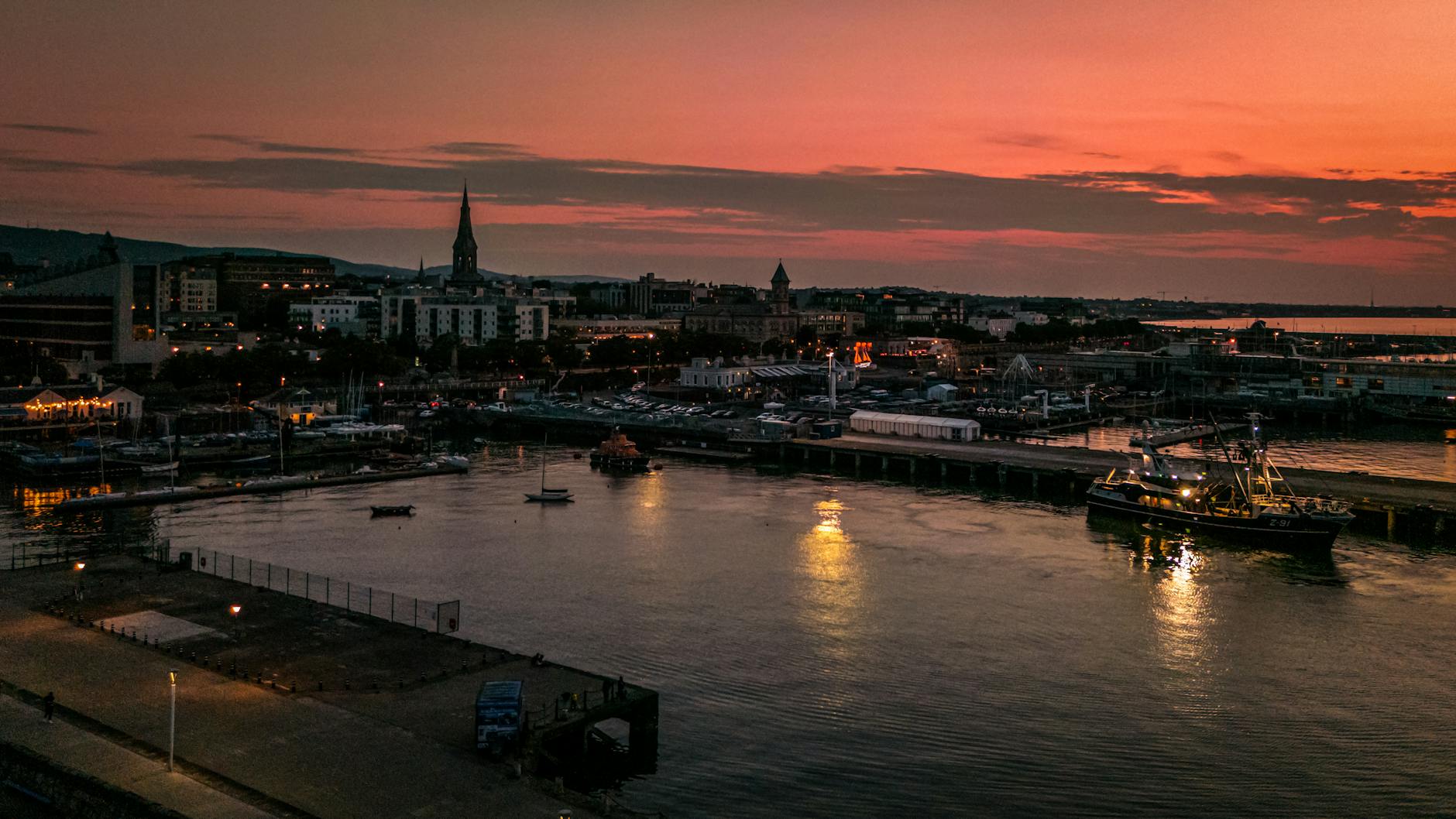
Dún Laoghaire — pronounced “dun leery” and never spelled the way visitors expect — was built as a mail-packet harbour in the 1820s and it still looks it. Two enormous granite piers curve out into the bay, the East Pier running about 1.3 kilometres to a lighthouse at the end. Walking the East Pier and back is the town’s central activity, takes forty minutes at a stroll, and on a Sunday it is full of Dubliners doing exactly that.
The rest is agreeable rather than compelling. The dlr LexIcon is a striking modern public library on the seafront with free entry, big windows over the harbour and a café, which makes it the single best wet-weather bolthole on this route. The National Maritime Museum of Ireland occupies the old Mariners’ Church and is small, cheap and genuinely interesting if you like lighthouses and shipwrecks. The People’s Park hosts a food market on Sundays. And Teddy’s, at the East Pier end, has been selling the same soft-serve ice cream for generations and is a local institution that outsiders occasionally find puzzling.
Verdict: give it an hour, or skip it entirely and start further south — the Dalkey Dublin end of the line is where the day earns itself. If you are working through the wider day trips from Dublin list, Dún Laoghaire is a companion to the rest of this route rather than a trip on its own.
Sandycove, the Forty Foot and the Joyce Tower
One DART stop further at Sandycove & Glasthule, a ten-minute walk brings you to a squat granite Martello tower on a rocky point. This is the James Joyce Tower, and it is where Ulysses opens — Buck Mulligan on the gunrest, the shaving bowl, the “snotgreen sea”. Joyce stayed here for six nights in 1904. The museum inside is small, run by volunteers, free to enter, and worth twenty minutes whether or not you have read the book. Check the current opening hours, which are shorter than a state museum’s and can vary.
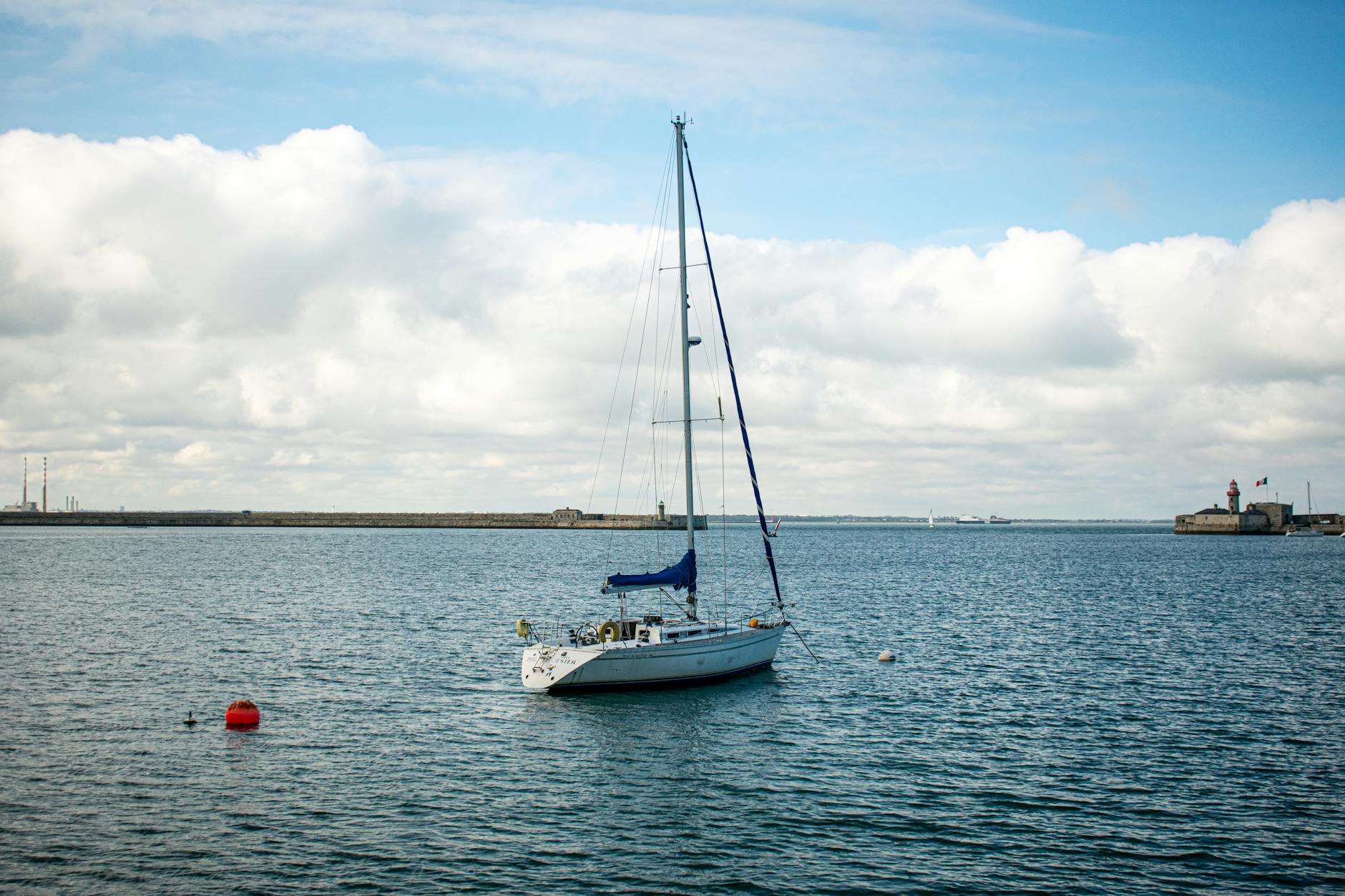
Beside it is the Forty Foot, the most famous swimming spot on the Dalkey Dublin coast and a rocky sea-bathing place that has been in continuous use for around three hundred years. People swim here every day of the year, including Christmas morning, when several hundred do it at once. The water is around 9 °C in winter and 15 °C at its August peak, there are no lifeguards, the entry is a set of steps into deep water, and the swell can be serious. It was a men-only bathing place well into the twentieth century and is now entirely mixed. If you are going in, go with somebody, get out before you think you need to, and have dry clothes. If you are not, watching is genuinely half the fun.
Dalkey Dublin: The Prettiest Village on the Coast
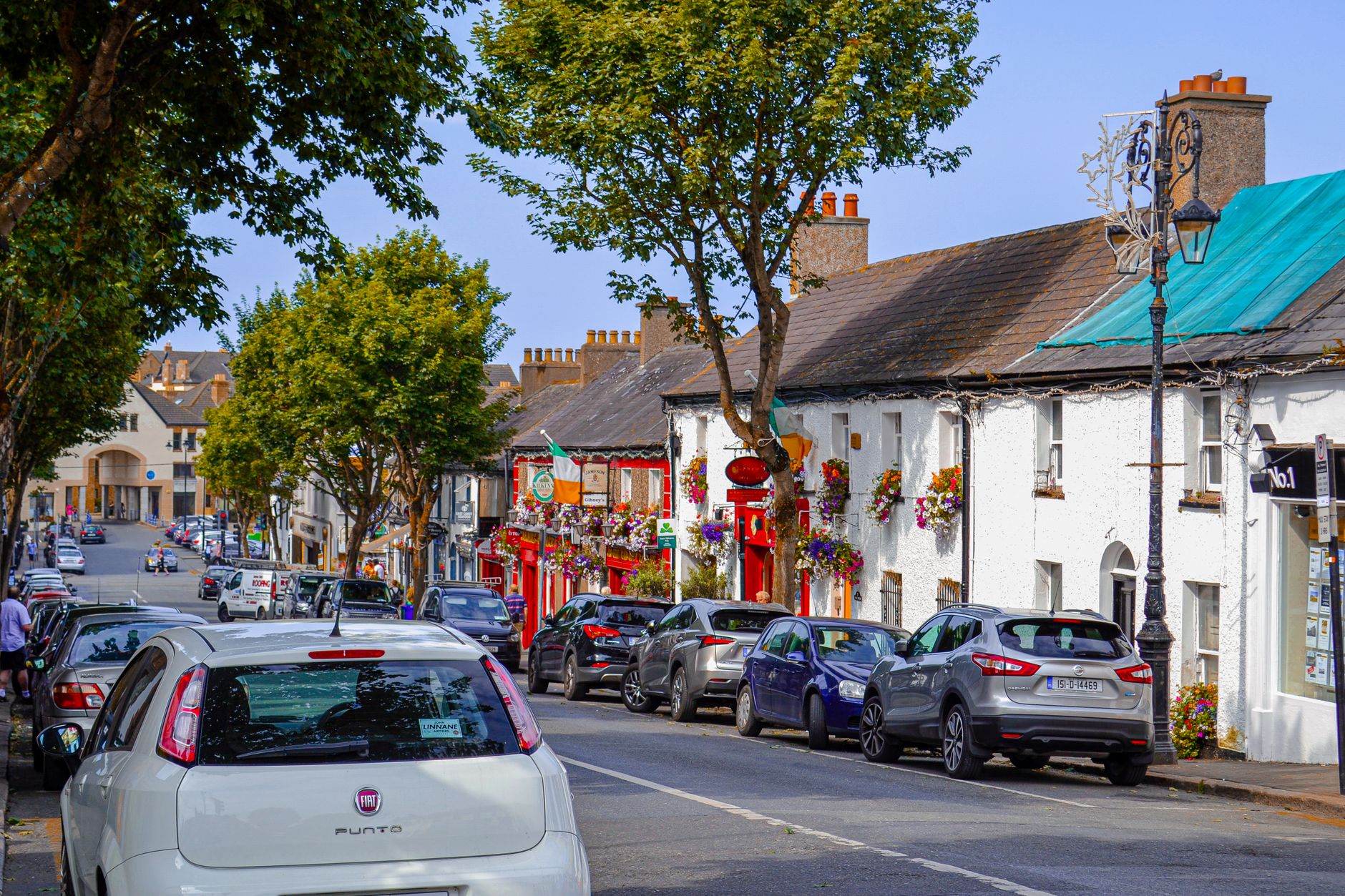
Dalkey is a small, extremely handsome village built on the seaward slope of a hill, and it is the reason most people make this trip. Castle Street runs for about three hundred metres with two medieval tower houses on it, a church ruin, a good bookshop, several restaurants and a run of pubs that are busy on a Sunday afternoon and quiet on a Tuesday. The village has been comprehensively gentrified — this is one of the most expensive postcodes in Ireland and its celebrity residents are a local sport — but it has kept the shape and the scale of a small coastal town, which is more than most of south Dublin managed.
What makes Dalkey Dublin worth a specific journey rather than a general one is that everything is within ten minutes of everything else. From the DART station you are four minutes from Castle Street, twelve from Coliemore Harbour, and twenty from the top of Dalkey Hill. There is no logistics problem to solve here at all.
Dalkey Castle and Heritage Centre
The one paid attraction on the whole Dalkey Dublin route, and the only place on it where you go indoors on purpose. It is a genuine fifteenth-century tower house on Castle Street, one of seven that once guarded the village when Dalkey was Dublin’s deep-water port. Standard admission is a fully guided tour lasting about seventy minutes, run as living history with costumed actors — which sounds excruciating and is, by broad consensus, done well. The tour takes in the tower, the battlements, the adjoining St Begnet’s church ruin and a heritage exhibition.
| Detail | Information |
|---|---|
| Address | Castle Street, Dalkey, Co. Dublin, A96 DE61 |
| Open | Six days a week, all year — closed every Tuesday |
| Tours, Apr–Oct | 10:00, 11:30, 13:30, 14:30, 15:30, 16:30 (weekends from 10:30) |
| Tours, Nov–Mar | 10:00, 11:30, 13:30, 14:45, 16:00 (weekends from 10:30) |
| Duration | About 70 minutes, fully guided |
| Adult | €18 |
| Senior / student | €17 |
| Child under 12 | €12 |
| Booking | Online is the best-value option |
It is closed every Tuesday. This is the single most important line in this guide, because a Tuesday day trip built around the castle arrives at a locked door, and Tuesday is exactly the sort of quiet weekday people choose for a trip like this. Check before you travel and book online.
Coliemore Harbour and Dalkey Island
Twelve minutes downhill from Castle Street, Coliemore is a tiny stone harbour facing an island three hundred metres offshore. Dalkey Island has a ruined seventh-century church, a Martello tower and a battery from the Napoleonic period, and a resident population of feral goats. Small boats run across in the warmer months, weather permitting, from the harbour — this is a seasonal, informal, tide-and-swell-dependent operation rather than a scheduled ferry, so treat it as a bonus rather than a plan.
Even without the boat, Coliemore is the quietest corner of Dalkey Dublin and worth the walk. It is the closest you get to the water on this stretch and there are usually seals about. From here you can carry on around the coast road towards Sorrento Point and the start of the Vico Road, which is the best twenty minutes of the day.
The Vico Road
The Vico Road runs high along the cliff between Dalkey and Killiney with the whole of Killiney Bay laid out below it and the Wicklow Mountains at the far end. Nineteenth-century visitors compared it to the Bay of Naples, which is the sort of thing nineteenth-century visitors said about everywhere, but in this case they had a point — the curve of the bay, the headland at one end and the mountains at the other genuinely do resemble it, particularly in good light.
Halfway along, a set of steps drops down to White Rock beach and the Vico bathing place, both free, both used year-round by local swimmers. The beach is small, rocky and sheltered. Below the road on the seaward side runs the railway, which means the DART is threaded along the shoreline underneath you, which is a strange and pleasing thing to watch from above.
Be clear about what the Vico Road is. This is a road walk rather than a path walk — there is a footpath, but cars use it too — so it is not the wild coastal experience of the Howth cliff walk or the Bray to Greystones path. It is, however, easier than either, doable in ordinary shoes, and the view is better than both.
Killiney Hill
The high point of the day, literally and otherwise. Killiney Hill Park is free, open all year, and managed as public parkland, with a network of paths through gorse and Scots pine up to an obelisk on the summit. The obelisk was built in 1742 by a local landowner, John Mapas, as famine relief work — a common enough origin for eighteenth-century Irish follies — and from the platform beneath it you get the view that makes the whole trip.
North: Dublin Bay, the city, Howth Head across the water, and on a clear day the Mourne Mountains. South: Killiney Bay curving away to Bray Head, the Sugarloaf, and the Wicklow Mountains behind. It is the best free view in County Dublin and it costs you a twenty-minute walk up from the car park on Killiney Hill Road, or a longer and better forty-minute climb from Dalkey village over Dalkey Hill and past the old quarry.
Take the Dalkey Hill route if you can — it is the best hour of walking anywhere near Dalkey Dublin. It goes up through the quarry that supplied the granite for Dún Laoghaire’s piers, past a telegraph tower, and along a ridge with the sea on one side and the bay on the other, and it arrives at the obelisk having earned it. Come down the other side to Killiney DART station and you have walked the whole thing point-to-point without retracing a step.


The Dalkey Dublin Route: How to Actually Do It
The best version is point-to-point, using the DART at both ends and walking the middle. It runs about seven kilometres in total and takes a full day at a comfortable pace with stops.
- 09:30 — DART to Dún Laoghaire. Walk the East Pier out and back. Forty minutes. Coffee at the harbour end.
- 11:00 — Walk or one stop by DART to Sandycove. The Joyce Tower and the Forty Foot. Thirty minutes, longer if people are swimming.
- 12:00 — On to Dalkey. Castle Street, lunch in the village, and the castle tour if you have booked it — remember it is shut on Tuesdays.
- 14:00 — Down to Coliemore Harbour. Twelve minutes. Look at the island. Take the boat if it is running and the day is calm.
- 14:45 — Sorrento Point and the Vico Road. The best twenty minutes of the day. Down the steps to White Rock if the weather is good.
- 15:30 — Up Killiney Hill. From the Vico Road side or back through Dalkey over Dalkey Hill. The obelisk, and as long as you want at the top.
- 17:00 — Down to Killiney station and the DART back into the city.
Shorter versions work. Dalkey plus Killiney Hill alone is a solid half-day and covers the two best things. Dún Laoghaire plus the Forty Foot is an easy two hours if you have a morning. The full run is better than the sum of its parts because the DART makes the linking free of friction.
Getting to Dalkey Dublin: DART Logistics
All of it is on the DART’s southern branch. From the city centre, board at Connolly, Tara Street or Pearse and go south towards Bray or Greystones. Journey times run from about twenty minutes to Dún Laoghaire up to thirty-five to Killiney. Trains are frequent, roughly every ten to fifteen minutes at peak and every twenty off-peak, with a reduced Sunday service.
Use a Leap Card — it is materially cheaper than buying paper tickets at the machine, and the saving on a return of this length is real. Check the current fare before you travel rather than budgeting from an old figure. The DART guide covers the line properly, and cheap transport in Dublin explains where the savings are.
Two practical notes. First, sit on the left going south for the sea views — from Booterstown onward the line runs right along the water and it is one of the better commuter rides in Europe. Second, in high winds the coastal section can run reduced services; if a named storm is forecast, this is not the day for it.
Driving is possible and unnecessary. Dalkey village parking is limited and residential, the Killiney Hill car park fills on fine weekends, and the point-to-point walk stops working if you have to return to a car. See the car hire guide for when a car is actually worth it in Dublin, which is mostly not here.

Where to Eat
Dalkey Dublin is comfortably the best-fed stop on the line. The village is the best bet and has more good options per hundred metres than anywhere else on the route: bistros, a couple of well-regarded restaurants, cafés and several pubs doing food. Finnegan’s is the traditional stop and is where visitors tend to end up. Book at weekends, particularly for Sunday lunch, when the village fills with Dubliners doing exactly what you are doing.
In Dún Laoghaire, the Glasthule end towards Sandycove has the better food — the stretch near the DART station is more functional. Seafood is the obvious order anywhere on this coast, and the seafood restaurants guide covers where it is genuinely good rather than merely available. If you would rather not sit down, both Dún Laoghaire and Dalkey have decent bakeries and delis for a bag to eat on the hill, which on a good day is the better plan by some distance.
There is nothing to eat on Killiney Hill and nothing at Coliemore. Buy before you climb.
When to Go
Clear days, in any season — Dalkey Dublin is an outdoor day trip and the weather decides it.
This trip is almost entirely outdoors and there is very little indoor fallback beyond the LexIcon library, the maritime museum and the castle tour, so a wet day here is a worse day than a wet day in the city. Check the forecast the night before and be willing to swap it for a museum day.
Late spring and early autumn are the sweet spots — enough daylight, fewer people, and the gorse on Killiney Hill is in flower in April and May. Summer weekends bring crowds to the piers and the beaches but the hill absorbs them easily. Winter is genuinely good on a cold clear day, with the caveat that in January you have about six usable hours of light, which is enough for a shortened version but not the full run. The best time to visit guide covers the seasonal picture, and Dublin weather has the monthly numbers.
Avoid: the castle on a Tuesday, the coast in a named storm, and Killiney Hill car park on a sunny bank holiday.
Dalkey Dublin Versus the Other Coastal Day Trips
| Trip | Time from city | Best for | Verdict |
|---|---|---|---|
| Dún Laoghaire–Dalkey–Killiney | 20–35 min | Views, a village, a castle, variety | The best all-rounder |
| Howth | 25 min | A proper cliff path and seafood | The best pure walk |
| Bray to Greystones | 45 min | A sea-level cliff path, closed until further notice after landslides | Not at the moment; the DART still serves both ends |
| Malahide | 25 min | A castle, gardens and a village | The best with children |
Howth is the better walk and this is the better day. Howth gives you one excellent thing; the southside run gives you a harbour, a Martello tower with Joyce in it, a medieval castle, an island, the Vico Road and a summit view, all inside seven kilometres. If you only have time for one coastal trip and you want variety, take this one. If you want to be on a cliff path with the sea below you for two hours, take Howth. For the full comparison, day trips from Dublin ranks everything, and day trips without a car covers the public-transport-only options in depth.
Gotchas
Almost everything that spoils a Dalkey Dublin day trip is knowable the night before. These are the ones worth checking.
- Dalkey Castle is closed every Tuesday, all year. Build your day around this or arrive at a locked door.
- Book the castle online. It is the best-value option and the tours are timed, so walk-ups can wait for a slot.
- The Forty Foot has no lifeguards, deep-water steps and real swell. It is a serious swim, not a paddle.
- Boats to Dalkey Island are seasonal and weather-dependent. There is no scheduled ferry. Treat it as a bonus.
- The Vico Road is a road. There is a footpath, but cars use it. Not a pushchair-friendly wild cliff walk.
- Nothing is open on Killiney Hill. No café, no shop, no toilets at the summit. Buy food and use facilities in the village.
- High winds cut the coastal DART. If a named storm is forecast, pick a different day.
- Killiney Hill car park fills early on fine weekends. Take the train.
- Dún Laoghaire is a big harbour town, not a beauty spot. Give it an hour, not three.
- Dublin Castle in the city is closed to visitors until the end of 2026 for Ireland’s EU Council presidency — so if you wanted to see a castle this year, Dalkey Castle is a genuine substitute and one of the few tower houses in the county you can actually go inside.
Dalkey Dublin Day Trip FAQ
Is Dalkey worth visiting?
Yes, and Dalkey Dublin is the most rewarding village on the whole coast. It has a genuine medieval castle you can tour, a beautiful three-hundred-metre main street, a working harbour facing an island with a ruined church and wild goats on it, and the Vico Road and Killiney Hill within twenty minutes’ walk. Everything is close together, it is thirty minutes from the city on the DART, and the best parts of it — the coast road, the harbour, the hill — cost nothing at all.
How long is the Dún Laoghaire to Killiney walk?
About seven kilometres end to end along the coast, taking three to four hours at a walking pace without stops, or a full day with the Joyce Tower, the castle, lunch in Dalkey and time at the top of Killiney Hill. The Dalkey-to-Killiney-Hill section alone is roughly three kilometres and takes an hour and a half including the climb. All of it is on surfaced roads and park paths — no scrambling and no special footwear needed.
Is Killiney Hill free?
Completely. Killiney Hill Park is public parkland, open all year with no admission charge, and the obelisk at the summit is free to walk up to. There is a car park on Killiney Hill Road, but the better approach is on foot from Dalkey village over Dalkey Hill, which takes about forty minutes and passes the old granite quarry. There are no facilities at the top, so bring what you need.
How much is Dalkey Castle?
€18 for an adult, €17 for a senior or student and €12 for a child under 12, with online booking the best-value option. Standard admission is a fully guided seventy-minute tour with costumed actors, covering the fifteenth-century tower house, the battlements and the adjoining St Begnet’s church ruin. The centre is open six days a week all year and closed every Tuesday, with tour times varying between the April–October and November–March seasons.
How do I get from the city to Dalkey Dublin?
The DART, from Connolly, Tara Street or Pearse station, heading south towards Bray or Greystones. It takes about thirty minutes and trains run roughly every ten to twenty minutes depending on the time of day, with a reduced Sunday service. Use a Leap Card rather than a paper ticket — it is meaningfully cheaper. Dalkey station is a four-minute walk from Castle Street, so there is no onward connection to arrange.
Can you swim at the Forty Foot?
Yes, all year, and people do — including on Christmas morning, when several hundred turn up at once. It is a rocky bathing place at Sandycove with steps into deep water, no lifeguards and genuine swell on a rough day. Water temperature runs from about 9 °C in winter to 15 °C at the August peak. Go with somebody, get out sooner than you think you need to, and bring dry clothes. If you are not swimming, it is still worth the walk to watch.

Can you visit Dalkey Island?
In the warmer months, weather permitting, on small boats from Coliemore Harbour. This is not a scheduled ferry — it is a seasonal, informal operation dependent on tide, swell and demand, so do not build a day around it. It is the one part of Dalkey Dublin you cannot reach on foot. The island has the ruins of a seventh-century church, a Martello tower, a Napoleonic-era battery and a population of feral goats. Even without crossing, Coliemore is a ten-minute walk from Dalkey village and usually has seals in the water.
What is the Vico Road?
A cliff-top road between Dalkey and Killiney with the whole sweep of Killiney Bay below it and the Wicklow Mountains at the far end. Victorian visitors compared it to the Bay of Naples and for once the comparison holds up. Steps partway along drop down to White Rock beach and the Vico bathing place, both free and both used year-round. It is a walk on a road with a footpath rather than a wild coastal path, which makes it easy going and unusually accessible for the quality of the view.
Is Dalkey Dublin a good day trip for children?
Reasonably, with the right expectations. The castle tour is genuinely aimed at families and the costumed actors work well with children. The Forty Foot, the harbour and the seals hold attention. Killiney Hill is a manageable climb for anyone over about six and there is space to run. What does not work is the full seven-kilometre point-to-point walk with small children — do Dalkey and the hill and go home. Malahide is the easier castle day with young children, and the family guide has more.
What is the best part of the Dalkey Dublin coast?
Killiney Hill, without much argument. The obelisk platform gives you Dublin Bay and Howth Head to the north, Killiney Bay curving south to Bray Head, and the Wicklow Mountains behind — the best free view in the county, reached by a twenty-minute walk. The Vico Road runs it close and requires no climbing at all. Dalkey village and its castle are the best of the built attractions, and Dún Laoghaire’s East Pier is the most pleasant hour of flat walking.
Is Dún Laoghaire worth visiting on its own?
Only as part of a longer day. It is an attractive Victorian harbour town with two impressive granite piers, a good modern public library on the seafront with free entry and a view, a small maritime museum in a converted church, and a Sunday food market in the People’s Park. That is a pleasant two hours rather than a destination. Pair it with Sandycove and Dalkey and it becomes a strong day out; visit it alone and you may wonder what the fuss was.
Keep Planning
Dalkey Dublin is one of several coastal escapes on the DART, and these guides cover the rest of the network it sits on.
- Day Trips from Dublin — the parent guide, with everything ranked.
- The DART — the line that makes this whole route work.
- The Howth Cliff Walk — the northside equivalent, and the better pure walk.
- Bray to Greystones — the next stop down the same line, though the cliff walk is closed until further notice.
- Malahide Castle — the other coastal castle, and the easier one with children.
- Seafood Restaurants in Dublin — where the coast pays off at lunch.
- Walking in Dublin — routes across the city and the coast.
- The Leap Card — what to buy before you board.
- Free Things to Do in Dublin — most of this route qualifies.
- Dublin Neighbourhoods — how the southside coast fits into the city.
Check directly before you travel: Dalkey Castle and Heritage Centre for tour times and booking, Iarnród Éireann for DART timetables and fares, Met Éireann for the forecast and wind warnings, and Dún Laoghaire–Rathdown County Council for Killiney Hill Park and the seafront.
Keep Reading
Lean na Comharthaí — Keep following the signs