Irish Pub Etiquette: How to Order, Rounds, Tipping & Not Looking Like a Tourist
Béasa an Tí Tábhairne in Éirinn
Ar an gComhartha Seo — On this sign
- Quick Answer: The Rules of Irish Pub Etiquette
- Getting Served: The Part of Irish Pub Etiquette Visitors Get Wrong
- The Two-Part Pour, and Why Your Pint Is Sitting There
- The Round System
- Tipping: The Shortest Rule in Irish Pub Etiquette
- Two Things Never to Order
- Trad Session Etiquette
- Where to Stand, Where to Sit
- Smoking, Vaping and the Beer Garden
- Children, Dogs and Closing Time
- Money, Cards and Splitting
- Temple Bar and the Etiquette That Does Not Apply
- Drinking and Driving
- Gotchas
- Irish Pub Etiquette FAQ
- Keep Planning
- Keep Reading
Nobody in a Dublin pub is going to tell you that you are doing it wrong. That is the difficulty. The bar staff are unfailingly polite, the regulars will not comment, and you can spend a fortnight in Ireland waving a twenty-euro note at a barman, tipping for every pint, and standing on the wrong side of a snug door without a single person mentioning it. You will simply be quietly and permanently marked as a visitor, which is fine — you are one — but it is an easy thing to fix.
This guide covers Irish pub etiquette the way it actually works rather than the way the internet imagines it: how to get served, what to say when you order, the rounds system and how to opt out of it without offending anyone, whether to tip and when, the two drink names you should never say out loud, how to behave near a trad session, what closing time actually means, and the small physical customs — where to stand, whose seat that is, what the bell means — that are never explained because everyone here learned them at nineteen.

Quick Answer: The Rules of Irish Pub Etiquette
Order at the bar, not from your table — table service barely exists in traditional pubs. Do not wave, shout, click your fingers or brandish money; make eye contact and wait, because bar staff track the order in which people arrived and they are very good at it. Do not tip for a pint. If you are in a group, you are in a round, and the round system is a genuine social obligation rather than a suggestion. When a trad session is playing, keep your voice down and do not talk over the music.
The single most useful principle of Irish pub etiquette is that a Dublin pub is a shared living room, not a service transaction. The staff are hosts rather than servers, the regulars have a stake in the room, and almost every unwritten rule follows from that. Get that framing right and the specifics look after themselves. Get it wrong — treat the place like a bar in a resort — and everything else follows badly.
| Situation | Do | Don’t |
|---|---|---|
| Getting served | Catch the bartender’s eye and wait | Wave, shout or hold up money |
| Ordering | “A pint of Guinness, please” | Order the whole group’s drinks one at a time |
| Tipping | Nothing at the bar; round up for table service | Tip per drink like the US |
| Rounds | Buy yours when it comes round | Skip your turn, or leave before it |
| Waiting for a stout | Let it settle; it takes about two minutes | Ask why it isn’t finished |
| Trad sessions | Listen; applaud at the end of a set | Talk over it, request songs, or film without asking |
| Seating | Ask if a seat is free | Assume an empty stool at the bar is free |
| Closing | Finish up within 30 minutes of the bell | Argue about last orders |
Getting Served: The Part of Irish Pub Etiquette Visitors Get Wrong
There is no queue at an Irish bar and there is absolutely an order. Bar staff maintain a mental list of who arrived when, and they will work through it accurately even when six people are standing three deep. Your job is to be visible, be patient, and be ready when they get to you.
What that means in practice: stand at the bar rather than hovering behind the people at it. Make eye contact once. Then stop. Do not lean over, do not say “excuse me” repeatedly, do not hold a note in the air, do not tap a coin on the counter, and under no circumstances click your fingers. Waving money is the single most conspicuous tourist move in an Irish pub and it does not speed anything up; if anything it slows it down.
When they do get to you, have the whole order ready. “Two pints of Guinness, a Smithwick’s and a gin and tonic, please” is one transaction. Ordering them one at a time, thinking between each, is four, and the person behind you noticed. If you are ordering for a large group, order everything at once and let them build it.
What to say
“A pint of Guinness, please” is correct and complete. You do not need to say “of beer”, you do not need to specify a brand of stout in a pub that only serves one, and you do not need any Irish. “Thanks” or “thanks a million” when it lands. If you want a half, ask for “a glass” — in Ireland a glass is a half-pint, and asking for “a half” will get you a puzzled look or a half-measure of whiskey. A “small one” means a measure of spirits. If you want water, tap water is free and is given without comment.
Nobody expects you to say sláinte, and saying it constantly marks you out faster than not saying it at all. It is pronounced roughly “slawn-cha” and it is used the way “cheers” is — once, at the start, when glasses are raised. The Irish slang guide covers the rest of the vocabulary you will hear.
The Two-Part Pour, and Why Your Pint Is Sitting There
No rule of Irish pub etiquette causes more visible confusion than this one, and it is entirely mechanical rather than social.
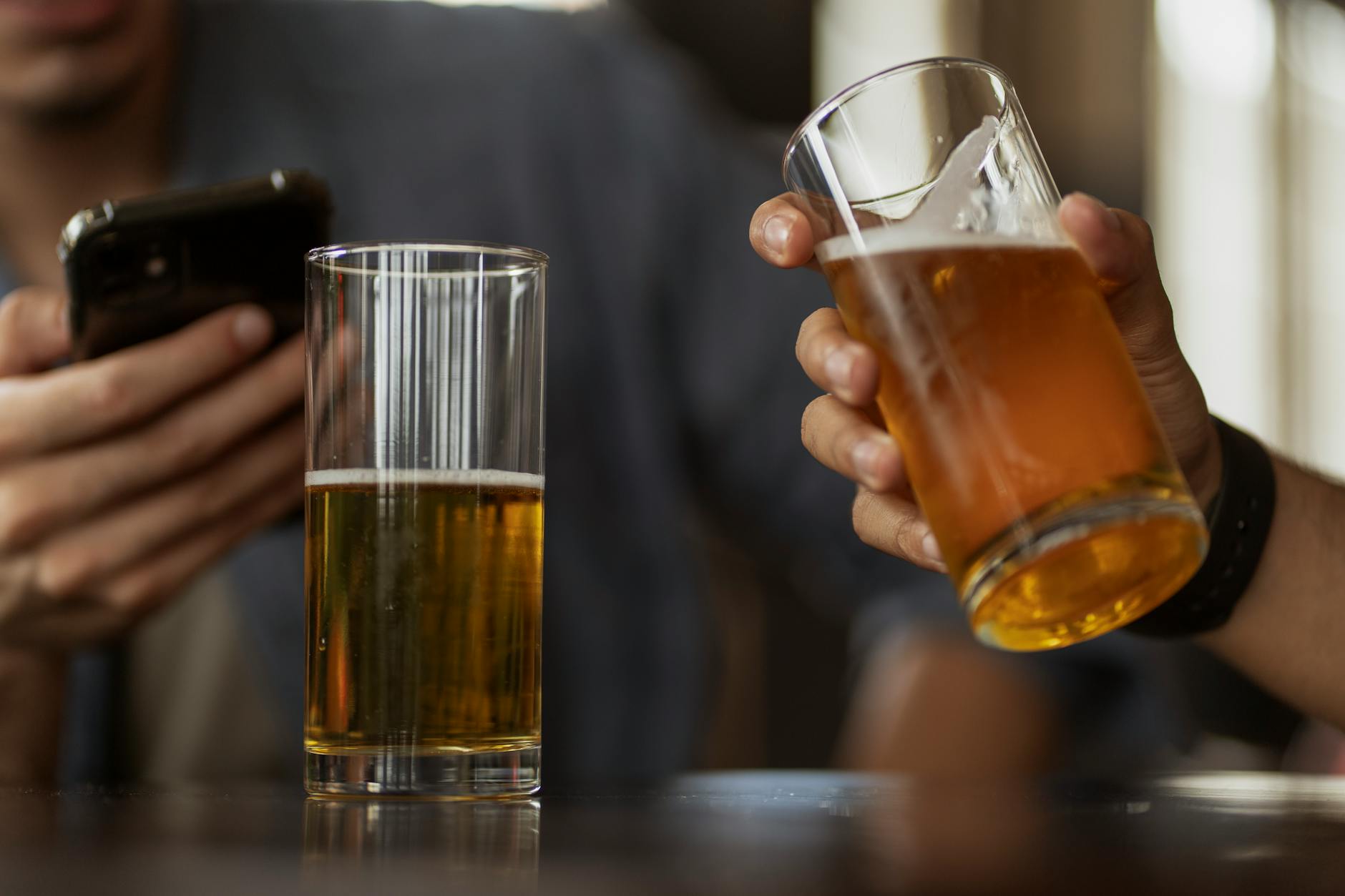
A pint of Guinness is poured in two stages. The bartender fills it about three-quarters, sets it down to settle, and comes back to top it off. The whole business takes roughly two minutes, and during that gap your pint sits on the drip tray looking finished and abandoned. It is neither. Do not reach for it, do not ask about it, and do not assume you have been forgotten.
This is not theatre, and it is not marketing — it is nitrogen physics, and a pint served in one go tastes different. A bartender who takes the two minutes is telling you something useful about the house; a bartender who does not, in a pub that sells a lot of stout, is telling you something too. The best pint of Guinness guide goes into how to judge a pour properly, and the traditional pubs guide covers where to look for one.
One more thing on the pint: do not tell an Irish bartender that Guinness tastes better in Ireland. They know. Everybody says it. It is true, mostly because of turnover and line cleaning rather than magic, and it is the single most-repeated sentence uttered by visitors in Irish pubs. Say something else.

The Round System
This is the part of Irish pub etiquette with actual social consequences, and it is worth understanding properly. In a group, drinks are bought in rounds: one person buys for everyone, and when those are finished the next person buys for everyone, and so on until the circle closes. It is not a payment method. It is a small ongoing contract, and it is how Irish sociability is organised.
The rules are simple and almost never spoken:
- Everyone buys. If you are drinking in a round, you buy a round. Being bought several drinks and never buying one is the most reliable way to be quietly disliked.
- Do not leave before your round. If you have to go, go before the round comes to you, or buy yours early and then leave. Slipping out just as your turn arrives is noticed by everybody.
- Drink at roughly the same speed. The round moves at the pace of the group. A fast drinker in a slow group is a problem for their own liver; a slow drinker in a fast group holds everyone up.
- Do not try to settle up in cash afterwards. Offering to reimburse someone for your drink misses the point and reads as slightly cold.
- Big groups break the system. Above about five or six people, rounds become an evening-long financial commitment. In large groups people usually pair off or go individually, and it is normal to say so.
The correct way to opt out is to say so at the very start, before the first round is bought: “I’ll get my own, I’m only having the one.” Said up front this is completely unremarkable and nobody will push. Said after three rounds, it lands badly. If you are not drinking at all, the same applies — Ireland is entirely relaxed about non-drinkers now, Dry January is widely observed, and a bartender will pour you a soft drink or a coffee without a flicker.
Tipping: The Shortest Rule in Irish Pub Etiquette
You do not tip for a drink bought at the bar. Ireland is not the United States, bar staff are paid a wage rather than a tipped minimum, and handing over an extra euro with each pint is a purely tourist behaviour that will be accepted politely and remembered.
What you do instead, when you want to acknowledge good service, is buy the bartender a drink: “and have one yourself.” They will usually take the price of a drink and have it later or not at all, and this is the local, correct form. It is not obligatory and it is not expected on a single round.
Table service is different. In a gastropub or a pub restaurant where food is brought to you, a tip of around 10% is normal, and many places now add a service charge — check the bill before adding to it. The tipping in Dublin guide covers restaurants, taxis, hotels and hairdressers properly, because the rules genuinely differ by setting.

Two Things Never to Order
Most of Irish pub etiquette is soft convention where getting it wrong costs you nothing. These two are different, and they are worth committing to memory.
Do not order a “Black and Tan.” In much of the world this is a harmless layered pint of stout and pale ale. In Ireland, the Black and Tans were a British paramilitary force deployed during the War of Independence, remembered for reprisals against civilians. The drink name is not a joke here. If you want the layered drink, it is called a half and half, and even then you are better off ordering something else.
Do not order an “Irish Car Bomb.” A shot of whiskey and cream liqueur dropped into a stout, named after the bombings of the Troubles. It is a genuinely offensive thing to ask for in a country where people remember those bombings, and asking for one in a Dublin pub will get you, at best, a very flat look. It is not a real Irish drink and no Irish person has ever ordered one.
Neither of these will get you thrown out. Both will change the temperature of the room. Order a Jameson, or a Powers, or a pint — the whiskey bars guide has better ideas than either.
Trad Session Etiquette
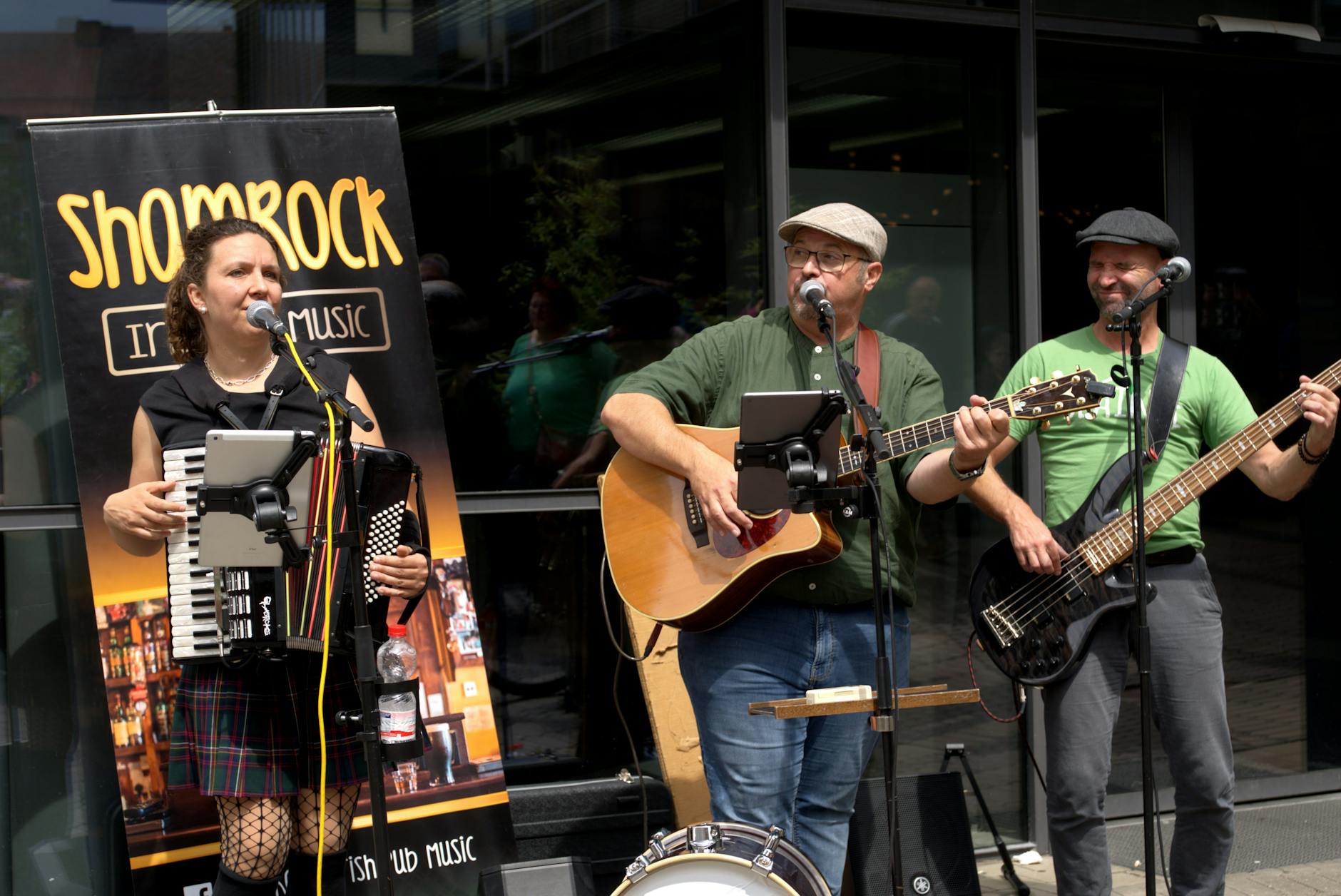
This is where Irish pub etiquette gets least forgiving, because a session has rules that look like no rules at all. A traditional session is not a gig. There is no stage, no ticket, no setlist and no performance in the sense you are used to. A group of musicians sits in a corner or around a table, plays tunes for their own pleasure, and the pub happens to be there. Understanding that fixes almost every mistake visitors make.
- Keep your voice down while they play. This is the big one. Conversation continues in the rest of the pub, but the volume near the musicians drops, and a table talking loudly through a slow air is the fastest way to be resented by an entire room.
- Applaud at the end of a set, not between tunes. Tunes run together in sets of two or three. Clapping in the gap between them is a beginner’s error and everyone will forgive it, but wait if you can.
- Do not request songs. They are not taking requests. Asking for “Whiskey in the Jar” or “Danny Boy” — the latter not being an Irish song in any meaningful sense — is the equivalent of asking a stranger to perform for you.
- Ask before you film. Photographing a session mid-tune without asking is rude. Most musicians will say yes if you ask between sets.
- Do not put your drink on the musicians’ table. That table has instruments on it, and instrument cases open on the floor beside it. Watch your feet.
- Do not sit in the session circle unless you are playing. Those chairs are held for players who have not arrived yet.
Sessions are usually free and usually unadvertised, and the good ones are in the small pubs rather than the big ones. The live music guide lists where to find them, and the cosy pubs guide covers the rooms they tend to happen in.
Where to Stand, Where to Sit
Half of Irish pub etiquette is really about space, and Dublin pubs are small.
Space in a Dublin pub is negotiated rather than allocated, and the conventions are consistent.
- Ask before you take a seat. “Is anyone sitting here?” is all it takes, and the answer is usually yes, it’s free. An empty stool at the bar in a local pub may well belong to somebody who has stepped outside.
- Do not spread out. Four people at a table for eight in a full pub will get looks. Consolidate.
- Coats go on the back of the chair or under it, not on a second chair.
- Snugs cannot be reserved and go to whoever gets there first. If a snug is occupied, it is occupied; hovering does not help.
- Standing at the bar is normal and is not a lesser option. In many of the older pubs the bar is where the conversation is.
- Bags stay with you. Dublin is a safe city, but a bag on a chair in a busy pub is an opportunity. See is Dublin safe for the sensible version of this.

Smoking, Vaping and the Beer Garden
Ireland banned smoking in enclosed workplaces including pubs in 2004, the first country in the world to do so, and the ban is absolute and universally observed. Nobody smokes indoors. What you get instead is the smoking area — a covered yard or a stretch of pavement outside — which has become a genuine social institution in its own right, and where a surprising amount of the evening’s conversation happens.
Vaping indoors is not illegal in the same way, but most pubs treat it as smoking and will ask you to step outside. Do that without arguing. Standing in a doorway with a cigarette blocking the entrance is the one smoking-related thing that genuinely annoys people.
Children, Dogs and Closing Time
Three areas where Irish pub etiquette is backed by actual law rather than convention.
Under-18s may be in a pub with a parent or guardian until 21:00, extended to 22:00 in the summer months, after which they have to leave. In practice families use pubs for Sunday lunch and early afternoons without any awkwardness at all, and evening pubs are adult spaces. The family guide has better options for a group with young children in the evening.
Dogs are at the publican’s discretion and a good many older Dublin pubs allow them, particularly in the back bar or the covered yard. Ask at the door rather than assuming.
Standard licensing hours are 10:30–23:30 Monday to Thursday, 10:30–00:30 Friday and Saturday, and 12:30–23:00 on Sunday, with thirty minutes’ drinking-up time after last orders. When the bell goes and somebody calls “time”, that is the end of service, not a negotiating position. Finish your drink, do not order another, and go. Pubs with a later licence are a different category — the nightclubs guide and the Temple Bar nightlife guide cover where the night continues.
Money, Cards and Splitting
The financial side of Irish pub etiquette is simpler than the social side, and mostly comes down to not making the person behind you wait.
Card is accepted essentially everywhere, contactless included, and tap-to-pay at the bar is now the default. A handful of very old pubs still prefer cash for small rounds and one or two on the fringes are cash-only, so carrying €20 in notes removes the problem entirely.
Do not ask to split a round across four cards. The bartender will do it and everybody behind you will wait. Round-buying exists partly to avoid exactly this. If your group genuinely is not doing rounds, buy your own drinks individually as you go rather than accumulating a tab and splitting it at the end.
Tabs are less common in Ireland than in the US or the UK and are usually offered rather than requested, generally in food-serving pubs. If you do run one, do not leave without settling it, and check whether a service charge has already been added. For a broader picture of what an evening costs, see what a Dublin trip costs and the budget guide.
Temple Bar and the Etiquette That Does Not Apply
Most of this guide describes ordinary Dublin pubs. The main Temple Bar strip is a different environment: large venues, amplified music, table service in places, a crowd that turns over every two nights, and prices set accordingly. Rounds are looser, tipping is more common because so many customers are American, and nobody is tracking who arrived first because the bar is six deep.
That is not a criticism — see the Temple Bar guide for what it does well — but do not learn your Irish pub etiquette there and then assume it transfers. Walk five minutes in any direction and the older conventions reassert themselves immediately. If your trip is mostly Temple Bar, you will leave without ever having been in an Irish pub in the sense this article means.
Drinking and Driving
Ireland’s drink-driving limits are among the strictest in Europe, and enforcement is serious and random. The general limit is 50mg of alcohol per 100ml of blood, dropping to 20mg for learner drivers, newly qualified drivers and professional drivers — which in practice means effectively zero. Penalties start at an automatic disqualification. Garda checkpoints are common at night and at weekends.
The practical advice is simply not to combine the two at all. Dublin’s public transport runs late enough for most evenings, taxis are plentiful if occasionally slow at closing time, and the city centre is walkable. See the taxi guide, the transport guide, and — if you were planning to drive between rural pubs — the car hire guide, which makes the case for not.
Gotchas
A consolidated list of the Irish pub etiquette failures that visitors commit most often, in rough order of how conspicuous they are.
- Never wave money or click your fingers. It is the most visible tourist error in an Irish bar and it slows you down.
- “A glass” means a half-pint. “A half” will confuse the bartender or get you a half-measure of whiskey.
- Do not tip per drink at the bar. Buy the bartender one instead if you want to.
- Never order a Black and Tan or an Irish Car Bomb. Both are named after violent episodes in living memory.
- Do not skip your round or leave just before it. Opt out at the beginning if you want to opt out.
- Do not talk over a trad session or ask the musicians for a song.
- Do not tell the bartender that Guinness tastes better here. They have heard it several thousand times.
- Last orders are earlier than you think — 23:00 on a Sunday, 23:30 midweek — and the bell is not negotiable.
- Do not assume an empty stool is free. Ask.
- Do not smoke or vape indoors. Not once, not briefly, not in a corner.
- Do not split a round across four cards. One person pays; the next round evens it out.
- Do not put on an accent and do not say “top o’ the morning” — it is not a phrase anybody in Ireland has ever used.
Irish Pub Etiquette FAQ
Do you tip bartenders in Ireland?
Not for drinks bought at the bar. Irish bar staff are paid a proper wage rather than a tipped minimum, and tipping per pint is a visibly American habit. If you want to acknowledge good service, the local form is to say “and have one yourself” when you order, which adds the price of a drink to your round. Table service in a gastropub is different and around 10% is normal there — but check whether a service charge has already been added to the bill.
What is the round system in Irish pubs?
In a group, one person buys drinks for everyone, and when those are finished the next person buys the next round, and so on until everyone has bought once. It is a social obligation rather than a way of splitting a bill, and skipping your turn — or leaving just before it reaches you — is noticed. If you do not want to be in a round, say so before the first one is bought: “I’ll get my own” is completely unremarkable at the start of an evening and awkward three rounds in.
What do you say when ordering a pint in Ireland?
“A pint of Guinness, please” — nothing more elaborate is needed. Have the whole group’s order ready in one go rather than asking for drinks one at a time. If you want a half-pint, ask for “a glass”; “a half” is ambiguous and may get you a measure of whiskey. Say thanks when it lands. You do not need any Irish, and saying sláinte repeatedly marks you out more than not saying it at all.
Why is my Guinness left sitting on the bar?
Because it is settling. A pint of stout is poured in two stages — filled about three-quarters, left to settle for roughly a minute and a half, then topped up — and the whole process takes about two minutes. The pint on the drip tray has not been forgotten and is not finished. Wait for the bartender to come back to it. A pub that skips this step in favour of a single fast pour is telling you something about its standards.
Is it rude to talk during traditional Irish music?
During a session, yes, if you are near the musicians. A session is not a performance with a paying audience; it is players playing for themselves in a corner of a pub, and the convention is that the volume drops around them. Conversation carries on elsewhere in the room. Applaud at the end of a set rather than between individual tunes, do not request songs, and ask before filming. These are the rules that matter most in the small pubs where the best sessions happen.
Why should I not order a Black and Tan in Ireland?
The Black and Tans were a British paramilitary force deployed in Ireland during the War of Independence and are remembered for reprisals against civilians. The drink shares the name and nobody in Ireland finds it funny. If you want a layered stout and ale, ask for a half and half. The same applies more strongly to the so-called Irish Car Bomb, which is named after the bombings of the Troubles and is not something any Irish person has ever ordered.
Can you order food at the bar in an Irish pub?
In pubs that serve food, usually yes — you order at the bar and it is brought to your table, and that is when a tip becomes appropriate. Many traditional pubs serve very little: crisps, a toasted sandwich, sometimes soup or a Sunday roast, and nothing after about 20:00. Do not walk into a small Victorian bar late in the evening expecting a menu. Eat first — the traditional restaurants and cheap eats guides have options — and treat the pub as the evening rather than the meal.
What time do Irish pubs close?
Standard licensing hours are 10:30 to 23:30 Monday to Thursday, 10:30 to 00:30 Friday and Saturday, and 12:30 to 23:00 on Sunday, with thirty minutes’ drinking-up time after last orders are called. When the bell rings and somebody calls “time”, service has ended — that is not a moment to try to order another round. Venues open later than this hold a separate late licence, and they tend to be bars and clubs rather than traditional pubs.
Are children allowed in Irish pubs?
Under-18s may be present with a parent or guardian until 21:00, extended to 22:00 during the summer months, and must leave after that. Families use pubs for Sunday lunch and afternoon meals routinely and nobody thinks anything of it; after seven or eight in the evening pubs become adult spaces. If you are travelling with young children and want an evening out, the family guide is the better starting point.
Do I need to buy a drink to sit in an Irish pub?
Yes, but it does not have to be alcohol. A coffee, a tea, a soft drink or a glass of tap water alongside a paid drink are all entirely normal, and no bartender will comment on any of them. Non-drinking is common and unremarkable in Ireland now. What is not on is occupying a table in a full pub without ordering anything at all — the room is a business as well as a living room.
What is the most important rule of Irish pub etiquette?
Treat the pub as somebody’s living room rather than a service counter. Almost every specific convention — waiting your turn quietly, buying your round, dropping your voice near the musicians, asking before taking a seat — follows from that one idea. Visitors who get the framing right rarely put a foot wrong on the details; visitors who treat a Dublin pub like a bar in a resort get the details wrong regardless of how many lists they have read.
How do I get served in a busy Irish pub?
Stand at the bar rather than behind the people at it, make eye contact with the bartender once, and then wait. Irish bar staff keep an accurate mental order of who arrived when and will get to you in turn. Waving, shouting, holding up money and clicking your fingers are all counterproductive as well as conspicuous. When your turn comes, give the entire order at once — that is the single thing that most speeds up a busy bar.
Keep Planning
Irish pub etiquette is only useful once you know which pubs to walk into. These guides handle that half.
- Dublin Nightlife and Pubs — the parent guide to the whole scene.
- Traditional Pubs in Dublin — the rooms where these conventions are strongest.
- Dublin’s Cosiest Pubs — snugs, fires and the small back bars.
- Tipping in Dublin — the full picture across restaurants, taxis and hotels.
- The Best Pint of Guinness in Dublin — how to judge a pour.
- Live Music in Dublin — where the real sessions are.
- Things to Know Before Visiting Dublin — the wider cultural groundwork.
- The Oldest Pubs in Dublin — which dates over the door hold up.
- Temple Bar Nightlife — the exception to most of the above.
- First Time in Dublin — everything else you should know before you land.
Useful official sources: Citizens Information for licensing law and age rules, the Road Safety Authority for the drink-driving limits, Comhaltas Ceoltóirí Éireann on traditional music and sessions, and Visit Dublin for official listings.
Keep Reading
Lean na Comharthaí — Keep following the signs