Dublin in January: Off-Season Deals, TradFest & Winter Walks
Baile Átha Cliath i mí Eanáir
Ar an gComhartha Seo — On this sign
- Quick Answer: What Is Dublin in January Actually Like?
- The Weather in Dublin in January, Honestly
- TradFest: The One Week That Changes Everything
- What Is Open in Dublin in January, and What Quietly Is Not
- The Price Case for Dublin in January
- The January Sales
- Things to Do in Dublin in January
- Where to Stay in Dublin in January
- What to Pack for Dublin in January
- Dublin in January Versus the Other Winter Months
- A Four-Day Dublin in January Itinerary
- Gotchas
- Dublin in January FAQ
- Keep Planning
- Keep Reading
January is the month Dublin stops performing. The lights come down in the first week, the Christmas market packs up, the hotels drop their rates by half, and the city goes back to being a working capital of a million-odd people who all have jobs to get to. It gets light at twenty to nine and dark before half four. It rains on roughly thirteen days out of thirty-one. And it is, for a very specific kind of traveller, the best value month in the Irish calendar — which is the honest case for Dublin in January, and the reason this guide exists.
What follows is the whole month: real Met Éireann numbers rather than vibes, exactly how much daylight you get and when, TradFest and what it actually costs, what is open and what quietly shuts for a fortnight, where the January sales are worth your time, the walks that are better in cold weather than in July, and the several ways a January trip can go wrong if you plan it like a summer one. It is written for people choosing between months, not for people who have already booked.
Quick Answer: What Is Dublin in January Actually Like?
Cold but not freezing, dark, frequently wet, and remarkably cheap. Daytime highs average 8.2 °C (47 °F) and overnight lows 2.3 °C (36 °F) — mild by northern European standards, because the Atlantic keeps Dublin’s winters flat. Rain falls on about thirteen days and totals around 65 mm, which is less than October. The problem is not the temperature; it is the light. You get 7 hours 36 minutes of daylight on 1 January and 8 hours 54 minutes by the 31st, with sunrise never earlier than 08:12 all month.
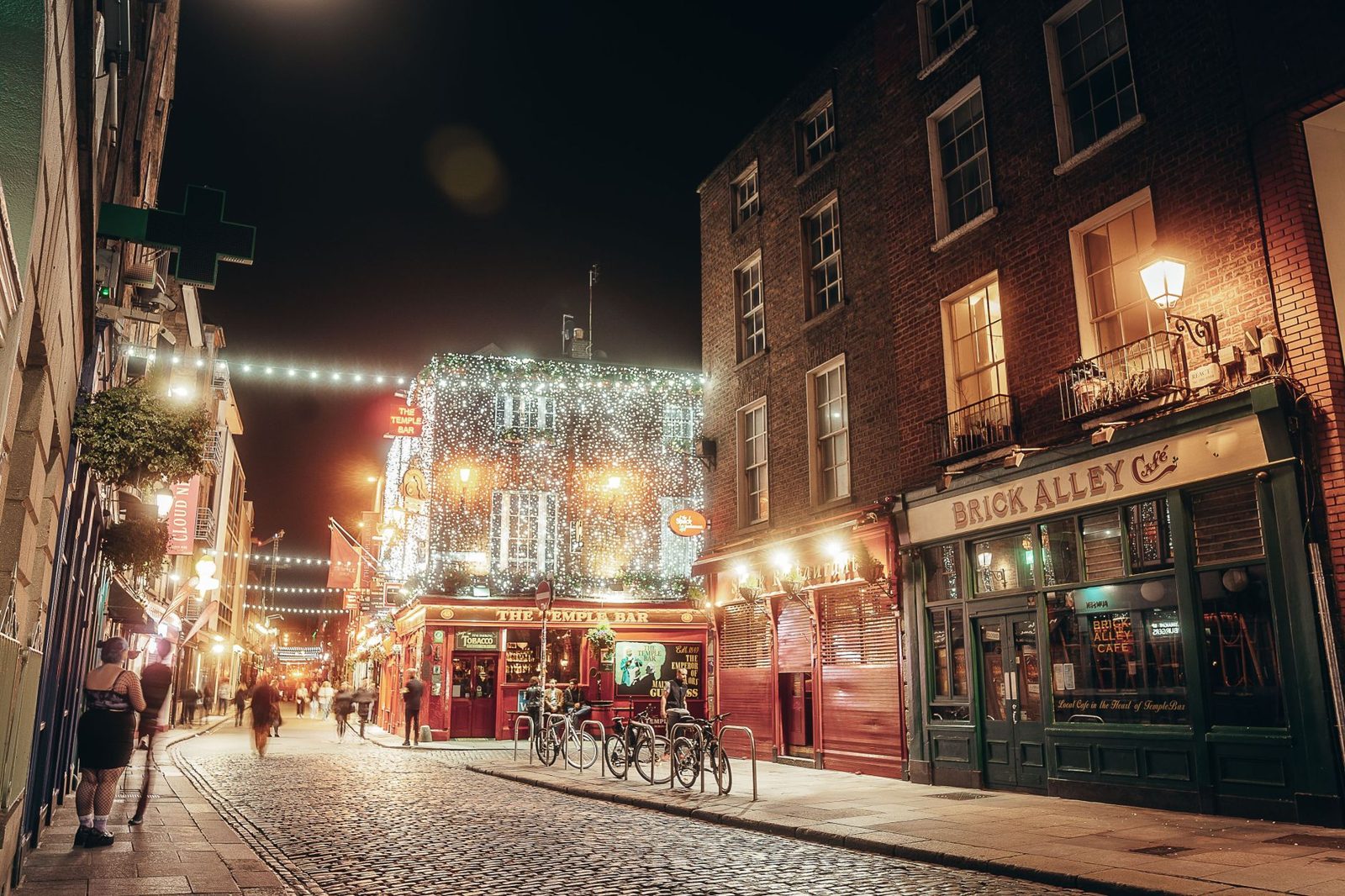
The trade is simple. You give up daylight and outdoor comfort, and you get the city at roughly half the price with none of the queues. Hotel rates in January are the lowest of the year, Kilmainham Gaol is bookable a week out rather than a month, Trinity’s Long Room has a manageable queue, and the pubs are full of Dubliners rather than visitors. The one week that breaks the pattern is TradFest — Wednesday 20 to Sunday 24 January 2027 — when the city fills up again for five days of traditional music. If you are visiting Dublin in January and want atmosphere rather than pure economy, book that week; if you want the lowest prices in the year, book any other.
| Measure | January | Compared with |
|---|---|---|
| Average high | 8.2 °C / 47 °F | Coldest month with February |
| Average low | 2.3 °C / 36 °F | Frost on maybe a third of nights |
| Rainfall | ~65 mm over ~13 days | Less than October’s 80 mm |
| Sunshine | ~2 hours a day | The lowest of the year with December |
| Sea temperature | 9 °C | Warmer than the air, oddly |
| Daylight, 1 Jan | 08:41–16:17 | 7h 36m |
| Daylight, 31 Jan | 08:12–17:06 | 8h 54m — an hour and a quarter gained |
| Crowds | The lowest of the year | Except TradFest week |
| Hotel prices | Annual floor | Often half of June |
The Weather in Dublin in January, Honestly
Dublin sits in the rain shadow of the Wicklow Mountains and gets around 770 mm of rain a year — roughly half what Galway gets. January is not a notably wet month by Irish standards. It is a grey one. Expect low cloud, a lot of days that never quite get bright, and rain that arrives as drizzle and horizontal squalls rather than downpours.
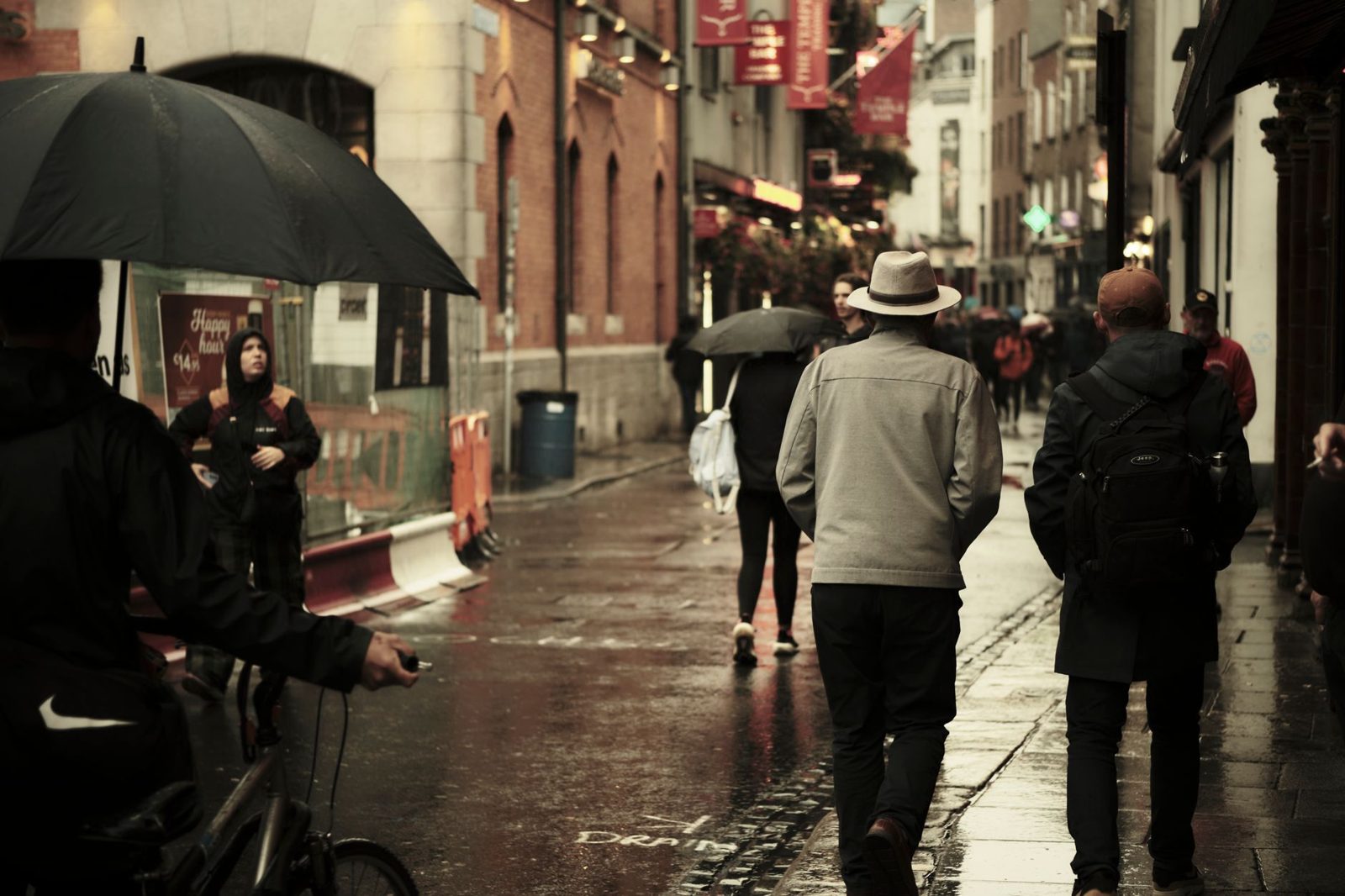
Snow is rare and rarely settles in the city — about six snow days a winter across the whole country’s east coast, most of which amount to sleet. Frost is more common than snow; on a clear still night the temperature drops to around freezing and Phoenix Park comes up white. The genuine January hazard is wind. The Met Éireann storm-naming season starts on 1 September, and by January the Atlantic is producing named storms regularly. A storm day in Dublin means cancelled ferries, disrupted DART services, closed park gates, and — the specific local detail — every bin-bag umbrella in the city inverted on Nassau Street. Dubliners wear hooded waterproofs and do not own umbrellas for a reason.
| Date | Sunrise | Sunset | Daylight |
|---|---|---|---|
| 1 January | 08:41 | 16:17 | 7h 36m |
| 8 January | 08:38 | 16:26 | 7h 48m |
| 15 January | 08:33 | 16:37 | 8h 04m |
| 22 January | 08:25 | 16:49 | 8h 24m |
| 31 January | 08:12 | 17:06 | 8h 54m |
The practical consequence is that you have about six usable hours of outdoor daylight — call it 09:30 to 16:00 — and everything you want to see outdoors has to happen inside that window. Plan one outdoor thing per day, in the morning, and let the afternoon be indoors. Trying to fit the Howth cliff walk in after lunch in early January is how people end up finishing a coastal path in the dark. Check the current Dublin weather patterns before you commit to anything on an exposed headland.

TradFest: The One Week That Changes Everything
TradFest runs from Wednesday 20 to Sunday 24 January 2027, and it is the single best reason to choose these particular dates. It is Ireland’s largest traditional and folk music festival, and its distinguishing trick is the venues: rather than a field or an arena, the headline concerts go into buildings you would otherwise pay to tour. St Patrick’s Cathedral, the Round Room at the Mansion House, the National Stadium and Áras Chrónáin in Clondalkin have all hosted it, and hearing a trad set under the vaulting of a medieval cathedral is a genuinely different experience from hearing one in a pub.
The important thing for a budget traveller is that a large part of it is free. The Smithwick’s Sessions run un-ticketed performances on the cobbles of Temple Bar and out in Fingal across the festival, with a mix of established and emerging acts. You can have a very full TradFest without buying a single ticket, then pay for one cathedral concert as the centrepiece. Ticketed shows go on sale months ahead and the cathedral concerts sell out; the lineup is published on the festival’s own site well before Christmas.
Two warnings. First, hotel prices rise for that week — not to summer levels, but the January bargain softens noticeably, so book early or book around it. Second, this is not the only trad in town: the live music guide covers the year-round sessions, and the pubs in the cosy pubs guide run their ordinary sessions all month whether or not there is a festival on. See the Dublin music festivals overview for how TradFest fits into the wider calendar.
What Is Open in Dublin in January, and What Quietly Is Not
Most of the city works normally in January. The exceptions are worth knowing about before you build a day around one of them.
- The national museums are open and free — Archaeology on Kildare Street, Decorative Arts at Collins Barracks, Natural History, plus the National Gallery, the Chester Beatty (due to reopen in January 2027 — check it has before you go) and the Botanic Gardens. In a month with two hours of daily sunshine, free indoor space you can spend three hours in is the single most valuable resource in the city. The museums guide ranks them properly.
- Dublin Castle was closed to visitors throughout 2026 because Ireland held the presidency of the Council of the EU and the castle was the main state venue. Tours are expected to resume in January 2027, but confirm on the OPW’s own listing before you plan around it — the reopening date has moved before. The Chester Beatty in the castle grounds was closed on the same grounds from 15 June to the end of December 2026, and is expected back with it.
- Kilmainham Gaol runs all year and still sells out, but in January you can usually get a slot a week ahead instead of a month. Pre-book anyway; walk-ups are not a thing there in any season.
- Some smaller attractions and restaurants close for a fortnight after the New Year for staff holidays and refits, typically the first two weeks. This mostly affects independent restaurants and a handful of small museums rather than the big-ticket sites. Check before you travel across town for one specific place.
- Reduced winter hours are common: several attractions that close at 18:00 in summer close at 16:30 or 17:00 in January. The last admission is often an hour before that.
- Guinness Storehouse, Trinity and EPIC all run full winter timetables and are dramatically less crowded than in summer. This is the month to do the ones you would otherwise avoid on queue grounds — see the Storehouse guide and the Trinity guide.
The Price Case for Dublin in January
This is the strongest argument for the month and it is worth being specific about. January is the annual floor for Dublin accommodation. The Christmas trade has finished, the conference and stag-and-hen calendar has not restarted, and the Six Nations — which pushes hotel prices sharply upward on match weekends — does not begin until February. In 2027 the Dublin Six Nations fixtures fall on 5 February and 13 March, so the whole of January sits clear of them.
The saving is not marginal. The same city-centre room that costs a fortune in June is routinely half the price in the third week of January, and the difference between a hostel and a decent hotel narrows enough that a lot of people trade up. Flights follow the same curve, with the caveat that the first weekend of the month is expensive because everyone is going home from Christmas. The cheapest time to visit Dublin guide runs the numbers across the year, and what a Dublin trip costs breaks down a realistic daily budget.
The one thing that does not get cheaper is food and drink. Restaurant and pub prices are the same in January as in July. If your budget is tight, the savings live in the room rate, and the budget guide and the cheap eats list are where the rest of it comes from. The free things to do list carries disproportionate weight in a month like this.
The January Sales
The other reliable saving in Dublin in January is on the shop floor. Irish retail sales start on St Stephen’s Day, 26 December, and run through most of January, with the deepest discounting in the second and third weeks once the initial rush has cleared. Grafton Street and Henry Street are the two poles of it — Brown Thomas and the designer end on one side of the river, the department stores and high-street chains on the other. Neither is a bargain hunt in the sense of an outlet mall; the discounts are real but the baseline prices are Irish.
What January is genuinely good for is the things that are hard to buy elsewhere: Irish knitwear at end-of-season prices, Irish design and craft, and whiskey at a point in the year when nobody is buying it. The souvenirs guide separates the worthwhile from the leprechaun aisle, Irish fashion and design covers the makers, and the shopping and markets guide has the geography. Be aware that VAT refunds for non-EU visitors have their own paperwork and minimum spend, and that the refund is claimed at the airport rather than in the shop.
Things to Do in Dublin in January
The shape of a good day in Dublin in January is fixed by the light: one thing outdoors in the morning, everything else under a roof. Within that constraint there is more than enough for a week.
Indoors, and worth the whole afternoon
The Chester Beatty is the best free museum in the country and gets three hours out of most people. The National Gallery’s Irish rooms and the Yeats collection are the same. Collins Barracks is enormous and largely empty in January. The Little Museum of Dublin, EPIC on the docklands and 14 Henrietta Street are all paid but all good in bad weather, and the rainy day guide is essentially a January itinerary by another name. For a full sweep of the options, the things to do pillar is the starting point.
Outdoors, in the six hours you have
Cold, clear January mornings are among the best walking conditions of the year in Dublin — hard ground, no crowds, and light that comes in almost horizontally. Phoenix Park is at its best: the fallow deer herd is easy to find on the Fifteen Acres, the grass is frosted, and there is nobody there. The Howth cliff loop is spectacular in winter and needs to be started by about eleven. The Bray to Greystones cliff walk is closed until further notice because of landslides, although the DART still serves both ends. Walk the Grand Canal from Portobello, or the coast at Sandymount when the tide is out and the strand runs to the horizon. Dress for wind rather than cold; see the walking guide for routes and the DART guide for reaching them.
Pubs, which are the actual point
January is the best month of the year to be in a Dublin pub, for the same reasons it is a difficult month to be outside in one. The fires are lit, the tourist volume has collapsed, the sessions are full of players rather than audiences, and you can get a seat. Everything in the cosy pubs guide works better in January than in any other month, and the traditional pubs and best pint guides are worth reading before you pick where to spend an evening. Dry January is a real and widely observed thing in Ireland now, and no bartender will comment on a soft drink.

Day trips that work in winter
Glendalough in January is better than Glendalough in July: the valley is empty, the lakes are black, and the monastic site looks like what it is rather than like a car park. Powerscourt keeps its gardens open through winter with reduced hours. Malahide and Newgrange both run all year — and Newgrange has an obvious winter-solstice association that makes a January visit feel appropriate even though the solstice itself is in December. The day trips pillar has the full list, and the Cliffs of Moher is the one to be careful with: a fourteen-hour round trip in eight hours of daylight is a long day in the dark on both ends.

Where to Stay in Dublin in January
Base yourself centrally. In a month with six hours of usable daylight and frequent rain, a twenty-minute walk back to the hotel matters far more than it does in June, and January prices make the city centre affordable in a way it is not the rest of the year. The best areas to stay guide has the geography; city-centre hotels and boutique options both sit at their annual low. If you are trading up, this is the month to do it — the luxury hotels that are unattainable in summer become merely expensive.
Two practical notes. Ask whether the room has proper heating and whether the hotel has a bar or lounge worth sitting in, because you will spend more evening hours in the building than you would in summer. And check the cancellation terms: January is the month when a named storm can close the ferries and disrupt flights at short notice.
What to Pack for Dublin in January
- A hooded waterproof, not an umbrella. The wind wins. This is the single most repeated piece of advice on this site and it is repeated because visitors keep buying umbrellas on Nassau Street and binning them on Dame Street.
- Waterproof shoes with grip. Dublin’s older pavements and the cobbles in Temple Bar and Smithfield are slick when wet.
- Layers rather than a heavy coat. Pubs, museums and buses are all warm; the gap between 8 °C outside and 22 °C indoors is where people get uncomfortable.
- A hat and gloves. The wind chill on the coast and in Phoenix Park is meaningfully colder than the thermometer suggests.
- A plug adapter. Ireland uses the three-pin Type G plug at 230 V, the same as the UK and not the same as continental Europe.
- Nothing you would call resort wear. Dublin is informal; almost no restaurant in the city enforces a dress code.
Dublin in January Versus the Other Winter Months
December is expensive, crowded, festive and short of hotel rooms — a wonderful time to be here and a poor time to be economical. February is January with slightly more daylight, a bank holiday for St Brigid’s Day on the first Monday, and Six Nations weekends that spike prices for two or three days at a time. March brings St Patrick’s Festival and a complete reversal of the value equation.
That leaves January as the cheapest and quietest month of the year, and the only winter month with no bank-holiday distortion after the 1st. If your priority is price and space, it wins outright. If your priority is atmosphere, December wins and January comes second on the strength of TradFest alone. The Dublin in winter pillar compares all three properly, and the best time to visit puts winter against the rest of the year.
A Four-Day Dublin in January Itinerary
Built around six hours of daylight, with an indoor fallback attached to every afternoon.
- Day 1. Trinity and the Long Room first thing while the light is good, then Grafton Street and the sales, then the National Gallery for the afternoon. Evening in Kehoe’s or Neary’s.
- Day 2. DART to Howth at nine, cliff loop before lunch, fish in the village, back into town by mid-afternoon. Chester Beatty until it closes, then a session in Smithfield.
- Day 3. Kilmainham Gaol on a pre-booked morning slot, IMMA next door, lunch in Kilmainham, Guinness Storehouse in the afternoon when the crowds are thinnest all year. Evening in the Liberties.
- Day 4. Glendalough or Powerscourt on an early bus, back for a long late lunch and a last pub. If it is TradFest week, swap this for a cathedral concert.
The three-day itinerary and itinerary planner have alternatives, and first-time visitors should read that guide alongside this one.
Gotchas
Most of what goes wrong with Dublin in January is a scheduling problem rather than a weather one. These are the ones that catch people out.
- Dublin Castle’s reopening is not guaranteed for January 2027. It was closed to visitors for all of 2026 for Ireland’s EU Council presidency and tours are only expected back in January. Verify before building a day around it.
- The first week of the month is the worst value. Flights are full of people going home after Christmas, and a lot of restaurants and small attractions are closed for their annual break. The second and third weeks are the sweet spot.
- TradFest week is not the cheap week. If you are here for the January price, avoid 20–24 January 2027.
- Six hours of usable daylight is less than it sounds. One outdoor thing per day, in the morning. Everything else indoors.
- Named storms close things. Ferries, some DART services, the Phoenix Park gates and outdoor attractions all shut in high winds. Have a wet-weather plan for every day.
- 1 January 2027 is a Friday and a public holiday. Transport runs a reduced timetable, most shops open late or not at all, and museums vary. Do not plan anything time-critical for that day.
- Sea swimming at the Forty Foot happens all year, but 9 °C water is genuinely cold and there are no lifeguards in winter. Watch rather than join unless you know what you are doing.
- Last admission is earlier than closing, often by a full hour, and winter closing is earlier than the summer times still printed on some third-party sites. Check the operator’s own page.
- Kilmainham Gaol still sells out even in January. Book it the moment you have dates.
Dublin in January FAQ
Is Dublin worth visiting in January?
Yes, if you are coming for the city rather than the weather. You get the lowest hotel prices of the year, no queues at attractions that have hour-long waits in summer, pubs full of locals rather than visitors, and — in the third week — Ireland’s biggest traditional music festival. What you give up is daylight and outdoor comfort. If your trip is built around walking the coast and sitting outside, come in May or September instead; the is Dublin worth visiting guide takes the wider question on.
Is Dublin quiet in January?
Very. It is the quietest month of the tourist year. Trinity, the Guinness Storehouse and EPIC all run at a fraction of their summer volume, Kilmainham Gaol becomes bookable at short notice, and restaurants that need a fortnight’s notice in July will seat you the same evening. The exception is TradFest week from 20 to 24 January 2027, when the city fills up again. Note also that quiet is not the same as empty — Dublin is a working city of over a million people, and the commuter rush is exactly as busy in January as in June.
What is TradFest?
TradFest is Ireland’s largest traditional and folk music festival, held in Dublin every January and running from Wednesday 20 to Sunday 24 January in 2027. Its defining feature is the venues: headline concerts are staged in St Patrick’s Cathedral, the Round Room at the Mansion House, the National Stadium and other buildings that are not ordinarily music spaces. Alongside the ticketed programme, the free Smithwick’s Sessions put un-ticketed performances on the cobbles of Temple Bar and out in Fingal, so a large part of the festival costs nothing.
How cold does Dublin get in January?
Less cold than most visitors expect. The average high is 8.2 °C (47 °F) and the average low 2.3 °C (36 °F), which puts Dublin milder than Berlin, Copenhagen or Chicago in the same month, because the Atlantic moderates the whole island. Frost is common on clear nights, snow is rare and usually does not settle in the city, and the coldest thing about the month is the wind chill on the coast rather than the air temperature itself.
How many hours of daylight does Dublin get in January?
Between 7 hours 36 minutes on 1 January and 8 hours 54 minutes on 31 January. Sunrise is at 08:41 at the start of the month and 08:12 at the end; sunset moves from 16:17 to 17:06. In practice, plan on usable outdoor light from about 09:30 to 16:00. The month gains roughly an hour and a quarter of daylight from start to finish, and the change is genuinely noticeable by the last week.
Does it snow in Dublin in January?
Rarely, and it rarely settles. Dublin’s east-coast position and the Atlantic influence mean most winter precipitation falls as rain or sleet; a proper snowfall that closes schools happens perhaps once every few winters rather than annually. Frost is much more likely than snow. If you want a guaranteed white landscape, Dublin is the wrong city in any month.
Are the January sales in Dublin any good?
They are real, and the best window is the second and third weeks once the St Stephen’s Day rush has cleared. Grafton Street covers the designer and department-store end and Henry Street the high street. The genuine value is in Irish knitwear, Irish design and whiskey rather than in international brands, which are priced much as they are anywhere. Non-EU visitors can reclaim VAT, but the paperwork is done at the airport and there is a minimum spend.
What should I pack for Dublin in January?
A hooded waterproof rather than an umbrella, waterproof shoes with grip, layers you can strip off indoors, and a hat and gloves for the coast. Ireland uses the three-pin Type G plug at 230 V. You do not need serious winter kit — this is not a continental winter — but you do need genuinely wind- and waterproof outerwear, because the wind is the part visitors consistently underestimate.
Is Dublin in January a good time for a first visit?
It is a good time for a second visit and an acceptable time for a first. On a first trip you are mostly doing indoor things anyway — Trinity, the Guinness Storehouse, Kilmainham, the museums, the pubs — and all of them are better without queues. The argument against is that you will not see the parks, the coast or the Georgian squares at their best, and Dublin’s outdoor life is a real part of its appeal. Read the first-time guide and decide which half of the city matters more to you.

Is public transport reliable in Dublin in January?
Generally yes, with storm days as the exception. Dublin Bus, the Luas and the DART run full timetables all month, and a Leap Card is worth buying on arrival. In high winds the DART can run reduced services along the exposed coastal sections and Irish Ferries and Stena sailings to Holyhead are cancelled outright. The transport guide covers the network, and the taxi guide is worth reading for the evenings when walking home in horizontal rain has lost its charm.
Keep Planning
Dublin in January sits inside a wider seasonal picture, and these guides fill in the parts this one only touches.
- Dublin in Winter — the parent guide, comparing December, January and February head to head.
- The Cheapest Time to Visit Dublin — where January sits against the rest of the year on price.
- Dublin Music Festivals — TradFest in the context of the full calendar.
- Dublin When It Rains — effectively a January contingency plan.
- Dublin’s Cosiest Pubs — where the fires are lit and the snugs are gettable.
- Dublin in December — the month before, and its opposite in every way.
- The Best Time to Visit Dublin — the full month-by-month verdict.
- Dublin on a Budget — how to make the cheap month cheaper still.
- Dublin Events and Festivals — what is on across the year.
- New Year’s Eve in Dublin — if you are arriving before the month properly starts.
Check directly before you travel: Met Éireann for forecasts and storm warnings, TradFest for the 2027 lineup and tickets, Heritage Ireland for OPW site opening hours including Dublin Castle, the National Museum of Ireland for its winter hours, and the Chester Beatty for its programme.
Keep Reading
Lean na Comharthaí — Keep following the signs