Dublin vs Belfast: Which Should You Visit (or Both)?
Baile Átha Cliath i gcoinne Bhéal Feirste
Ar an gComhartha Seo — On this sign
- Quick Answer: Which Should You Visit?
- The Honest Difference, in One Paragraph
- Cost: Belfast Wins, and by More Than You Expect
- Attractions Compared
- Day Trips: Where Belfast Pulls Ahead
- Food, Pubs and Nights Out
- Getting Between Them: The Enterprise
- Can You Visit Both in One Trip?
- The Practical Differences
- Which City Suits You?
- Gotchas
- FAQ: Dublin vs Belfast
- Keep Planning
- Keep Reading
Two capital cities, a hundred and sixty kilometres apart, on one island, in two different states, using two different currencies, and a train ride of just over two hours between them. Very few pairs of cities anywhere are this close together and this genuinely different, and almost nobody visiting one seriously considers the other — which is a shame, because the honest answer to the question is frequently “both”, and the second-most honest answer is “Belfast, if money matters”.
This is a straight comparison of Dublin vs Belfast on the things that actually decide a trip: what each costs, what there is to see, what the food and drink are like, how you get between them, and whether you can sensibly do both. It is written from Dublin and it does not pretend to be neutral about which city we know better — but it does not pretend Dublin wins either, because on several measures it plainly does not.
Quick Answer: Which Should You Visit?
Go to Dublin if this is your first trip to the island, if you want literary and medieval history, if you want the widest choice of restaurants, pubs and day trips, or if you are flying in from outside Europe — it has far more flights, far more beds and a much deeper spread of things to do. Go to Belfast if your budget is tight, if twentieth-century history interests you more than medieval history, if you want the Titanic story told properly, or if the Causeway Coast is what you actually came to Ireland for.
The cost difference is the single most decisive fact in the whole Dublin vs Belfast comparison. Dublin runs roughly 35 per cent more expensive than Belfast across the board, and hotel rooms there cost about a third more. If you are choosing on price, it is not close. If you are choosing on breadth, Dublin wins comfortably. And if you have four days or more, the Enterprise train makes doing both genuinely easy.
| Dublin | Belfast | |
|---|---|---|
| Country | Republic of Ireland | United Kingdom |
| Currency | Euro | Pound sterling |
| Cost of living | About 35% higher | Materially cheaper |
| Mid-range hotel | About a third dearer | Cheaper |
| Backpacker day rate | Higher | Lower |
| Headline attraction | Guinness Storehouse, from about €24 | Titanic Belfast, £24.95 online |
| Free museums | The national museums and National Gallery | Ulster Museum and others |
| Best day trip | Glendalough, Howth, the Boyne Valley | The Causeway Coast |
| Between them | Enterprise train, about 2h 08m, roughly hourly | |
The Honest Difference, in One Paragraph
Strip the Dublin vs Belfast question back to its essentials and it is not really about attractions at all — it is about two cities that were shaped by completely different centuries.
Dublin is a Georgian and medieval city that became a capital and then a tech hub, and it sells its literature, its brewing and its eighteenth century. Belfast is a Victorian industrial city that built ships and linen, went through thirty years of conflict, and is now selling both its industrial past and, carefully, its recent history. Dublin is bigger, busier, more expensive and much more used to tourists. Belfast is smaller, cheaper, easier to walk, noticeably friendlier to strangers, and has a harder and more recent story to tell. Neither is a version of the other.
Cost: Belfast Wins, and by More Than You Expect
Money is where Dublin vs Belfast stops being a matter of taste and becomes a matter of arithmetic.
Cost-of-living comparisons put Dublin about 35 per cent above Belfast, and hotel rooms are about a third dearer. Dublin has a chronic shortage of hotel rooms and a tourist economy that fills them; Belfast has more supply and less demand.
Where it does not differ much is the headline attractions. The Guinness Storehouse starts at about €24, depending on the time slot, and Titanic Belfast is £24.95 booked online — both are big, well-made, expensive brand museums, and neither is a bargain. The real saving is on beds, food and drink rather than on tickets.
A practical consequence: if your dates collide with a St Patrick’s weekend, a Six Nations weekend or the October bank holiday, Dublin rates roughly double while Belfast barely moves. On those weekends, staying in Belfast and taking the train down for the day is a genuinely sensible piece of arbitrage. See the Dublin trip cost guide and the cheapest time to visit.
Attractions Compared
This is the part of the Dublin vs Belfast argument where the two cities are least alike, and where the right answer depends entirely on which century interests you.
Dublin’s case
Breadth, and a lot of it free. The National Museum of Ireland on Kildare Street holds the bog bodies, the Tara Brooch and the Bronze Age goldwork and costs nothing; the National Gallery, Collins Barracks and the Botanic Gardens are all free too. Paid, you have Trinity College and the Book of Kells from €25, Kilmainham Gaol at €8 — the best-value hour in either city — the Guinness Storehouse from about €24, and Croke Park at €18 including the GAA Museum.
One important caveat for 2026: Dublin Castle is closed to visitors until January 2027 for Ireland’s EU Council presidency, and the Chester Beatty inside the complex is closed with it. Two of the city’s usual recommendations are simply unavailable this year — see the castle guide and the Chester Beatty guide.

Belfast’s case
Depth on two subjects, done extremely well.
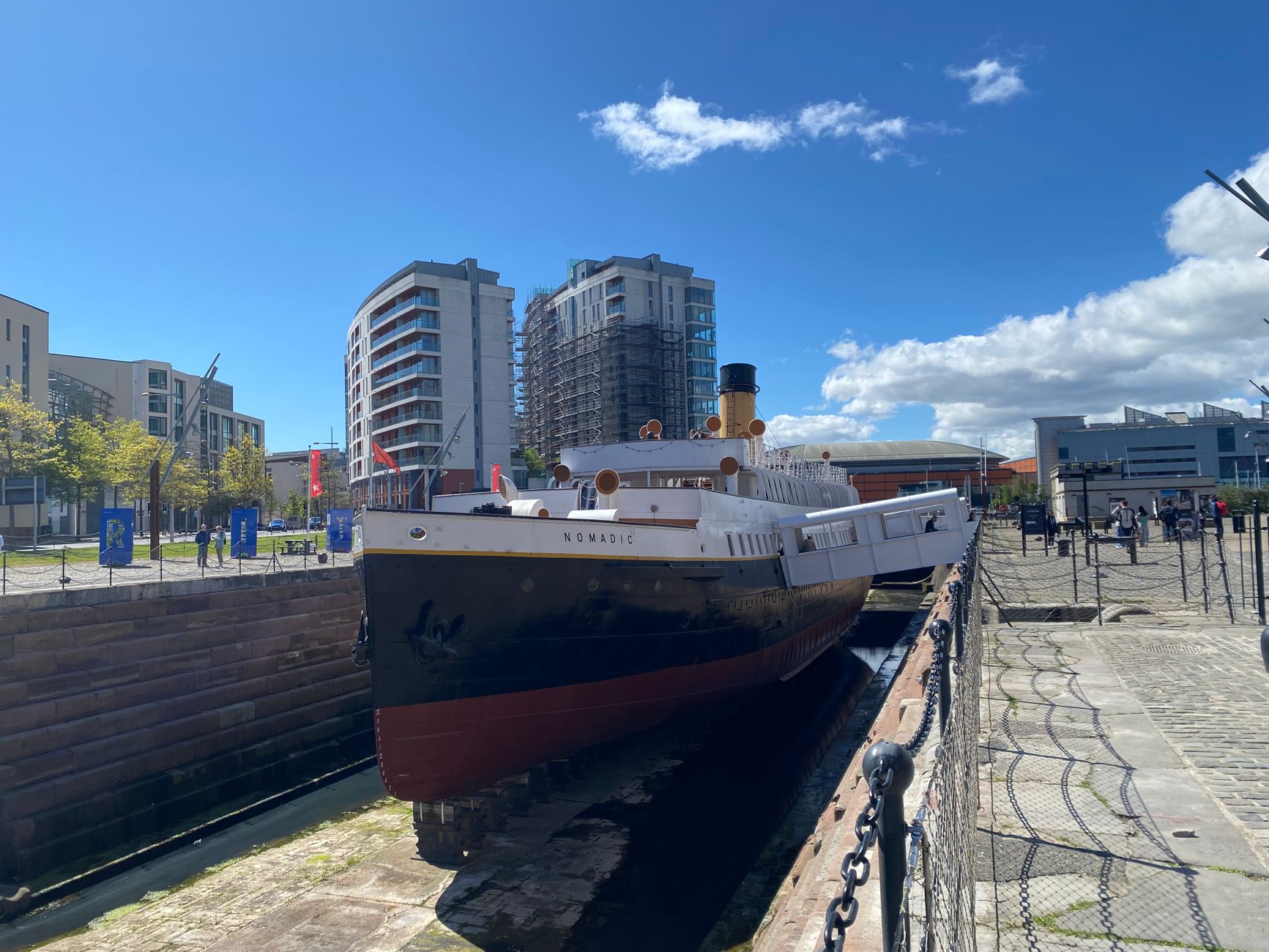
- Titanic Belfast, beside the slipways where the ship was built and launched, is one of the best museum experiences in either city — adult tickets £24.95 booked online or £26.95 walk-up, children £11 and £13, and admission includes going aboard the SS Nomadic, Titanic’s original tender and the last surviving White Star Line vessel. There is an Early Riser ticket at £19.95 online between April and October if you can be there first thing.
- The Ulster Museum is free, holds art, history and natural sciences, and sits in the Botanic Gardens beside Queen’s University — the equivalent of Dublin’s free national museums and just as worth an afternoon.
- The black taxi mural tours of West Belfast are the way most visitors approach the history of the Troubles. Prices vary by operator, so check before booking. Guides are local, the accounts are personal and vary depending on whose taxi you are in, and that is part of the point rather than a flaw.
- Crumlin Road Gaol, often sold in combination with a mural tour, is Belfast’s counterpart to Kilmainham.
- The Harland and Wolff cranes, Samson and Goliath, still stand over the yard, and the Titanic Quarter around them is a genuinely strange piece of post-industrial city.

The verdict on attractions
Dublin has more to do and more of it free; Belfast has the better single museum and a more distinctive story. If you have two days, Dublin gives you more variety. If you have one day and want to come away having learned something you could not have learned anywhere else, Belfast does that better.
Day Trips: Where Belfast Pulls Ahead
This is Belfast’s strongest argument and it gets underplayed. The Causeway Coast — the Giant’s Causeway itself, Carrick-a-Rede rope bridge, Dunluce Castle, Bushmills, the Dark Hedges — is about an hour from Belfast and is the most spectacular stretch of coastline on the island. From Dublin it is a very long day; from Belfast it is comfortable.
Dublin’s day trips are good but different in character: Glendalough and the Wicklow Mountains, Howth on the DART, Newgrange and the Boyne Valley, Powerscourt. Greener, gentler, more historic, less dramatic. If the Causeway is on your list, our Giant’s Causeway from Dublin guide is honest about how long that day is from here — and the short version is that Belfast is the better base for it.

Food, Pubs and Nights Out
On eating and drinking, Dublin vs Belfast comes down to range against value.
Dublin has the deeper restaurant scene by a distance — more Michelin recognition, more range, and a genuinely excellent casual middle in the streets around South William Street and Capel Street. Belfast’s food scene is smaller but has improved enormously and is much better value; the Cathedral Quarter is the centre of it.
On pubs, Dublin has the weight of history — the oldest pubs, the Victorian snugs, the trad sessions. Belfast has the Crown Liquor Saloon, a Victorian gin palace owned by the National Trust and one of the most beautiful pub interiors anywhere. Both cities drink well. A pint costs less in Belfast, and noticeably less than in Temple Bar.
For nightlife breadth, Dublin wins on volume — see the nightlife guide. Belfast is more compact and easier to navigate on foot at two in the morning.

Getting Between Them: The Enterprise
The train is the answer and it is a good one. The Enterprise runs from Dublin Connolly to Belfast Grand Central in about two hours and eight minutes, with roughly fifteen departures a day Monday to Saturday from about 06:00 and eight on Sunday.
- Fares from Belfast: Low £14.99 single, £29.98 return; Semi Flexible £15.99 / £31.98; Flexible £16.99 / £33.98. From Dublin, cheapest singles from about €15.99.
- Online booking closes 80 minutes before departure from the origin station; collect at a station ticket machine.
- A Leap Card is not valid on the Enterprise. This catches people out constantly.
- Three different train types run the route, so catering varies — in-seat menu on Enterprise Plus, a buffet car, or a trolley only.
- Services typically also call at Drogheda and Dundalk, with some at Portadown, Newry and Lisburn. Not every train calls everywhere.
Full detail in the Enterprise train guide, and the Belfast day trip guide covers doing it in a single day.

Can You Visit Both in One Trip?
The honest resolution to the Dublin vs Belfast question, for anyone with more than three days, is that it is a false choice.
Yes, easily, and most people who have four days or more should.
Belfast as a day trip from Dublin
Take the first train, come back on a late one, and you get six or seven hours in the city — enough for Titanic Belfast, a black taxi tour and a walk round the centre, which is a genuinely full day. It does not give you the Causeway Coast, and it does not give you a Belfast evening, but as an introduction it works. This is the standard approach and our day trip guide sets out the timings.
Two nights each, which is better
Two nights in Dublin and two in Belfast, with the Enterprise in the middle, is the best four-to-five-day shape on the island for a first visit. You get both cities properly, one Wicklow or coastal day out of Dublin, and the Causeway out of Belfast. Book the train in advance and travel in the middle of the day rather than at either end, so you do not lose a morning. Our Dublin and Ireland itinerary and four days in Dublin cover the alternatives.
Basing yourself in Belfast
Underrated, particularly on an expensive Dublin weekend. Belfast rooms cost less, the train is cheap and frequent, and Dublin is a two-hour ride away. If your dates land on St Patrick’s weekend or a Six Nations Saturday, this can halve your accommodation bill — see Dublin for sports fans for which weekends those are.
The Practical Differences
The things that make Dublin vs Belfast a genuine international journey rather than a domestic hop.
- Two countries. The Republic of Ireland is an independent state; Northern Ireland is part of the United Kingdom. Getting this wrong is the single most common visitor mistake on the island.
- Two currencies. Euro in Dublin, pound sterling in Belfast. Euros are not accepted in Belfast shops and sterling is not accepted in Dublin. Cards work everywhere.
- No border check on the Enterprise or the roads — but carriers and hotels may ask for ID, so carry a passport.
- Different transport systems. A Leap Card works in Dublin and nowhere in Northern Ireland; Belfast uses Translink. Neither works on the Enterprise without a separate ticket.
- Different phone roaming. Crossing the border can switch your network, and post-Brexit roaming varies by tariff. Check before you travel; see the SIM card guide.
- Same side of the road, same plugs, same language. Distances are kilometres in the Republic and miles in Northern Ireland.
Which City Suits You?
The Dublin vs Belfast shortcut, by traveller type.
- First trip to Ireland — Dublin, for breadth and connections.
- Tight budget — Belfast, comfortably, and by about a third.
- Literature, medieval history, Georgian architecture — Dublin.
- Industrial history, the Titanic, the twentieth century — Belfast.
- Dramatic coastline — Belfast, for the Causeway Coast.
- Restaurants and range — Dublin.
- Walkability — Belfast is smaller and easier on foot.
- Pubs — Dublin on depth, Belfast on price, and the Crown Liquor Saloon beats anything either city has on interiors.
- Flying in long-haul — Dublin, which has far more routes and US preclearance.
- Four days or more — both, with the Enterprise in between.
Gotchas
The things that most reliably catch people out moving between the two.
- Different currencies. Euro in Dublin, sterling in Belfast, and neither is accepted in the other city.
- A Leap Card is not valid on the Enterprise, or anywhere in Northern Ireland.
- Enterprise online booking closes 80 minutes before departure. After that it is the ticket office.
- Only eight Enterprise services on a Sunday against fifteen the rest of the week. Check before planning a Sunday day trip.
- Dublin Castle and the Chester Beatty are closed to visitors until January 2027. Two standard Dublin recommendations are unavailable this year.
- Titanic Belfast is cheaper booked online — £24.95 against £26.95 — and cheaper again on the April-to-October Early Riser at £19.95.
- The Causeway Coast is a long day from Dublin and a comfortable one from Belfast. Base yourself accordingly.
- Bring a passport even though there is no border check. Carriers and hotels ask.
- Do not call Northern Ireland part of the Republic, or the Republic part of the UK. Both are wrong and both land badly.
- Black taxi tours give a perspective, not the perspective. Different guides tell it differently; that is the nature of the subject.
FAQ: Dublin vs Belfast
Is Belfast cheaper than Dublin?
Yes, substantially. Cost-of-living comparisons put Dublin around 35 per cent above Belfast, and Dublin hotel rooms cost about a third more. Headline attraction tickets are similar in both, so the saving comes from beds, food and drink rather than from entry fees.
Which has better attractions?
Dublin has more, and more of them free — the national museums and the National Gallery cost nothing, Kilmainham Gaol is €8, and Trinity and the Guinness Storehouse are paid. Belfast has the better single attraction in Titanic Belfast, the free Ulster Museum, Crumlin Road Gaol and the black taxi mural tours, and a far better day trip in the Causeway Coast. Breadth to Dublin; depth and distinctiveness to Belfast.
Can you visit both in one trip?
Yes, and with four days or more you should. The Enterprise train links Dublin Connolly and Belfast Grand Central in about two hours and eight minutes, roughly hourly, with singles from around €15.99. Either do Belfast as a long day trip from Dublin, or — better — split the trip two nights in each city and travel in the middle of a day so you do not lose a morning at either end.
How long is the train from Dublin to Belfast?
About two hours and eight minutes on the Enterprise, Dublin Connolly to Belfast Grand Central, with roughly fifteen departures a day Monday to Saturday from about 06:00 and eight on Sunday. Book online in advance for the cheapest fares, but note that online booking closes 80 minutes before the train leaves its origin station, and a Leap Card is not valid.
Do you need a passport to go from Dublin to Belfast?
There is no border check on the Enterprise or on the roads, and British and Irish citizens move freely under the Common Travel Area. But carriers and hotels routinely ask for photographic identification, and you are crossing into a different state, so bring a passport. Everyone who is not a British or Irish citizen should also check their own entry requirements for the UK separately from Ireland’s.
Is Belfast safe for tourists?
Yes. Belfast is a normal European city with normal city-centre caution required after dark, and the Troubles ended with the Good Friday Agreement in 1998. Political murals and peace walls are still standing and are visited on organised tours; treat them as living history in a place where people live, photograph respectfully, and be aware that flags and kerb painting mean something locally. See is Dublin safe for the equivalent on this side.
Which is better for a weekend break?
Dublin if you are flying in and want maximum choice, Belfast if you want the same weekend for about a third less. For a UK-based traveller, both are short flights and Belfast has the additional advantage of being domestic — no currency change and no separate entry rules. See Dublin from London and the UK for how the Dublin version works.
Which city is more walkable?
Belfast, by a margin. It is smaller and its centre is more compact, and you can cross the useful part of it in twenty minutes. Dublin’s core is also walkable — Christ Church to Trinity is about fifteen minutes — but the sights are spread across a wider area and you will use buses or the Luas more. See walking in Dublin.
Should I base myself in Belfast and visit Dublin?
It is a genuinely good idea on expensive dates. Belfast rooms cost materially less, the Enterprise is cheap and frequent, and Dublin is a two-hour ride. On a St Patrick’s weekend, a Six Nations weekend or the October bank holiday, when Dublin hotel rates roughly double and Belfast barely moves, staying north and travelling down can halve your accommodation bill.
Keep Planning
- Is Dublin Worth Visiting? — the parent guide, and the honest case.
- Belfast Day Trip from Dublin — doing it in a single day.
- The Dublin to Belfast Train — the Enterprise, fares and timetable.
- Giant’s Causeway from Dublin — and why Belfast is the better base.
- Dublin Trip Cost — what the southern half actually costs.
- Dublin & Ireland Itinerary — fitting both into one trip.
- Dublin vs Edinburgh — the other comparison people make.
- 4 Days in Dublin — if you decide to stay put.
Keep Reading
Lean na Comharthaí — Keep following the signs