Dublin to Belfast by Train: The Enterprise Guide (Tickets, Times & Tips)
Ó Bhaile Átha Cliath go Béal Feirste ar an Traein

Ar an gComhartha Seo — On this sign
- Quick Answer: How Does the Dublin to Belfast Train Work?
- The Route, and What You Actually See
- Fares, Tickets and How to Book
- The Trains Themselves
- Train Versus Bus: The Honest Comparison
- The Border: Passports, ETAs and What Actually Happens
- What Changes When You Cross
- Doing Belfast as a Day Trip
- Timing Your Day Around the Timetable
- Onward and Alternative Rail Trips
- Accessibility, Bikes and Luggage
- Gotchas
- Dublin to Belfast Train FAQ
- Keep Planning
- Keep Reading
Two hours and eight minutes after leaving Dublin Connolly you are standing in Belfast Grand Central, in a different jurisdiction, a different currency and a different accent, having crossed an international border without anybody looking up from their coffee. There is no checkpoint, no announcement, no ceremony of any kind. Somewhere between Dundalk and Newry the phone flicks over to a UK network and that is the only signal you get. The Dublin to Belfast train is, for that reason alone, one of the strangest and most pleasant rail journeys in Europe.
This guide covers the whole thing properly: the Enterprise service and how often it runs, real fare bands and how far in advance you can book, what the three different sets of rolling stock are actually like inside, whether it beats the bus, the passport and ETA question that generates more anxiety than it deserves, what changes the moment you cross the border, and how to plan a day in Belfast around the timetable rather than fighting it. It is written for visitors doing this as a day trip from Dublin, and for anyone moving between the two cities properly.
Quick Answer: How Does the Dublin to Belfast Train Work?
The service is called the Enterprise and it is run jointly by Iarnród Éireann on the southern side and Translink on the northern side. It runs between Dublin Connolly and Belfast Grand Central, roughly hourly, with fifteen departures a day Monday to Saturday from around 06:00 and eight on Sundays. The journey takes about 2 hours 8 minutes end to end. Booking opens well in advance and closes 80 minutes before departure from the origin station, after which you buy at the station.
Fares are banded rather than fixed. From Belfast, singles run at roughly £14.99 on the cheapest Low fare, £15.99 Semi Flexible and £16.99 Flexible, with returns at double; from the Dublin side the equivalent starts around €15.99. That makes a return between the two capitals cheaper than most people expect and comfortably competitive with the bus once you account for the time saved. The honest verdict on the Dublin to Belfast train: book the cheapest fare band online a few days ahead, take an early train, and treat the price difference between fare types as buying flexibility rather than comfort — the seat is identical.
| Detail | What to expect |
|---|---|
| Service name | Enterprise |
| Operators | Iarnród Éireann and Translink, jointly |
| Route | Dublin Connolly ↔ Belfast Grand Central |
| Journey time | About 2 hours 8 minutes |
| Frequency | Roughly hourly; 15 a day Mon–Sat, 8 on Sunday |
| First departure | From around 06:00 Mon–Sat |
| Cheapest single | From about £14.99 / €15.99 |
| Booking cut-off | 80 minutes before departure from the origin station |
| Border checks | None on the train |
| Currency change | Euro to pound sterling |
The Route, and What You Actually See
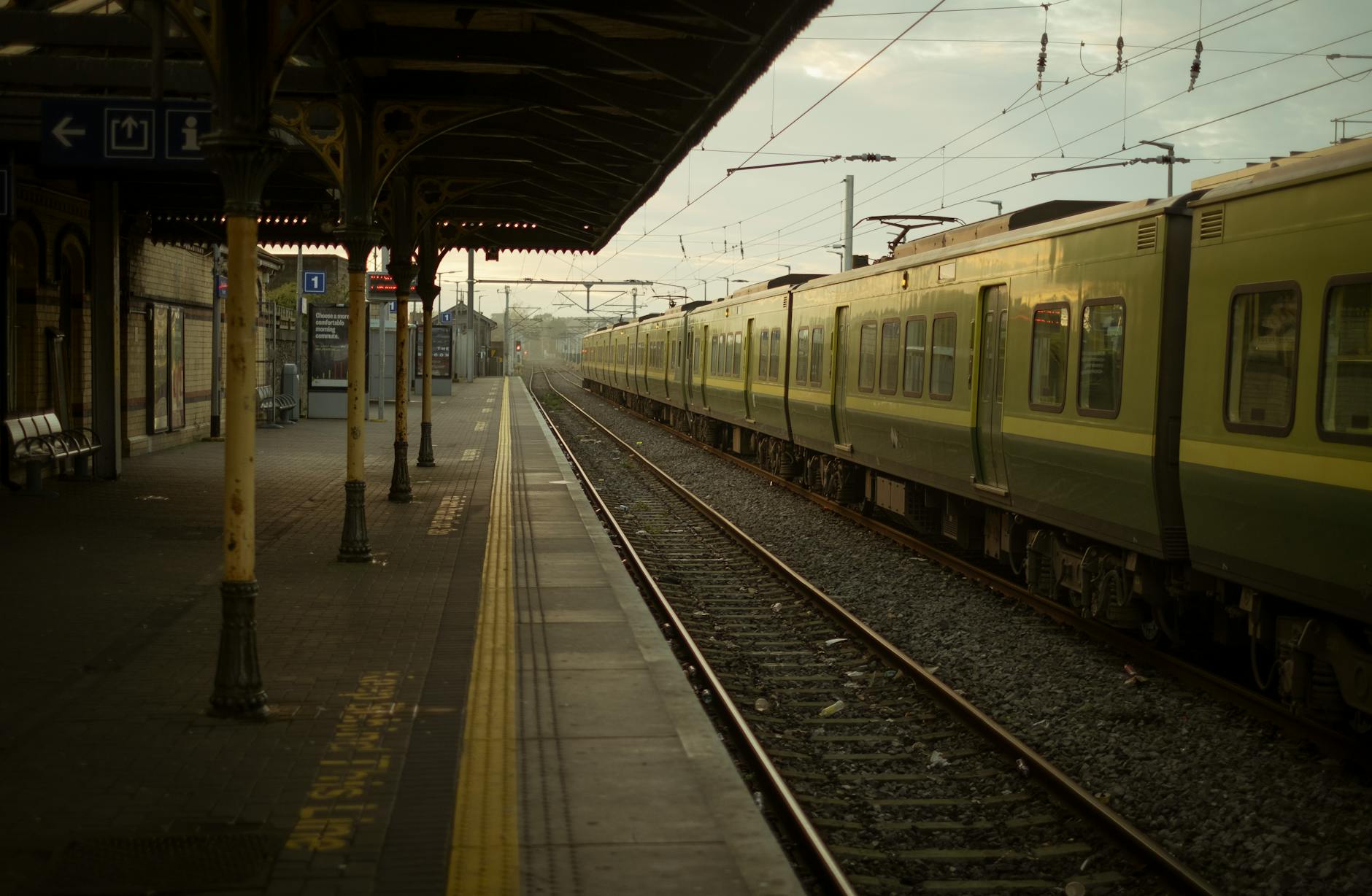
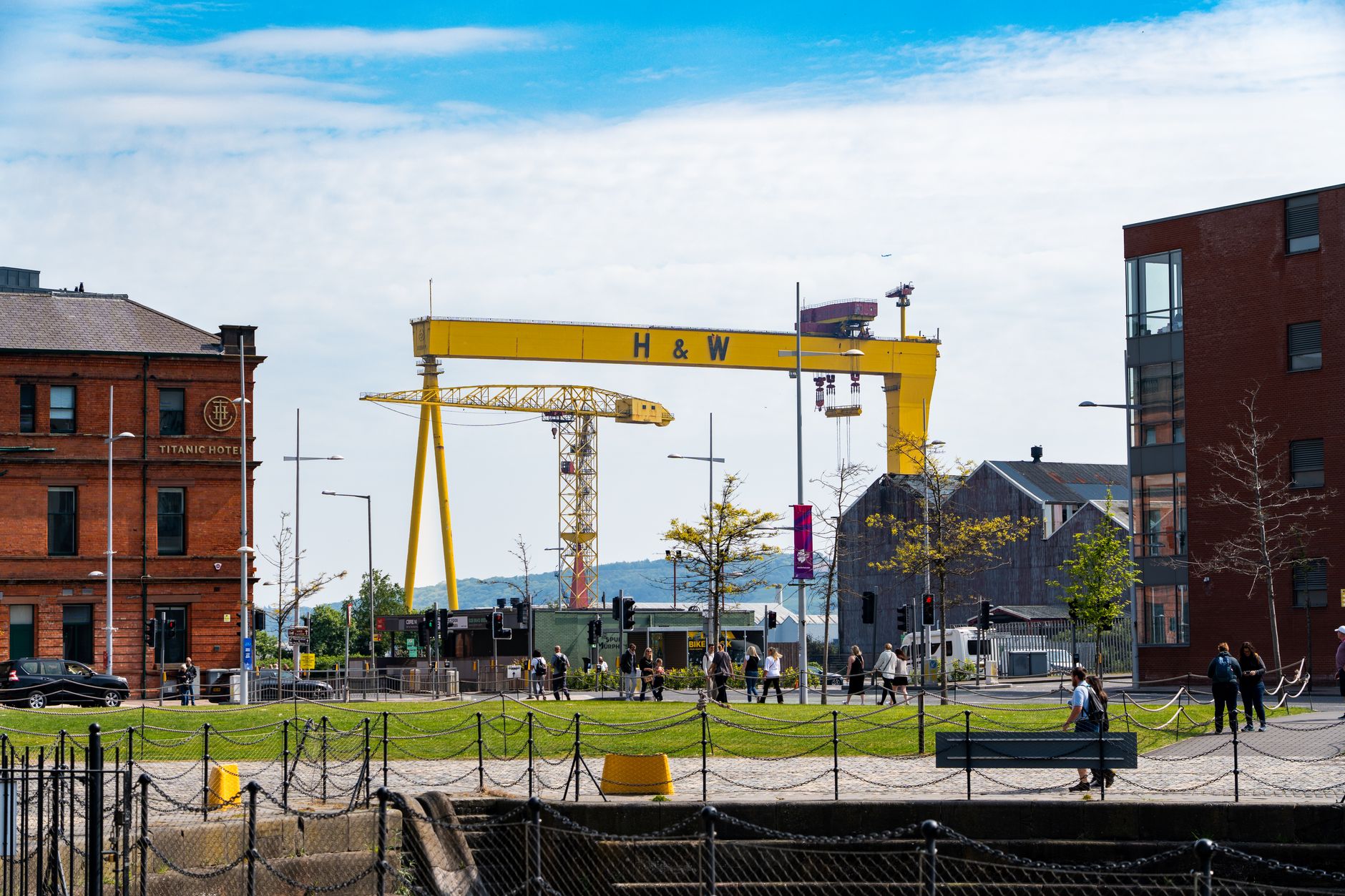
The line leaves Connolly and runs north along the coast through Fingal — for the first twenty minutes you are looking at the same water the DART runs beside, with Malahide estuary and the viaduct as the visual highlight. After Drogheda the train crosses the Boyne on a high viaduct with a genuinely good view of the river and the town, then the landscape flattens into the drumlin country of Louth and south Armagh. The middle hour is farmland. The last twenty minutes into Belfast is suburban and industrial, and you get a glimpse of the shipyard cranes on the approach if you are on the right-hand side.
Stops vary by service. The usual pattern calls at Drogheda, Dundalk, Newry and Portadown, with some services also serving Lisburn; not every train stops everywhere, so check the specific departure rather than assuming. Portadown and Newry are also legitimate boarding points if you are approaching from elsewhere in Northern Ireland.
Sit on the left going north for the coast and the Boyne, and on the right coming back for the same reason in reverse. The scenery is pleasant rather than dramatic — this is not the Bray to Greystones coastal stretch, and anyone expecting the west of Ireland will be underwhelmed. Bring something to read for the middle hour.
Fares, Tickets and How to Book
Enterprise fares are sold in three bands, and the difference between them is flexibility rather than seat quality.
| Fare type | Single | Return | What you get |
|---|---|---|---|
| Low | £14.99 | £29.98 | Cheapest; tied to a specific service |
| Semi Flexible | £15.99 | £31.98 | Some latitude on which train you take |
| Flexible | £16.99 | £33.98 | Full flexibility across the day |
From the Dublin side, the cheapest singles start around €15.99 and behave the same way. Prices are set by the two operators and change; treat these as the shape of the fare structure rather than a quote, and check the operators’ own sites before you buy.
Three practical points. First, book online — the cheapest bands are an online product and the station price will not match them. Second, online sales close 80 minutes before the train leaves its origin station, so a spontaneous dash to Connolly means paying the walk-up price at the machine. Third, if you booked online you collect from a ticket vending machine at the station, which takes a few minutes at a busy hour, so do not arrive at Connolly with four minutes to spare.
Your Leap Card does not work on the Enterprise. Leap covers Dublin Bus, the Luas and the DART within the Dublin commuter area; the cross-border intercity service is an entirely separate ticket. Nor do Northern Ireland’s Translink smartcards work on the southern end. The cheap transport guide covers what Leap does and does not buy you.
The Trains Themselves
Enterprise runs a mixed fleet of three different train types, which is the single most useful thing to know before you board, because what you get on board depends entirely on which set turns up. Catering ranges from a full in-seat service at one end to a trolley at the other, with a buffet or bar car in between. On some departures you can have a proper meal at your seat; on others you can have a coffee and a packet of crisps. The operators publish which service carries what, and it is worth two minutes of checking if you were planning to eat on the train.
Enterprise Plus is the premium class and it is the one worth considering. It buys you a reserved seat, more legroom, better lumbar support, wheelchair-accessible space, and — on the services that carry it — an in-seat food and drink service from a full menu. For a two-hour journey it is not essential, but on a Friday evening or a match day when standard is full and unreserved, a reserved seat is worth the difference on its own.
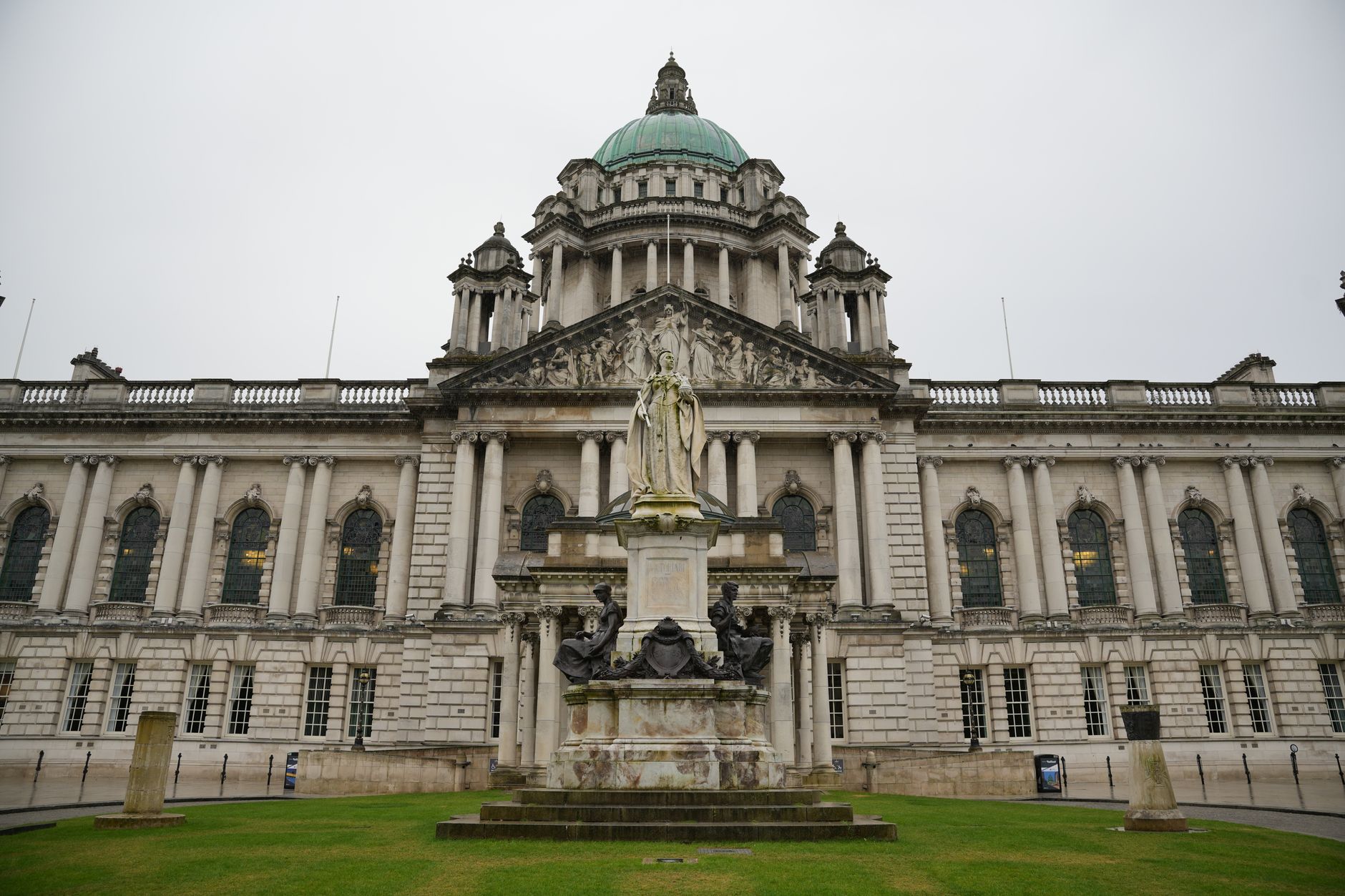
Standard class is comfortable, has tables at some bays, and is generally quiet. Reservations are not universal in standard, so at peak times the seat you sit in is the seat you found. Luggage goes on the overhead racks or the end-of-carriage stacks; there is no separate baggage system and nobody weighs anything.
Train Versus Bus: The Honest Comparison
The coach — run by both Aircoach and Translink’s Goldline, plus Dublin Express variants — is the main alternative, and it is genuinely cheaper at the low end. It is also slower, more exposed to motorway traffic, and it arrives less centrally. The M1 is a good road and a clear run is competitive, but a bad run on a Friday afternoon is not.
| Enterprise train | Coach | |
|---|---|---|
| Journey time | About 2h 08m, reliably | About 2h 15m–3h, traffic dependent |
| Cheapest fare | From about £14.99 / €15.99 | Often cheaper again |
| Frequency | Roughly hourly | Frequent, often more so |
| Comfort | Table seats, catering, you can walk about | Coach seating, no catering |
| Dublin end | Connolly, right in the city | Busáras or on-street stops |
| Belfast end | Grand Central | Grand Central or Europa |
| Verdict | Better for a day trip | Better for the lowest possible price |
For a day trip where you are leaving early and coming back late, the train wins clearly: the timings are predictable, you arrive rested, and you can work or read for two hours instead of watching the hard shoulder. For a budget traveller counting every euro, the coach wins on price. There is no version of this where driving wins — see renting a car in Dublin for why a hire car is the wrong tool for this particular trip, given parking, cross-border insurance paperwork and the fact that you will want a drink at some point.
The Border: Passports, ETAs and What Actually Happens
What actually happens is nothing. The Enterprise does not stop at the border, there are no immigration officers on the train, and there is no announcement. Ireland and the United Kingdom operate the Common Travel Area, which means Irish and British citizens move freely between the two with no routine checks at all.
For everyone else it is more nuanced, and the honest answer is that you should check the current position rather than trust any guide, including this one. Carry your passport — not because anyone will ask on the train, but because you are entering a different country, you may need photo ID for a hotel, a car hire desk or a bank, and any spot check by police is a great deal easier with it. The UK has introduced an Electronic Travel Authorisation requirement for visa-exempt visitors, and the rules on how that interacts with travel from Ireland into Northern Ireland have been revised more than once since it launched. Check gov.uk directly, in the weeks before you travel, and do not rely on a blog post — including this one — for an immigration decision.
What genuinely does change at the border is more mundane and more likely to affect your day: currency, mobile roaming and emergency numbers. See the section below.
What Changes When You Cross
- Currency. The Republic uses the euro, Northern Ireland the pound sterling. Card works everywhere; cash does not cross. Do not change money at the station — use a card and let your bank do the conversion, or withdraw a small amount from an ATM in Belfast.
- Northern Irish banknotes. Several Northern Irish banks issue their own sterling notes. They are legal and spend fine in Northern Ireland, and they are a nuisance in Great Britain, where some retailers refuse them. Spend them before you leave or swap them at a bank.
- Mobile roaming. EU roaming rules do not cover the UK. An Irish or EU SIM may or may not include Northern Ireland at no extra cost depending on your operator, and some plans treat it as a separate zone. Check before you go — the SIM card guide covers the options.
- Emergency number. 999 works in both, and 112 also works in both.
- Time zone. Identical. Both jurisdictions are on GMT in winter and IST/BST in summer, and both change clocks on the same weekend.
- Driving. Both drive on the left, but speed limits switch from kilometres per hour to miles per hour at the border, which is the single most common cause of accidental speeding by visitors.
- Travel insurance. Check that your policy covers the UK as well as Ireland; some single-country policies do not. See the insurance guide.
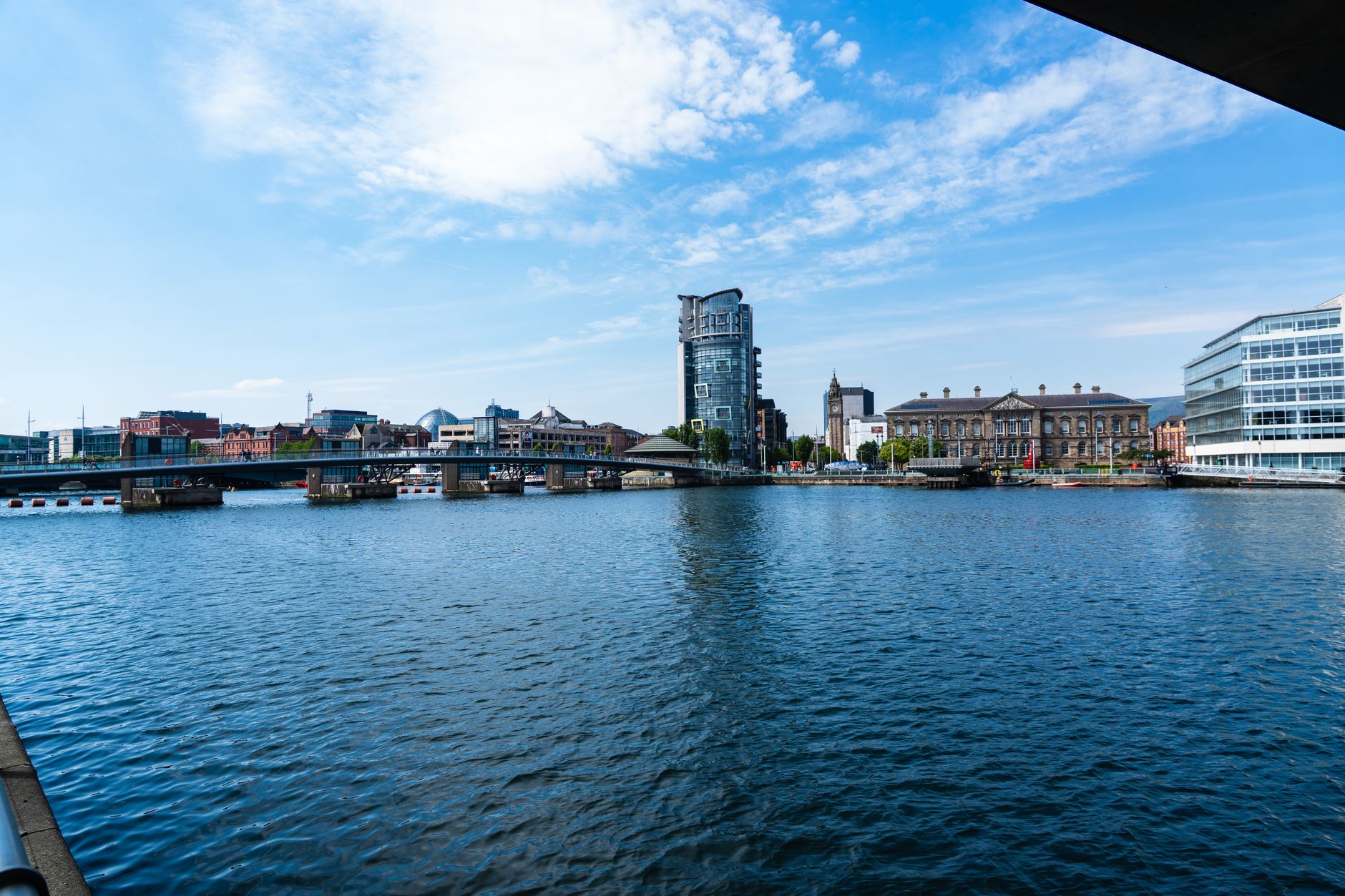
Doing Belfast as a Day Trip
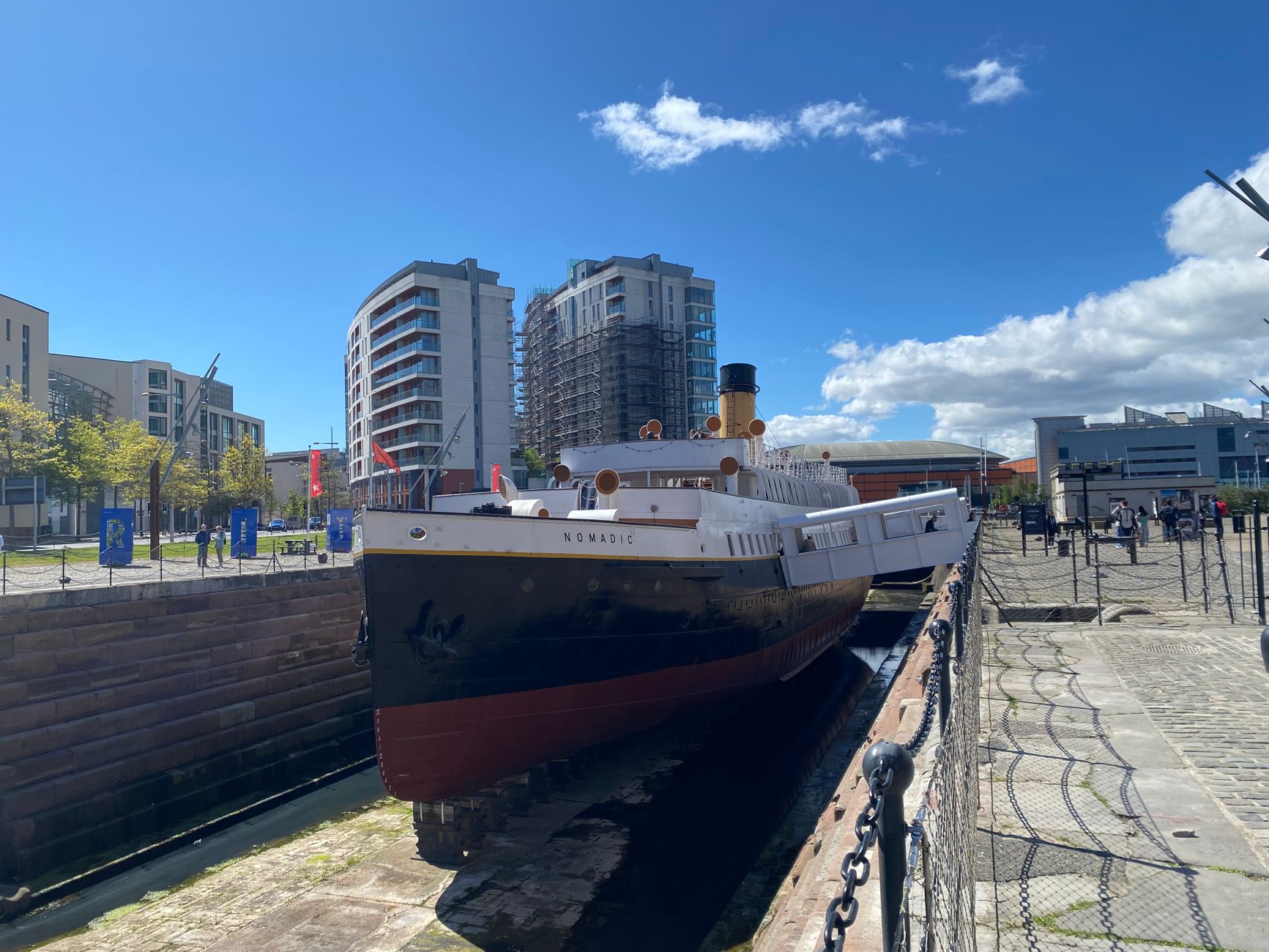
The timetable makes a day trip genuinely comfortable. Take an early train — the first departures are from around 06:00 Monday to Saturday, and anything up to about 08:00 gives you a full day — and come back on an evening service. That is seven or eight hours in Belfast, which is enough for the Titanic Quarter, a black-taxi political tour, City Hall and a decent lunch, or for a slower version of two of those.
Belfast Grand Central opened as the city’s new transport hub and replaced Lanyon Place as the Enterprise terminus. It is west of the centre, about a fifteen-minute walk to Donegall Square and City Hall, and connected to everywhere else by the Glider bus routes. The Titanic Quarter is on the other side of the city and worth the short taxi or Glider ride rather than the walk.
For what to actually do once you are there, the Belfast day trip guide is the detailed itinerary, and Dublin versus Belfast compares the two cities properly if you are deciding how to split your time. If the Causeway is the real target, note that Belfast is a stop rather than a destination on most Giant’s Causeway day trips from Dublin, and that doing the Causeway independently by train means Belfast plus a further connection, which makes it a long day.
Timing Your Day Around the Timetable
| Time | What you are doing |
|---|---|
| 06:45 | Arrive at Connolly, collect tickets from the machine |
| 07:00 | Depart Dublin Connolly |
| 09:10 | Arrive Belfast Grand Central |
| 09:30–12:00 | Titanic Belfast and SS Nomadic |
| 12:30 | Lunch in the Cathedral Quarter |
| 14:00–15:30 | Black-taxi tour of the murals and the peace walls |
| 16:00 | City Hall and the centre |
| 18:00 | Depart Belfast |
| 20:10 | Back at Connolly |
Two adjustments. On a Sunday there are only eight services, so the day is shorter at both ends and less forgiving of a missed train — check the Sunday timetable before committing. And if you want to see Belfast properly rather than briskly, one overnight turns a rushed day into an unhurried two, and Belfast hotel prices are generally below Dublin’s.

Onward and Alternative Rail Trips
The Enterprise is the flagship, but it is one of several worthwhile rail journeys out of Dublin. Kilkenny is about ninety minutes from Heuston and is the best-value medieval day trip in the country. Galway is two and a half hours and is a long but doable day. Malahide and Howth are both DART rides rather than intercity journeys. The day trips pillar ranks them all, and day trips without a car goes deeper on the ones that work on public transport alone. For how the national network fits together — Connolly versus Heuston, ticket types, seat reservations — see Irish Rail for tourists.
Note the two-station problem: Dublin has two main intercity terminals and they are not the same place. Connolly serves the north and the east, including Belfast, Sligo and Rosslare. Heuston serves the south and the west, including Cork, Galway, Limerick and Kilkenny. They are about thirty-five minutes apart on foot or one Luas Red Line ride, and confusing them is the single most common rail mistake visitors make in Dublin. The transport guide covers the geography.

Accessibility, Bikes and Luggage
Enterprise Plus coaches include wheelchair-accessible space, and both operators run assisted-travel schemes that are worth booking in advance rather than turning up and hoping — the notice period is short but it is not zero. Connolly and Grand Central are both step-free at platform level. For a fuller picture of getting around the city at the Dublin end, the transport guide and the taxi guide cover the connecting legs.
Luggage is informal: overhead racks and end-of-carriage stacks, no weight limits, no check-in. Bicycle policy differs between the two operators and between train types, and spaces are limited where they exist, so if you intend to take a bike across the border, confirm with the operator for your specific service rather than assuming. The bike hire guide is the easier answer for most people — hire at each end rather than carry one across.
Gotchas
- Online booking closes 80 minutes before departure. After that you are buying at the station at the walk-up price.
- Connolly is not Heuston. The Belfast train leaves from Connolly. Turning up at Heuston costs you thirty-five minutes and probably the train.
- Your Leap Card does not work on the Enterprise. Neither does a Translink smartcard on the southern half.
- Sunday has eight services, not fifteen. A Sunday day trip is a shorter and tighter day.
- Catering varies by train type. Three different sets run this route and one of them is trolley-only. Do not board hungry assuming a full menu.
- Standard class seats are not always reserved. On busy departures — Friday evenings, match days, bank holiday weekends — it is a scramble. Enterprise Plus buys certainty.
- Northern Irish banknotes are awkward outside Northern Ireland. Spend or swap them before you leave.
- Mobile roaming is not automatic. The UK is outside EU roaming rules; check your plan before you cross.
- Check the ETA position yourself on gov.uk. The rules for visitors crossing into Northern Ireland from Ireland have changed since the scheme launched, and no guide can be relied on to be current.
- Engineering works happen at weekends, occasionally with bus substitution on part of the route. Check the operators’ service updates the day before.

Dublin to Belfast Train FAQ
How long is the train from Dublin to Belfast?
About 2 hours 8 minutes end to end between Dublin Connolly and Belfast Grand Central. That is broadly consistent across the day, because the Enterprise is an intercity service with limited stops rather than a stopping train, and it is not subject to the road traffic that makes the coach journey variable. Allow fifteen minutes at each end for getting to and from the station and collecting tickets.
Do I need a passport for the Dublin to Belfast train?
There are no immigration checks on the train and no border stop, and Irish and British citizens move freely under the Common Travel Area. That said, you are crossing into a different country, so carry your passport: you may need photo ID for a hotel, a hire car or a bank, and it makes any police interaction straightforward. Non-visa-exempt visitors and anyone affected by the UK’s Electronic Travel Authorisation scheme should check the current rules on gov.uk before travelling, because the position on travel from Ireland into Northern Ireland has been revised since the scheme began.
Is the train cheaper than the bus from Dublin to Belfast?
Usually not at the very lowest end — the coach operators regularly undercut the cheapest rail fare. What the train buys you is time reliability and comfort: about 2 hours 8 minutes regardless of the M1, table seats, catering on most services, and the ability to walk about. For a day trip where a delay eats directly into your hours in Belfast, that reliability is worth the difference. For a one-way transfer where you have nothing to be late for, the coach is the cheaper option.
How often does the Dublin to Belfast train run?
Roughly hourly. There are fifteen departures a day Monday to Saturday, starting from around 06:00, and eight on Sundays. The Sunday reduction is significant enough to change how you plan a day trip, so check the specific date rather than assuming an hourly service across the week.
Where does the Dublin to Belfast train arrive in Belfast?
Belfast Grand Central, the city’s transport hub, which replaced Lanyon Place as the Enterprise terminus. It sits west of the city centre, about fifteen minutes’ walk from Donegall Square and City Hall, and it connects to the rest of the city on the Glider bus network. The Titanic Quarter is on the far side of the centre and is better reached by Glider or taxi than on foot.
Can I book Dublin to Belfast train tickets on the day?
Yes, at the station, but not online within 80 minutes of the train’s departure from its origin station. Online booking is where the cheapest fare bands live, so booking on the day usually means paying the walk-up price. If you have booked online, allow a few minutes at Connolly to collect the tickets from a vending machine — at a busy hour there is a queue.
Is there wifi and food on the Enterprise?
Catering depends on which of the three train types operates your service: some carry a full in-seat menu in Enterprise Plus, some a buffet or bar car, and some only a trolley. Onboard facilities vary in the same way, so if internet access or a hot meal matters to you, check what is scheduled for your specific departure on the operator’s site rather than assuming. Buying something at Connolly before you board is the low-risk option.
Is Enterprise Plus worth it?
On a quiet midweek departure, no — standard class is comfortable and the journey is only two hours. On a Friday evening, a Sunday afternoon, a bank holiday or a match day, yes, because a reserved seat with extra legroom is worth several pounds when standard is full and unreserved. It also includes the in-seat food service on the trains that carry it, which turns the journey into lunch.
Can I do Belfast as a day trip from Dublin by train?
Comfortably. A 07:00 departure puts you in Belfast by about 09:10 and an 18:00 return has you back at Connolly by 20:10 — seven or eight hours on the ground, which covers Titanic Belfast, a black-taxi tour, City Hall and lunch without rushing. On a Sunday the reduced timetable makes it tighter. The Belfast day trip guide has the full itinerary.
Does the Dublin to Belfast train stop anywhere useful in between?
Services typically call at Drogheda, Dundalk, Newry and Portadown, and some also serve Lisburn, though not every train stops everywhere. Drogheda is the useful one for visitors: it is the gateway to the Boyne Valley and Newgrange, which makes a Drogheda stop a legitimate half-way break rather than just a commuter call. Check the individual service before planning around a particular stop.
Keep Planning
- Belfast Day Trip from Dublin — what to actually do with your seven hours in the city.
- Getting Around Dublin — the parent guide, including which station is which.
- The Giant’s Causeway from Dublin — the other big cross-border trip, and why it is a long day.
- Day Trips from Dublin — everything within reach, ranked.
- The DART — the coastal line for the shorter escapes.
- The Leap Card — what it covers, and what it does not.
- Cheap Transport in Dublin — the money-saving version of all of the above.
- Dublin Travel Tips — the practical groundwork.
- Things to Know Before Visiting Dublin — including the currency and plug questions.
- Dublin and Ireland Itineraries — how a Belfast leg fits into a longer trip.
Book and check directly with the operators: Translink for the Northern Ireland side, fares and Enterprise Plus, Iarnród Éireann for the southern side and timetables, and gov.uk for the current Electronic Travel Authorisation rules. Discover Northern Ireland is the official source for what is open at the Belfast end.
Keep Reading
- Dublin vs Belfast — what you get at each end of the Enterprise line, and which city suits you.
- Getting Around Dublin: Transport Guide
- Belfast Day Trip from Dublin
Lean na Comharthaí — Keep following the signs