Ireland Plug, Adapter & Voltage Guide for Dublin Visitors
Plocóidí agus Cuibheoirí in Éirinn
Ar an gComhartha Seo — On this sign
- Quick Answer: What Plug Adapter Do You Need for Ireland?
- The Irish Plug in Detail: What an Ireland Plug Adapter Is Fitting Into
- Voltage: The Part That Actually Matters
- What to Buy, and What to Avoid
- Where to Buy an Ireland Plug Adapter in Dublin
- Hotel Room Quirks Worth Knowing
- Phones, Data and Staying Charged
- Northern Ireland, Britain and the Rest of Your Trip
- The Five-Minute Pre-Flight Checklist
- Gotchas
- Ireland Plug Adapter FAQ
- Keep Planning
- Keep Reading
- Photo Credits
It is a small question with an unreasonably large capacity to ruin a first evening. You land at Dublin Airport, get to the hotel, unpack, and discover that the charger in your hand does not fit the hole in the wall — and that the shop downstairs closed at six. Plenty of visitors to Ireland from outside Britain hit this, and some end up paying an airport-shop premium the next morning for something that costs far less in a supermarket.
This is the complete Ireland plug adapter guide for Dublin visitors: which plug the country actually uses, why it is the same as Britain’s and different from the rest of Europe’s, when you need a simple adapter and when you need an actual voltage converter, what to do about hairdryers and straighteners, where to buy one once you have landed, and the small local quirks — switched sockets, shaver-only bathrooms — that catch people out even when they brought the right kit. It takes five minutes to read and will save you an hour and about twenty euro.
Quick Answer: What Plug Adapter Do You Need for Ireland?
Ireland uses the Type G plug — three rectangular pins in a triangle — at 230 volts, 50 hertz. It is the same plug as the United Kingdom, so travellers from Britain and Northern Ireland need nothing at all. Everyone else needs a plug adapter.
Whether you also need a converter depends entirely on where you are coming from. Visitors from continental Europe, Australia, New Zealand, South Africa, India and most of Asia are already on 220–240 V: you need a simple plug adapter and nothing more. Visitors from the United States, Canada and Japan are on 100–120 V, and there the answer splits by device. Anything whose label reads 100–240 V — which covers essentially every phone charger, laptop brick, camera charger and electric toothbrush made this century — is dual-voltage and needs only a plug adapter. Anything that heats, and is rated for 120 V only, needs a converter or, far more sensibly, leaving at home.
| Coming from | Plug adapter? | Voltage converter? |
|---|---|---|
| United Kingdom, Northern Ireland | No — identical plug | No |
| Continental Europe (Type C/E/F) | Yes | No — already 230 V |
| United States, Canada | Yes | Only for 120 V-only heating appliances |
| Australia, New Zealand | Yes | No — 230 V, though 50 Hz vs 50 Hz matches |
| Japan | Yes | Only for 100 V-only appliances |
| India, South Africa, most of Asia | Yes | No — already 220–240 V |
The Irish Plug in Detail: What an Ireland Plug Adapter Is Fitting Into
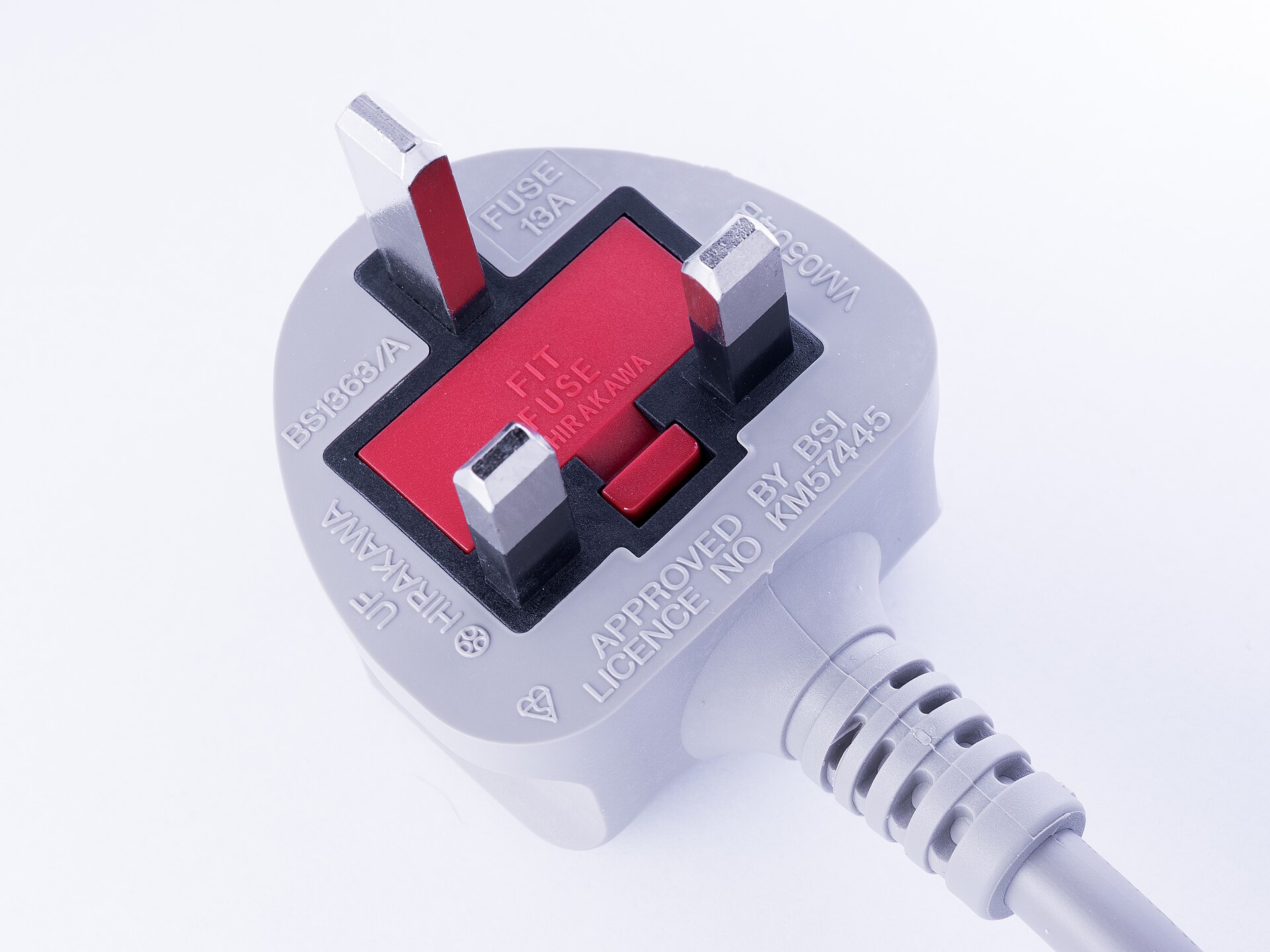
Ireland’s plug standard is IS 401, which is essentially a direct adoption of the British BS 1363. That is why the plugs are identical and why every Ireland plug adapter sold anywhere in the world is labelled “UK/Ireland” rather than getting a category of its own.
The Type G plug is genuinely well designed, and a couple of its features matter to a visitor:
- It contains a fuse. A cartridge fuse sits inside the plug body itself — something almost no other plug in the world has. The plug is rated to 13 A. If an appliance dies suddenly and completely, the fuse in the plug is a plausible culprit, and a replacement fuse costs very little.
- The earth pin is longer than the other two. It engages first and disconnects last, and it also mechanically opens the shutters that cover the live and neutral holes. That is why you cannot push a fork into an Irish socket, and why a two-pin plug will not go in even if the pins were the right shape.
- Sockets very often have their own on/off switch. This is standard in Ireland and Britain and unfamiliar almost everywhere else. If your phone is not charging, look at the little rocker beside the socket before you blame the adapter. This is comfortably the most common false alarm in Irish hotel rooms.
- It is big. Type G is the bulkiest common plug in the world, and a Type G adapter sticking out of a socket behind a hotel bed is genuinely awkward. This is an argument for a flat or right-angled adapter if you are buying one anyway.
Voltage: The Part That Actually Matters
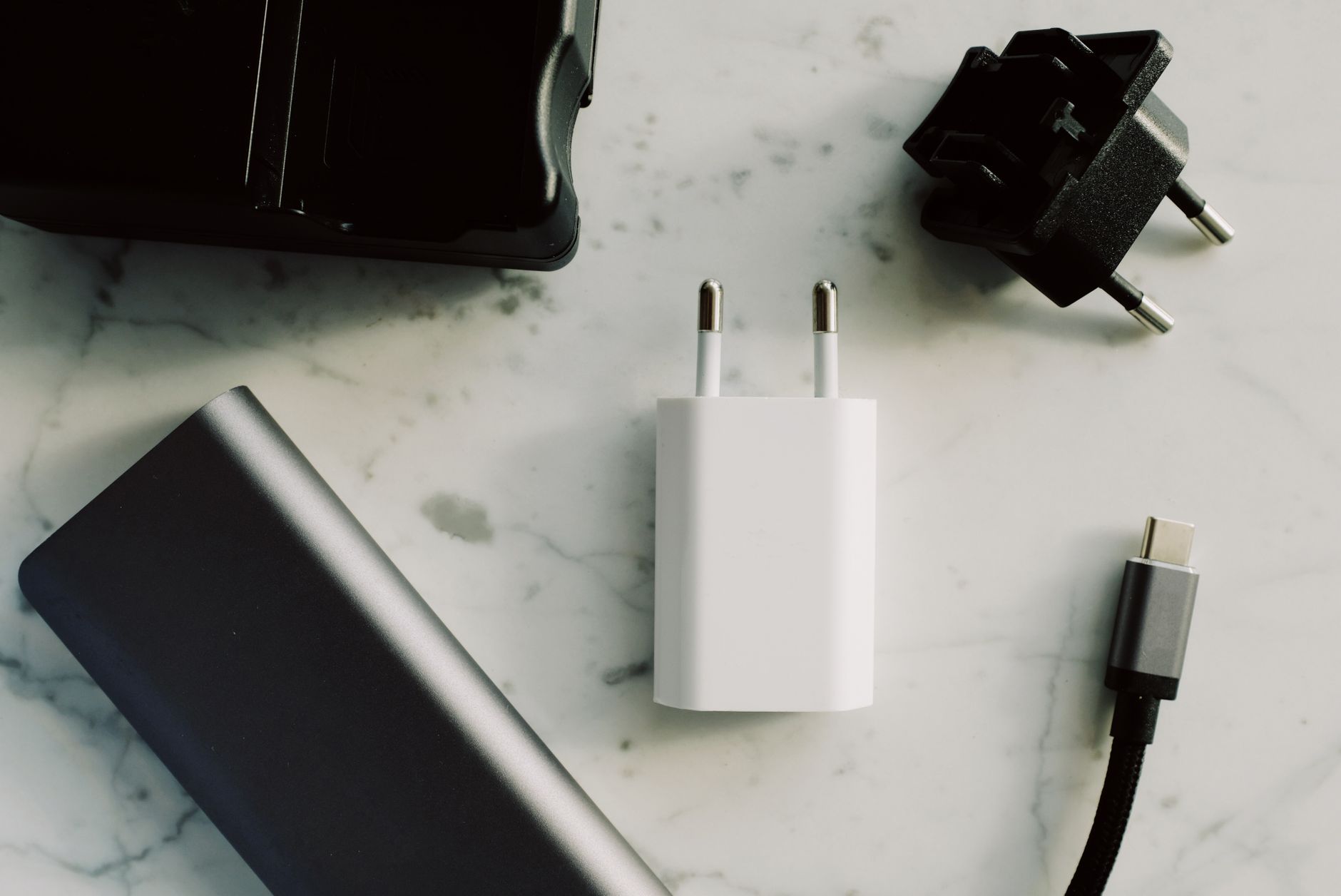
A plug adapter changes the shape of the pins. It does not change the electricity. Ireland runs at 230 V, 50 Hz, and that is what will arrive at your device whatever you put between it and the wall.
For most travellers this is a non-issue, because modern electronics are built for the world. Turn over your charger and read the small print. If it says INPUT: 100–240V ~ 50/60Hz, it works everywhere, and a plug adapter is all you will ever need. Phone chargers, laptop power supplies, camera and drone chargers, e-readers, electric shavers and most electric toothbrushes are all in this category.
The exceptions are appliances that convert electricity into heat, which are inherently voltage-specific:
- Hairdryers — the classic problem. A 120 V American hairdryer plugged into 230 V through a plug adapter will burn out, sometimes spectacularly.
- Hair straighteners and curling tongs — same issue, though many modern ones are dual-voltage. Read the label.
- Travel kettles and travel irons — same again.
- Older or cheap electric shavers — usually fine, but worth checking.
The practical advice, and the one every experienced traveller gives: do not bring a voltage converter for a hairdryer. A typical American hairdryer draws well over 1,000 W, and a travel converter that can genuinely handle that is heavy, expensive and prone to overheating. Every Dublin hotel above hostel level provides a hairdryer in the room. Use theirs, or buy a cheap dual-voltage travel hairdryer and stop thinking about it.
What to Buy, and What to Avoid
You have three sensible options, in ascending order of cost and descending order of hassle.
- A simple plug adapter — a few euro. Fine if you have one device, or a multi-port charger. Buy two; they are the single most losable item in a suitcase.
- A multi-port USB-C charger with a UK/Ireland plug — the modern answer, and the one we would recommend to almost everyone. One brick, one socket, three or four devices, no adapter to lose. A 65 W GaN charger is compact and, depending on the model, can power a laptop and a phone at the same time.
- A universal travel adapter with USB ports — convenient, bulky, and worth it if you travel widely. Buy a branded one. The very cheap ones have loose contacts and, in an Irish socket, no fuse protection at all.
Two things to actively avoid. First, the ultra-cheap unbranded adapter — an Ireland plug adapter with no fuse and a sloppy fit is a genuine hazard, not just a false economy. Look for a CE mark and a stated current rating. Second, the combined adapter-plus-converter units sold at airports, which usually cannot handle a hairdryer anyway and are sold on exactly that promise.
One more piece of practical advice: bring a short extension lead or a three-way strip from home, plug that into a single Ireland plug adapter, and charge everything at once. This solves the perennial problem of hotel rooms having exactly one accessible socket, usually behind the bed and usually already occupied by the lamp.
Where to Buy an Ireland Plug Adapter in Dublin
If you land without one, you will not be stuck for long. In rough order of price:
- Supermarkets and pharmacies — Tesco, Dunnes, SuperValu and Boots all carry travel adapters, and this is the cheapest option in the city. There are branches all over the centre, including on Grafton Street and Henry Street.
- Discount and variety stores — Dealz, Penneys and similar, on Henry Street and in the shopping centres. Cheap, and stock varies.
- Electronics shops — Currys and the phone shops on Grafton Street and O’Connell Street. Better quality, higher prices.
- Dublin Airport — the option people fall back on when they forget. Buy before you fly.
- Your hotel — worth asking. Most Dublin hotels keep a small stock of adapters at reception and will lend one against a deposit, or simply lend one. It costs nothing to ask, and it works surprisingly often.
Our Grafton Street shopping guide and shopping guide cover where the relevant shops are.
Hotel Room Quirks Worth Knowing
Even with the right Ireland plug adapter in hand, Irish hotel rooms have a few conventions that surprise visitors.
Bathrooms usually have no normal socket. Irish and British wiring regulations restrict sockets in bathrooms, so what you will find instead is a two-pin shaver socket — a different standard again, low current, and intended for shavers and electric toothbrushes only. Do not try to run a hairdryer off it. Dry your hair at the bedroom mirror, which is where the hotel’s own hairdryer will be.
The socket by the bed may be switched off at the wall. Covered above, but it bears repeating, because a switched-off socket is a very common “my adapter is broken” moment in Ireland.
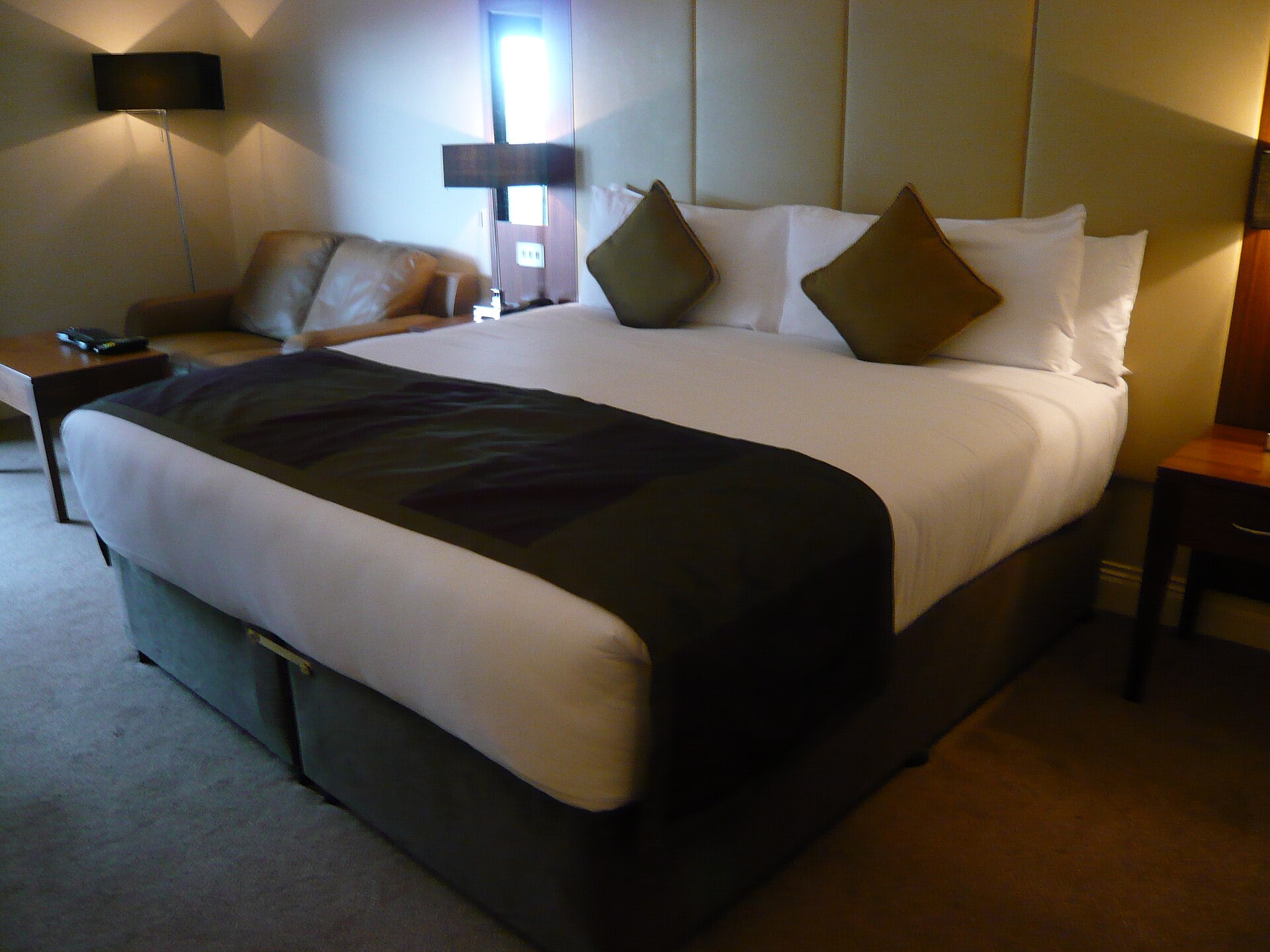
Older Dublin hotels have very few sockets. Many of the city’s best-loved hotels are in Georgian buildings that were wired long after they were built, and a room can have very few accessible sockets. This is the case for the extension lead.
Some newer hotels have built-in USB ports in the bedside units. Treat them as a convenience, not a charging plan. Our city-centre hotels guide and boutique hotels guide cover what to expect at each end of the market, and apartment rentals generally do better on sockets than hotels do.
Phones, Data and Staying Charged
The adapter question sits inside a bigger one, which is keeping a phone alive through a day of navigation, photos and maps. Three things help more than a bigger charger.
A power bank. A power bank is one of the most useful things in a day bag in a city you are walking around. Note that power banks must travel in hand luggage, never in the hold — that is an aviation rule, not a Dublin one, and it is enforced.
A local eSIM or SIM. Roaming is free for EU-based travellers under the roam-like-at-home rules, but visitors from outside the EU should sort data before arrival. Our SIM card guide covers the options, and note that the UK is no longer in the EU roaming zone, so a British SIM may or may not include Ireland depending on the plan.
Offline maps and offline tickets. Download the map of central Dublin before you leave the hotel Wi-Fi, and screenshot your Kilmainham or Guinness Storehouse booking rather than relying on an email loading in a basement. Our transport guide and Leap Card guide cover the travel apps worth having.
Cafés across the city have free Wi-Fi and, less reliably, accessible sockets — see our coffee shops guide for the ones that are genuinely set up for it.

Northern Ireland, Britain and the Rest of Your Trip
If Dublin is one stop on a longer trip, the Ireland plug adapter question is simpler than the rest of the border logistics.
Northern Ireland and Britain use the identical Type G plug at the same 230 V. A day trip to Belfast, the Giant’s Causeway or a longer swing through the UK needs no additional adapter — only a different currency, since the north uses sterling. See our Dublin and Belfast comparison and the Enterprise train guide.
Continental Europe is the opposite case: the same 230 V but a completely different plug, so if you are continuing to Paris or Amsterdam you need a second adapter, or a universal one. Nothing you buy in Ireland will fit a French socket.
One genuinely important non-electrical note for anyone arriving by sea from Britain: since 28 September 2026, a valid passport or Irish passport card is required for all passengers on Stena Line and Irish Ferries sailings between Ireland and Britain, in both directions, regardless of age or nationality — driving licences and national ID cards are no longer accepted. See the Holyhead ferry guide. Our entry requirements guide covers the wider documentation picture.
The Five-Minute Pre-Flight Checklist
Do this the evening before you fly and the whole subject disappears for the rest of the trip.
- Turn over every charger you are packing and read the input line. Anything that says 100–240 V is fine on Irish current. Anything that says 120 V only either stays at home or needs a converter you probably do not want to carry.
- Count your devices. Phone, watch, earbuds, camera, laptop, e-reader, toothbrush — most people are carrying five or six chargeable things and packing one adapter.
- Pack two adapters, or one adapter and an extension lead. The lead is lighter and solves the Georgian-hotel socket problem in one move.
- Charge the power bank and put it in your hand luggage, not the hold.
- Decide the hairdryer question now. Confirm your hotel provides one — nearly all Dublin hotels do — and leave yours behind.
- Download offline maps and screenshot any timed attraction bookings while you still have reliable Wi-Fi.
Everything on that list costs nothing and takes less time than queueing at the airport shop on arrival. Our Dublin layover guide is worth a look too if you are only passing through and want the shortest possible version of all this.

Gotchas
- Check the switch beside the socket. Irish sockets have their own on/off rocker. This is the number one cause of “the adapter doesn’t work”.
- A plug adapter is not a voltage converter. It changes the pin shape and nothing else. A 120 V-only hairdryer will still burn out.
- Bathroom shaver sockets will not run a hairdryer. They are a different, low-current standard entirely.
- Buy before you fly. Dublin Airport charges several times the supermarket price, and it is the one place you are certain to be desperate.
- Cheap unbranded adapters have no fuse. In a country whose plugs are designed around an internal fuse, that matters. Look for a CE mark and a current rating.
- Type G plugs are enormous. A stack of adapters behind a bedside table is a real nuisance — a flat or right-angled model is worth the extra euro.
- Georgian hotel rooms have very few sockets. Bring a short extension lead and you only ever need one adapter.
- Power banks must go in hand luggage. Never in the hold. Cabin crew do check.
- The UK is no longer in EU roaming. Do not assume a British SIM covers Ireland — check your specific plan.

Ireland Plug Adapter FAQ
What plug do I need for Ireland?
Ireland uses the Type G plug — three rectangular pins arranged in a triangle — running at 230 volts and 50 hertz, under the Irish standard IS 401. That is the same plug as the United Kingdom, so any adapter sold as a “UK adapter” is exactly what you need. Travellers from continental Europe, North America, Australia, Asia and Africa all need one; travellers from Britain and Northern Ireland need nothing at all.
Do I need a voltage converter for a hairdryer in Ireland?
Only if your hairdryer is rated for 120 V alone, which most American and Canadian ones are. Read the label: if it says 100–240 V it is dual-voltage and a plug adapter is enough. If it says 120 V only, a plug adapter will destroy it on Irish current. Rather than carrying a heavy converter big enough for a hairdryer, use the hairdryer your Dublin hotel provides — virtually all of them do — or buy an inexpensive dual-voltage travel model.
Is Ireland the same plug as the UK?
Yes, identical. Ireland’s IS 401 standard is effectively a direct adoption of Britain’s BS 1363, so the Type G plug, the 230 V supply and the 13 A rating are the same on both sides of the Irish Sea and on both sides of the border with Northern Ireland. If you are travelling between Dublin and London, Belfast or Edinburgh, you need one adapter for the whole trip, not two.
Will my European two-pin plug work in Ireland?
No. Continental European Type C, E and F plugs are physically incompatible with Irish sockets — the pins are round rather than rectangular, and Irish sockets have shutters that only open when a longer earth pin is inserted first. The voltage is the same at 230 V, so you need a plug adapter and never a converter. This catches out a lot of European visitors who assume that being in the EU means the plugs match.
Where can I buy an Ireland plug adapter in Dublin?
Supermarkets and pharmacies are cheapest — Tesco, Dunnes, SuperValu and Boots all stock them, with branches across the city centre including Grafton Street and Henry Street. Discount stores like Dealz are similar. Electronics shops and phone shops charge more for better quality. Buying one before you fly saves the scramble on arrival. Before any of that, ask at your hotel reception: many keep a small stock and will lend one.
Why is the socket in my Dublin hotel room not working?
Almost always because it is switched off. Irish and British sockets have an individual on/off switch beside the outlet, which is unfamiliar to most visitors and is a very common explanation. If the switch is on and nothing is happening, check the fuse inside the plug of any Irish-plugged appliance, and check whether you are trying to use a two-pin shaver socket in the bathroom, which will not run normal devices.
Are there USB sockets in Dublin hotels?
Some newer hotels have USB ports in the bedside units, but treat them as a convenience rather than your main charging plan. Older hotels in Georgian buildings can have few accessible sockets of any kind, which is why a short extension lead from home plus a single adapter is the most reliable setup.
Can I bring a power bank to Ireland?
Yes, and you should — a power bank makes a long day of walking and navigating far less stressful. The rule to remember is an aviation one rather than an Irish one: power banks and spare lithium batteries must travel in hand luggage, never in checked baggage, and airlines do enforce it at the gate.
Keep Planning
The Ireland plug adapter question is one of about a dozen small practical things worth settling before you fly — these guides cover the rest.
- Dublin Travel Tips — the full practical hub.
- Things to Know Before You Visit — the short list that matters.
- First Time in Dublin — where to start if this is trip number one.
- SIM Cards and Data — eSIMs, roaming and the UK exception.
- Dublin Weather — what to pack alongside the charger.
- Dublin Airport to the City Centre — every transfer option.
- The Leap Card — the one card that pays for the whole transport network.
- Tipping in Dublin — the other question everybody asks.
- What a Dublin Trip Costs — real numbers, season by season.
- Entry Requirements — passports, the Common Travel Area and the ferry rule.
Keep Reading
Photo Credits
A traveller with luggage at Dublin Airport: 20130811 dublin airport05 by Jean Housen, CC BY-SA 3.0, via Wikimedia Commons.
O’Connell Street pavement: 20130807 dublin101 by Jean Housen, CC BY-SA 3.0, via Wikimedia Commons.
A Type G three-pin plug: BS1363 Plug 03 by Asim18, CC BY-SA 4.0, via Wikimedia Commons.
A Royal Marine Hotel bedroom: Royal Marine Hotel room (3280716439) by Andy Mitchell, CC BY-SA 2.0, via Wikimedia Commons.
Lean na Comharthaí — Keep following the signs