Dublin for Seniors: A Slow-Paced, Low-Walking Guide for Over-60s
Baile Átha Cliath do Dhaoine Scothaosta
Ar an gComhartha Seo — On this sign
- Quick Answer: Is Dublin Easy for Seniors to Get Around?
- The Free Travel Pass: The Thing Everyone Gets Wrong
- Getting Around Dublin for Seniors, Without Wearing Yourself Out
- The Low-Walking Sights, Ranked
- Two Days in Dublin for Seniors, at a Sensible Pace
- Where to Stay
- Eating Well, and Sitting Down
- Money: Where the Senior Rate Is Worth Having in Dublin
- Weather, Pacing and Practicalities
- Gotchas
- Dublin for Seniors FAQ
- Keep Planning
- Keep Reading
- Photo Credits
Dublin is one of the easier European capitals to visit in your sixties, seventies or eighties, and the reason is unglamorous: it is flat, it is small, and almost everything worth seeing sits inside a rectangle you could walk across in half an hour. There are no funiculars, no eight-hundred-step cathedral towers, no metro stations buried four escalators down. The hardest terrain in the city centre is a set of cobbles in Temple Bar and a gentle rise up Grafton Street, and both are avoidable.
What Dublin does have is a habit of being sold at a pace that suits nobody. The standard three-day itinerary marches you from Trinity to the Guinness Storehouse to Kilmainham to Howth and back, and it is exhausting at any age. This guide plans Dublin for seniors properly: shorter days, fewer moves, real seating, honest walking distances between the things you actually want to see, the attractions where the senior rate is worth having, and — stated clearly, because a great many visitors get it wrong — the truth about free travel passes for people who do not live here.
Quick Answer: Is Dublin Easy for Seniors to Get Around?
Yes, unusually so. The city centre is flat and compact — Trinity College to Christ Church is fifteen minutes on level ground, and Trinity to the National Gallery is five. The bus fleet is entirely low-floor with ramps, every Luas tram boards level from the platform, and the DART reaches the coast in half an hour with lifts at most stations. Taxis are plentiful and reasonably priced by western European standards. Half the best museums are free, which removes the pressure to cram value out of an expensive ticket.
The two honest constraints are weather and stamina. Dublin has around 135 days of rain a year and the wind off the Liffey is the real issue rather than the temperature, so an itinerary that assumes fine weather will fail. And the city rewards a slow pace far more than a fast one: three properly seen things in a day beats six half-seen ones by a wide margin. Plan Dublin for seniors around two anchors a day and a long lunch, and it becomes one of the most pleasant short breaks in Europe.
| Question | Short answer |
|---|---|
| Terrain | Flat city centre; Howth and Killiney are the hillier exceptions |
| Free travel pass | Residents of Ireland aged 66+ only — visitors pay full fare |
| Senior admission | Generally from 65, sometimes 60, on production of ID at the desk |
| Free museums | National Museum sites, National Gallery, Botanic Gardens — free for everyone |
| Best transport | Luas for level boarding, DART for the coast, taxis for the rest |
| Hardest ground | Temple Bar cobbles, Trinity’s front square, some Georgian pavements |
| Best months | May, June and September — long days, milder weather, no ice |
| Realistic daily pace | Two anchor sights, one long meal, one sit-down |
| Best-value single ticket | The hop-on hop-off bus, as a mobility aid rather than a tour |
The Free Travel Pass: The Thing Everyone Gets Wrong
Let us clear this up first, because it is the question that comes up most often when anyone plans Dublin for seniors, and the answer disappoints people.
Ireland’s Free Travel Scheme gives everyone aged 66 and over who lives permanently in Ireland free travel on public transport. It is generous, it is well used, and it does not apply to visitors. A senior arriving from Britain, the United States, Canada or anywhere else pays the same fare as everybody else. There is no tourist equivalent, no reciprocal arrangement, and no discount card that replicates it.
What you should do instead is get a Leap Card, which caps daily and weekly spending for everyone regardless of age and is materially cheaper than paying cash on board. Our Leap Card guide explains the capping and the visitor versions, and cheap transport in Dublin covers the rest. On a Leap Card, a full day of unlimited bus, Luas and DART travel costs less than two taxi fares.
Getting Around Dublin for Seniors, Without Wearing Yourself Out
The transport network is genuinely good, and choosing the right mode for each leg matters more than any other planning decision.
- Luas trams — the easiest thing in the city. Level boarding straight from the platform, no step, no gap, frequent. The Green Line runs through the south city centre and out to Sandyford; the Red Line runs east–west from Heuston past Smithfield. If a journey can be made by Luas, make it by Luas.
- Dublin Bus — every vehicle is low-floor with a ramp the driver deploys on request. Board at the front. Buses stop and start, which is harder work than a tram, so take a seat before it moves and use the bell in good time.
- DART — the coastal railway, and the single best half-day in Dublin. Most stations are step-free, and staff at gated stations will put out a ramp. See our DART guide.
- Taxis — plentiful, metered, and the right answer far more often than pride will allow. A cross-city fare is a few euro, and at the end of a long day it is the best money you will spend. Our taxi guide covers ranks and apps.
- The hop-on hop-off bus — the underrated option. Treat it not as a sightseeing tour but as a mobility aid with commentary: it stops at nearly everything you want to see, you never have to work out a route, and you can sit down between stops. Our hop-on hop-off comparison covers the operators.
The general Dublin transport guide has fares and zones, and the wheelchair accessible Dublin guide goes deeper on ramps, lifts and step-free routes if mobility is a bigger factor than pace.
The Low-Walking Sights, Ranked
These are the places that give the most for the least effort — the core of a good Dublin for seniors itinerary.
The National Gallery of Ireland
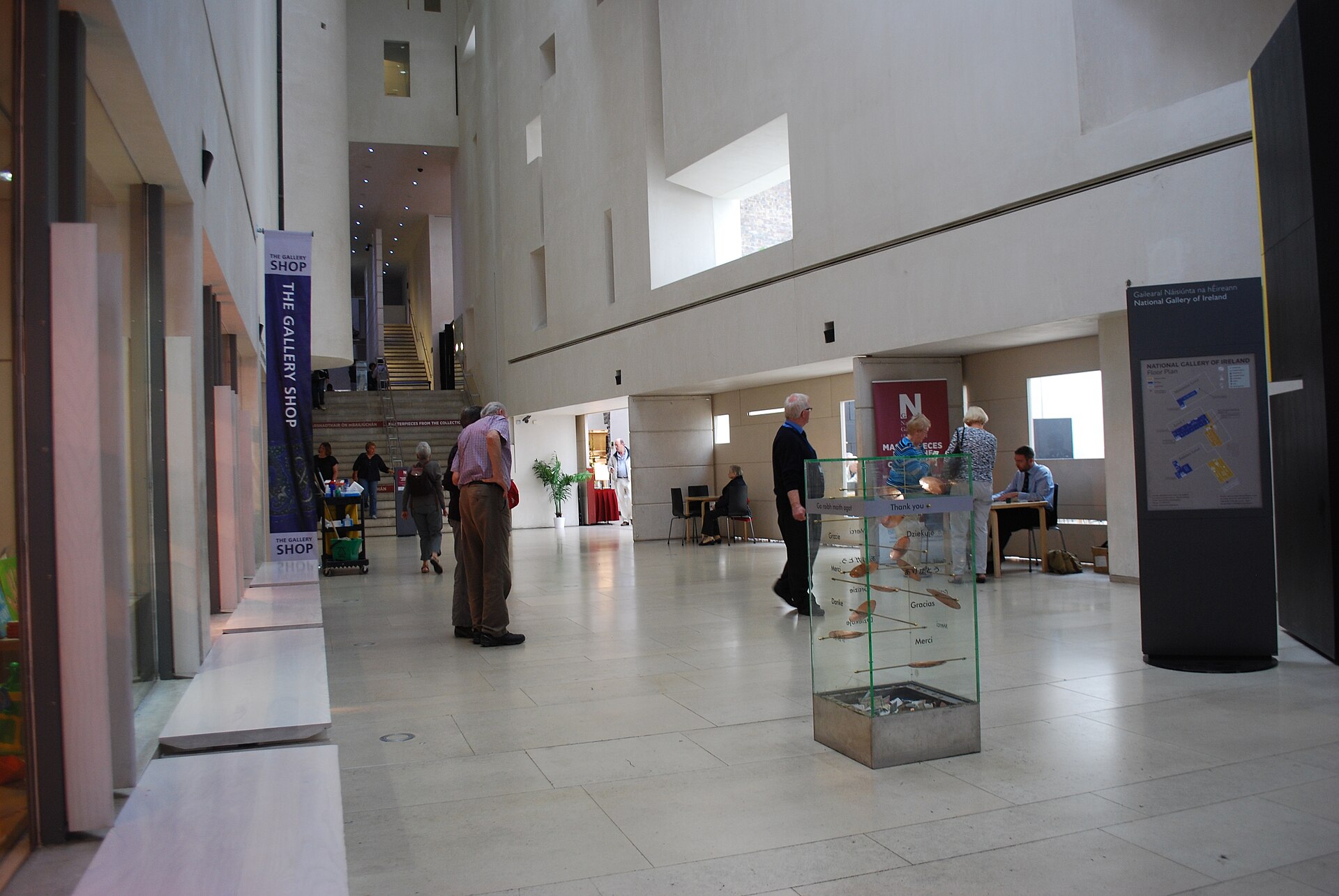
Free, central, level, air-conditioned, full of benches, and genuinely world-class — the Caravaggio alone justifies the visit. Merrion Square West, five minutes from Trinity. The layout is flat with lifts, the café is good, and you can spend an hour or three. If we had to name one Dublin attraction that suits an older visitor best, this is it.
The National Museum, Kildare Street
Also free, also level, and home to the bog bodies and the Ór goldwork — the museum’s prehistoric gold collection. It is a ten-minute walk from the Gallery. Two free museums plus lunch in between is a complete and satisfying day, and it costs the price of the meal. Our museums guide covers the other sites, and free things to do has the wider list.
The Guinness Storehouse
Seven floors, but they are connected by lifts and the route is entirely indoors and level within each floor. Ask whether a senior discount applies when you book, as prices vary by time slot. Free loan wheelchairs are available at the Information Desk if the distances are more than you want. The Gravity Bar at the top has one of the best 360-degree views in the city. Book an early slot to avoid the crush. See the Storehouse guide.
EPIC The Irish Emigration Museum
A digital museum in a converted warehouse on Custom House Quay: ramps and lifts throughout, no crowded artefact cases, and about ninety minutes at your own pace. Adult €22, senior €19, with a further discount for booking well in advance. For anyone with Irish ancestry — which is a great many visitors — it lands harder than they expect. Our EPIC guide has the full pricing.
Christ Church and St Patrick’s Cathedrals
Both are level at ground floor with seating throughout, both charge modest admission, and both are a short walk from the centre. Christ Church’s crypt involves stairs; the nave does not. See our guides to Christ Church and St Patrick’s.
What to think twice about
Three honest warnings. Kilmainham Gaol is a superb visit but it is a guided tour on a fixed route with standing, stairs and cold stone — check the accessible tour option when booking, and know that it sells out weeks ahead regardless. Trinity College’s front square is rough cobble; enter from Nassau Street if you can, and note that most of the Long Room’s books have been removed during the Old Library redevelopment, with no official date for their return. And Dublin Castle and the Chester Beatty are closed to visitors to the end of 2026, reopening expected January 2027 — do not build them in.
Two Days in Dublin for Seniors, at a Sensible Pace
A shape rather than a schedule, built on two anchors a day with a long lunch between them.
Day one, the city. Start late — Dublin does not really open until ten and there is nothing to be gained by beating it. The National Gallery in the morning, then lunch somewhere with proper chairs around Merrion Row or Dawson Street. In the afternoon, either the National Museum on Kildare Street or a slow hour in St Stephen’s Green, which is level, full of benches and one of the best small city parks in Europe. Dinner early — Dublin restaurants fill from seven and the six o’clock sitting is calmer and often cheaper.
Day two, the coast. The DART north to Howth or south to Dún Laoghaire. Both are half an hour from the centre. In Howth, the harbour front is flat and the seafood is the point; skip the cliff walk, which is genuinely steep. In Dún Laoghaire, the East and West Piers are among the best level walks in Ireland — wide, paved, sea on both sides, benches the whole way, and a Teddy’s ice cream at the end. Home by four, feet up, dinner in town.
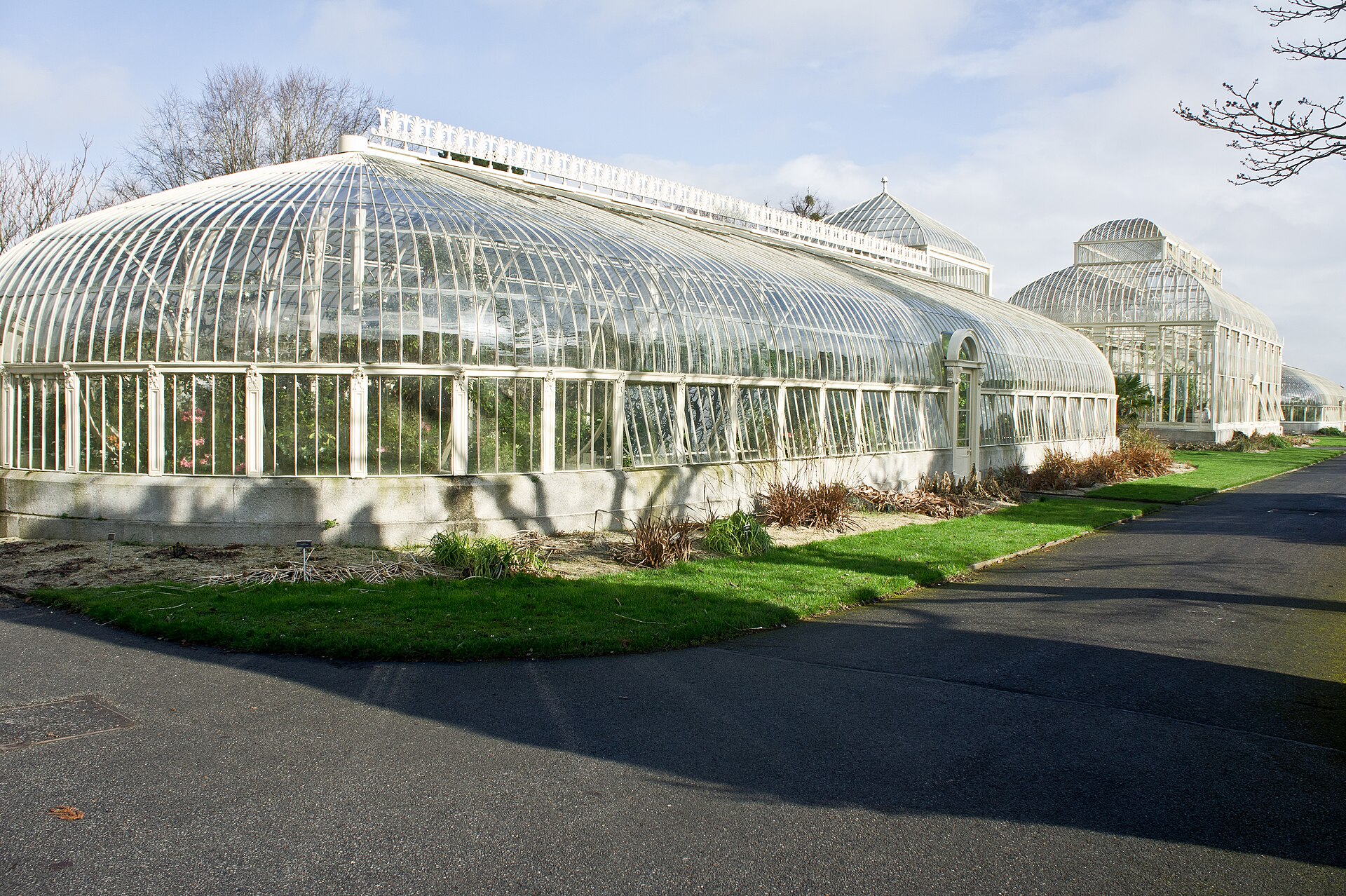
If you have a third day, add either a slow morning at the National Botanic Gardens at Glasnevin — free, flat, glasshouses for wet weather — or a river cruise on the Liffey, which is an hour of sitting down while somebody else explains the city. For fuller plans see three days in Dublin and the itinerary hub.

Where to Stay
When choosing a base in Dublin for seniors, location does more than any hotel feature, because every metre you do not have to walk at the end of the day is worth something.
- Around Dawson Street, Kildare Street and Merrion Square (Dublin 2) — the sweet spot. Level ground, the two best free museums on the doorstep, good restaurants, taxis everywhere. The most expensive part of the city and, for this trip, worth it.
- Near St Stephen’s Green — Luas Green Line at the door, a park to sit in, and Grafton Street a two-minute walk. See the area guide.
- The Docklands — modern buildings with lifts and wide corridors, the flattest pavements in Dublin, and quiet at night. Slightly further from the sights. See the Docklands guide.
- Avoid Temple Bar for this trip. It is loud until three in the morning, the cobbles are the worst in the city, and the hotels are not cheaper for it — our Temple Bar hotels guide is honest about the trade.
Ask three questions when you book: is there a lift, is the room on a floor served by it, and is there a bath or a walk-in shower. Older Dublin hotels in Georgian buildings frequently have half-landings, narrow stairs and lifts that do not reach every floor. Our city-centre hotels guide, where to stay and luxury hotels guide cover the options, and the savings guide matters because Dublin rates are high.
Eating Well, and Sitting Down
Dublin’s food has improved enormously in fifteen years, and the parts of it that suit an unhurried trip — which is to say the parts that matter most in Dublin for seniors — are the parts most guides skip.
Afternoon tea is the classic Dublin sit-down and it is done properly here. The Shelbourne’s Lord Mayor’s Lounge and the Merrion’s Art Tea both run at €79 for the classic service, the Westbury at €75. A sitting at the Merrion takes around two hours and at the Shelbourne about 90 minutes, in a comfortable chair. It is expensive and it is an event; book well ahead. See our afternoon tea guide for sittings and the cheaper alternatives, several of which are genuinely good.
Early dinner is the single best practical tip. Dublin restaurants get loud from about half past seven; the same room at six is calm, better served, and often has an early-bird menu. Our restaurant guide, traditional Irish restaurants and seafood guide cover the ground.
Pubs are for the afternoon, not the night. A traditional Dublin pub at three o’clock is quiet, warm, has a fire in winter and someone who will talk to you; the same pub at ten is standing room. Our traditional pubs guide and cosy pubs guide name the ones with snugs and open fires, which are exactly the right rooms for this. And if you want live traditional music, ask the pub when its session starts — see live music in Dublin for the earlier options.
Money: Where the Senior Rate Is Worth Having in Dublin
Senior discounts in Ireland generally begin at 65, occasionally at 60, and are applied on production of ID at the ticket desk. Bring a passport or driving licence, check whether online booking offers a senior ticket, and simply ask — the worst outcome is a polite no.
| Attraction | Adult | Senior |
|---|---|---|
| EPIC The Irish Emigration Museum | €22 | €19 (65+) |
| Croke Park stadium tour | €18 | €14.50 with ID |
| Jameson Distillery Bow St. | €26 | €23 |
| Dalkey Castle and Heritage Centre | €18 | €17 |
| Guinness Storehouse | From about €24, varying by slot | Ask whether a senior rate applies |
| National Museum, National Gallery, Botanic Gardens | Free | Free |
Two notes. The Seniors Card you may read about is a discount card aimed at Irish residents aged 60 and over, so it won’t help a visitor. And the Dublin Pass and similar city cards only pay off on a packed itinerary of paid attractions — on a slower trip built around free museums, they will not. Our trip cost guide has the honest arithmetic.
Weather, Pacing and Practicalities
Weather shapes a Dublin for seniors itinerary more than it shapes anyone else’s, because a wet afternoon with nowhere to sit is what turns a good day into a bad one. Dublin’s climate is milder than its reputation — the annual range runs from about 8 °C in January to 19 °C in July — but it rains on roughly 135 days a year, and the wind is what catches people out. Bring a hooded waterproof rather than an umbrella; the gusts along the quays destroy umbrellas and you will not see a local carrying one. Sensible shoes with grip matter on wet pavement. Our weather guide has the Met Éireann tables by month.
The best months are May, June and September: long daylight, mild temperatures, no ice, and — in September particularly — smaller crowds and lower hotel rates. December has Christmas markets and lights but short days and cold quays; January and February are cheapest but dark by half past four. See the best time to visit.
Pharmacies are plentiful and Irish pharmacists are helpful; bring prescriptions in their original packaging with a copy of the prescription. Travel insurance matters more with age and pre-existing conditions need declaring — see our insurance guide. And Dublin is a safe city by international standards, with the usual caveat about the north quays and O’Connell Street late at night, which is a general nuisance rather than a targeted one.
Gotchas
- The Free Travel Scheme is for Irish residents only. Visiting seniors pay full fare — get a Leap Card instead.
- Senior rates are applied at the desk, not online. Bring photo ID and ask; many booking engines have no senior option at all.
- Kilmainham Gaol is a walking tour on stone floors and sells out weeks ahead. Book early and ask about the accessible option.
- Trinity’s front square is rough cobble. Enter from Nassau Street, and know most of the Long Room’s books have been removed for the Old Library redevelopment.
- Dublin Castle and the Chester Beatty are shut to visitors until the end of 2026. Reopening is expected in January 2027.
- Howth’s cliff walk is genuinely steep. The harbour front is not. Do not let a guidebook talk you onto the loop.
- Restaurants get loud after 19:30. Book for six and enjoy the same food in a calmer room.
- Check when trad sessions start. Ask the pub before committing your evening.
- Georgian hotels have half-landings and small lifts. Confirm lift access to your specific floor when booking, not on arrival.
- Two anchors a day is the right pace. Every itinerary that promises six is written by someone who did not walk it.
Dublin for Seniors FAQ
Is Dublin easy for seniors to get around?
Yes. The city centre is flat and compact — most of the main sights sit within a twenty-minute walk of each other on level ground — and the transport network is well set up. Every Dublin Bus is low-floor with a driver-deployed ramp, every Luas tram boards level from the platform with no step or gap, and most DART stations are step-free. Taxis are plentiful and cheap by western European standards. Two surfaces to watch in a Dublin for seniors itinerary are the Temple Bar cobbles and Trinity’s front square.
Are there senior discounts on Dublin transport?
Not for visitors. Ireland’s Free Travel Scheme gives free public transport to everyone aged 66 and over who lives permanently in Ireland, but it does not extend to tourists, and there is no equivalent visitor card. What you should get instead is a Leap Card, which caps daily and weekly spending for all passengers regardless of age and works out considerably cheaper than paying cash fares on board.
Which Dublin attractions involve the least walking?
The National Gallery of Ireland and the National Museum on Kildare Street are the two best: both free, both level, both with lifts, plenty of seating and a café. EPIC on Custom House Quay has ramps and lifts throughout. The Guinness Storehouse has lifts to all seven floors and loan wheelchairs at the Information Desk. Christ Church and St Patrick’s Cathedrals are level at ground floor. A Liffey river cruise gives you an hour of the city entirely seated.
What age counts as a senior in Ireland?
It depends on who is asking. Attraction senior rates generally start at 65, though some venues use 60. Ireland’s Free Travel Scheme for residents begins at 66. The Seniors Card discount scheme, aimed at Irish residents, starts at 60. In practice, carry photo ID, ask at the ticket desk and check whether online booking offers a senior ticket.
What is the best time of year to visit Dublin for older travellers?
May, June and September. All three give long daylight, mild temperatures and no risk of ice underfoot. December has the Christmas lights and markets but very short days — dark by about four — and cold winds along the quays. January and February are the cheapest months and the darkest.
How many days do I need in Dublin at a relaxed pace?
Three to four. At a sensible pace of two anchor sights a day plus a proper lunch, three days covers the city centre and one coastal trip on the DART comfortably. A fourth day gives you either the Botanic Gardens and Glasnevin, or a slow half-day trip out to Malahide or Glendalough. Trying to compress the same list into two days is the most common mistake in planning Dublin for seniors, and it is the one that makes people say the city was tiring.
Are Dublin day trips suitable for seniors?
Some are, some are not. The DART trips to Howth, Malahide, Dún Laoghaire and Dalkey are gentle half-days and ideal. Glendalough and Powerscourt work well if you stay on the lower paths. The long coach days to the Cliffs of Moher or the Giant’s Causeway are very long days, much of it on a coach, which is a great deal to ask — if you want those, consider an overnight instead, or a train-based tour. Our comparison of the operators covers the differences.
Do Dublin hotels have lifts?
Not all do, and not every lift serves every floor. A significant number of the city’s most characterful hotels occupy Georgian townhouses with half-landings, narrow staircases and lifts that stop short of the top storey. Ask three specific questions when you book: is there a lift, does it serve the floor your room is on, and does the bathroom have a bath or a walk-in shower. Newer hotels and the Docklands properties are the safest bet on all three, and they are the ones we would point anyone planning Dublin for seniors towards first.
Keep Planning
Planning Dublin for seniors needs the practical guides more than a fast trip does — these cover the ground this page assumes.
- Is Dublin Worth Visiting? — the honest overall verdict.
- Wheelchair Accessible Dublin — step-free routes, ramps and lifts in detail.
- Dublin Hop-On Hop-Off Bus — as a mobility aid, not just a tour.
- Dublin Taxis — ranks, apps and what a cross-city fare costs.
- The Leap Card — the cheapest way to pay, at any age.
- Afternoon Tea in Dublin — two hours in a comfortable chair.
- Dublin Museums — most of the best ones are free.
- DART and Luas Guide — the coast in half an hour.
- Walking in Dublin — the level routes and the ones to skip.
- Best Time to Visit Dublin — month by month.
- Three Days in Dublin — a slower version of the classic itinerary.
Keep Reading
Photo Credits
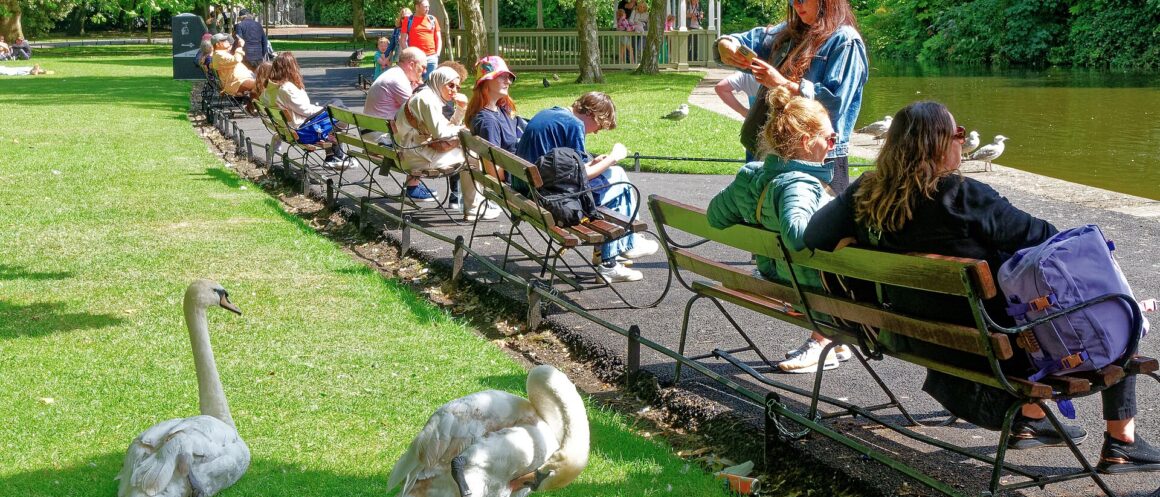
Lakeside benches in St Stephen’s Green: “Eine grüne Oase inmitten der Stadt Dublin”. 11 by Holger Uwe Schmitt, CC BY-SA 4.0, via Wikimedia Commons.
National Gallery of Ireland: 20130810 dublin030 by Jean Housen, CC BY-SA 3.0, via Wikimedia Commons.
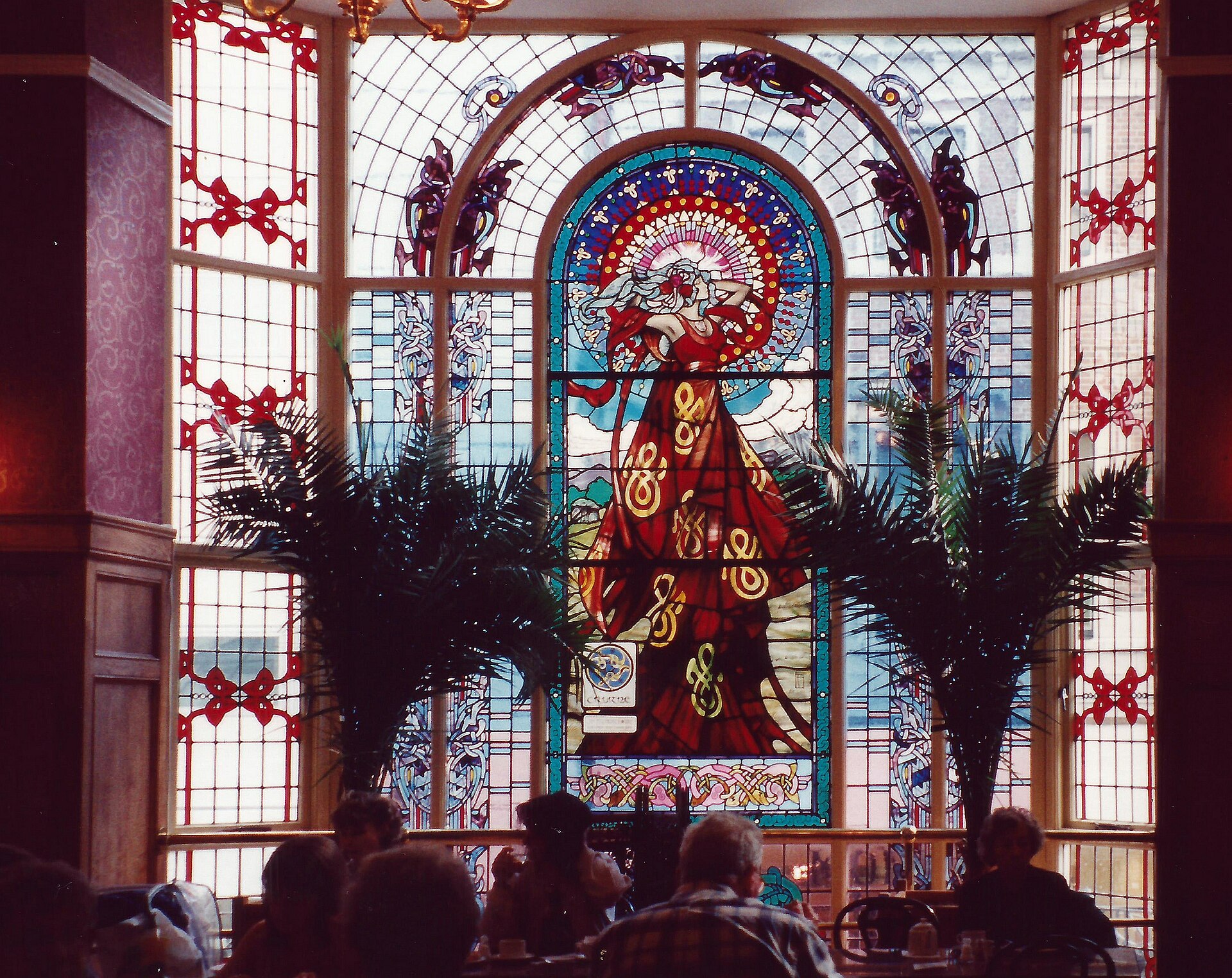
Stained glass at Bewley’s: Stained glass, Bewley’s Cafe, Dublin by User:Rodhullandemu, CC BY-SA 4.0, via Wikimedia Commons.
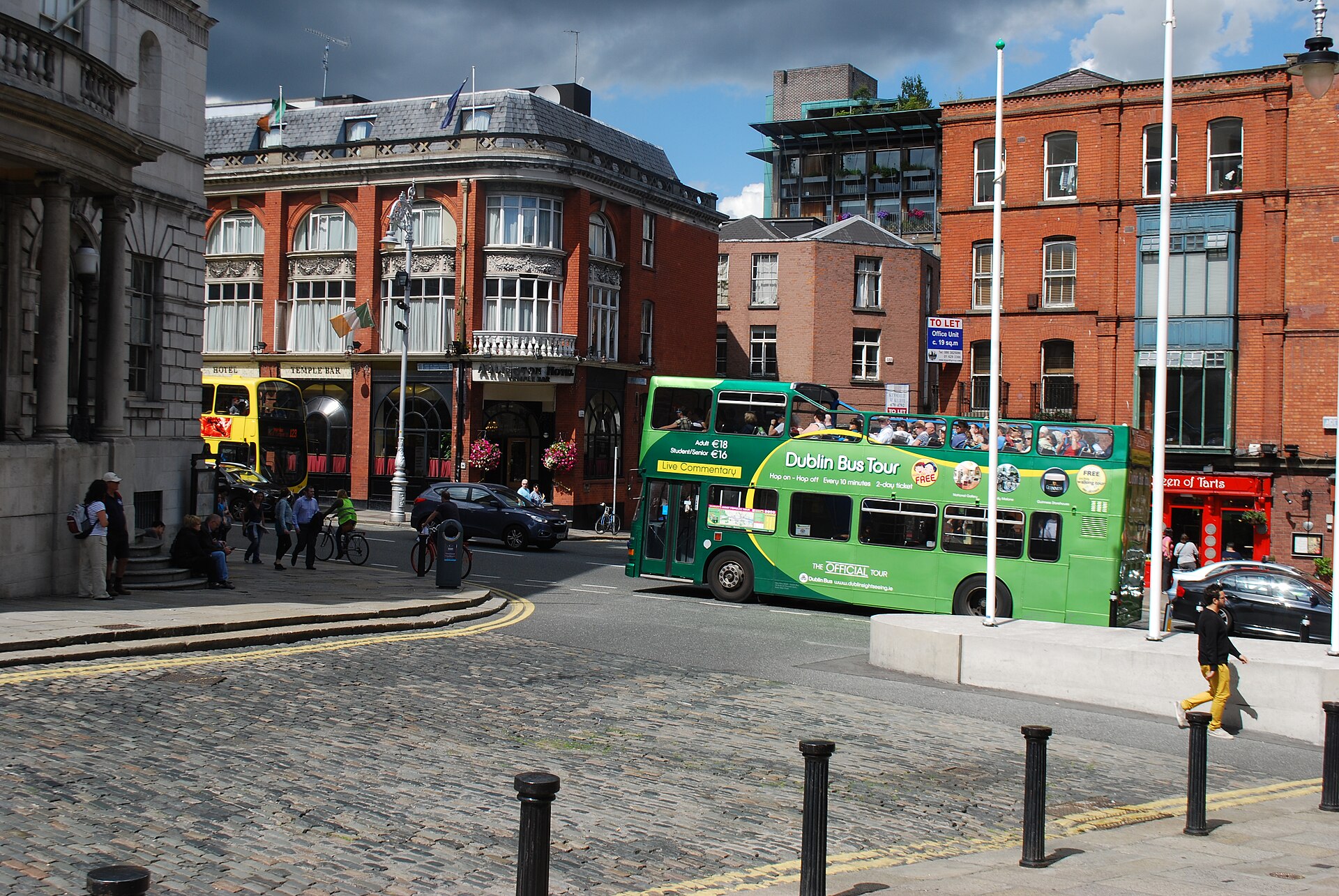
A Dublin sightseeing bus on Dame Street: 20130807 dublin035 by Jean Housen, CC BY-SA 3.0, via Wikimedia Commons.
The Grand Canal at Portobello: Portobello In Dublin – Grand Canal (7087800403) by William Murphy, CC BY-SA 2.0, via Wikimedia Commons.
The Curvilinear Range: A Visit To the Botanic Gardens In Glasnevin (5469896912) by William Murphy, CC BY-SA 2.0, via Wikimedia Commons.
Lean na Comharthaí — Keep following the signs