Is Dublin Worth Visiting? An Honest Guide for Every Kind of Traveller (2027)
An fiú cuairt a thabhairt ar Bhaile Átha Cliath? Freagra macánta do gach taistealaí

Ar an gComhartha Seo — On this sign
- Quick Answer: Is Dublin Worth Visiting?
- What Dublin Does Better Than Almost Anywhere
- Where Dublin Disappoints: The Honest Cons
- What Dublin Costs in 2026
- How Many Days Do You Need in Dublin?
- Dublin vs Belfast, Edinburgh, London, Galway and Cork
- Is Dublin Worth It for You? Traveller by Traveller
- Is Dublin Overrated?
- How to Make Sure Dublin Is Worth It
- Is Dublin Worth Visiting? FAQ
- Keep Planning: Dublin for Every Kind of Traveller

Type “Dublin” into any travel forum and you will find two camps. One says it is the friendliest capital in Europe, a city of pubs, poets and coastline where strangers talk to you and the museums are free. The other says it is cripplingly expensive, that Temple Bar is a theme park, that O’Connell Street is grim after dark and that “the real Ireland” starts once you leave. Both camps are describing the same city, and both are partly right.
We run a site about Dublin, so you might expect a cheerleading answer. You will not get one. This guide is our honest attempt to answer the question properly: what Dublin does brilliantly, where it disappoints, what it costs in 2026, how long you need, how it compares to Belfast, Edinburgh and London, and, most usefully, whether it is worth it for the kind of traveller you are. It is also the hub for our guides to Dublin for specific travellers: hen and stag groups, LGBTQ+ visitors, older travellers, wheelchair users, sports fans and weekenders from Britain. Those are linked throughout and at the end.
Quick Answer: Is Dublin Worth Visiting?
Yes, for most people, with two conditions. First, give it at least three nights; the two-night weekend that many British and European visitors book is the single biggest reason people leave underwhelmed. Second, budget for it honestly: Dublin’s average hotel rate was €174 in 2025 and a pint of Guinness in the centre is €7, so it is a London-priced city, not a Lisbon-priced one. If you can do both, Dublin delivers a compact, walkable, English-speaking capital with world-class free museums, the best pub culture on earth, a UNESCO literary heritage, sea and mountains 30 minutes from the centre, and a warmth from locals that nearly every visitor remarks on. If you want cheap, hot, or postcard-pretty, it is probably not your city.
| Dublin is worth it if you… | Think twice if you… |
|---|---|
| Love pubs, live music and talking to strangers | Don’t drink and dislike pub culture |
| Have 3–5 nights and want a base for day trips | Only have one night and want “Ireland” |
| Care about history, literature and museums | Want a beach-and-sun holiday |
| Want an English-speaking, safe, easy first trip to Europe | Are on a tight backpacker budget |
| Are flying from the US (preclearance, direct flights) | Expect a fairy-tale medieval old town |
| Are coming for rugby, GAA, Pride, St Patrick’s Day or TradFest | Hate crowds and are visiting 13–17 March |
What Dublin Does Better Than Almost Anywhere
The pubs, and what happens inside them
Dublin has around 750 pubs, and the point is not the number but what they are for. An Irish pub is a living room with a licence: people go to talk, and they will talk to you. The trad session in the back room of the Cobblestone in Smithfield or O’Donoghue’s on Merrion Row is not a show put on for tourists; it is musicians playing for each other with an audience attached. No other European capital has anything comparable, and it is the reason “the people” is the single most repeated compliment in every review, forum and survey about Dublin we have read. If you would enjoy a Tuesday night in a pub full of locals and a fiddle player, Dublin is worth visiting for that alone. Our guides to traditional pubs, live music and the best pint of Guinness in the city will get you started.

Free, world-class museums
This is Dublin’s most underrated selling point and the best answer to “it’s expensive”. The National Museum of Ireland’s archaeology branch on Kildare Street holds the Ardagh Chalice, the Tara Brooch and the bog bodies, and it is free. So is the National Gallery (Caravaggio, Vermeer, Jack B. Yeats), the Natural History Museum, the decorative arts museum at Collins Barracks, the Irish Museum of Modern Art, the Hugh Lane and the Chester Beatty at Dublin Castle (closed until January 2027), which won European Museum of the Year in 2002 and holds one of the world’s finest collections of Islamic and East Asian manuscripts. A visitor who never pays for a single attraction can still fill three days. Our Dublin museums and free things to do guides cover them all.

Literature you can walk through
Dublin has been a UNESCO City of Literature since 2010, and it earns it. Joyce, Wilde, Beckett, Swift, Shaw, Yeats, Stoker and Behan all lived and wrote here, and the city treats them as neighbours rather than monuments: you can drink in the pubs of Ulysses, sit in Wilde’s Merrion Square, visit the Museum of Literature Ireland in Newman House and see the original Book of Kells at Trinity. Bloomsday on 16 June is the only day in the world when a city dresses up as a novel. For anyone who reads, this is a reason to come. See our history and literary heritage pillar.

A capital you can walk across in 30 minutes
Trinity College to the Guinness Storehouse is 25 minutes on foot; the Book of Kells to Kilmainham Gaol is a 20-minute tram ride. Dublin is flat, compact and, unlike London or Paris, does not exhaust you with logistics. Almost every headline sight sits inside a rough square mile either side of the Liffey, and for the rest there is the Luas tram, which is fully accessible and simple to use. This is a big part of why Dublin works so well as a first European trip for Americans and as a short break for Britons: you spend your time in the city rather than getting across it. Our walking guide and transport guide explain the practicalities.

Sea, cliffs and mountains on a €2 fare
Few capitals can offer this. The DART coastal train runs from the city centre to Howth in 25 minutes, where a cliff walk with views to Wales on a clear day starts at the station, and south to Dalkey and Killiney, where you can swim off the rocks at the Forty Foot and walk a hill that regularly gets compared to the Bay of Naples. The Dublin Mountains are visible from O’Connell Street and reachable by bus. Glendalough and the Wicklow Mountains are an hour away. Dublin is the only European capital where a beach swim before breakfast and a Vermeer before lunch is a normal plan. Start with the Howth cliff walk and our day trips from Dublin pillar.

The easiest gateway to Ireland
Dublin Airport is the only Irish airport with direct flights from most of North America, and for Americans it has a unique advantage: US Preclearance in Terminal 2, which means you clear US immigration and customs before you fly home and land as a domestic passenger. From the city, Galway is 2.5 hours by train, Cork 2.5 hours, Belfast around 2 hours, and the Cliffs of Moher, Giant’s Causeway and Newgrange are all established day trips. Even if you are “really” coming for the west of Ireland, Dublin is where you will arrive, and it rewards a few days rather than a night. Our Dublin and Ireland itinerary shows how to combine them.
Safe, English-speaking and easy
Ireland sits in the top ten of the Global Peace Index and the US State Department keeps it at Level 1, its lowest advisory tier. Everyone speaks English, the currency is the euro, contactless payment works everywhere, and there is no cultural minefield to navigate. That makes Dublin an unusually low-stress destination for first-time international travellers, older visitors and families. Our is Dublin safe guide has the detail, including the caveats below.
Where Dublin Disappoints: The Honest Cons
The complaints that come up again and again are specific and mostly fair. Here they are, with our take on how much each one should matter to you.
It is expensive
This is the big one, and it is true. Dublin’s hotel average of €174 a night (peaking around €200 in August) puts it alongside London and above Edinburgh, Belfast, Lisbon and most of Spain. A city-centre pint of Guinness averages about €7 and reaches €11 or more in Temple Bar. A restaurant main course is typically €18–28. The Guinness Storehouse starts from €24 online, varying with the time slot, and the Book of Kells Experience is €21.50–25. Cost-of-living indices put Dublin roughly 28% dearer than Edinburgh and 35% dearer than Belfast. The mitigation is real, though: the great museums are free, the parks and coast are free, public transport is capped at €2 a ride with a Leap card, and if you avoid Temple Bar and book accommodation outside the summer peak the daily budget comes down fast. Our trip cost breakdown and Dublin on a budget pillar go through the numbers.

Temple Bar is a tourist trap
Also true, and the most-cited “overrated” experience in Ireland on TripAdvisor and Fodor’s forums. The cobbled streets are real and photogenic, but the pubs charge among the highest prices in the country for a pint, the food is mostly poor, the crowd at weekends is stag and hen parties, and the “traditional” music is amplified cover bands. The fix is simple: walk through it during the day, photograph the Temple Bar pub’s red frontage, and then drink somewhere else. Everything you were hoping Temple Bar would be exists five minutes away on the other side of Dame Street or across the river in Smithfield and Stoneybatter. Our honest Temple Bar guide and Temple Bar nightlife piece explain what to skip and what to keep.

It is not a “pretty” city
If you are picturing Prague or Bruges, adjust. Dublin’s beauty is Georgian and understated: the doors of Merrion Square, the sweep of Fitzwilliam Street, the quads of Trinity, the river at dusk. In between there is a lot of ordinary 20th-century fabric, some derelict upper floors and a city centre that can look tired on a wet Tuesday. Visitors who arrive expecting a compact medieval old town are the ones who go home saying it was “just a city”. Visitors who read a little about the Georgian city, walk the squares and get out to the coast tend to fall for it.
O’Connell Street and the north inner city after dark
This is the con that deserves the most careful handling. The Store Street Garda district, which covers O’Connell Street, Talbot Street and the area around Connolly Station and Busáras, records a crime rate many times the national average, and open drug use and antisocial behaviour on and around O’Connell Street are a visible, much-debated local issue. During the day it is a busy shopping street and perfectly fine to walk. After about 10pm, the stretch from the Spire north to Parnell Square and east along Talbot Street is where most visitors feel uncomfortable, and where phone-snatching and pickpocketing are concentrated. The practical answer is to stay and go out on the south side or in Smithfield and Stoneybatter, take a taxi rather than walk back to a northside hotel late, and keep your phone in a pocket rather than your hand. Violent crime against tourists remains rare; Ireland’s overall safety ranking is excellent. Our safety guide and forthcoming tourist scams guide go into this without either exaggerating or glossing over it.
The weather
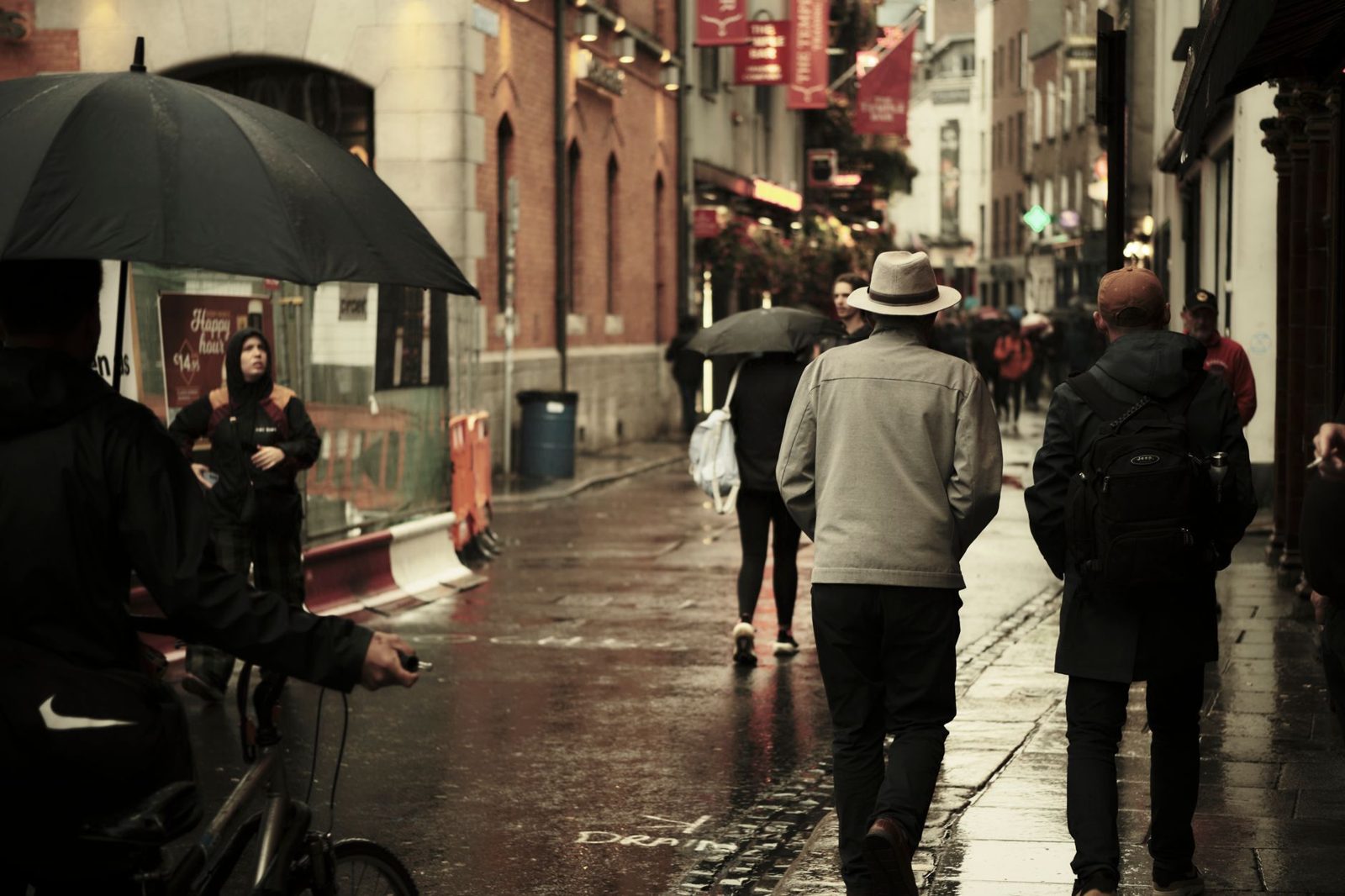
It rains on about 135 days a year, the summer high averages 19°C and December gets 90 minutes of sunshine a day. Nobody comes to Dublin for the weather, and anyone who does will be disappointed. What most first-timers get wrong is the direction of the error: they expect all-day rain and get short showers between bright spells, with wind as the real nuisance. A hooded waterproof solves 90% of it. Our season-by-season guide and weather guide set expectations properly.
Some big-ticket attractions underdeliver
The Guinness Storehouse is a very well-run, very crowded brand experience that ends with a pint and a view; some people love it, others feel they paid €30 for a museum of advertising. The Book of Kells itself is two pages under glass in a dim room, and the Long Room that makes the visit worthwhile is being progressively emptied for a €25 million restoration and closes fully at the end of 2027. Both are still worth doing for most people, but go in with accurate expectations, book the earliest slot, and balance them with the free and less-hyped alternatives: the Chester Beatty (closed until January 2027), Marsh’s Library, Kilmainham Gaol (the single most recommended paid attraction in the city, at about €8) and the National Museum. Our Guinness Storehouse guide and Book of Kells guide tell you how to get the most from each.

It is small
Dublin’s metro population is about 1.3 million, and the tourist core can be “seen” in two days. Some people find that a relief; others, especially those used to London or New York, find it limited. The way to think about it is as a small capital plus a coast plus a mountain range plus a country: the city gives you three days, and the surroundings give you as many more as you want.

What Dublin Costs in 2026
| Item | Typical 2026 price | Notes |
|---|---|---|
| Hotel, mid-range, city centre | €150–250 per night | Average €174; ~€200 in August; ~€110 in January midweek |
| Hostel dorm bed | €25–55 | Cheapest November and January |
| Pint of Guinness | €6–7.50 | €9–12 in Temple Bar |
| Coffee | €3.90–4.50 | Flat white ~€4.20 |
| Pub lunch / casual main | €14–20 | Restaurant main €18–28 |
| Leap Card bus, tram or DART fare | €2 (90-minute) | Leap Visitor Card €8 / €18 / €24 for 1 / 3 / 7 days |
| Airport bus to centre | €9–11 | Taxi €25–45 |
| Guinness Storehouse | From €24 online | Price varies by time slot; includes a pint |
| Book of Kells Experience | €21.50–25 | Long Room closes end of 2027 |
| Kilmainham Gaol | €8 | Book only on the official OPW site |
| EPIC Emigration Museum | ~€23 | Usually the best-rated paid museum |
| National Museum, National Gallery, Chester Beatty (closed until January 2027), IMMA | Free | Donation boxes only |
For comparison, a similar mid-range day costs around €200–300 in London, €180–260 in Paris or Amsterdam and a good deal less in Lisbon or Porto. Dublin is not an outlier among north-west European capitals; it is simply not the bargain many visitors expect Ireland to be.
How Many Days Do You Need in Dublin?
Three is the answer that satisfies almost everyone. Two full days cover the core (Trinity and the Book of Kells, Dublin Castle and the Chester Beatty from January 2027, Kilmainham Gaol, the National Museum, a proper pub crawl and either the Guinness Storehouse or a distillery). The third day is the one that turns “fine” into “loved it”: Howth or Dalkey on the DART, or Glendalough and Wicklow. Four or five days lets you add a second day trip and slow down; a week lets you use Dublin as a base for Belfast, Newgrange, Kilkenny and the west. One night is enough to see Temple Bar, drink an overpriced pint and leave with the wrong impression. Our itineraries pillar has plans for one day, two days, three days, four days and a week.

Dublin vs Belfast, Edinburgh, London, Galway and Cork
Many people asking whether Dublin is worth visiting are really asking whether it is worth visiting instead of somewhere else. The short comparison:
| City | Cost vs Dublin | Feel | Main draws | From Dublin | Currency |
|---|---|---|---|---|---|
| Belfast | ~35% cheaper; hotels ~25% less | A quarter the size; grittier, friendlier than its reputation | Titanic Belfast, Troubles history and murals, Giant’s Causeway | ~2 hrs by train | Pound sterling |
| Edinburgh | ~25–30% cheaper (except August) | Dramatic, hilly, medieval and Georgian | The Castle, Arthur’s Seat, Royal Mile, August festivals | 1 hr 10 by air | Pound sterling |
| London | Similar or slightly more | Eight times bigger; endless | Everything; scale and variety | 1 hr 15 by air, or ferry and train | Pound sterling |
| Galway | Cheaper | Small, bohemian, musical | Wild Atlantic Way, Connemara, Aran Islands | 2.5 hrs by train | Euro |
| Cork | Cheaper | Compact second city, food-led | English Market, Kinsale, Blarney | 2.5 hrs by train | Euro |
Edinburgh is prettier and cheaper; Dublin is warmer in character and easier to reach from North America. Belfast is cheaper and has the better single attraction in Titanic Belfast, but a fraction of Dublin’s depth; the two hours between them make a combined trip easy. London wins on scale and loses on intimacy. Galway and Cork are the answer for people who want “the real Ireland” and are best treated as additions to Dublin, not substitutes. We have full head-to-heads coming: Dublin vs Belfast and Dublin vs Edinburgh.
Is Dublin Worth It for You? Traveller by Traveller
The answer changes a lot depending on who is asking. This is the section we would most like you to read.
First-time visitors to Europe
Strong yes. English-speaking, safe, compact, direct flights from most US and Canadian hubs, and preclearance for the trip home. Dublin is the softest possible landing in Europe and a natural first stop before Britain or the continent. See first time in Dublin.
Couples and honeymooners
Yes, with the caveat that Dublin is more “cosy pub and coastal walk” than “candlelit canal”. The Georgian hotels around Merrion Square, Howth and Killiney on the DART, and a night at a trad session make a good three days; Wicklow adds the romance. See Dublin for couples.
Families
Yes. Dublin Zoo, Phoenix Park, the beaches, Dublinia, the free museums and a real welcome for children in pubs and restaurants make it easier than most capitals. The cost of family rooms is the pain point. See Dublin with kids.
Budget travellers and backpackers
Qualified yes. Hostel beds are €25–55, museums are free, and a Leap card caps transport at a few euro a day, so a careful traveller can do Dublin for under €90 a day. But it is the most expensive city in Ireland and dearer than Belfast, Porto or Kraków, so keep it to two or three nights and move on. See the backpacker guide.

Hen and stag groups
Emphatic yes: Dublin is one of the top three hen and stag destinations for British and Irish groups, with 750 pubs, guaranteed live music, late bars and a city centre built for walking between them. The trick is to avoid paying Temple Bar prices for the whole weekend and to book accommodation early on rugby and St Patrick’s weekends. Our hen and stag weekend guide covers areas, activities and budgets.
LGBTQ+ travellers
Yes. Ireland legalised same-sex marriage by popular vote in 2015, Dublin Pride (24–27 June 2027, parade on the 26th) is one of the biggest events in the city’s year, and The George on South Great George’s Street and PantiBar on Capel Street anchor a small but welcoming scene. See our LGBTQ+ Dublin guide.

Older travellers and seniors
Yes, and Dublin is easier than most: flat, compact, English-speaking, with hop-on hop-off buses, a fully accessible tram and plenty of seated, indoor attractions. Two myths to bust: Ireland’s free travel pass is for residents only, and senior discounts at attractions are patchy, though the OPW Heritage Card (€30 for over-60s) covers Kilmainham, Dublin Castle (closed until January 2027) and every state heritage site for a year. See Dublin for seniors.
Wheelchair users and travellers with reduced mobility
A qualified yes. The Luas is fully step-free, the major museums and the Guinness Storehouse are accessible, and most DART stations are step-free. The gaps are honest ones: only around 60% of Dublin Buses were wheelchair-accessible in 2026 (the target is 80% by 2028), several older DART stations are stairs-only, Georgian townhouse hotels often have steps, and the cobbles in Temple Bar and Trinity are hard going. See wheelchair accessible Dublin.
Sports fans
Yes, and possibly the best reason of all. The Six Nations brings Ireland v England to the Aviva on Friday 5 February 2027 and Ireland v France on Saturday 13 March 2027 in the tournament finale; Croke Park, at 82,300 the fourth-largest stadium in Europe, hosts the All-Ireland hurling and football finals in late summer; and the Croke Park stadium tour and GAA Museum are a good day even without a match. Book hotels the day fixtures are announced. See Dublin for sports fans.

Visitors from Britain
Yes, and it is the most natural short break there is: an hour’s flight or a pleasant ferry from Holyhead, no time difference, and a city that feels familiar and foreign at the same time. Two practical notes. Ireland uses the euro, not sterling. And although the Common Travel Area means British citizens do not legally need a passport, Ryanair and (from February 2026) Aer Lingus require one to board, so bring it. See Dublin from London and the UK.
Visitors from the United States
Strong yes. Direct flights from a dozen US cities, US Preclearance at Dublin Airport for the trip home, English everywhere and a culture that already half-belongs to you if you have Irish roots (EPIC, the emigration museum, is built for exactly this). Tip 10% rather than 20%, do not drive in the city, and give it more than the one night most Ireland itineraries allow. See things to know before visiting.
Non-drinkers
Honest answer: Dublin is still worth it, but you will feel the pub-centredness of the culture more than most. The good news is that the pub is a social institution rather than a drinking one: nobody minds a tea, the alcohol-free Guinness is genuinely good, and the museums, coast, theatre and food scene fill the days easily. Our forthcoming guide to alcohol-free Dublin will help; in the meantime the coffee guide and food pillar are the places to start.
People with one night
Probably not, unless it is a layover you cannot avoid. One night in Dublin usually means an airport hotel or Temple Bar, and neither is Dublin. If one night is all you have, spend it on the south side, eat well, find a session, and come back.
Is Dublin Overrated?
Parts of it are. Temple Bar is overrated. The Guinness Storehouse is overrated by the people who put it at the top of every list, and underrated by the people who refuse to go. The idea that Dublin is “not really Ireland” is overrated too: it is the capital, a third of the country lives in its orbit, and its pubs, music and literature are as Irish as anything in Kerry. What is underrated is the coast, the free museums, the Georgian squares in low autumn light, the northside neighbourhoods across the river, and the sheer ease of the place. Dublin’s problem is not that it is overrated; it is that the most visible version of it (Temple Bar, the Storehouse, a two-night weekend in a chain hotel) is the least good one, and it is the one most people see. Our guides to Dublin’s hidden gems and the neighbourhoods are the antidote.

How to Make Sure Dublin Is Worth It
- Stay three nights minimum, and spend one of the days on the coast or in Wicklow.
- Stay south of the river or in Smithfield/Stoneybatter, not on O’Connell Street or in Temple Bar. See best area to stay.
- Book the big three ahead: Kilmainham Gaol (sells out days ahead), the Book of Kells (earliest slot) and, if you are doing it, the Guinness Storehouse (cheapest early-morning slots).
- Do the free museums. The Chester Beatty (from January 2027) and the National Museum are better than most of the paid attractions.
- Drink outside Temple Bar. The Long Hall, Kehoe’s, Grogan’s, the Palace, Mulligan’s and the Cobblestone are ten minutes away and half the price.
- Get a Leap Card and use the DART: Howth and Dalkey are €2 away.
- Avoid 13–17 March unless St Patrick’s Day is the point, and check the rugby fixtures before booking a winter weekend.
- Come in late spring or September if you can choose; come in January if you want it cheap and quiet.
- Bring a waterproof, not an umbrella.
Is Dublin Worth Visiting? FAQ
Is Dublin worth visiting?
Yes for most travellers, provided you stay at least three nights and budget for a London-priced city. Dublin offers a walkable, English-speaking capital with outstanding free museums, the best pub and live-music culture in Europe, a UNESCO literary heritage and coast and mountains within 30 minutes. It is less suited to travellers wanting cheap prices, hot weather or a picture-book medieval old town.
Is Dublin overrated?
Temple Bar is, and some of the big paid attractions are hyped beyond what they deliver. The city as a whole is not: its problem is that the most visible tourist version of Dublin is its weakest. Visitors who stay a third day, get out to Howth or Wicklow, use the free museums and drink outside Temple Bar consistently rate it highly.
How many days do you need in Dublin?
Three nights is the sweet spot: two days for the city and one for the coast or Wicklow. Four or five days allow a second day trip such as Newgrange, Kilkenny or Belfast. Two nights covers the core sights but is the length most often associated with disappointment; one night is really only for layovers.
Is Dublin expensive to visit?
Yes. The average hotel rate was €174 in 2025, a pint is €6–7.50 in the centre and €9–12 in Temple Bar, and mains run €18–28. It is comparable to London and 25–35% dearer than Edinburgh or Belfast. Free museums, €2 capped transport, hostels from €25 and off-season hotel rates 40–50% below August bring a careful budget down to under €90 a day.
Is Dublin safe for tourists?
Broadly yes. Ireland ranks in the top ten of the Global Peace Index and the US State Department advisory is Level 1, the lowest. Petty theft, phone snatching and antisocial behaviour are concentrated around O’Connell Street, Talbot Street and the north inner city late at night; stay alert there after 10pm, keep your phone out of sight and take a taxi back to northside hotels. Violent crime against visitors is rare.
What is Dublin best known for?
Pubs and Guinness, traditional music, its writers (Joyce, Wilde, Beckett, Swift, Stoker), Trinity College and the Book of Kells, Georgian architecture, St Patrick’s Day, and the friendliness of its people. Increasingly it is also known for its coastline: Howth, Dalkey, Killiney and sea swimming at the Forty Foot.
Is Dublin or Edinburgh better to visit?
Edinburgh is prettier, cheaper outside August and more dramatic to look at; Dublin has the warmer welcome, the better pub and music culture and easier access from North America. Both suit three-night breaks. Choose Edinburgh for looks and history you can see; choose Dublin for atmosphere and people.
Is Dublin or Belfast better?
Dublin has far more to see and do, and the better pubs, museums and food; Belfast is about 35% cheaper, has Titanic Belfast and is the gateway to the Giant’s Causeway. They are two hours apart by train, so the best answer for a trip of five nights or more is to do both.
Is Temple Bar worth visiting?
For a daytime walk and a photograph, yes. For eating and drinking, no: it has the highest pint prices in Ireland, mostly poor food and weekend stag and hen crowds. The pubs visitors are hoping to find are five to ten minutes away around South Great George’s Street, Grafton Street’s side streets, and across the river in Smithfield.
What is the best time of year to visit Dublin?
Late April to early June and September to mid-October offer the best combination of weather, daylight, prices and crowds. Summer has the longest days and the fullest festival calendar but the highest prices; January and February are the cheapest and quietest; the festive period from mid-November to New Year is the most atmospheric.
Keep Planning: Dublin for Every Kind of Traveller
This guide is the hub for our traveller-by-traveller series. Each of the guides below takes one kind of visitor or one common comparison and answers it in full.
- Dublin Hen & Stag Weekend Guide — Areas, pubs, activities and realistic budgets for groups.
- LGBTQ+ Dublin — Gay bars, Dublin Pride 2027 and the complete travel guide.
- Dublin for Seniors — A slow-paced, low-walking guide for over-60s.
- Wheelchair Accessible Dublin — Step-free attractions, transport and hotels, with the gaps named honestly.
- Dublin vs Belfast — Which to visit, or how to do both.
- Dublin vs Edinburgh — The two Celtic capitals head to head.
- Dublin from London & the UK — Plane or ferry, passports, the Common Travel Area and costs.
- Dublin for Sports Fans — Six Nations weekends, GAA matches and the match-day guide.
For the wider picture, start with things to do in Dublin, first time in Dublin, our itinerary planner and essential travel tips.
Lean na Comharthaí — Keep following the signs