The Best Photo Spots in Dublin: Where to Go for the Shot, and When
Áiteanna grianghrafadóireachta i mBaile Átha Cliath
Ar an gComhartha Seo — On this sign
- Quick Answer: The Best Photo Spots in Dublin
- The Liffey and Its Bridges
- Trinity and the Georgian South Side
- Medieval Dublin
- Temple Bar and the City After Dark
- Views From Above
- The Coast: Lighthouses, Piers and Sea Views
- Light, Weather and the Best Seasons for Photography
- Photography Rules and Etiquette
- A One-Day Photo Walk
- Dublin at Christmas: Lights and Projections
- Gotchas for Photo Spots in Dublin
- Photo Spots in Dublin FAQ
- Keep Planning
- Photo Credits
- Keep Reading
Dublin is a better city to photograph than its postcards let on. The skyline is low, so the light reaches the streets, and the weather changes so often that a dull grey morning can turn into a sky full of torn cloud and sunbeams by lunchtime. The river runs straight through the middle, crossed by bridges from three different centuries. The Georgian squares are made for close-ups, all brick, iron railings and painted doors under fanlit arches, and within half an hour on the DART you can be standing on a cliff path, a granite pier or a hilltop looking over the whole bay.
This guide to the best photo spots in Dublin covers the classic shots and the ones locals take, grouped by area so you can string them together on foot or by train. It gives the best light for each, the rules that catch photographers out, from Trinity’s ban on photographing the Book of Kells to tripods and drones, sunrise and sunset times for every month, a one-day photo walk and the Christmas lights. It is written for anyone with a camera or a phone, whether you are chasing one great image of the Ha’penny Bridge or planning a whole day around the light.
Quick Answer: The Best Photo Spots in Dublin
If you have one day, shoot the Ha’penny Bridge and the quays at dusk, Trinity’s Long Room as early as your ticket allows, the Georgian doors on Merrion and Fitzwilliam Squares in soft morning light, and Temple Bar’s painted pub fronts before the crowds arrive. Then get out to the coast. Howth’s harbour and cliff path, Killiney Hill above Killiney Bay, and the long walk out to Poolbeg Lighthouse are where Dublin’s photo spots stop being city views and become landscapes.
Timing matters more than location in a city this far north. Worked out for central Dublin, the sun sets at about 16:05 in mid-December and about 21:55 in mid-June, so golden hour can fall at teatime or close to midnight depending on when you visit. Overcast days are not a write-off either. Flat, soft light is kind to brick facades and wet cobbles, and the reflections after a shower are half the appeal of Temple Bar.
| Spot | Best time | Getting there | Cost |
|---|---|---|---|
| Ha’penny Bridge and the quays | Dusk and blue hour | City centre, on foot | Free |
| Samuel Beckett Bridge and the Docklands | After dark | Walk east along the quays | Free |
| Trinity’s Long Room | First entry of the day | Trinity College, city centre | From €19 (Book of Kells and Long Room) |
| Merrion and Fitzwilliam Squares | Soft morning light | A short walk from St Stephen’s Green | Free |
| Temple Bar | Early morning, or at night for the lights | City centre, on foot | Free |
| Gravity Bar, Guinness Storehouse | Late afternoon | St James’s Gate, the Liberties | From €24 |
| Poolbeg Lighthouse and the Great South Wall | Sunrise or sunset | The end of the Poolbeg peninsula | Free |
| Howth harbour and cliff path | Late afternoon | DART to Howth | Free |
| Killiney Hill | Late afternoon and sunset | DART to Dalkey, then a walk uphill | Free |
| Bull Island and the Bull Wall | Sunrise | Clontarf, on the north side of the bay | Free |
| Sandycove and the Joyce Tower | Early morning | DART to Sandycove & Glasthule | Free |
| Grafton Street lights | December evenings | City centre, on foot | Free |
The Liffey and Its Bridges
The river ties together more photo spots in Dublin than anything else, and it is the spine of every photo walk. It runs east to the sea through the middle of the city, which means the quays catch the low sun in the morning and evening and the bridges line up neatly in a long lens. Start in the middle and work outwards.
The Ha’penny Bridge
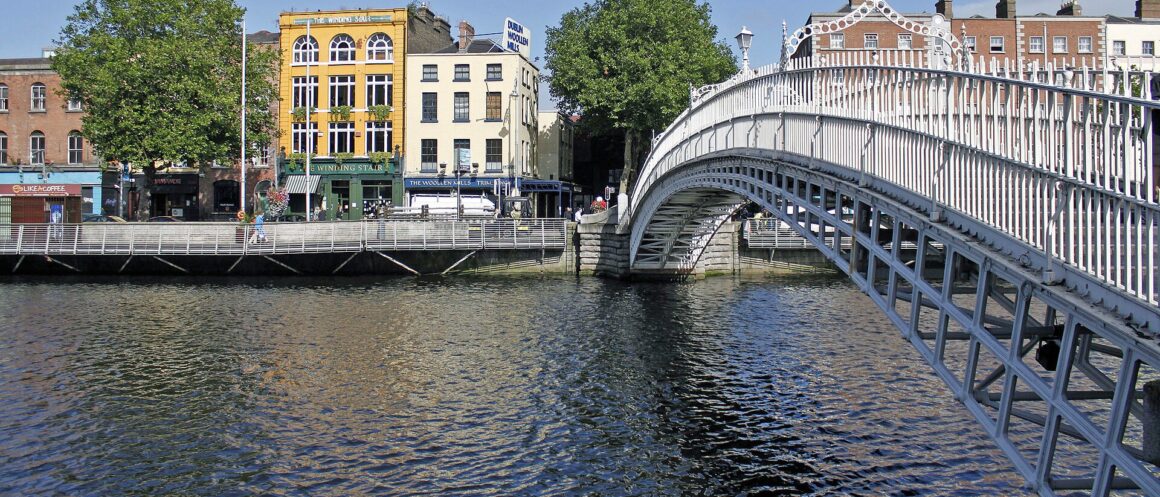
The Ha’penny Bridge is the shot. Opened in May 1816, the cast-iron footbridge, made in Shropshire, takes its nickname from the halfpenny toll that pedestrians paid to cross it until 1919. Its single, shallow arch spans 43 metres, and at night the lamps along it glow against the dark water. The best angles are from the boardwalk on Bachelors Walk, looking across to the coloured buildings of Wellington Quay, and from the south bank looking north, where the curve of the bridge frames the river. Come at blue hour, the half hour or so after sunset, when the sky still has colour and the lamps are on. On a still evening you get the reflection too.
The bridge is busy from mid-morning, so for a clean shot of the arch with nobody on it, go early. Our Temple Bar guide covers the streets at its southern end.
O’Connell Bridge and the Custom House
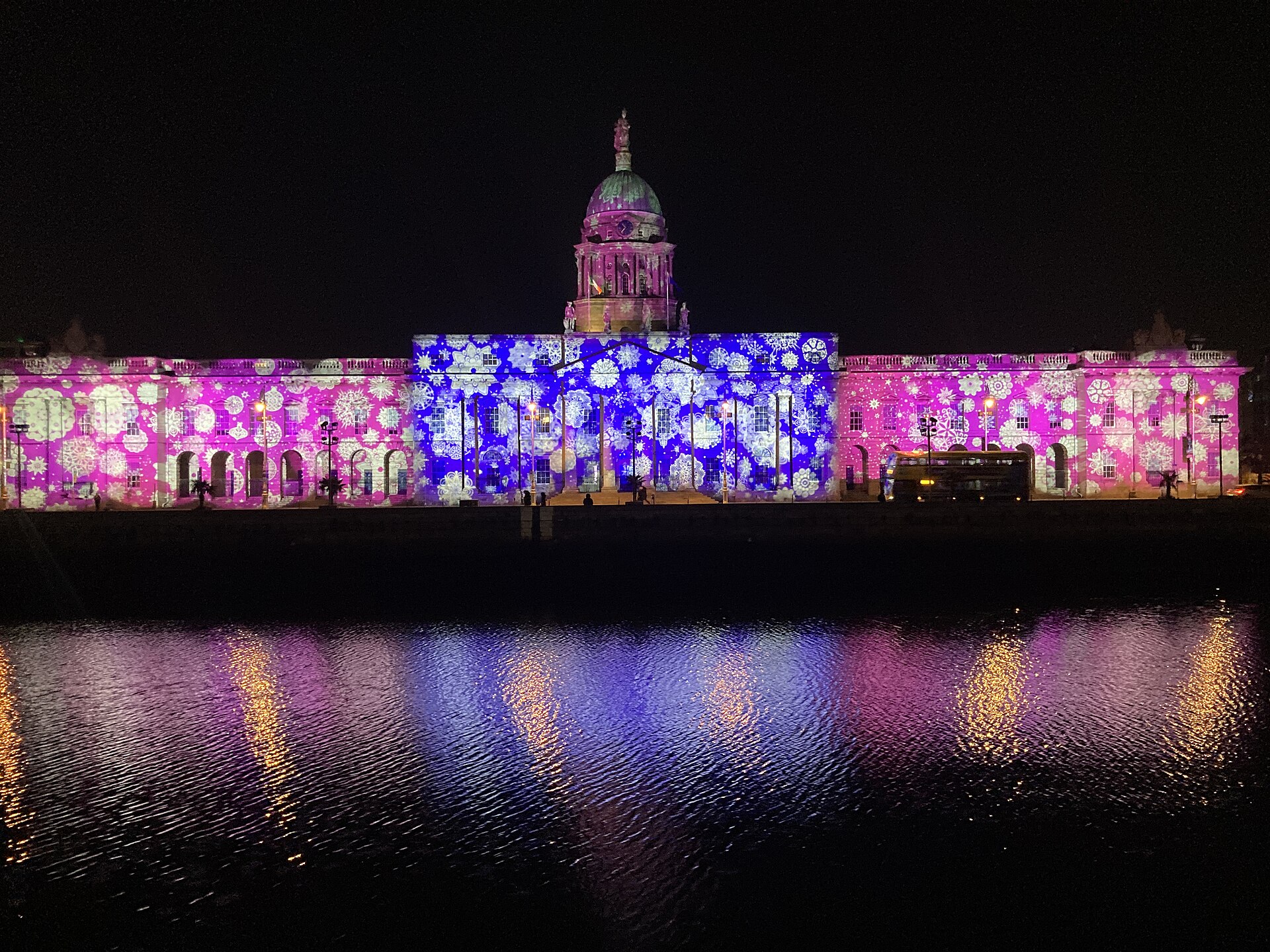
A few minutes downstream, O’Connell Bridge looks east along the river to the Custom House, whose long classical front and green dome sit right on the water. Shoot it from the south quays at dusk, when the building is lit, or after dark in the Christmas season, when it has been used as a canvas for projections. On Custom House Quay, just east of the building, the gaunt bronze figures of the Famine memorial by Rowan Gillespie, make a powerful and sombre subject, best in flat light that shows the detail of the faces.
Samuel Beckett Bridge and the Docklands
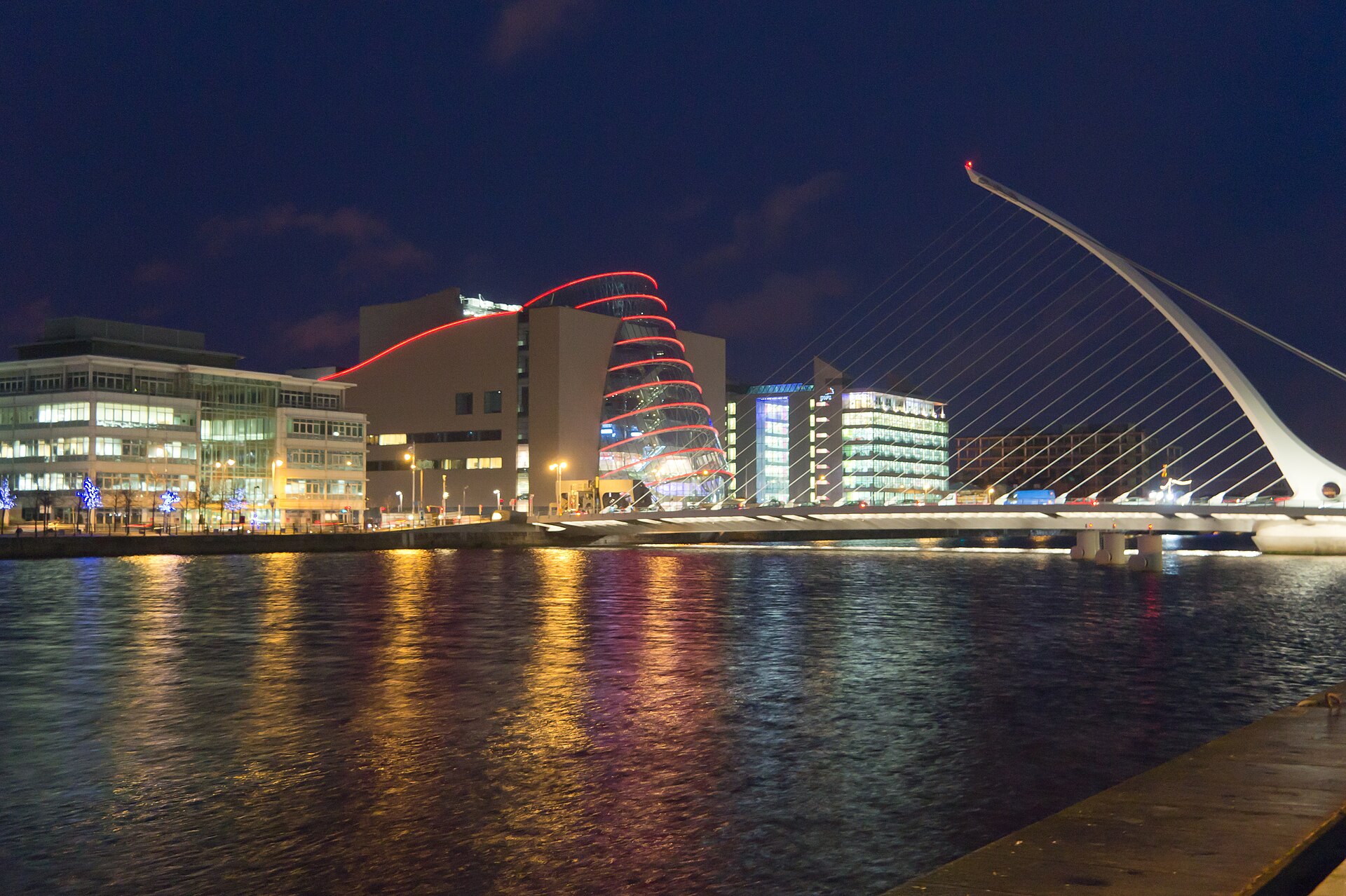
Further east, the Docklands are Dublin’s modern face. Santiago Calatrava’s Samuel Beckett Bridge, with a tall curved spar and a fan of cables that is said to evoke a harp lying on its side, is the obvious subject, and it pairs with the tilted glass drum of the Convention Centre on the north bank. Both are lit at night, and the reflections in the wide river make this one of the best night shots in the city. A little south, the water and glass offices of Grand Canal Dock reward a wander at blue hour. Our Docklands guide covers the area.
Trinity and the Georgian South Side
South of the river, the photo spots in Dublin get quieter and more refined: a library interior, the brick terraces and doors of the Georgian squares, and the parks between them.
The Long Room at Trinity College
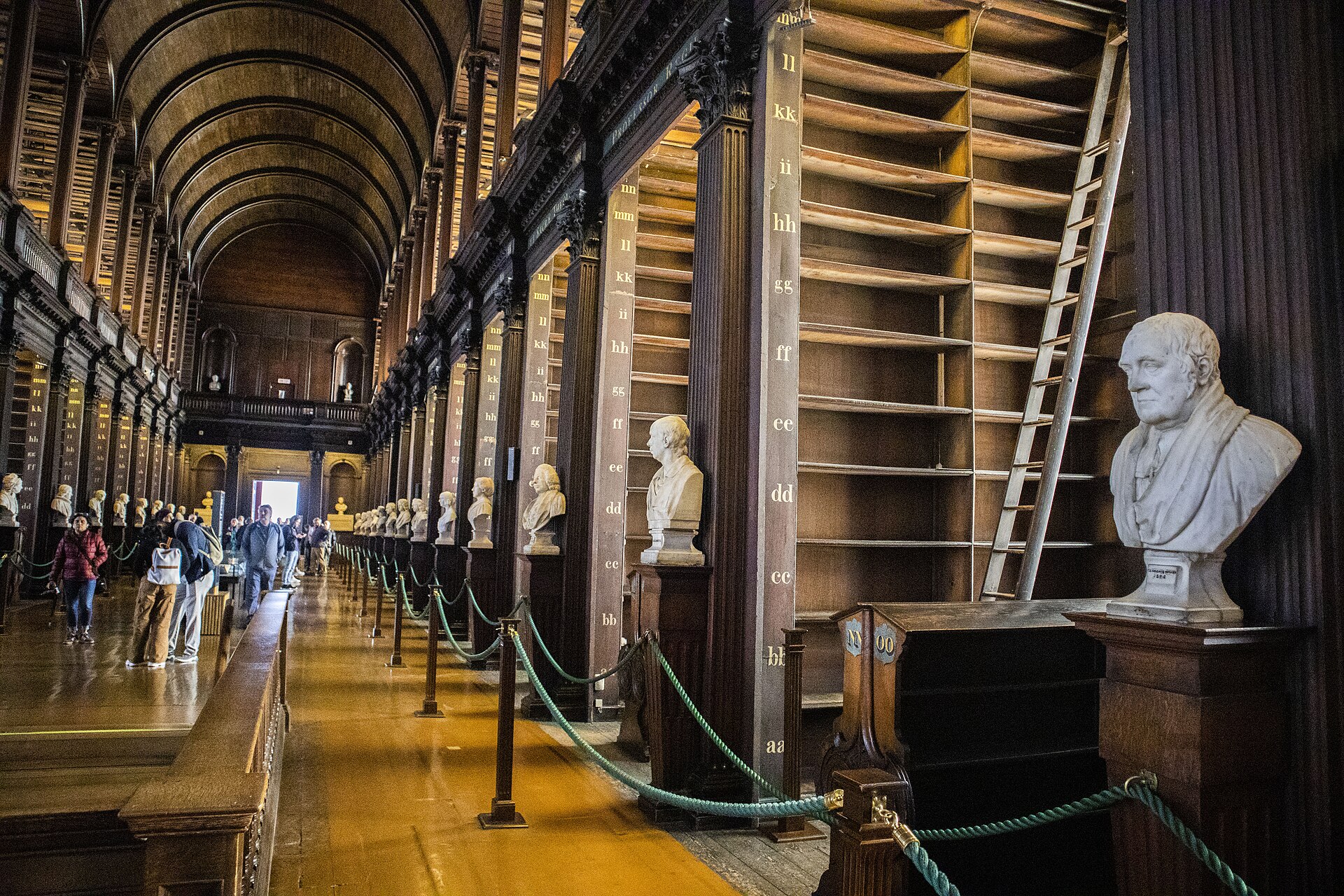
The Long Room of Trinity’s Old Library, with its barrel-vaulted wooden ceiling, marble busts and gallery after gallery of shelving, is one of the great interiors of Dublin. Know what you are walking into, though. The library is being redeveloped, and all of its books have been removed except those in the first four bays at the entrance, so the famous wall of leather spines is now mostly empty shelving. It is still a beautiful room, and the Old Library stays open to visitors until the end of 2027, before the main restoration works close it.
The rules are clear on Trinity’s visitor site: non-flash photography for personal use is allowed throughout the Book of Kells Experience, but there is no photography at all in the Treasury, where the Book of Kells itself is shown, and tripods are not permitted. Tickets for the full Book of Kells Experience start at €25, or €19 for the Book of Kells and the Long Room only. Book the earliest slot you can for the emptiest room. Our Trinity College and Book of Kells guide has the details.
Merrion Square, Fitzwilliam Square and the Georgian doors
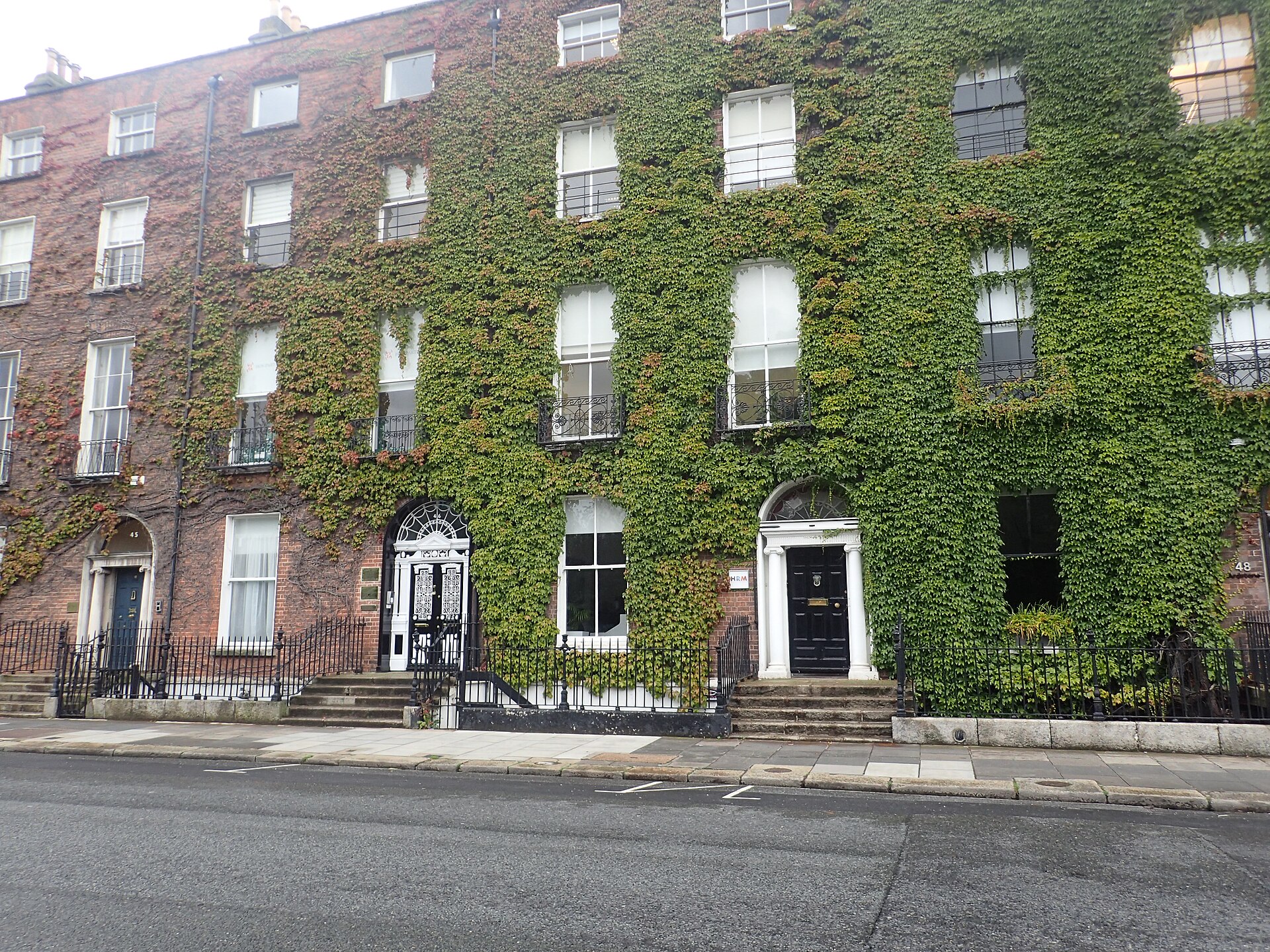
The doors of Dublin are a photo subject in their own right: panelled front doors in strong colours under semicircular fanlights, set into long terraces of red brick. Merrion Square and Fitzwilliam Square, a short walk east and south of St Stephen’s Green, have some of the finest runs, and the streets between them, such as Lower Fitzwilliam Street, are almost as good. Morning is best, when the light is soft and the streets are quiet. A 50 mm or short telephoto lens lets you isolate a single door and its fanlight; a wider lens shows the rhythm of a whole terrace. Merrion Square also has the Oscar Wilde statue at its north-west corner. Our Georgian architecture guide explains what you are looking at.
St Stephen’s Green, Iveagh Gardens and Molly Malone
St Stephen’s Green is the city’s front garden, with a lake, bridges and flowerbeds, and the quieter Iveagh Gardens a few minutes to the south have a waterfall and rustic grotto that feel a long way from the traffic. In spring the blossom in the Green is worth a detour; our Grafton Street and St Stephen’s Green guide maps the area. At the other end of Grafton Street, the bronze statue of Molly Malone was moved to Suffolk Street, outside the tourist office, in 2014. Expect a queue of people waiting for a selfie, and check it isn’t screened off for restoration before you make a special trip.
Medieval Dublin
The oldest part of the city sits on the ridge west of Dublin Castle, and its stone, spires and lanes are a change of mood from the Georgian south side. Christ Church Cathedral and the covered bridge that links it to Dublinia, the Viking and medieval exhibition in the old Synod Hall, make one of the most recognisable compositions in the city, best from the corner of Winetavern Street and High Street. Dublinia’s St Michael’s Tower, a 96-step climb, looks out over the rooftops. Down the hill, St Patrick’s Cathedral and its park are lovely in the late afternoon, and the stretch of medieval city wall at St Audoen’s, with its arched gate, makes a moody subject on a grey day.
Photography rules inside the cathedrals are set by each church, so check our Christ Church guide, our St Patrick’s guide or ask at the desk, and never use flash during a service. Dublin Castle’s courtyards, another favourite, are closed to the public until Monday 4 January 2027; our Dublin Castle guide has the details.
Temple Bar and the City After Dark
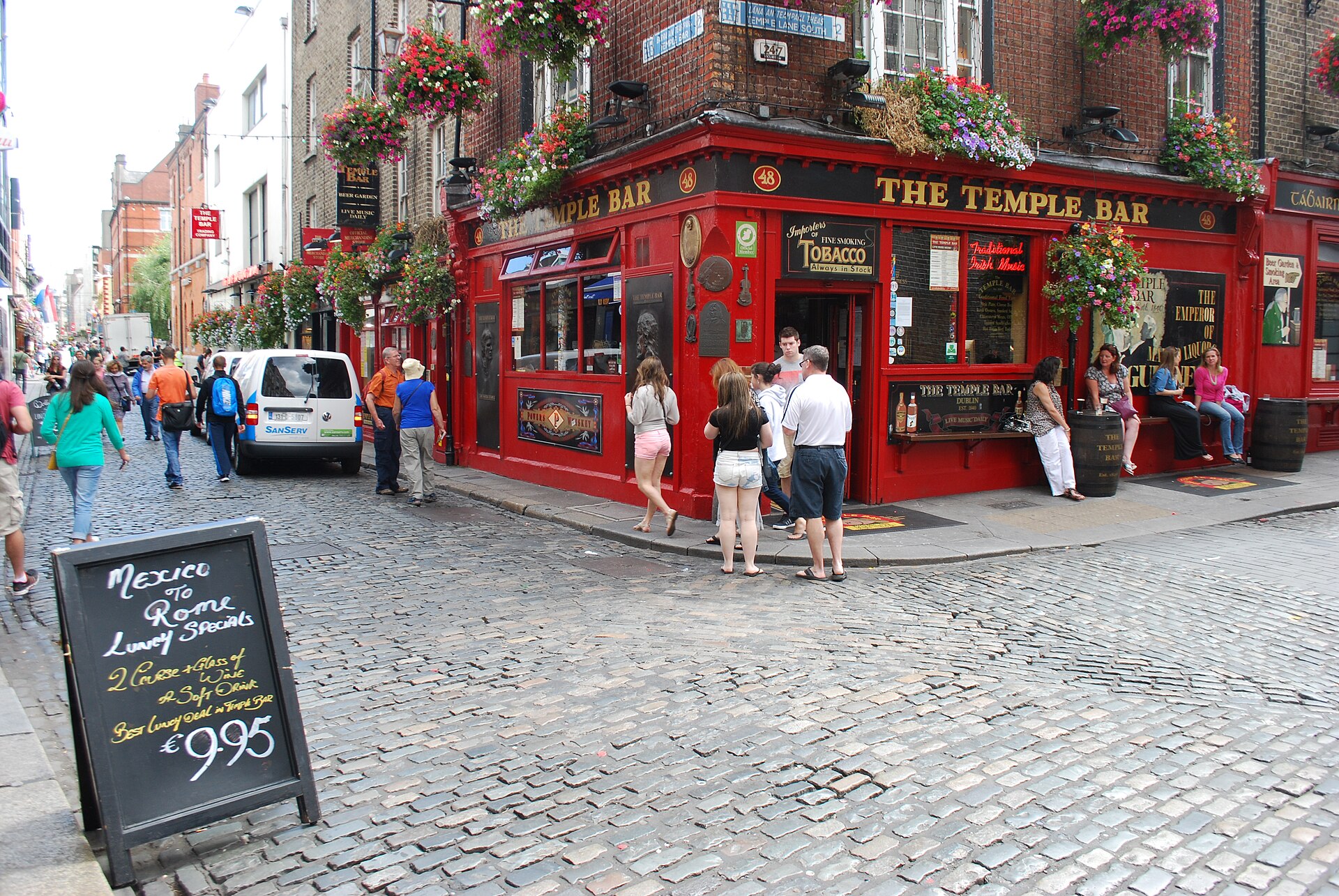
Of all the photo spots in Dublin, Temple Bar changes a great deal through the day. It is really two different places. By day, and particularly at night, its cobbled streets are packed with people, music and colour, which makes for lively street photography. Early in the morning, it is empty, the cobbles are often wet and the painted pub fronts stand out without a crowd in front of them. The red corner frontage of the Temple Bar pub, hung with flower baskets, is the shot everyone wants; the Quays Bar and the narrow lanes around Crown Alley and Merchant’s Arch are worth exploring too. Respect the people you photograph: ask before taking close-up portraits, and tip the buskers you film.
North of the river, O’Connell Street has the Spire, a 120-metre stainless-steel needle on the site of the old Nelson’s Pillar. Shoot it from the base, looking straight up, or from O’Connell Bridge, where it lines up with the street’s statues and the columned General Post Office. After dark, the street’s lights and the traffic trails make good long exposures from a solid wall or railing, since tripods on busy footpaths get in everyone’s way. Our Temple Bar nightlife guide covers what to do once you put the camera away.
Views From Above
This is a flat, low city, so the high photo spots in Dublin are scarce and worth seeking out.
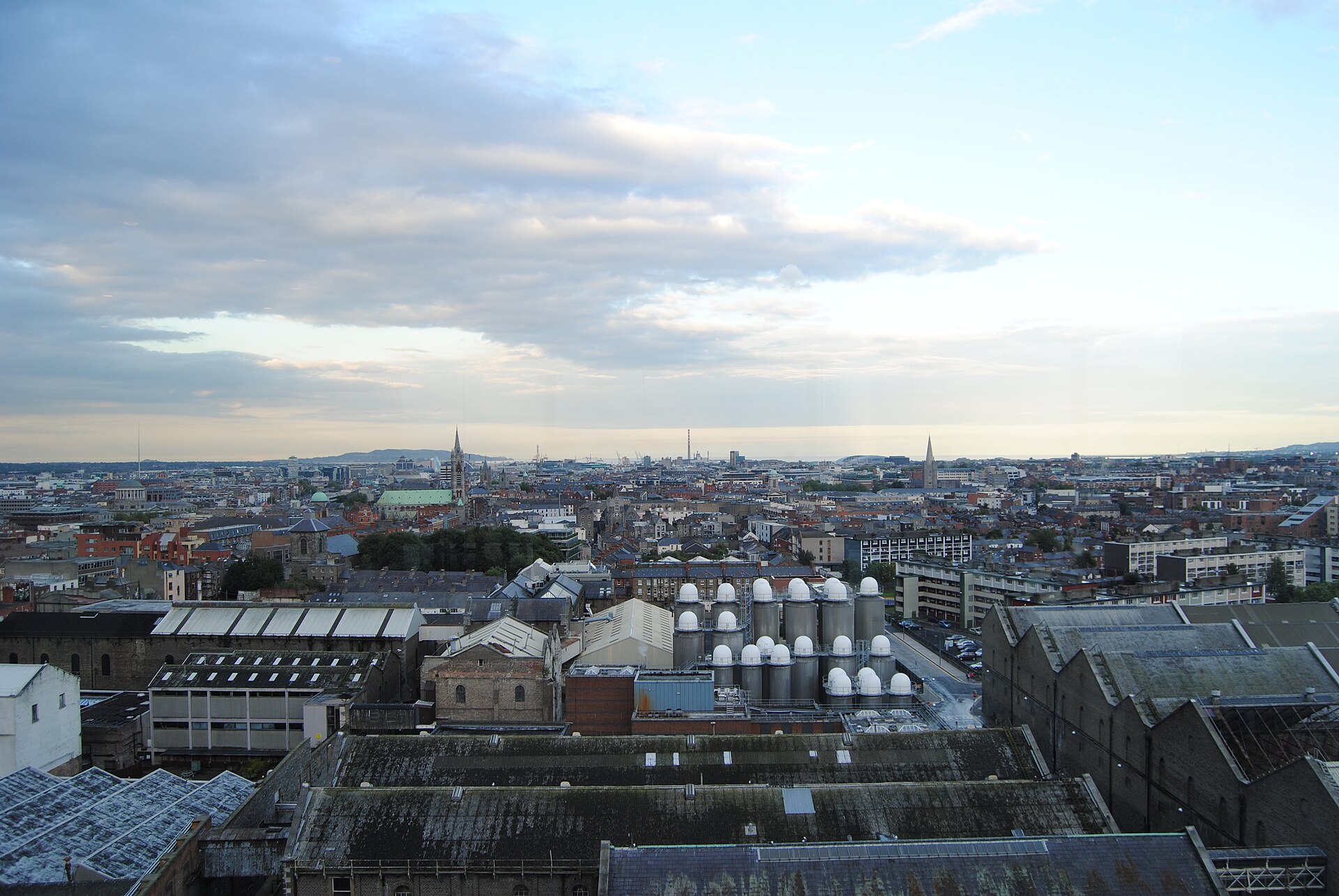
- The Gravity Bar at the Guinness Storehouse. The self-guided Guinness Storehouse experience climbs seven floors and ends with a pint, or a Guinness 0.0, in the Gravity Bar at the top, where the views run across the rooftops of the Liberties to the mountains. Entry is from €24 by time slot on the Storehouse’s booking page. Late afternoon gives you warm light from the west. Our Guinness Storehouse guide explains the ticket options.
- St Michael’s Tower at Dublinia. A 96-step climb with a view over Christ Church and the old city.
- The O’Connell Tower at Glasnevin. The round tower over Daniel O’Connell’s grave can be climbed (check the Glasnevin Trust site for the current ticket price), and the view takes in the cemetery and the north side of the city.
- Killiney Hill and Howth Head. Two of the best free viewpoints in the county, covered below with the coast.
Rooftop bars are another option for an evening view with a drink; our rooftop bars guide lists them.
The Coast: Lighthouses, Piers and Sea Views
This is where the photo spots in Dublin really open up. The bay curves for miles from Howth in the north to Killiney in the south, and almost all of it is reachable by DART. Our DART guide covers the line.
Poolbeg Lighthouse and the Great South Wall
The Great South Wall is one of the great walks in Dublin and a favourite photo spot. Built between 1720 and 1795, it runs nearly five kilometres out into the bay from the tip of the Poolbeg peninsula, ending at the red Poolbeg Lighthouse, first established in 1767 and rebuilt in 1820. Walk out at sunrise for the light behind the lighthouse, or at sunset to look back at the city with the mountains behind it. A section near the lighthouse was closed for storm repairs early in 2026; Dublin Port announced in March 2026 that it had fully reopened. The wall is exposed, with no railings, so stay off it in high winds and follow Dublin Port’s safety guidance.
Bull Island and the Bull Wall
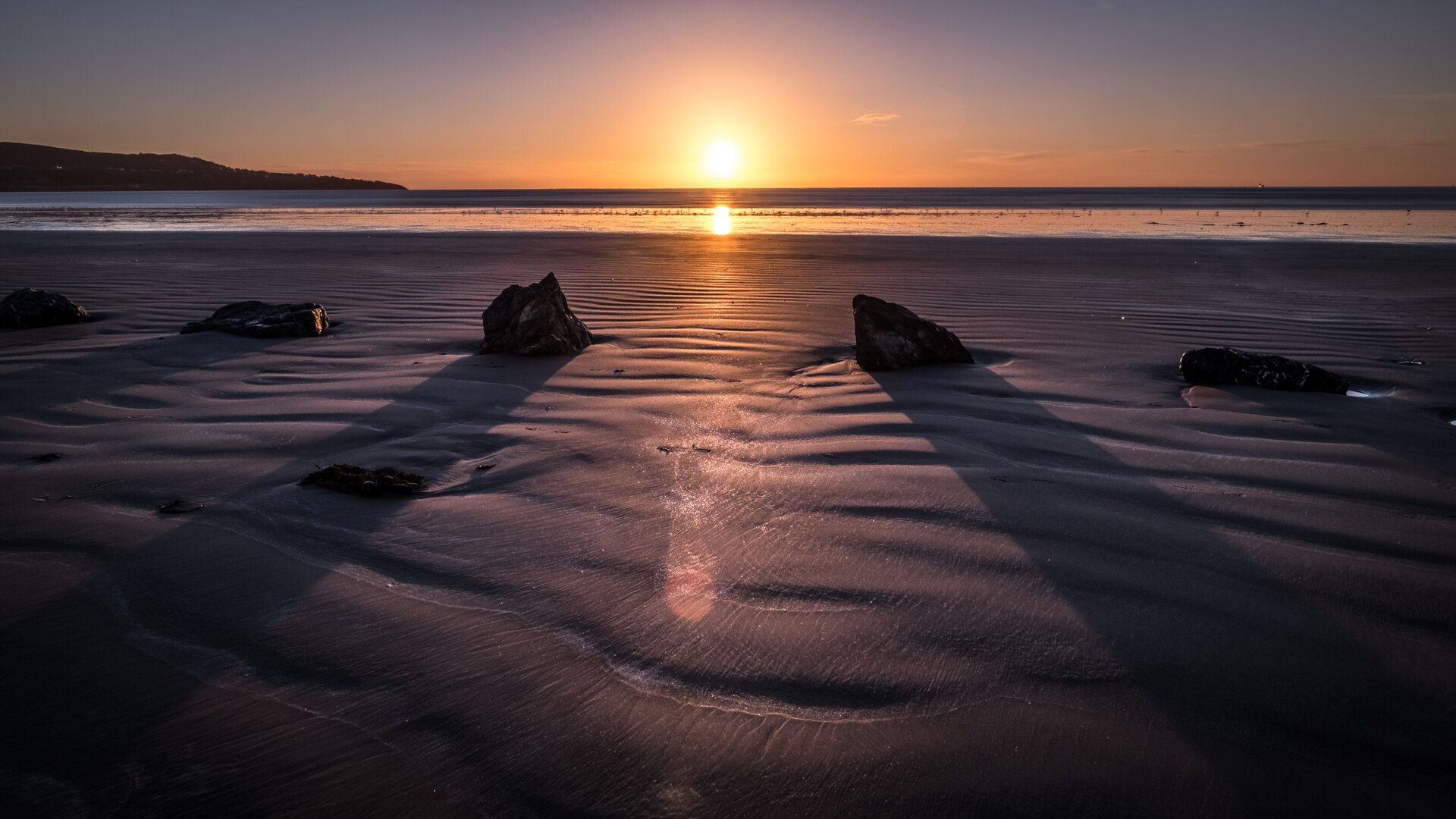
On the north side of the bay, the North Bull Wall runs out from Clontarf to the Star of the Sea statue, Réalt na Mara, at the end of the wall. Funded by Dublin Port workers and sailors, it was dedicated by the Archbishop of Dublin in 1972. Bull Island’s long beach faces east, which makes it a classic sunrise spot close to the city, with wet sand and low rocks to give foreground. Our best beaches guide covers Dollymount Strand.
Howth
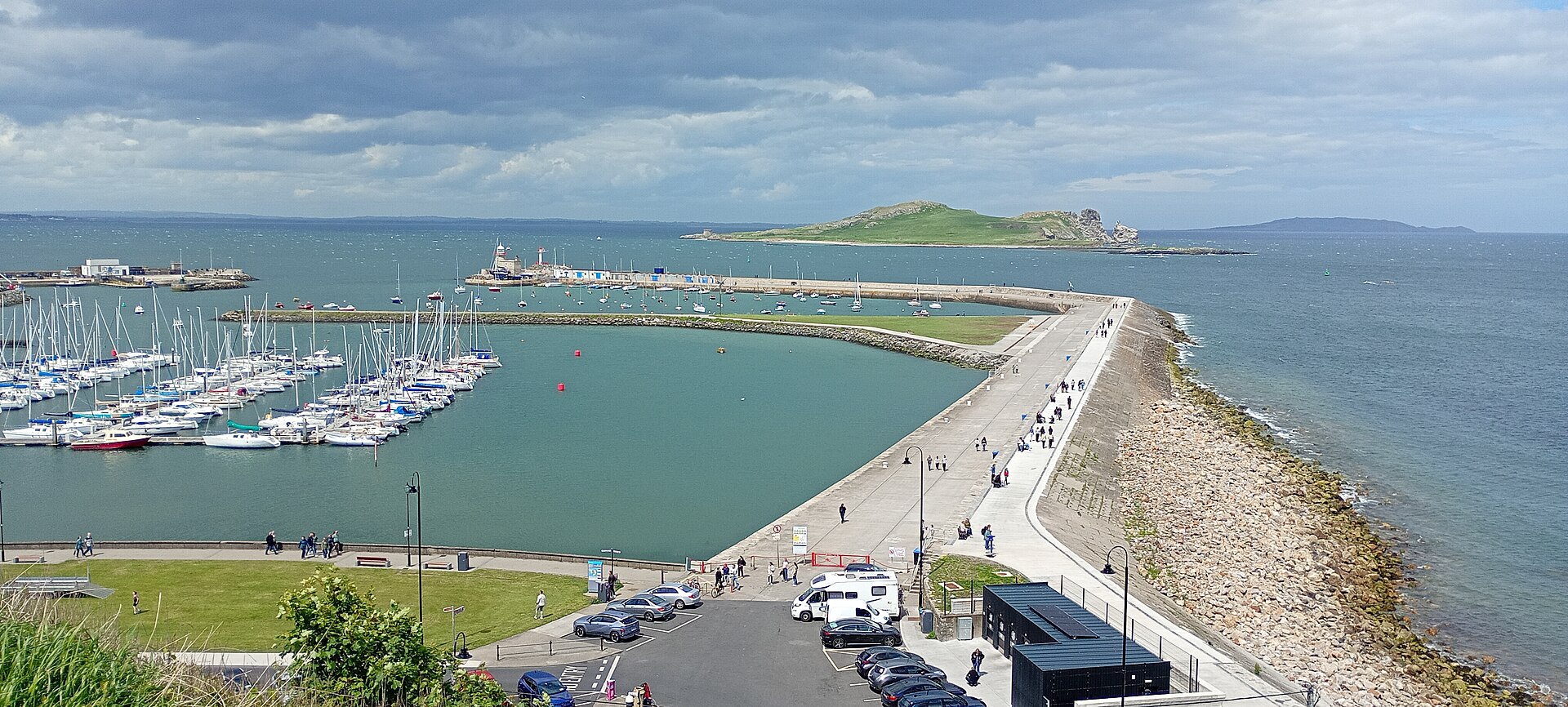
Howth gives you everything in one trip: a working fishing harbour and marina, the island of Ireland’s Eye just offshore, often a seal or two around the pier, and a cliff path that loops around the headland past the Baily Lighthouse. Climb above the village for the classic view down over the harbour with Ireland’s Eye behind it, then follow the cliff path south for the lighthouse. Late afternoon light falls nicely on the harbour, and the cliff path is spectacular when the gorse is in flower. Our Howth cliff walk guide and Howth village guide have the routes.
Sandycove, the Forty Foot and the Joyce Tower
At Sandycove, the Forty Foot bathing place draws swimmers into the sea all year, and early morning brings soft light and a steady stream of hardy regulars, so ask before photographing anyone up close. Above it stands the round Martello tower that opens the first chapter of Ulysses, now the James Joyce Tower and Museum. Entry is free, it opens Tuesday to Sunday from 10:00 to 16:00 and is closed on Mondays, and it is not wheelchair accessible. Take the DART to Sandycove & Glasthule. Our James Joyce guide has more on the tower.
Dalkey, Vico Road and Killiney Hill
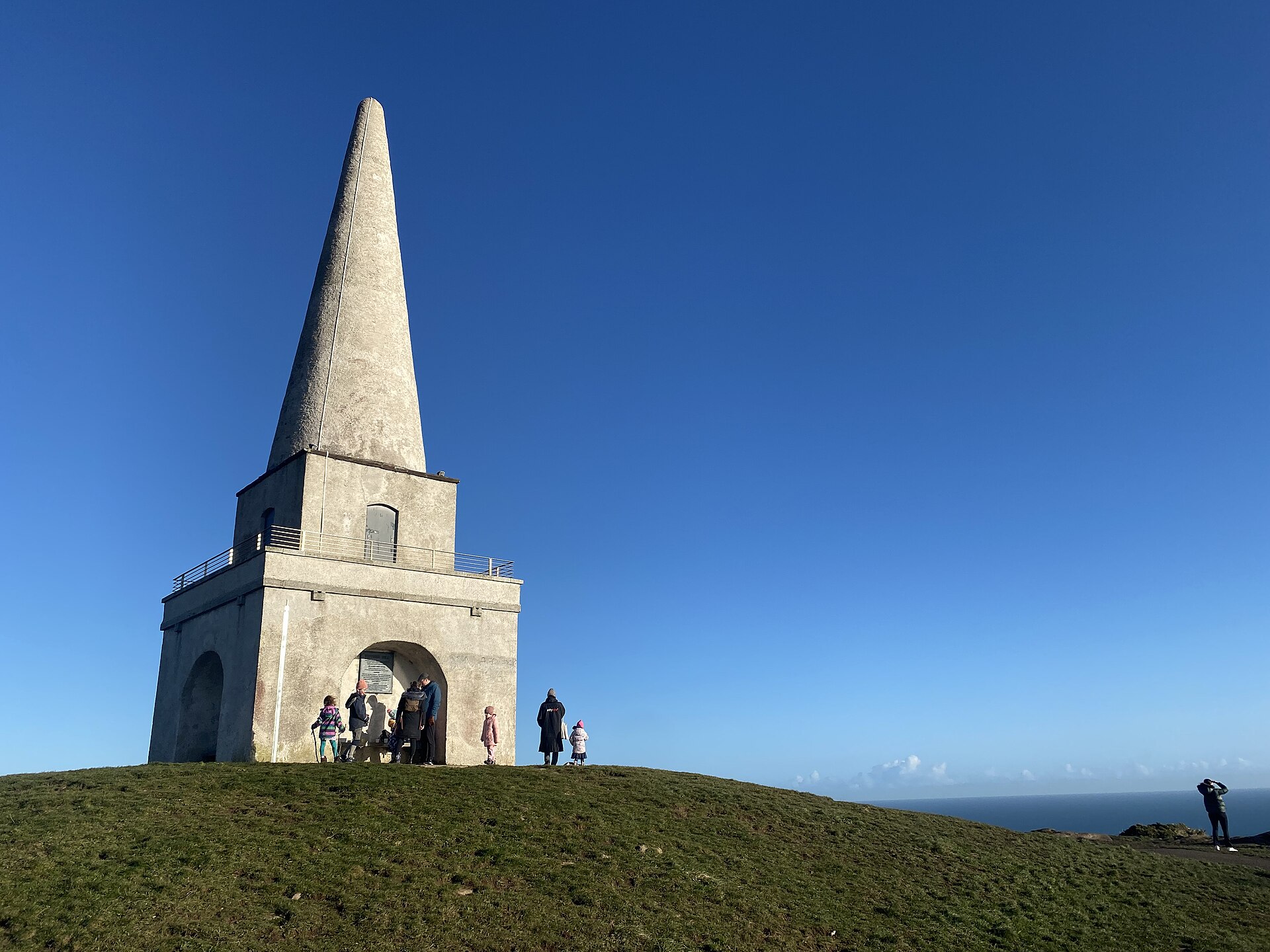
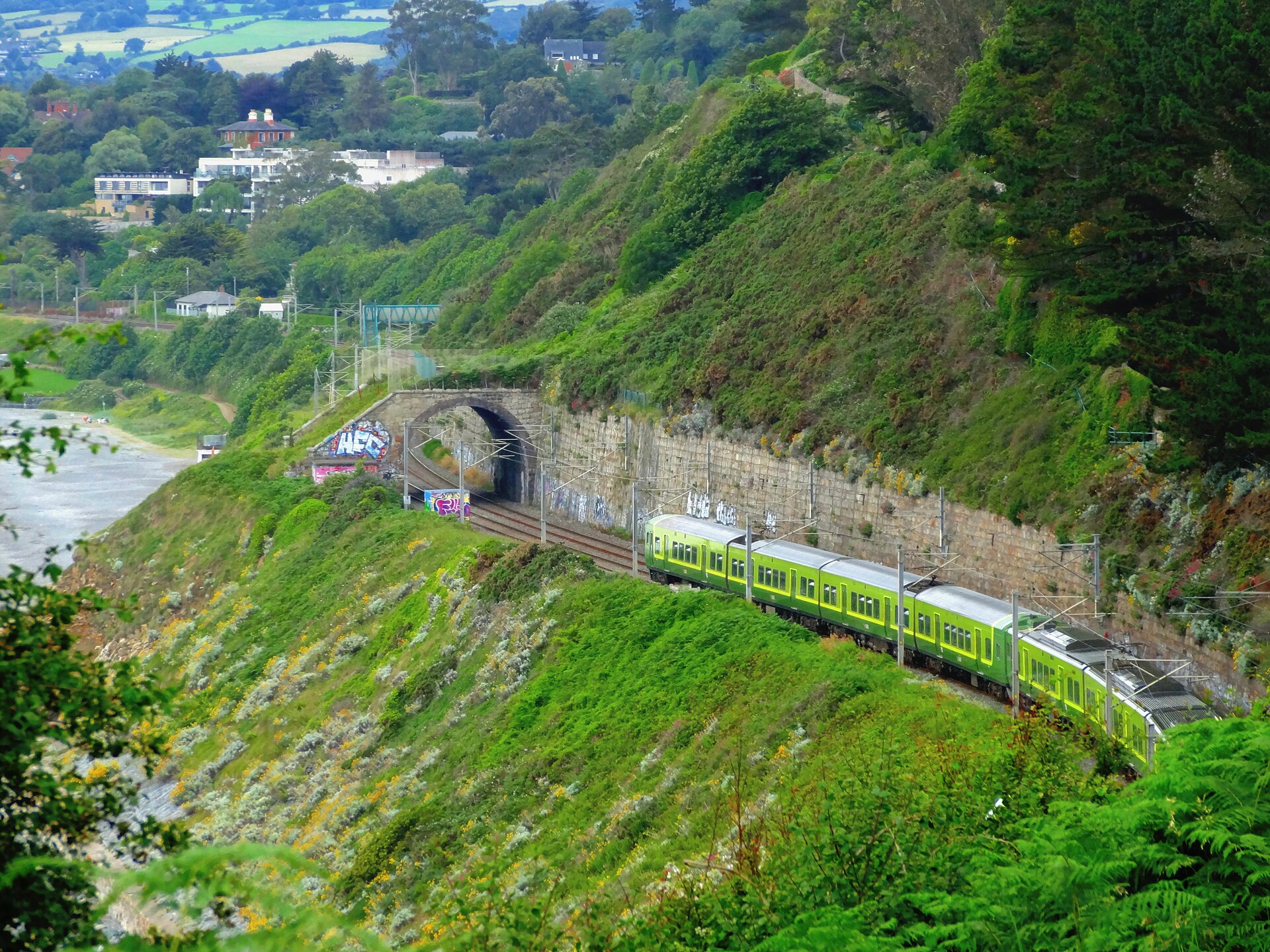
The southern end of the bay is the most dramatic. From Dalkey, the Vico Road winds above the sea towards Killiney, with views that are often compared to the Bay of Naples, and paths climb to the summit of Killiney Hill, 153 metres up, where an obelisk completed in 1742 looks out over Killiney Bay to Bray Head and the Wicklow Mountains. Late afternoon and sunset are the times to be here. The DART line itself is a subject: it runs along the cliffs between Dalkey and Killiney, ducking through tunnels above the shore, and a green train curving along the edge is a classic Dublin shot. Our Dún Laoghaire, Dalkey and Killiney guide has the walking routes, and Dún Laoghaire’s long granite piers make a gentler outing with plenty to frame.
Light, Weather and the Best Seasons for Photography
Dublin’s northern latitude gives it long summer evenings and very short winter days, and that shapes everything. Sunrise and sunset in central Dublin, worked out for the middle of each month, fall roughly like this:
| Month | Sunrise | Sunset |
|---|---|---|
| January | 08:30 | 16:35 |
| February | 07:45 | 17:35 |
| March | 06:40 | 18:30 |
| April | 06:25 | 20:25 |
| May | 05:25 | 21:20 |
| June | 04:55 | 21:55 |
| July | 05:15 | 21:45 |
| August | 06:05 | 20:55 |
| September | 07:00 | 19:40 |
| October | 07:50 | 18:30 |
| November | 07:50 | 16:30 |
| December | 08:35 | 16:05 |
A few things follow from that table. In winter, sunrise is late enough to catch without an alarm, and blue hour falls before most people have finished work, which is perfect for city lights. In summer, the evening light goes on and on, but sunrise is brutally early. Spring and autumn are the sweet spots for a photography trip, with workable hours at both ends of the day. According to Met Éireann’s 1991–2020 averages for Dublin Airport, May is the sunniest month, with 6.4 hours of sunshine a day, and December the dullest, at 1.7 hours. November is the wettest, with 82.7 mm of rain on average. Our Dublin weather guide has the full table.
Don’t wait for perfect weather. Showers bring dramatic skies, rainbows over the bay and reflections in every puddle and cobble, and a wet evening on the quays can produce better images than a cloudless one. Keep a microfibre cloth and a rain cover for your camera in your bag, and remember that the wind on the piers and headlands can shake a lightweight setup.
Photography Rules and Etiquette
- Trinity College: non-flash photography only, none at all in the Treasury where the Book of Kells is shown, and no tripods.
- Churches and cathedrals: rules vary, so check each one’s own site or ask at the desk, and never photograph during a service without permission.
- Museums and galleries: most allow personal photography without flash, but individual exhibitions and loaned works often don’t. Look for the no-photography symbol on labels.
- Drones: register as an operator with the Irish Aviation Authority and check its map of geographical zones before you fly anywhere in the city. Dublin is a busy capital with an international airport, and the rules are strict.
- Tripods in the street: legal, but busy footpaths and bridges are no place for them at peak times. Use a wall, a railing or a small tabletop tripod, or come early.
- People: street photography is part of the city’s life, but ask before close-up portraits, especially of children, swimmers and buskers.
A One-Day Photo Walk
This route links the best photo spots in Dublin into a single day. It works best in spring or autumn, when sunrise and sunset fall at civilised hours. In winter, start later and finish with the city lights; in summer, split it across two days.
- Sunrise: Bull Island beach, or the Great South Wall if you would rather have the lighthouse in the frame.
- Early morning: Temple Bar while the cobbles are empty, then the Ha’penny Bridge before the footfall builds.
- Mid-morning: Trinity’s Long Room on a pre-booked slot, then the Georgian doors of Merrion and Fitzwilliam Squares.
- Lunch and early afternoon: St Stephen’s Green and the Iveagh Gardens, then west to Christ Church, Dublinia and St Patrick’s.
- Late afternoon: the Gravity Bar at the Guinness Storehouse for the view across the rooftops.
- Blue hour: back to the river for the Ha’penny Bridge lit up, then east to the Samuel Beckett Bridge and the Docklands.
For a coastal version, swap the city afternoon for the DART to Dalkey, the Vico Road and the climb up Killiney Hill for sunset. Our one day in Dublin itinerary and walking in Dublin guide help with timings between stops.
Dublin at Christmas: Lights and Projections
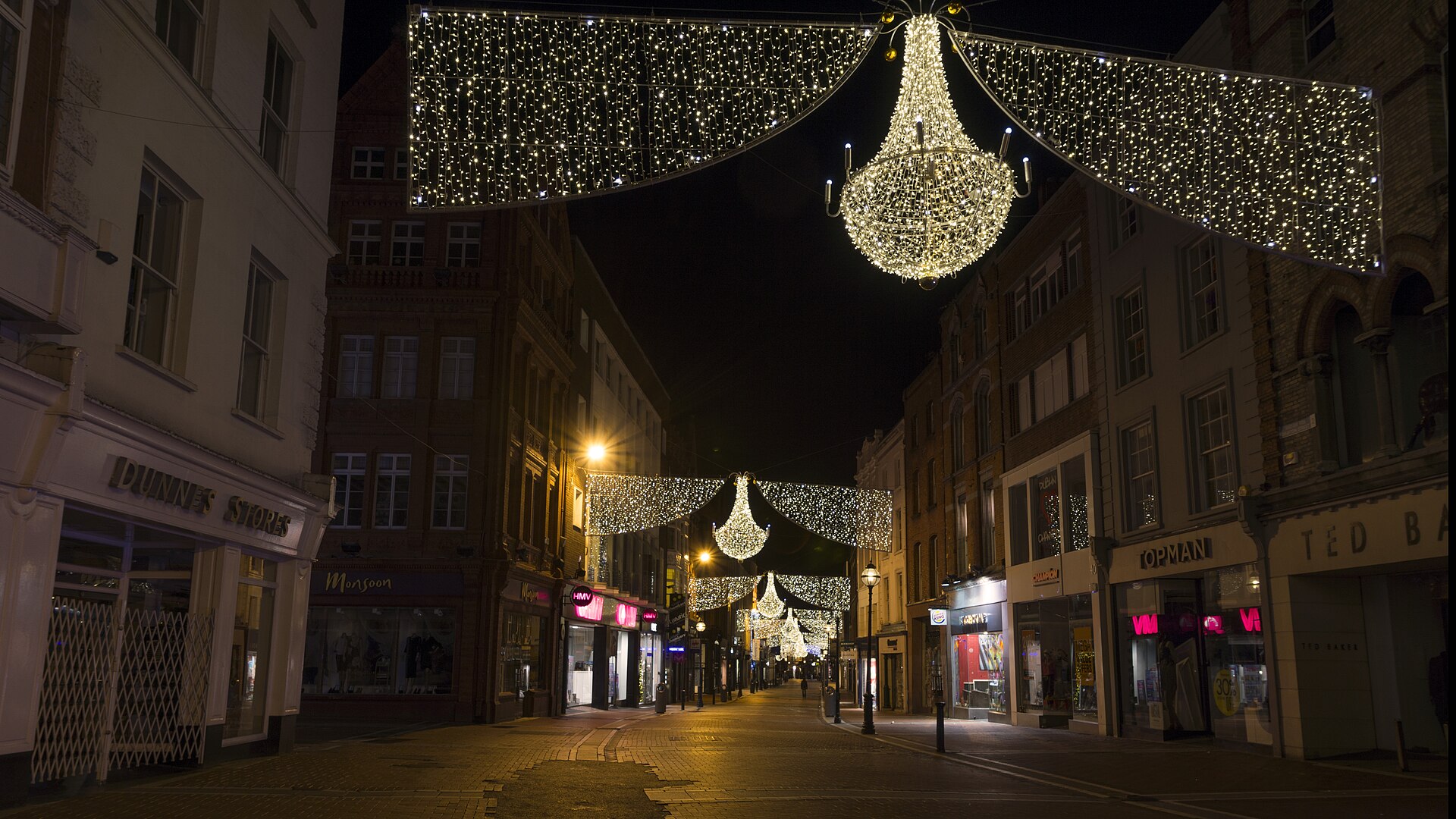
In the run-up to Christmas, Dublin’s shopping streets put up their lights, and Grafton Street’s are the classic shot of the season. Go after dark on a weekday evening for space to work, and shoot down the length of the street to stack the lights. Dublin Winter Lights adds light installations and projections around the city, and the programme now runs into January; its locations are published in December on dublinwinterlights.ie. Our Christmas in Dublin guide and Dublin in December guide cover the season.
Gotchas for Photo Spots in Dublin
- No photos of the Book of Kells. Trinity bans photography in the Treasury, and tripods throughout.
- The Long Room is mostly empty of books during the redevelopment; only the first four bays at the entrance still hold them.
- Dublin Castle’s courtyards are closed to the public until 4 January 2027, and the Chester Beatty is closed until the end of December 2026.
- The Great South Wall is exposed. There are no railings and the stones can be wet and slippery, so skip it in strong winds.
- The Joyce Tower is closed on Mondays and opens only from 10:00 to 16:00.
- Winter days are short. In December the sun sets at about 16:05, so plan outdoor shots for the middle of the day.
- Temple Bar and the Ha’penny Bridge are crowded from mid-morning; go early for clean shots.
- Drones need registration and a check of the IAA’s geographical zones before every flight.
Photo Spots in Dublin FAQ
What is the most photographed place in Dublin?
There is no official count. The Ha’penny Bridge, the Temple Bar pub’s red frontage and the Long Room at Trinity College are the classic shots. For something less familiar, try the Great South Wall, Killiney Hill or the Georgian doors of Fitzwilliam Square.
Where can I get the best view of Dublin?
For the city itself, the Gravity Bar at the top of the Guinness Storehouse, included in standard entry from €24, gives a view across the rooftops to the mountains. For the bay, climb Killiney Hill, 153 metres high, or walk the cliff path on Howth Head. Both are free.
Can you take photos in the Long Room at Trinity?
Yes. Trinity allows non-flash photography for personal use throughout the Book of Kells Experience, including the Long Room. Photography is not allowed in the Treasury, where the Book of Kells is displayed, and tripods are not permitted anywhere.
Where is the best place to photograph the sunset in Dublin?
Killiney Hill is the classic, with the light falling across Killiney Bay. Closer to town, the Great South Wall gives you the city and the mountains behind it, and the Ha’penny Bridge is at its best in the blue hour just after sunset. Sunset ranges from about 16:05 in December to about 21:55 in June.
Can I fly a drone in Dublin?
Only within the Irish Aviation Authority’s rules. Register as an operator with the IAA and check its map of geographical zones before every flight, because restrictions apply across much of the capital. If in doubt, don’t fly.
Where are the famous Georgian doors of Dublin?
Mostly around Merrion Square and Fitzwilliam Square, east and south of St Stephen’s Green, and on the streets between them. Look for panelled doors in bold colours under semicircular fanlights, set into long red-brick terraces.
Is the Great South Wall walk open, and how long is it?
Yes. Dublin Port announced in March 2026 that repairs near Poolbeg Lighthouse were complete and the wall had fully reopened. The wall runs for nearly five kilometres from the tip of the Poolbeg peninsula to the lighthouse. It is exposed, so avoid it in strong winds.
Where is the Molly Malone statue?
On Suffolk Street, outside the tourist office, at the end of Grafton Street. It was moved there from Grafton Street in 2014. Expect a queue for photos, and check it isn’t screened off for restoration before a special trip.
Keep Planning
- The best free things to do in Dublin: most of these photo spots cost nothing.
- Dublin’s hidden gems: quieter corners for original shots.
- Dublin walking tours: let a guide lead you to the details.
- Dublin ghost tours: the old city after dark.
- Dublin in April: blossom, long evenings and spring light.
- Dublin season by season: the light and weather month by month.
Photo Credits
Ha’penny Bridge over the Liffey: 6HaPenny Bridge14 (8158656285) by psyberartist, CC BY 2.0, via Wikimedia Commons.
Samuel Beckett Bridge at night: Dublin Docklands At Night (6540417735) by William Murphy, CC BY-SA 2.0, via Wikimedia Commons.
The Long Room: Biblioteca del Trinity College interno 10 by Cristina Morettini 95, CC BY-SA 4.0, via Wikimedia Commons.
Fitzwilliam Square’s Georgian houses: Georgian houses in Fitzwilliam Square – geograph.org.uk – 7589869 by Marathon, CC BY-SA 2.0, via Wikimedia Commons.
The Temple Bar pub: 20130807 dublin012 by Jean Housen, CC BY-SA 3.0, via Wikimedia Commons.
The view from the Guinness Storehouse: City view from Guiness Storehouse – panoramio by diego_cue, CC BY-SA 3.0, via Wikimedia Commons.
Sunrise on Bull Island beach: Bull Island after sunrise – Dublin, Ireland – Landscape photography by Giuseppe Milo, CC BY 2.0, via Wikimedia Commons.
Howth Harbour from above: – Howth Harbour – 2026-09-28 19-17-46 001 by BriPics26, CC BY-SA 4.0, via Wikimedia Commons.
Killiney Hill obelisk: Killiney Hill Obelisk, 2024-01-06 by 瑞丽江的河水, CC BY-SA 4.0, via Wikimedia Commons.
DART between Killiney and Dalkey: Railway Killiney Dalkey 01 by Alicia Fagerving, CC BY-SA 3.0, via Wikimedia Commons.
Grafton Street Christmas lights: Grafton Street at night (8262993407) by Miguel Mendez, CC BY 2.0, via Wikimedia Commons.
Christmas projections on the Custom House: Christmas Lights on the Custom House, Dublin by Southsidebrian, CC BY-SA 4.0, via Wikimedia Commons.
Keep Reading
Lean na Comharthaí — Keep following the signs