4 Days in Dublin: The Complete Itinerary (City + One Day Trip)
Ceithre Lá i mBaile Átha Cliath
Ar an gComhartha Seo — On this sign
- Quick Answer: Is 4 Days in Dublin Enough?
- How This Four-Day Itinerary Is Built
- Day One: Medieval Dublin, the Liberties and Your First Proper Pint
- Day Two: Trinity, Georgian Dublin and the Free Museums
- Day Three: Kilmainham, Phoenix Park and the Northside
- Day Four: The Day Trip — Five Options, Ranked
- What 4 Days in Dublin Actually Costs
- Where to Stay for Four Days
- Adapting the Itinerary
- Gotchas
- FAQ: 4 Days in Dublin
- Keep Planning
- Keep Reading
Dublin is a small capital that people consistently underestimate and then, having underestimated it, rush. The historic core is barely two kilometres across; you can walk from Christ Church to Trinity College in fifteen minutes and from Trinity to the Grand Canal in twenty more. That compactness is why so many visitors book two nights, tick off Guinness and the Book of Kells, drink a pint on a wet street in Temple Bar and leave slightly puzzled about what the fuss is. Four days is the length at which that stops happening. It is enough to see the obvious things without queueing for them, enough to spend a morning in a museum without feeling you are stealing time from somewhere else, and — the part that changes everything — enough to give one whole day to the countryside, the coast or the North.
This is a complete plan for 4 days in Dublin: three days in the city arranged so that you never double back on yourself, and a fourth given over to a day trip, with five options ranked and one you should firmly ignore. It carries real prices in euro, real opening patterns, real bus and DART numbers, and honest notes on what is currently closed — because in 2026 one of Dublin’s headline attractions is shut to visitors entirely and another looks nothing like its photographs. It is written for a first or second visit, at any time of year, on foot and by public transport, with no hire car required at any point.
Quick Answer: Is 4 Days in Dublin Enough?
Yes — comfortably, and it is arguably the ideal length. Three full days covers the city properly: the medieval quarter and the Liberties, Trinity and Georgian Dublin with its free national museums, and Kilmainham with the Northside and Phoenix Park. That leaves a fourth day for a day trip, which is where Dublin’s real advantage over other European city breaks sits. Within ninety minutes of the city centre you can reach a sixth-century monastic valley in the Wicklow Mountains, a fishing village with a cliff path, a passage tomb older than the pyramids, or another country. Very few capitals can offer that range on public transport.
The only case where 4 days in Dublin feels tight is if you are determined to combine the city with the west coast. Do not. Galway and the Cliffs of Moher are a six-to-thirteen-hour round trip depending on how you do it, and squeezing them into a four-day trip means spending a third of it on a coach. If the west is the point of your holiday, add days or fly into Shannon. If Dublin is the point, four days is generous, unhurried and enough to leave with a feel for the place rather than a list.
| Day | Area | Anchor | Walking | Paid entry |
|---|---|---|---|---|
| One | Medieval city, the Liberties, Dublin 8 | Guinness Storehouse | 6–8 km | From €24 |
| Two | Trinity, Kildare Street, Georgian squares | Book of Kells Experience | 5–6 km | From €19 |
| Three | Kilmainham, Phoenix Park, the Northside | Kilmainham Gaol | 7–9 km | €8 |
| Four | Out of the city | Your chosen day trip | Varies | €0–€70 |
How This Four-Day Itinerary Is Built
Three rules shape the plan below, and they are worth stating because they are why it works better than the standard list-of-attractions approach. Most published guides to 4 days in Dublin are simply a three-day guide with a fourth day of leftovers bolted on. This one is not.
One district per day. Dublin’s sights cluster geographically far more neatly than most guides admit. The medieval city, the two cathedrals and the Liberties are one walkable block of the map. Trinity, the National Museum, the National Gallery, Merrion Square and St Stephen’s Green are another. Kilmainham, the Irish Museum of Modern Art, Phoenix Park and the Collins Barracks museum form a third along the north-western edge. Group them and you walk between sights instead of criss-crossing on buses.
One paid attraction a day, maximum two. Dublin’s paid attractions are expensive and its free ones are excellent. The National Museum of Ireland, the National Gallery, the Chester Beatty (closed until January 2027) and the Botanic Gardens are all free and all genuinely good (the Natural History Museum is closed for refurbishment). Pacing yourself to one big ticket per day keeps the trip under control financially and stops the days blurring into a queue-and-audioguide loop. Our guide to free things to do in Dublin has the full list.
Nothing booked for the fourth day until you see the forecast. The day trip is the flexible one. Glendalough in horizontal rain is a wasted €40; Glendalough in low autumn sun is the best day of the trip. Keep day four loose, watch Met Éireann on day two, and choose accordingly.
Book these before you fly
- Kilmainham Gaol. It sells out weeks ahead, every single month of the year, and there is no walk-up queue worth joining. This is the one non-negotiable advance booking of the four days.
- The Book of Kells Experience. Timed entry, and summer slots go well in advance.
- The Guinness Storehouse. Timed entry with dynamic pricing — booking an early weekday slot rather than a Saturday afternoon saves up to €10 a head for exactly the same visit.
- Your day trip, if it is a coach tour rather than a train or a DART.
Day One: Medieval Dublin, the Liberties and Your First Proper Pint
Start where the city started. Everything on day one sits inside the old Norse and Norman town and the hill of Dublin 8 immediately west of it, and the whole day can be walked without touching public transport.
Morning: Christ Church, Dublinia and the oldest streets
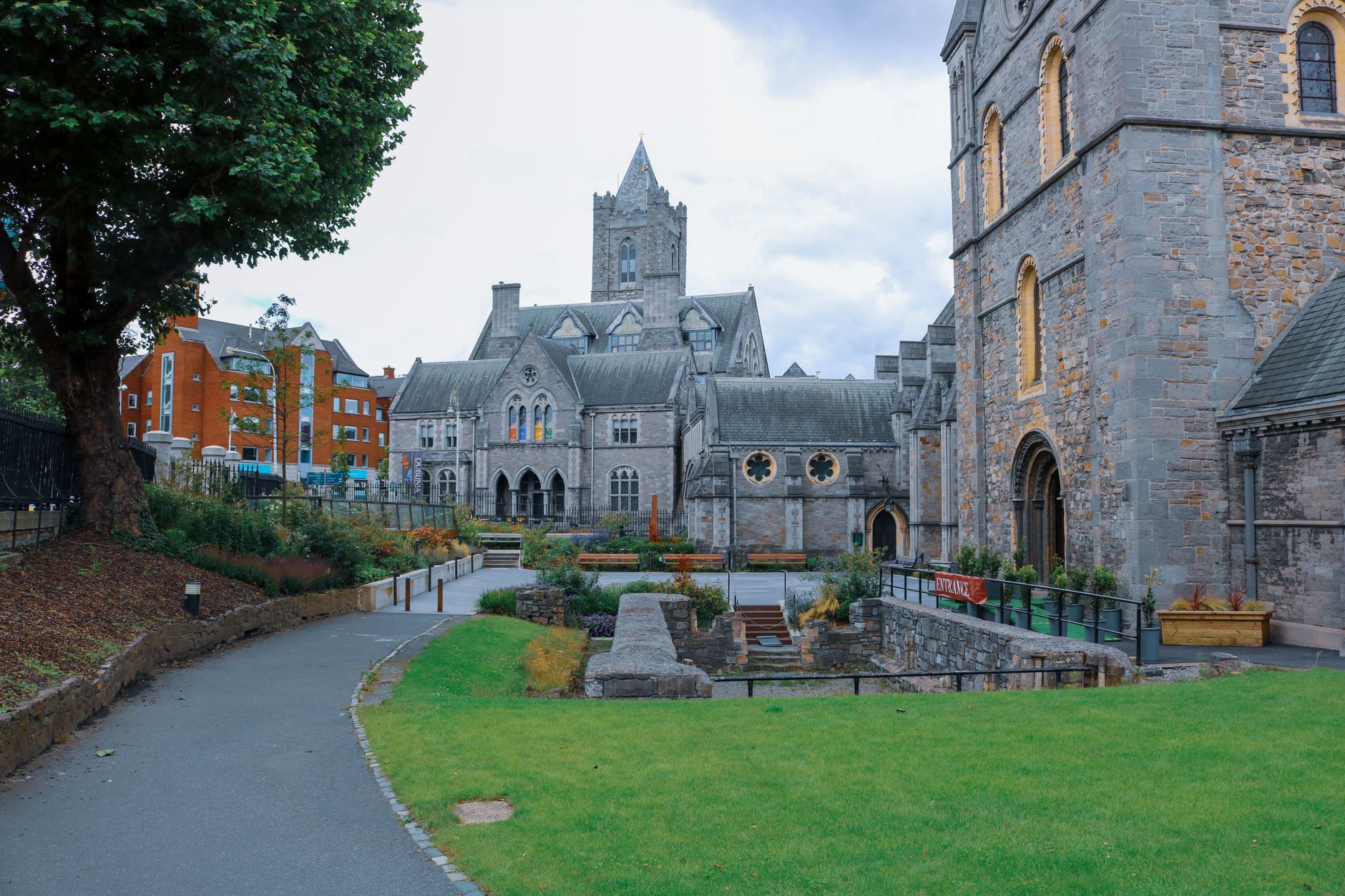
Begin at Christ Church Cathedral, founded around 1030 by the Hiberno-Norse king Sitric Silkenbeard and rebuilt by the Normans. Its crypt is the largest in Britain or Ireland and the oldest structure in Dublin still in use, and it holds the famous mummified cat and rat found inside an organ pipe in the 1860s — a small, macabre, entirely genuine piece of the city. Allow an hour.
Attached to it by a covered stone bridge is Dublinia, a reconstruction museum of Viking and medieval Dublin. It is unashamedly aimed at families, and it is the right call if you have children with you and the wrong one if you do not; adults travelling alone get more from the cathedral itself and from our Viking and medieval Dublin walk, which follows the line of the old walls through the surviving fragments on Cook Street and Ship Street.
A word you need on day one: Dublin Castle is closed to visitors for the whole of 2026. Ireland holds the presidency of the Council of the European Union from July to December 2026, the castle is the state’s principal event venue, and the State Apartments shut in May with the courtyards and Dubh Linn Garden following in June. Tours are expected back in January 2027. Nearly every four-day itinerary you will read online still sends you there. Ours does not — see the Dublin Castle guide for the detail, and note that the Chester Beatty library inside the complex is closed too, from 15 June to the end of December 2026, and is also expected back in January 2027.
Afternoon: St Patrick’s, the Liberties and the Guinness Storehouse
Walk ten minutes south-west to St Patrick’s Cathedral, the largest church in Ireland and the one where Jonathan Swift was dean for thirty-two years and is buried beside his Stella. It is a strange, deeply layered building — battle standards rotting gently overhead, a floor of medieval tiles, and the door with the hole hacked through it in 1492 that gave English the phrase “chancing your arm”. St Patrick’s Park beside it is a good place to eat a sandwich and reset.
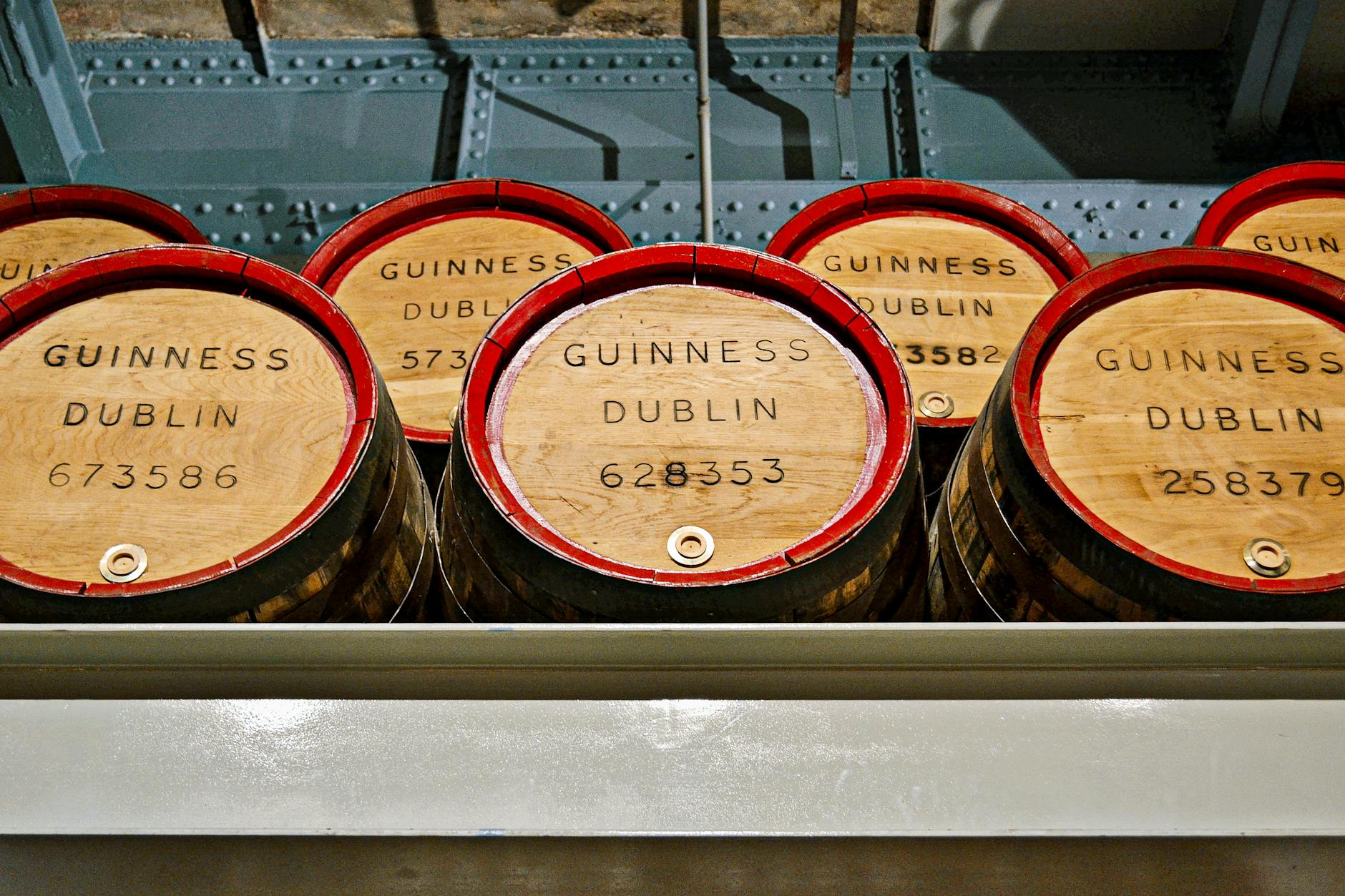
From there you are in the Liberties, the old brewing and distilling quarter outside the city walls, and the walk up Thomas Street to St James’s Gate takes about twenty minutes past Victorian shopfronts, second-hand markets and the new distilleries. The Guinness Storehouse is the anchor of day one: seven self-guided floors in a converted fermentation plant, about ninety minutes at a normal pace, ending with the pint included in your ticket at the Gravity Bar and its 360-degree view over the city to the Wicklow Mountains. Adult tickets start from €24 online, and the price changes with the time slot you book, so the busiest weekend slots cost more.
Is it worth it? For a first visit, yes — the advertising archive floor alone is one of the best design collections in Ireland, and the view is not available any other way. If you have done it before, swap it for Jameson Distillery Bow St across the river or, better value for the money, one of the smaller working distilleries in the same few streets. We compare them all in the Dublin distillery comparison, and the head-to-head is in Guinness Storehouse vs Jameson.
Evening: Temple Bar for twenty minutes, then somewhere better
Here is the honest version. Temple Bar is worth walking through once, at dusk, for the photographs and the noise, and it is worth knowing that a pint there can cost €10 or more against €6.50 to €7.50 in an ordinary city pub. Have a look, take the picture of the red frontage, and then walk five minutes in any direction to a pub where Dubliners actually drink.
The reliable ones within ten minutes: Kehoe’s on South Anne Street, The Long Hall on South Great George’s Street, The Palace Bar on Fleet Street, Neary’s on Chatham Street. Our traditional pubs guide and the oldest pubs in Dublin both go further, and the best pint of Guinness in Dublin settles the argument about where the pour is best. If you want music rather than conversation, live traditional sessions run most nights at The Cobblestone in Smithfield and at Devitt’s on Camden Street, and both are free to walk into.

Day Two: Trinity, Georgian Dublin and the Free Museums
Day two is the intellectual day and the cheapest one. Almost everything after the morning is free, and the walking is flat and short.
Morning: Trinity College and the Book of Kells
Book the earliest slot you can get at Trinity College and the Book of Kells. Two things to understand before you go, because they change what you are buying. The Book of Kells itself — the ninth-century illuminated gospel book, arguably the finest surviving work of insular art — is on display and is extraordinary, though you are seeing two open pages of it behind glass in a dim room with a crowd behind you. And the Long Room, the image that sells the ticket, is currently almost empty: about 200,000 volumes have been removed for conservation and digital scanning as part of the Old Library Redevelopment, with only the first four bays as you enter still shelved. The books return between 2027 and 2030.
That is not a reason to skip it, but it is a reason to manage expectations. The visitor product is now the Book of Kells Experience, which adds a digital exhibition in a pavilion on New Square and an audio guide. Self-guided admission starts from about €21.50 for adults; a limited Book of Kells and Long Room ticket starts from €19; adding a guided walking tour of the college campus takes it to around €39. Prices and slots are on visittrinity.ie. The campus itself — the cobbled Front Square, the campanile, the Berkeley Library and Pomodoro’s cracked bronze sphere — is free to walk through at any time and is one of the pleasantest ten minutes in the city.


Afternoon: Kildare Street, Merrion Square and the National Gallery
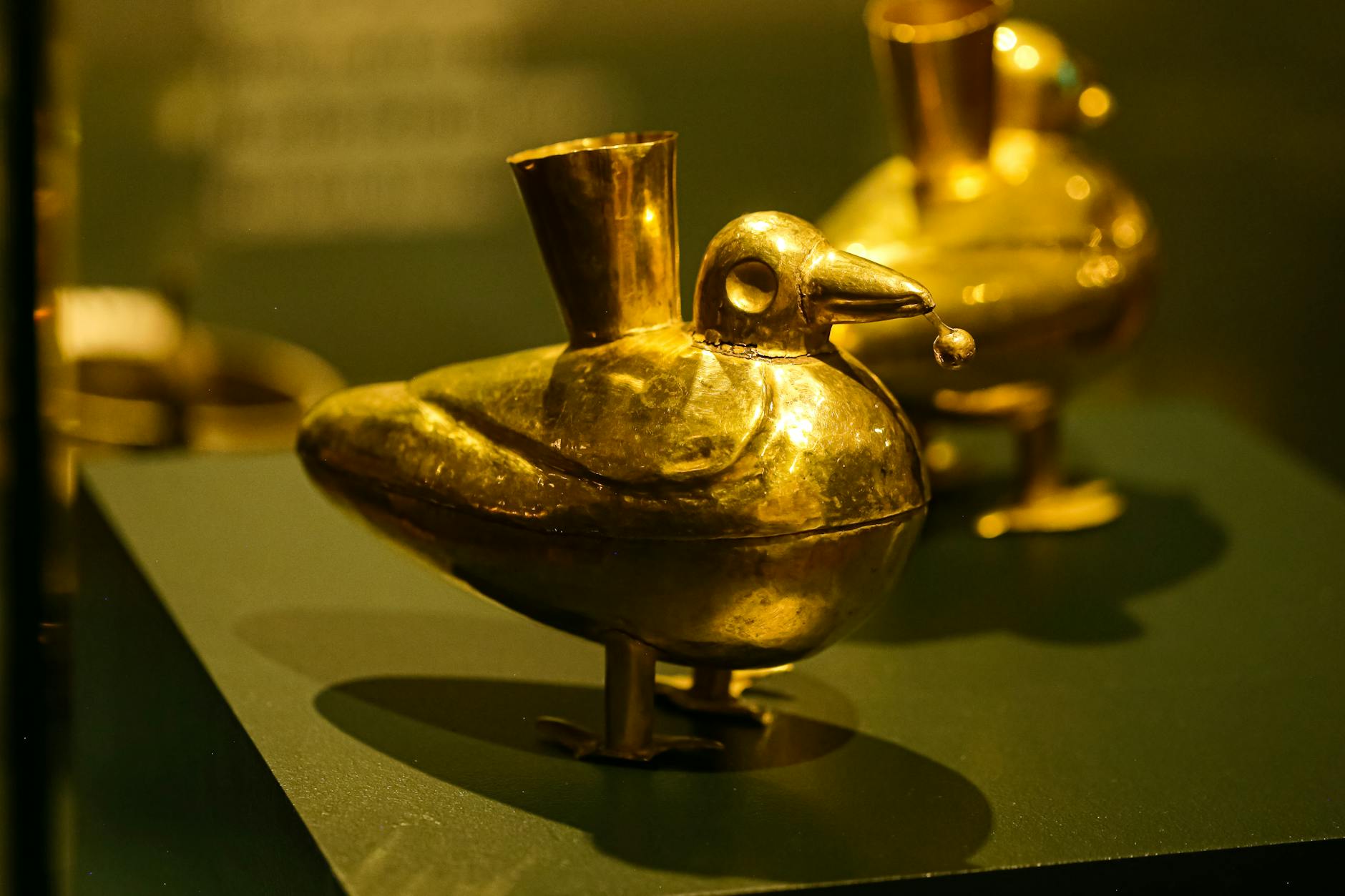
Leave Trinity by the Nassau Street gate and you are three minutes from the best free afternoon in Ireland. The National Museum of Ireland — Archaeology on Kildare Street holds the Ór collection of Bronze Age goldwork, the Tara Brooch, the Ardagh Chalice and the bog bodies, and it costs nothing. Give it ninety minutes. It is, by a distance, the single most underrated thing in the city, and the fact that visitors pay from €24 online for a brand museum and skip this one for free is the great oddity of Dublin tourism.
Around the corner, the National Gallery of Ireland is also free and holds the Caravaggio Taking of Christ, rediscovered hanging in a Jesuit dining room on Leeson Street in 1990, alongside the Jack B. Yeats collection. The Natural History Museum — universally called the Dead Zoo — has been closed for refurbishment since September 2024 and has no reopening date, so leave it off the plan. The gallery and the museum sit within four minutes of each other. Opening details for each are on the National Museum of Ireland site, and it is worth checking, because most of them close on Mondays.
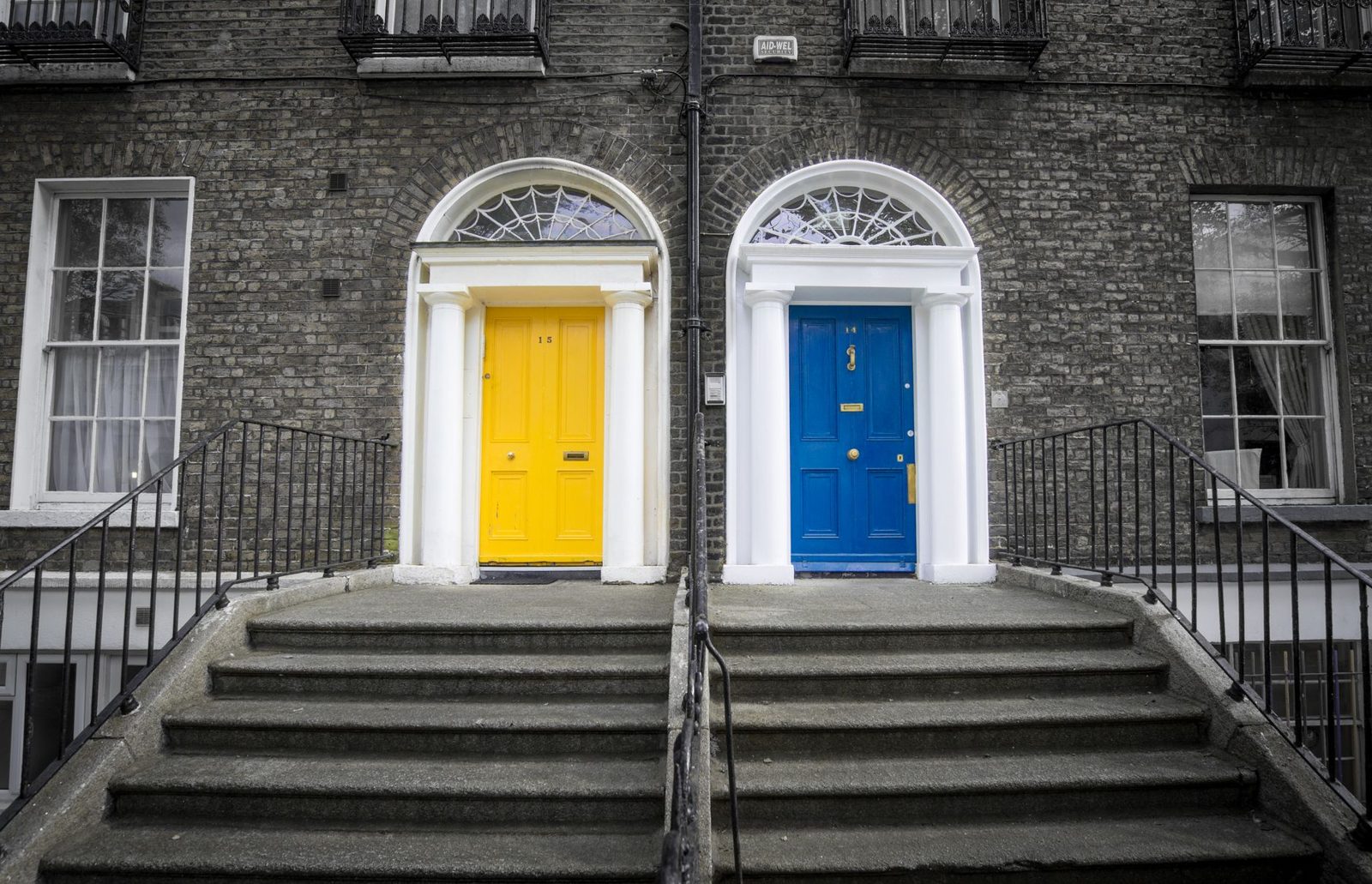
Between them, walk the Georgian squares. Merrion Square and Fitzwilliam Street give you the doors, the fanlights and the ironwork that define the city’s eighteenth-century plan, plus Oscar Wilde reclining on a rock in the corner of the park with an expression of considerable smugness. Finish at St Stephen’s Green, which is a proper Victorian park rather than a lawn, and which closes at dusk.
Evening: the Grafton Street side streets
The streets running off Grafton Street — South Anne Street, Duke Street, Chatham Street, Drury Street, Fade Street, South William Street — are where Dubliners actually eat and drink, and they are all within a five-minute radius of each other. The Powerscourt Townhouse arcade and the George’s Street Arcade are both worth a wander before the shops shut. For dinner, the restaurant guide covers the range; for something under €20 a head, cheap eats in Dublin is the one to read.
Day Three: Kilmainham, Phoenix Park and the Northside
Day three goes west and then north, and it is the day the trip stops being about buildings and starts being about the twentieth century.
Morning: Kilmainham Gaol
Take the 40 or 13 bus from the city centre, or the Luas Red Line to Suir Road and walk. Kilmainham Gaol is a guided tour only, costs €8 for an adult, takes around an hour, and is the most affecting hour of the four days. Almost every leader of every Irish rebellion from 1798 to 1916 was held here, and fourteen of the 1916 leaders were executed in the Stonebreakers’ Yard at the back — including James Connolly, who was too badly wounded to stand and was shot tied to a chair. The Victorian east wing, with its glass roof and its tiers of cells around a central void, is one of the great panopticon interiors and has appeared in a dozen films.
Book it. It sells out weeks ahead in every month of the year and the guides are excellent — this is a state-run site under Heritage Ireland, not a commercial attraction, and the tour is unsentimental about a genuinely brutal history. If you want to follow the thread through the city afterwards, our 1916 Rising sites walk maps the GPO, Moore Street and the rest of it.

Afternoon: Phoenix Park, or the museums at Collins Barracks
Two good options, and the weather decides. Phoenix Park is 707 hectares — twice the size of Central Park, and the largest enclosed park in any European capital — and it has had a free-roaming herd of about 600 fallow deer since the 1660s. From mid-October to early November the rut is on and the stags bellow across the Fifteen Acres at dawn and dusk, which is one of the great free spectacles of the Dublin year. The Office of Public Works asks visitors to stay fifty metres back and never to feed them; details are on phoenixpark.ie. The Victorian People’s Flower Garden, the Papal Cross and Áras an Uachtaráin are all inside the park, as is Dublin Zoo if you have children with you.
If it is pouring, go instead to the National Museum of Decorative Arts and History at Collins Barracks — free, enormous, and holding among other things the Eileen Gray collection and a serious 1916 exhibition — and then walk the north quays back into town. Our list of things to do in Dublin when it rains has more.

Evening: Stoneybatter, Smithfield and the north quays
Come back east through Smithfield and Stoneybatter, which is where a lot of Dublin’s better new food has landed over the last decade and where the cobbled Smithfield square still holds an occasional horse fair. The Cobblestone on the square is the city’s most serious traditional music pub and there is no cover charge. If the weather is decent, walk the quays back past the Four Courts and over the Ha’penny Bridge at dusk, which is the photograph everyone takes home. For food after closing time, the late-night food guide covers what is actually open, and the city’s best chippers covers the other half of that question.
Day Four: The Day Trip — Five Options, Ranked
This is the day that makes 4 days in Dublin better than three. All five of these are genuine day trips from the city centre, and four of the five need no car at any point. Full detail is in the day trips from Dublin guide, and specifically in day trips without a car.
1. Glendalough and the Wicklow Mountains — the best all-round day
A sixth-century monastic city founded by St Kevin, sitting in a glacial valley with two lakes and a near-complete round tower, an hour south of Dublin inside the Wicklow Mountains National Park. The site is free and always open; the visitor centre is a small charge. Walking trails run from a twenty-minute lakeside stroll to the four-hour Spinc loop above the Upper Lake, which is the best day’s walking within reach of the city and is properly steep in places.
Getting there without a car means either the St Kevin’s Bus from St Stephen’s Green (roughly €20 return, twice daily, more often in summer) or a coach tour at €35–€50 that usually adds Powerscourt and a Wicklow village on the way back. The tour is the easier option and includes the driving commentary; the bus is cheaper and leaves you more hours on the ground. See the Glendalough day trip guide and Powerscourt.

2. Howth — the easiest, cheapest and shortest
Twenty-five minutes on the DART from Connolly or Tara Street, on a Leap Card, for a couple of euro each way. Howth is a working fishing harbour on a peninsula with a four-and-a-half-kilometre cliff loop, a Sunday market, seals in the harbour and some of the best seafood in the county. It is the option to take if the forecast is good but not settled, because you can abandon it and be back in town within half an hour. Read the Howth cliff walk and Howth village.
Two variations on the same idea, both on the DART: Dún Laoghaire, Dalkey and Killiney to the south, which is gentler and has a genuinely good castle tour attached; and the Bray to Greystones cliff walk, which is seven kilometres of coastal path with a train station at each end.

3. Newgrange and the Boyne Valley — the best history
Newgrange is a passage tomb built around 3200 BC, five hundred years before the Great Pyramid and a thousand before Stonehenge, aligned so that the rising sun floods the inner chamber at the winter solstice. You can only enter on a guided tour from the Brú na Bóinne visitor centre, and in high season the tours sell out. Without a car it is a coach tour, typically €40–€60, and worth every cent. The Newgrange day trip guide has the booking detail. If you would rather have castles than tombs, the same corner of Meath holds Ireland’s largest Norman castle — see Trim Castle and the Boyne Valley.
4. Belfast — the most ambitious, and it works
The Enterprise train runs Dublin Connolly to Belfast Grand Central in about two hours and eight minutes, roughly hourly, with fifteen departures a day Monday to Saturday and eight on Sunday, and cheap singles from around €15.99 if you book ahead. That gives you six or seven hours in another country: Titanic Belfast, the Ulster Museum, a black-taxi tour of the murals. Online booking closes eighty minutes before departure and a Leap Card is not valid on the Enterprise. See the Belfast day trip and the Enterprise train guide. Bring a passport or national ID — there is no border check, but carriers and some hotels will ask.
5. Malahide, Kilkenny or Galway — the specialists
Malahide Castle is a half day on the DART, eight hundred years of one family, good gardens, and the best of these options with children. Kilkenny is ninety minutes by train and is the prettiest medieval town in the country. Galway is two and a half hours each way by train and is a stretch for a single day, though it can be done if you take the first train out.
The one to skip: the Cliffs of Moher
Every operator in Dublin sells a Cliffs of Moher day trip and it is the single worst use of a day on this itinerary. It is roughly thirteen hours door to door, about ten of them sitting on a coach, for perhaps ninety minutes at the cliffs — frequently in mist, because that coast is in cloud a great deal of the time. If the Cliffs matter to you, base yourself in Galway or Ennis for a night instead. The Cliffs of Moher from Dublin guide sets out the full timings if you want to judge for yourself, and our Dublin and Ireland itinerary shows how to fold the west coast into a longer trip properly.
What 4 Days in Dublin Actually Costs
Costing 4 days in Dublin is mostly an exercise in costing three nights of accommodation. Dublin is expensive, and accommodation is the reason — it is the single biggest line in almost every budget and it swings more than everything else put together. The figures below are per person for four days and three nights, excluding flights, and assume you are sharing a room where that applies.
| Line | Budget | Mid-range | Comfortable |
|---|---|---|---|
| Accommodation | €105 (hostel dorm) | €330 (3★ double, shared) | €600+ (4★ central) |
| Food and drink | €120 | €200 | €350 |
| Attractions | €35 | €60 | €90 |
| Local transport | €20 (Leap Visitor Card) | €20 | €40 with taxis |
| Day trip | €6 (DART to Howth) | €45 (coach tour) | €70 |
| Four-day total | ≈€286 | ≈€655 | ≈€1,150 |
Two levers move that total more than anything else. The first is when you come: hotel rates roughly double over the St Patrick’s weekend, the Six Nations weekends in February and March, and the October bank holiday. The cheapest time to visit Dublin is January and February excluding those dates. The second is the Leap Visitor Card, which gives unlimited Dublin Bus, DART and Luas travel — €8 for one day, €18 for three, €24 for seven. For four days, the seven-day card costs only €6 more than the three-day one, so it is the better buy if you will use public transport much on day four. The Leap Card guide explains which version to buy and where, and the full trip cost breakdown goes deeper on all of the above.
Is the Dublin Pass worth it for four days? Usually not on this itinerary, because we have deliberately built it around free museums and one paid attraction a day. It starts to pay only if you are doing three or more expensive attractions daily, which is a different and, frankly, worse holiday. See the discount card comparison for the arithmetic.
Where to Stay for Four Days
Over 4 days in Dublin the walkability of your base matters more than the star rating, because you will be leaving and returning to it eight times rather than three. Anywhere inside the ring formed by Parnell Square, Merrion Square, the Grand Canal and Christ Church puts everything in this itinerary within a thirty-minute walk.
- Around Grafton Street and St Stephen’s Green — the most convenient and the most expensive, and surprisingly quiet at night despite the daytime crowds.
- Merrion Square and the Georgian core — handsome, calm, walkable, and a reasonable compromise on price.
- Smithfield and Stoneybatter — better value, ten minutes on the Luas, and the best food-to-price ratio in the city.
- Portobello and Rathmines — residential, cheaper, and a pleasant twenty-minute canal walk into town.
- Temple Bar — central, loud until three in the morning, and priced as though the noise were a feature. Only if you intend to be part of it.
Full comparisons in where to stay in Dublin and the best areas to stay; specific properties in city centre hotels and cheap hotels and hostels. If you are travelling as a group, apartment rentals usually beat four hotel rooms.
Adapting the Itinerary
The skeleton above suits most people, but 4 days in Dublin looks different with a seven-year-old in tow, in four days of rain, or on a second visit. Here is how to bend it without breaking the geography that makes it work.
With children
Swap the Book of Kells for Dublinia on day two, put Dublin Zoo at the centre of day three instead of the deer, and make day four Howth or Malahide rather than Glendalough. The National Museum’s bog bodies are an enormous hit with anyone over about eight, and free; the Dead Zoo, sadly, has been shut for refurbishment since September 2024. See Dublin for families, the family itinerary and rainy-day options with kids.
If it rains for four days straight
It might. October is the wettest month at about 80 mm across twelve rain days, and the wind coming off the Irish Sea destroys umbrellas — the local answer is a hooded waterproof, not an umbrella, and you will notice that almost nobody native is carrying one. The good news is that this itinerary is already rain-resistant: the two cathedrals, the Guinness Storehouse, Trinity, three national museums, the National Gallery and Kilmainham are all indoors. Only day four is genuinely weather-dependent, which is exactly why we left it unbooked. The Dublin weather guide has the month-by-month figures.
If you have been to Dublin before
Keep the structure and change the anchors. Replace the Guinness Storehouse with a distillery tour, the Book of Kells with Marsh’s Library, Kilmainham with the EPIC emigration museum at Custom House Quay, and the standard day trip with the Boyne Valley or Belfast. Add a food tour or a walking tour — the historical walking tours run by graduate students are the best value in the city. Our hidden gems guide is written for exactly this trip, and the neighbourhoods guide will point you at districts you skipped the first time.
Gotchas
These are the things that most reliably go wrong on 4 days in Dublin, in rough order of how annoying they are when they catch you out.
- Dublin Castle is shut to visitors until January 2027. The State Apartments, courtyards and gardens are all closed for Ireland’s EU presidency. The Chester Beatty inside the complex is closed until the end of December 2026 too.
- The Long Room is nearly empty. Its 200,000 books are away being conserved and digitised until 2027–2030. You are paying for the Book of Kells and the architecture, not the wall of ancient volumes in the photographs.
- Kilmainham Gaol sells out weeks ahead, every month. Not only in summer. Book it before anything else you book.
- Most national museums close on Mondays. Do not build day two or three around Kildare Street on a Monday without checking first.
- Guinness Storehouse pricing is dynamic. The same ticket varies by up to €10 depending on the slot. Early weekday mornings are cheapest and quietest.
- The Leap Visitor Card comes in one, three and seven-day versions — there is no four-day one. For four days, either buy the three-day card (€18) and pay separately on the fourth, or take the seven-day card at €24.
- Nothing runs on Christmas Day. No Dublin Bus, no DART, no Luas. Services resume on the 26th on a Sunday timetable from about 09:00.
- Bank holiday Mondays close a lot of things and fill the pubs. The October bank holiday falls on Monday 26 October 2026, and the clocks go back the day before.
- Pub closing is earlier than most visitors expect. Monday to Thursday it is 23:30, Friday and Saturday 00:30, Sunday 23:00, plus thirty minutes’ drinking-up time. Late bars need a separate licence.
- Taxis are metered and plentiful but slow in the centre. Walking is usually faster inside the canals. See the Dublin taxi guide.
FAQ: 4 Days in Dublin
Is 4 days enough for Dublin?
Yes, and it is close to ideal. Three days covers the city centre thoroughly — the medieval quarter, Trinity and the Georgian core, and the Kilmainham and Phoenix Park side — without rushing any of them. The fourth day is what lifts the trip, because it buys you a full day out to Wicklow, the coast, the Boyne Valley or Belfast. Fewer than four days and something gets cut; more than four and you start repeating yourself unless you are using Dublin as a base for the rest of Ireland.
Should day 4 be a day trip?
Almost always, yes. Dublin’s compactness means three days genuinely does exhaust the headline sights at a civilised pace, and a fourth day in the same square kilometre tends to get spent on second-tier attractions or shopping. Meanwhile Glendalough, Howth, Newgrange and Belfast all sit within a two-hour radius on public transport. The exception is if this is your first city break in years and you want one slow day — in which case use day four for the free museums you skipped, a food tour and a long lunch.
What should a 4-day Dublin itinerary include?
At minimum: one of the two medieval cathedrals, the Guinness Storehouse or a distillery, Trinity College and the Book of Kells, the National Museum of Ireland on Kildare Street, Kilmainham Gaol, a walk in Phoenix Park or along the coast, at least two proper pubs that are not in Temple Bar, and one day trip outside the city. That list is the spine of the itinerary above. Everything else — EPIC, Dublinia, the Little Museum, the Jeanie Johnston, the hop-on hop-off bus — is optional and should be treated as such.
How much does 4 days in Dublin cost?
Budget roughly €286 per person on a hostel-and-DART basis, about €655 mid-range in a three-star double, and €1,150 or more staying centrally in a four-star, all excluding flights and based on three nights. Accommodation is more than half of every one of those figures, and it is the line most worth attacking — moving from a Temple Bar hotel to Stoneybatter or Portobello can take a third off the whole trip.
Do you need a car for 4 days in Dublin?
No, and it is actively a liability. City-centre parking is expensive and scarce, much of the core is bus-gated or pedestrianised, and every day trip in this itinerary can be done by DART, train or coach tour. Hire a car only if you are continuing around Ireland after Dublin — see renting a car in Dublin for the case where it does make sense.
Is the Book of Kells still worth seeing in 2026?
Yes, but go in knowing that the Long Room has been emptied of its books for conservation until at least 2027 and that you see two open pages of the manuscript in a busy, dimly lit room. What you are paying for is a genuinely astonishing object, the architecture of the Old Library, and the digital exhibition that now accompanies it. If your mental image is the wall of ancient books, adjust it before you buy the ticket rather than after.
What is the best time of year for a four-day trip?
May, June and September are the sweet spot — the longest days, the driest stretch of the year around April and May, and prices below the July and August peak. Winter is cheap and atmospheric and the pubs are at their best, but you get seven and a half hours of daylight in late December against about seventeen in June, which materially changes how much you can fit into a day. Avoid the St Patrick’s weekend and the Six Nations weekends unless the event is why you are coming. Our best time to visit guide makes the month-by-month case.
Can you see the Cliffs of Moher on a 4-day Dublin trip?
Technically yes, on a thirteen-hour coach day. Practically, no — you would spend about ten hours on a bus to get ninety minutes at the cliffs, quite possibly in cloud, and you would give up a quarter of your trip to do it. Wicklow gives you comparable landscape ninety minutes from your hotel door. Save the Cliffs for a trip where you can sleep in Clare or Galway.
How does 4 days compare to 3 or 7?
Three days is the city without the day trip, and it works if you are disciplined about it — see 3 days in Dublin. Four adds the day out, which is the biggest single upgrade available to this trip. Seven days stops being a Dublin trip and becomes an Ireland trip with Dublin as a base, and should be planned as one: the one-week itinerary covers that properly. For shorter stays, see 2 days in Dublin and 1 day in Dublin.
Keep Planning
Everything else you need to turn 4 days in Dublin from a plan into a booked trip.
- Dublin Itineraries & Trip Planning — the parent guide, with every itinerary length compared.
- First Time in Dublin — what to expect if you have never been.
- Things to Know Before Visiting Dublin — tipping, plugs, weather, etiquette.
- Getting Around Dublin — bus, DART, Luas and how they connect.
- Dublin Airport to the City Centre — the four ways in, timed and priced.
- Things to Do in Dublin — the full attraction list if you want to swap anything out.
- Day Trips from Dublin — every option for day four, in detail.
- Dublin on a Budget — how to do the same four days for considerably less.
Keep Reading
Lean na Comharthaí — Keep following the signs