Dublin in March: St Patrick’s Month, Weather & Crowds Explained
Baile Átha Cliath i mí an Mhárta
Ar an gComhartha Seo — On this sign
- Quick Answer: Is March a Good Time to Visit Dublin?
- Dublin in March: The Weather, With Real Numbers
- The Daylight, and the Clock Change
- St Patrick’s Festival: What Actually Happens
- The Six Nations Weekend Nobody Warns You About
- Crowds, Prices and the Two-Speed Month
- What Is Open, and What Is Not
- Spring in the Parks
- What to Pack
- Five Good Days: What to Do in Dublin in March
- Gotchas
- Dublin in March FAQ
- Keep Planning
- Keep Reading
- Photo Credits
March is the month Dublin stops apologising. The light comes back at a rate you can actually feel — a little over two hours added between the first of the month and the last, plus another hour handed over in one go when the clocks change — and the city visibly relaxes about it. Daffodils go in along the canal banks, the Botanic Gardens start doing something other than surviving, and by the middle of the month the evenings are bright enough that a walk after dinner is a real option again for the first time since October. Then, right in the middle of all that, the entire place tips into one of the biggest weeks of its year.
This guide covers Dublin in March honestly: the actual Met Éireann numbers rather than the brochure ones, what St Patrick’s Festival week is like from the inside, the Six Nations weekend that quietly costs more than Paddy’s Day itself, what is open and what is not, and — the question that matters most — whether to aim for the festival or deliberately swerve it. It is written for someone choosing dates, not for someone already booked. If you have already booked, skip to the packing and the gotchas.
Quick Answer: Is March a Good Time to Visit Dublin?
Yes — with one enormous caveat about which week you pick. March is one of Dublin’s driest months (about 51 mm of rain across roughly eleven wet days, against 78 mm in October), the daylight is transforming, and everything is open. Temperatures are still modest — an average high of 10.1 °C and lows near 3.0 °C — but the city is far more pleasant than the raw numbers suggest, because the wind drops and the light is genuinely good. Spring flowers arrive in the parks from the middle of the month.
The caveat is that Dublin in March is really two different cities. St Patrick’s Festival runs from Saturday 13 to Wednesday 17 March in 2027, and for those five days the place is full: hotel rates climb, the restaurants you want need booking, and on the 17th the city centre belongs to the parade and its crowds. Either side of the festival you get the same weather and the same open attractions without the festival crowds or festival prices. Both are valid trips. They are just not the same trip, and booking one while imagining the other is the single most common March mistake.
| Question | Short answer |
|---|---|
| Average high / low | 10.1 °C (50 °F) / 3.0 °C (37 °F) |
| Rainfall | ≈51 mm over ≈11 wet days — the driest month of the year |
| Sunshine | ≈3.7 hours a day, rising through the month |
| Daylight | 10h 49m on 1 March → 12h 56m on 31 March |
| Clocks | Forward one hour, Sunday 28 March 2027, 01:00 GMT → 02:00 IST |
| St Patrick’s Festival 2027 | Sat 13 – Wed 17 March; parade Wed 17 March, 12:00 |
| Bank holiday | Wednesday 17 March 2027 — the day itself, no substitute Monday |
| Busiest / dearest | St Patrick’s Festival (13–17 March 2027), and Six Nations match weekends |
| Quietest / best value | The weeks either side of the festival, away from Six Nations weekends |
| Sea temperature | 7.5 °C — the coldest of the year. Yes, people still swim. |
Dublin in March: The Weather, With Real Numbers
Met Éireann’s 1991–2020 normals for Dublin Airport give March an average high of 10.1 °C and an average low of 3.0 °C. Rainfall is around 51 mm across roughly eleven days with measurable rain, which puts March in the driest part of the Dublin year alongside February and April — Dublin sits in the Wicklow rain shadow and gets far less rain than the west of Ireland.
What the averages do not tell you is the variance. A March week in Dublin can bring a mild, bright spell or a cold snap with sleet, and occasionally both. Snow is possible and rarely settles in the city. The practical read is that March is not cold in any serious sense — it is changeable, and the wind matters more than the thermometer.
| Month | High °C | Low °C | Rain mm | Wet days | Sun hrs/day |
|---|---|---|---|---|---|
| February | 8.5 | 2.2 | 52 | 11 | 2.9 |
| March | 10.1 | 3.0 | 51 | 11 | 3.7 |
| April | 12.3 | 4.0 | 55 | 11 | 5.4 |
| May | 14.8 | 6.6 | 57 | 11 | 6.4 |
| October | 13.6 | 7.1 | 78 | 12 | 3.4 |
Note the comparison with October in that last row. October is warmer than March and considerably wetter, which is why locals who can choose will take a bright March week over a mild October one. Our Dublin weather guide has the full twelve-month table.

The Daylight, and the Clock Change
This is the real argument for Dublin in March, and it is the thing month-by-month guides always underplay. On 1 March the sun rises at 07:14 and sets at 18:02 — ten hours and forty-nine minutes. By the 22nd it is 06:24 to 18:41, over twelve hours. Then on Sunday 28 March 2027 the clocks go forward at 01:00 GMT, and the evenings jump an hour in a single night: sunset on the 31st is at 19:58.
| Date | Sunrise | Sunset | Daylight |
|---|---|---|---|
| 1 March | 07:14 GMT | 18:02 GMT | 10h 49m |
| 8 March | 06:57 GMT | 18:16 GMT | 11h 18m |
| 15 March | 06:41 GMT | 18:29 GMT | 11h 48m |
| 17 March | 06:36 GMT | 18:32 GMT | 11h 56m |
| 22 March | 06:24 GMT | 18:41 GMT | 12h 18m |
| 28 March | 07:09 IST | 19:52 IST | 12h 43m |
| 31 March | 07:02 IST | 19:58 IST | 12h 56m |
Practically, this means a late-March trip gets you a full extra activity per day compared with a January one. A Howth cliff walk in the afternoon and dinner in town afterwards is straightforward on the 30th and simply impossible on the 5th. If you are booking the last week of March, build your itinerary around evenings, not mornings — the mornings are still dark and the city does not really open until ten.
St Patrick’s Festival: What Actually Happens
The 2027 festival runs Saturday 13 to Wednesday 17 March, with the full programme published in January 2027. It is a genuine multi-day cultural festival — music, theatre, talks, family events across the city — and not just the parade, though the parade is what everyone comes for.
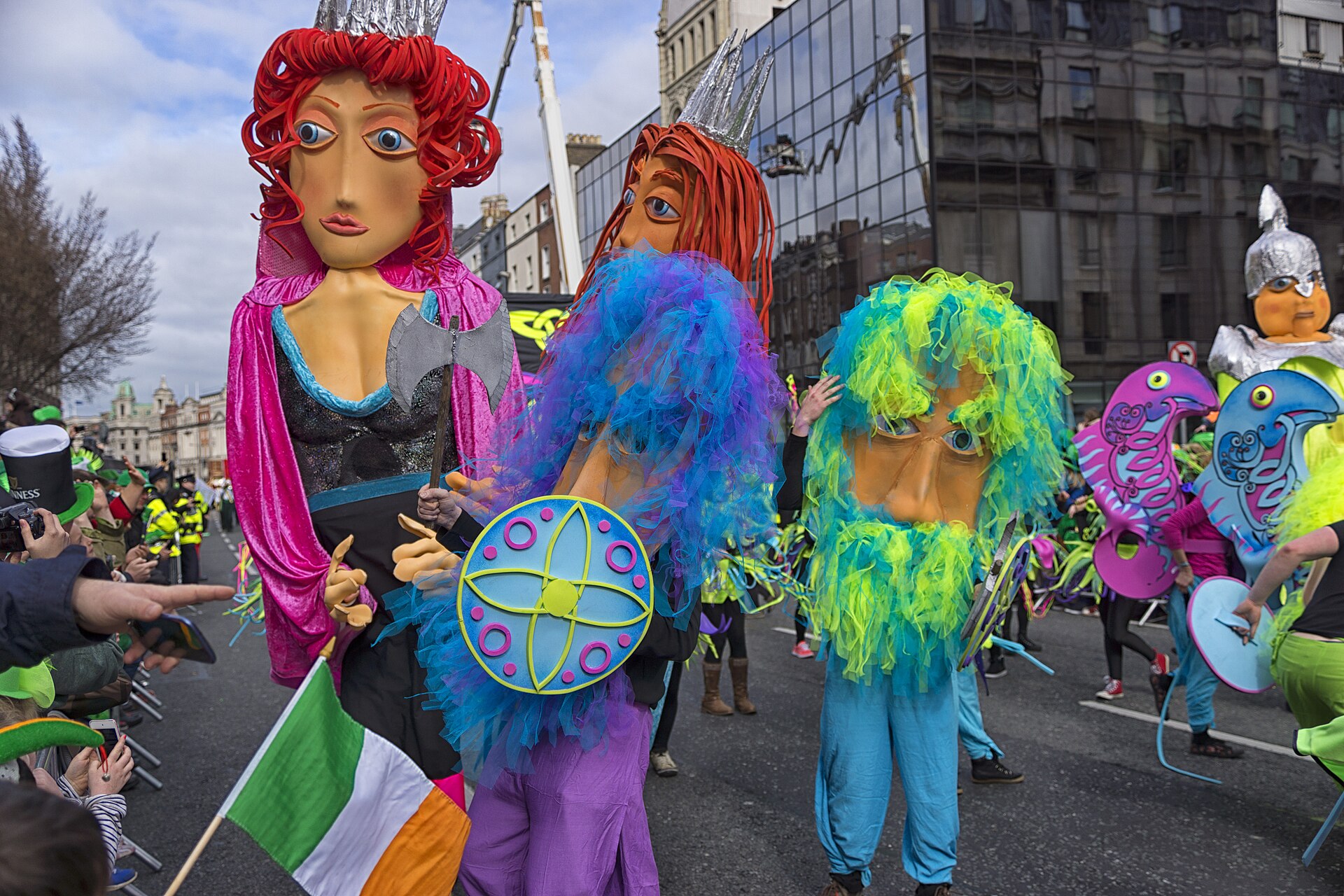
The parade starts at 12:00 on Wednesday 17 March 2027, assembling at Parnell Square, coming down O’Connell Street, over O’Connell Bridge and through the southside to finish at the Cuffe Street / Kevin Street junction. Over 3,000 participants take part, with large-scale floats from parade companies around Ireland. You do not need a ticket to watch — pick a spot on the route. Grandstand seats are ticketed and went on sale on 28 September 2026 for the 2027 festival; they sell out.
Here is the honest version. The parade is good, genuinely — it is a serious pageant with professional companies, not a procession of local businesses. But it takes a while to pass, you will be on your feet a good deal longer once you count getting a spot, and small children will struggle to see over the crowds on O’Connell Street. Arrive early if you want a front-row position anywhere central.
Our dedicated St Patrick’s Day in Dublin guide goes much deeper on the day itself — the route map, where to eat, and what the pubs are like once the parade disperses (short answer: full, and not the day for a quiet pint in a traditional pub).
The Six Nations Weekend Nobody Warns You About
Here is the trap. In 2027, Ireland play France at the Aviva Stadium on Saturday 13 March, kicking off at 20:10 — the same Saturday the St Patrick’s Festival opens, and the final weekend of the championship. That is 51,000 people in the stadium and a great many more in the city, on top of a festival launch weekend.
The result is that the night of 13 March 2027 is set to be an expensive and hard-to-book night for Dublin hotels. Rugby weekends already do this to the city; a rugby weekend stacked on a festival opening is a different order of thing. If your dates are flexible and you are not coming for either event, move.
If you are coming for the rugby, our Six Nations and sports guide covers tickets, the walk out to Lansdowne Road, and where to watch if you did not get a seat. Note that both of Ireland’s 2027 Dublin home fixtures are evening kick-offs, which changes the shape of the day completely — you have the whole afternoon free, and the city is at its best in it.

Crowds, Prices and the Two-Speed Month
Dublin in March splits cleanly into three price bands, and knowing which one your dates fall into is worth more than any other piece of planning advice on this page.
| Dates | What it is like | Hotel rates |
|---|---|---|
| 1–12 March | Quieter, spring light arriving | Low |
| 13–14 March | Festival opening weekend plus, in 2027, Ireland v France | Highest |
| 15–17 March | Festival continues; parade on Wednesday 17th | High |
| 18–31 March | Festival over, longest daylight of the month, clock change | Moderate |
The last band is the sleeper. From about the 19th the festival crowd has gone home, Irish schools are back, and you get the best daylight of the month at the lowest prices of the month. If someone asks us for one week in March with no other constraints, it is the last full week, every time.
For the money side, our Dublin trip cost breakdown has real numbers, and the cheapest time to visit explains where March sits in the annual pattern. If you are booking around the festival, the hotel-savings guide earns its keep: staying in Portobello or Rathmines, or out along the DART line, routinely halves the bill for twenty minutes of travel.
What Is Open, and What Is Not
March is a good month for openness. The big city attractions run all year, and some heritage sites move to longer seasonal hours in spring, so check each site’s own page for the times on your dates.
- Dublin Castle and the Chester Beatty are the big exception through 2026 — both closed to visitors while Ireland holds the EU Council presidency, and expected to reopen in January 2027. Verify before you build either into a March 2027 plan; see our Dublin Castle guide for the current position.
- The free national institutions — the National Museum’s three Dublin sites, the National Gallery, the Botanic Gardens — are all open and free. See our museums guide and free things to do.
- Kilmainham Gaol is open all year except 24–27 December, and tickets often sell out. Book the moment you have dates. Our Kilmainham guide explains the release pattern.
- Trinity’s Book of Kells Experience is open, though the Long Room is largely empty during the Old Library redevelopment — only about 20,000 books remain, in its first four bays, and the rest return once the project is finished. Read the Trinity guide before you buy, because the postcard image is not what you will see.
- 17 March itself: the bank holiday. Many museums and attractions open on reduced or Sunday hours, some close entirely, banks and offices shut, and public transport runs a Sunday-plus timetable with parade-day diversions. Do not plan a ticketed attraction for parade morning.
- Day trips all run. Glendalough in early spring is superb and almost empty; Powerscourt‘s gardens are waking up. Our day trips guide covers the lot.
Spring in the Parks
The other reason to book Dublin in March, and the one nobody markets. Dublin is an unusually green city, and the parks turn over in this month.
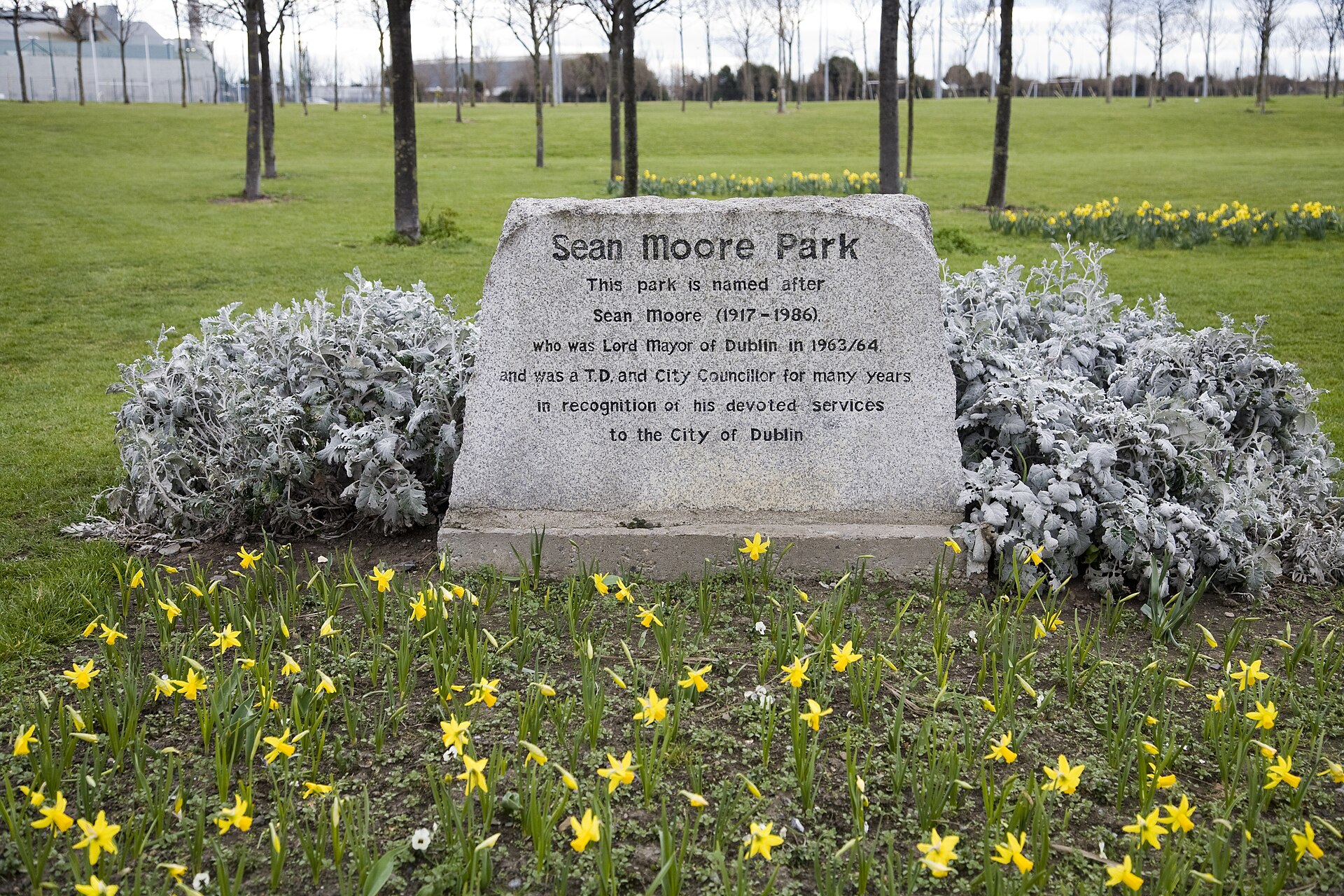
The National Botanic Gardens at Glasnevin are free, open every day except Christmas Day, and at their best in early spring when the glasshouses do the heavy lifting and the first bulbs come through outside. St Stephen’s Green and Merrion Square both get serious daffodil displays. Phoenix Park — at 707 hectares, one of the largest enclosed city parks in Europe — is at its emptiest and its most photogenic; the fallow deer herd, there since the 1660s, is calm in spring, well away from the autumn rut. The OPW rule stands all year: stay fifty metres back, never feed them, dogs on leads.
Cherry blossom in Dublin generally lands late March into April depending on the year, with the best displays in the Botanic Gardens and along the Grand Canal at Portobello. It is not Kyoto. It is still very good, and it is free.
See our Phoenix Park guide and the walking guide for routes, and parks and playgrounds if you have children with you.
What to Pack
Layers, and one specific piece of local knowledge: bring a hooded waterproof, not an umbrella. The wind coming up the Liffey destroys umbrellas at a rate that keeps Dublin’s chemists in business, and you will see approximately zero locals carrying one. That is the single most useful sentence in this guide, and it applies to Dublin in March more than to any other month, because spring showers here arrive sideways.
- A properly waterproof hooded jacket — not showerproof, waterproof.
- Layers you can shed indoors. Pubs and museums run warm; the street does not.
- Shoes you can walk 15,000 steps in and that survive a puddle. Dublin is a walking city and the cobbles in Temple Bar are unforgiving.
- A light scarf. It does more for a Dublin March than a heavier coat would.
- Sunglasses, unironically — March light comes in low and hard between showers.
- Something green, only if you are here for the 17th and only if you want to be. Nobody minds either way.
The full things to know before you visit guide covers plugs, tipping, transport cards and the rest of the practical layer; first-time Dublin is the place to start if this is your first trip.
Five Good Days: What to Do in Dublin in March
A rough shape rather than a schedule, weighted towards the things March does better than other months.
- A bright morning: Phoenix Park early, deer and the Papal Cross, then walk down to the quays. The light before ten in late March is the best of the year.
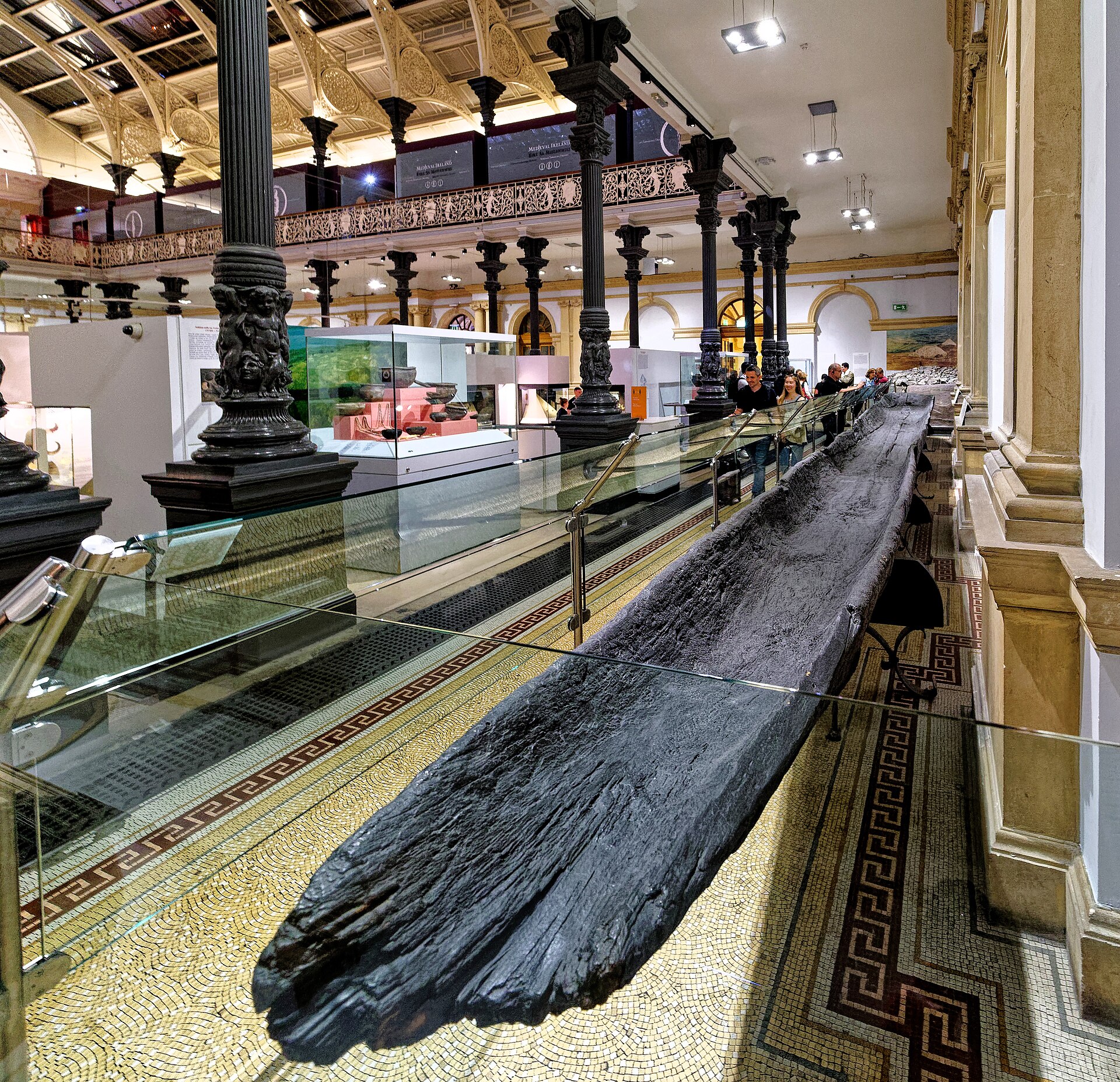
- A wet morning: the National Museum at Kildare Street for the bog bodies and the Ór goldwork, then the National Gallery. Both free, both indoors, both genuinely world-class. Our rainy-day guide has twenty more.
- An afternoon out: the DART to Howth for the cliff loop and a crab sandwich, or south to Dún Laoghaire and Dalkey. Half an hour each way, and the coast in spring light is the argument for the whole city.
- An evening: after the clocks change, the pubs with a bit of daylight left in them are a different proposition. Live trad start times vary from pub to pub, so check before you go and eat first.
- A full day out: Glendalough, which in March has the valley to itself, or Newgrange, or the Dublin Mountains if the forecast is kind.
For structured plans, see three days in Dublin, four days or the itinerary hub.

Gotchas
- Saturday 13 March 2027 is a hard night to find a hotel — Ireland v France at the Aviva plus the festival opening. Check your dates against it before booking anything.
- 17 March 2027 is a Wednesday, so there is no long weekend attached and no substitute Monday. Plan a midweek trip, not a weekend one, if the parade is the point.
- Dublin Castle and the Chester Beatty are closed until the end of 2026 and are only expected back in January 2027. Confirm before you count on either.
- The clocks go forward on 28 March 2027. If you have an early flight that Sunday, you lose an hour of sleep and your phone may be the only clock in the room that knows.
- Book restaurants ahead for the festival, 13–17 March 2027. Our restaurant guide and brunch guide are worth a read first.
- Parade-day transport is not normal transport. City-centre bus routes divert, the Luas is disrupted around the route and roads close from early morning. Walk, and check the transport guide.
- Temple Bar on 17 March is a queue with a pub attached, at prices to match. Our Temple Bar guide is candid about the trade-off.
- The sea is 7.5 °C. The Forty Foot swimmers will make it look easy. It is not.
- Kilmainham Gaol tickets often sell out, in March as in the rest of the year, so book before you travel rather than counting on a ticket at the door.

Dublin in March FAQ
Is March a good time to visit Dublin?
It is one of the better months, provided you choose your week deliberately. March is among the driest months of the Dublin year at around 51 mm of rain, the daylight increases by a little over two hours across the month, and the main attractions are open. The trade-off is temperature — highs average 10.1 °C — and the fact that the middle of the month is dominated by St Patrick’s Festival, when the city is full and expensive. Come before or after the festival and the weather is no different, but the crowds are gone.
How busy is Dublin in March?
Extremely busy during St Patrick’s Festival and notably quieter for the rest of the month. In 2027 the festival runs from Saturday 13 to Wednesday 17 March, with the parade on the 17th and a Six Nations match against France on the opening Saturday. Outside that window March is one of the calmer months, and hotel rates fall well below the festival peak.
What is the weather like in Dublin in March?
Cool, changeable and drier than its reputation. Met Éireann’s 1991–2020 normals give an average high of 10.1 °C and an average low of 3.0 °C at Dublin Airport, with about 51 mm of rain over eleven wet days and roughly 3.7 hours of sunshine a day. Expect anything from mild sunshine to sleet, sometimes in the same week. The wind matters more than the temperature — pack a hooded waterproof rather than an umbrella.
Do I need to book ahead for St Patrick’s Day in Dublin?
For accommodation, absolutely — book by the previous autumn for the festival week, and be aware that in 2027 the Saturday of the festival opening also carries an Aviva Stadium rugby international. You do not need a ticket to watch the parade itself; grandstand seats are ticketed, so check the festival’s own site for when they go on sale. Restaurants are worth reserving before you travel for the festival days, 13 to 17 March in 2027.
When do the clocks change in Ireland in March?
Ireland moves to Irish Standard Time on the last Sunday of March, which in 2027 is Sunday 28 March. Clocks go forward one hour at 01:00 GMT, becoming 02:00 IST. Sunset jumps from around 18:50 to almost 20:00 overnight, which transforms what you can fit into an evening — and costs you an hour of sleep if you are flying out that morning.
Is it worth visiting Dublin in March if I skip St Patrick’s Day?
Very much so. The last full week of March gives you the longest daylight of the month, spring in the parks and the clock change, with the festival crowds gone. Everything is open and day trips run. If you want Dublin at its most liveable rather than its most theatrical, that week is the answer.
What is there to do in Dublin in March besides the parade?
Plenty. The free national museums and the National Gallery are open all year; the Botanic Gardens and Phoenix Park are at their spring best; the Six Nations puts rugby internationals at the Aviva; and the coast is half an hour away on the DART. The St Patrick’s Festival programme itself runs five days of music, theatre and family events beyond the parade — the full lineup is published each January.
How should I dress for Dublin in March?
Layers, with a genuinely waterproof hooded jacket as the outer one. Daytime highs sit around 10 °C and evenings drop towards 3 °C, so a mid-layer you can add and remove matters more than a heavy coat. Bring walking shoes that cope with wet cobbles, and leave the umbrella at home — the wind off the Liffey ruins them, which is why you will not see a local carrying one.
Keep Planning
Dublin in March sits at the hinge of the year, so it is worth reading against the months on either side before you commit to dates.
- Dublin Season by Season — the full year, and where March fits in it.
- St Patrick’s Day in Dublin — the parade day itself, in detail.
- Best Time to Visit Dublin — month by month, with the weather tables.
- Dublin for Sports Fans — Six Nations, Croke Park and match-day logistics.
- Dublin in January — the quietest and cheapest month, for comparison.
- Dublin in October — warmer, wetter, and the other good shoulder month.
- What a Dublin Trip Costs — real numbers by season.
- Dublin Weather — the twelve-month Met Éireann tables.
- Dublin Events and Festivals — the whole calendar.
- Day Trips from Dublin — all of them run in March.
Keep Reading
- Dublin in February — the quieter month before St Patrick’s, with Ireland v England at the Aviva on 5 February 2027.
- Dublin Season by Season: The Complete Guide
- The Best Time to Visit Dublin
Photo Credits
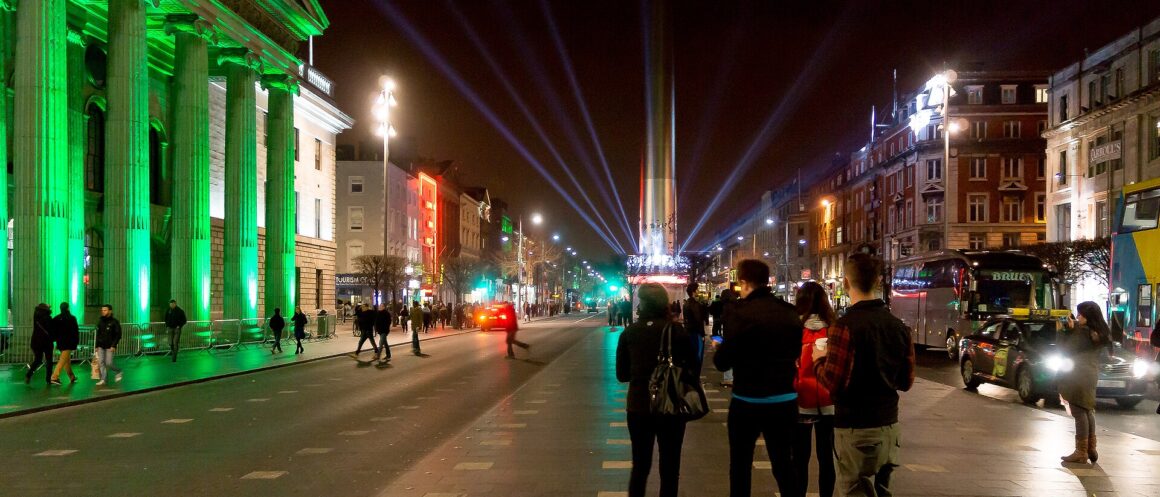
St Patrick’s Festival lights on O’Connell Street: ST. PATRICK’S SPIRE OF LIGHT ON O’CONNELL STREET IN DUBLIN REF-102053 (16650495260) by William Murphy, CC BY-SA 2.0, via Wikimedia Commons.
Giant puppets at the Dublin parade: Artastic (13240218084) by Miguel Mendez, CC BY 2.0, via Wikimedia Commons.
Daffodils in Seán Moore Park: SEAN MOORE PARK – DUBLIN by William Murphy, CC BY-SA 2.0, via Wikimedia Commons.
Ireland rugby players at the Aviva Stadium: Ireland rugby team at the Aviva Stadium by William Murphy, CC BY-SA 2.0, via Wikimedia Commons.
The Archaeology museum gallery: “Eine beeindruckende Sammlung”. 11 by Holger Uwe Schmitt, CC BY-SA 4.0, via Wikimedia Commons.
Lean na Comharthaí — Keep following the signs